
GEAR: WHICH SURFBOARD AFTER YOUR FIRST SOFT BOARD?
Our advice for choosing your first hard surfboard.
 Surfer: Evelin, GONG team rider, on the Acidolly EPS.
The softboard: the ideal tool to start
The softboard (also called a foamie or soft-top) is an excellent platform for discovering surfing. Its generous volume, stability, and forgiving rocker make paddling and take-offs easier. It allows you to catch many waves quickly and build success from the very first sessions.
Its thick, rounded rails, combined with a soft material, offer great tolerance for mistakes and increased safety, both for you and for other surfers. The result: more confidence, less apprehension, and learning focused on the fundamentals: balance, positioning, and wave reading.
Softboards like those offered by Softtech are therefore fantastic learning tools. But there comes a point when they start to limit progression.

Why switch to a hard board?
Moving to a hard board in fiberglass marks an important step in your progression.
The first major difference is structural rigidity: the energy transmitted through your feet is no longer absorbed by foam. The board reacts immediately. You gain speed, precision, and responsiveness.
The thinner, more refined rails provide much better grip on the wave face. Where a softboard floats and slides, a hard board penetrates the water and anchors itself. This gives you:
-
more control
-
cleaner turns
-
better hold at higher speed
-
real drive out of turns
The sensations change completely: the connection to the wave becomes more direct and more precise. In two words: more glide.
Another major advantage: a hard board opens the door to a wider range of conditions. Faster, steeper, more powerful waves… it supports long-term progression.

The fundamental difference: rail shape
One of the main differences between a soft board and a hard board lies in the rails.
On a soft-top, rails are thick, rounded, and almost identical from nose to tail, often with an edge running along the entire length. The edge on a surfboard refers to the sharper line located on the lower part of the rail, where the rail meets the bottom.
This configuration provides stability but creates a more uniform behavior in the water. A constant edge can lead to rail catches, while the thickness of the rail limits its ability to penetrate the wave face.
On a hard board, the rails are progressive:
-
more forgiving at the front to ease wave entry
-
thinner, lower, and more precise toward the tail
-
with a pronounced edge mainly at the tail
This rear section does most of the work during turns. It allows progressive anchoring in the water, transforming your pressure into smooth, controlled curves. Maneuverability therefore comes from the shape and rails, not simply from board length.

Should you go shorter?
Contrary to common belief, you don’t necessarily need to shorten your board when switching to a hard board.
The maneuverability of a hard board comes from:
-
thinner rails
-
structural rigidity
-
rocker
-
tail design
You can therefore keep some length, maintain paddling comfort, and catch waves early while enjoying far better maneuverability than with a softboard. What changes most is often volume and its distribution, not necessarily length.
When are you ready to go shorter?
You’re ready to reduce size when:
-
your take-off is controlled without stress
-
you naturally surf across the wave
-
you control your lines
-
you actively engage your rails
And most importantly, when you become active in your surfing.
An active surfer moves along the board, climbs and descends the wave face, and generates and maintains speed. A passive surfer simply lets the wave carry them.
A shorter board has less inertia and therefore requires you to generate your own speed. If you already surf actively, the transition will feel natural.
 Surfer: Servane on a Gumball PU 7’0.
How to manage the transition in length and volume
When moving from a soft board to a hard board, the key rule is simple: don’t reduce everything at once.
A successful transition comes from gradually adjusting length and volume, depending on your real level and especially how often you surf. Also remember that foam boards are naturally very high in volume.
- The length: a measured reduction
In general, dropping 4 to 6 inches, up to about 1 foot, already represents a real transition.
For example:
-
-
If you learned on an 8’0 soft board, a hard board between 7’0 and 7’8 is a logical step.
-
From a 7’6 soft board, aiming for 6’6 to 7’6 is reasonable, provided you keep comfortable volume.
-
The goal isn’t simply to shorten the board, but to keep enough inertia for stability, paddling efficiency, and early take-offs.
-
The volume: the real progression lever
During the transition, you generally remove 15 to 25% of the volume compared with your soft board.
For example, a 70 L soft board would lead to a hard board around 50–58 L, depending on level and surfing frequency.
But the key factor remains how often you surf.
With a low frequency of sessions, it is important to keep more length and volume. A surfer who surfs only once or twice a month should make a very gentle transition. A weekly surfer can reduce a bit more. A very regular surfer can consider a more ambitious transition.
Some concrete examples
A 65 kg surfer who surfs twice a month and learned on a 7’6 soft board with 70 liters should look toward a hard board between 7’2 and 7’6, with a volume between 48 and 55 liters. Going below 45 liters would be too ambitious and would likely reduce the number of waves caught.
A 75 kg surfer surfing once a week after learning on an 8’0 soft board with 75 liters can aim for a board between 7’4 and 7’6 with a volume between 52 and 60 liters, in an evolving mini-mal shape.
An 80 kg surfer who surfs regularly (two to three sessions per week) and comes from a 7’6 soft board with 72 liters could move down to 7’0 to 7’2, around 50 to 55 liters, as their regular surfing compensates for the loss of inertia.
A lighter surfer, 60 kg, surfing once a week after a 7’0 soft board with 60 liters, could aim for 6’10 to 7’0 around 40 to 46 liters without sacrificing comfort.
Finally, a 70 kg surfer surfing three times per week and already active in their surfing could consider transitioning to 6’8 to 6’10 with 38 to 44 liters, as their ability to generate speed compensates for the reduced inertia.
These references are not strict rules, but they help avoid the classic mistake: reducing size and volume too quickly, losing comfort, catching fewer waves, and slowing progression.
 Surfer: Moritz, GONG team rider, with an Acidolly EPS.
Which GONG board should you choose for this transition?
The best option after a foam board is usually not a radical shortboard but a modern intermediate board.
The shapes best suited for this transition are mini-malibu boards, hybrid models, and mid-length boards. These shapes retain length and volume while offering a wide range of use and a strong margin for progression.
Mini-malibus
They are, in a way, longboards in a more compact size. They retain excellent stability, comfortable paddling, and easy take-offs, while being more maneuverable and easier to put on rail than a classic longboard. It’s a smooth and reassuring transition after a foam board. In the mini-malibu category, you’ll find the Gumball and the Acidolly.
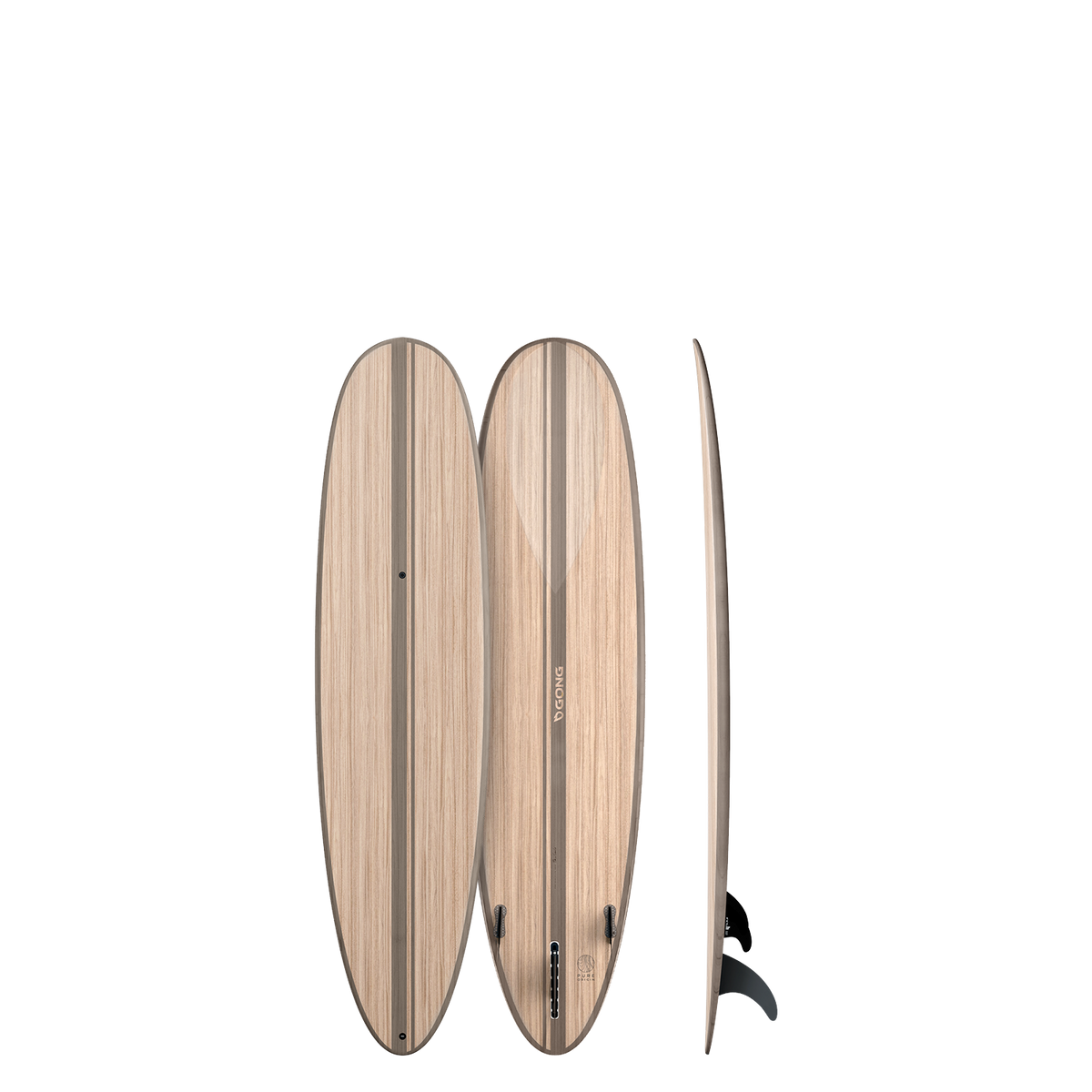
Acidolly 7’0 / 7’4 / 8’0 / 8’4
The Acidolly is a mini-longboard-style mid-length that combines ease, glide, and modernity in a compact format. Fast to paddle, smooth through turns, and maneuverable thanks to its round tail and defined rails, it allows both linked maneuvers and stylish noserides. Accessible yet high-performing, it is a versatile board that offers the spirit of a modern longboard with the compactness and efficiency of a mid-length.

Wave type: soft, low-power waves, mellow beach breaks, and relaxed point breaks. The Acidolly excels when the goal is to maximize glide and ease. It gets into waves early, keeps its speed effortlessly, and remains very enjoyable in small conditions.
Wave size: 30 cm to 1.20 m
Which size?

Acidolly 7’0 - 49 L
Designed for light to medium-weight surfers, or for skilled surfers looking for a compact mini longboard, this size emphasizes maneuverability and active surfing. It keeps the longboard spirit (glide, noseride) with controlled volume to stay playful and precise.
Acidolly 7’4 - 51 L
The versatile sweet spot, ideal for medium builds or for those looking for a balance of ease, glide, and control. Fast to paddle and stable, it offers plenty of forgiveness while remaining high-performing enough to vary turns, maneuvers, and noserides.
Acidolly 8’0 - 62 L
With more volume, this size is aimed at beginner surfers, progressing surfers, or those who prioritize comfort and glide. It gets into waves very early on take-off, maintains speed effortlessly, and allows you to make the most of small to medium conditions.
Acidolly 8’4 - 70 L
The most generous version, designed for bigger builds and beginner to intermediate surfers. Ultra-buoyant and stable, it comes close to a modern longboard while remaining more compact and maneuverable.
 Surfer: Moritz, GONG team rider, on the Acidolly EPS.
Gumball 7’0 / 7’2 / 7’4 / 7’6
The Gumball is an ultra-compact longboard designed to offer the glide and lift of a longboard in a shorter, more maneuverable format. Easy to paddle, highly buoyant, and incredibly playful, this shape lets you catch waves early, plane through small conditions, and link turns and noserides. It’s a progressive, fun, and accessible board, ideal for surfing often and enjoying yourself while developing style, fluidity, and timing.

Wave type: soft, low-power waves, mellow beach breaks, and relaxed point breaks. The Gumball excels in small to medium conditions, when you want lift and a board that “does the work” without requiring too much energy.
Wave size: 30 cm to 1.20 m
Which size?

Gumball 7’0 - 51 L
The most compact and playful version, ideal for light to medium surfers looking for a maneuverable mini noserider. It prioritizes responsiveness and fun, while keeping paddling easy and preserving the ability to nose ride.
Gumball 7’2 - 56 L
The best versatility / maneuverability compromise, perfect for medium builds or those who want an easy board without excess volume. It offers an excellent balance of glide, stability, and freedom of movement, making it an ideal everyday board.
Gumball 7’4 - 60 L
More buoyant, this size is aimed at heavier builds, progressing surfers, or those who want to maximize ease and early take-off. It allows relaxed surfing, keeps speed effortlessly, and makes the most of small conditions.
Gumball 7’6 - 64 L
The most generous version, designed for bigger builds, surfers looking for maximum comfort, or those wanting to get closer to longboard sensations in a compact format. Ultra stable and very comfortable to paddle, it turns soft waves into an incredibly playful playground.
 Surfer: Servane on a Gumball PU 7’0.
Hybrid shapes with DNA closer to the shortboard feature a more compact outline, a more refined tail, and more pronounced rocker. They remain comfortable thanks to well-distributed volume, but they are livelier and more reactive. They often represent a true transition toward the shortboard, and the smaller sizes are suited to surfers who are already active and capable of generating their own speed. In this category, you’ll find the Batmob.
Batmob 6’6 / 6’10 / 7’2 / 7’6
The Batmob is a compact hybrid designed to offer the ease of a mini-malibu with the maneuverability of a shorter, more responsive board. Accessible, stable, and quick to paddle, it allows early take-offs and makes it easy to generate speed thanks to its wide, buoyant tail. It’s an ideal board for progressing without frustration, while still lively enough to satisfy experienced surfers looking for volume and efficiency in everyday conditions.

Wave type: everyday beach breaks, imperfect waves, chop, wind, soft to average waves, it goes everywhere, even when conditions aren’t clean. The Batmob particularly excels when conditions are average or inconsistent.
Wave size: from 50 cm to overhead.
Which size?

Batmob 6’6 - 39 L
The most compact and playful version, ideal for lighter intermediate surfers looking for a short but accessible board. It prioritizes responsiveness while keeping enough lift to stay easy in small conditions.
Batmob 6’10 - 44 L
The best compromise for most surfers. This size combines stability, paddling ease, and maneuverability, perfect for progressing or surfing often in average conditions without sacrificing performance.
Batmob 7’2 - 54 L
More buoyant, it is aimed at heavier builds, progressing beginners, or those who want to maximize ease and early take-off. Very stable and reassuring, it helps you learn to generate speed and engage your first real turns.
Batmob 7’6 - 65 L
The most generous version, designed for bigger builds, near-beginners, or those who want maximum comfort in a compact format. Ultra stable, easy to paddle, and efficient in small waves, it offers accessible surfing that still feels dynamic.

 Surfer: Malo, GONG team rider, on the Batmob EPS.
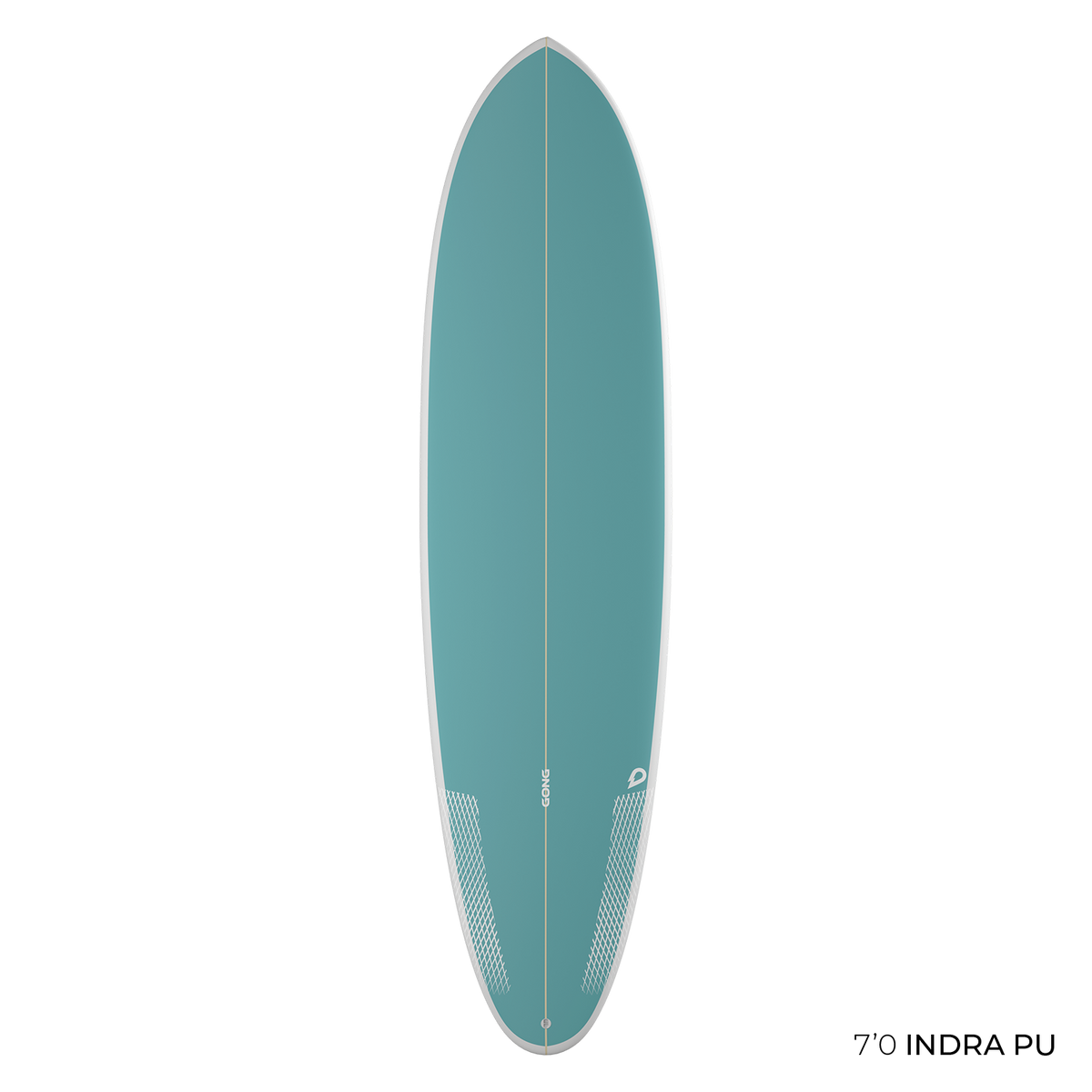
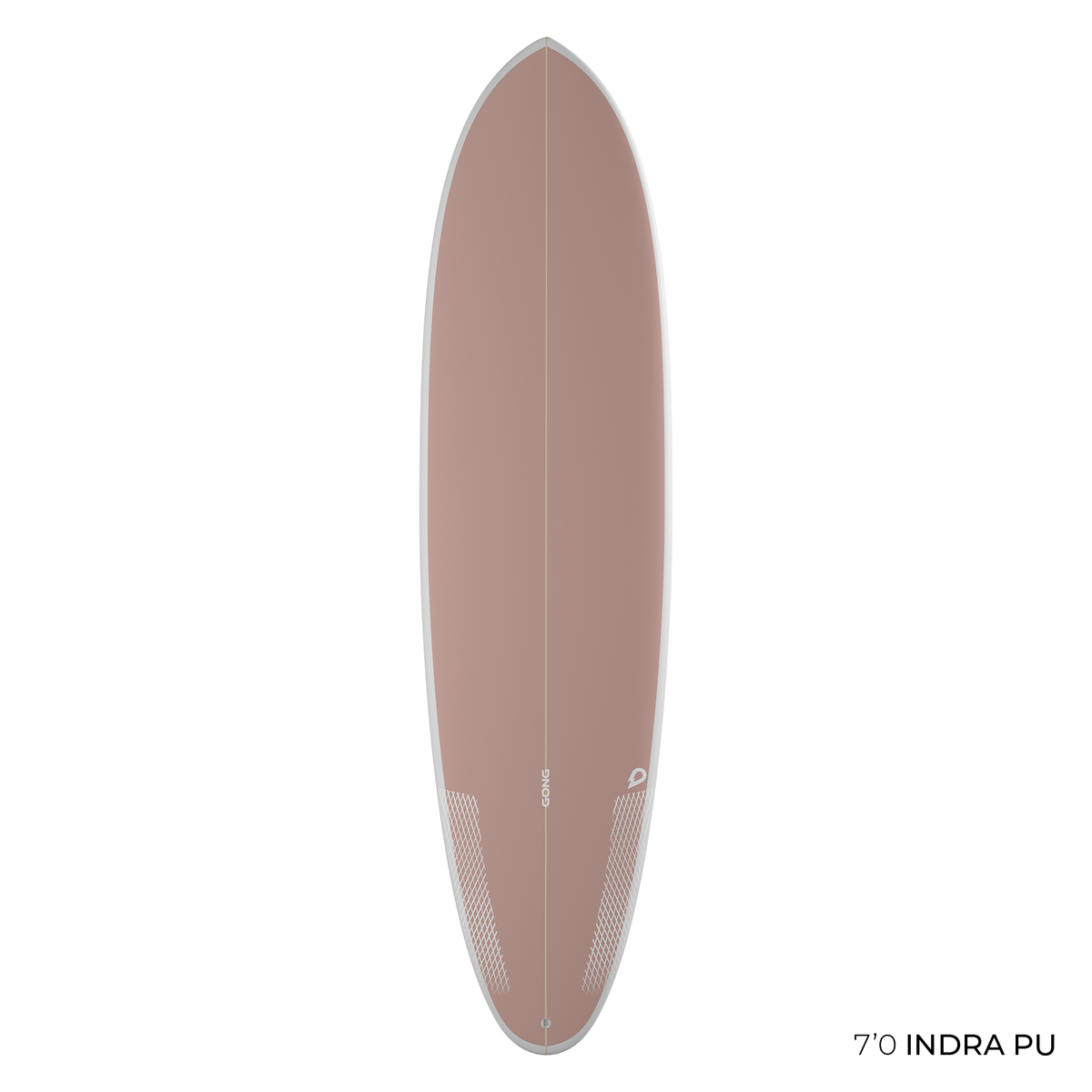
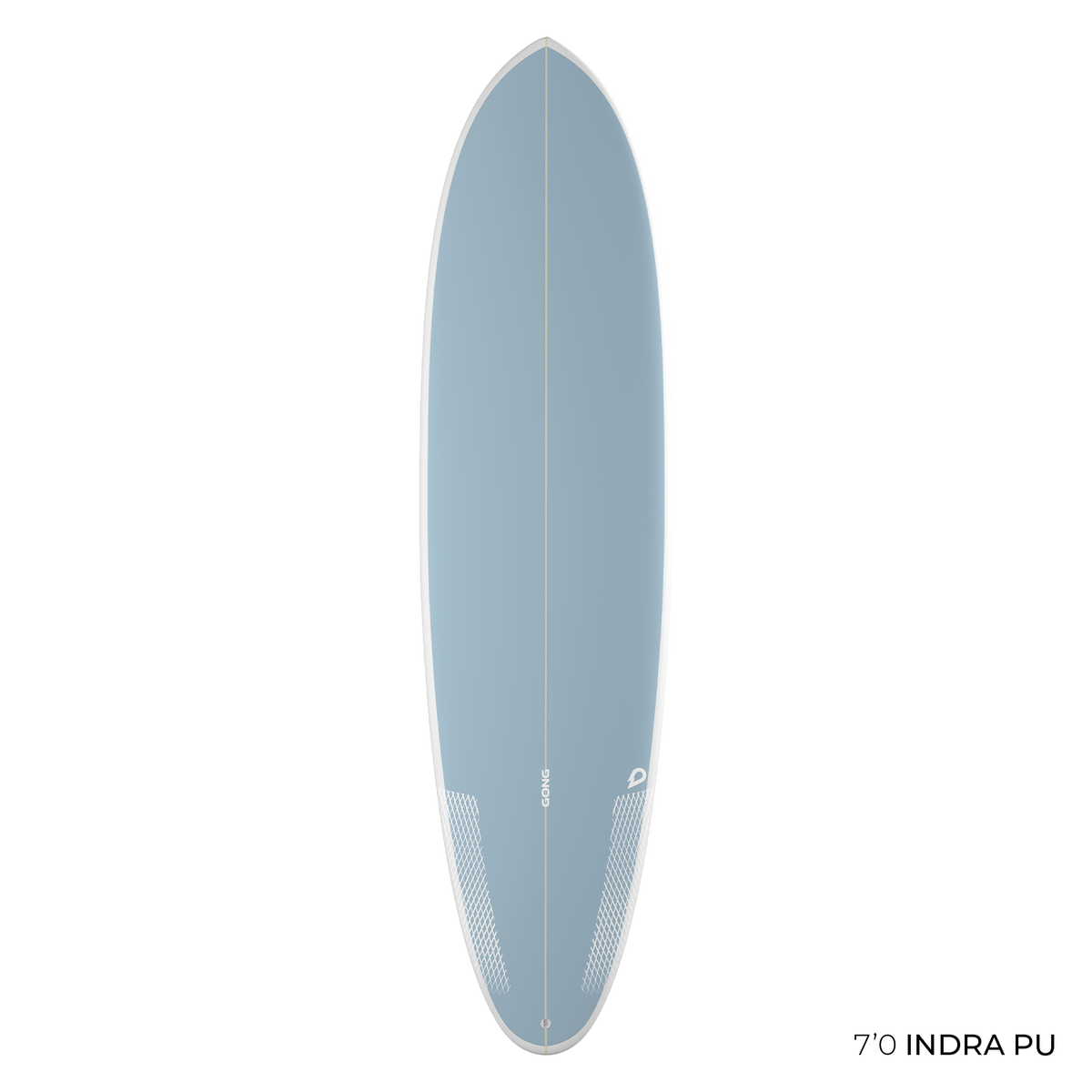
Mid-lengths sit between the mini-malibu and the shortboard. Narrower, with thinner rails and a more refined tail, they offer more fluidity and performance. They retain glide and inertia, but allow for more committed and more technical surfing. It’s a balanced choice for progressing while keeping comfort. In this category, you’ll find the Indra.
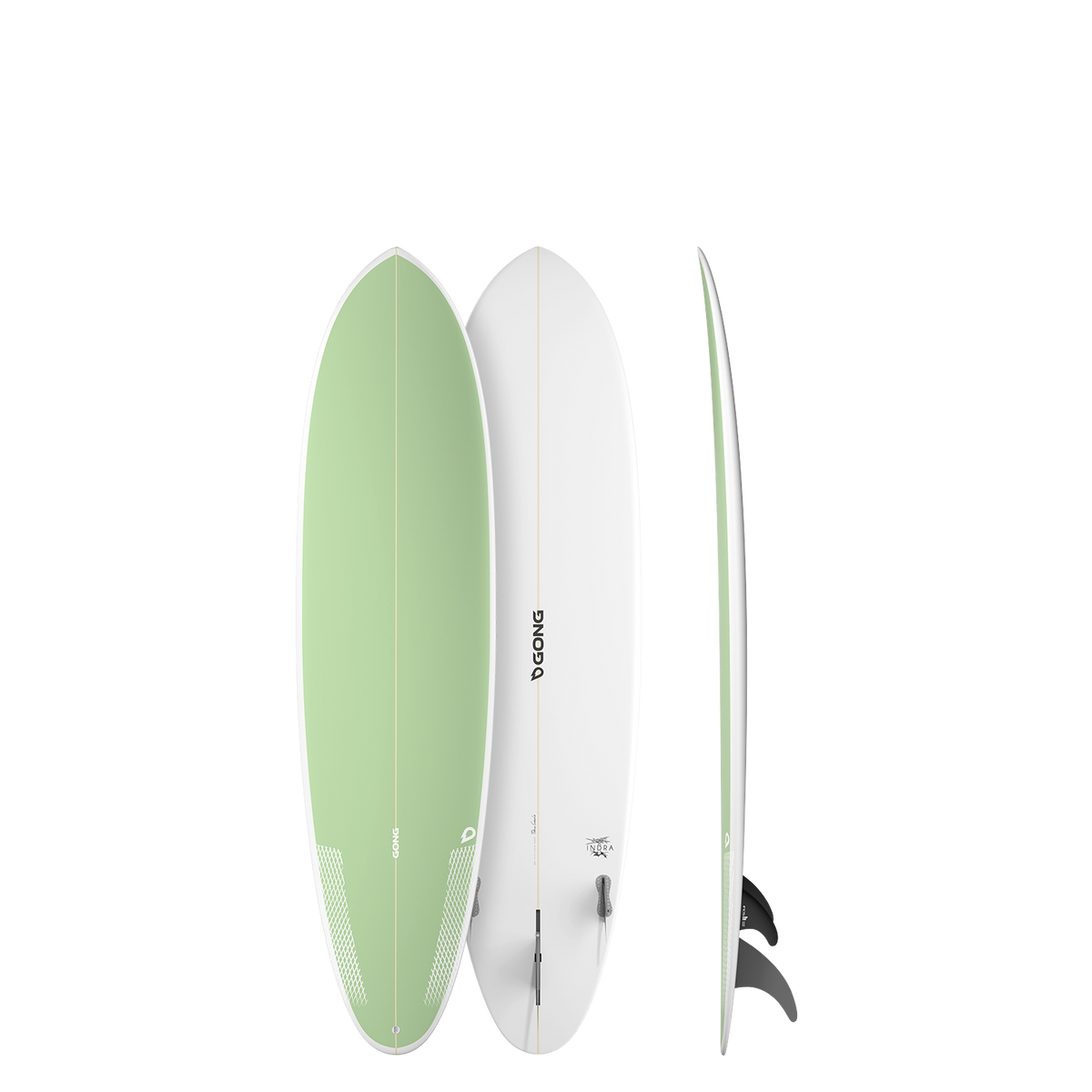
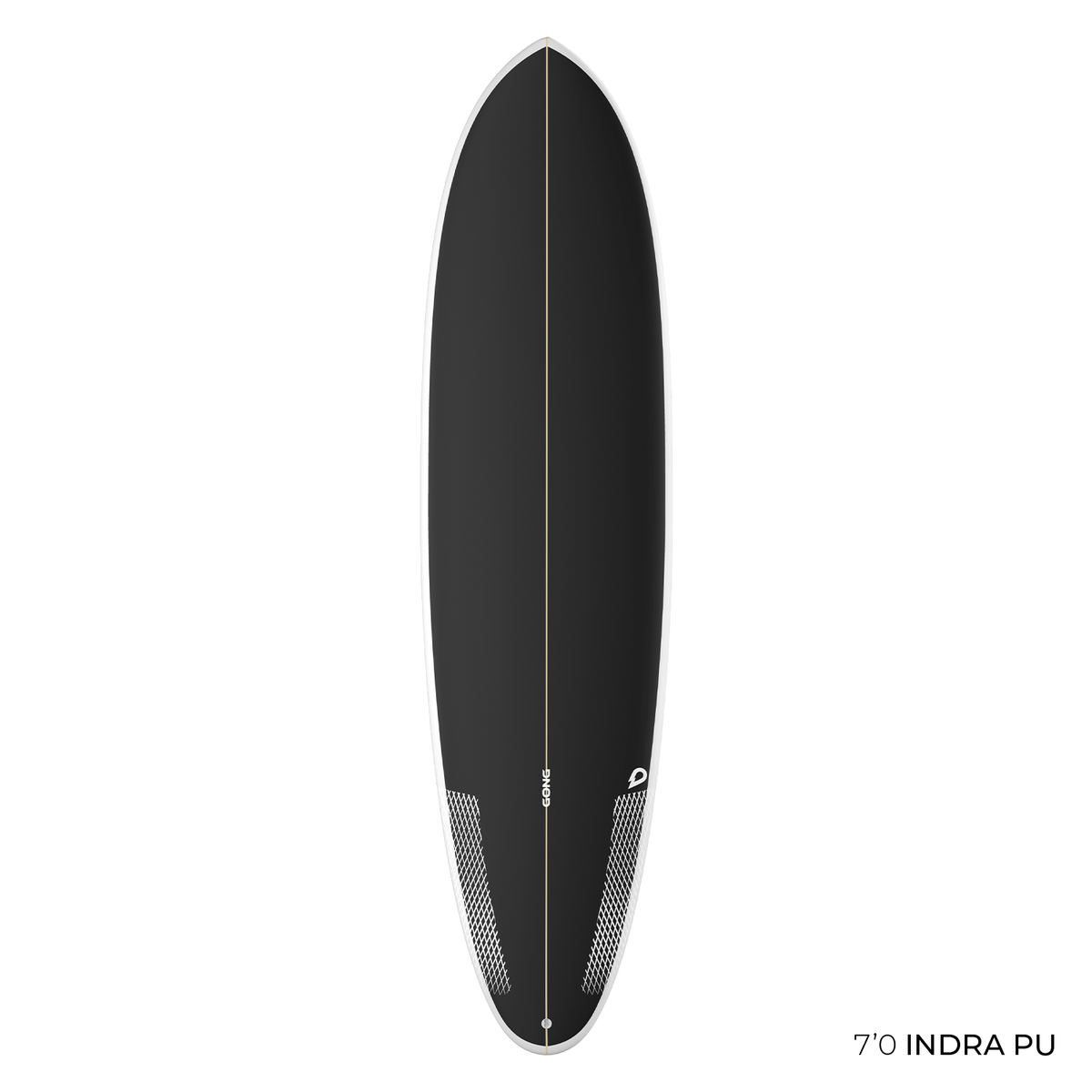
Indra 6’6 / 7’0 / 7’6 / 8’0
The Indra is a pure mid-length, elegant and modern, offering flow, speed, and great versatility. Its elongated outline, progressive rocker, and balanced round tail create fast, fluid, instinctive glide without locking surfing into a single style. Easy to paddle, quick into waves, and extremely enjoyable to surf, it is an all-around mid-length designed for drawing beautiful lines with style in all kinds of waves.

Wave type: varied waves, clean beach breaks, reefs, and point breaks. The Indra adapts to almost everything, feeling just as comfortable in small conditions as in more solid waves.
Wave size: 50 cm to 2 m
Which size?

Indra 6'6 - 40 L
To keep a very compact feel, almost like a shortboard, with the idea of drawing tight turns. Designed for active, lighter surfers looking for a highly maneuverable mid-length. It keeps the surfing lively and precise, ideal for tightening turns while gaining more glide than a pure performance board.
Indra 7'0 - 46 L
An excellent compromise for those who want easier paddling and comfortable wave entry without too much length. This size offers fluid, versatile glide, perfect for balanced everyday surfing.
Indra 7'6 - 50 L
Designed for surfers who prioritize paddling speed and early take-off. It allows you to draw long, open turns, with fluid handling and maximum efficiency when waves lack power.
Indra 8’0 - 61 L
Ideal for bigger builds or for those who want an ultra-easy, stable, no-fuss board. It combines lift and maneuverability, offering the best compromise between comfort and liveliness.

 Surfer: Mateia, GONG team rider, on his Indra PU.
To conclude
A foam board is perfect for learning. A hard board is the tool for progressing.
Maneuverability comes from the shape and the rails, not only from length. Keeping comfort while gaining precision is the key to a successful transition.
The right choice is the one that allows you to keep catching lots of waves while raising your technical level.
heart
heart-full

heart
heart-full
Surf Acidolly Pure Origin
The compact and easy longboard.
Regular Price
469€
Sale Price
469€Regular Price
heart
heart-full

heart
heart-full
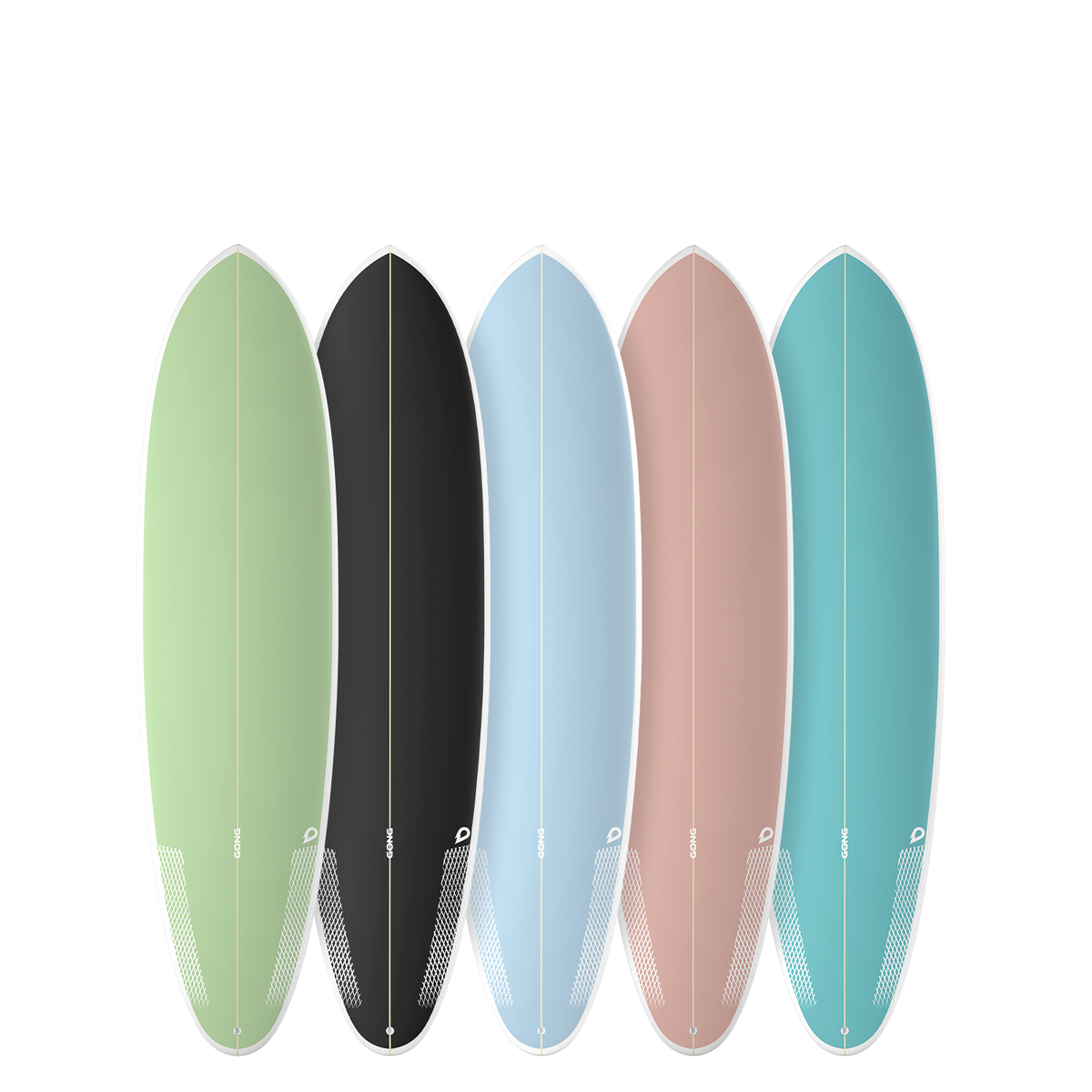
Surf Indra PU
Surf with style and flow on a pure mid-length.
Regular Price
365€
Sale Price
365€Regular Price
409€
heart
heart-full

heart
heart-full
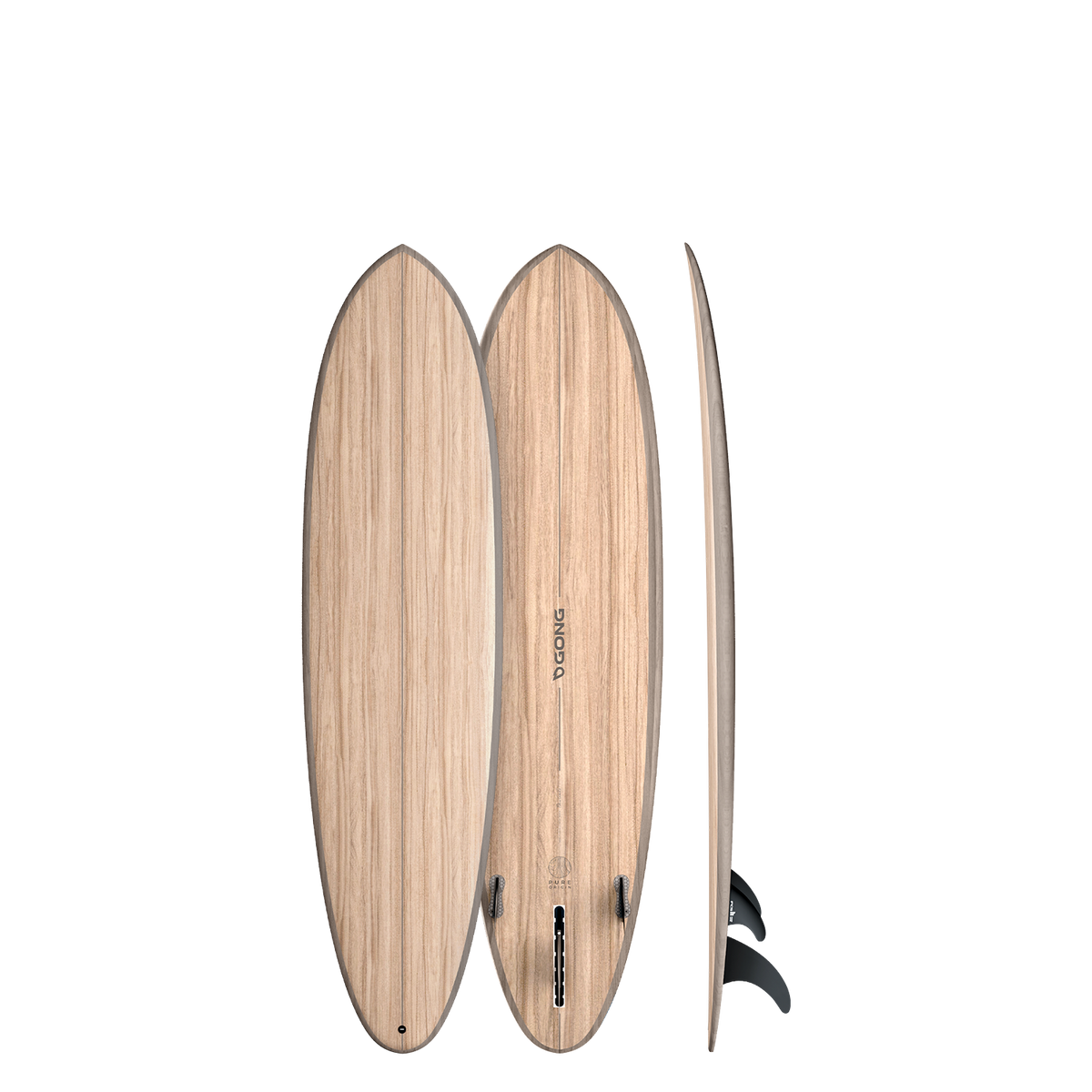
Surf Indra Pure Origin
Surf with style and flow on a pure mid-length.
Regular Price
439€
Sale Price
439€Regular Price

