Your cart is empty!
It's flat around here...
It was in the late 1970s that this type of fin really came into its own. Surfers like Mark Richards proved that a twin fin could become a true high-performance tool. With two large side fins, these boards delivered instant speed, an incredibly loose feel underfoot and a carving ability far beyond the single fins of the era.
The arrival of the thruster in the early 1980s reshaped the landscape. With its third center fin, the thruster offered greater control, more confidence under pressure and a more predictable feel in powerful waves. It gradually became the dominant setup in modern surfing. Twin fins never disappeared, but they became more closely associated with alternative board designs.
Today, performance twins are making a strong comeback because they answer a different desire. Many surfers want to move away from the highly standardized feel of the classic thruster. They're looking for boards that are faster in small to medium waves, more playful and more fluid. The performance twin fits that brief perfectly.

This revival is also driven by the evolution of board shapes. Modern fish, compact hybrids, performance mid-lengths and contemporary twin designs are all shaped to make the most of these fins. Today's boards combine generous volume, refined rails and modern bottom contours, allowing twin fins to reclaim a true place in every surfer's quiver.
Twin + trailer setups have also contributed to this resurgence. They retain much of the speed and freedom of a twin while adding an extra level of control. This configuration reassures surfers coming from thrusters, allowing them to discover the feel of a twin without completely leaving their comfort zone.
Performance twins now occupy an important place in surfing. They are no longer simply associated with retro designs or nostalgia. They represent a modern alternative to the thruster, ideal for surfers looking to rediscover speed, flow and a more creative feeling on the wave. Their comeback reminds us that performance doesn't always come from more control. Sometimes it comes from a board that feels freer, livelier and easier to accelerate.
 Surfer: Malo, GONG team rider, riding the Fury EPS.
Upright twins and keels are often confused, even though their design and performance characteristics are fundamentally different.
Keels are twin fins, but not all twin fins are keels. A keel is a specific type of twin fin defined by its very long base, generous surface area and pronounced rake.

Upright twins are more vertical, with a shorter base and less rake. This type of fin favors pivot and responsiveness. The board turns tighter, changes direction more quickly and is better suited to a dynamic, vertical style of surfing. These fins are commonly found on modern twin boards, performance fish and twin shortboards designed to surf actively in the pocket.
Keels, on the other hand, feature a much longer base and greater surface area. They generate more linear drive and a feeling of continuous pull through the wave. The ride becomes smoother, with longer lines and natural speed that carries effortlessly through the wave. Keels are particularly well suited to traditional fish, retro boards, wide swallow tails and Mini Simmons, shapes designed to maximize glide and projection in small to medium-sized waves.
In practice, choosing between upright twins and keels depends as much on the board as on the style of surfing you're after. Upright twins prioritize maneuverability and modern performance, while keels favor natural speed and long, flowing lines.
 Surfer: Mateia, GONG team rider, riding the Fury EPS.

Rake
Rake refers to how much the fin sweeps back toward the tail. On an upright twin, it is generally moderate, and it plays a key role in defining the fin's behavior.
The less rake a fin has, the more easily it pivots. The board turns tighter, reacts more quickly under the back foot and fits naturally back into the pocket. That's what gives upright twins their lively, vertical feel.
Adding a little more rake increases hold, drive and projection through turns. The board feels more composed and stable at higher speeds, but loses a bit of its instant pivot.

Base
The base of an upright twin plays a major role in generating drive. Without a center fin to stabilize the board, the two side fins must provide support, projection and part of the overall control.
That's why an upright twin retains enough base length to generate powerful acceleration through bottom turns and committed carves. But the base isn't excessively long, allowing the board to remain loose and maneuverable. This balance defines the fin's character: enough base for acceleration, enough freedom for pivot.

Depth
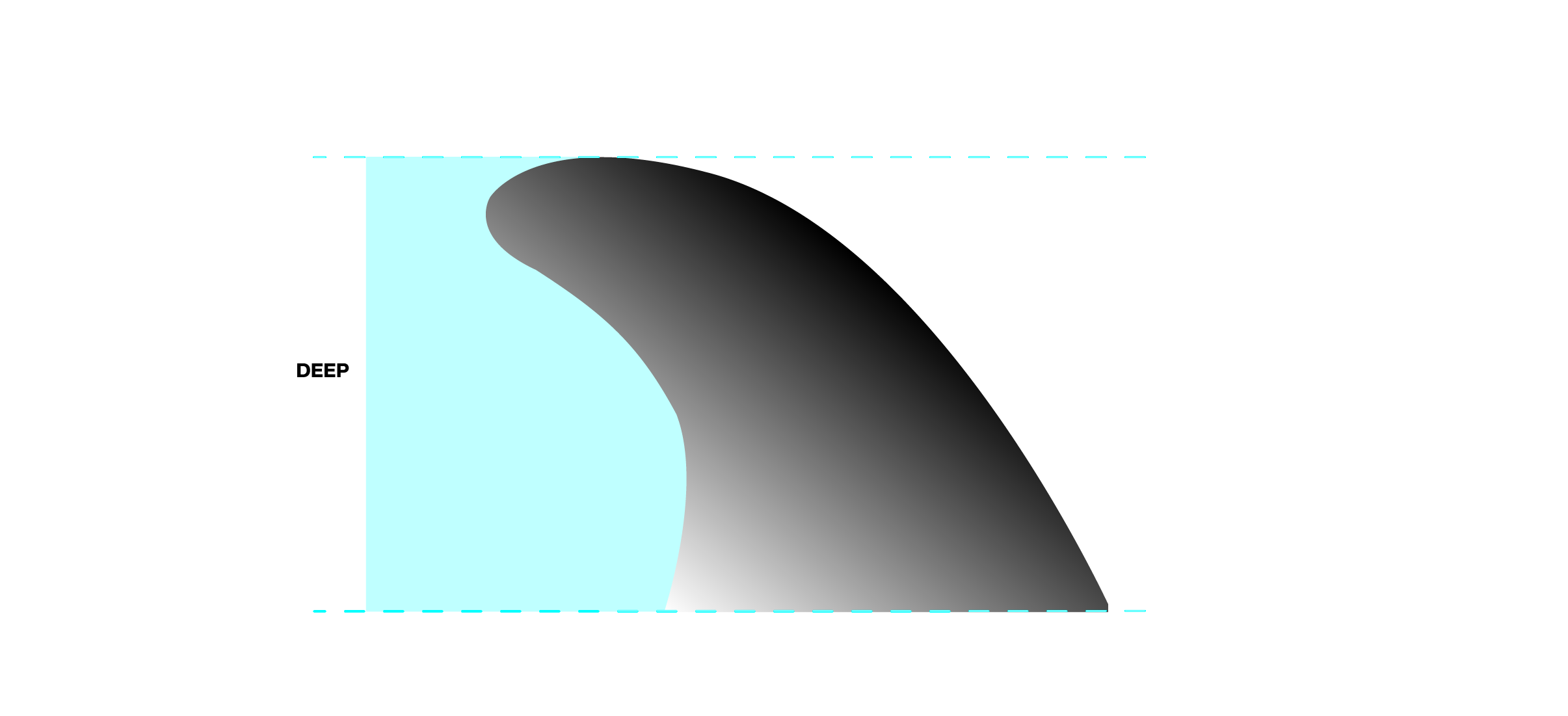
Depth is one of the most important characteristics of this type of fin. Without a center fin, the side fins need enough depth to provide grip and control.
That depth also gives the surfer a solid point of support, especially in faster or hollower waves.
Surface area
The surface area of an upright twin is generous because two fins must perform the work that a thruster spreads across three points of support. However, that surface is distributed differently, with more area concentrated in the upper section and around the main body of the fin.
This distribution creates a very direct feeling of support. The board grips quickly when you engage the rail, then releases easily as you ease the pressure. That's what gives these fins their lively character: they hold when you push, but never feel permanently locked in.

Flex
Although upright twins aren't primarily designed around flex, their template generally provides more spring and response than a very low, broad fin.

Foil
Upright twins often feature a flat inside foil. This profile increases lift when the board is on rail, enhancing both drive and grip through turns.
 Surfer: Malo, GONG team rider, riding the Fury EPS.
Upright twins perform particularly well on boards designed for modern, dynamic surfing that prioritize pivot and responsiveness over pure glide.
These boards generally feature a relatively narrow tail and more rocker than a retro fish. They excel in small to medium-sized waves but are equally capable in more powerful conditions.
A Twin + Trailer setup is a hybrid configuration that allows you to fine-tune a board's behavior.
Compared to a classic thruster, switching to Twin + Trailer frees up the tail, reduces drag through the center and delivers more speed, glide and responsiveness under the back foot. The board feels livelier, more playful and less locked in, while the trailer maintains a reassuring central point of control. You can't simply install twin fins in a thruster because the side fin boxes are positioned farther forward. Adding a trailer rebalances the setup, moving the effective point of support farther back. You retain much of the speed, freedom and playful character of a twin while gaining the control needed to fully exploit the board.
Conversely, adding a trailer to a pure twin setup increases control, precision and confidence under pressure. The trailer stabilizes the tail, reduces unwanted slides at high speed and makes the board's line easier to predict, particularly in fast, hollow waves or on your backside.
 Surfer: Mateia, GONG team rider, riding the Vibe EPS in thruster mode, convertible to a 2+1 twin/trailer setup.
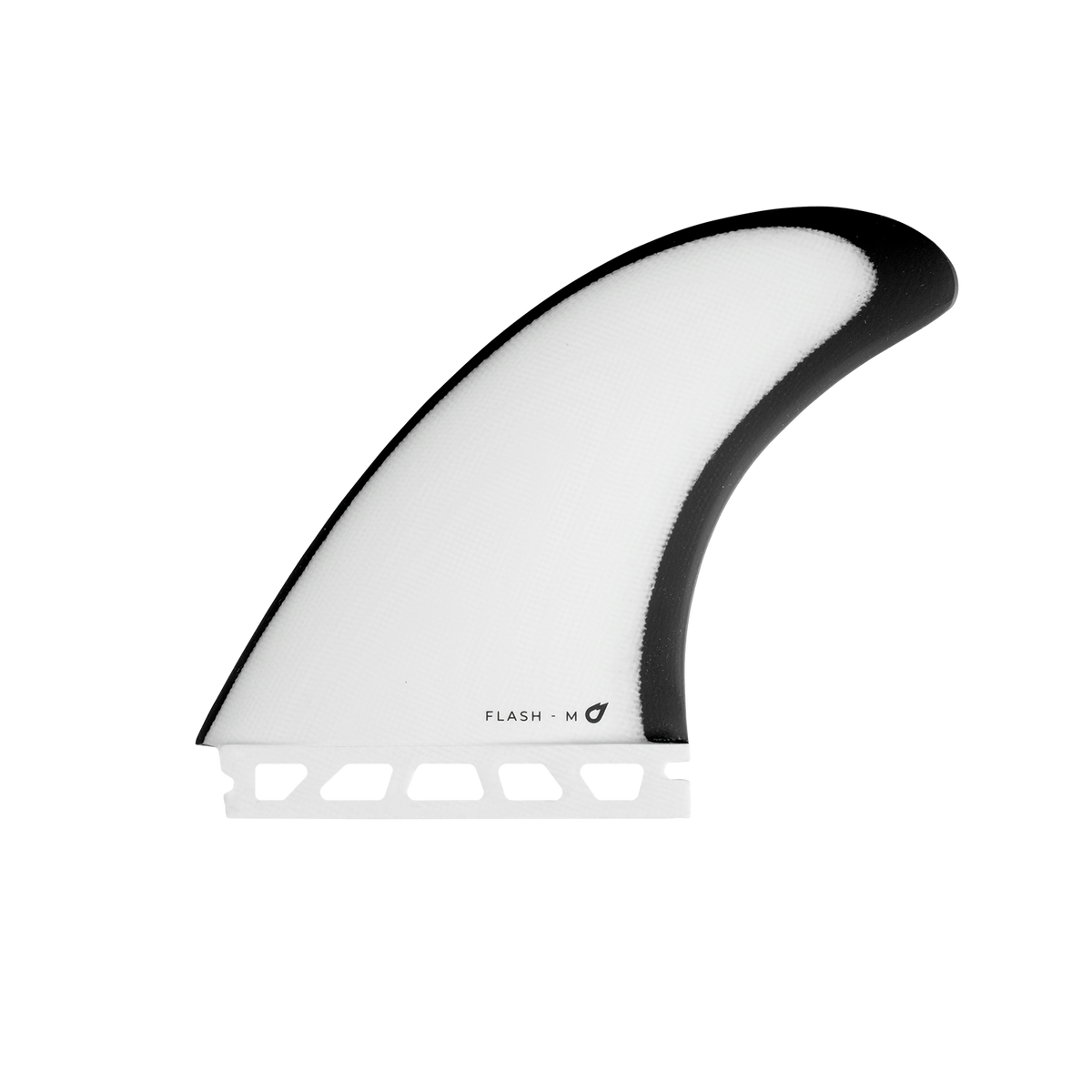
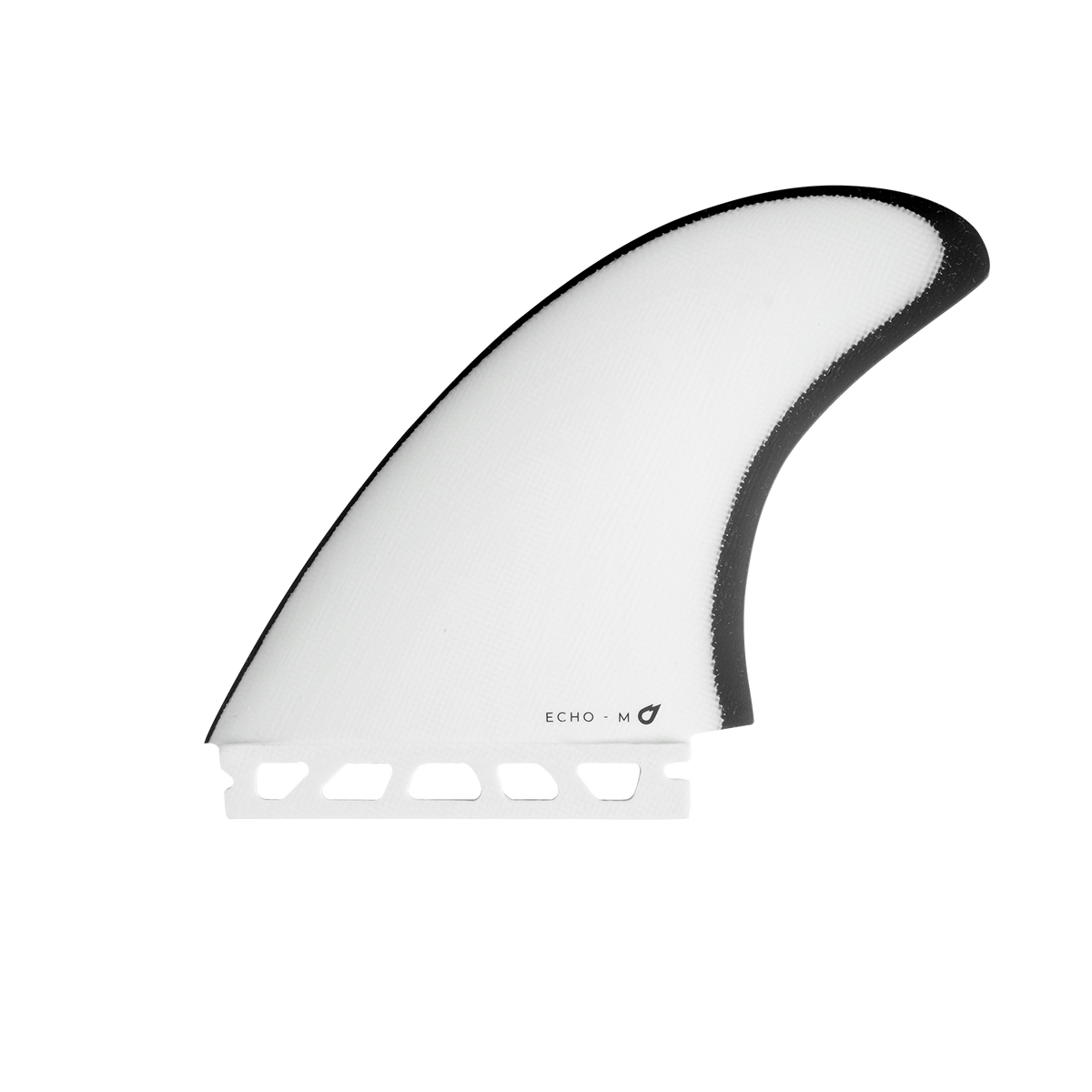
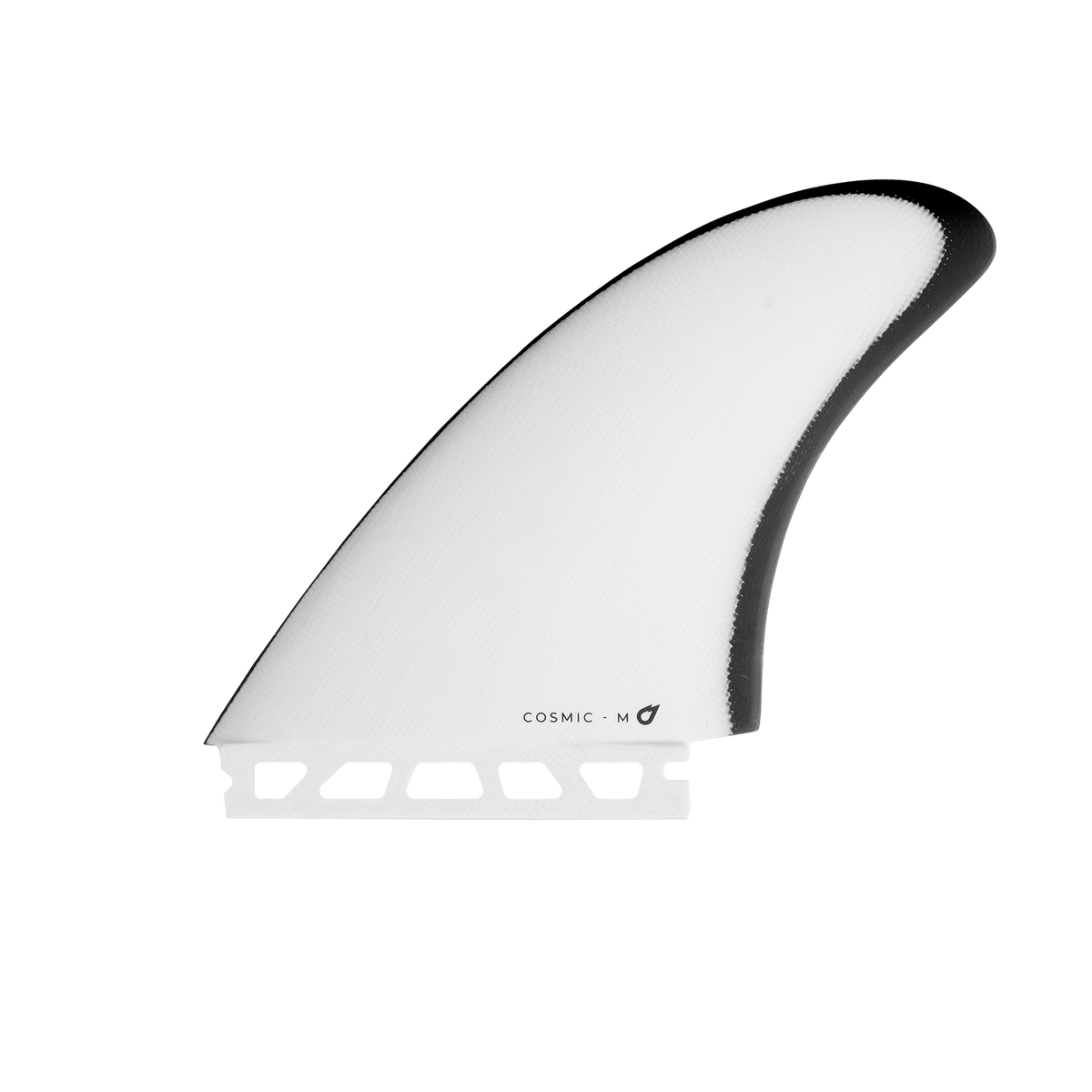
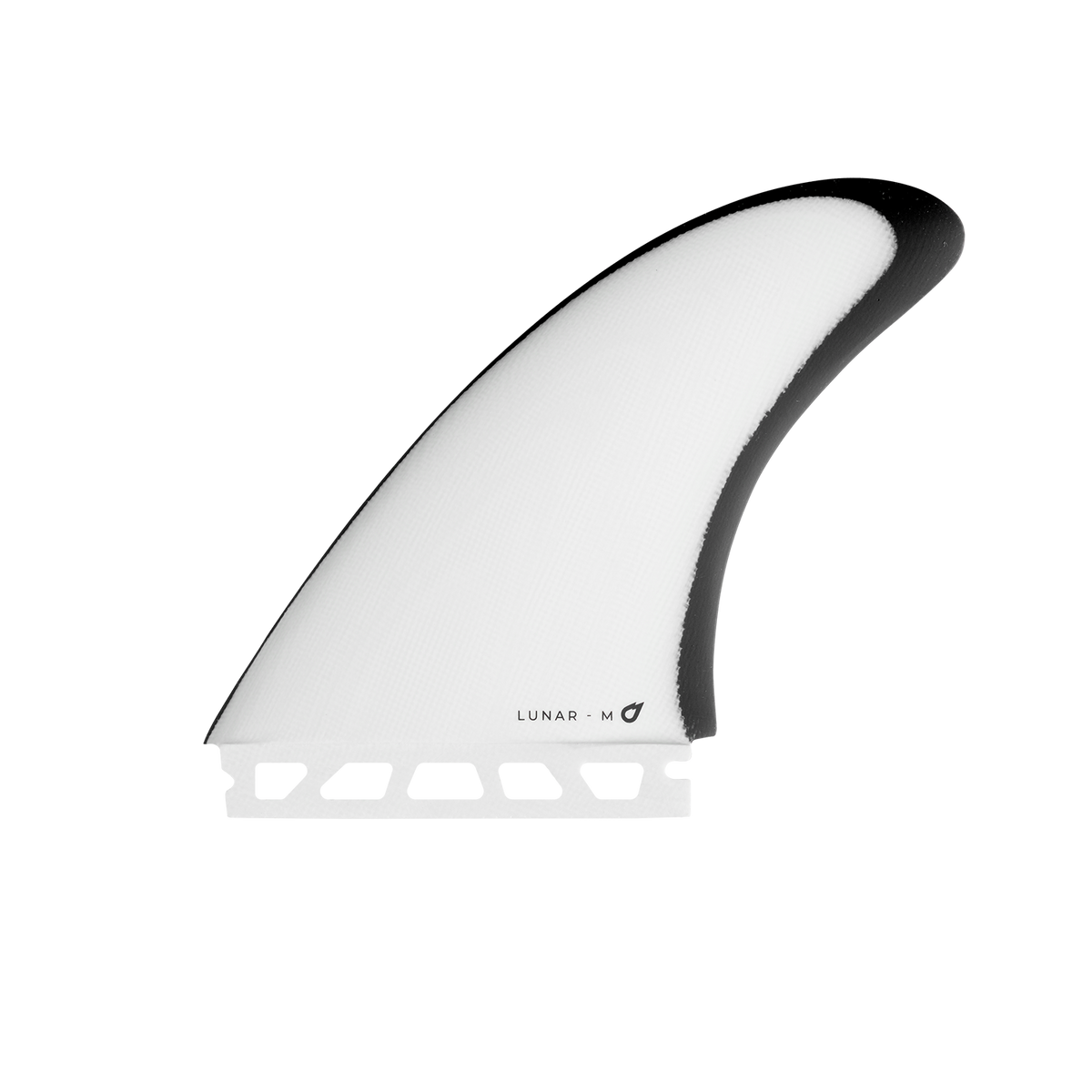
The four models presented here follow a logical progression, from the loosest and most maneuverable twin (Flash) to the most powerful and directional (Echo).

Flash: the loosest twin

The Flash is the most upright and loosest fin in the range. Its compact template, moderate surface area and thruster-like responsiveness make it ideal for modern, vertical twin-fin surfing with exceptional mobility in the pocket.
Board type: performance twins and modern fish.
Wave type: beach breaks and small to medium-sized waves.
Surfing style: dynamic surfing, snaps and quick transitions.
Lunar: pivot and precision

The Lunar delivers more drive and hold through turns. It's designed for surfers who push hard through their carves and want a precise, confidence-inspiring twin in fast or hollow waves.
Board type: modern fish and performance twins with narrower tails.
Wave type: fast or hollow waves.
Surfing style: committed surfing, tight turns and strong acceleration out of maneuvers.
Cosmic: the powerful twin

The Cosmic is the most powerful and stable twin in the range. Its wide base and generous surface area generate constant drive, allowing committed lines at high speed. Built for powerful surfing in demanding conditions.
Board type: performance fish and powerful modern twins.
Wave type: fast, hollow waves.
Surfing style: committed carves and maximum projection.
Echo: the directional twin

The Echo is the most directional model in the lineup. With pronounced rake and generous surface area, it's built to draw long lines and connect sections effortlessly. Where the Flash feels loose and the Lunar strikes a balance, the Echo is all about drawing clean lines.
Board type: performance twins and powerful modern fish.
Wave type: long waves with open faces.
Surfing style: committed surfing, long flowing lines.
Ultra-maneuverable, fast twin → Flash
Precise performance twin → Lunar
Powerful, stable twin → Cosmic
Directional twin with maximum drive → Echo
 Surfer: Malo, GONG team rider, riding the Fury EPS.

Twin fin size mainly depends on the following factors:
surfer weight
surfing style
board volume
wave conditions
A heavier or more powerful surfer will need larger fins to provide enough surface area in the water for grip and control.
A lighter surfer can use smaller fins to reduce drag and make the board feel looser and more maneuverable.
Surfing style also plays an important role. A surfer who favors quick turns and short transitions may prefer slightly smaller fins for added responsiveness, while someone who pushes hard through turns or regularly surfs powerful waves will benefit from larger fins that deliver greater stability and projection.
As a general rule:
Larger = more grip and control
Smaller = more speed and maneuverability
The more volume a board has, the more fin surface area it generally requires to stay balanced.
Finally, wave conditions also influence your choice. In small or weak waves, a slightly smaller fin helps generate more speed. In fast or hollow waves, a larger fin provides more grip and confidence through critical sections.
Ultimately, the right size is the one that delivers the best balance between speed, control and maneuverability, according to the surfer, the board and the waves being ridden.