Your cart is empty!
It's flat around here...
Switching to a shortboard is an exciting step: your surfing becomes more reactive, faster, and more precise in turns. But choosing the wrong first board can quickly turn this transition into frustration.
This guide is here to help you choose that first shortboard, the one that will mark a turning point in your progression and hold a special place in your journey. A well-chosen shortboard will allow you to progress efficiently and, above all, continue enjoying every session.
In this guide, you’ll discover the mistakes to avoid, followed by a list of 5 recommended shortboards for a smooth transition.

Here are some clear indicators that the time has come:
You catch waves easily without struggling while paddling and position yourself correctly without getting caught inside.
Your take-off is controlled: you pop up quickly and stably, even in slightly more powerful waves (around 3–4 ft / 1–1.2 m).
You engage rail turns, control your line, and feel the board holding in the carves.
You’re looking to generate your own speed rather than simply following the wave.
You’ve developed good wave reading and dynamic balance.
You surf spots where a shortboard can truly perform, and you’re ready to accept a short adaptation period.
In short, you’re between intermediate and advanced level, and you feel your current board is becoming limiting: you want to go faster, turn tighter, and surf more vertically
 Surfer: Mateia, GONG team rider, on the Vibe EPS.
A first shortboard shouldn’t be a “pro” model that’s super thin and ultra-radical. Choose a more forgiving shape that’s still easy to paddle. A board that turns easily without being extreme: the goal is to learn how to engage the rails without being punished for every mistake.
The objective is to maintain enough comfort to catch waves easily while discovering rail surfing, acceleration, and maneuver combinations.
The worst mistake is choosing a board that’s too technical, which will reduce the number of waves you catch and significantly slow your progress.
A good first shortboard is therefore a board suited to:
Your real level
Your body type
The conditions you surf most often
Your surfing frequency (a key factor in progression)

Which Outline?
For a first shortboard, favor an intermediate outline:
A slightly rounded nose for paddling comfort and take-off stability
A tail that’s not too narrow to maintain speed and forgiveness
An overly radical outline requires a lot of energy and precision, while a rounder outline provides flow, speed, and ease.

What length?
The length should remain consistent with your current board. If you’re coming from a longboard or a high-volume mid-length, reducing size too drastically can greatly decrease your waves per session. An intermediate size, or a shortboard slightly longer than “pro” standards, is often an excellent choice.
A board that’s too short will be more responsive… but also more demanding when paddling and accelerating.
What width?
Width provides take-off stability and forgiveness in key phases. If your take-offs are still sometimes hesitant, a few extra centimeters (or inches) can make a real difference.
What volume?
Volume is your best ally for continuing to paddle well, catch more waves, and repeat maneuvers.
As a general rule, a first shortboard works better with slightly more volume than a model designed for an expert surfer. Conditions also play a role: cold water, thick wetsuits, etc.
Extra volume:
Makes paddling easier
Helps you position better and catch more waves
Provides stability at take-off so your feet are well placed from the start
With insufficient volume:
Paddling becomes demanding
You catch fewer waves
You lack confidence once standing
You hesitate to fully commit, which slows progression and reduces enjoyment.
The right volume allows you to surf relaxed, committed, and progress faster.
Progress comes from repetition. More waves = more progress.
Two surfers of the same level but different body types or surfing frequency will not choose the same volume. An occasional surfer will always benefit from more comfort.
What rocker?
For a first shortboard, choose a moderate rocker.
Too flat: the board will lack maneuverability in hollow waves.
Too curved: it becomes demanding when paddling and taking off.
A balanced rocker maintains natural speed while facilitating turns.

What fin setup?
A thruster setup (3 equal-sized fins) is the most versatile and best for learning proper rail surfing.
A quad provides more speed in weaker waves but requires more energy in turns and produces wider arcs.
Choosing a board that’s too short or too thin
Copying a more experienced surfer’s dimensions
Trying to “future-proof” and skipping steps
Underestimating the importance of volume and paddling
Wanting a “radical” board before mastering the basics
A versatile, forgiving shape, not overly radical
Slightly more volume to maintain comfort and drive
A board that supports progression instead of hindering it
 Surfer: Moritz, GONG team rider, on the Devil’s Tongue EPS.
Here is a selection of 5 shortboards ideal as a first shortboard, ranked from the most accessible to the most technical. Each model corresponds to a different stage of progression depending on level, surfing frequency, and typical conditions.
Surf Devil's Tongue EPS
The Devil’s Tongue is the ideal entry point into shortboarding, designed for smooth progression without overcomplication. Its Modern Egg shape offers early take-off, natural acceleration, and great forgiveness, while maintaining true shortboard rails for learning to drive properly and link turns.


Surfer: Moritz, GONG team rider, on the Devil’s Tongue EPS.
Karamba EPS
The Karamba is for surfers who want a true shortboard with more comfort and margin for error than a radical model. Wider and more buoyant than a pro shortboard, it makes paddling, take-offs, and maneuvers easier while allowing stronger, more vertical surfing.
Required level: Intermediate (starting to link turns).
Recommended frequency: Regular (1–2 sessions per week).
Ideal waves: Small to medium with some push (2–5 ft / 60 cm to 1.5 m), accessible beach breaks and reefs.

 Surfer: Béryl on the Karamba EPS.
Vibe EPS
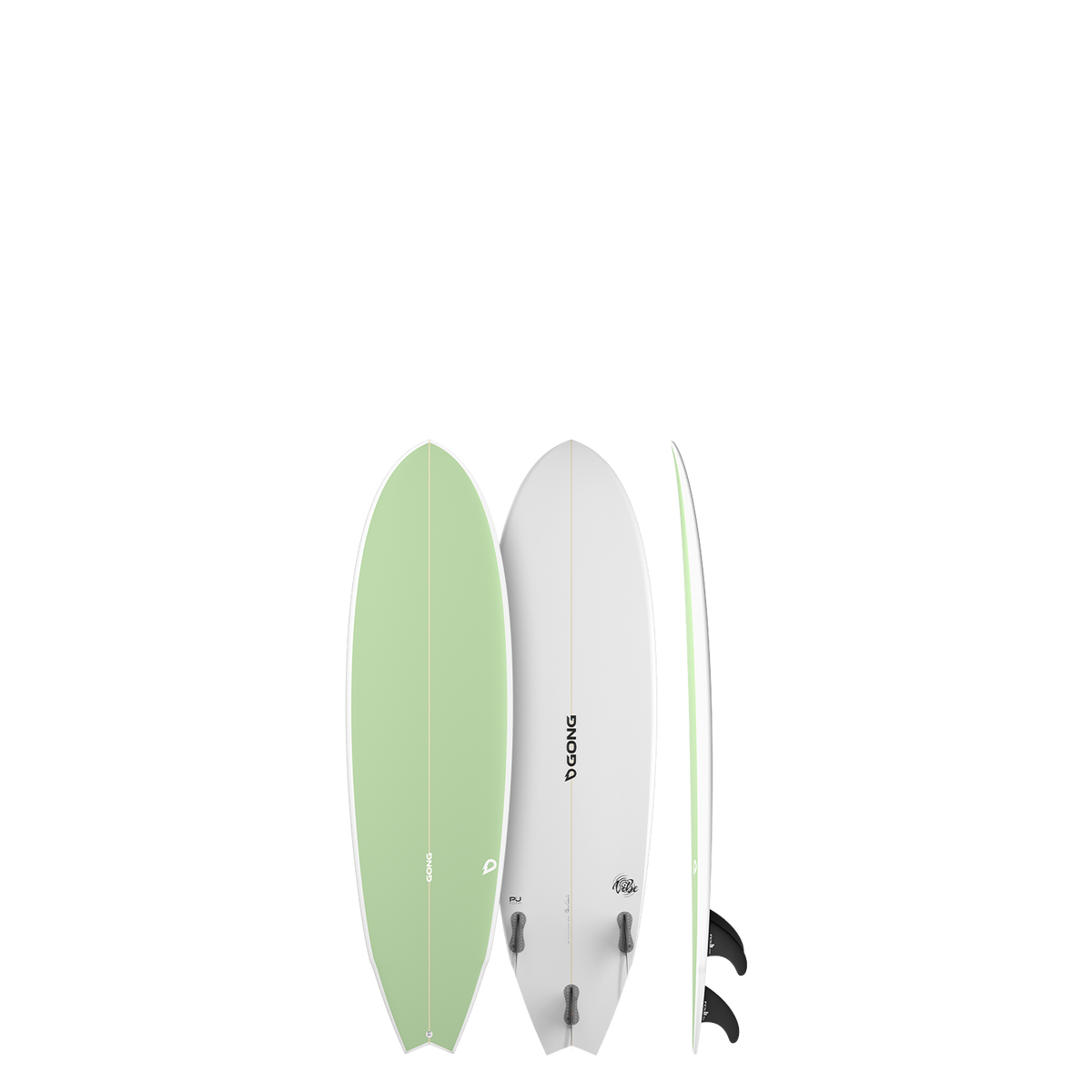
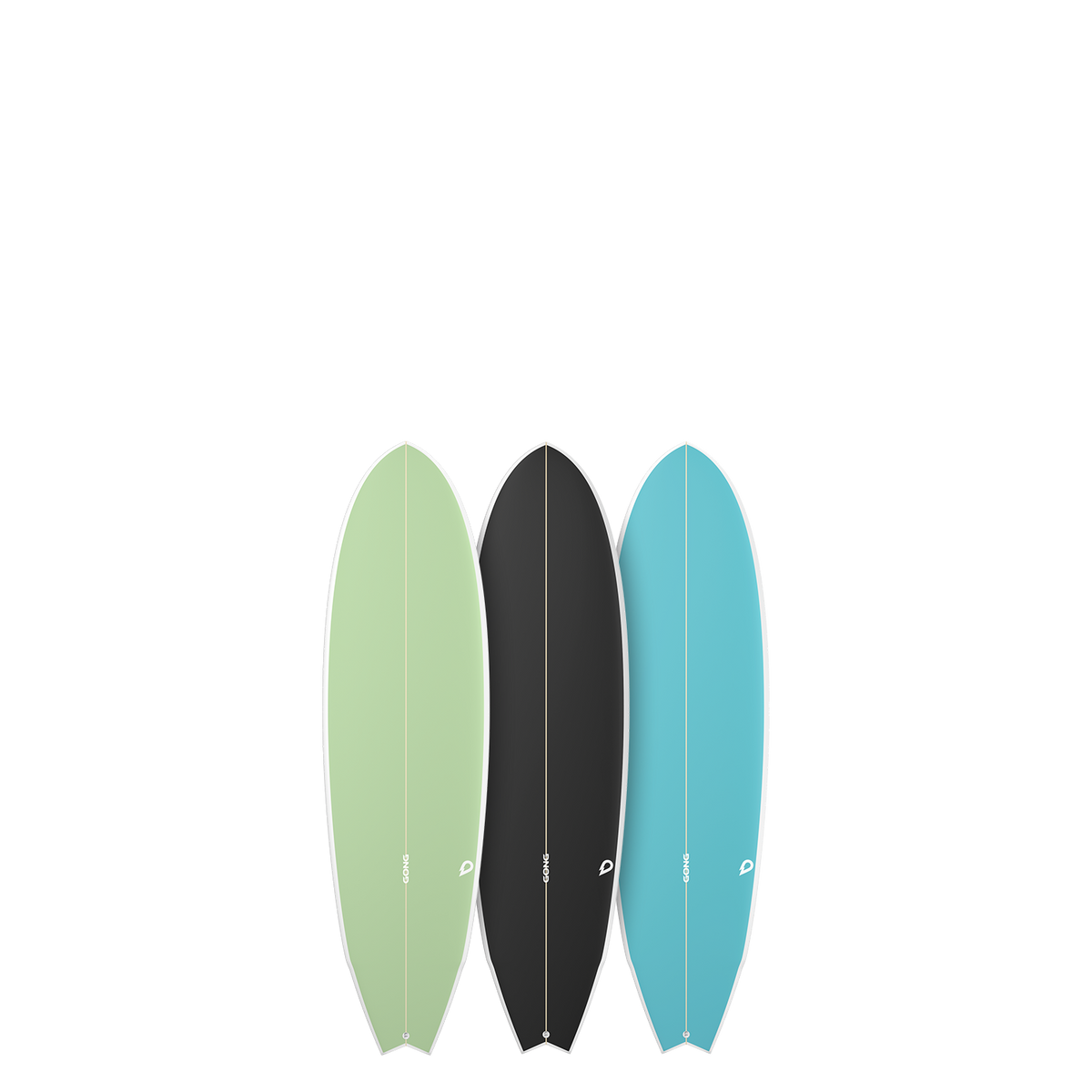
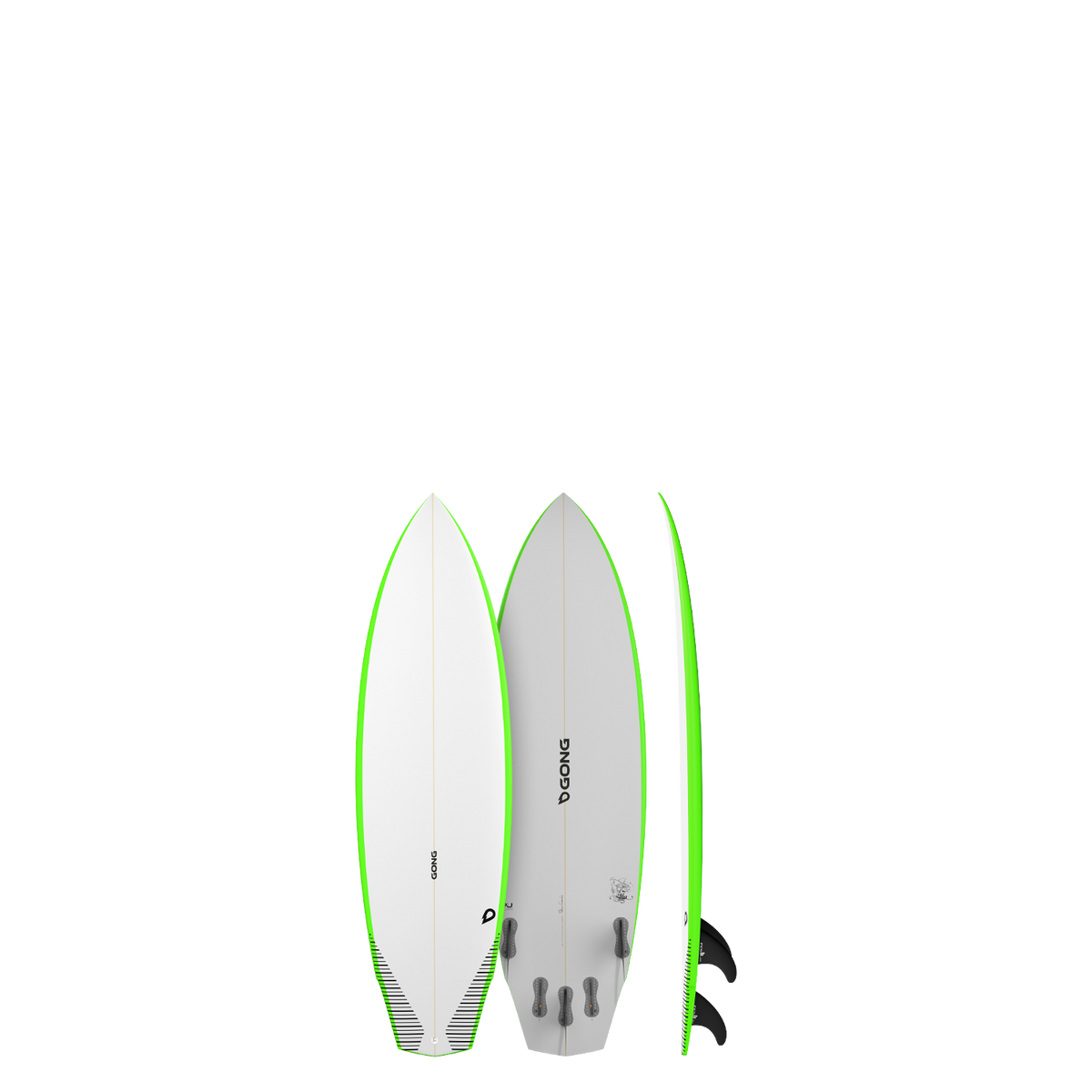
The Vibe is the ideal transition shortboard between ease and modern performance. Its hybrid, fuller, and faster shape makes it easy to generate speed, accelerate through soft sections, and stay radical when conditions allow.
Required level: Intermediate to advanced (able to generate speed and accelerate).
Recommended frequency: Regular (1–2 sessions per week).
Ideal waves: Average conditions, sometimes soft or uneven (2–6 ft / 70 cm to 1.8 m), beach breaks with workable sections.

 Surfer: Mateia, GONG team rider, on the Vibe EPS.
Alu EPS
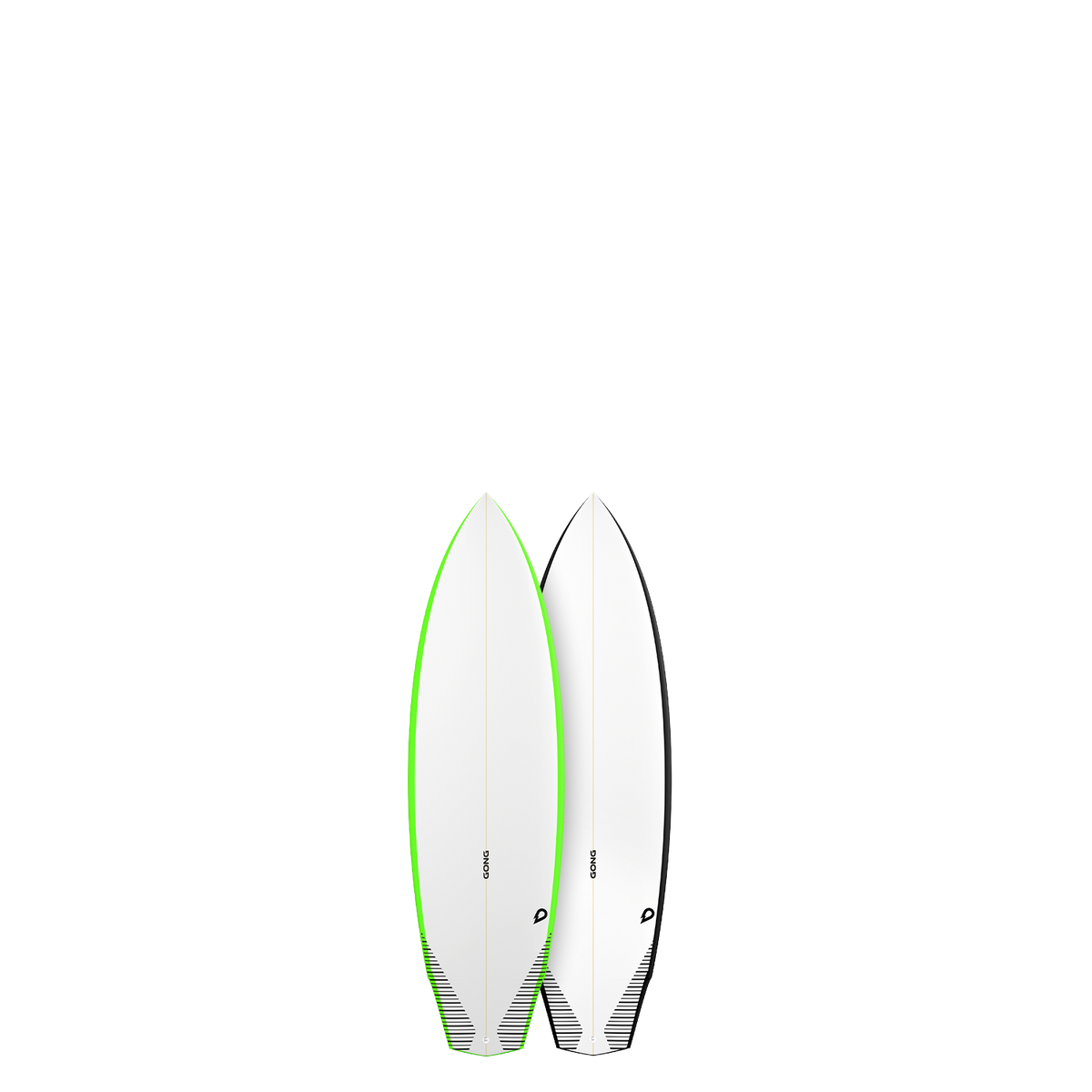
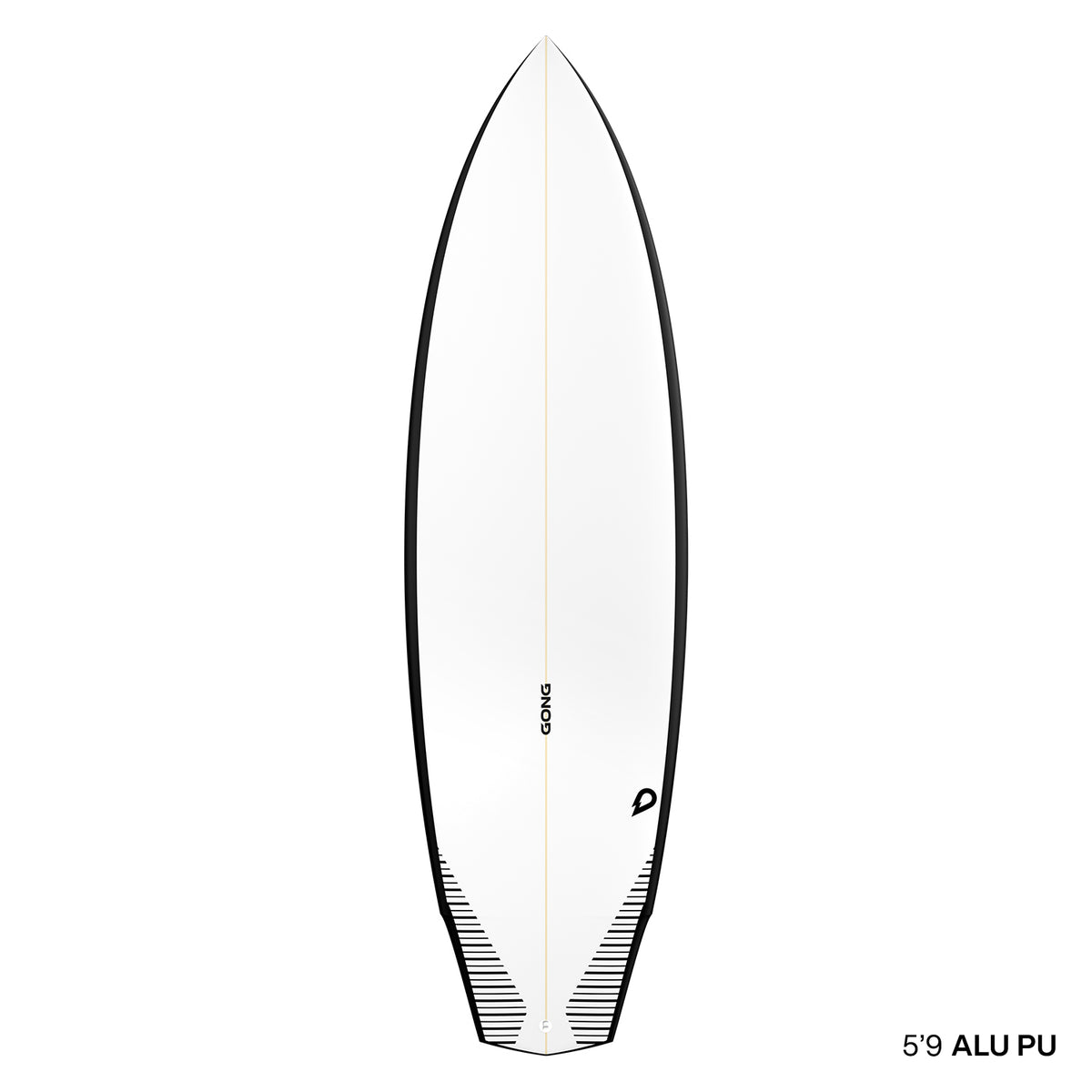
The Alu marks a clear step up in demand: entering the modern shortboard world focused on acceleration, speed, and airs. Still comfortable enough for daily use, it requires good positioning and an active approach, rewarding with explosive acceleration and dynamic surfing.
Ideal as a first true performance shortboard for solid intermediate surfers wanting a more radical register.
Required level: Intermediate to advanced (good positioning, active surfing, solid footwork).
Recommended frequency: Very regular (2+ sessions per week).
Ideal waves: Everyday waves with sections (2.5–6.5 ft / 80 cm to 2 m), fast beach breaks, messy but exploitable conditions.

 Surfer: Nicolas with the Alu EPS.
Surf Chemical EPS
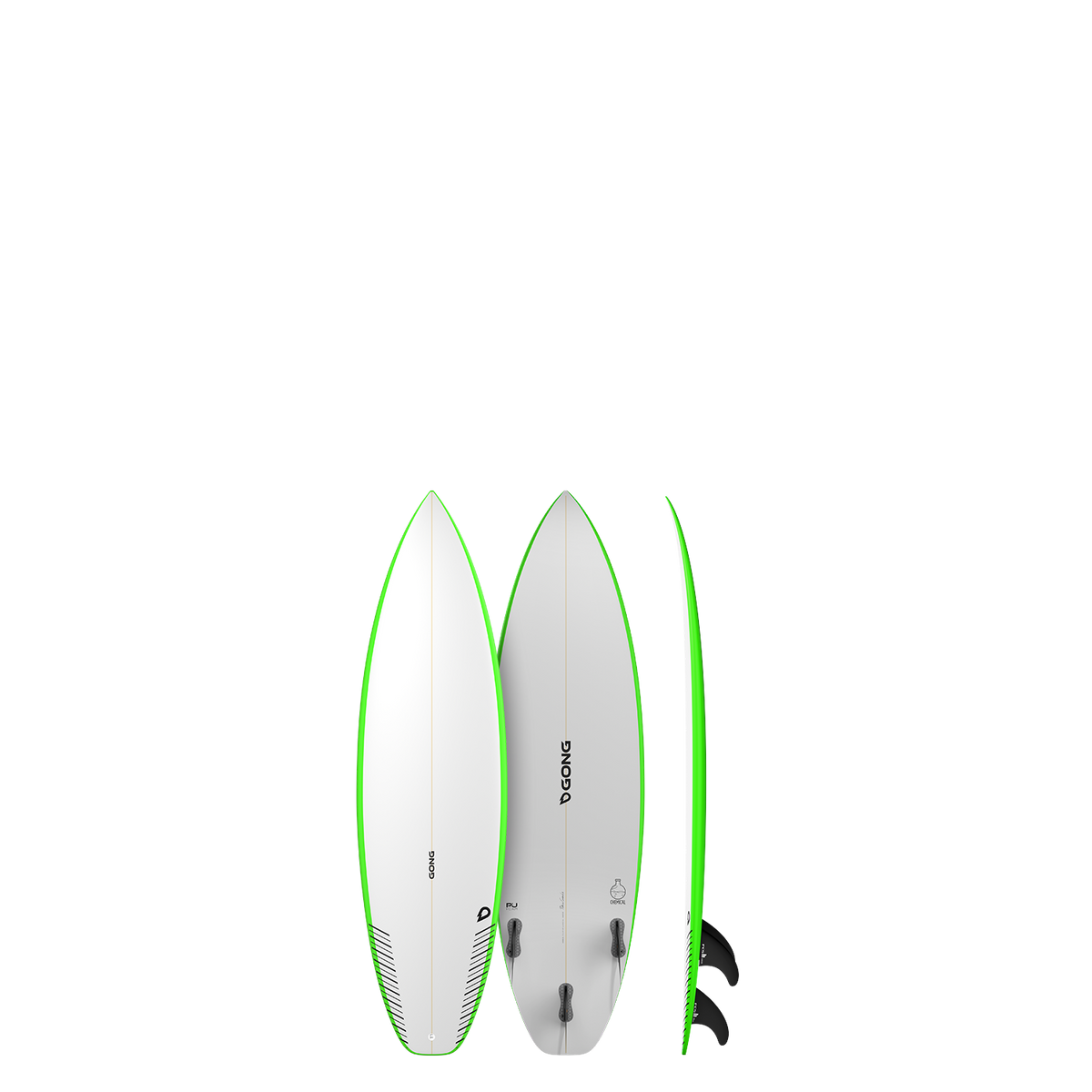
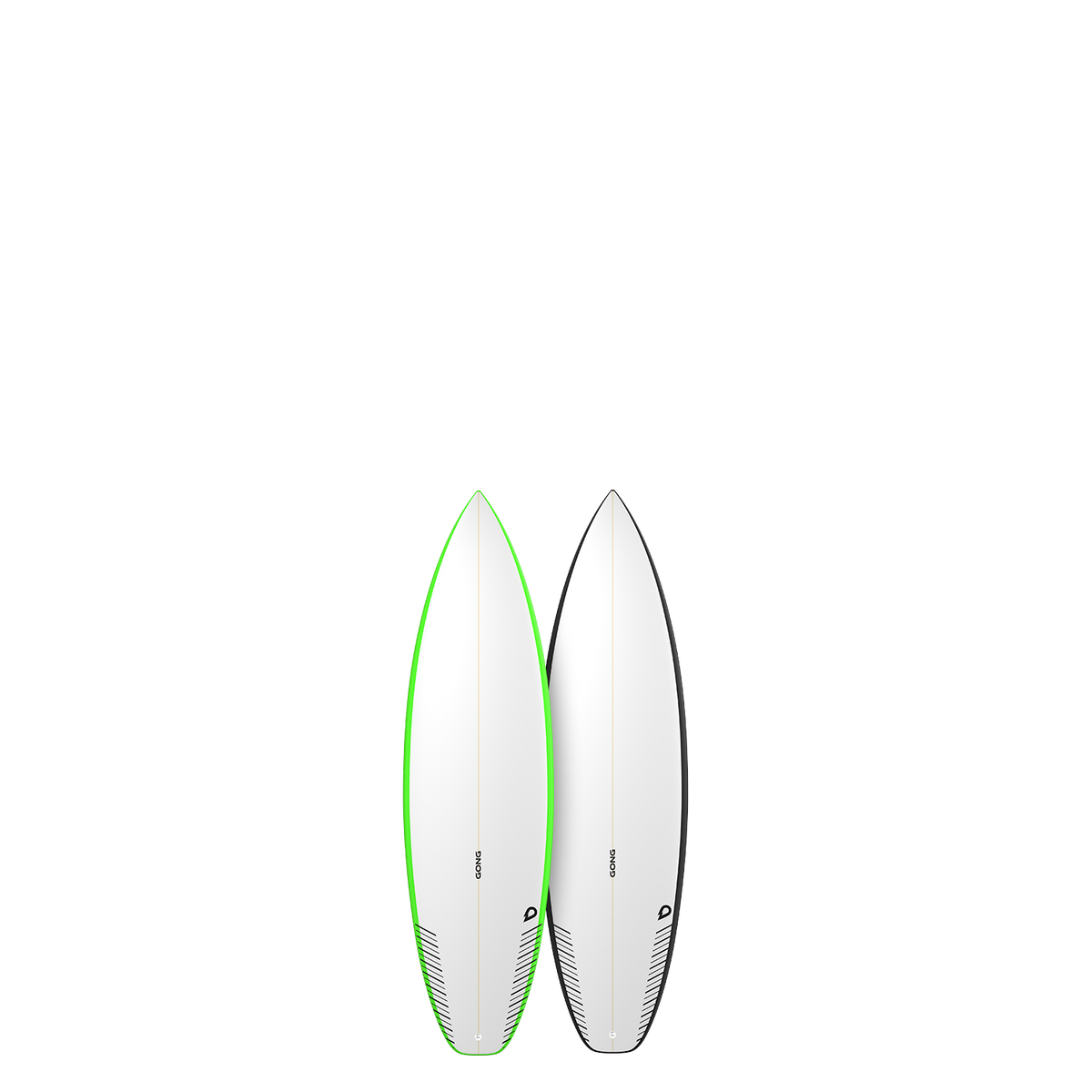
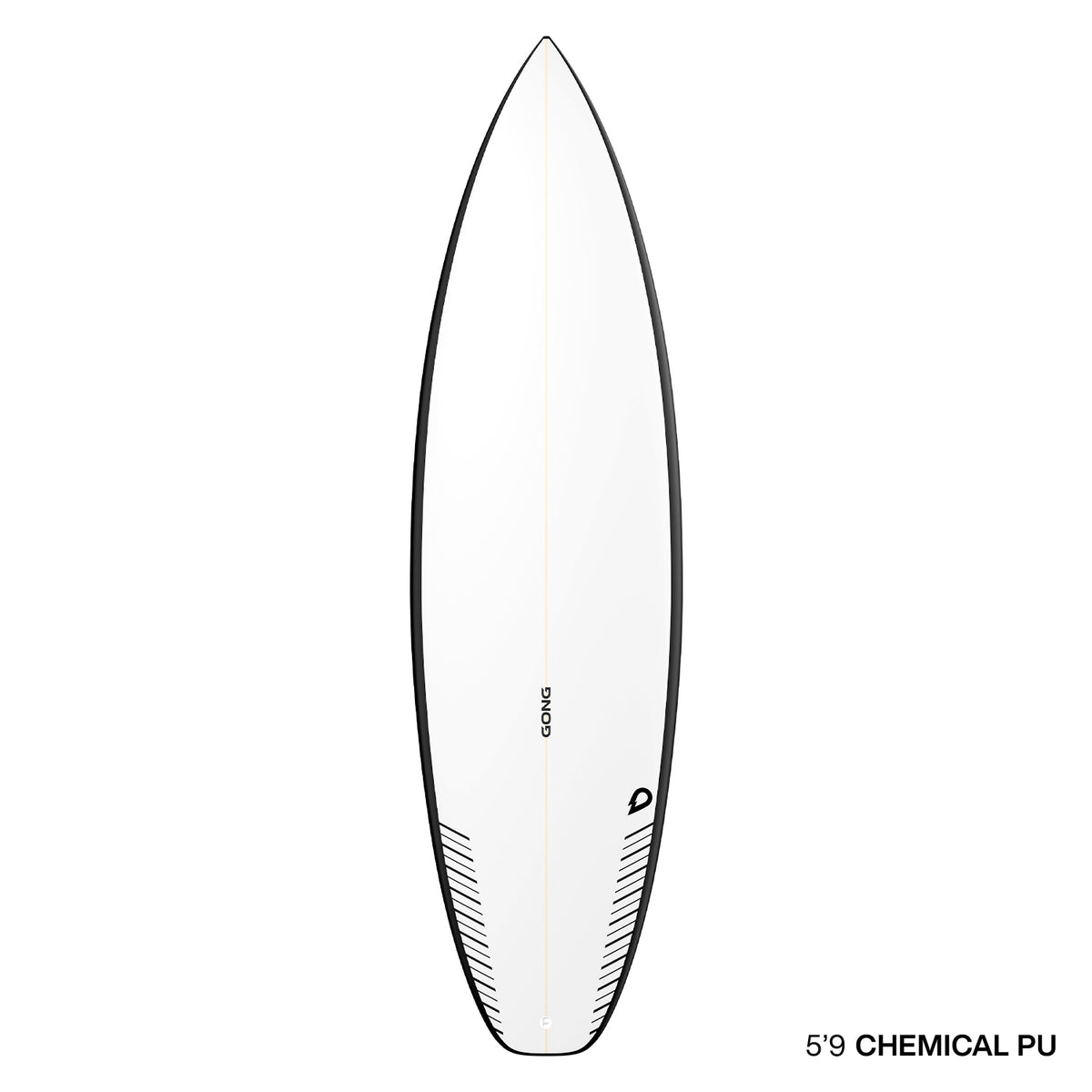
The Chemical is a pure performance shortboard for technically confident surfers. Ultra-reactive, lively, and precise, it demands constant commitment but rewards with speed, instant rail-to-rail transitions, and explosive maneuverability.
Not a “forgiving” first shortboard, but the ultimate first performance shortboard for fast-progressing surfers ready to unlock their full potential.
Required level: Intermediate to advanced (comfortable rail-to-rail, precise timing).
Recommended frequency: Regular to intensive (minimum 2 sessions per week).
Ideal waves: All wave types with some power (2.5–6.5 ft / 80 cm to 2 m), beach breaks and reefs.

 Surfer: Mateia, GONG team rider, on the Chemical EPS.
Discover these shapes in our Shortboards section.