Your cart is empty !
It's flat around here...
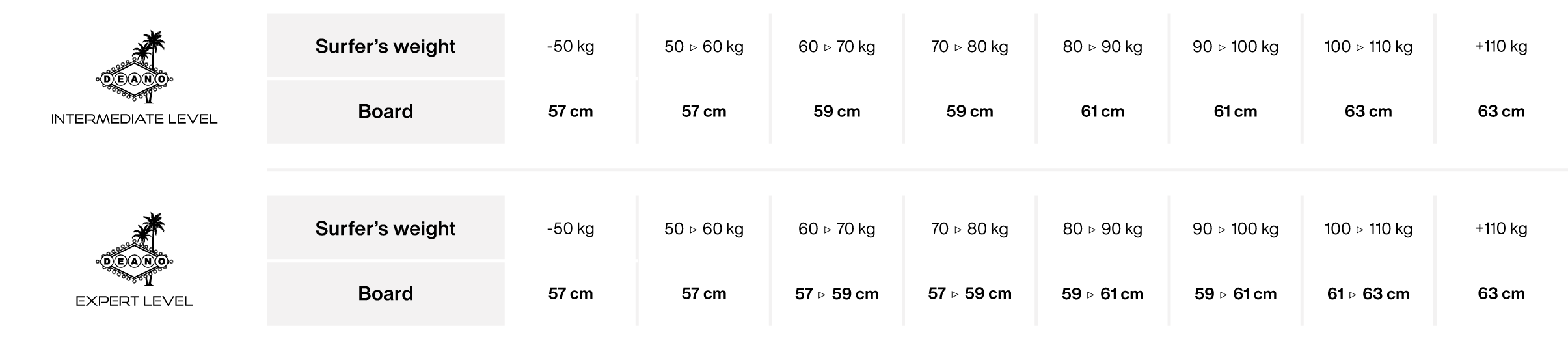
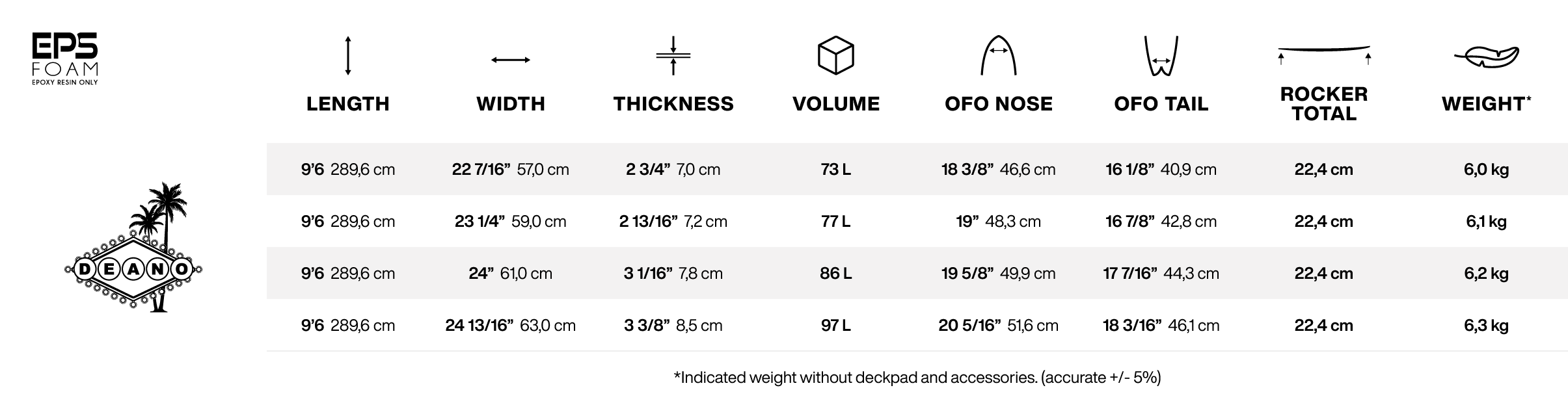
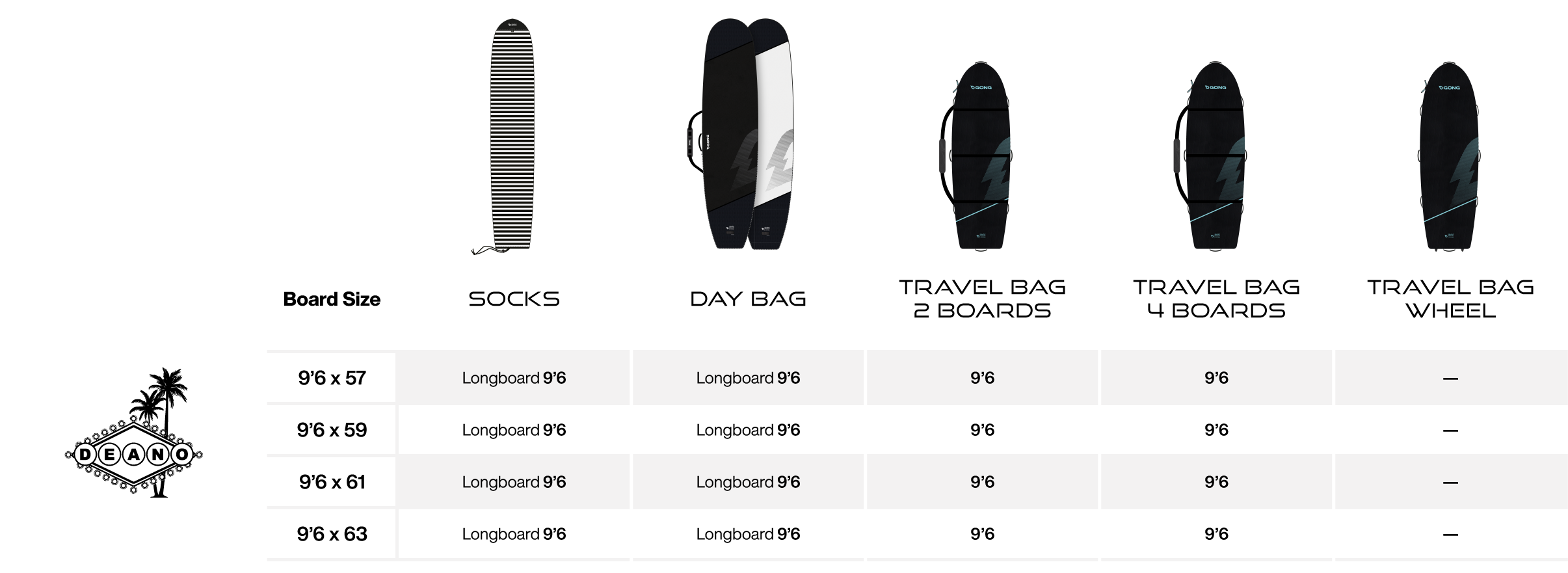


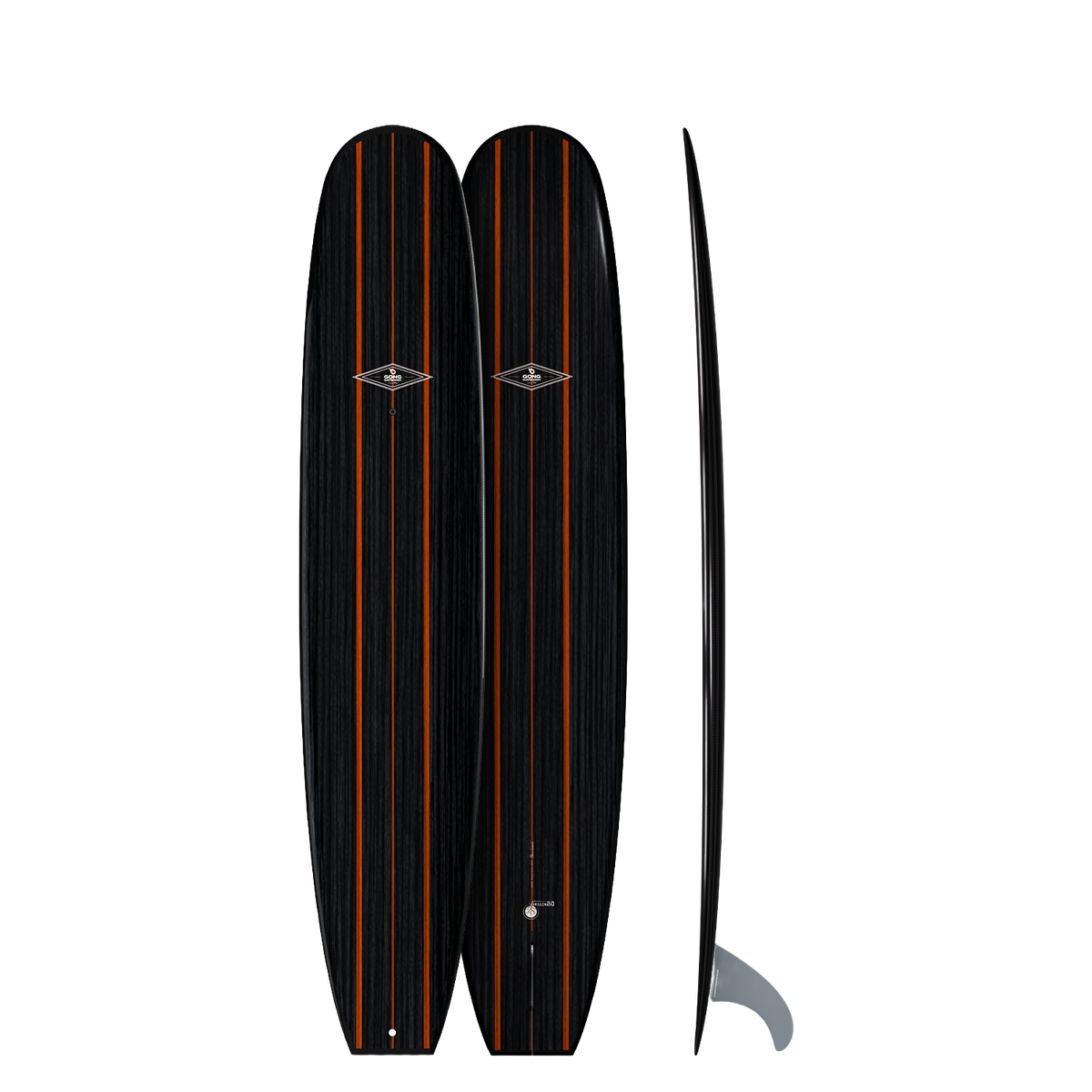
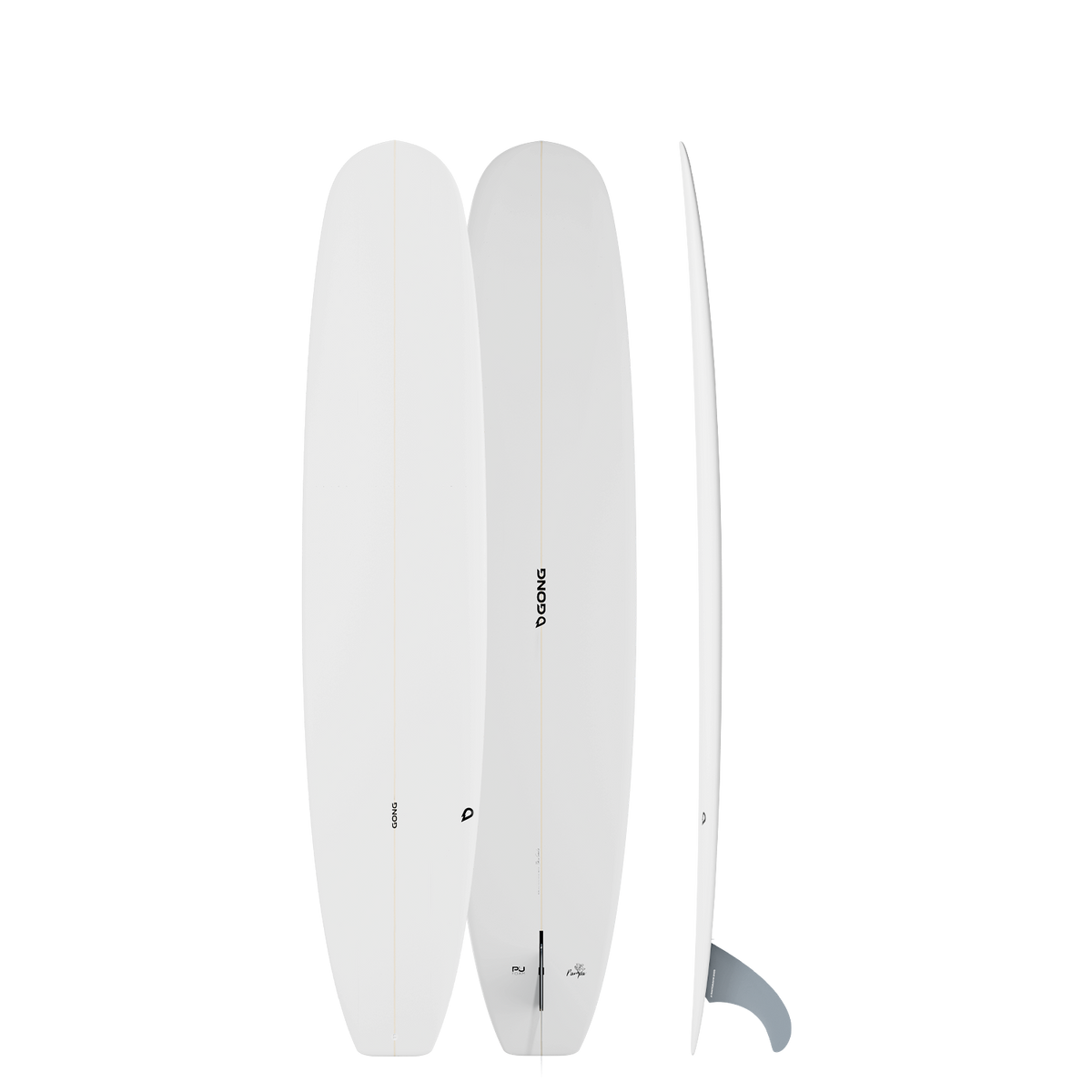
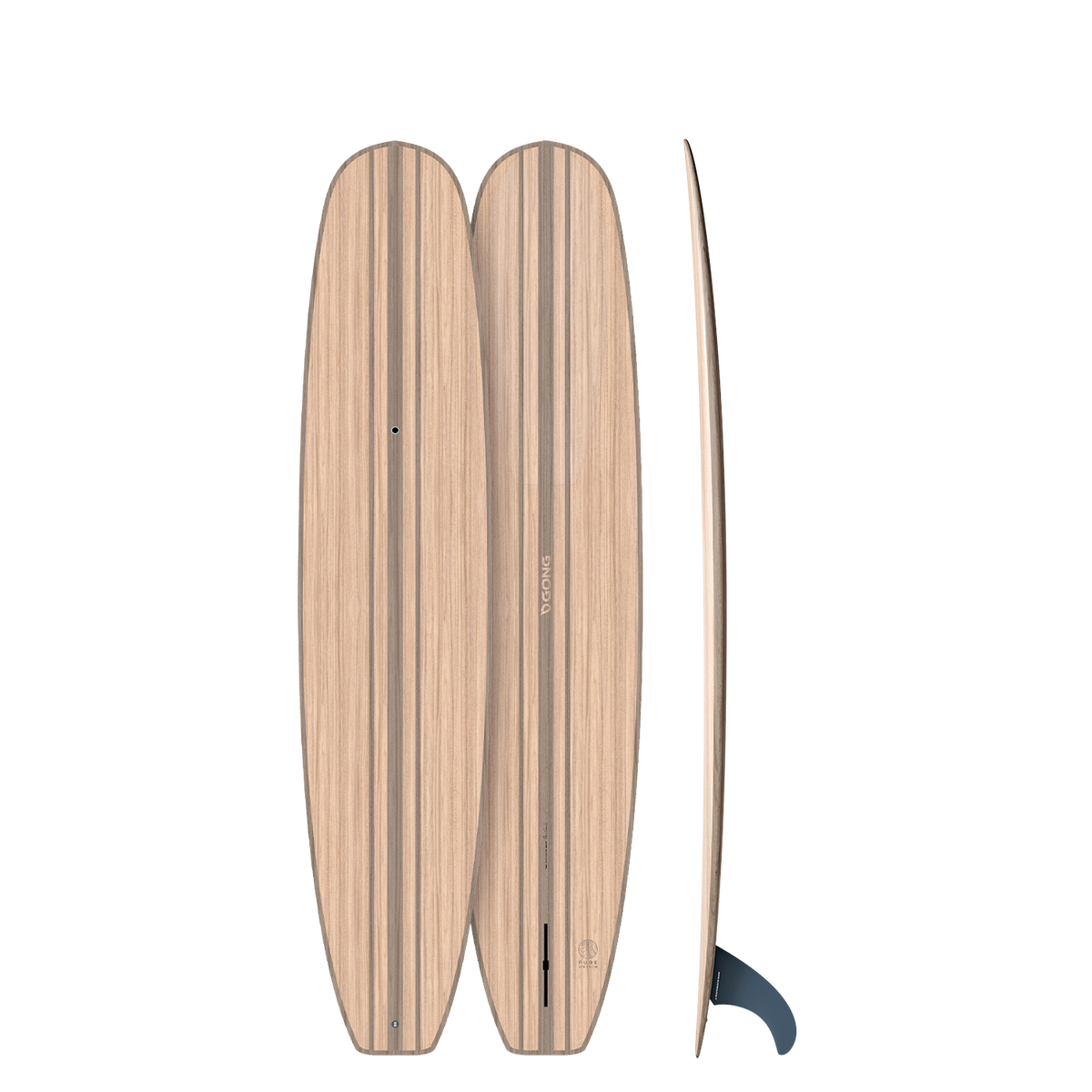
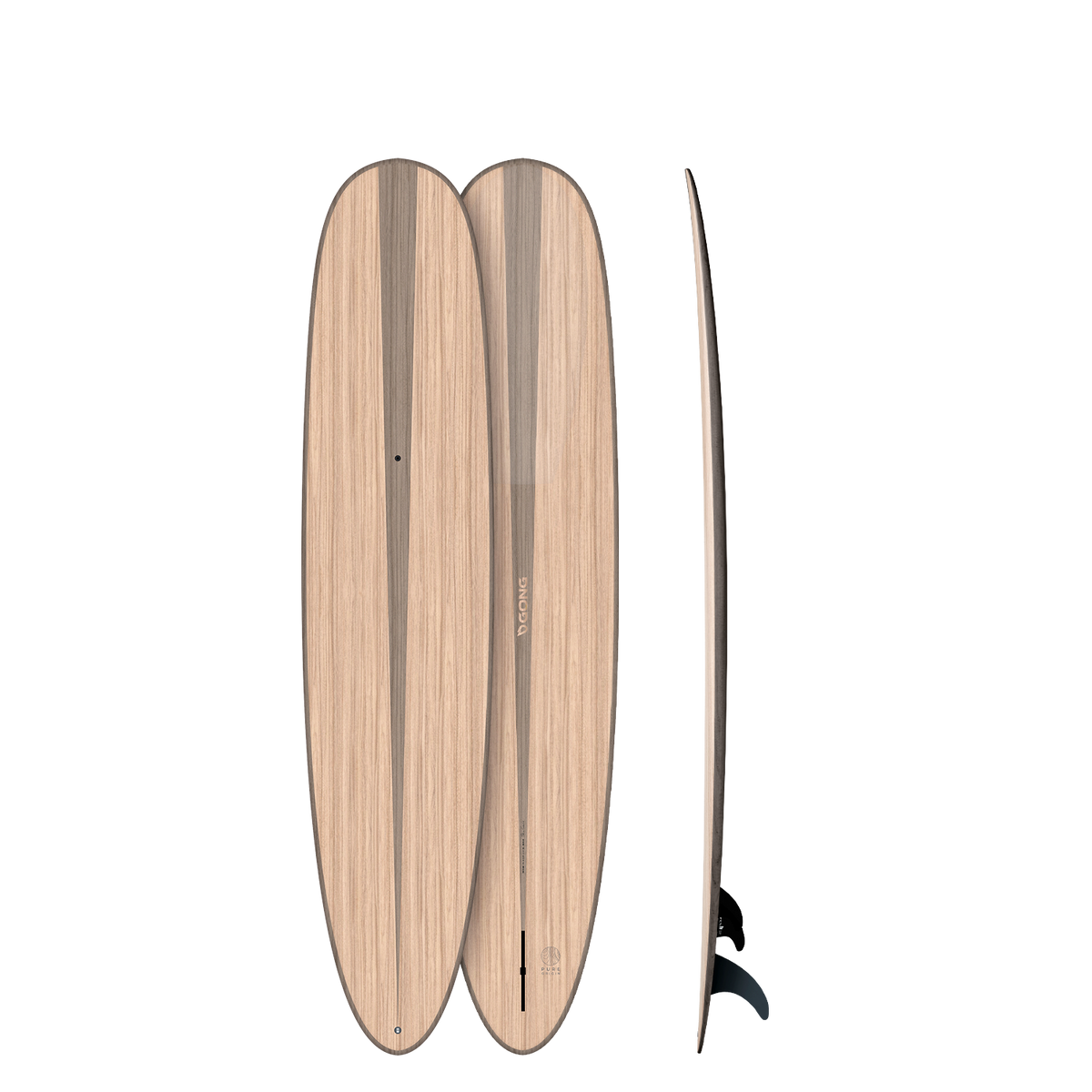
The shape for lovers of sharp, traditional longboards.
Looking to revisit all the classics of longboarding ? The Deano invites you to explore this timeless repertoire with finesse, performance and elegance.
Featuring excellent glide properties, this shape with thin rails and post retro lines is surprisingly maneuverable given its lift.
The Deano is more than just a reworking of existing lines, it takes the concept of a retro style of glide to a whole new level.
You can noseride, but without slowness. You can stall and pivot, but without heaviness. This is where the magic of this shape that glides in and on the water lies.
Flow is very often linked to a certain aesthetic of movement, to the way grace translates into actions to the rhythm of a wave.
Moving forward, gliding at the nose, moving backwards, turning … seamlessly, without altering the glide. This is a definition of flow, and that’s the technical aspect of this longboarding exercise. Giving the impression that you can move, place yourself and move again, effortlessly, without ever breaking the flow unless intentionally.
This is what the Deano offers, with totally relaxed surfing, a glide without resistance and optimum management of the natural speed of this shape. All you have to do is to place the board in the on the perfect line and let it do the job, flying over sections, doing nothing but enjoying the ride.
Ready to get rid of all the superfluous, all parasitic movements, to simply slow things down and get back to basics ? You’ll realize just how much the shape of a board can influence the way you surf, sometimes even dictate your style: that’s what the Deano is all about.

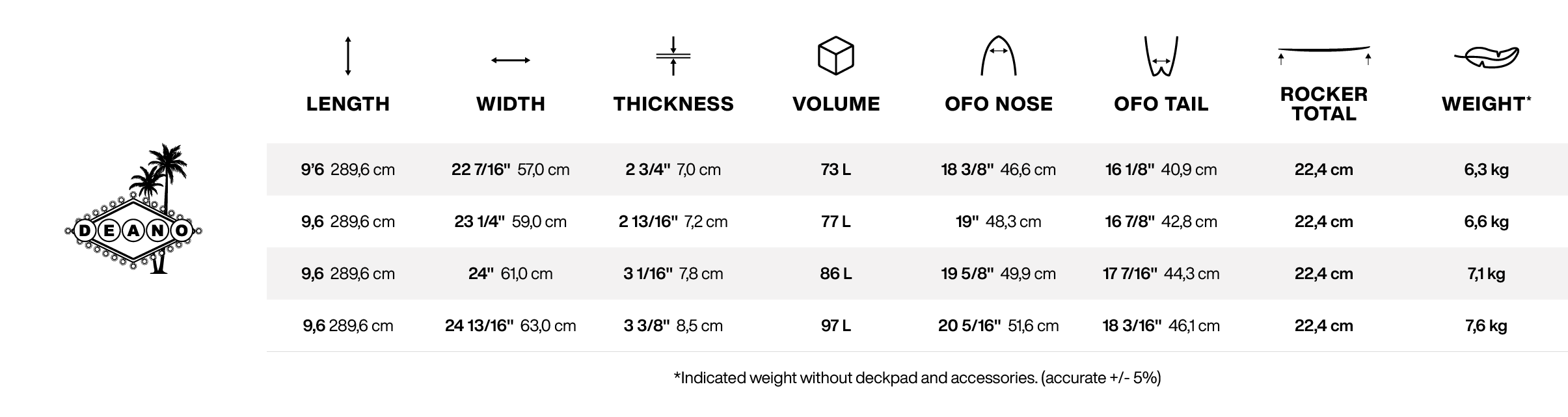
For traditional longboarding aficionados.
This is also a way to embrace the entire surf culture.
Beginner surfers will find the Ten Blues more accessible and versatile.
A noserider is a must-have when you’re in a region where waves are often small and offer little power.
The classic elegance of a traditional longboard and the timeless beauty of a log, ideal for practicing dropknee turns, cross-steps and noserides.
The wider the board, the more stability and buoyancy you get, and the more easily you can stay in control on the nose. The wider the board, the more speed is affected. A narrow longboard will be better suited to lightweight surfers who will gain in maneuverability. A wider board will be more stable for a heavier surfer, who will be able to move easily without impacting the board’s glide.
We offer different technologies on certain shapes to meet the program, conditions, and sometimes individual habits.
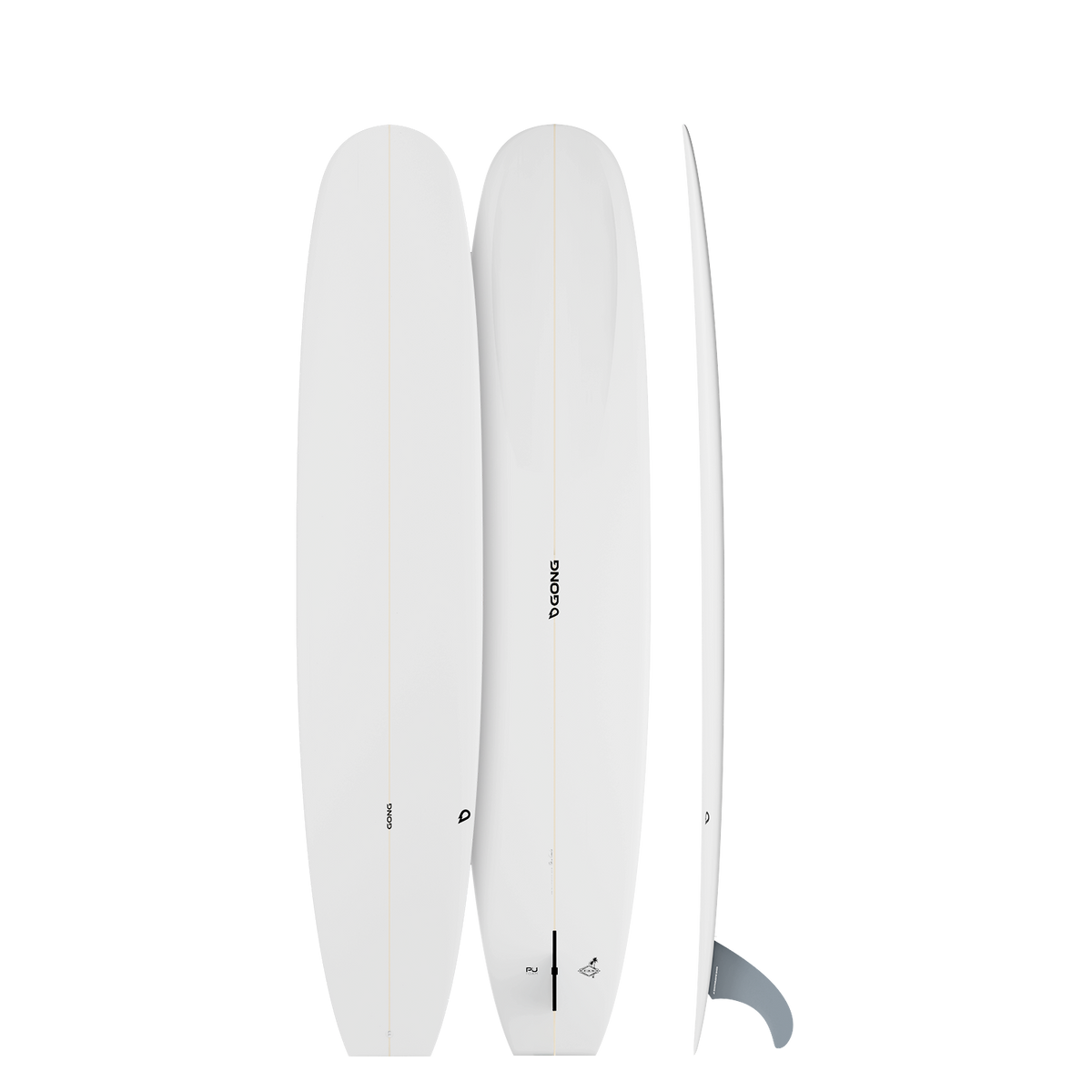
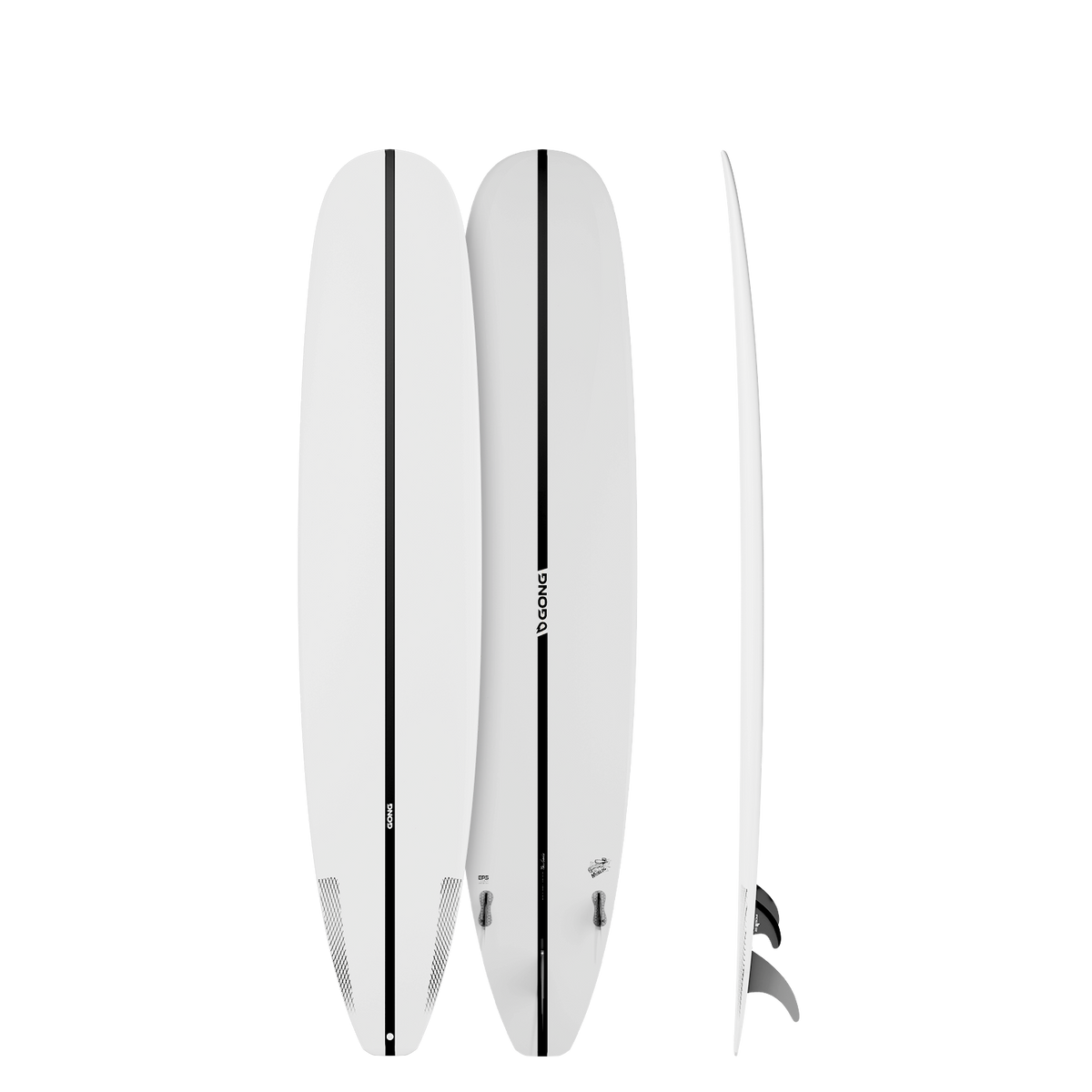
In the case of a PU board, there will be a different behavior from an EPS board of the same shape and weight. It’s the weight distribution in the board that generates a big difference in feeling. For two blanks with the same shape, one in PU and the other in EPS, the EPS blank will be lighter, as EPS foam is less dense.
In the case of a PU board, it’s the blank that provides solidity and concentrates weight in its core. The board thus has a very “central” inertia. This makes for a very smooth board, which forgives errors but is less dynamic. The PU blank will be heavier than the EPS blank.
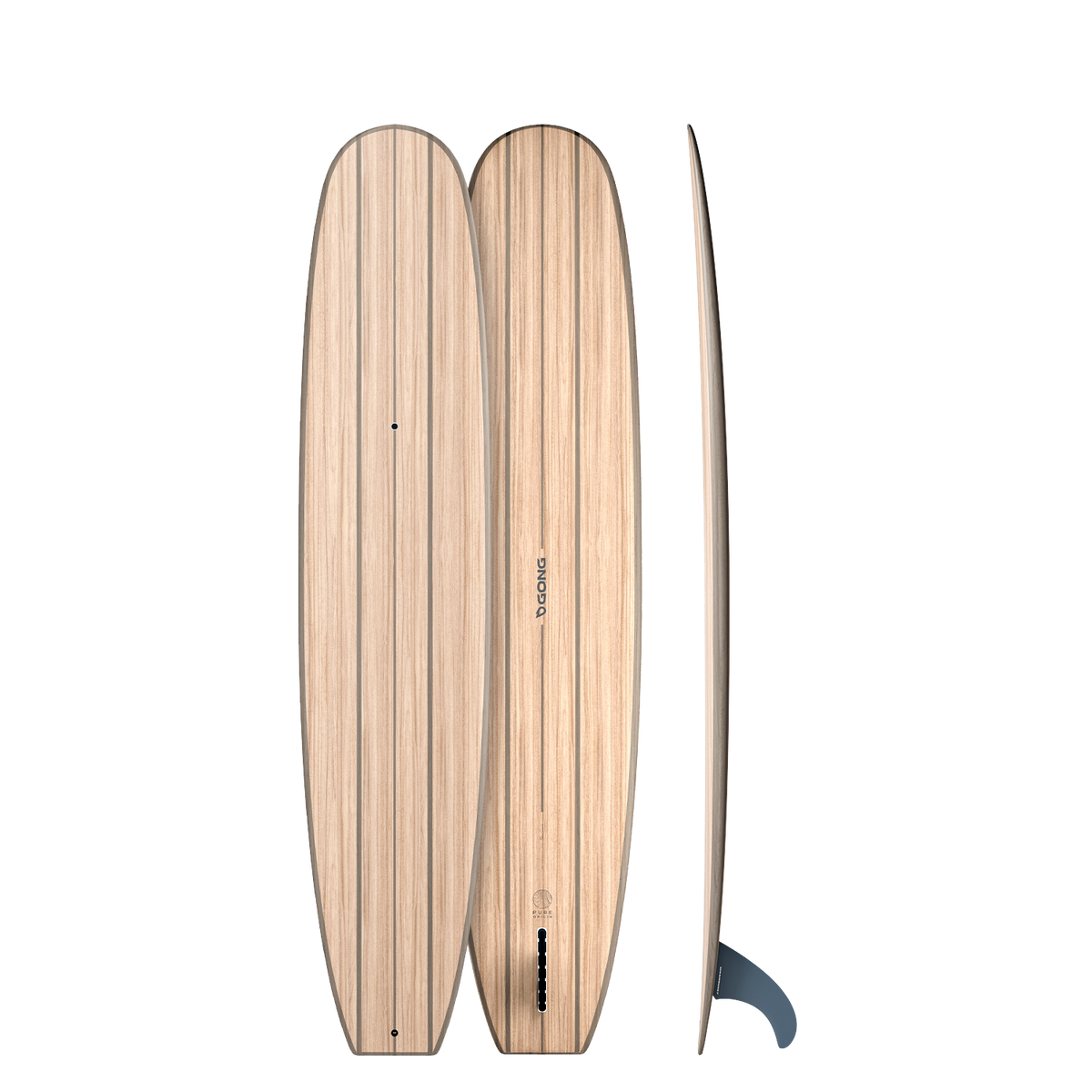
In the case of an Epoxy board, the blank is very light, and solidity comes from the skins. So the inertia is “peripheral,” meaning the weight of the board is on the outside, making it more mobile, agile, and dynamic.
The best comparison to explain these differences would be to say that the inertia of PU naturally gives a single fin feeling (very centered, smooth and soft pressure), while EPS gives a thruster or even quad feeling (very external support, immediate rail to rail, maximum nervousness).
EPS is generally preferred for boards that need dynamism, usually in small to medium conditions, schematically in waves where speed generation is required. EPS is therefore preferred on shapes where reactivity is sought, as it’s easier to turn quickly, perfect for waves that require rapid transitions. For very good surfers, this further enhances the dynamism of their surfing. For progressing surfers, EPS adds this little boost of dynamism as the board can gain speed much more easily, an important point considering that in surfing, speed is the key to everything. PU is favored for high-performance shortboards, for boards where controlling speed is the main objective.
Different feelings : Surfers accustomed to PU will generally say that “EPS bounces and feels stiff.” While surfers used to EPS will say that “PU feels soft, lacks response, and struggles to accelerate.” These feelings often stem from habits, sometimes generalities, and often prejudices. Don’t hesitate to deviate from conventional wisdom to make your choice.
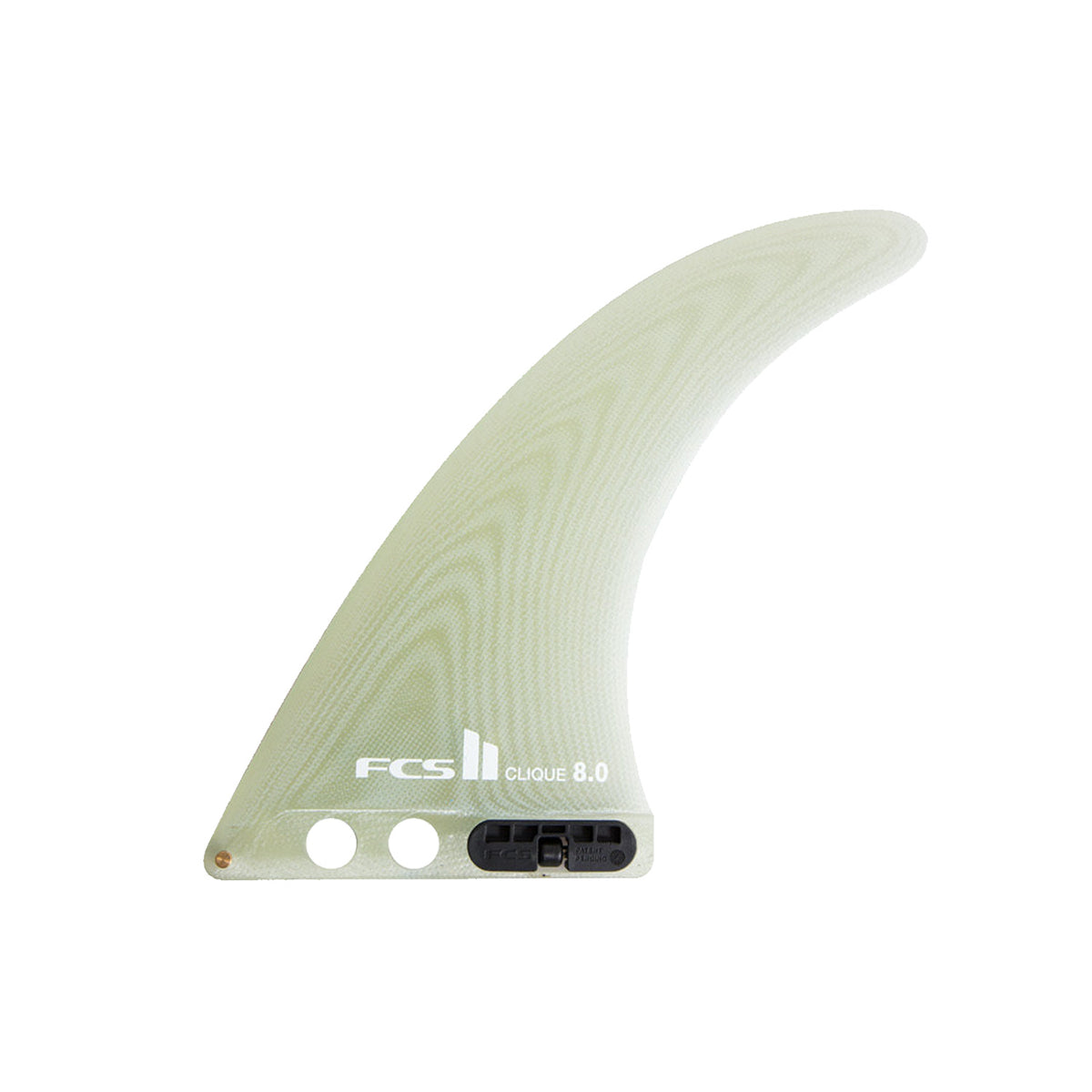
Generally speaking, some fins favor noseriding, while others favor maneuverability or speed. With the Deano, we're looking to maximize the time spent on the nose, so we'll choose a fin with a lot of surface area.
A wide fin will help to stay for longer at the nose, as it will maintain the trajectory without skidding. The board will be more easily maintained on a high line in the section. The purpose of this type of fin is to maintain the line optimally. Speed will be limited, as will maneuverability and responsiveness. Big fins stall the board. But they also allow the surfer to over-act, because they offer resistance that you can play with.
A fin with less surface area will help you get up to speed with less drag. Being narrower, it will give more vivacity in the pivot but will make staying on the nose more tricky. The board will slide more easily when hanging ten in the pocket of the wave, but it will go faster and be more playful.
The distribution of the surface area will be a key factor.
The distribution of the surface area will be a key factor. A rectangular parallelepiped surface that is homogeneous over the entire depth will give a fin that is fairly blocked. This can be an interesting way of trying to counteract certain behaviors, but the potential is limited and the technical side is maximum.
A thin surface at the head and a strong surface at the base will free up the rail to rail. It's maneuverable and pleasant, but directional stability is poor.
A large surface area at the head will stabilise the board without any lateral effort (flat and straight) and will exaggerate the angles taken because the head will want to foil towards the surface of the water. When leaning sideways, when you're pushing into the board when you're across the wave, this is the type of fin that will react the most with acceleration. Handle with care, but this type of fin can be a booster for your board.
A large surface area at the head but not much at the base: it's extreme with amplified angles and low drag. Very unstable, and virtually unsurfable at high speed.
The depth also plays a key role. The deeper the fin, the reflect its shape. In general, a deeper fin will give you stability, whether you're moving towards the nose or wanting to stay there. Depth will help lock in the tail and keep you stable when you go to the nose. But too much depth and you'll get stuck or fall off.
The rake of the fin will also be an important factor. A straight fin is theoretically stable and fast, but not very maneuverable. A fin that is very curved backwards is very maneuverable and will make fewer mistakes, giving greater tolerance. A fin with some rake will give your turns more width, while a relatively straight fin will give more pivot.
A lightweight surfer will not need to oversize his fin, but can reduce the surface area to maintain maneuverability. A tall surfer, on the other hand, will be better off with a large fin to improve stability in the nose and ensure that he can get around.
To choose the size of your fin, a simple principle is that the size of the fin in inches is equal to the length of the board in feet. It's very simple but relatively simplistic, because this rule is mainly related to the surface area of the fin. A flex fin will generally have less effect, so a 10" fin with a small surface area may be suitable for a 9" longboard.
The position of the fin is also crucial. By moving it backwards, you gain stability and control, making it easier to cross-step. You gain in maneuverability by moving it forward, but lose stability. Be careful not to go against the grain by moving a fin that is not very maneuverable forward in order to make it more maneuverable. This game has a limit which leads to aberrant behavior when you go too far. So when the behavior doesn't suit you, move the fin no more than a few centimeters. If it still doesn't work, change the fin.
Deano or Ten blues?
Those two longboards are almost the opposite, but designed for the same type of waves: a retro style for the classic noserider, the Deano, and a very modern, versatile style for the Ten Blues. The Ten blues is one of those modern shapes where the rear half of the board features a lot of shape elements borrowed from the world of shortboarding. With pinched rails and a pronounced edge, you get a great ability to relaunch and can put a lot of pressure underfoot, with the aim of making quick changes of direction. The tail is also thinner to give you more pivot and easy rail-to-rail without having to put a lot of pressure underfoot.
A shape like the Deano will paradoxically require anticipation and very subtle riding, with as little effort as possible. The Ten blues will tolerate a rougher, more 'unexpected' ride, and will be more forgiving to beginners, as well as being more versatile.
Deano or Pampa?
The Pampa will offer a wider range of use, while the Deano will offer a totally incomparable experience and glide at the nose. The Pampa offers a modern outline, but is closer to the Ten Blues in its more modern approach to surfing. If you want to ride top turns on the Pampa, no problem, but the Deano is not the board you need for that.
Deano or IT?
These are certainly the two shapes in the longboard range that have the most elements in common, starting with the program, small conditions and a common goal: spending as much time as possible at the nose. These are two shapes whose role is to get into the rhythm, at the same speed as the breaking wave. The IT is simply the extreme version of the nose rider for XXS waves.















GEAR: THE NEW GONG LONGBOARD THAT CELEBRATES RETRO LINES
The post-retro concept of the Deano is an invitation to revisit all the longboard classics! Exploring the timeless repertoire of...

GEAR: GUIDE TO CHOOSING YOUR RETRO LONGBOARD
Understand the specific features of retro longboards and find the right model for you in the GONG range. Why do...

Noseriding
Our tips for positioning yourself on the nose of your longboard The emblematic nose ride is not just a demonstration...

SESSION: RETRO LINES THAT WILL NEVER GET OLD!
Some styles from the past will never get old, much like the surfing you can perform with the Deano! Stalls,...

FEEDBACK: DEANO 9’6
Our team rider Moritz Mauch presents the new longboard that celebrates a retro style of surfing! The Deano 9'6 is...

SESSION: THE PERFECT FLOW OF A GLASSY SUNSET SESH!
The new Deano is a tribute to seamless styles that define elegance in longboarding! An idyllic end to the day...

SESSION: BACK TO THE ESSENCE OF GLIDE
Timeless moments on the Deano, a retro longboard. A laid-back session for Evelin on a shape that brings her back...

SESSION: FIRST LIGHT, FIRST WAVE!
Alone in the water, carried by the softness of the morning and the timeless glide of the Deano. What a...

INSIGHTS: 5 REASONS TO LONGBOARD
Curious to understand what makes longboarding so irresistibly appealing? Among many others, here are 5 reasons why longboarding wins over...

TECH HIGHLIGHT: OUR EPS SURFBOARDS IN 66464!
For the EPS construction of our surfboards we choose durability with 3 layers of fiberglass on the deck and 2...


