Your cart is empty!
It's flat around here...


The high-performance freestyle board scaled right for young riders and lightweight adults.
The Hyperloop Nano brings all the Hyperloop’s freestyle potential to lighter riders, with a board designed entirely around their weight, power and stance.
The idea is simple: a child, teenager or lightweight adult does not need to handle as much board volume as a heavier rider. So the Nano is not just a scaled-down Hyperloop. Its proportions have been reworked to maintain the right level of control and responsiveness, without forcing riders onto an unnecessarily bulky board.
You still get everything that defines the Hyperloop DNA: compact format, pop, repop, fast rotations and forgiving landings. But every element has been tuned so a lightweight rider can genuinely make the most of it with the amount of power they are able to put through it.
The recessed deck brings the feet much closer to the foil and creates a real bucket around the stance. Pressure feels much more direct, reactions are easier to read, and the rider naturally finds their position again after a rotation or landing.
Volume is kept where it is genuinely useful. The nose provides support on forward landings, while the tail keeps enough surface area to generate drive when pumping, accelerate and above all repop quickly after touching the water.
Its reduced format also limits bulk in the air. The board naturally follows rotations and pops, without giving a lightweight rider the feeling of having to fight against a board sized for someone much heavier.
The FSP PRO construction perfectly matches this programme, with its full vacuum-bagged PVC sandwich and carbon outer skin. Its stiffness, liveliness and responsiveness make it possible to transfer lighter input efficiently and keep a very direct response through every phase of the trick.
A true Hyperloop, with the right volume to let lightweight riders push their freestyle without being held back by an oversized board.
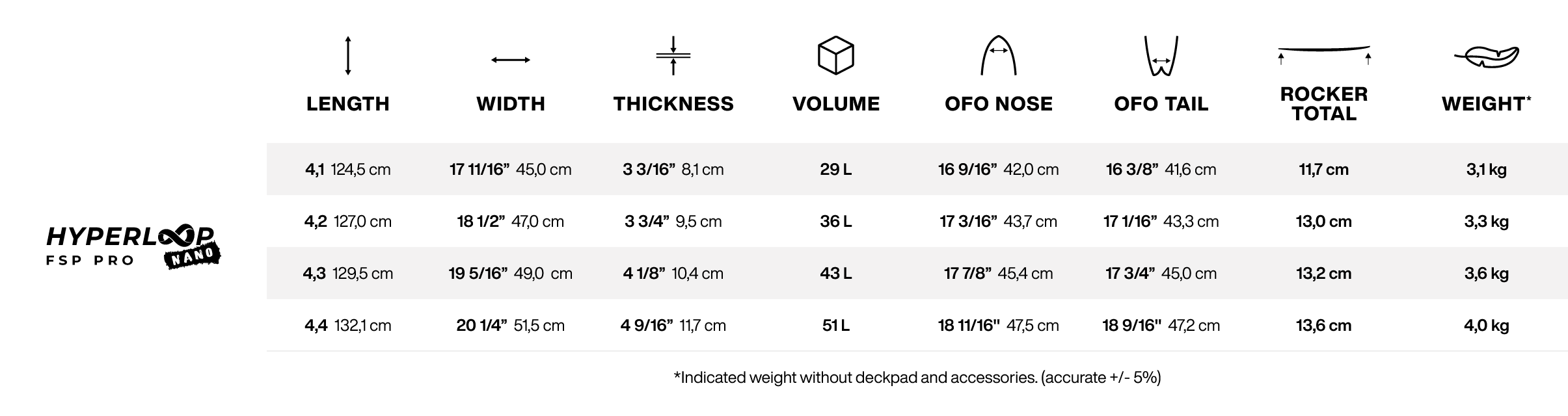
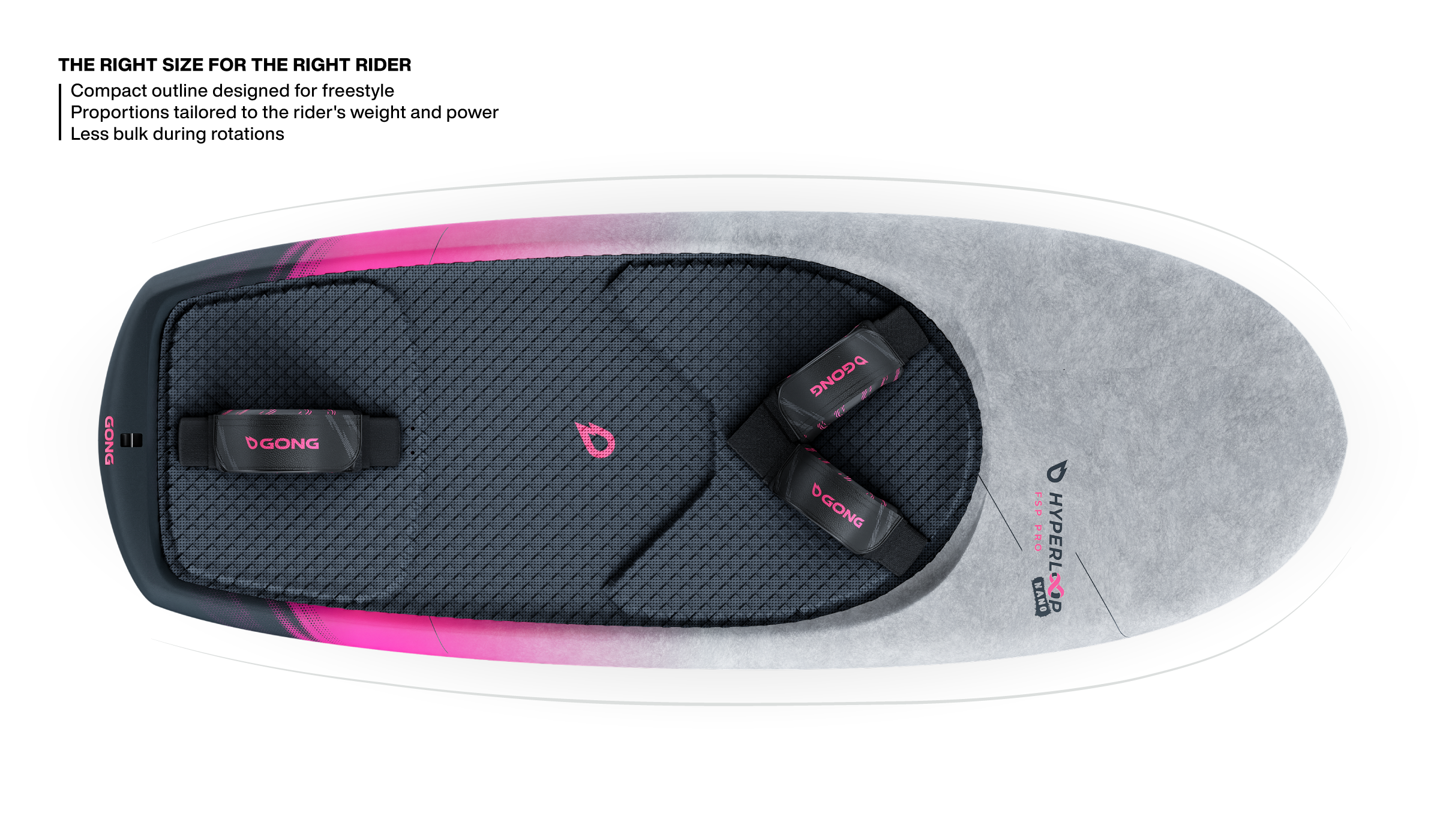
The ultra-compact shape with generous width takes the Hyperloop’s freestyle architecture and adapts it with proportions fully tuned for lighter riders. The length, width and usable surface area have been recalibrated to deliver plenty of control on touchdowns without adding unnecessary bulk in rotations.
Its relatively parallel outline keeps surface area in both the nose and tail to stabilise landings, while still allowing a lighter rider to move the board naturally in the air.
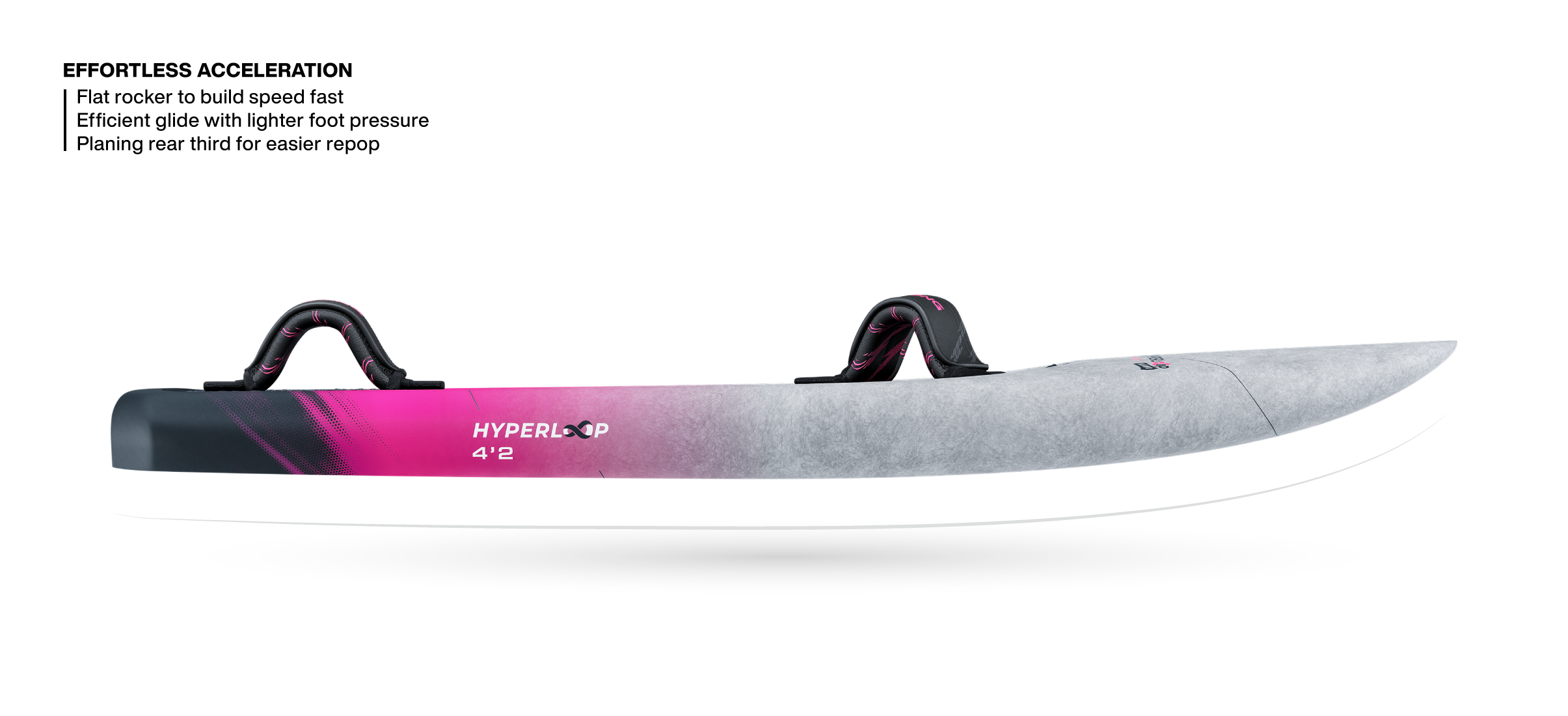
The very flat rocker, especially through the rear third, lets the Nano glide and accelerate with very little energy. A key point for a lightweight rider, who naturally has less power to load the board while pumping.
When it comes back down onto the water, this planing line lets you quickly regain speed and turn a touchdown into a repop, without requiring a major effort to regain foiling speed.
The hull, optimised for planing, provides an efficient platform to accelerate, take off and recover after a landing. At the rear, the slight concave works with the stretched rocker to deliver solid support and efficiently turn a lightweight rider’s input into speed.
Up front, the double concave makes water contact more progressive. It helps the nose skim and bounce rather than catch abruptly, increasing the chances of saving an imperfect landing.
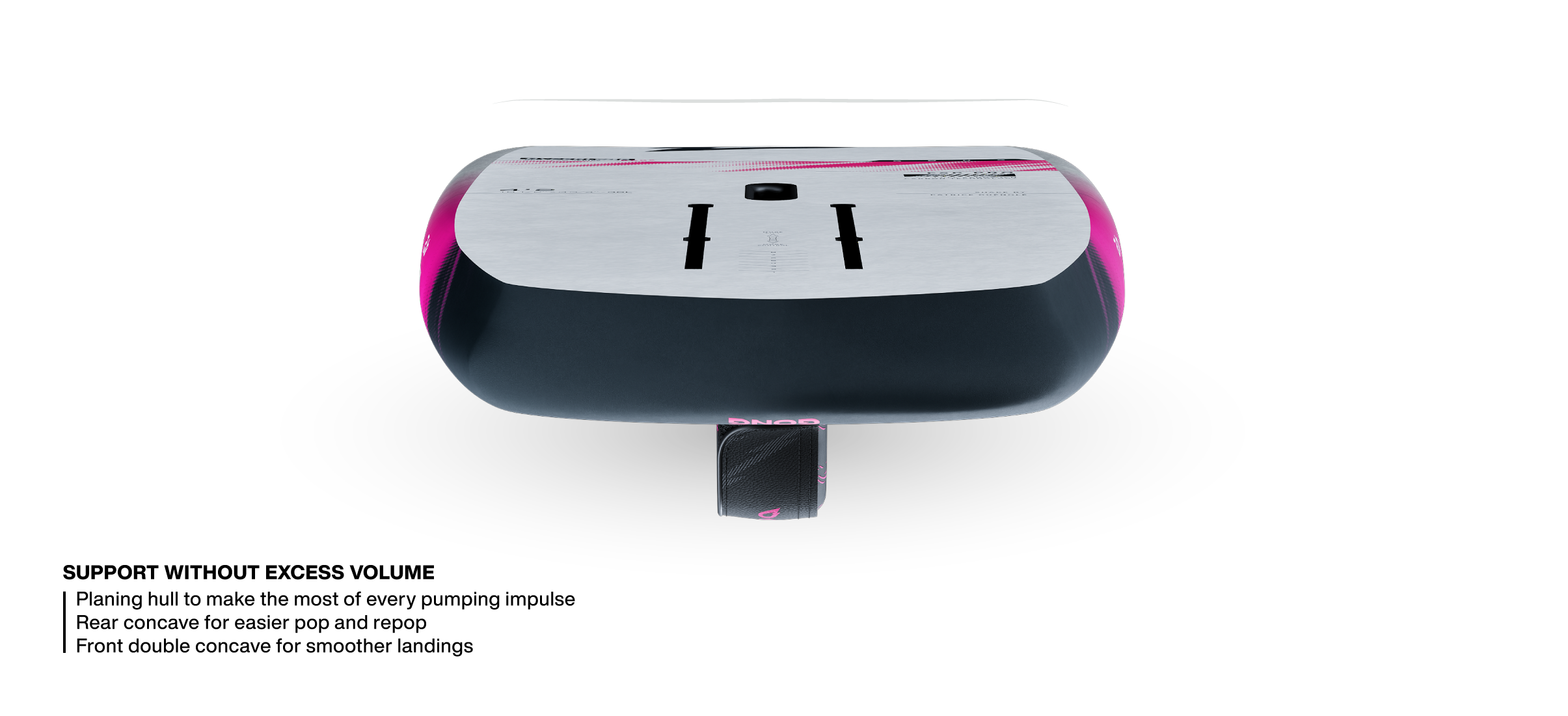
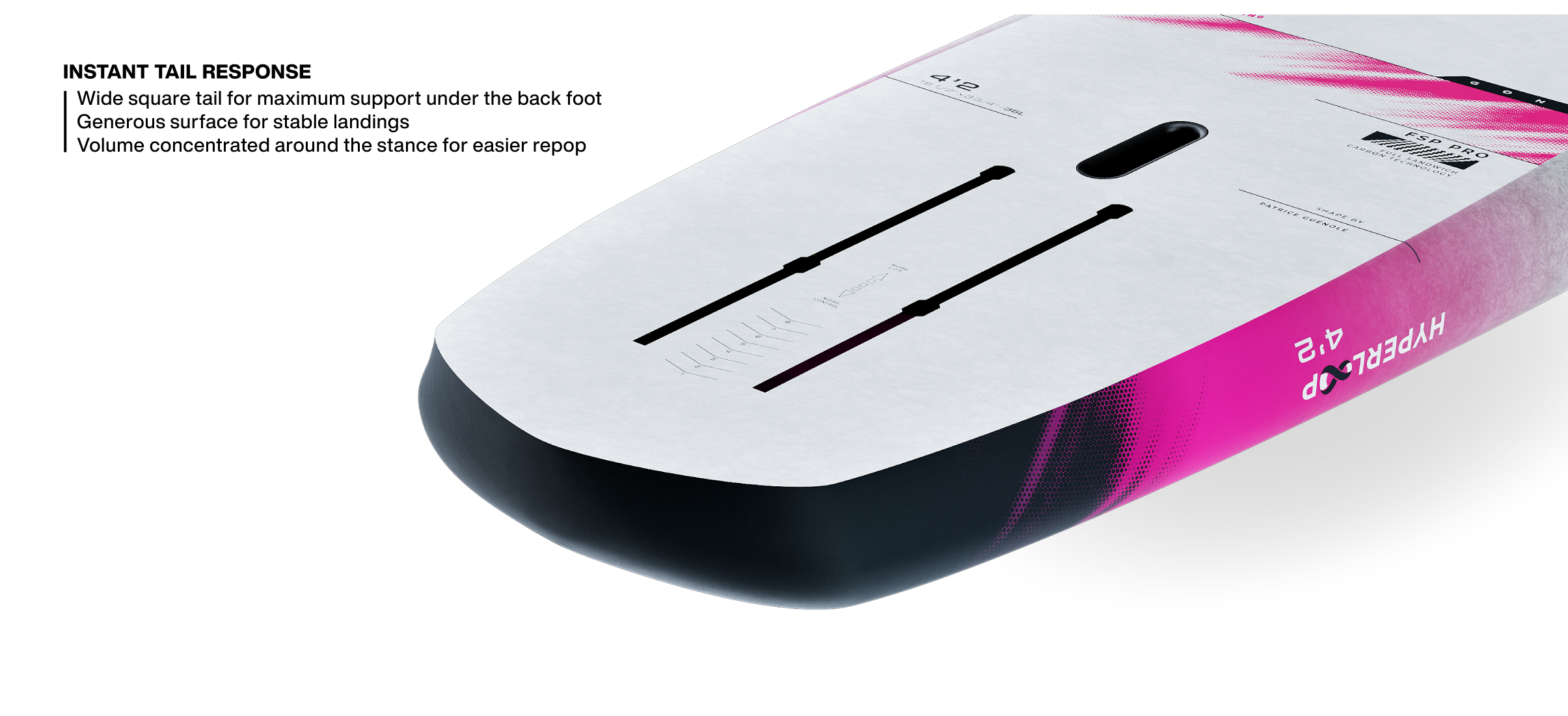
The large square tail provides plenty of usable surface area under the back foot, but in proportions tailored to lighter riders. It lets the rider load the board efficiently when pumping and at take-off, without having to put in the same power as a heavier rider.
On landing, this surface immediately brings back support and stability, while the volume concentrated around the stance makes it easier to build speed again without needlessly adding volume away from the feet.
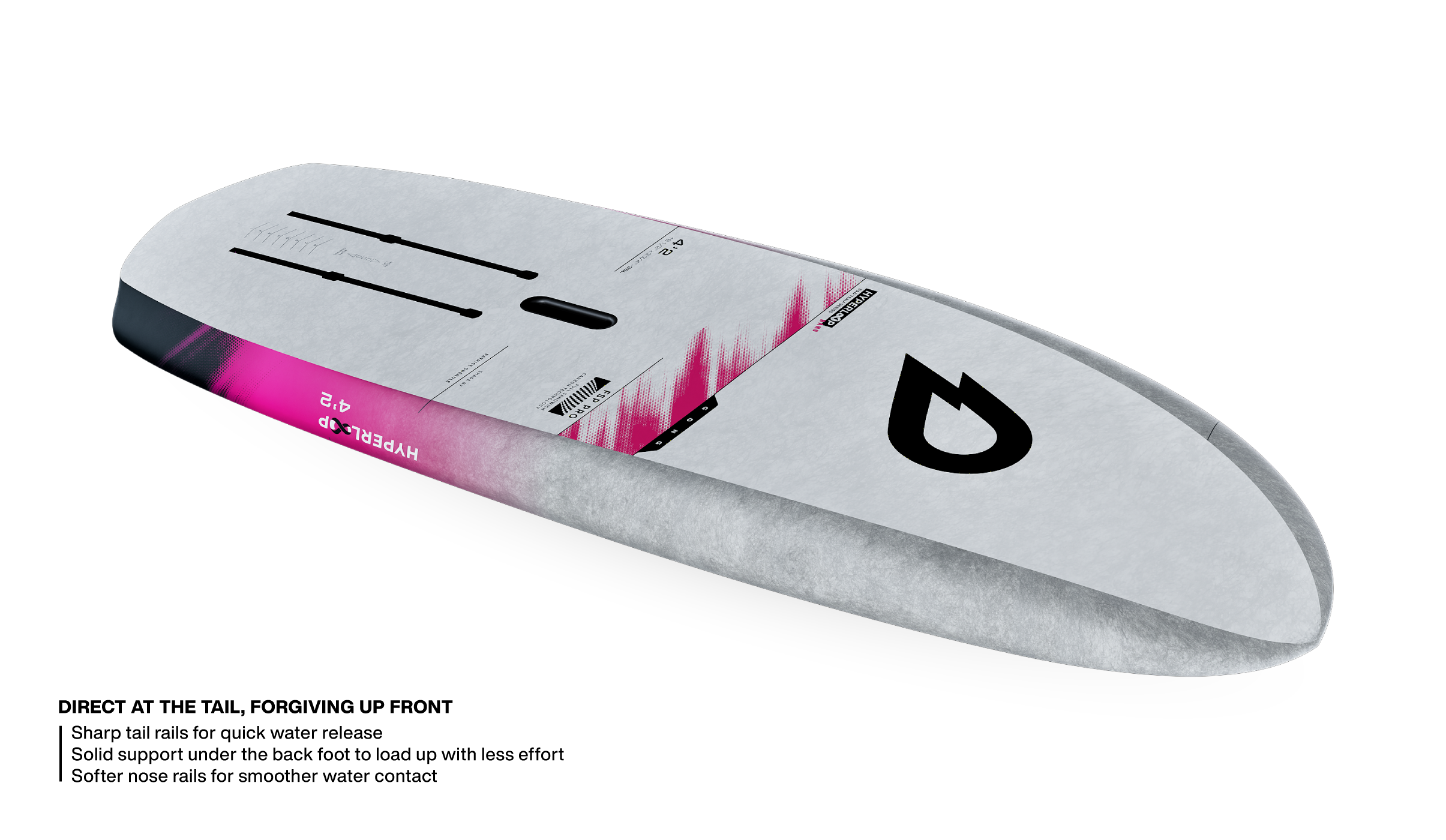
The rails stay straight and sharp through the tail to release the water cleanly and efficiently turn rider input into acceleration. This geometry gives lighter riders clear back-foot support to load up for pop and quickly regain speed after a landing.
They gradually become softer towards the front to handle off-axis touchdowns and prevent a small trim mistake from abruptly stopping the board.
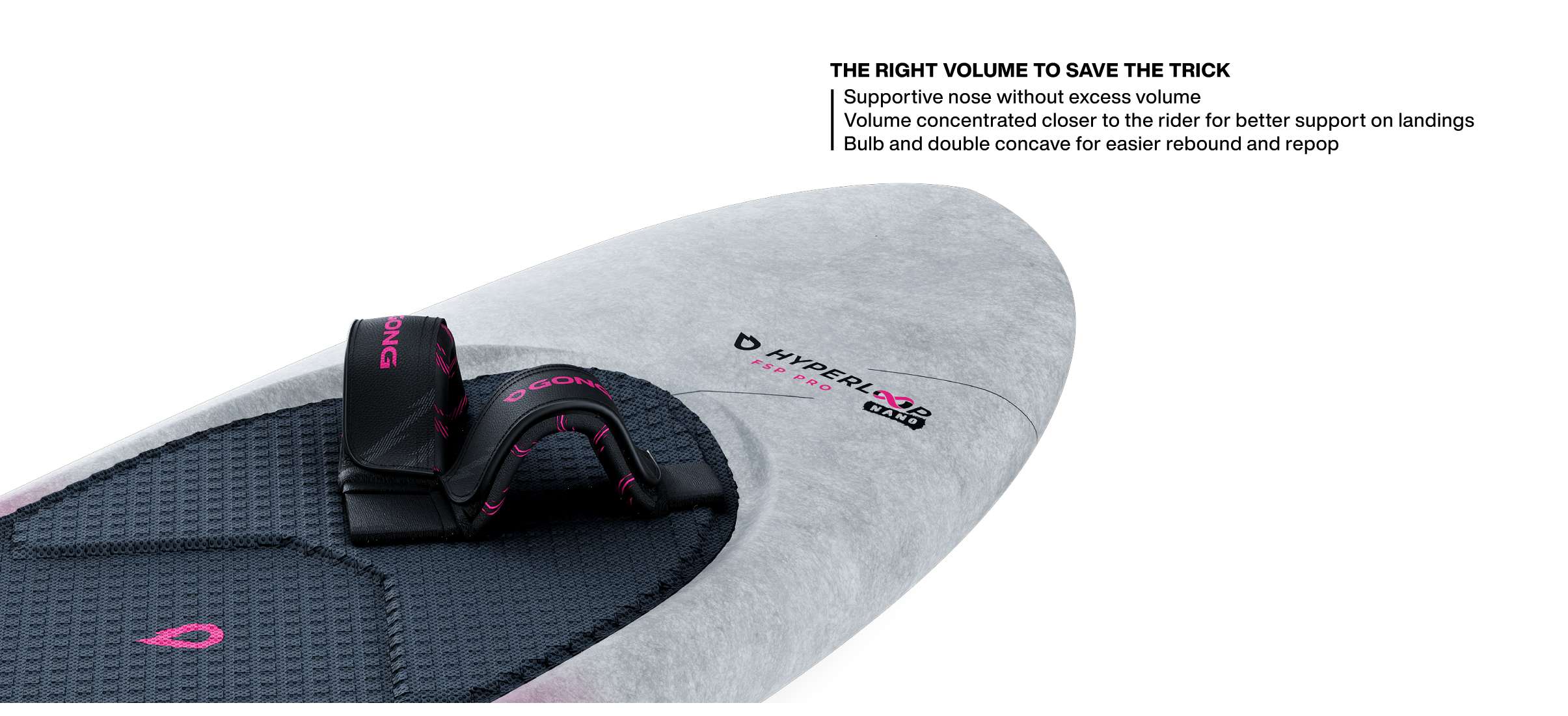
The wide, supportive nose keeps enough surface area to make nose-heavy landings more forgiving, without imposing the volume of a Hyperloop designed for a heavier rider. Its bulb brings as much volume as possible closer to the stance so support kicks in exactly where it is needed.
Combined with the double concave and soft rails, it helps the front end recover better after a nose dive. The rider keeps more speed and has more margin to save the landing and pop back up.


The Hyperloop Nano is designed for children, teenagers and lightweight adults who want a true high-performance freestyle board, with proportions genuinely suited to their build.
It carries all the Hyperloop DNA, but without forcing a lightweight rider to deal with the volume, width or bulk of a board designed around an average adult build. The result is a board that is more natural to control, easier to move through rotations and more in tune with the power the rider can actually put down.
It still requires solid foiling fundamentals. Its focus is clearly freestyle: the rider already needs to be comfortable in flight, in control of their lines, and starting to work on jumps, rotations and landings.
Volume choice remains key. More volume brings more comfort before take-off and on landings, less volume reduces bulk even further and enhances the freestyle feel. The goal is to choose a board that is truly proportioned to your weight, not simply the smallest one possible.
The Hyperloop Nano is a pure modern freestyle board, developed to let lightweight riders progress and perform with gear scaled to them.
Its programme is clear:
The concept is simple: all the freestyle behaviour of the Hyperloop, with the right amount of board for a lightweight rider.
The foil needs to stay aligned with the Nano's programme: acceleration, pop, responsiveness and maneuverability, without creating a setup that is oversized for the rider.
The Ypra Freestyle Micro V3 Atmo: the pure freestyle choice.
This is the most specialised pairing for pushing rotations, pop and technical tricks. Its highly responsive behaviour is a perfect match for a Nano ridden by someone who wants to put freestyle at the heart of their riding.
The Ypra Surf-Freestyle V3 Atmo: to mix tricks and freedom.
It keeps plenty of drive for pop and repop, while giving more freedom through carves. It is a great fit for riders who want to progress in freestyle without locking their setup into a tricks-only programme.
The Fluid V3 Atmo: for more versatile progression.
Lively, maneuverable and easy to use, it lets you work on your first tricks with a more progressive foil. It is an excellent choice for getting seriously into freestyle while keeping a real ability to carve and ride more freely.
In short: Ypra Freestyle Micro to push pure freestyle, Ypra Surf-Freestyle to mix tricks and free riding, Fluid for more progression.
On the Hyperloop Nano, the tail wing needs to keep the foil responsive and easy to move around, while still providing enough support to make landings more secure.
The Ypra Freestyle Micro: to maximise responsiveness.
Paired with the front wing from the same programme, it creates the most specialised setup for rotations, acceleration and quick speed build-up.
The Surf-Freestyle: to mix pop and maneuverability.
It frees up the foil through pitch changes while keeping support firm enough to load up for pop and control landings.
The Fluid: for more progression.
Its lively yet more predictable behaviour makes progression easier and keeps plenty of maneuverability without making the foil unnecessarily demanding.
Tail wing size then lets you fine-tune the level of freedom:
The Tail Shaft Short pushes maneuverability and instant response even further. The Medium brings more control and is an excellent baseline for more progressive freestyle.
On the Nano, the main goal is to keep the whole setup consistent with the rider's weight and power: enough support to control the foil, but never more gear to move around than necessary.
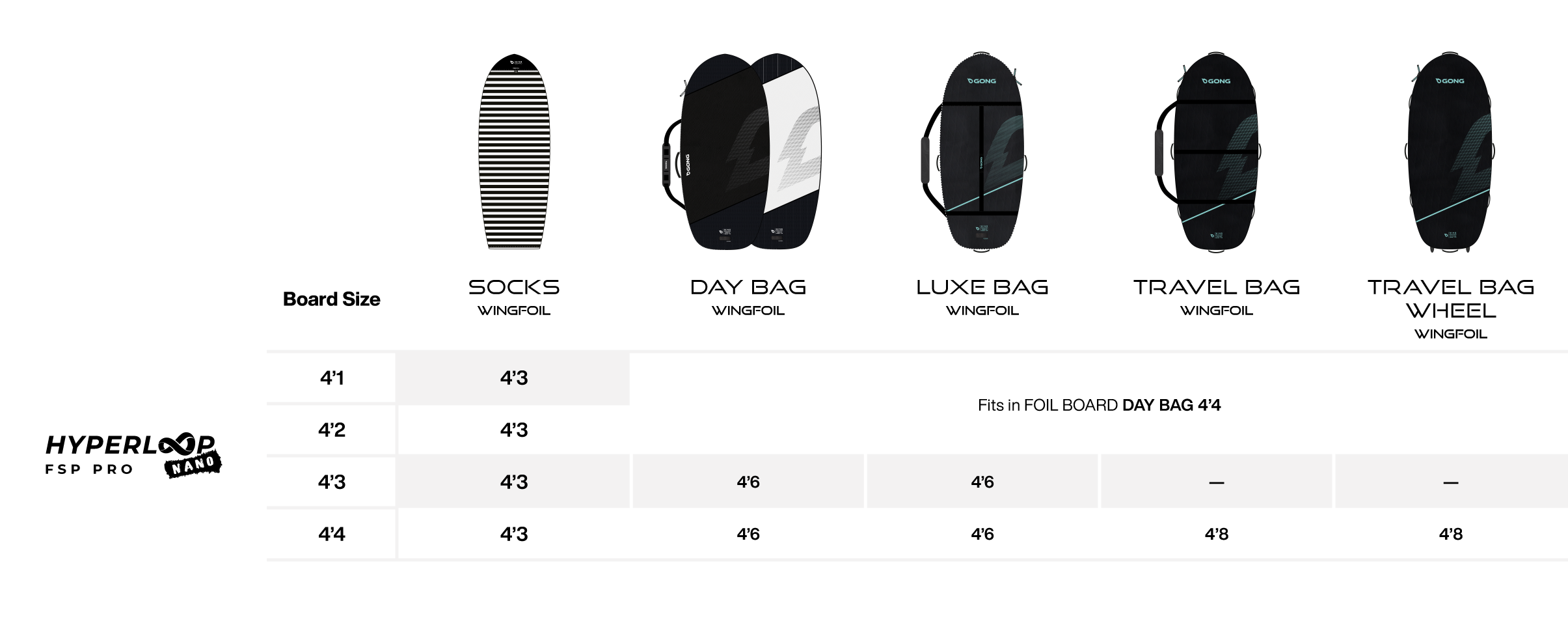
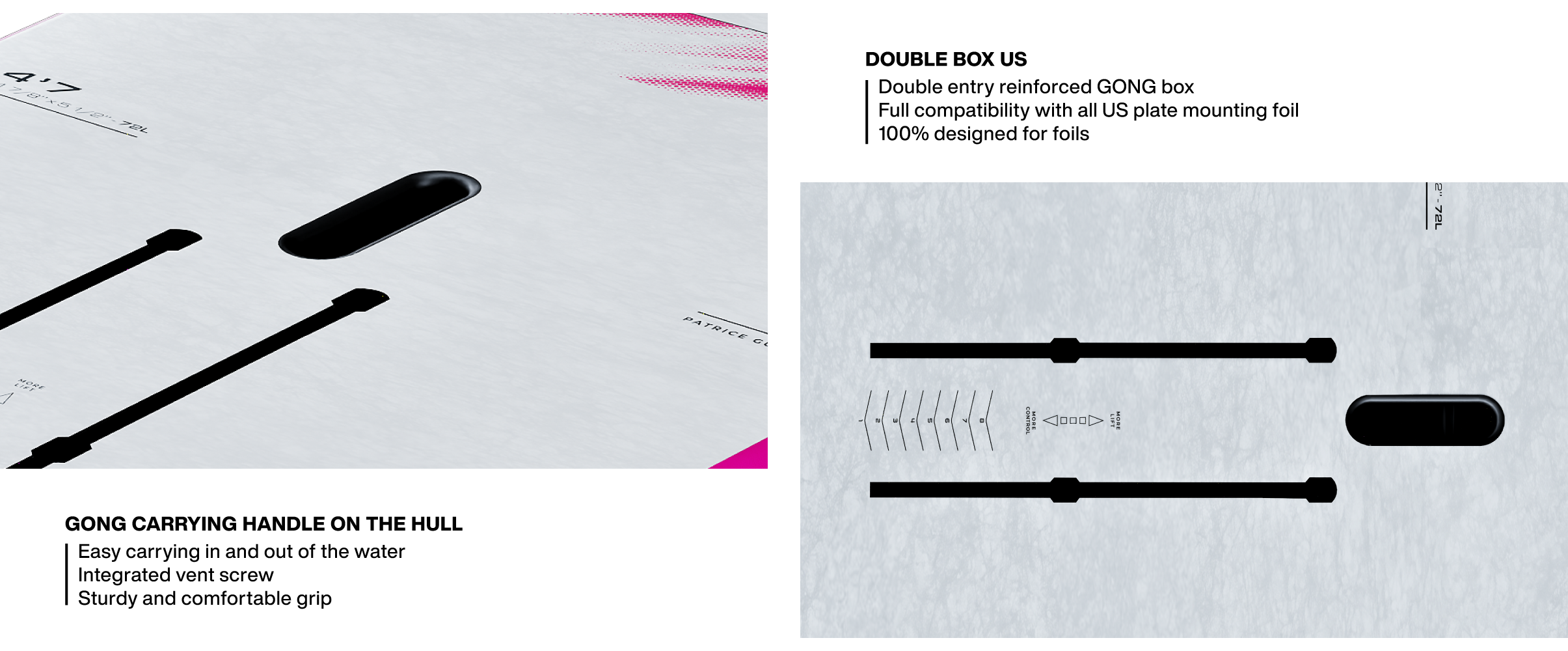
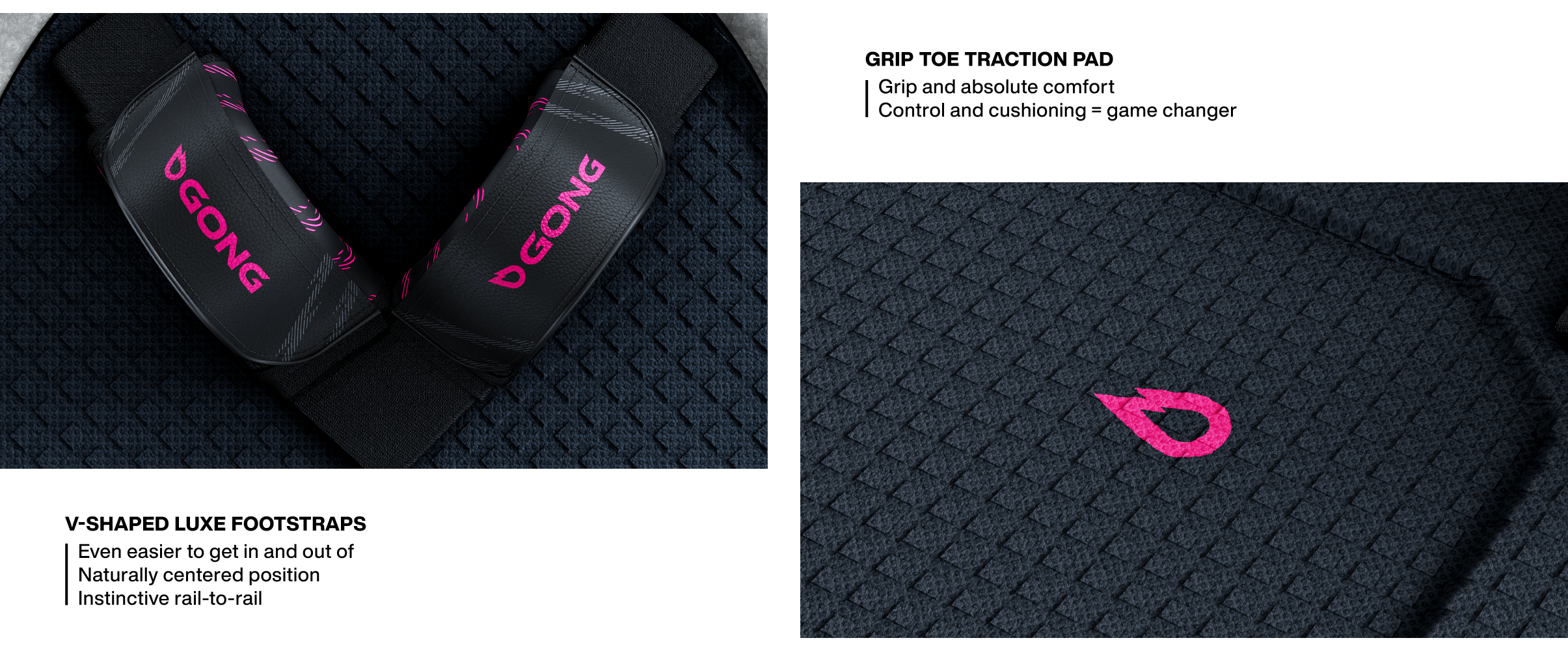
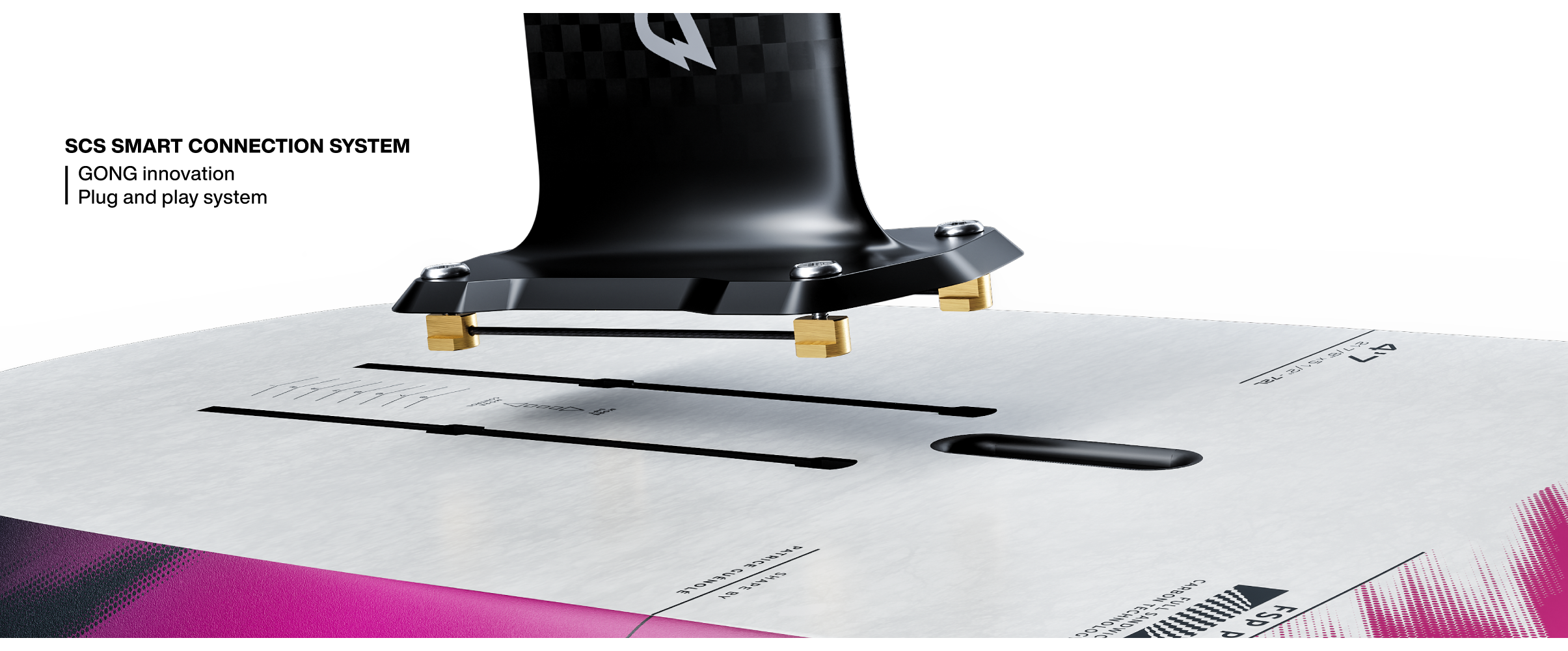
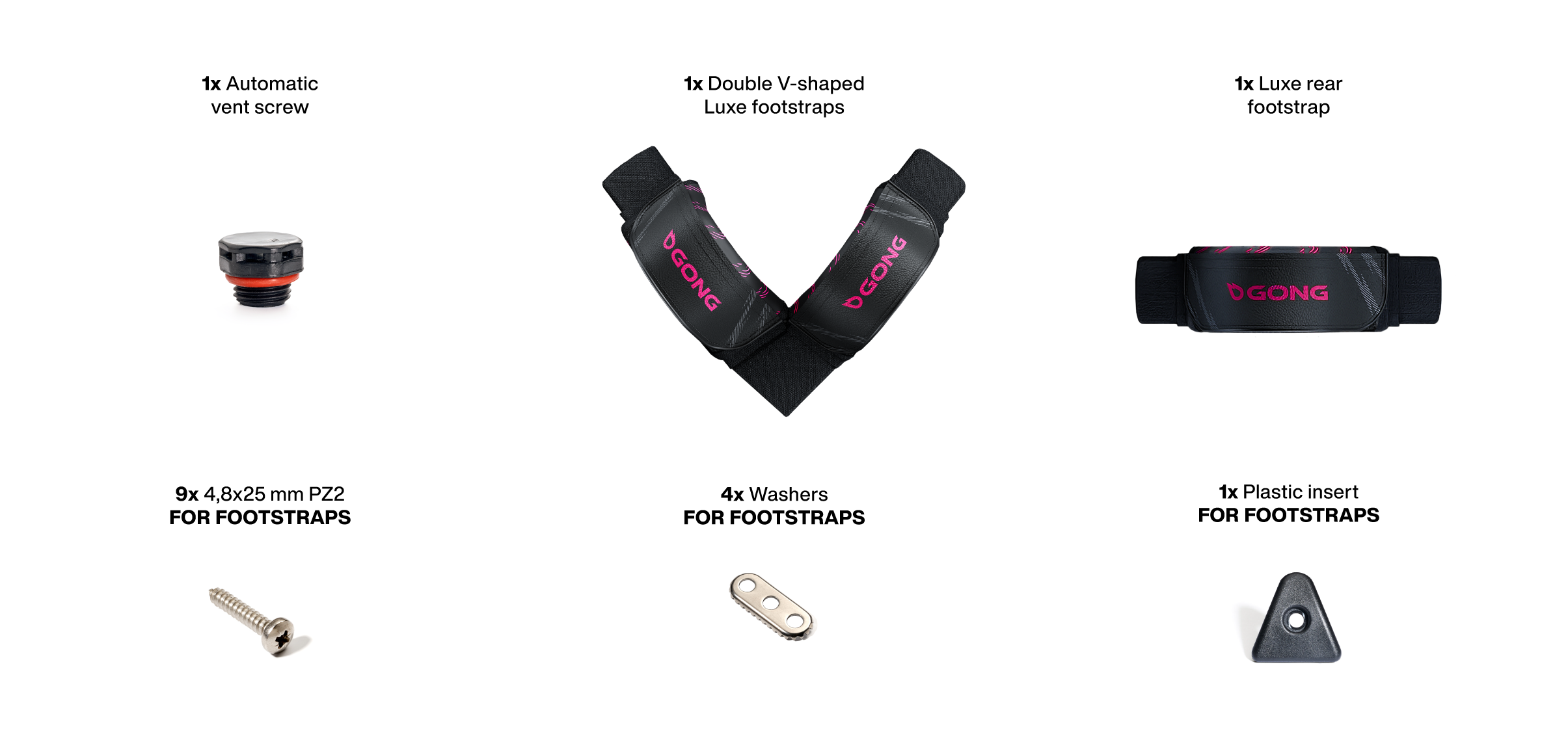
These boards are equipped with 2 GONG US Box Double Entry boxes compatible with standard 4-bolt plate foils and the SCS system with 9 cm spacing, Luxe Footstraps with multi-position anti-twist inserts, a Shock Traction Pad, an integrated carry handle, a leash plug and an automatic vent screw.
The Double Entry system allows for very fast mounting of GONG foils while remaining compatible with standard square nut setups. The SCS is not supplied with the board.









The Hyperloop Nano is designed for children, teenagers and lightweight adults who want a true high-performance freestyle board, with volume and proportions tailored to their build.
It delivers the feel of a Hyperloop without the bulk of a board sized for a heavier rider.
No. That’s precisely the whole point of the concept. The proportions haven’t been reduced uniformly: outline, thickness, volume, stance and planing surfaces have all been reworked together to suit lighter riders who apply less force through their feet.
The goal is to retain the Hyperloop character with a shape genuinely adapted to lighter riders.
A board with too much volume can quickly become cumbersome for pop, rotations and landings. The Nano is designed to deliver just the right amount of board to float, take off and land, without adding unnecessary volume to move around.
That’s the core principle: the right volume for the right rider size.
Yes. Its nose and tail retain useful load-bearing surface area, while the rocker and hull stay focused on glide and speed build-up.
When it touches down on landing, the Nano is designed to regain speed quickly and get back up on foil, rather than sticking to the surface.
The recessed deck lets you bring your feet much closer to the foil. A lighter rider naturally has less leverage to work the board, so reducing that distance makes every input more effective and easier to feel.
The recess also creates natural reference points around the stance, which are really useful for quickly finding your position again after a rotation or a landing.
Yes, despite its very freestyle-oriented programme. Its outline keeps enough surface area in the nose and tail to provide support when the landing is slightly nose-heavy, tail-heavy or off-axis.
This gives the rider more margin to recover their trim, regain speed and try to save the trick.
No. It also directly meets the needs of lightweight adults who find classic freestyle boards too bulky or cumbersome for their weight.
The principle remains exactly the same: use a board whose volume, dimensions and response are proportioned to the rider, whatever their age.
The FSP PRO combines a full vacuum-bagged high-density PVC sandwich with a 6 oz carbon skin to deliver stiffness, drive and responsiveness.
On the Nano, this direct response is especially valuable: it allows a lightweight rider’s input to be transferred efficiently and makes it possible to fully tap into the pop, rotations and speed build-up without having to force the board to react.
A performance-focused construction that makes perfect sense with a shape developed to push freestyle at the right scale.


