Your cart is empty!
It's flat around here...
Fins define the deep character of a board. They influence stability, hold, speed, pivot and the feeling under the back foot. The same board can change radically simply by changing the size, shape or position of the fins.
Understanding concepts such as rake, base, depth, surface area and flex makes it possible to fine-tune your setup according to the conditions, the board shape and your own surfing style. This guide details each parameter, explains how they interact and gives clear reference points for choosing and adjusting your fins.


Rake: drawing lines or pivoting tight
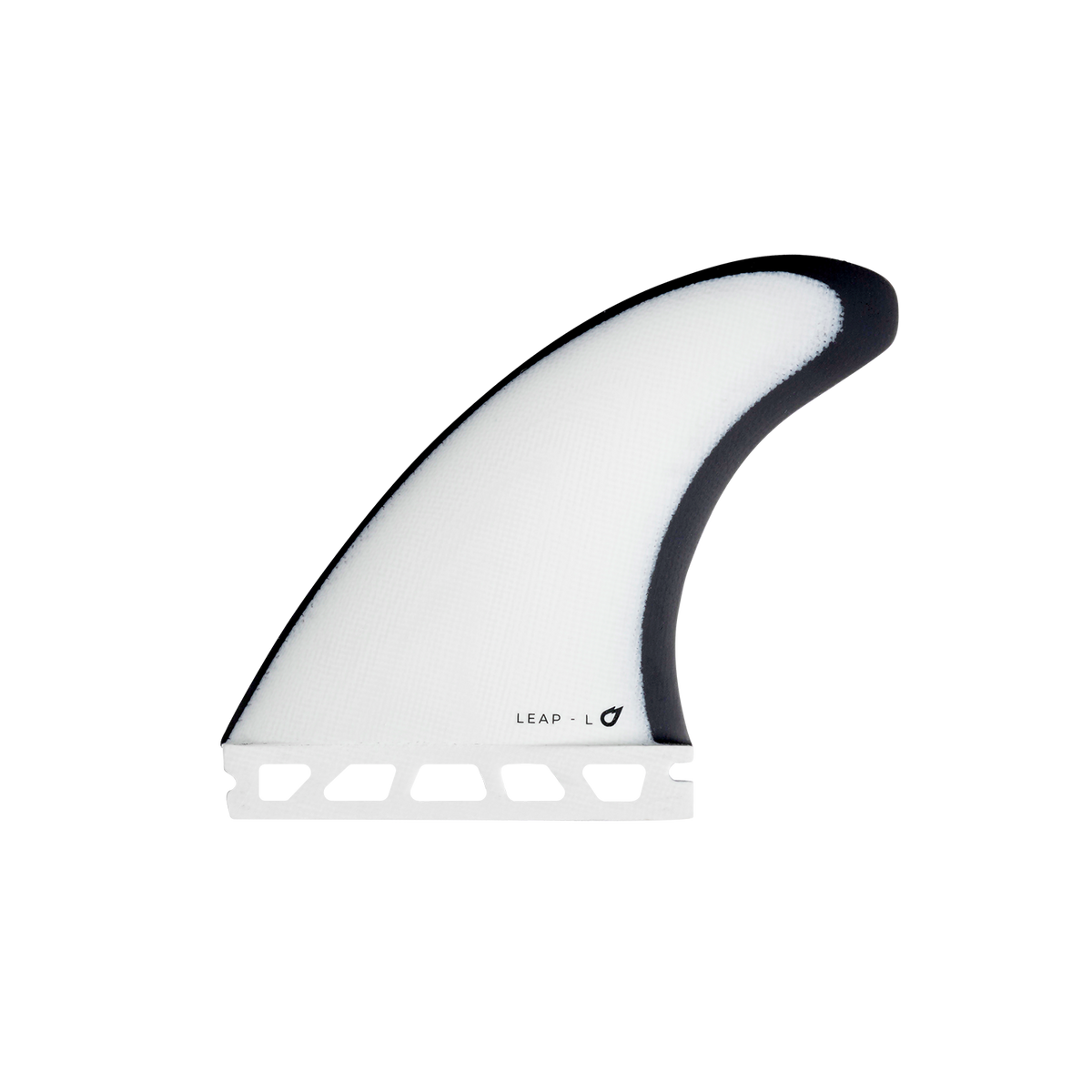
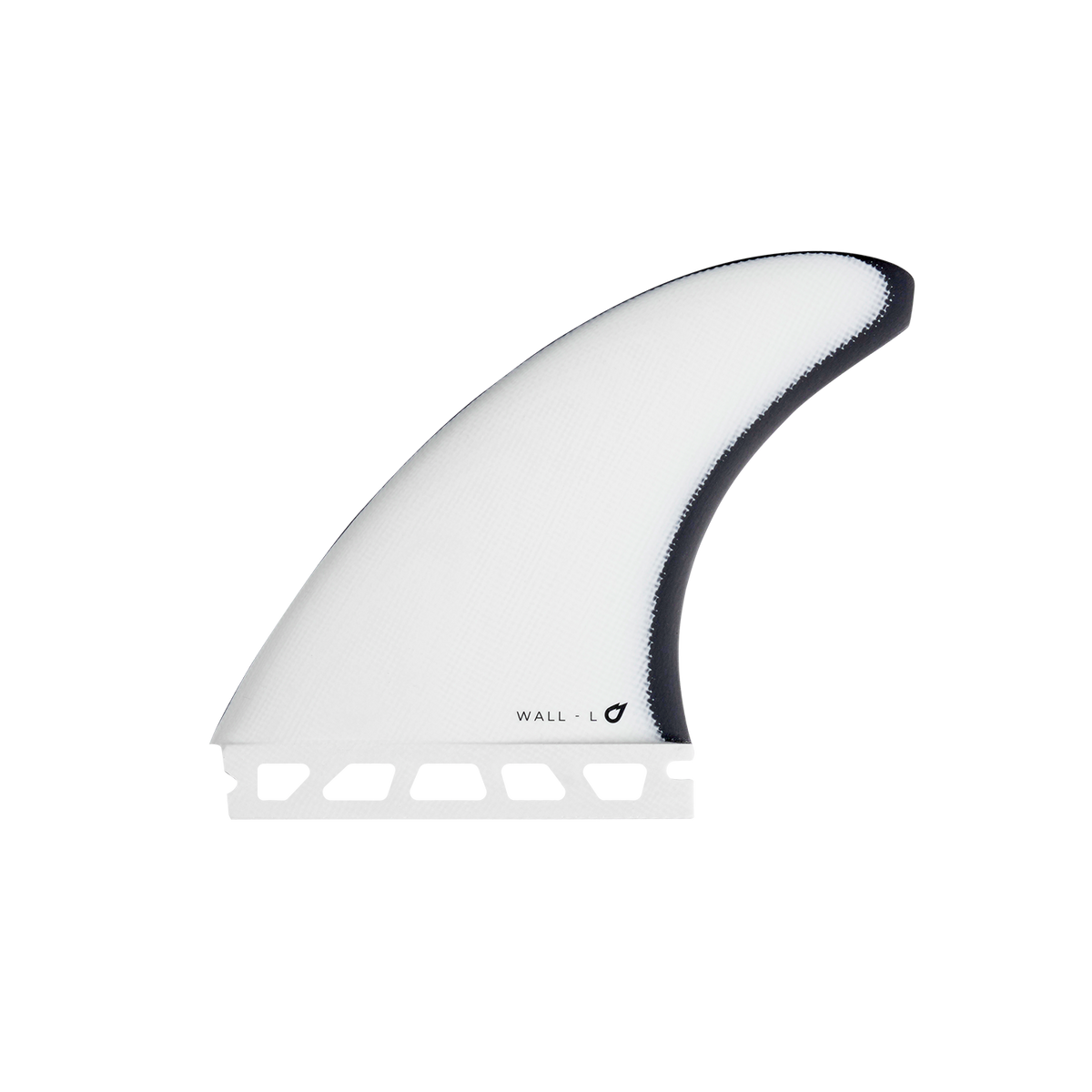
Rake is the backward lean of the fin. The more a fin is “swept back”, the closer its tip sits to the tail. This angle directly influences the way the board draws its lines.

A fin with a lot of rake favors long, drawn-out turns. It provides more hold and drive, meaning the ability to maintain speed all the way through a turn. This type of fin is particularly suited to powerful surfers, waves with a proper wall and committed lines.
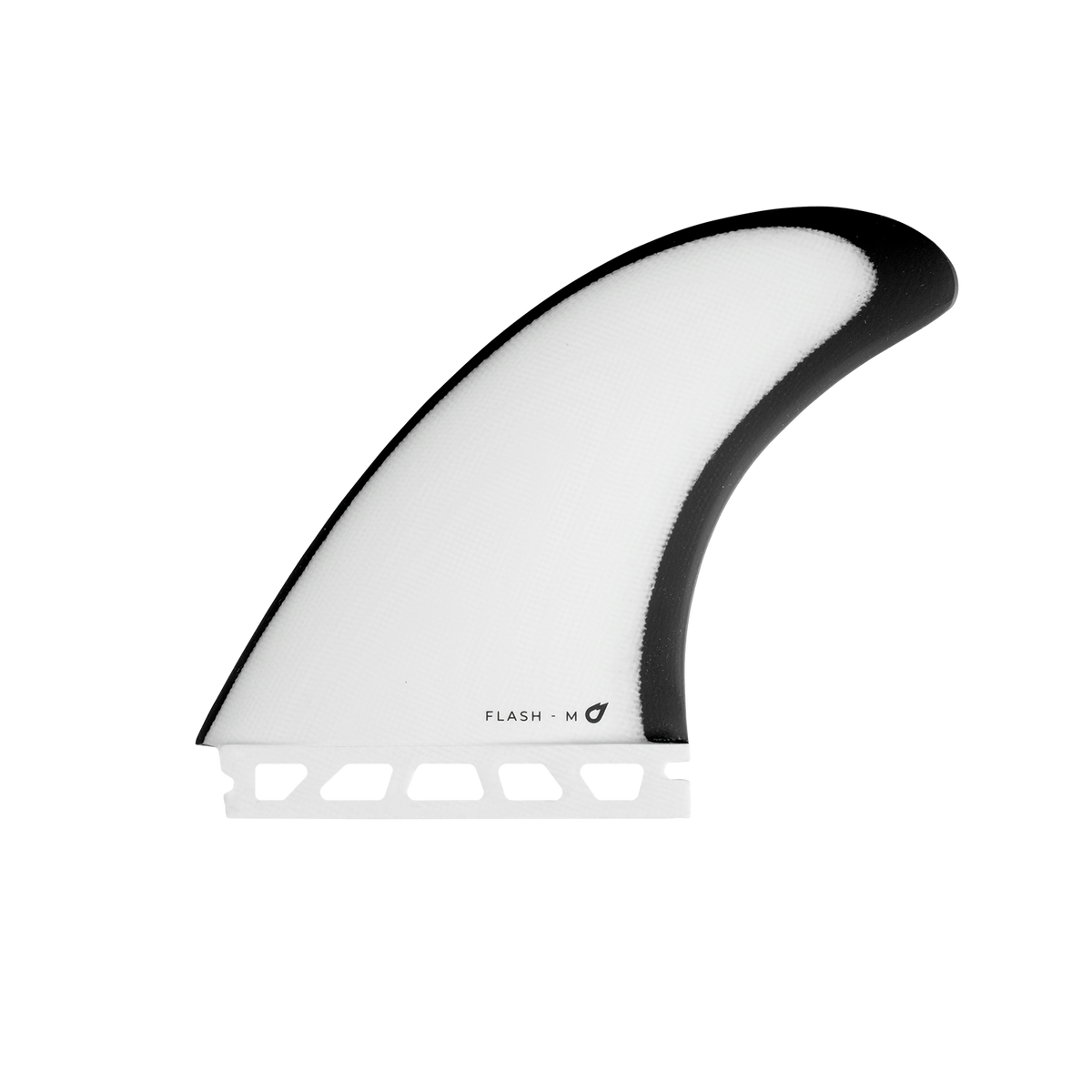
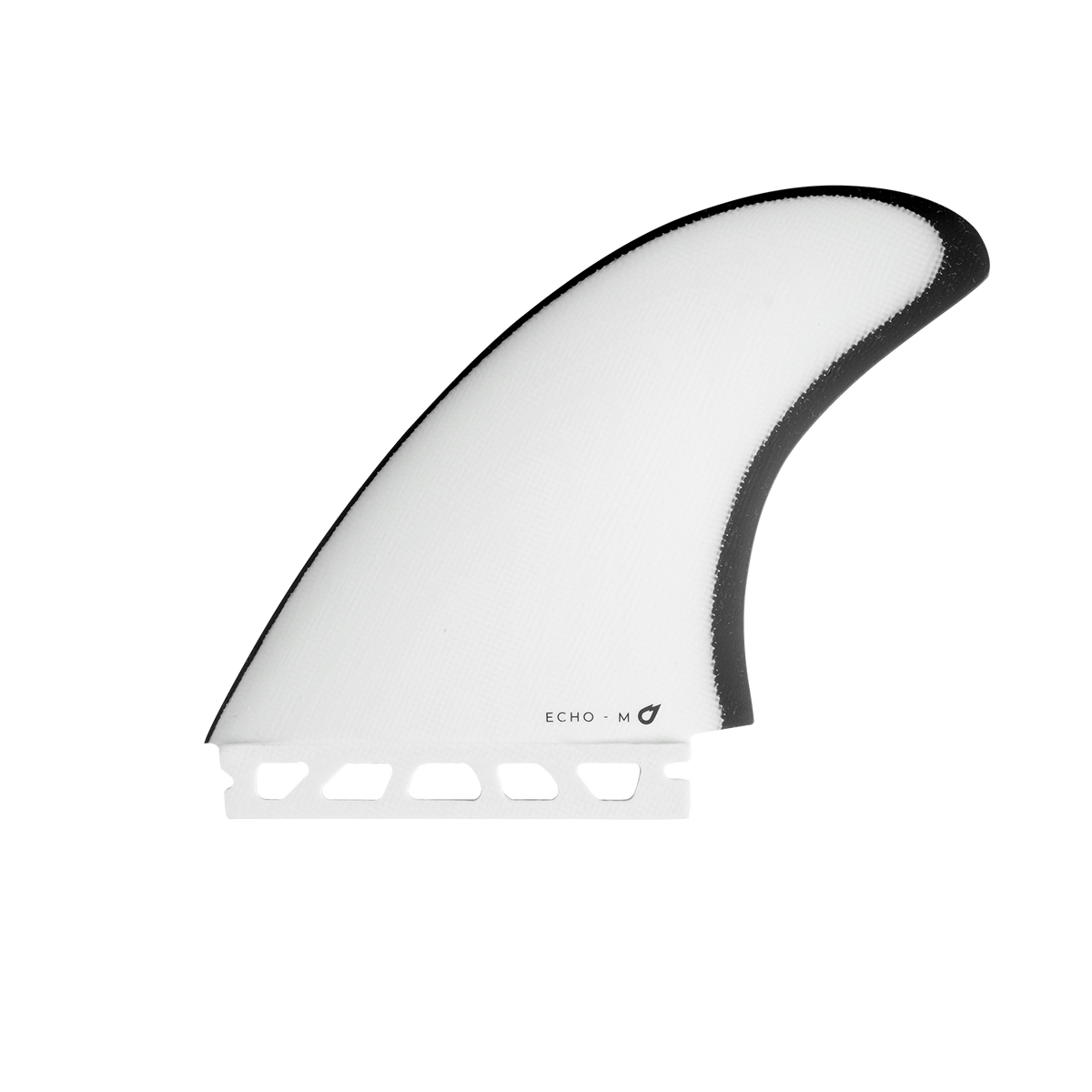
Conversely, a straighter fin with less rake favors pivot. It allows the board to turn tighter and maneuver in a smaller space. In short, soft or less powerful waves, this setup offers more reactivity and a more dynamic style of surfing.
In short, more rake to draw lines, less rake to pivot.
The base: projection and stability
The base is the length of the lower edge of the fin, the part in direct contact with the board. It plays a major role in projection and stability.
A long base gives more control and speed generated through turns. It favors wide lines and brings stability in powerful sections.
A shorter base frees up the tail and makes tight turns easier. It is ideal for playful surfing in soft waves.
In general, a fin with a lot of rake also has a longer base, while a more upright fin is often paired with a shorter base.
Depth: hold and freedom
Depth is the height of the fin, from the base to the tip.
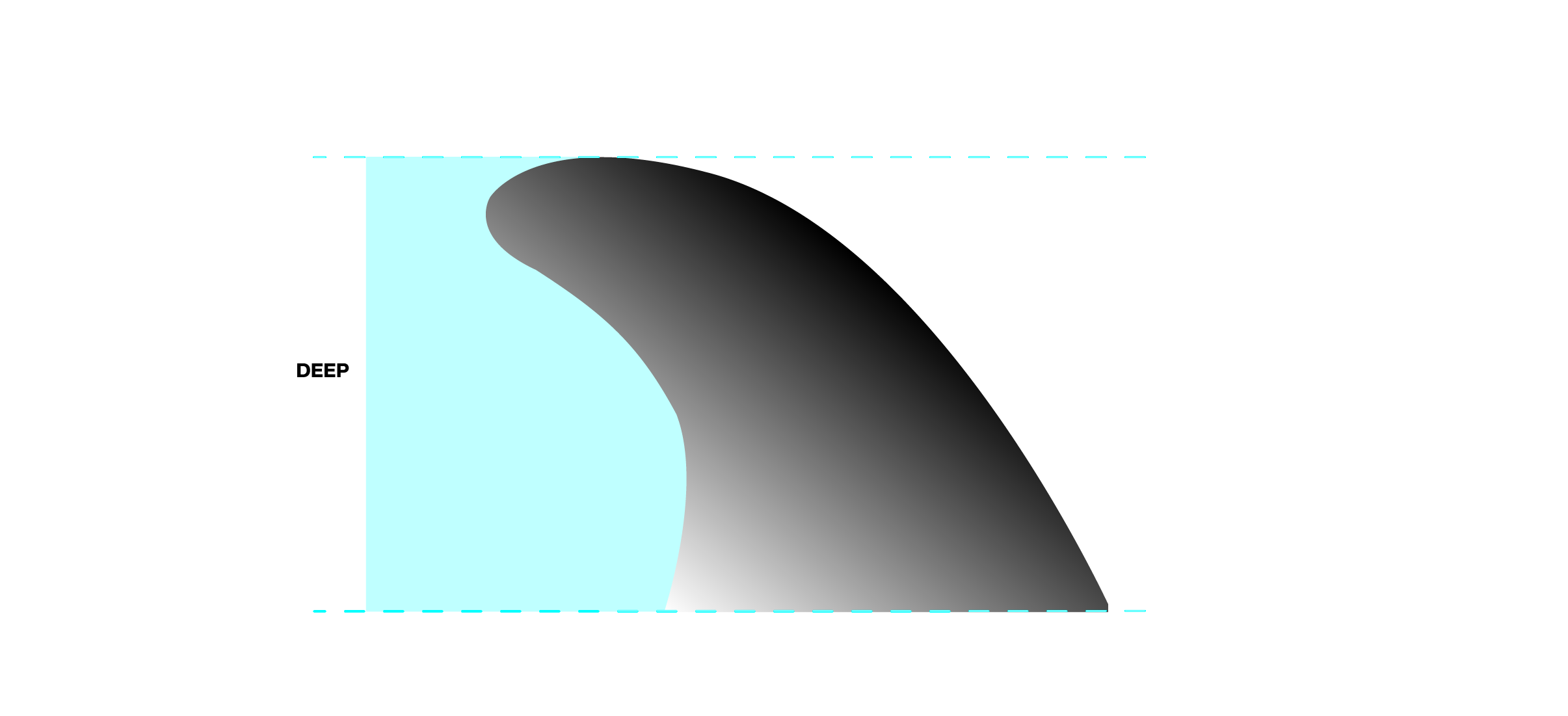
A deep fin brings more stability and hold, especially at high speed or in the pocket of a wave. On a longboard geared toward noseriding, good depth stabilizes the tail and allows you to stay on the nose for longer.
Conversely, a shallower fin reduces friction with the water and frees up the tail. On a fish, for example, this enhances the board’s skaty, playful feel.
Surface area: control or freedom
The total surface area of a fin is the combination of its base, height and outline, and it determines the overall level of control.

A large surface area provides stability and security, which is especially reassuring for beginners or in powerful waves.
A smaller surface area gives more freedom under the back foot and makes the board more playful.
The distribution of this surface area also matters. A narrow tip favors speed in fast waves, while a wider tip improves maneuverability in slower conditions.
Flex: smoothness or precision
Flex refers to a fin’s ability to bend under pressure and then return to its original position.

A flexible fin provides softer support and forgives mistakes more easily. It gives a looser and more tolerant feeling.
A stiff fin, on the other hand, brings more response, power and precision. However, it requires more control and technique. Single fins dedicated to noseriding are often stiff to avoid any side slip in hang five or hang ten.
The Foil: the hydrodynamic profile
The foil is the profile of the fin when viewed from the edge, meaning its thickness and the way material is distributed between its two faces. It determines how water flows around the fin, and therefore the amount and direction of lift generated.
You can compare the foil to that of an airplane wing: its shape influences the pressure difference between the two faces and defines the lift. Depending on whether it is symmetrical or asymmetrical, the board’s behavior changes noticeably.

A symmetrical foil (50/50) has thickness distributed equally on both sides. It generates neutral, progressive lift. This is the profile most often used for center fins, as it offers a balanced, stable and predictable feeling, without favoring one side in particular when the board is flat.
A flat inside foil is asymmetrical: the inside face is flatter, while the outside face is convex. When the board is on rail, this asymmetry increases the pressure difference between the two faces and boosts directional lift. The result: more hold and drive through turns. This type of foil is used on side fins in thruster or quad setups because it reinforces propulsion when the rail is engaged. The fin on the engaged rail side feels as if it is being pulled toward the wave face, which creates grip and hold.
The foil directly influences lift, speed and the feeling of control. A very lift-oriented profile increases lift and hold, but also creates more drag. Conversely, a more neutral or thinner profile favors pure speed and glide, at the expense of some hold in critical sections.
In short, the foil adjusts the way the fin “works” in the water. It determines whether the board will feel more locked-in and directional, or more fluid and progressive. As always, it is about finding the balance that suits your style and the conditions.
 Surfer: Moritz, GONG team rider, on J.Low EPS.
Toe: the angle toward the stringer
Toe refers to the inward angle of the side fins toward the center of the board. The more pronounced the toe, the more lift and maneuverability the fin generates... but also more drag. Less toe favors pure speed and glide.

Cant: the angle toward the rail
Cant is the outward tilt angle of the fin toward the rail. Unlike toe, which acts in the horizontal plane (orientation toward the nose), cant acts in the vertical plane.
These two settings follow the same fundamental logic: more maneuverability means more drag, and more speed generally means less angle.
When the board is leaned onto the rail, a fin with cant “dives” deeper into the wave face. It then works at a more efficient angle, which increases lift and makes pivoting easier.

The template is the overall design of the fin, its outline when viewed from the side. It combines rake, base length and surface distribution to create a unique model. More than just an aesthetic detail, the template immediately gives an indication of how the fin will perform.
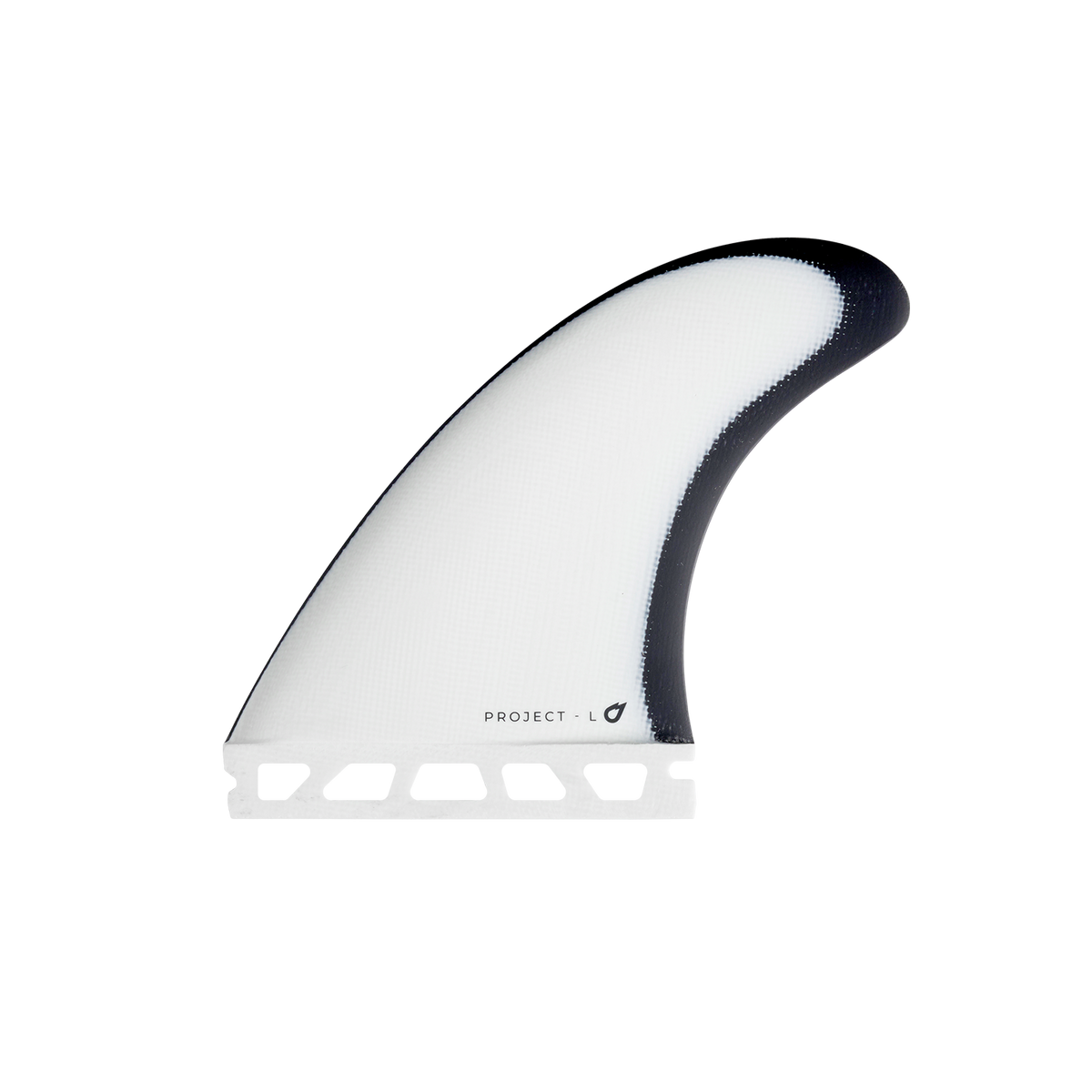
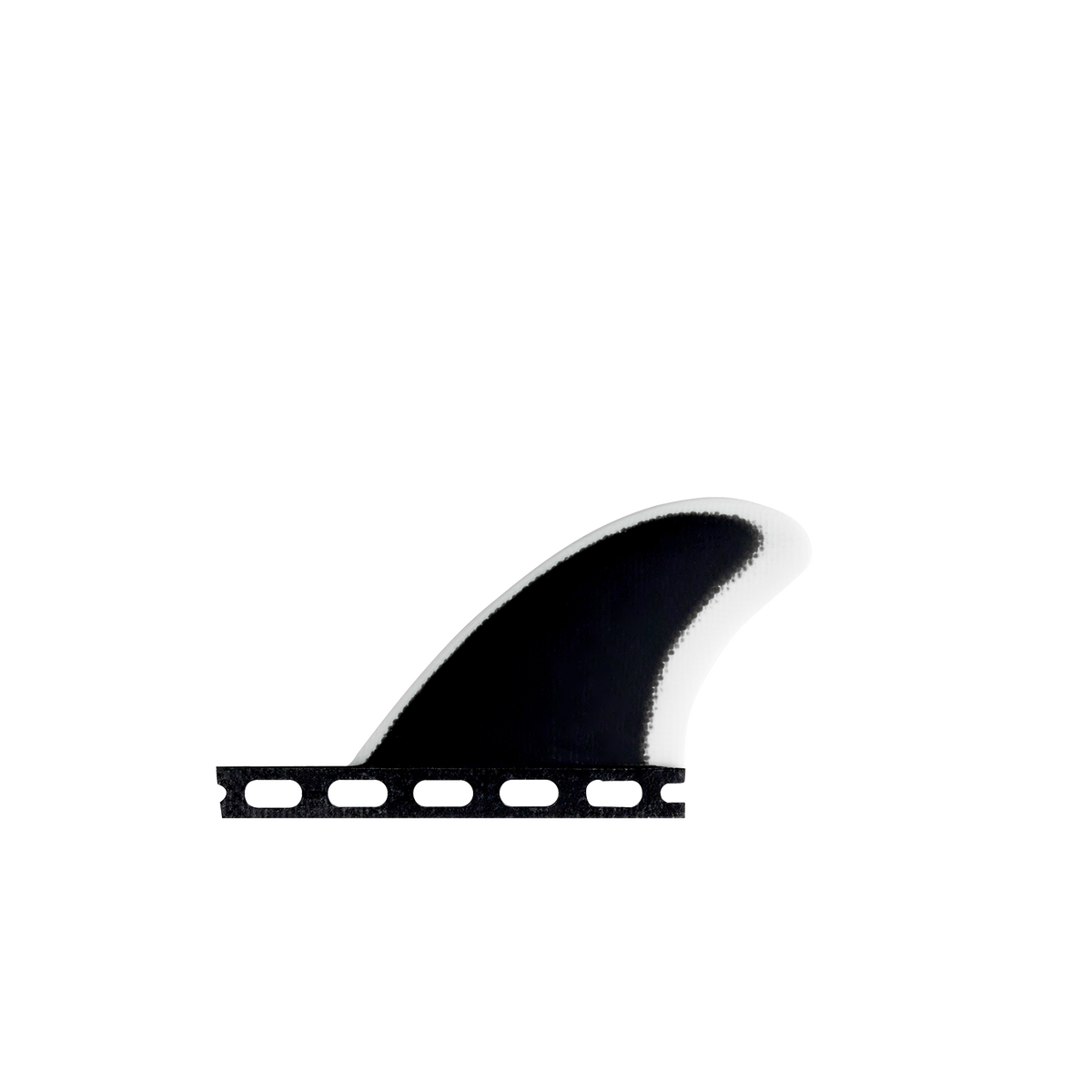
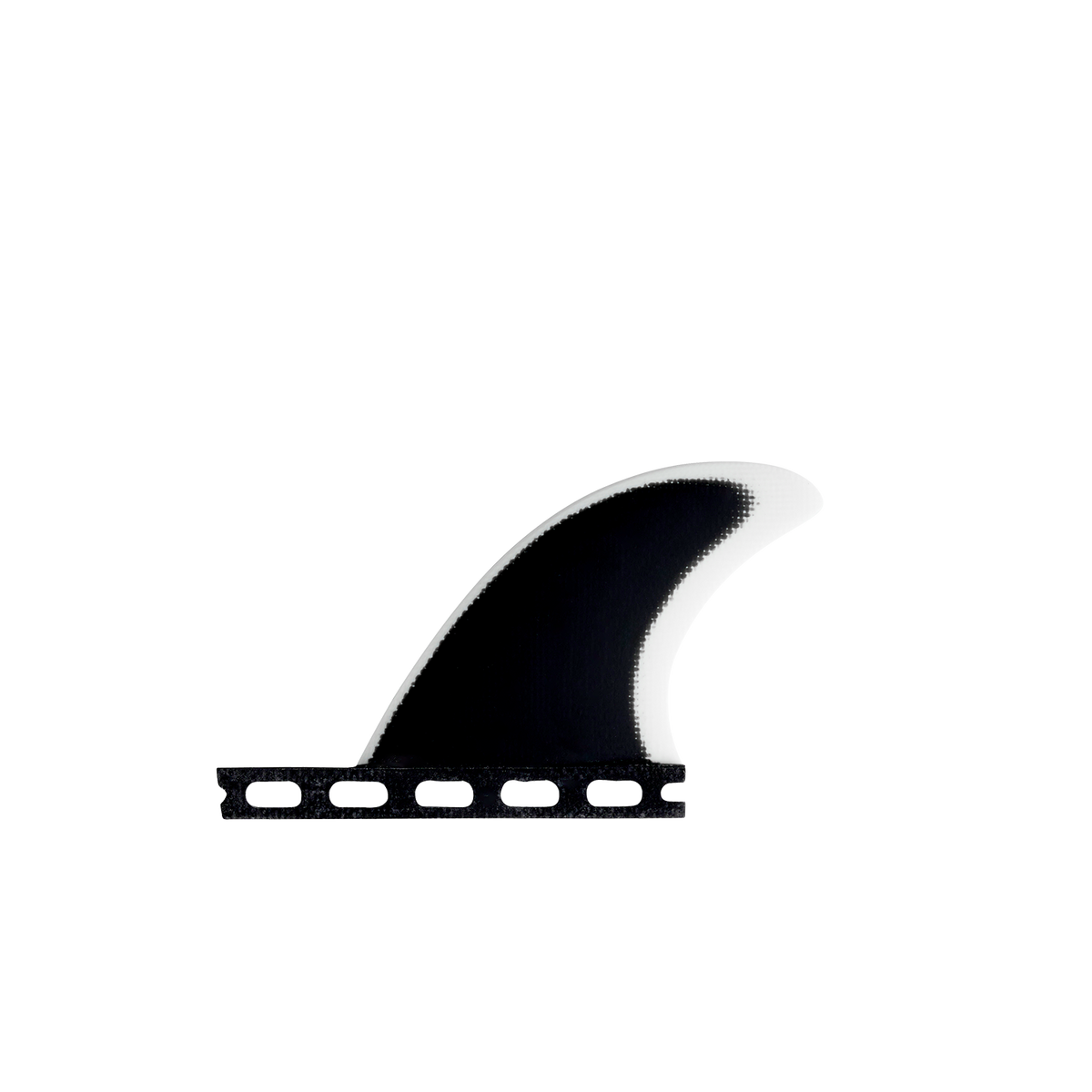
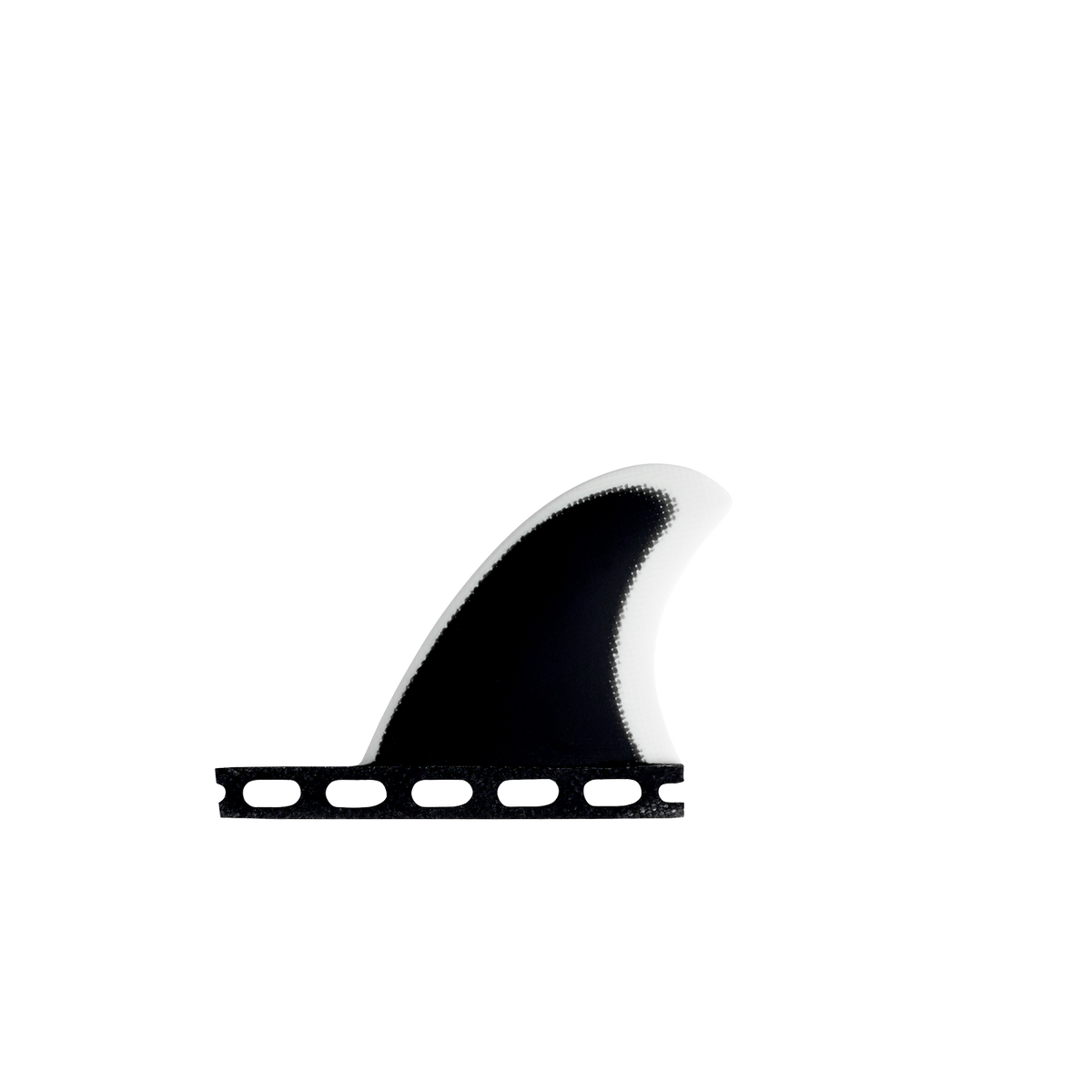
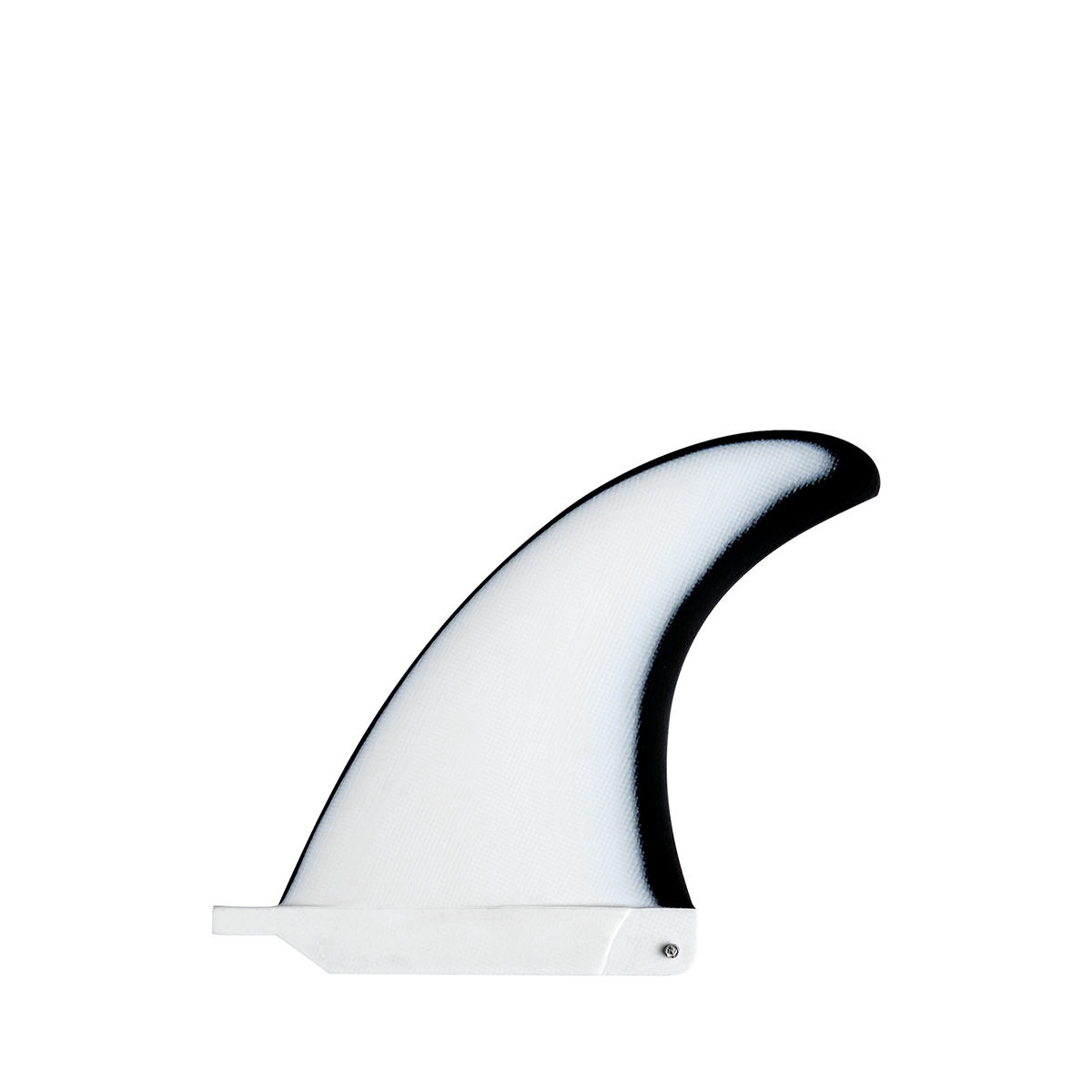
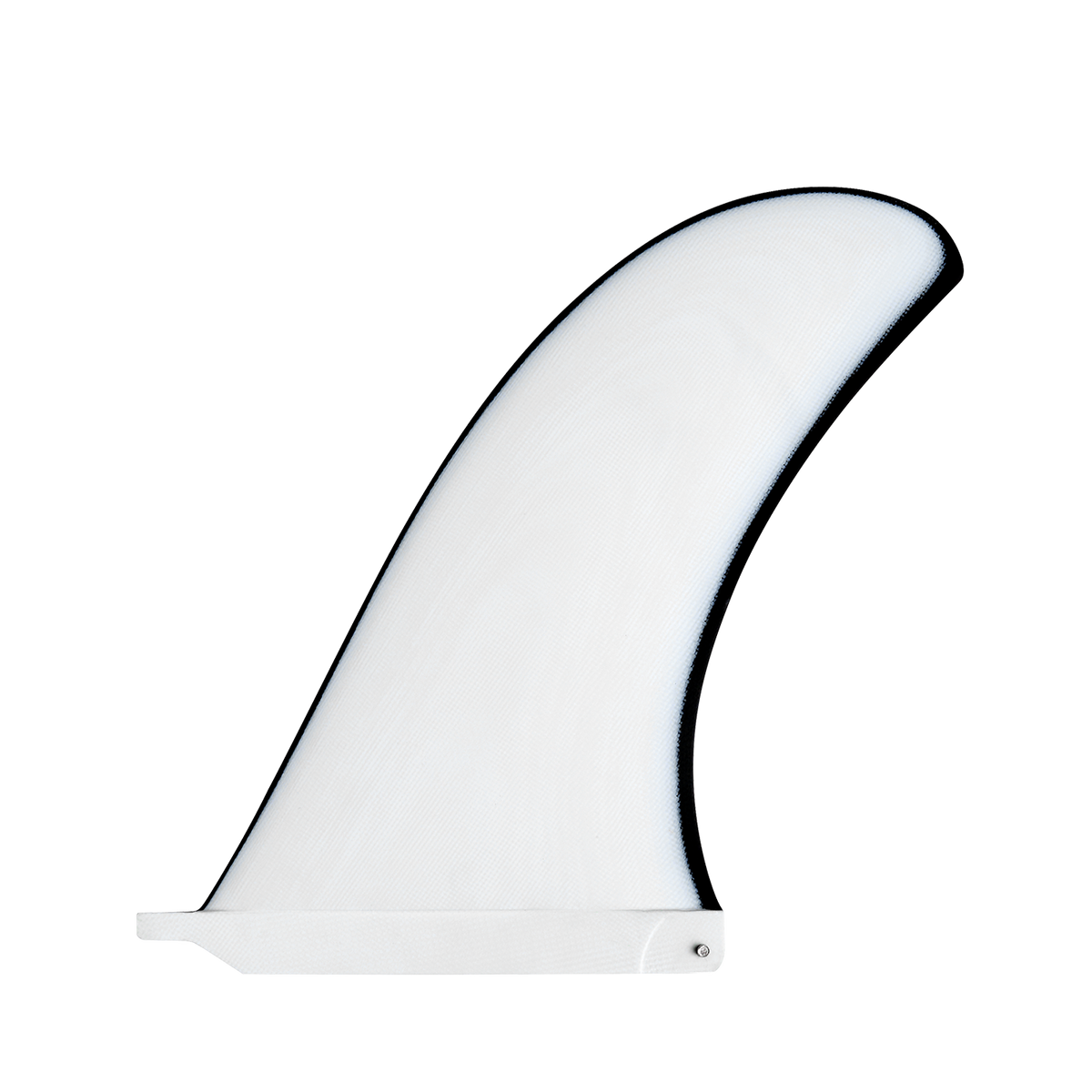
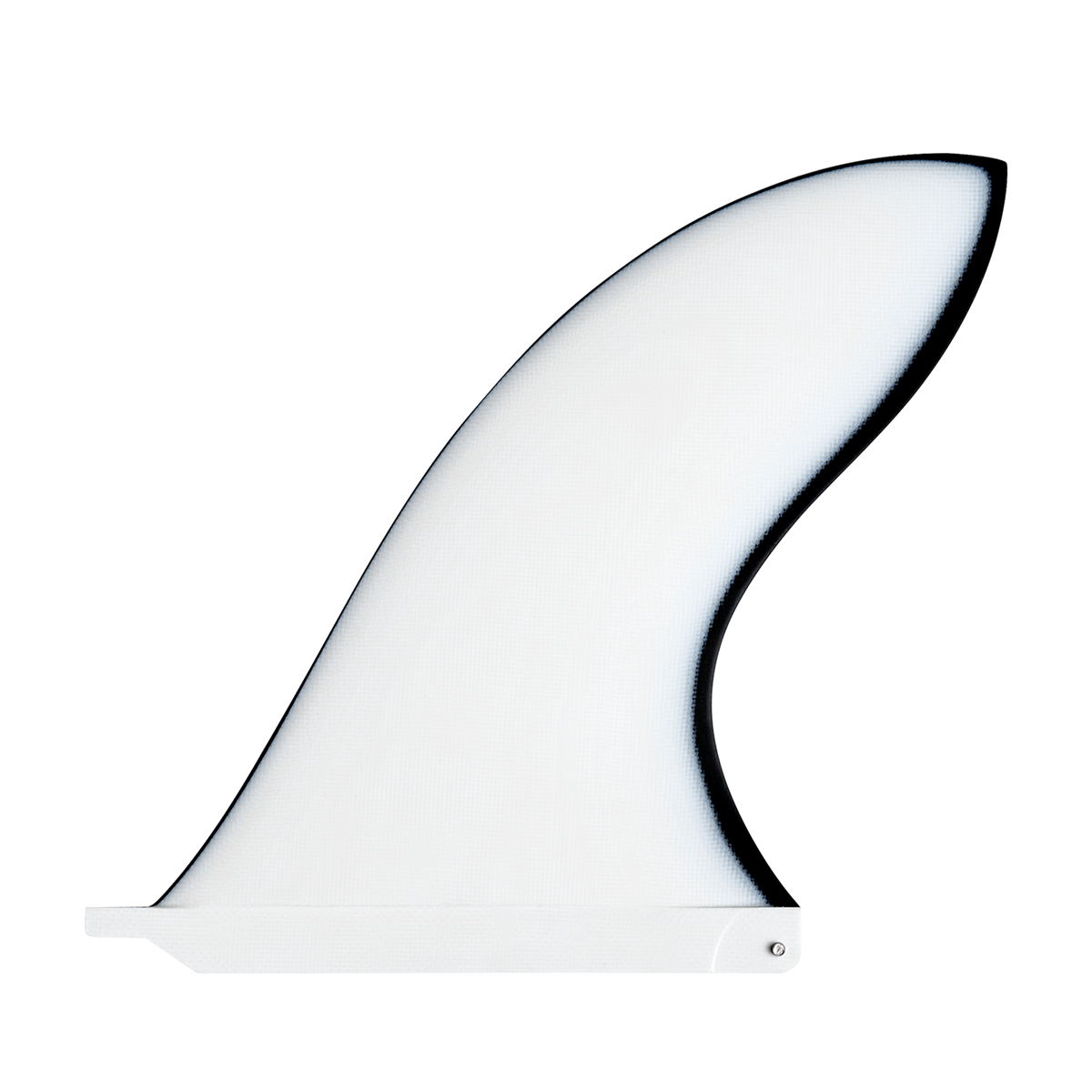
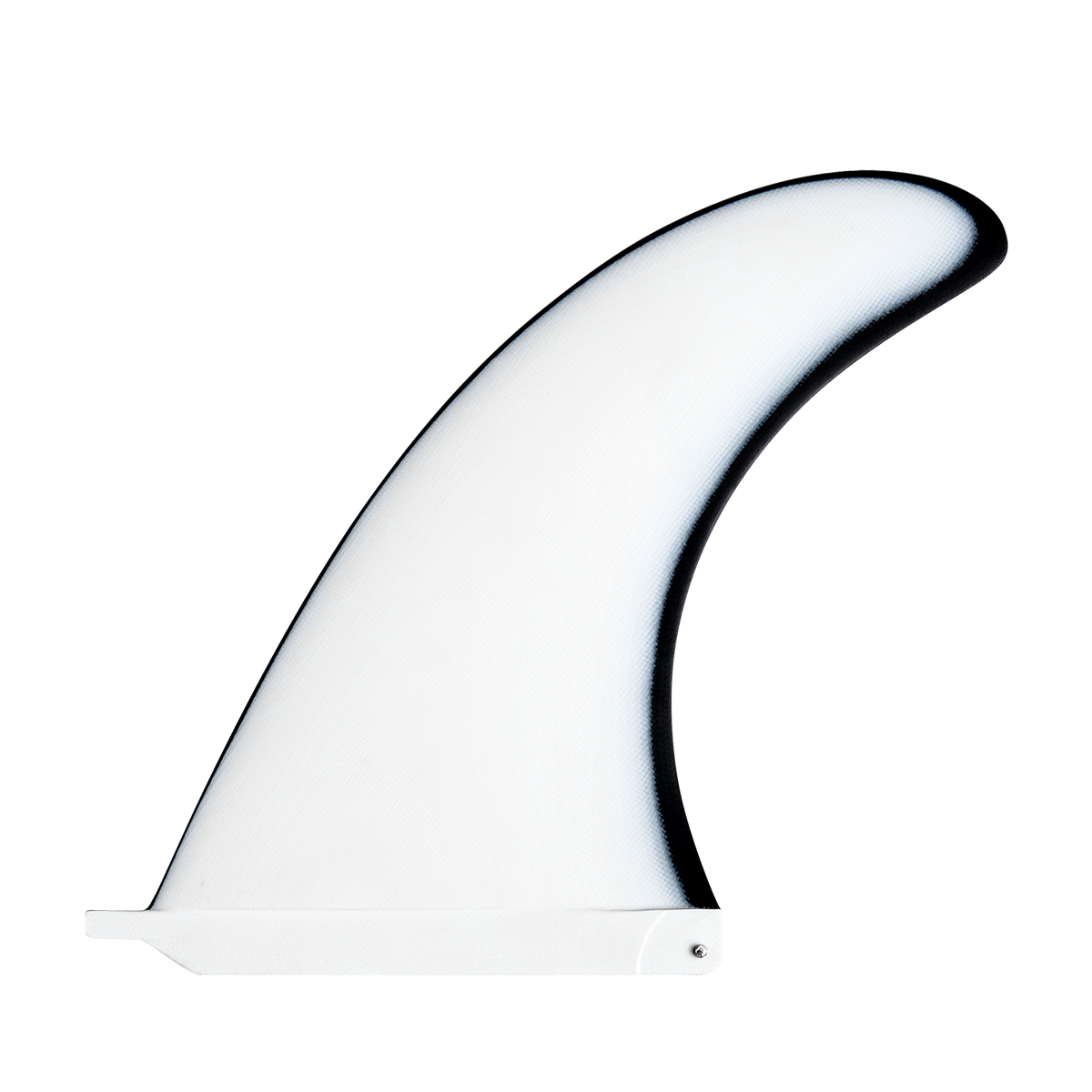
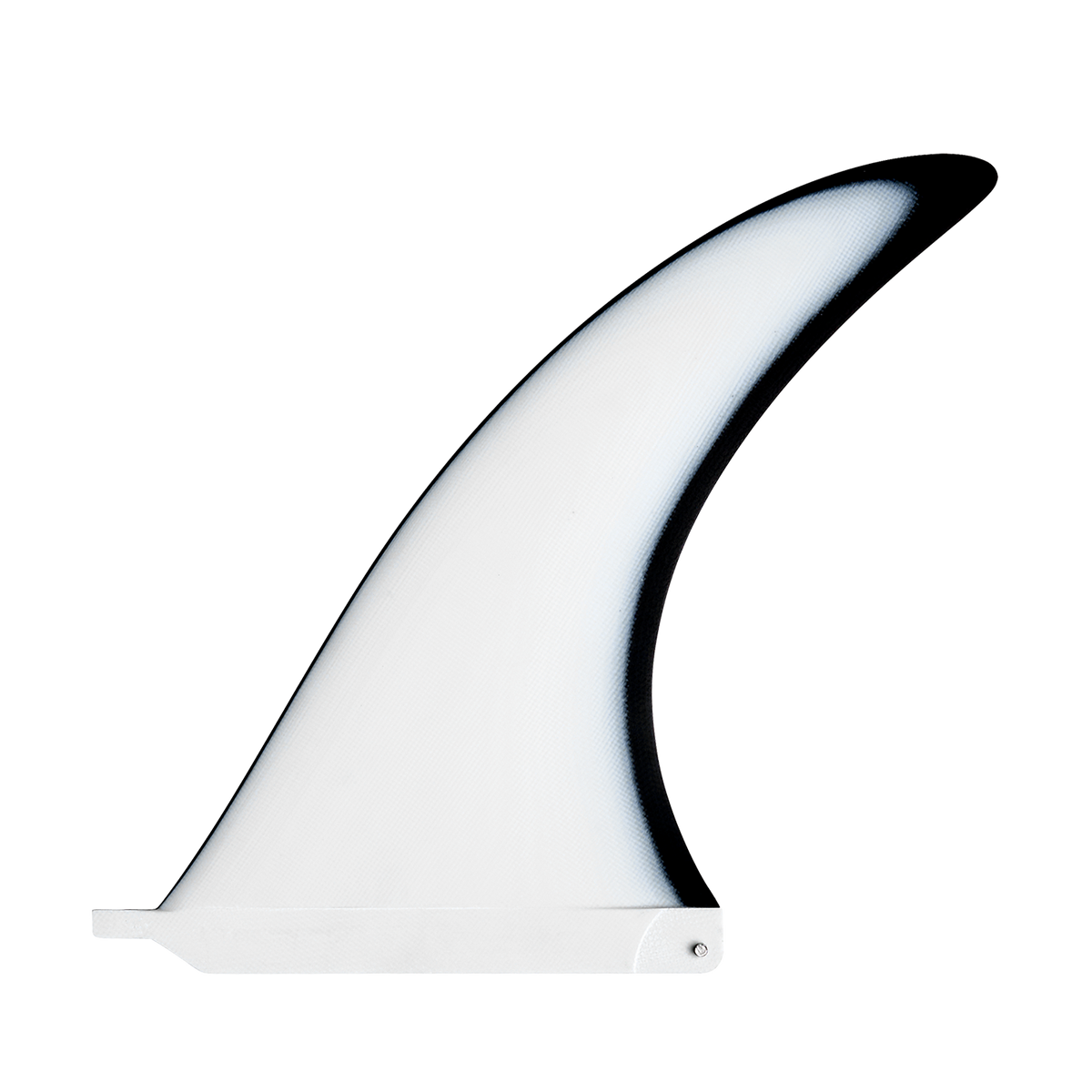
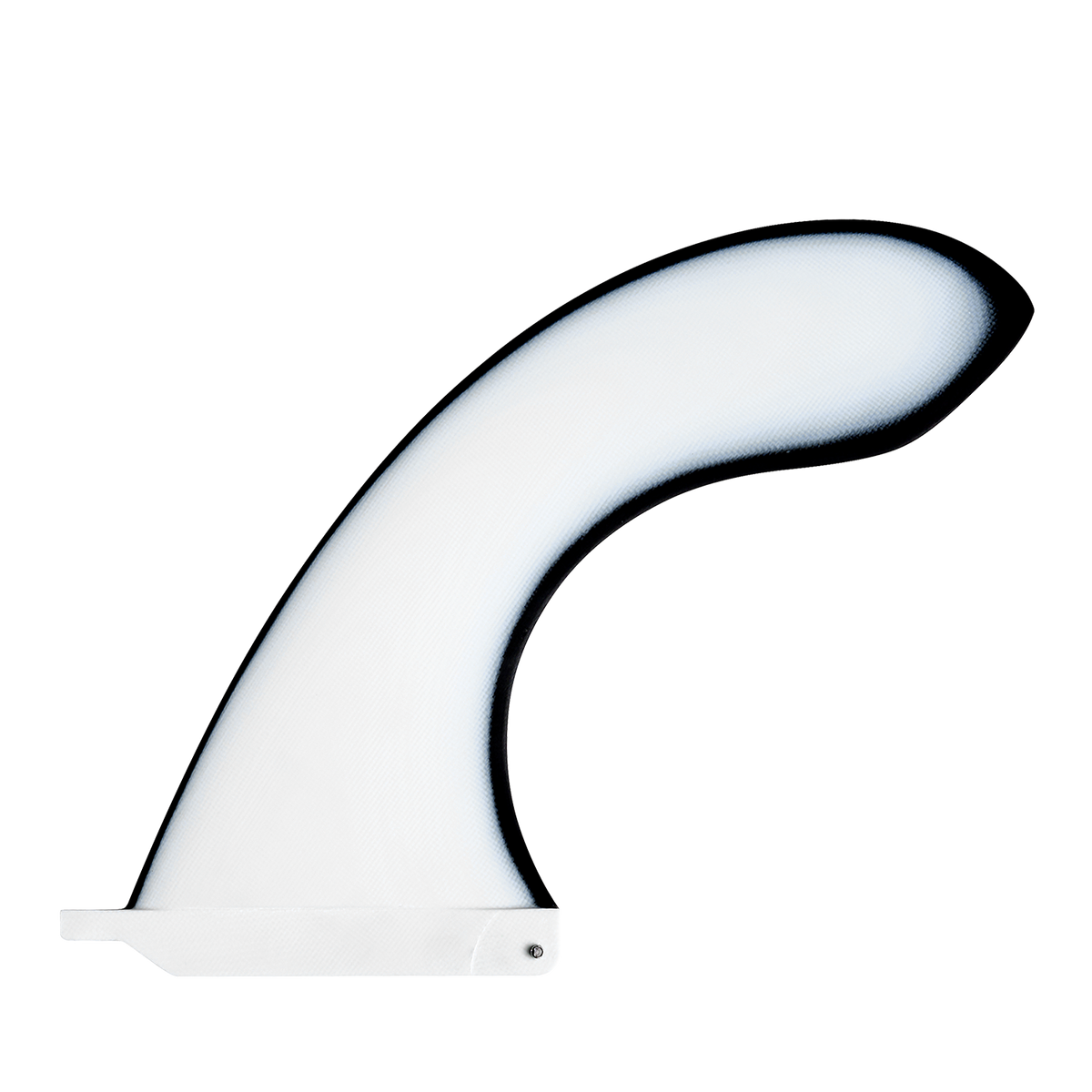
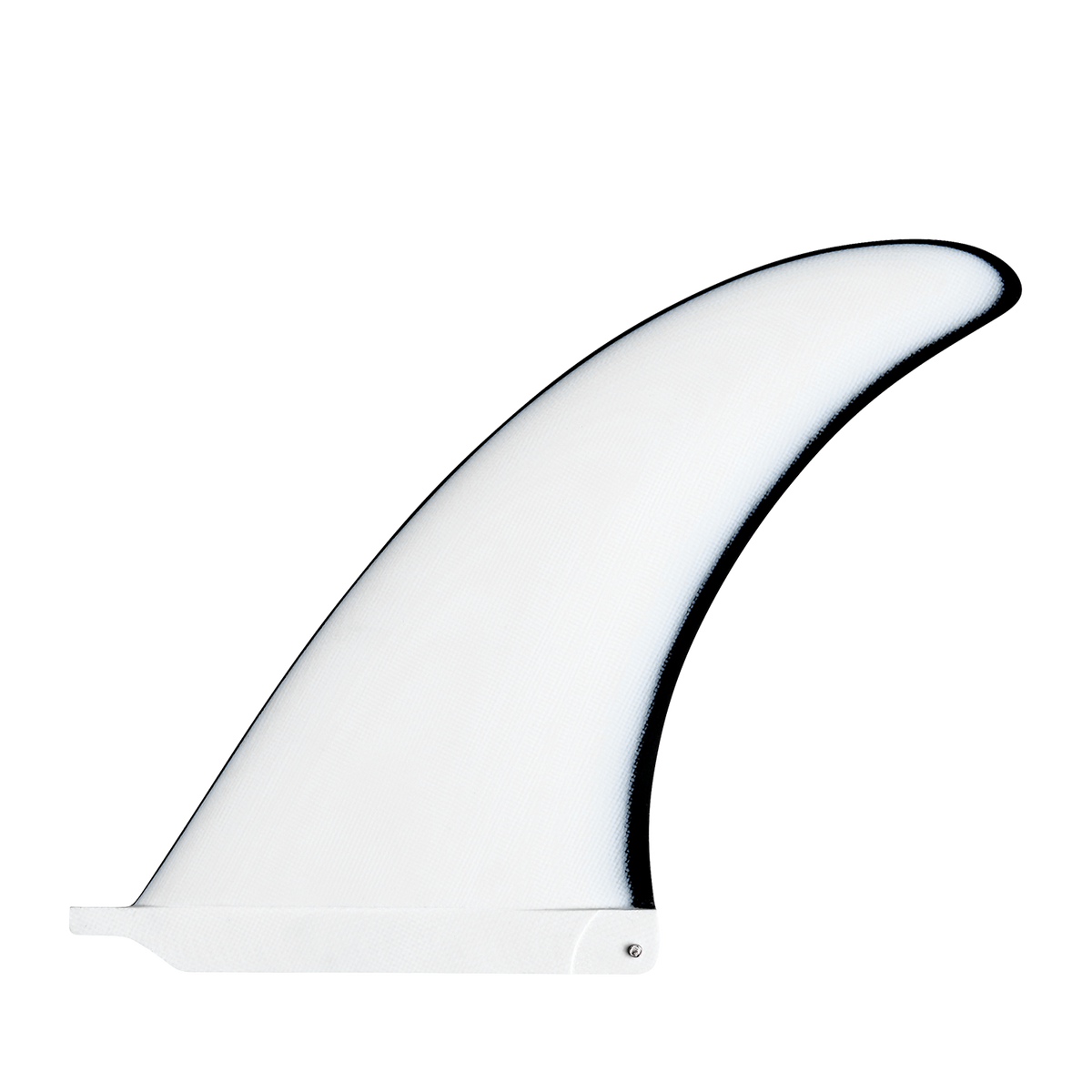
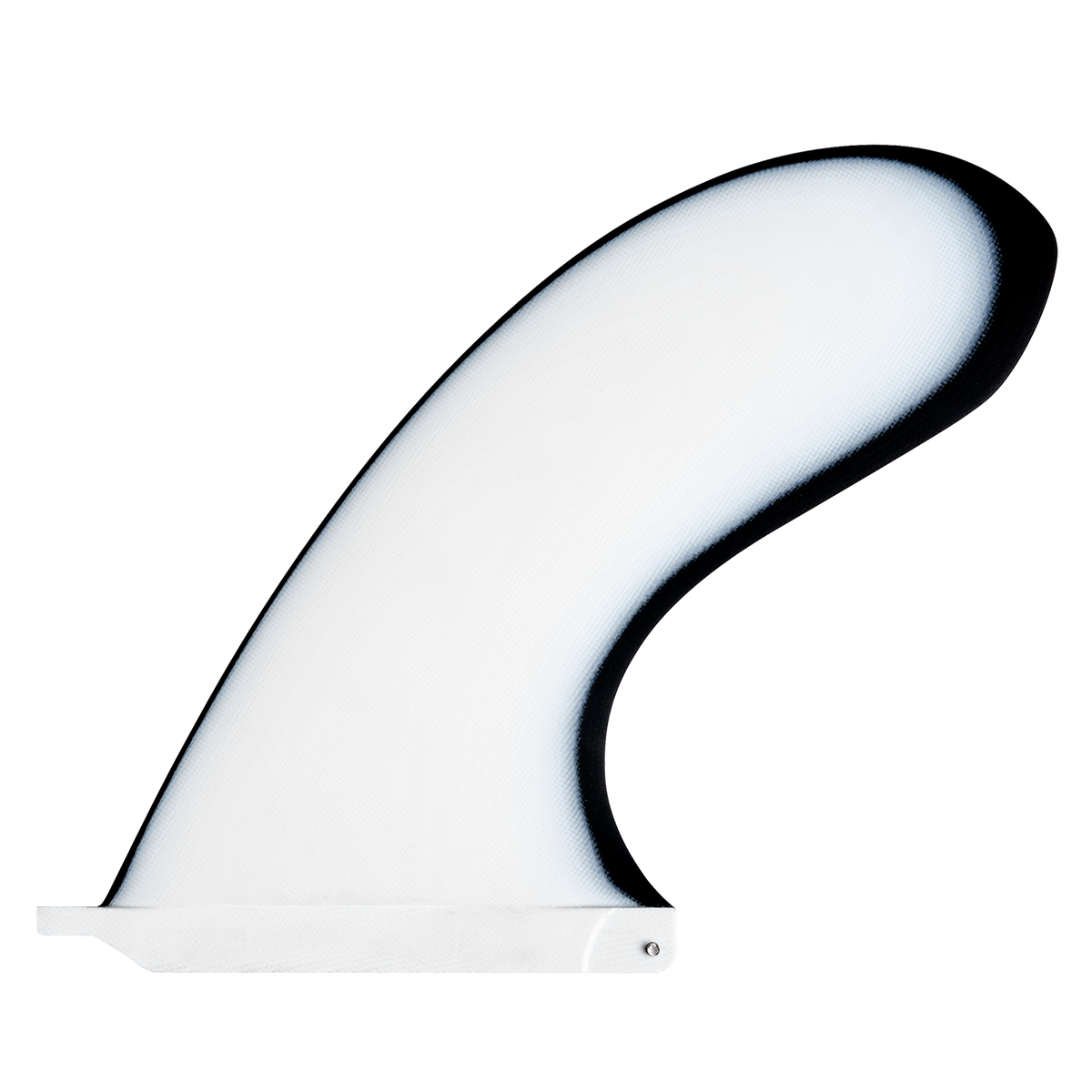
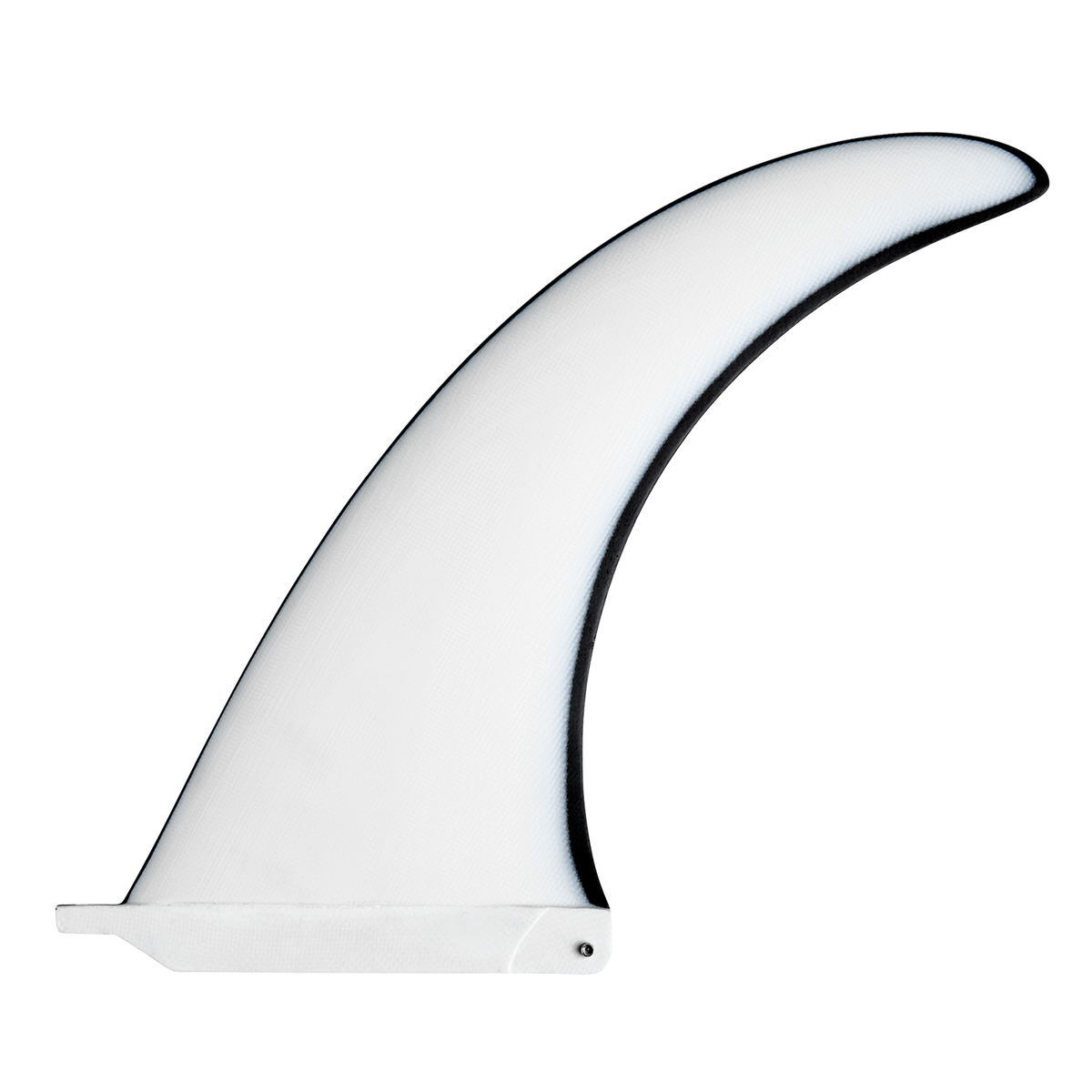
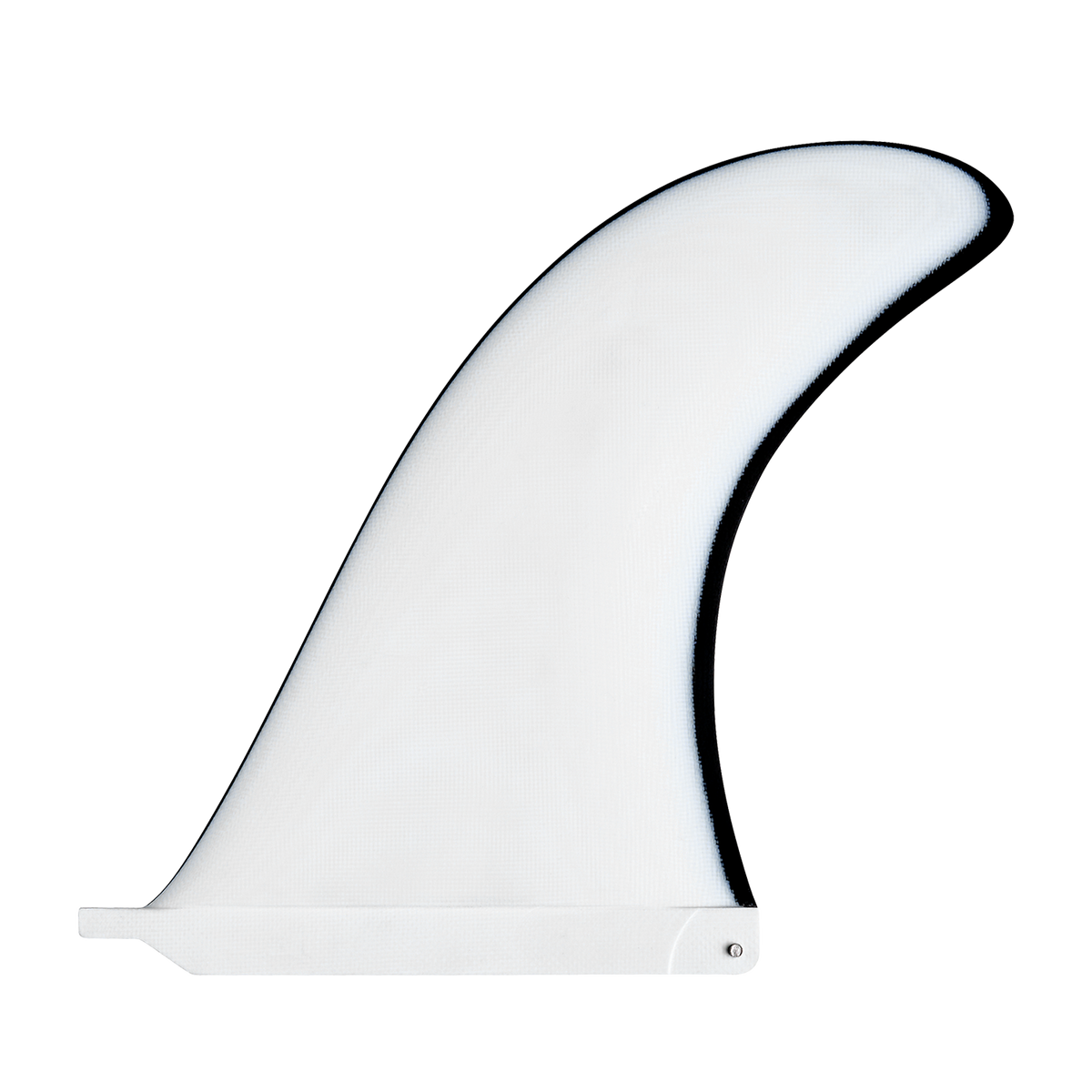
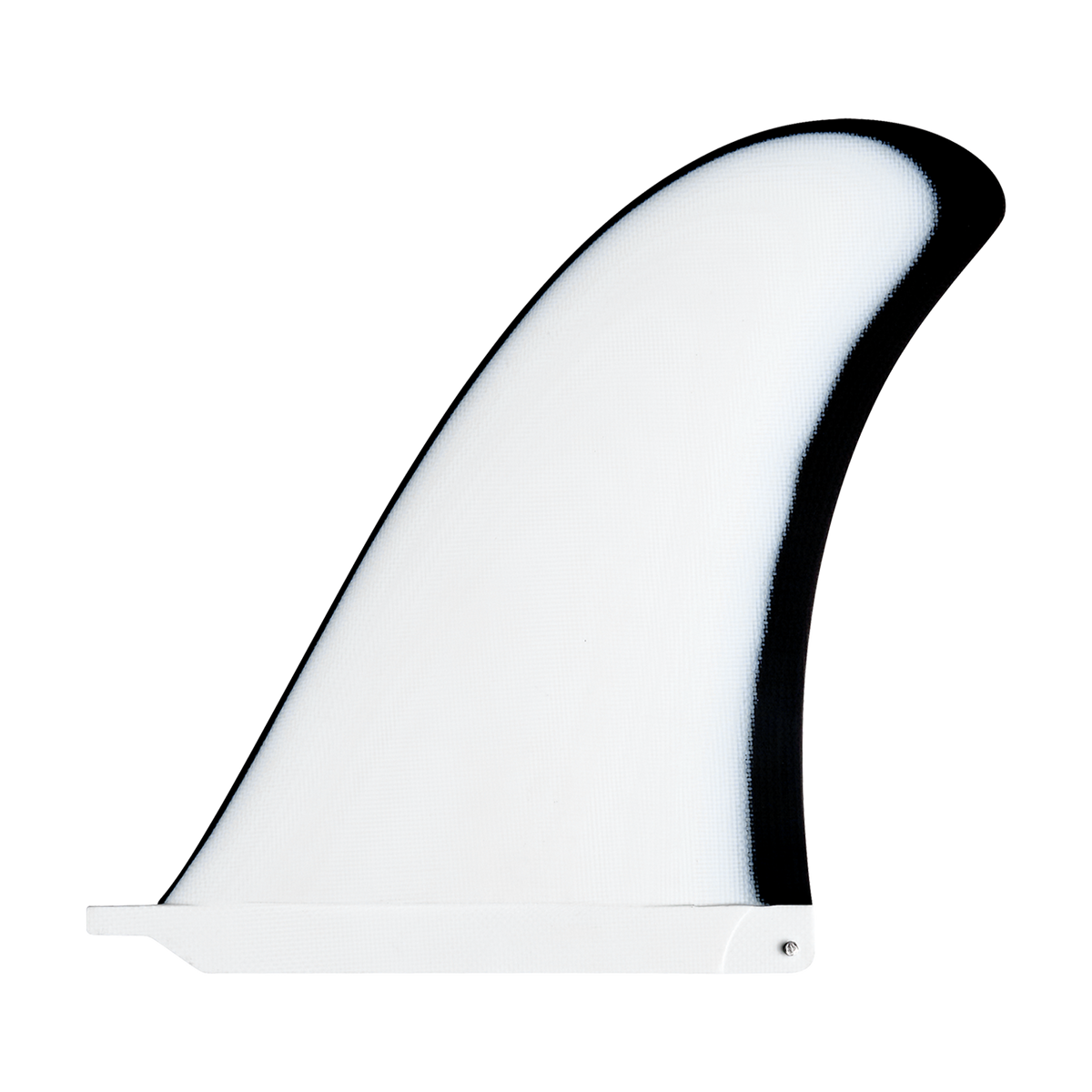
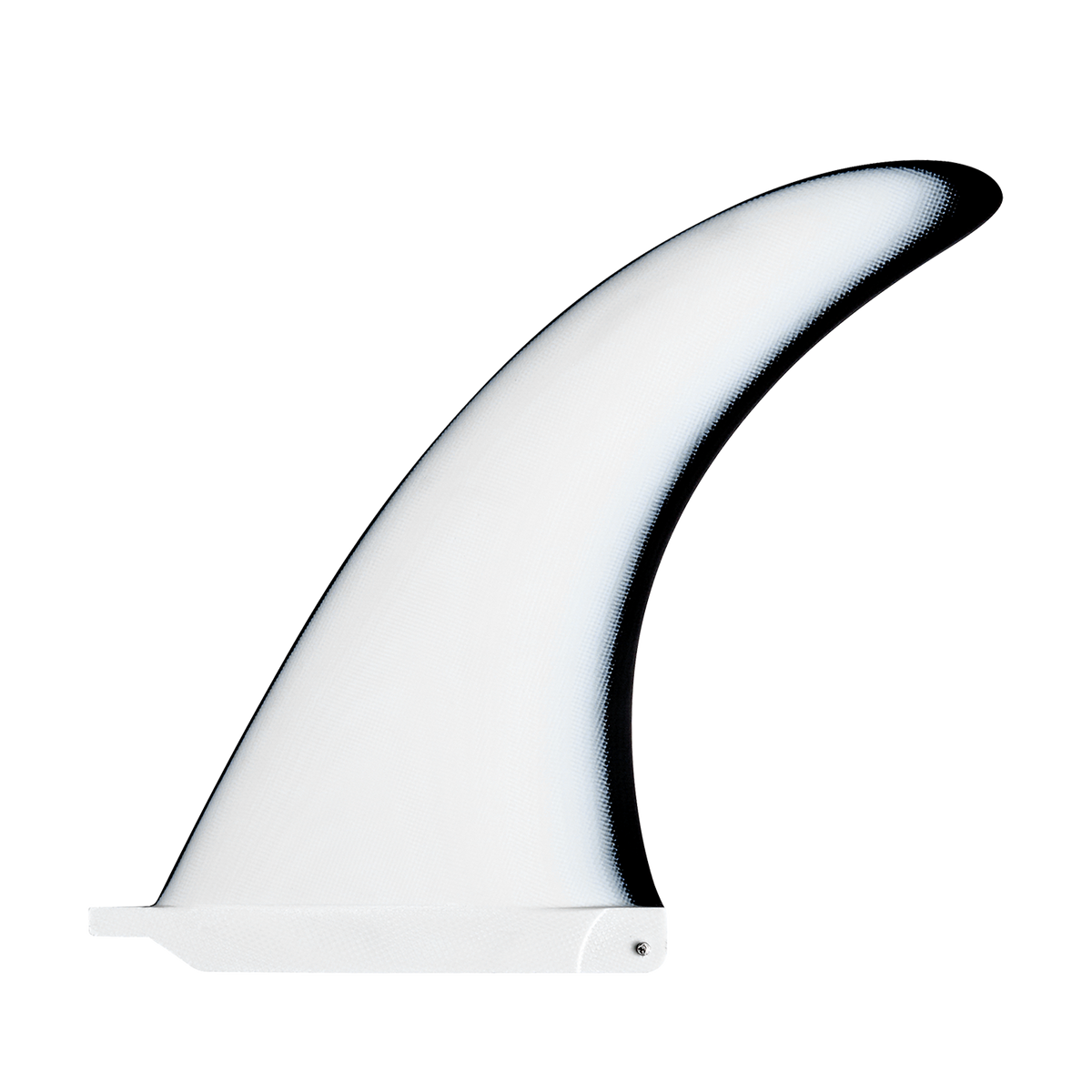
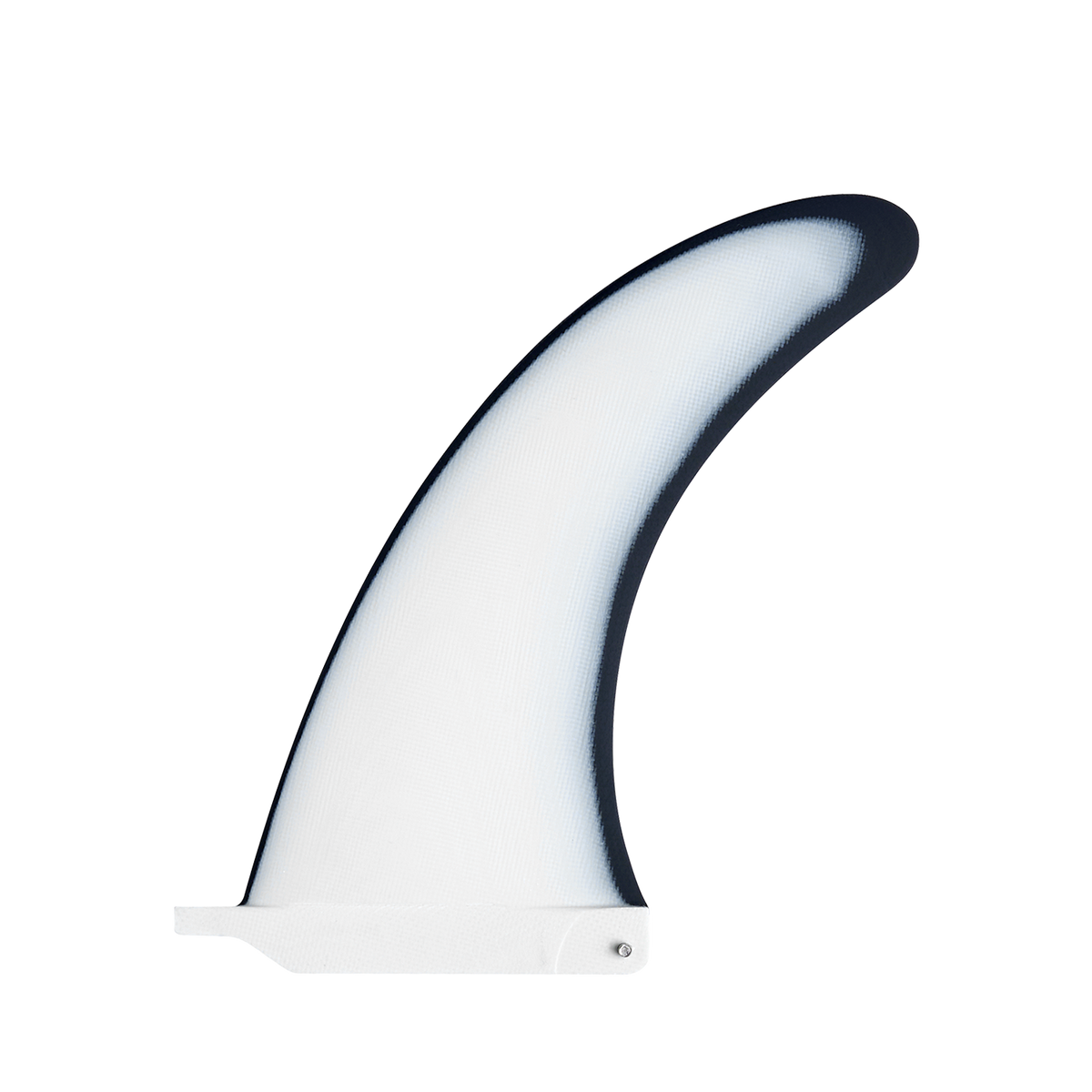
By looking at its outline, you can already anticipate its behavior in the water, the conditions it is designed for and the type of surfing it favors. Below are 3 examples of templates from our single fin range, with the Amalgam (“upright” template), the Fewer (“raked” template) and the Quirk (“neutral” template)

Upright templates: pivot and reactivity
An upright template is defined by little rake. The fin is more vertical, with a tip sitting relatively close to the base.
This type of template favors pivot. The board turns tighter, changes direction faster and needs less space to maneuver. They are particularly suited to beach breaks and short, punchy waves, where you need to react fast and tighten your lines. They suit dynamic surfers who like linking quick, vertical maneuvers.
They are often found on performance shortboards or boards designed for fast but short-running conditions.
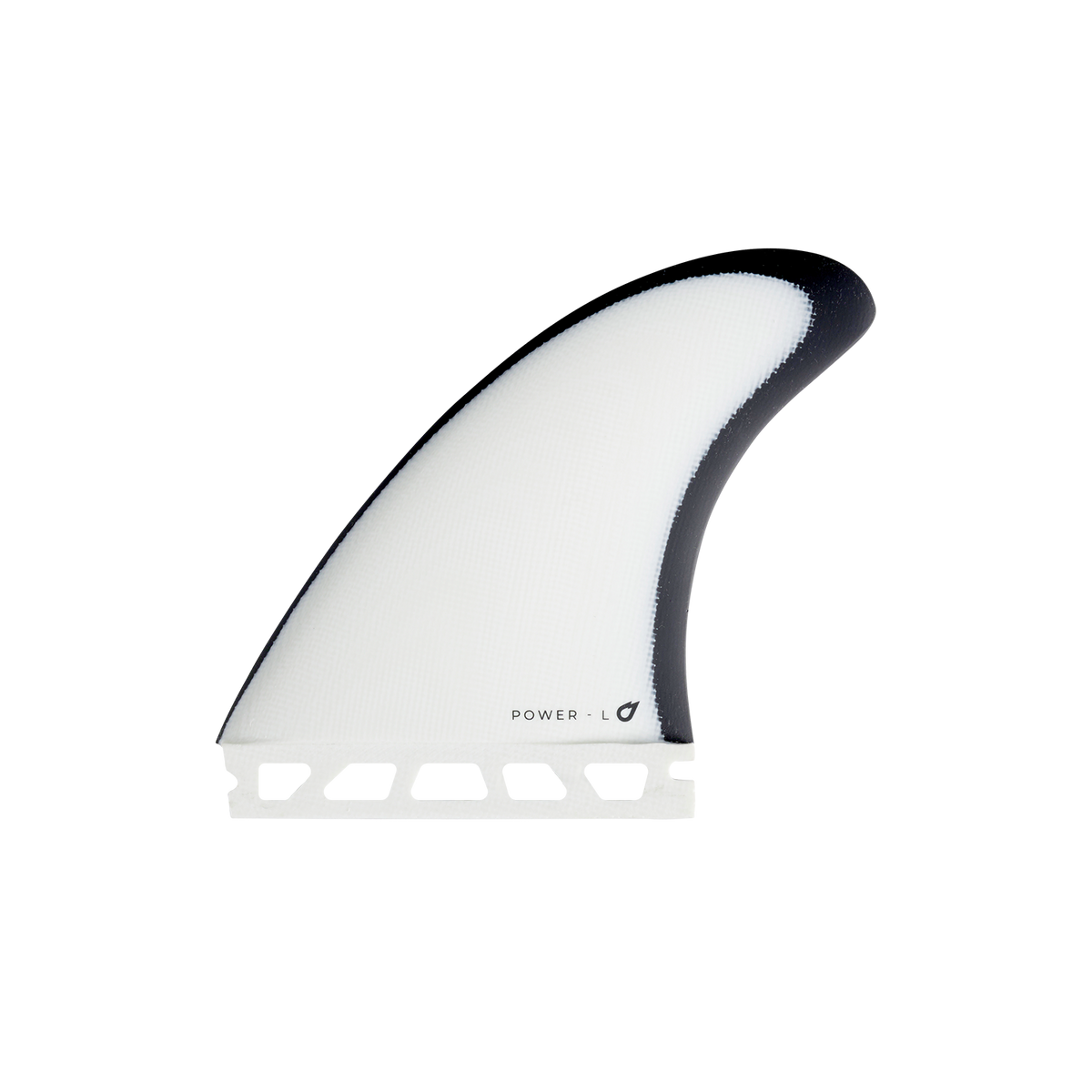
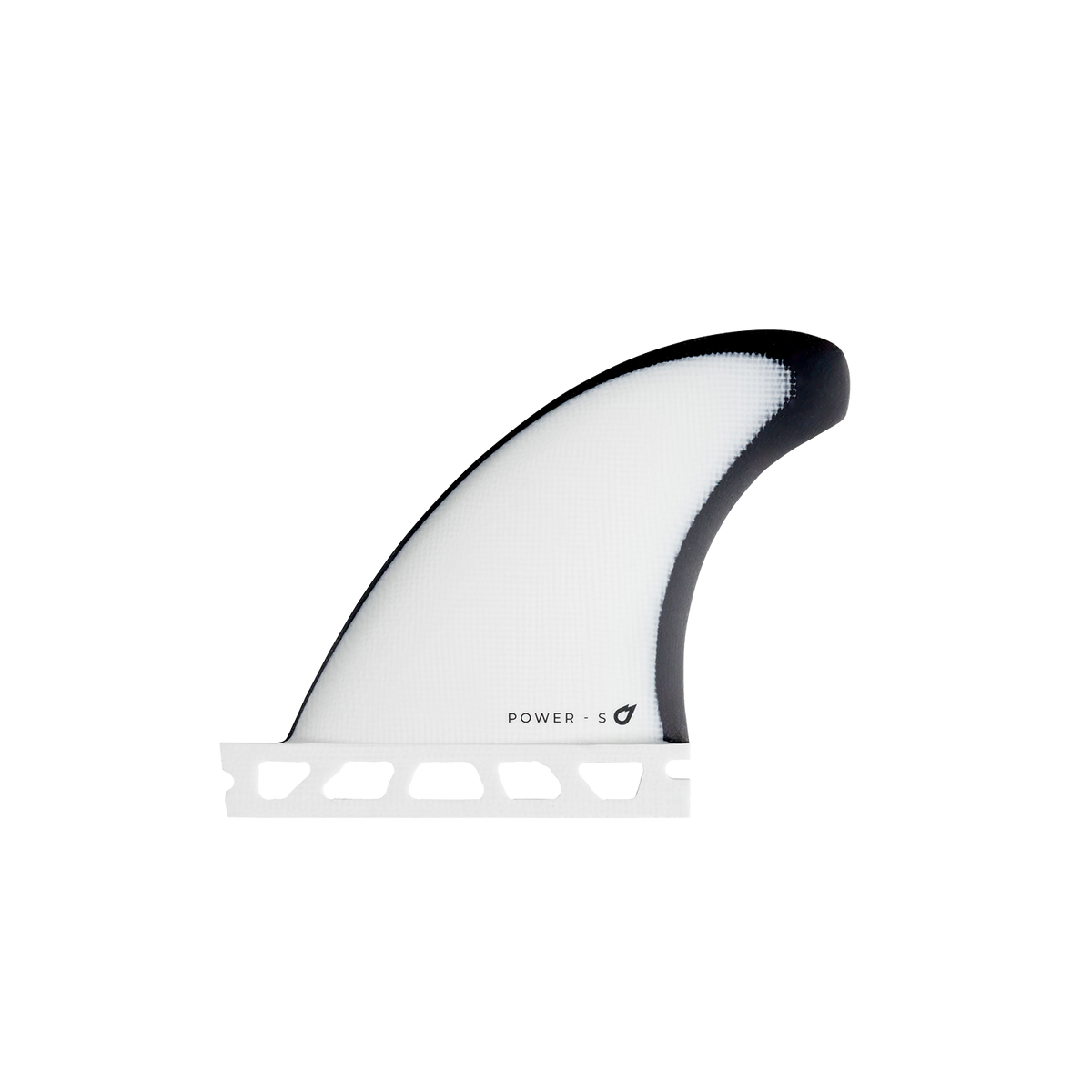
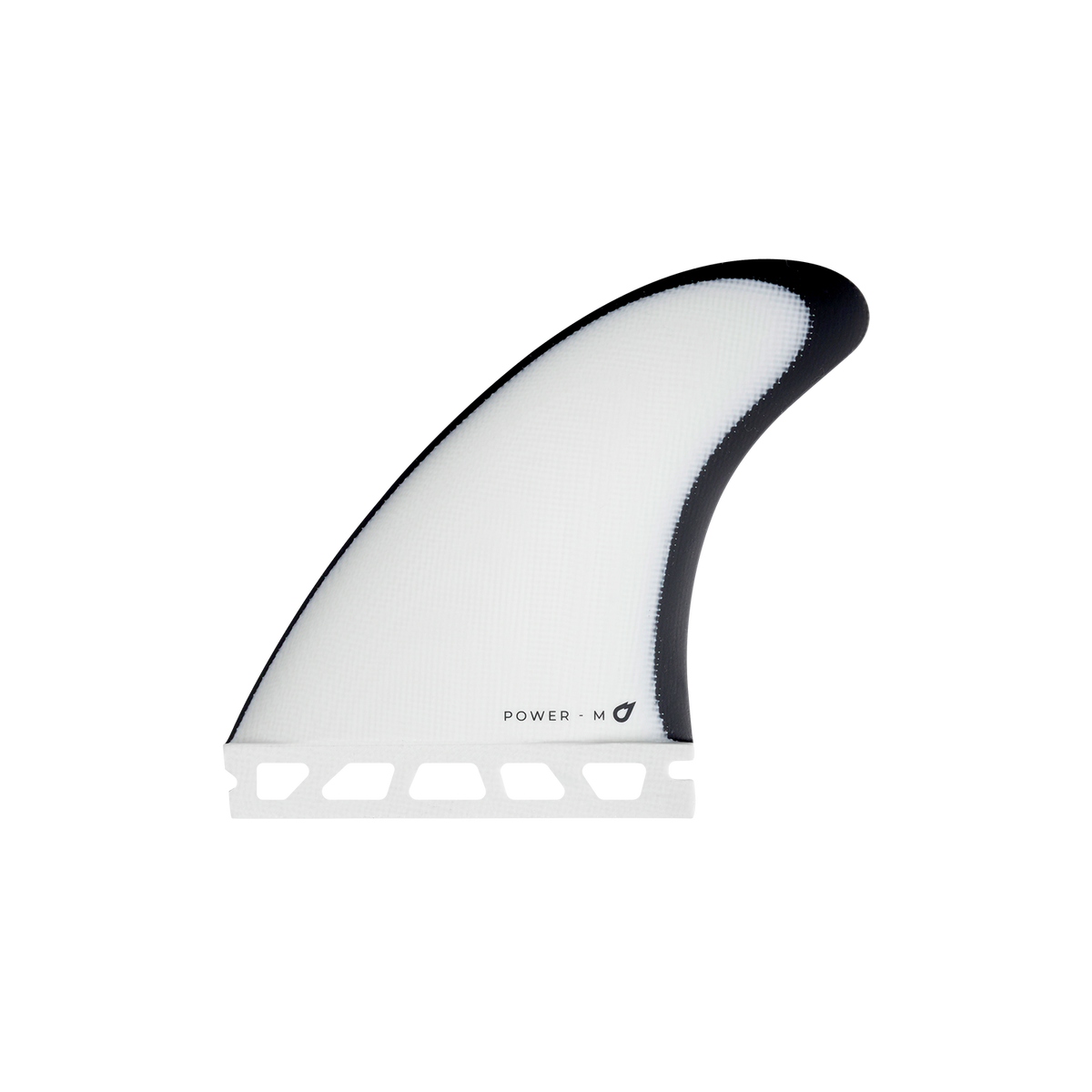
Examples of upright templates: Amalgam as a single fin or Power as a thruster.
“Raked” templates: projection and long lines
A template with rake has a tip swept back toward the tail. The base is generally longer and the surface area is better distributed toward the rear.
This type of fin favors long, committed turns and projection. The board draws lines more than it pivots. It maintains speed on long walls and offers excellent hold when pressure increases.
Raked templates are particularly effective on point breaks, reef breaks or any long wave with a proper wall. They suit powerful surfers who push hard on their rails and look for committed, drawn-out surfing.
They are frequently found on power-surfing shortboards, step-ups or boards designed for quality waves.
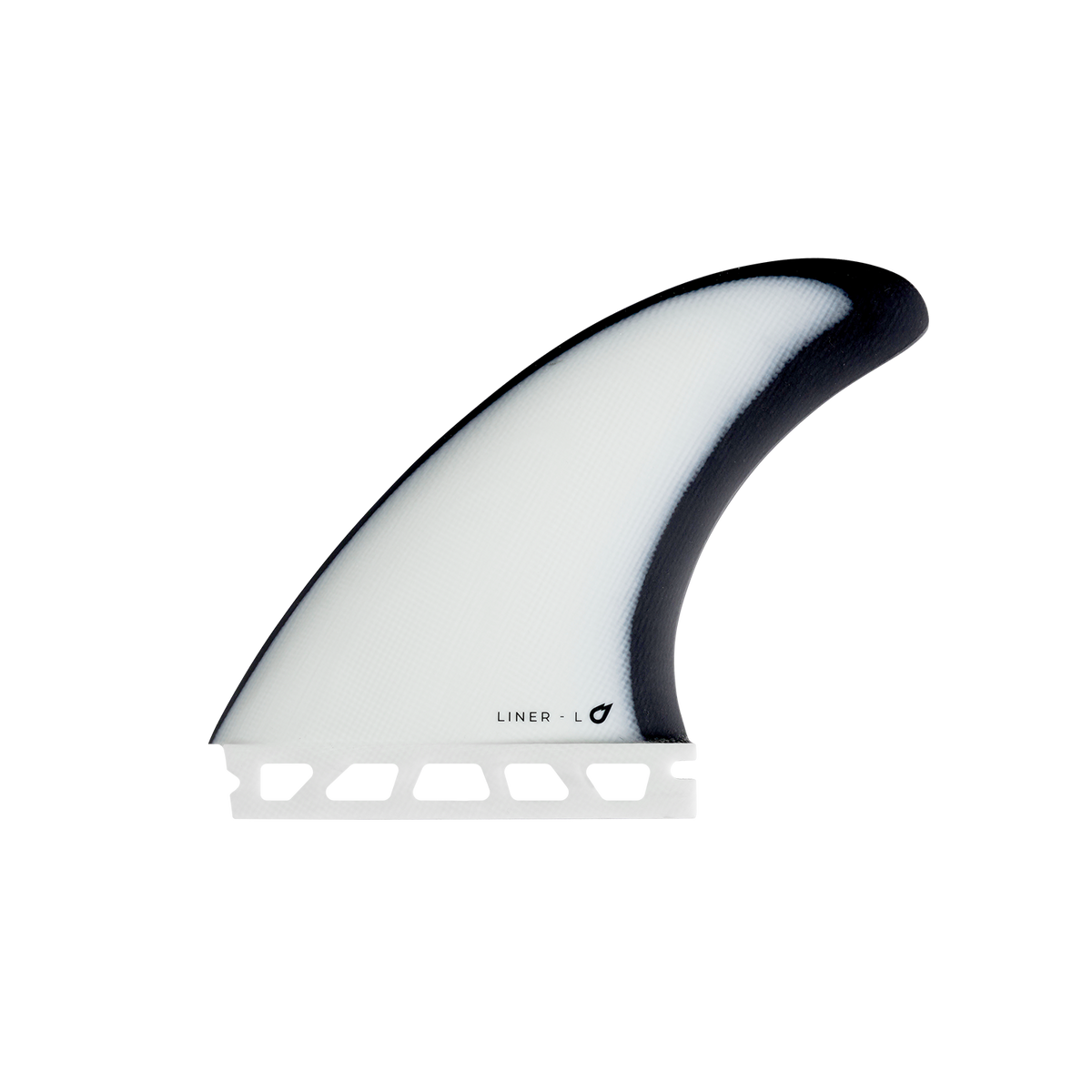
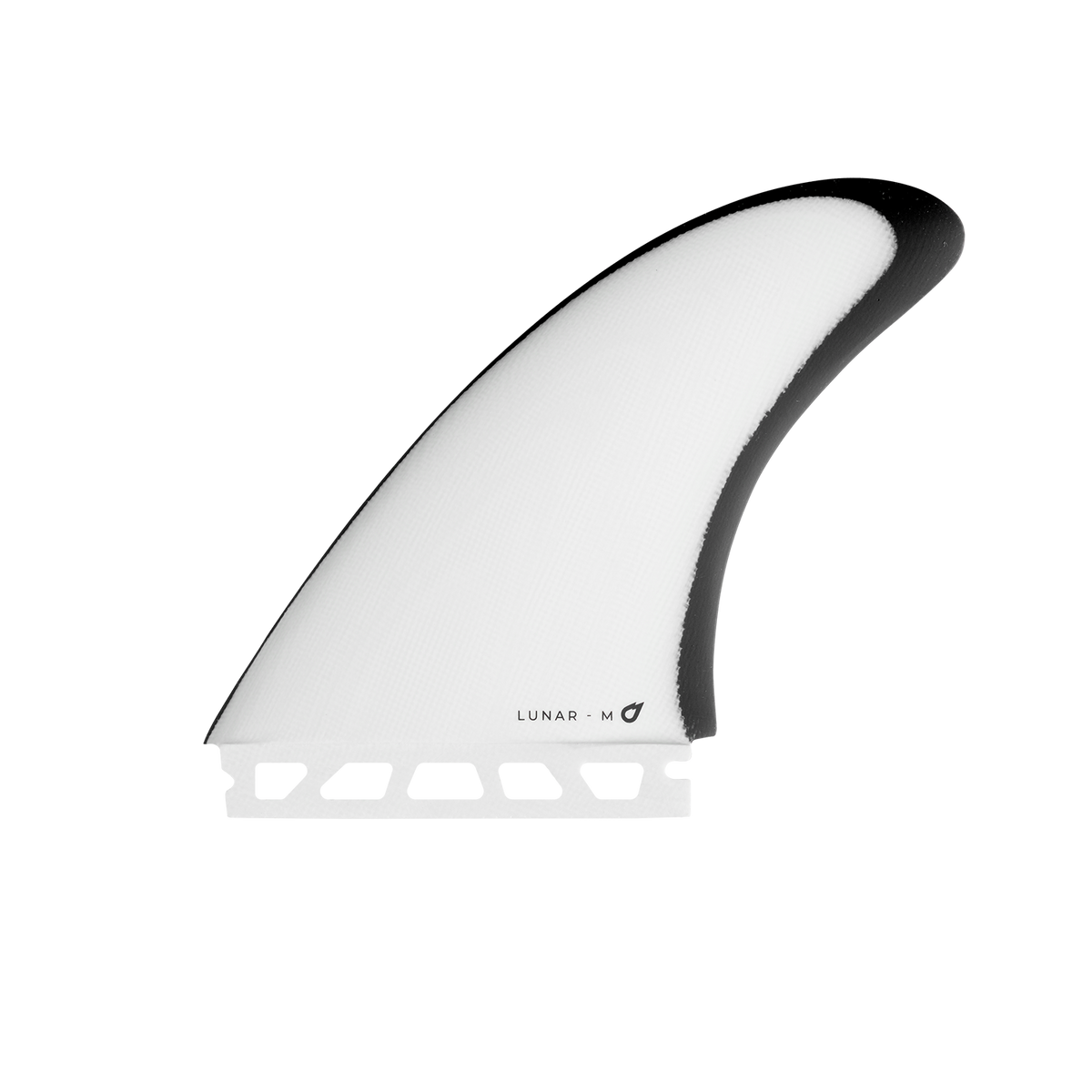
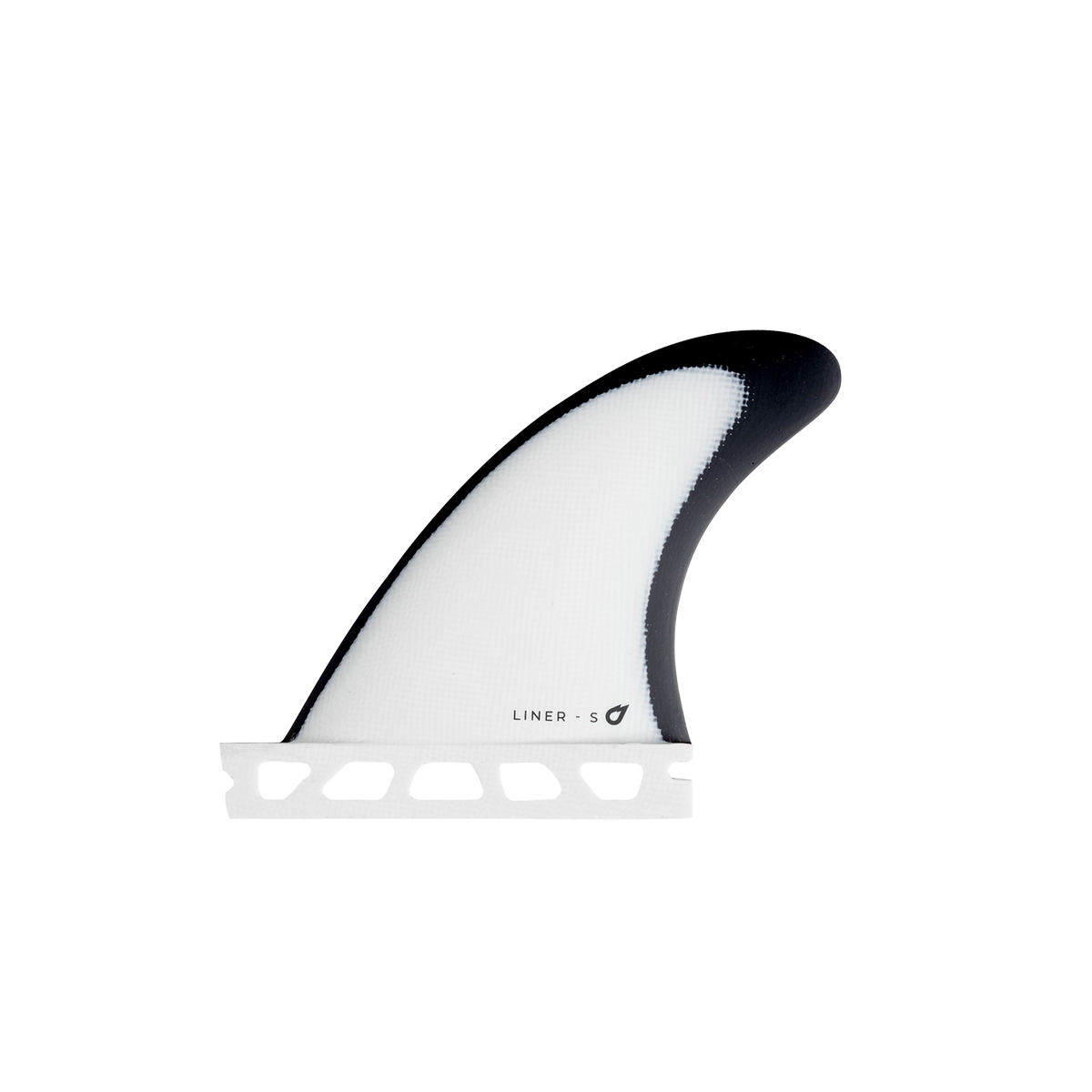
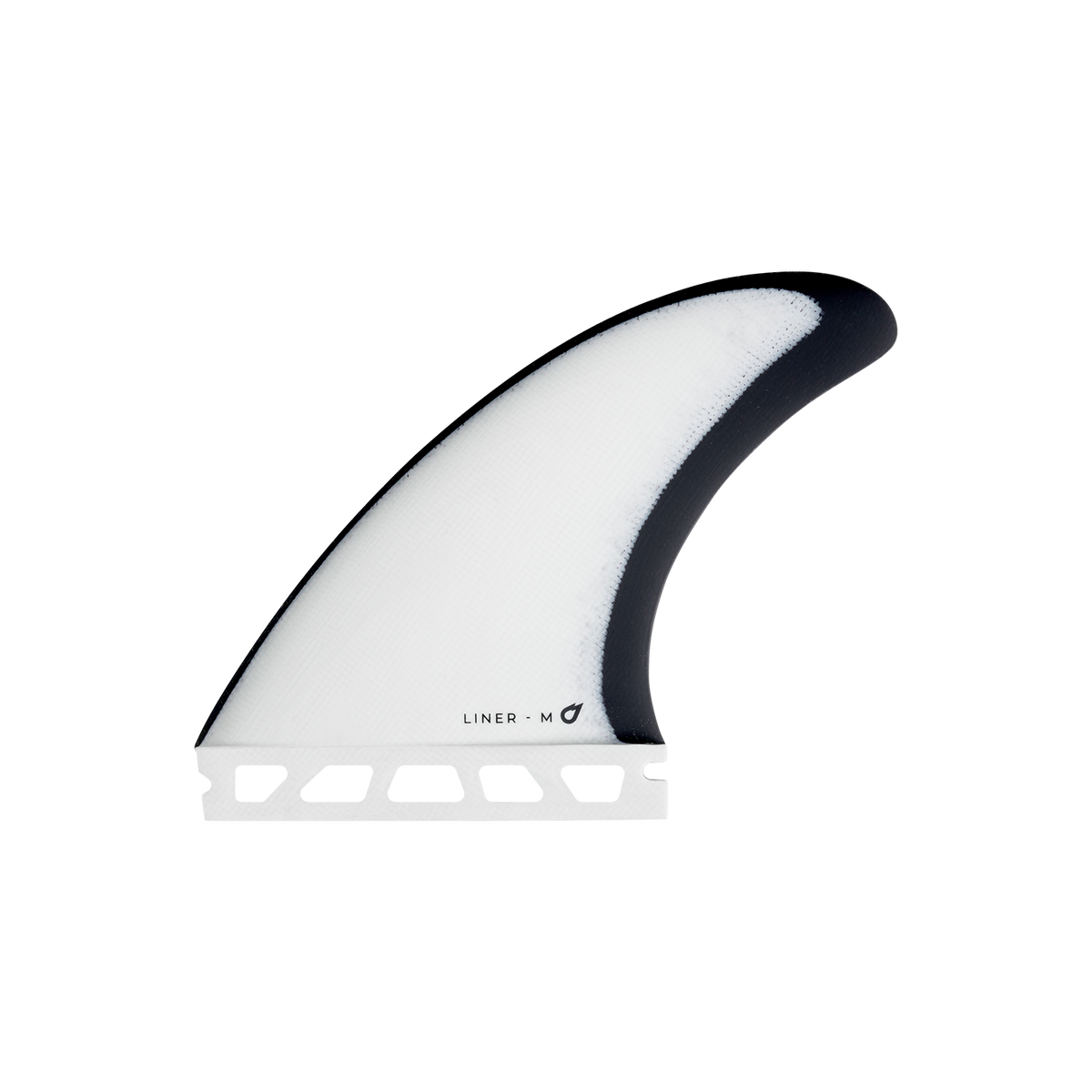
Examples of “raked” templates: Fewer as a single fin or Liner as a thruster.
Neutral or balanced templates: versatility and adaptability
Balanced templates sit between these two extremes. They feature moderate rake, a proportionate base and evenly distributed surface area.
This type of fin offers a compromise between pivot and projection. It allows the board to turn easily while maintaining drive when the wave opens up. It is often the most versatile choice.
Balanced templates suit a wide range of surfers, from intermediate to advanced, and adapt to varied conditions. They work just as well on beach breaks as on more organized waves.
They are frequently found on versatile shortboards, hybrids or all-round boards designed to handle the widest possible range of conditions.
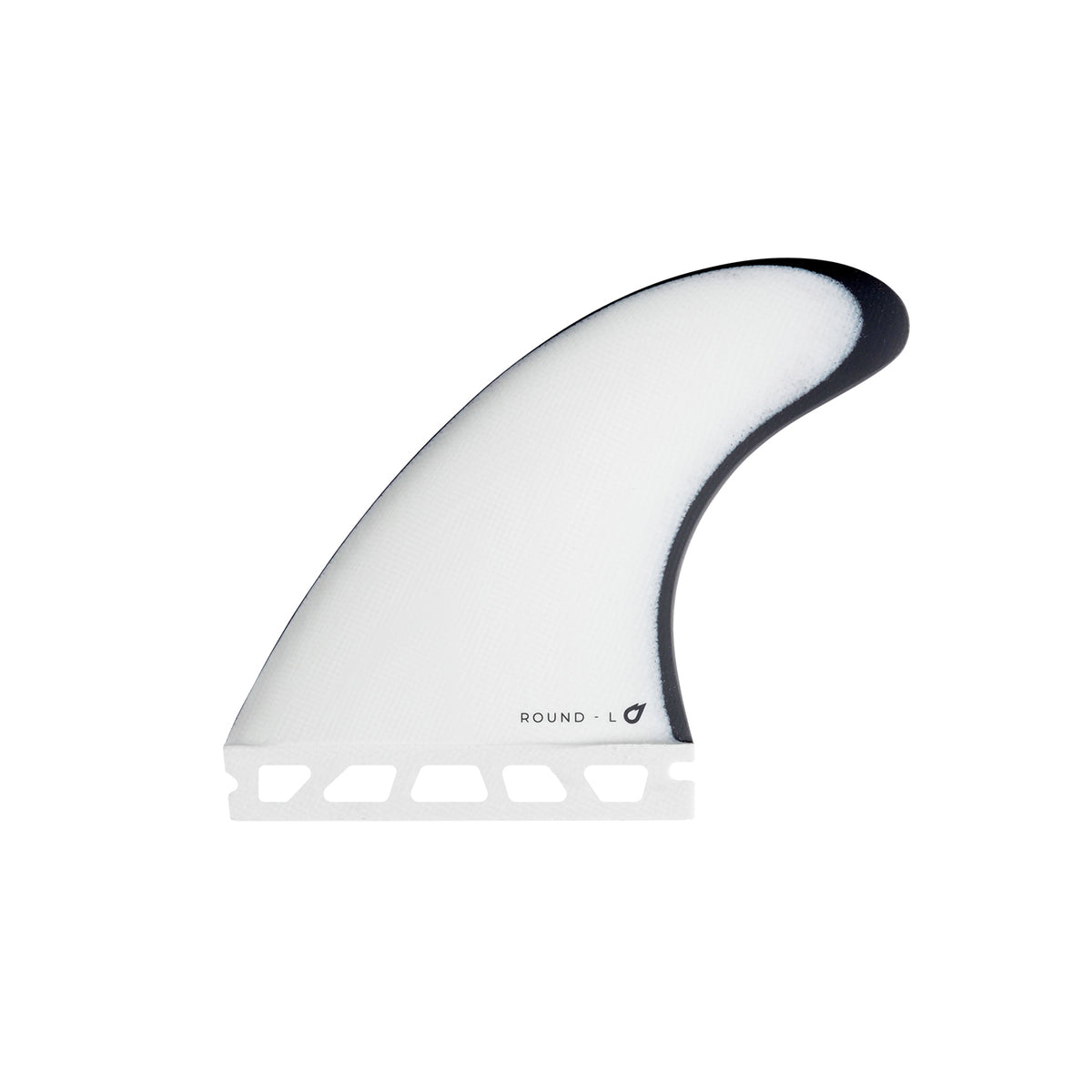
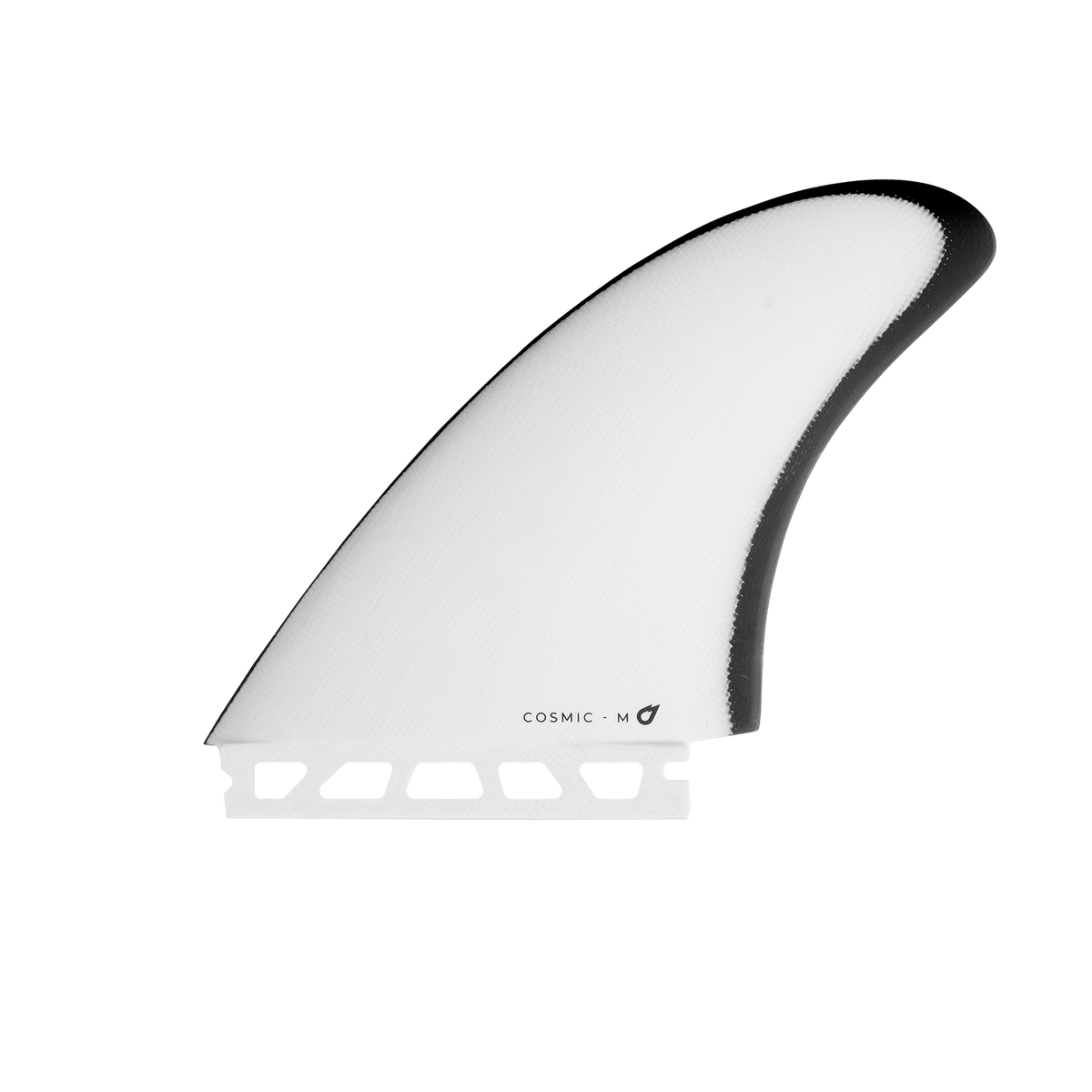
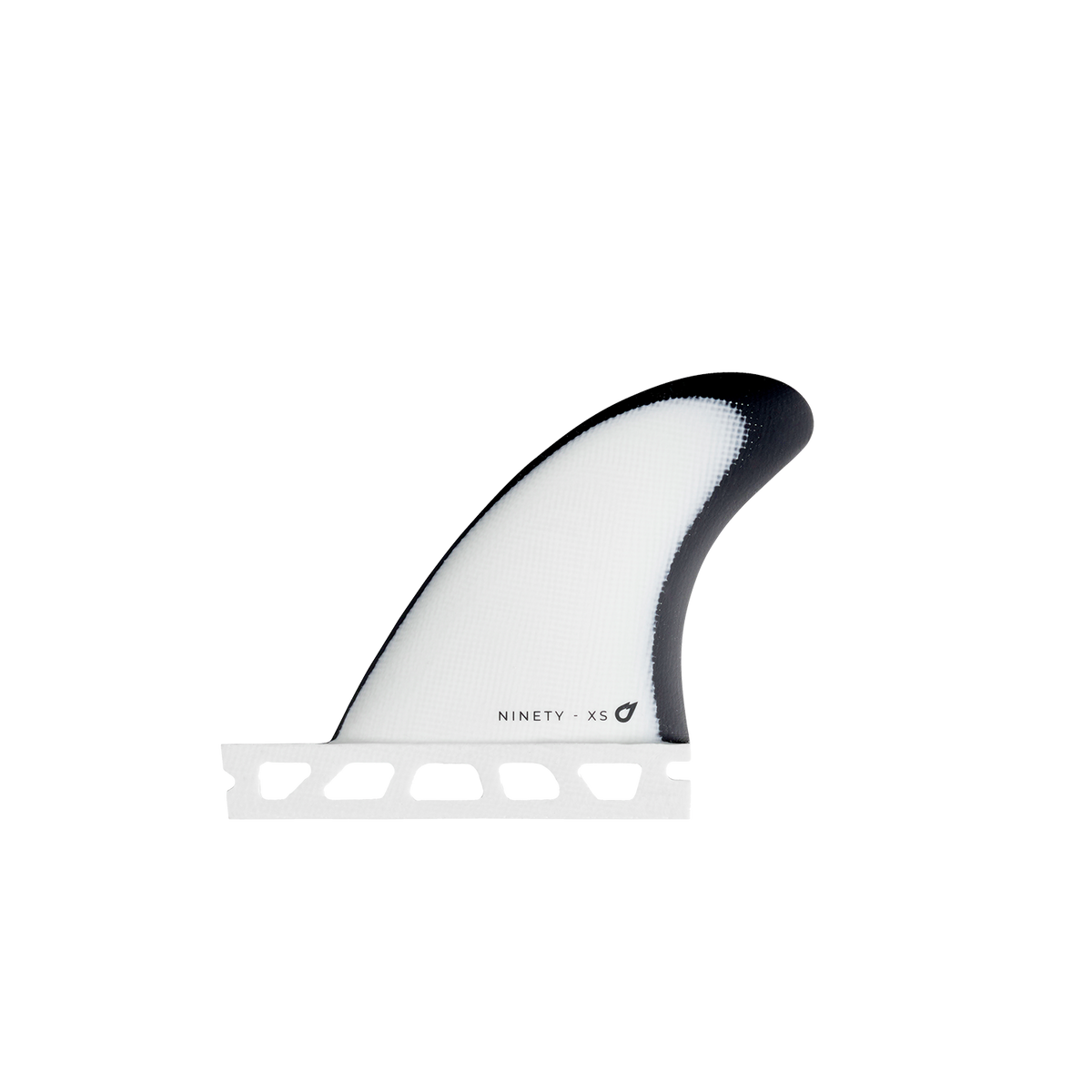
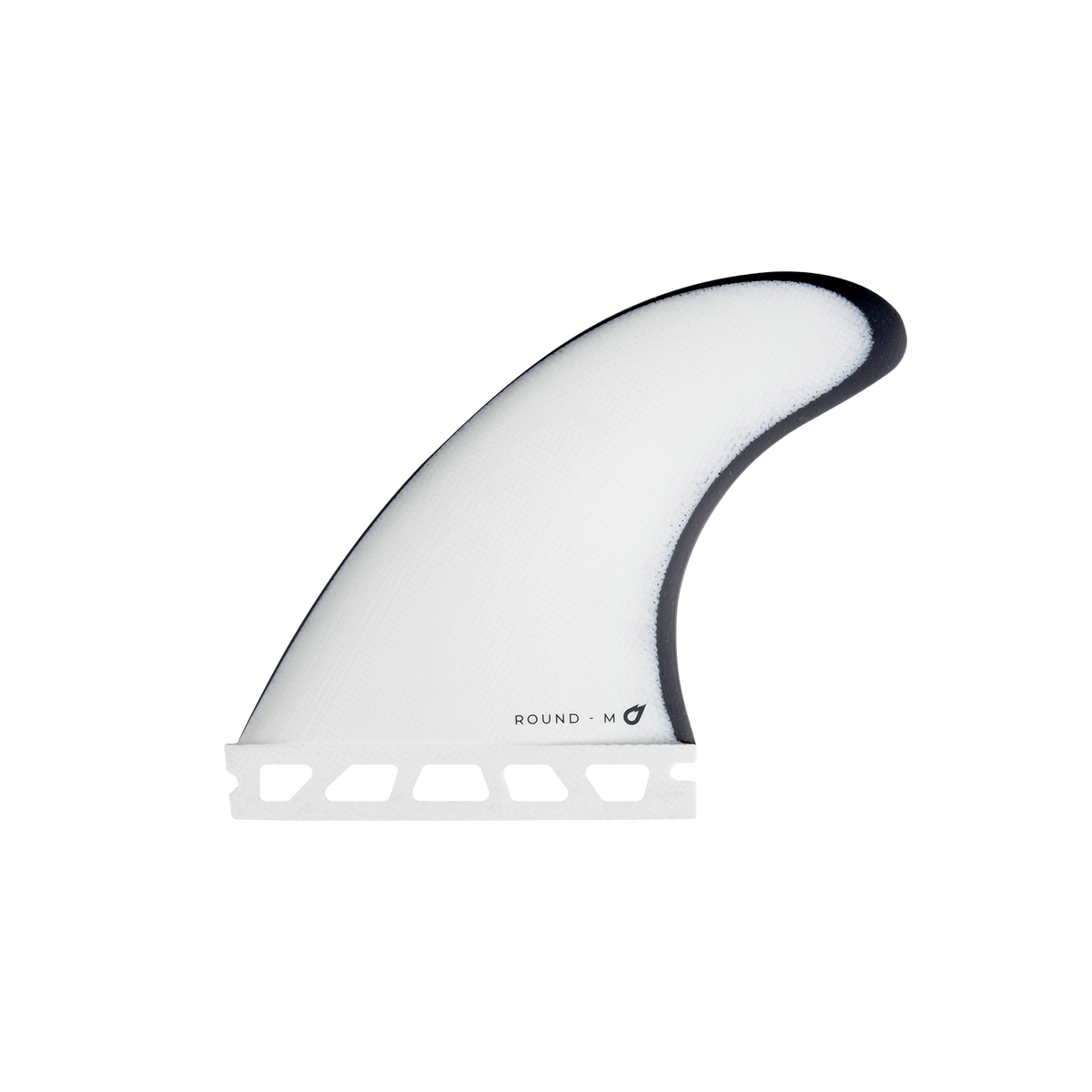
Examples of neutral or balanced templates: Quirk as a single fin or Round as a thruster.
In short
The template gives a very clear first read of a fin’s program:
Upright template → pivot, reactivity, short waves, vertical surfing.
Ex → Amalgam as a Single / Power as a thruster
Raked template → projection, long lines, powerful waves, committed surfing.
Ex → Fewer as a Single / Liner as a thruster
Balanced template → versatility, adaptability, varied surfing.
Ex → Quirk as a Single / Round as a thruster
Understanding the template already helps guide your choice before even getting into the details of surface area, foil or material. It is often the first indicator of a fin’s character.
 Surfer: Mateia, GONG team rider, on Atomic EPS.
Understanding a fin is not just about looking at its size or shape. Behind every feeling underfoot, speed, hold, flow or reactivity, there are real hydrodynamic forces at work. As the board moves forward, water flows around the fins, creates pressure, generates resistance and transforms the surfer’s energy into motion.
These mechanisms explain why a board accelerates out of a turn, why it holds in the pocket, why it pivots tightly or, conversely, draws long arcs. They also define the subtle balance between control and freedom.
To truly understand the behavior of a setup, it is essential to distinguish several fundamental concepts:
lift, which creates lift;
drag, which generates resistance;
drive, which transforms pressure into propulsion;
projection, which carries speed forward;
pivot, which allows rotation;
hold, which secures the line;
stability, which gives consistency to the behavior;
and finally release, which allows the tail to break free in a controlled way.
These concepts form the foundation of the technical language of fins. Mastering them helps you better understand your gear, fine-tune your settings and, above all, adapt your board to your style and the conditions you encounter.
Lift
Lift is the hydrodynamic force generated by water flowing around a fin. Its function can be compared to that of an airplane wing, but in water. When the board moves forward and the surfer engages a rail, the fin sits at an angle to the water flow. Water then flows differently on each side of the profile, creating a pressure difference. This difference produces a lateral force: lift.
Unlike an airplane wing, which creates upward lift, a fin generates lift oriented toward the inside of the wave. This force helps lock the rail into the face, prevents the board from slipping and, above all, transforms pressure under the back foot into forward acceleration.
The harder you push and the faster the board goes, the more lift increases. This is what allows you to come out of a turn with more speed than you had going in. Lift is therefore directly linked to drive.
The amount of lift depends on several factors: the surface area of the fin, its foil (profile), its cant (angle toward the rail), its rake and the angle of attack during the turn. A larger or more angled fin generally generates more lift. But this effect has a downside: more lift also means more drag. The whole challenge of fin design is finding the right balance between lift, speed and control.

Surfer: Vilayta, GONG team rider, on her Matata EPS.
Drag
Drag is the resistance water creates against the board’s movement. As soon as a fin moves through the water, it generates friction and disturbs the flow: this resistance is called drag.
Drag is inseparable from lift. The more lift a fin generates, the more resistance it also creates. A large surface area, significant depth or pronounced cant increase control, but they also create more drag.
A board with a lot of drag feels stable and locked in, but can feel heavy or slow in soft sections. Conversely, a low-drag setup gives an immediate feeling of freedom and speed, but reduces control in powerful conditions.
Fin design is therefore about finding the right balance between lift and drag. Too little drag makes the board unstable, while too much drag prevents it from expressing its natural speed.
 Surfer: Vilayta, GONG team rider, on Steve EPS.
Drive
Drive refers to a board’s ability to transform the surfer’s pressure into controlled acceleration through a turn.
When you push on the rail, the fins and rails generate hold, allowing the board to resist sliding, maintain its line and convert pressure into acceleration.
It is this feeling of push under the back foot that you feel in a bottom turn, cutback or long committed carve. The board does not slow down in the turn, on the contrary, it transforms the pressure applied to the rails and fins into speed.
Different drive sensations can be felt depending on the fins used. In single fin setups, drive is generally more linear, fluid and continuous. The board likes long lines, big arcs and progressive pressure. Energy builds along the length of the rail, with a stable and grounded glide. The surfer loads the board more progressively, and speed is maintained through a wide line.
Whereas in a thruster, drive is often more directional, reactive and timing-dependent. The side fins allow you to load the back foot harder, turn tighter and get back up to speed faster. The drive can feel more explosive, but it also requires more precise pressure: if the surfer pushes at the right moment, the board accelerates strongly through the turn; if the timing is off, it can lose speed or feel more bogged down.
A board with a lot of drive gives a feeling of power, stability and continuity. It allows you to keep speed even through a pronounced turn. Conversely, a board with little drive can feel soft, slippery or held back through the arc. But too much drive can also make a board more demanding: it grips a lot, holds its line strongly and can become less free, less pivoty or harder to slide.
Finally, drive must be distinguished from pure speed. A board can be fast in a straight line because it has little drag, without necessarily having a lot of drive through turns. Drive is the ability to create and control speed through pressure.
 Surfer: Mateia, GONG team rider, on Vibe EPS.
Projection
Projection refers to a board’s ability to release the energy accumulated during pressure.
It comes into play mainly at the exit of a turn, after a bottom turn, cutback or pump. When the surfer releases pressure, the board comes out of the turn with momentum. This energy allows it to cover distance toward the next section of the wave.
Projection gives a feeling of rebound, liveliness and sometimes explosiveness. It corresponds to the moment when the board “springs” forward, upward or down the line.
It depends on drive, because the board first has to be loaded before it can release energy. A board with a lot of projection comes out of turns fast and allows you to link maneuvers. It helps the surfer make sections, climb back toward the lip or keep momentum after a turn.
The surfer loads the board through the turn, then the board releases that energy on exit. Projection is therefore not just speed, but speed relaunched after pressure. It carries the energy created during the turn and transforms it into movement toward the next part of the wave.
In short, projection is the board’s ability to release, relaunch and carry energy out of the turn.
 Surfer: Mateia, GONG team rider, on Chemical EPS.
Pivot
Pivot is a board’s ability to change direction quickly around an axis point, generally located near the tail. It is what allows tight turns and quick transitions from one rail to the other.
Unlike drive, which favors forward projection, pivot favors rotation. It is often associated with more upright fins, with little rake and a shorter base. This geometry reduces longitudinal resistance and makes it easier to initiate the turn.
A fin with less surface area and a little more flex will also enhance the feeling of pivot. The board becomes more lively, more reactive and requires less pressure to change direction.
A lot of pivot improves maneuverability, but can reduce stability and hold at high speed. As with lift and drive, it is all about balance.
 Surfer: Moritz, GONG team rider, on Fork EPS.
Hold
Hold refers to a board’s ability to stay locked into the wave face without breaking free. It is the feeling of security you get when the rail holds firmly in the pocket.
It mainly depends on the depth, surface area, rake and stiffness of the fins. A larger, deeper fin with more backward rake increases the ability to hold a line under pressure.
In hollow or fast waves, good hold allows you to engage harder without fearing that the tail will slide out. Conversely, a lack of hold results in unwanted sliding.
Too much hold, however, can make the board feel stiff and hard to release. Once again, it is all about balance.
 Surfer: Mateia, GONG team rider, on Atomic EPS.
Stability
Stability refers to the board’s overall predictable behavior. A stable board holds its line and reacts consistently to pressure.
It is influenced by fin size, depth, surface area and the position of the center fin. A larger fin placed farther back generally increases stability, while a smaller, more forward setup favors liveliness.
Stability is essential for noseriding, where the tail must remain firmly anchored while the surfer walks forward. It also reassures progressing surfers by making the board easier to read.
Excessive stability can, however, reduce maneuverability and make the board feel “sleepy”.
 Surfer: Evelin, GONG team rider, on Deano PU.
Release
Release refers to the tail’s ability to break free deliberately and in a controlled way. It comes into play when you want to pivot the board quickly or perform a more radical maneuver.
Reduced surface area, moderate depth and limited rake favor this ability to release hold. Twin setups, for example, naturally offer more release than a deep, stiff single fin.
Release brings creativity and flow to surfing. It allows the tail to slide slightly without completely losing control.
However, too much release reduces hold and can make the board unstable in powerful waves. As with all these concepts, the goal remains to find the balance suited to your style and the conditions.
 Surfer: Mateia, GONG team rider, on Fork EPS.
A fin can never be summed up by a single characteristic. Rake, base, depth, surface area and flex do not work independently of one another. Every change affects the board’s overall balance. Changing a single parameter always means adjusting several sensations at once.
Drive, for example, increases when the base is long, the surface area is large, the rake is moderate to pronounced and the fin remains relatively stiff. This combination effectively channels the water flow and releases energy out of the turn. But the more these elements are reinforced, the more projection the board gains... and the more demanding it can become to pivot.
Maneuverability, on the other hand, improves when the base is shorter, the rake is more upright, the surface area is more limited and flex is more present. The board becomes livelier and easier to redirect in a smaller space. However, this gain in reactivity often comes at the expense of control at high speed.
Pure speed is favored by moderate depth, reduced surface area in the tip and a thin profile. Less material in the water means less drag. The board glides more freely, but naturally loses a little hold when pressure increases.
In the pocket, hold relies on a different combination: more depth, greater surface area, a long base and a certain level of stiffness. These elements increase lift and stabilize the rail in the wave face. However, they also create more resistance.
This is the whole subtlety of choosing fins: every quality has its downside. More stability often means less freedom. More pure speed can reduce control. More pivot can reduce projection.
It is therefore never about maximizing one single parameter, but about finding the point of balance suited to your style, your board and the conditions you encounter. Fins are a fine-tuning system: understanding how they interact can turn a simple board into a tool perfectly tuned to the way you surf.
 Surfer: Moritz, GONG team rider, on J.Low EPS.
Before even choosing a fin, you need to check the type of box on the board. Not all fins are compatible with each other.
US Box (Single Fin Box) : A long, adjustable box, mainly used for single fins and center fins in 2+1 setups. It allows the fin to be moved forward or back to adjust the board’s behavior.
Futures or Single Tab : A one-piece box that accepts a fin with a full base. Very stiff, it transmits energy directly and gives a precise feel.
FCS / FCS II : A two-plug system. Fins are fixed with screws or clipped in.
Glass-on : Fins laminated directly onto the board. No adjustment is possible, but the connection is optimal

Single fin: pure glide
The single fin is the purest expression of traditional surfing. One center fin guides the water flow without interference. The feeling is fluid, continuous and elegant.
This setup excels on classic longboards and for noseriding. It generates linear drive and little drag, but requires precision and commitment through pressure.
As a general rule, choose a fin about one inch longer than the board’s length (a 9’ longboard will often be set up with a 10” fin).

2+1: modern versatility
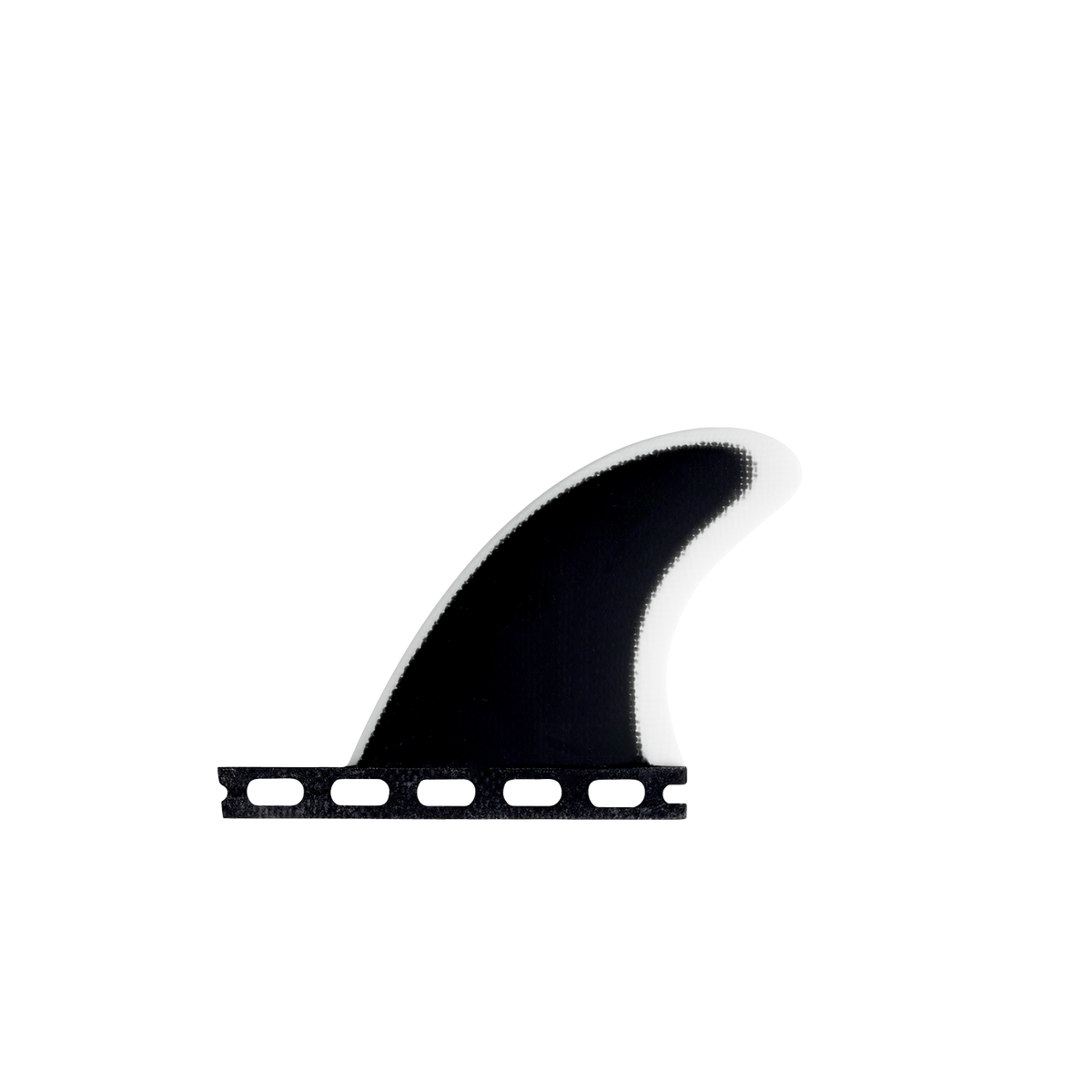
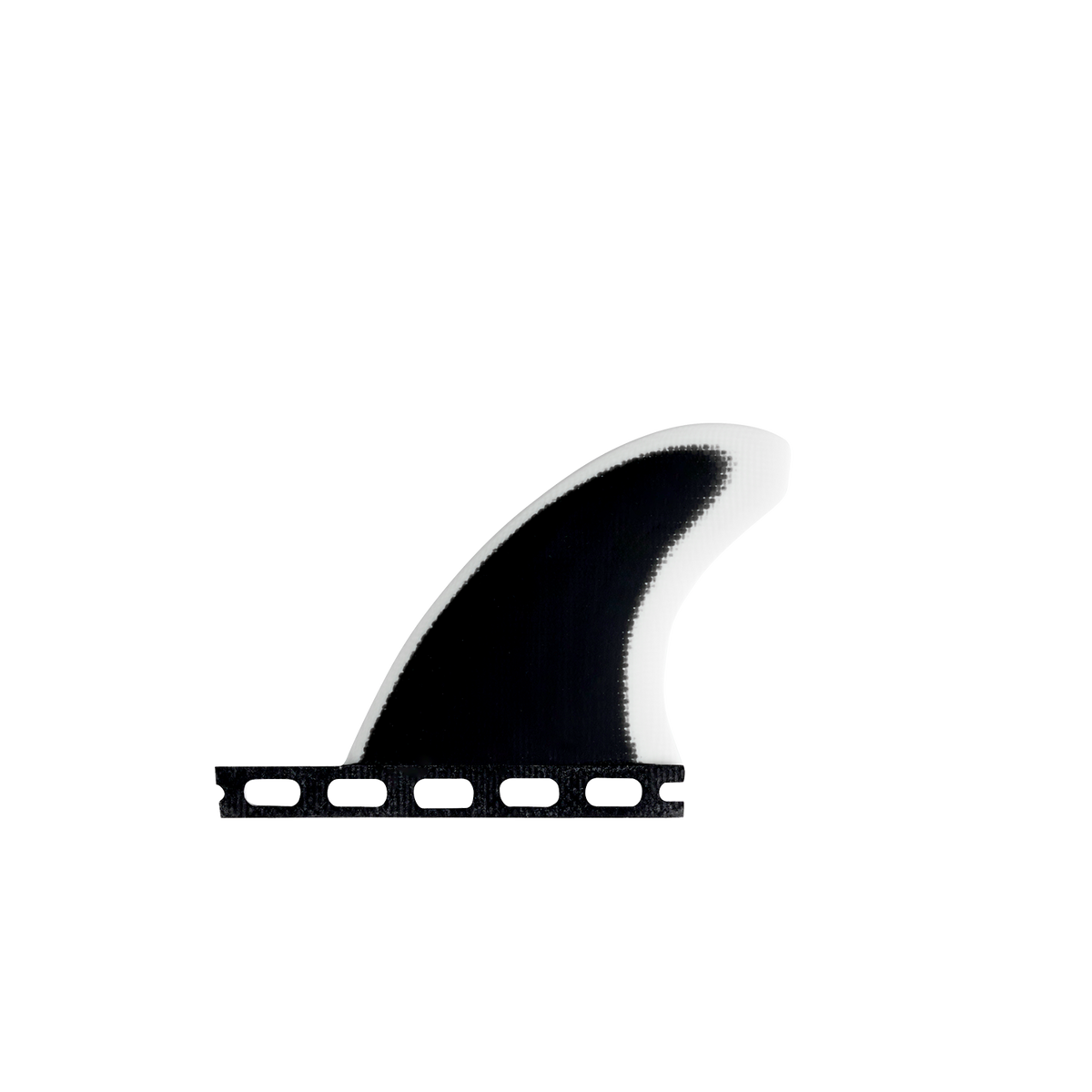
The 2+1 combines a large center fin with two small side fins. It keeps the glide of a single while adding more bite.
The center fin generates linear and stable drive, while the side bites reinforce control on the rail and make transitions easier. This setup is perfectly suited to modern longboards and surfers who want to alternate between noseriding and more dynamic maneuvers.
In general, choose a center fin about one inch shorter than the board’s length. For example, on a 9’, an 8” center fin paired with 3½” side bites gives a balanced base. But the size of the center fin can be reduced as the size of the side fins increases, to boost speed through turns.

Twin: speed and freedom
The twin setup is based on two side fins with no center fin. This absence completely frees up the tail and reduces drag. The result: the board accelerates fast, glides easily and gives an immediate feeling of freedom.
The twin stands out for its “skaty” feel. It favors fluid lines, flowing turns and natural speed generation. Speed builds quickly, especially in small waves, because the water flows with little interference. However, in very hollow waves or at high speed, the twin offers less hold than a thruster or a quad. It requires a more fluid, anticipatory style of surfing rather than very vertical commitment.
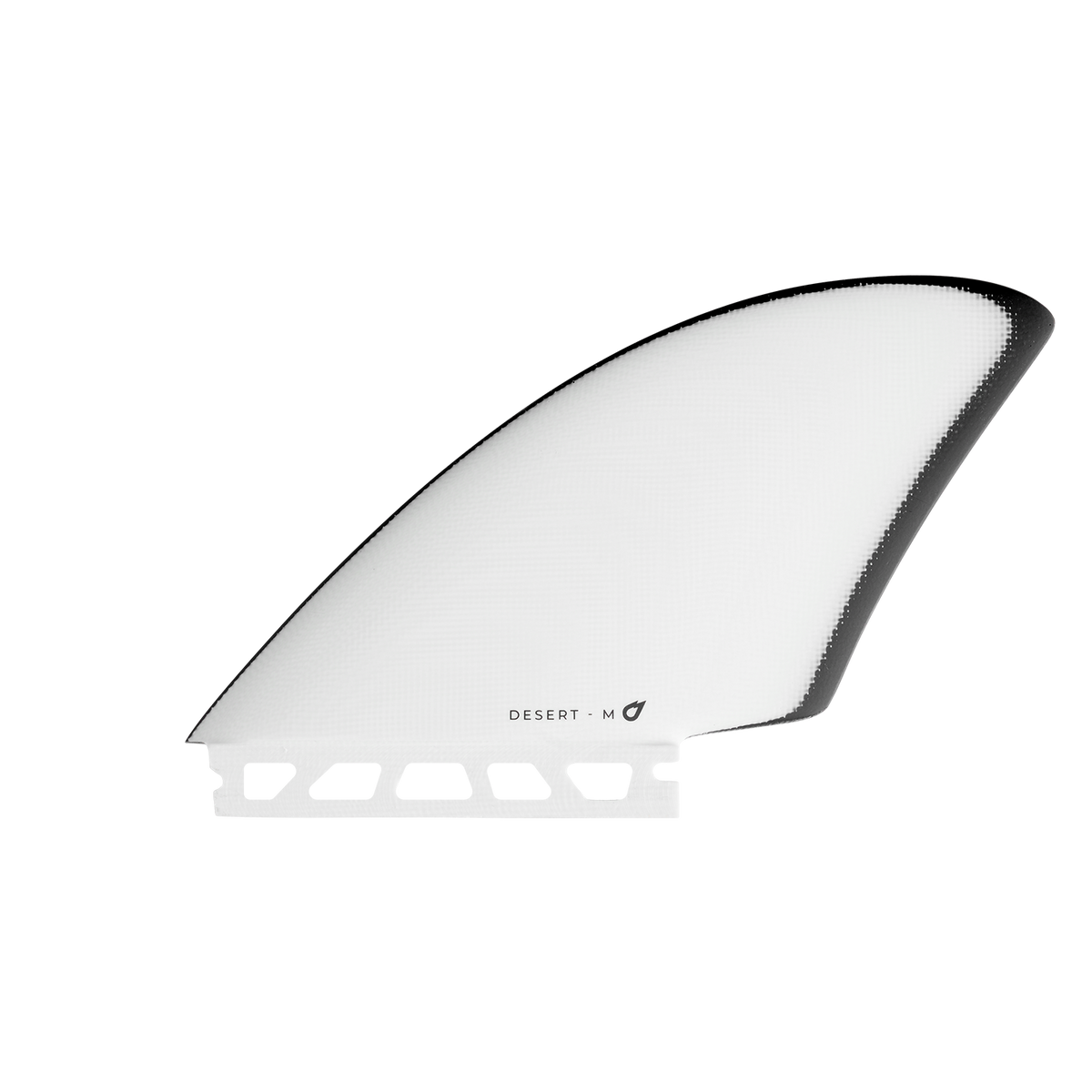
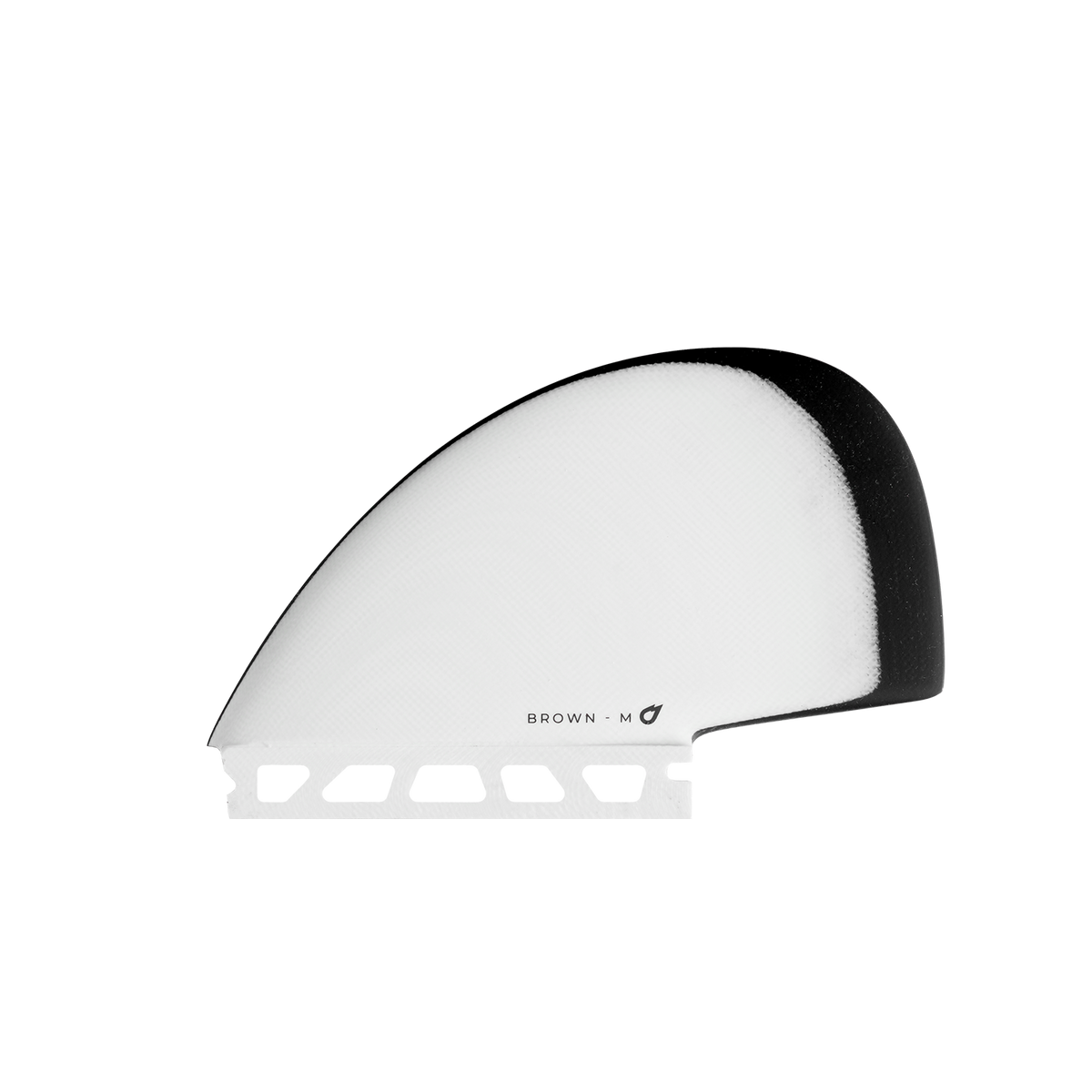
With twins, there are two main categories: Keel and Upright twins.
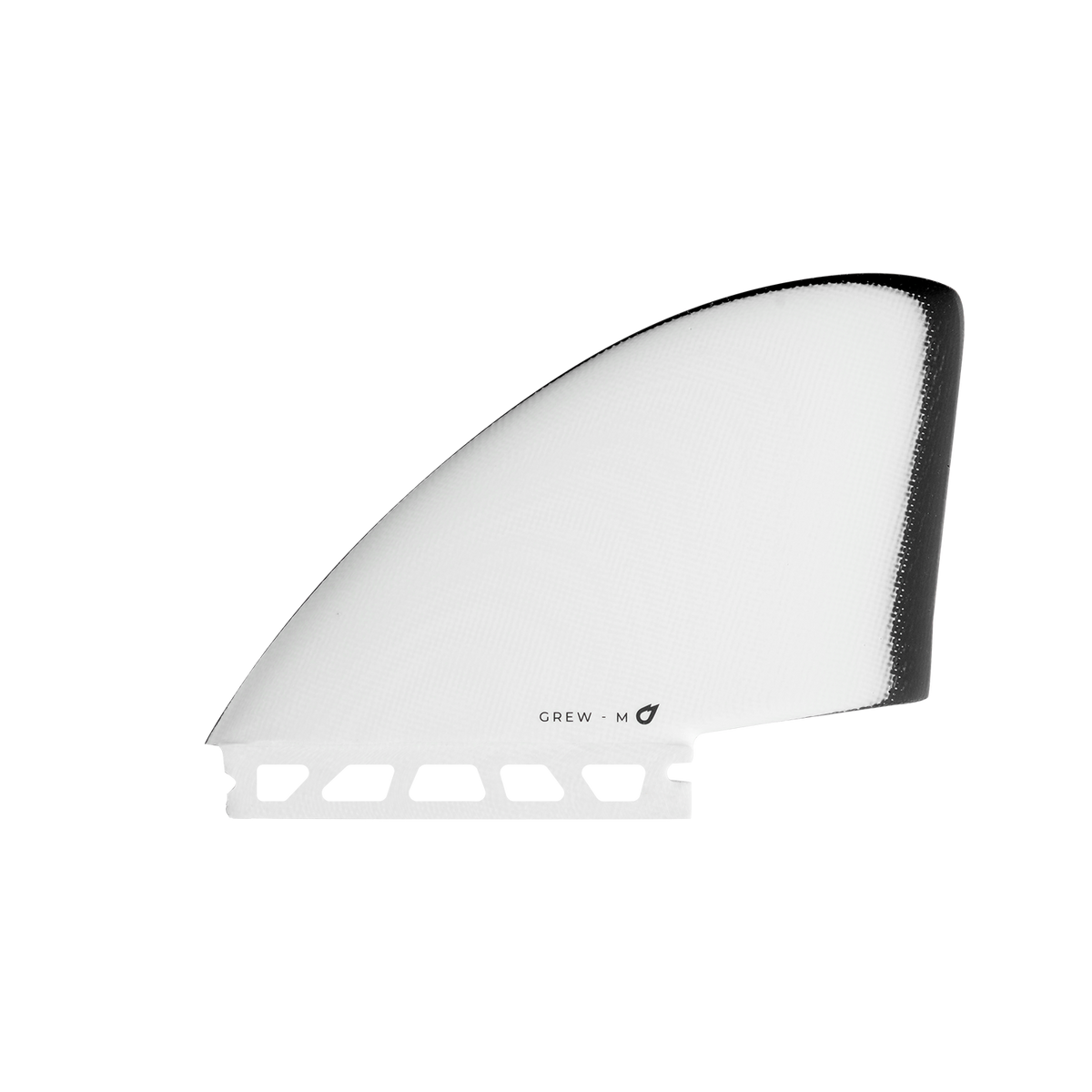
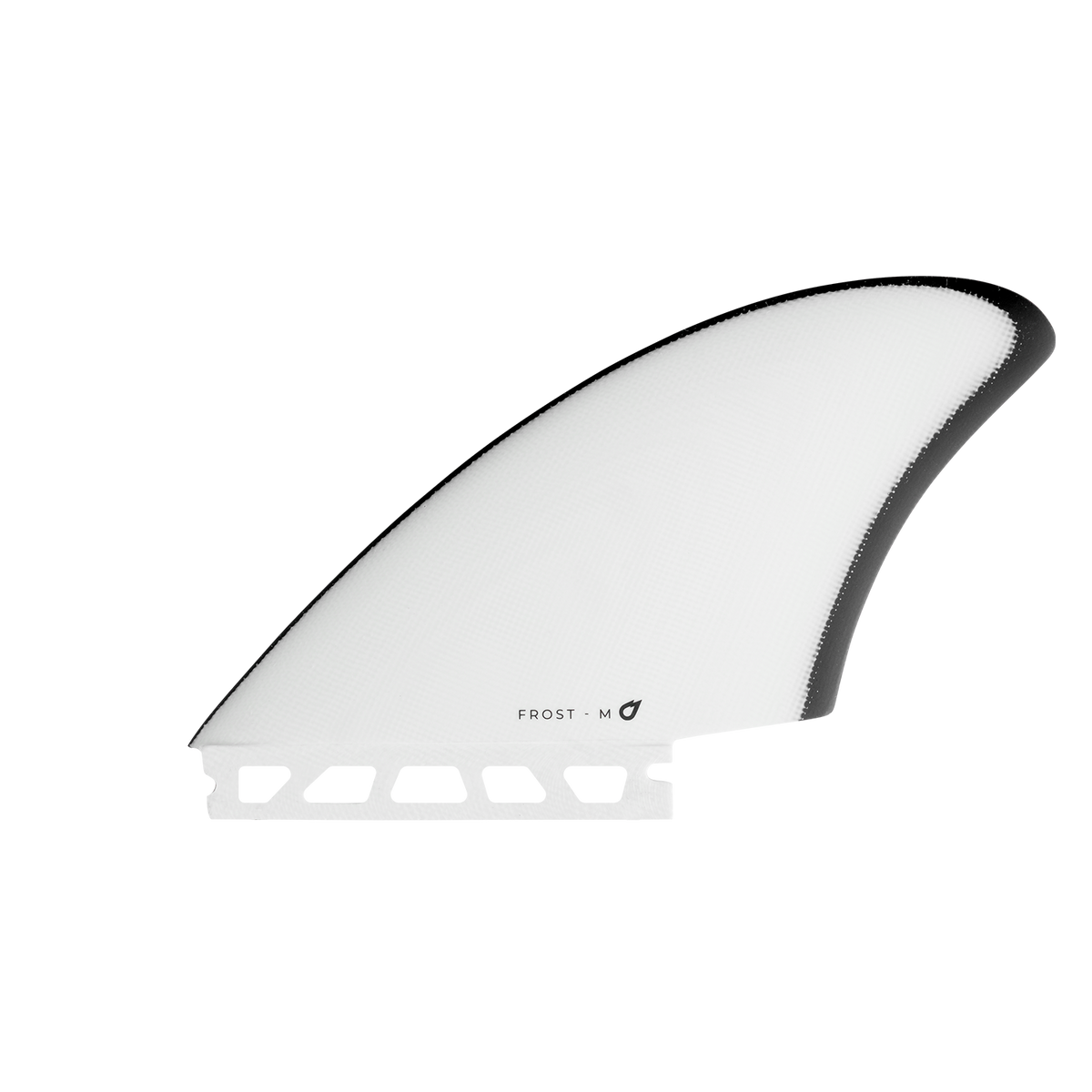
Twins with a large “keel” style template favor drive and long lines. This setup is particularly suited to fish boards, wide boards with volume and less powerful waves. It allows creative surfing, with freer and less constrained lines. This type of fin favors natural speed, long lines and a feeling of continuous traction
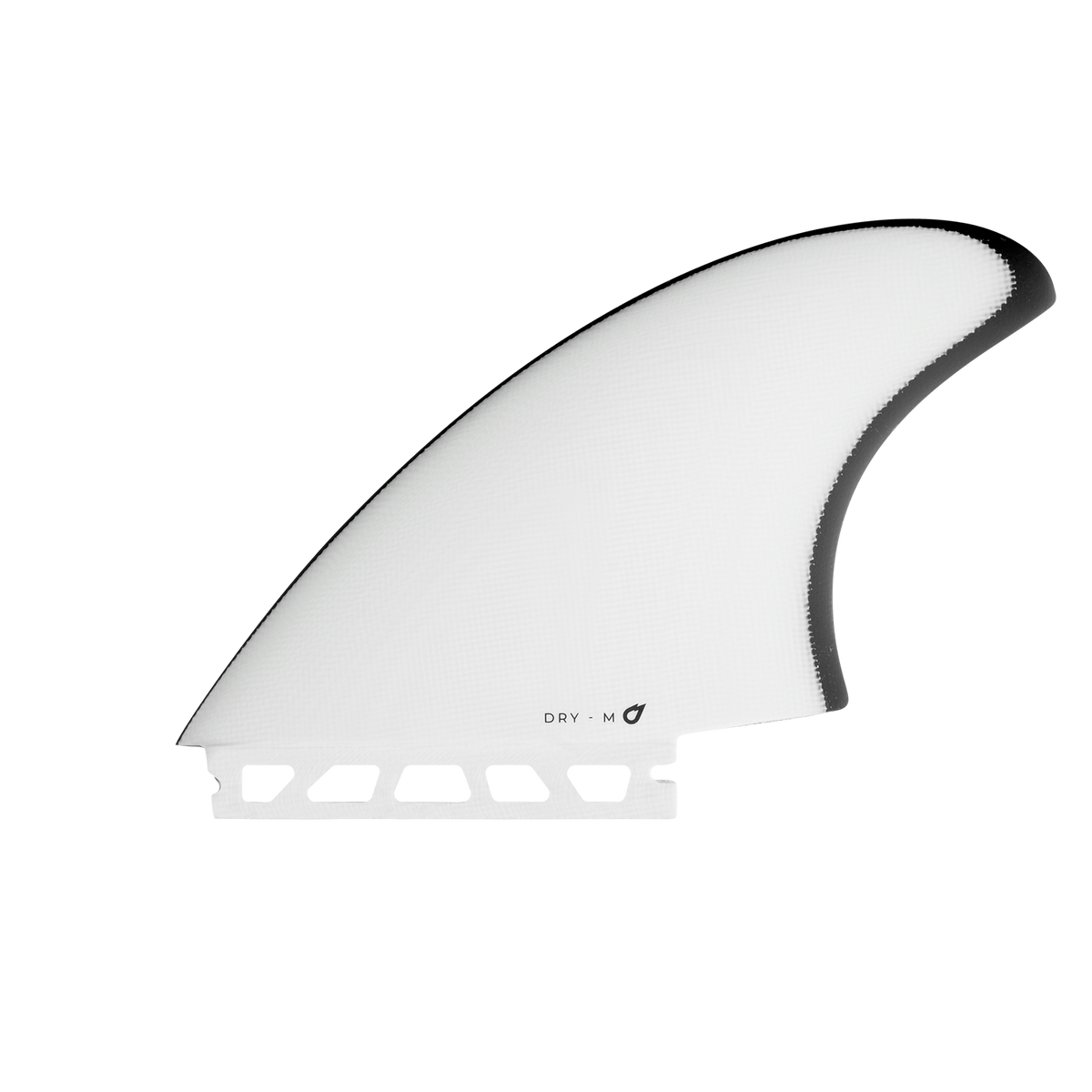
Twins with a more upright template offer more pivot. They are particularly suited to modern shapes and a more aggressive approach, offering quick snaps, vertical surfing and more pivot.

Twin + Trailer: speed, flow and an extra touch of control
The Twin + Trailer setup is a hybrid setup that allows very fine adjustment of a board’s behavior.
Compared with a classic thruster, switching to a Twin + Trailer frees up the tail, reduces center drag and brings back more speed, glide and reactivity under the back foot. The board becomes livelier, more playful and less locked-in, while keeping a central anchor point thanks to the trailer. You could not simply use twin fins on a thruster because the side boxes are positioned farther forward. Pairing a Trailer fin with Twin fins rebalances the position of your support points and brings back a more rearward point of hold. This preserves much of the speed, freedom and playful character of a twin, while recovering the control needed to fully exploit the board.
Conversely, when starting from a pure twin, adding a center box with a trailer brings more control, precision and security through pressure. The trailer stabilizes the tail, limits slide-outs at high speed and makes the line easier to read, especially in fast, hollow waves or when surfing backside.

Thruster: performance
The thruster is based on three fins of similar size: two side fins and one center fin. This setup strongly structures the water flow under the tail and gives the board a more precise and incisive behavior.
The side fins generate lift and actively contribute to speed generation, while the center fin stabilizes the whole setup and acts as an axis point during rail-to-rail transitions. Drive then becomes directional: it depends directly on the angle and timing of the turn. When you push hard, the board accelerates powerfully in the chosen direction.
This setup excels in hollow and fast waves, where reactivity and hold are essential. It allows more vertical surfing, lets you attack the pocket and helps maintain control at high speed.
On the downside, the thruster generates slightly more drag than more open setups and offers less stability on the nose of modern longboards.

Quad: speed under control
The quad is based on four fins: two larger front fins and two smaller rear fins. The absence of a center fin allows water to flow freely under the tail, which favors significant down-the-line speed.
This setup combines the speed of a twin with reinforced hold thanks to the rear fins. It gives a feeling of stability at high speed and excels in fast sections or hollow waves.
The quad generates powerful drive on rail. It allows you to engage hard without losing speed, especially in barrels or long, fast waves. However, it generally offers less pronounced pivot than a thruster, because there is no single central point acting as a rotation axis.
It is an ideal setup for those looking to maintain speed in powerful conditions while keeping good hold.
Smaller rear fins increase speed and maneuverability, while larger rears increase hold.

Twinzer: the balance between freedom and hold
The twinzer is an evolution of the twin. It adds a small front fin, called a “canard”, placed just in front of the large side fin. This small fin prepares and channels the water flow toward the main fin.
The result is subtle but effective: the twinzer keeps the freedom and speed of a twin while adding more hold and control.
The result is a very fluid setup, capable of generating speed easily while remaining stable under more committed pressure. It works particularly well in medium waves, where the goal is to combine flow and performance.
The twinzer sits halfway between a twin and a quad. It provides more bite than a classic twin while remaining freer than a quad.

Asymmetric (Asym): adapting the board to body mechanics
The asymmetric setup is designed for boards whose shape differs between the toe side and the heel side.
The idea is based on a simple observation: we do not surf the same way on our heels as we do on our toes. The asym setup therefore adapts the fin configuration to this biomechanical difference.
Generally, the toe side uses a setup close to a twin, favoring speed and drive, while the heel side is closer to a quad or thruster to provide more control and pivot.
This type of setup optimizes the board in each turning direction. It gives a very natural, almost intuitive feeling, because the board responds differently depending on the pressure used.
The asymmetric setup is aimed at curious, technical surfers who are open to a different approach.

Bonzer: hydrodynamic power
The bonzer setup is based on a specific configuration made up of a center fin with two or four heavily angled side fins (called “runners”).
These side fins are positioned to channel water toward the center fin, creating a hydrodynamic tunnel effect. The flow is accelerated, guided and compressed, generating exceptional drive.
The bonzer offers a very distinctive feeling: a lot of speed, powerful hold on the rail and impressive stability in hollow, committed waves.
However, it requires strong, committed surfing. It is not a neutral or versatile setup; it has a real personality.
The bonzer is often associated with powerful waves, long lines and surfers who like to feel the board lock into the wave face.
It is a technical setup, but extremely high-performing when used properly.

The position of the center fin in a US Box significantly changes the behavior. Moving the fin forward makes the board livelier and more maneuverable, but less stable. Moving it back brings more control and hold through turns.
Sometimes, moving it just one or two centimeters is enough to transform the feeling.
In a 2+1, increasing the size of the side fins reinforces speed through turns, while increasing the center fin stabilizes the board and lengthens the lines.
Bigger, longer and stiffer means more control, stability and hold.
Smaller, more upright and more flexible means more pivot, freedom and maneuverability.
For optimal positioning of your center fin in a 2+1, follow our recommendations here.

If the goal is to get more maneuverability, reduce the size of the center fin, move it forward and choose a more upright fin with less surface area.
To turn tighter, favor a short base, little rake and possibly slightly more present side fins.
If the board lacks control, increase the size of the center fin, move it back slightly and go for more rake and stiffness.
To gain drive, increase the base, surface area and stiffness.
In small waves where the board feels slow, reducing depth and surface area will free up the tail and bring speed back.
If hold is lacking in the pocket, increase depth, surface area and stiffness, which will stabilize the whole setup.
To stay on the nose for longer, a larger, deeper center fin set farther back will offer maximum stability.
If the board feels too lively or “wild”, calm it down by increasing the size of the center fin and moving it back.
Conversely, if it feels sleepy, moving the fin forward and slightly reducing its size will make it more reactive.

Surfer: Malo, GONG team rider, on Evolt EPS.
In small waves, favor shorter, shallower fins with less rake to generate speed and maneuverability. By reducing surface area, you reduce drag, which helps increase speed.
In intermediate conditions, a balance between base, depth and rake will help maintain drive without sacrificing flow.
In powerful, hollow waves, increase depth, surface area and stiffness to maximize hold and stability.
For classic noseriding, a deep, stiff single fin with a wide base remains the benchmark.

The material of a fin directly influences its flex, stiffness, weight and therefore the feeling under the back foot.
Fins made of solid fiberglass offer high stiffness and excellent stability. They provide a solid and predictable feeling, ideal for control, drive and powerful waves. They are often favored in single fin setups and classic performance-oriented configurations.
Honeycomb constructions are lighter and generally slightly more flexible. They bring more forgiveness and liveliness. This type of fin suits surfers looking for maneuverability and comfort, especially in varied conditions.
Fins reinforced with carbon increase reactivity and energy return. They flex less and snap back into place faster, which enhances the feeling of dynamism out of turns. They are generally aimed at more technical surfers or those looking for a more lively, responsive ride.
Not all fins are made the same way, and the manufacturing process directly influences how they behave in the water.
Entry-level fins are generally produced by plastic injection. The molten material is injected into a mold, then cooled. This process allows fast, low-cost production with very consistent shapes.
However, injected plastic often offers flex that is not very well controlled. Deformation can be irregular and the return to shape less dynamic. Under strong pressure or at high speed, the fin can lack precision and absorb part of the energy rather than returning it. The feeling is generally more “neutral”, sometimes a little soft.
Premium fiberglass fins are made differently. They are made from layers of fibers impregnated with resin, laminated and then cut or compression-molded. This process is longer, more technical and more costly, but it allows stiffness, flex and energy return to be precisely controlled.
In the water, the difference is noticeable. A fiber fin offers more progressive flex and a sharper rebound. It returns the energy accumulated in a turn more effectively, improving drive, projection and line precision. The feeling is more direct, more reactive, often more “alive”.
In short, an injected fin is ideal for learning, surfing without constraints or fitting out a board on a controlled budget. A fiber fin is more suited to surfers looking for performance, precision, finer sensations and anyone who wants to fully exploit their board.
The choice therefore depends less on absolute skill level than on the level of feel and demand you are looking for: the more control and energy return you want, the more decisive manufacturing quality becomes.

You do not need to be a pro surfer to feel this difference. As soon as you start pushing a little harder through your turns or looking for more control, the more precise behavior of a premium fin becomes noticeable.
Buying fins can actually be seen as a real investment. Rather than being fixed to just one board, they can become a small personal “quiver” that you adapt according to the conditions, the type of waves or the board you are using. Testing different sizes or templates then becomes an exciting experimental process.
Understanding and evolving your fins not only refines your sensations, it can also sometimes help you rediscover your boards from a new angle. It is often one of the simplest and most effective ways to evolve your surfing without changing boards.
 Surfer: Mateia, GONG team rider, on a custom GONG.
A fin is not just a simple accessory fixed under a board. It is a true hydrodynamic system that transforms the surfer’s energy into lines, speed and sensations.
Its size, template, stiffness, position or material changes the balance between control and freedom. No choice is universal: every combination responds to a style, a board and specific conditions.
Understanding lift, drive, pivot and hold allows you to go beyond simple feeling and enter a logic of conscious adjustment. From there, changing a fin is no longer random, it becomes a setting.
Exploring different configurations, testing sizes, adjusting placement, building a personal quiver: it is often one of the simplest and most effective ways to evolve your surfing.
The board does not change. But the way it communicates with the wave does. And that is precisely where fins come into their own.