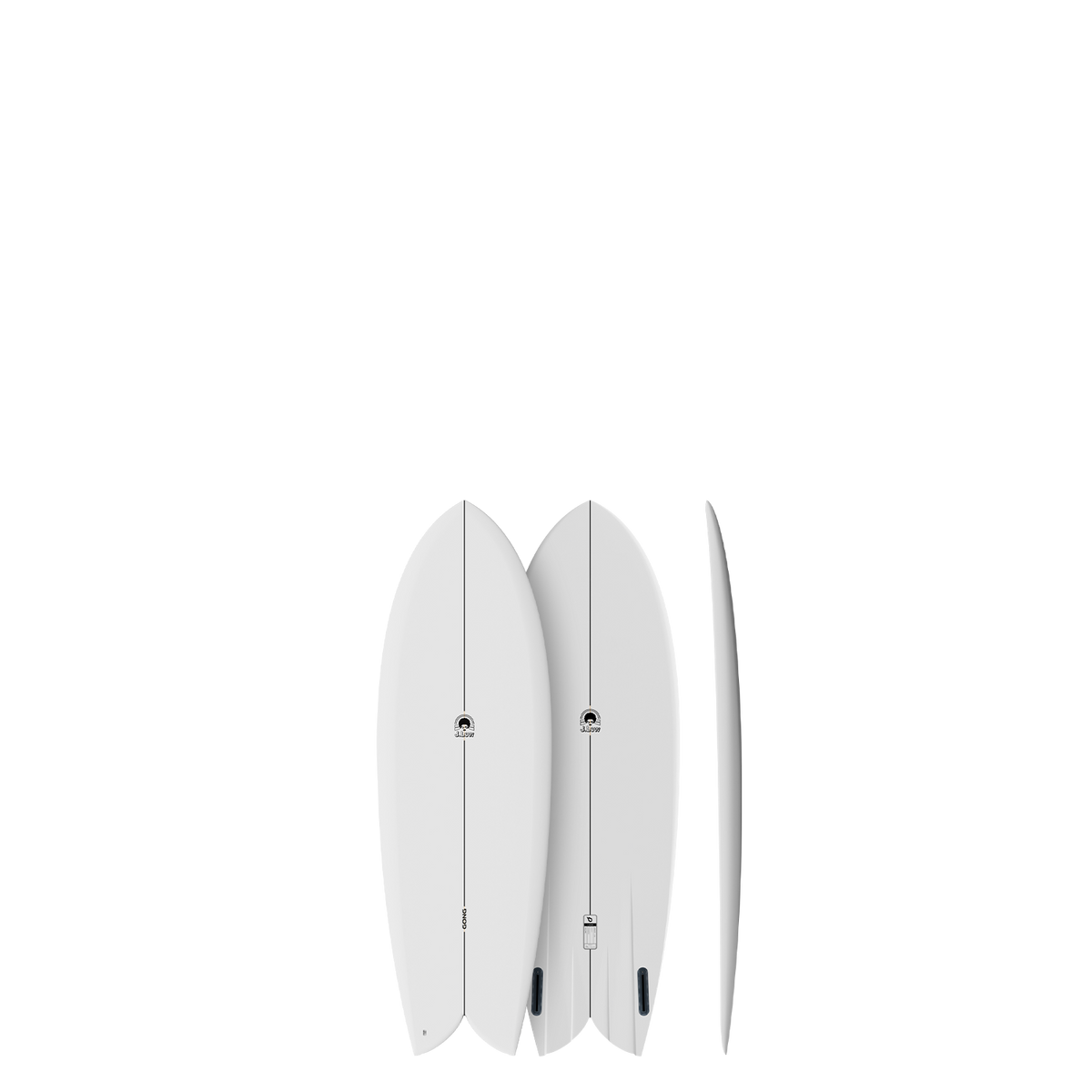
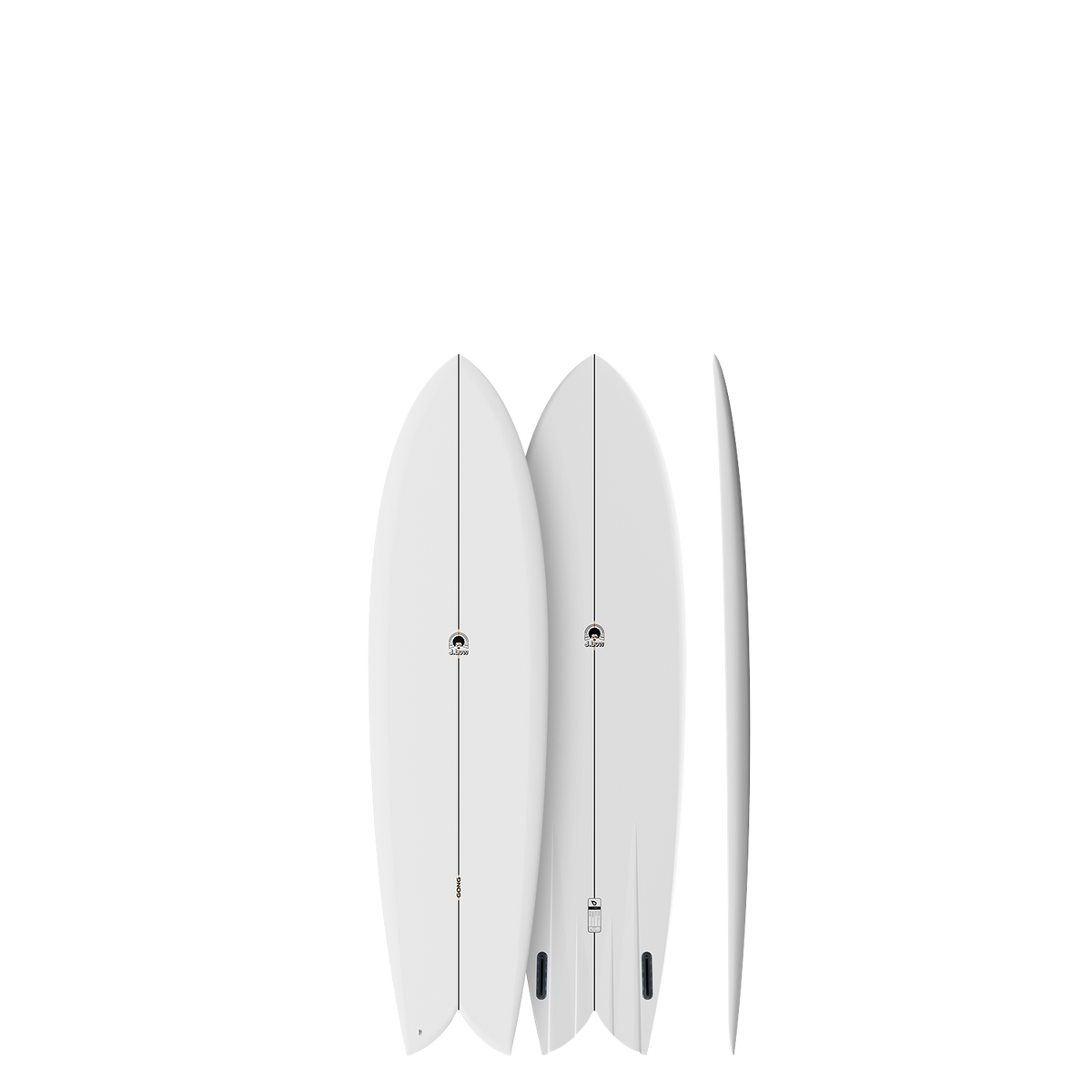
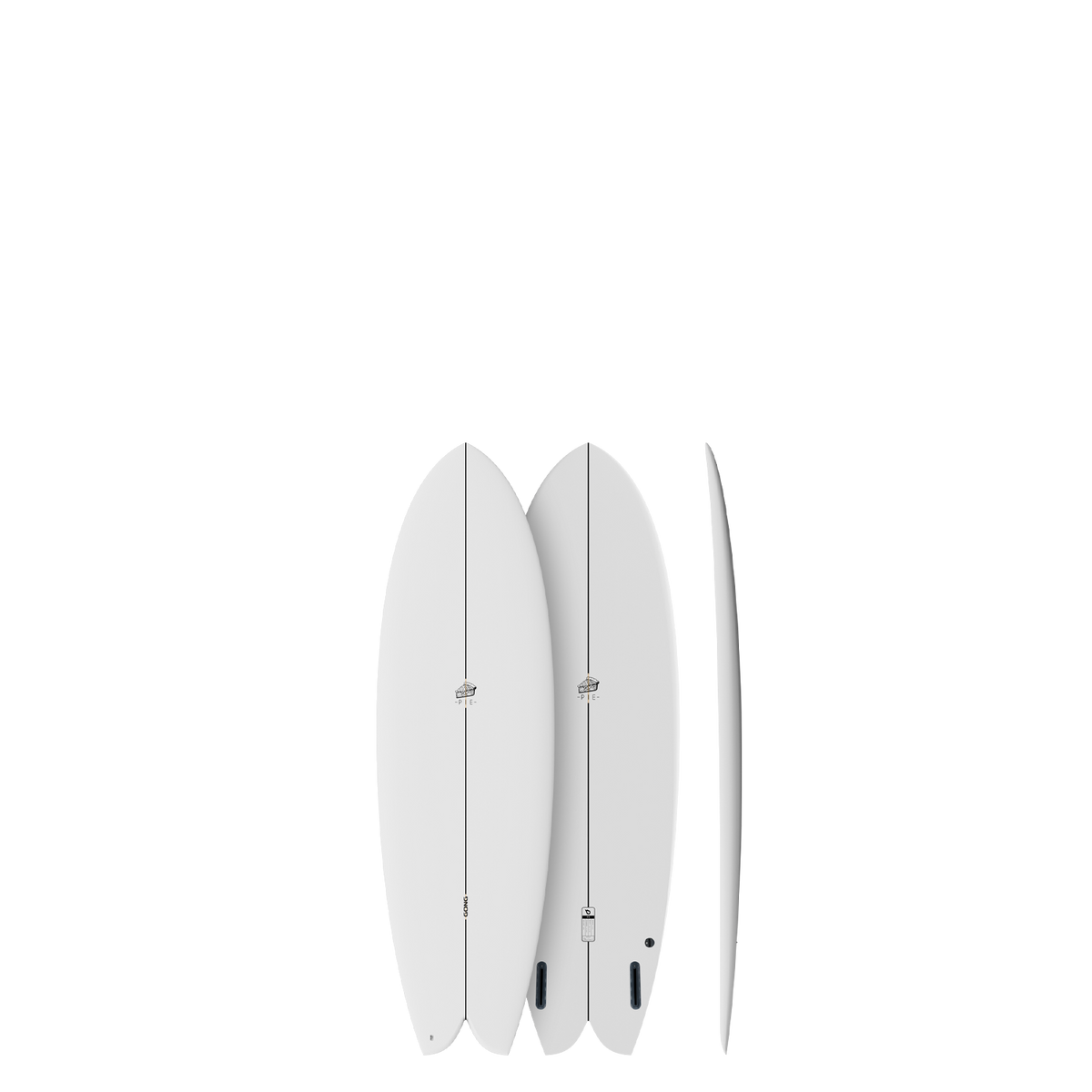
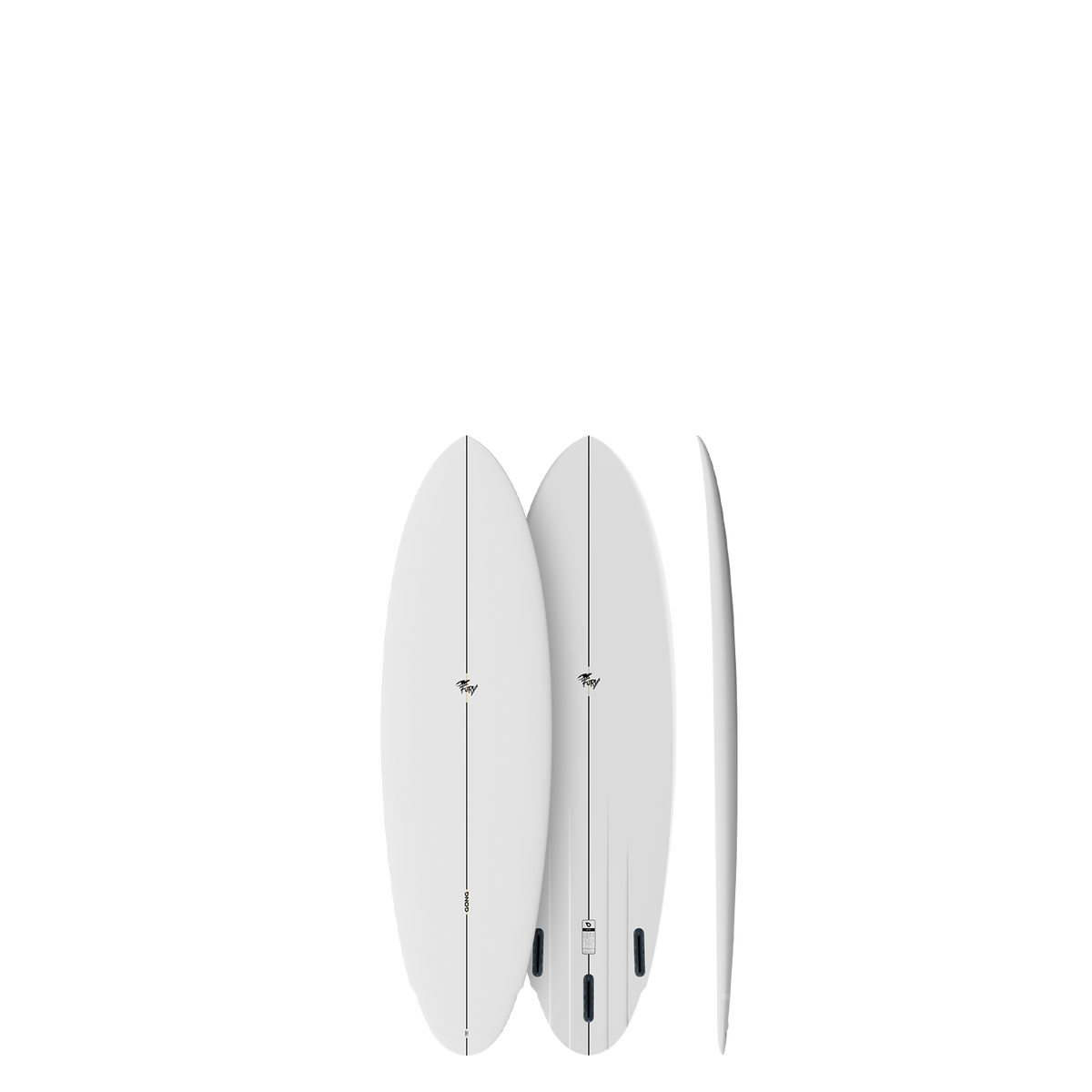
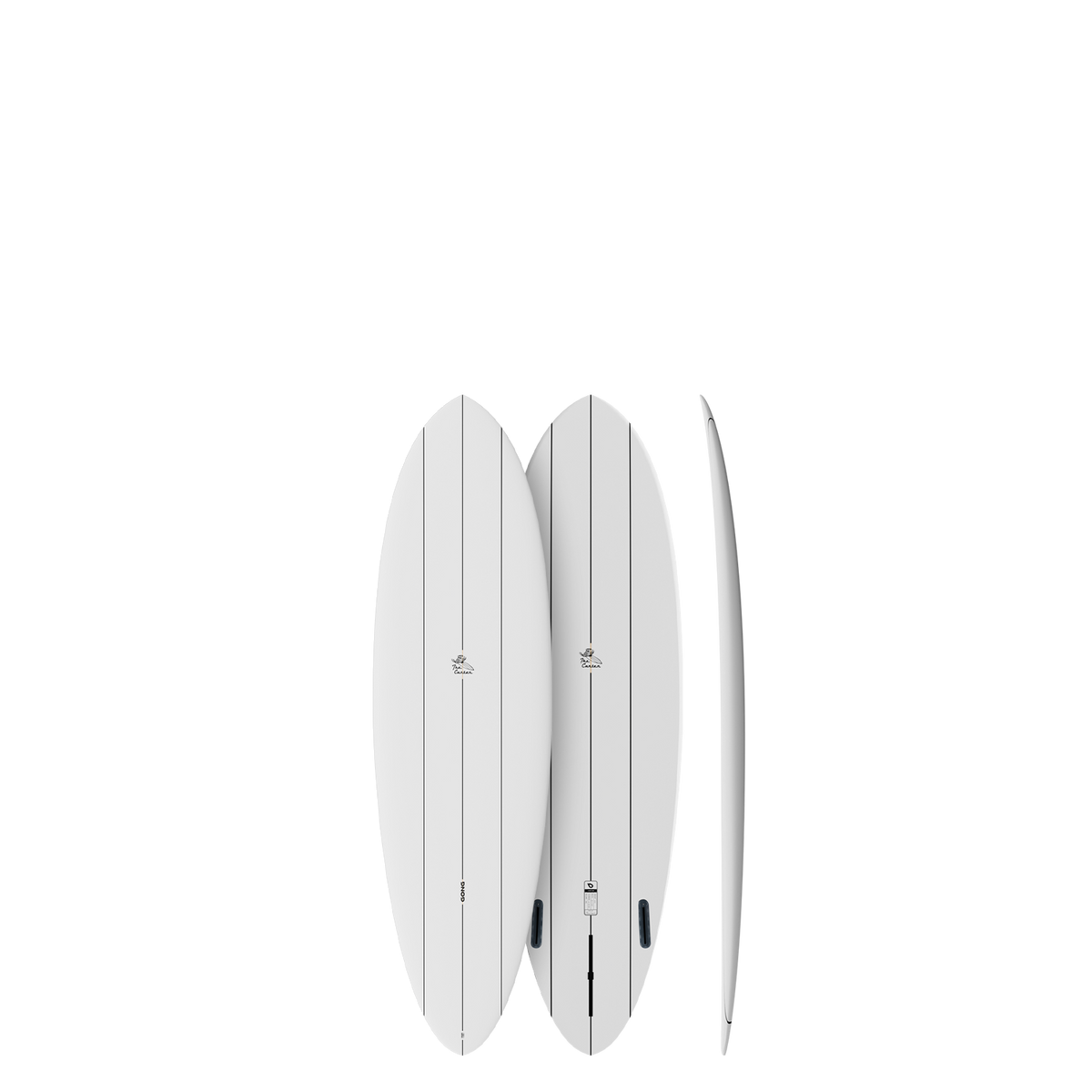
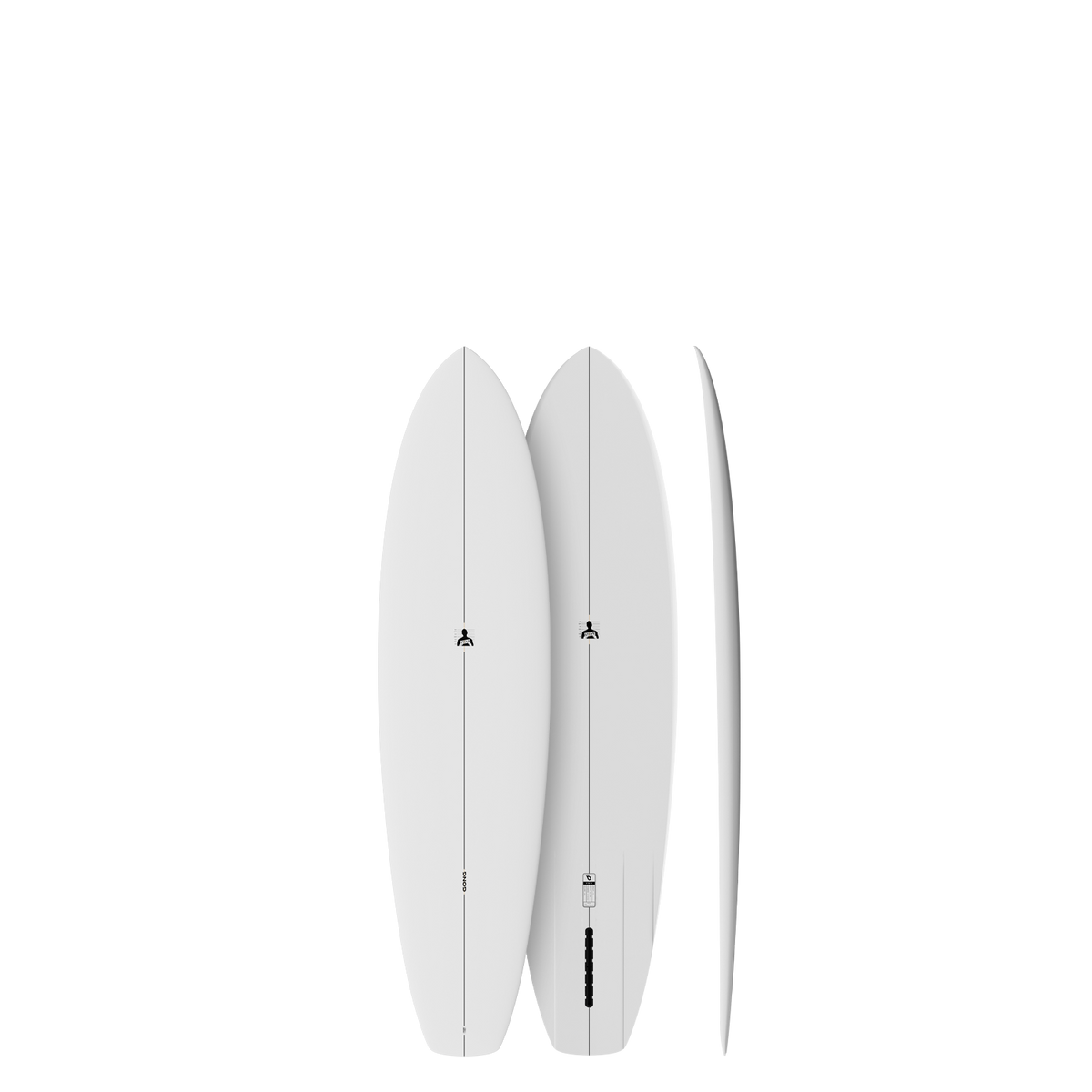
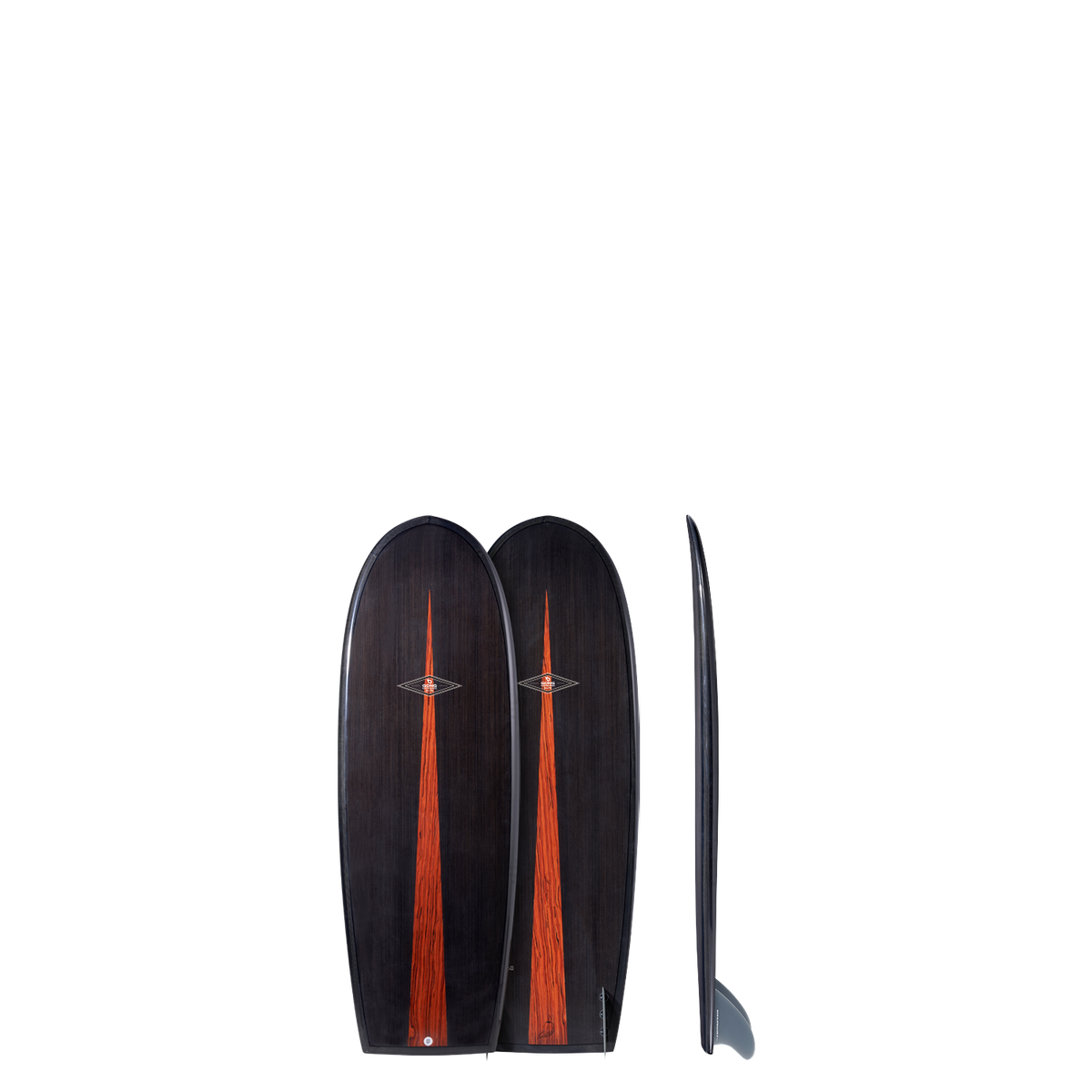
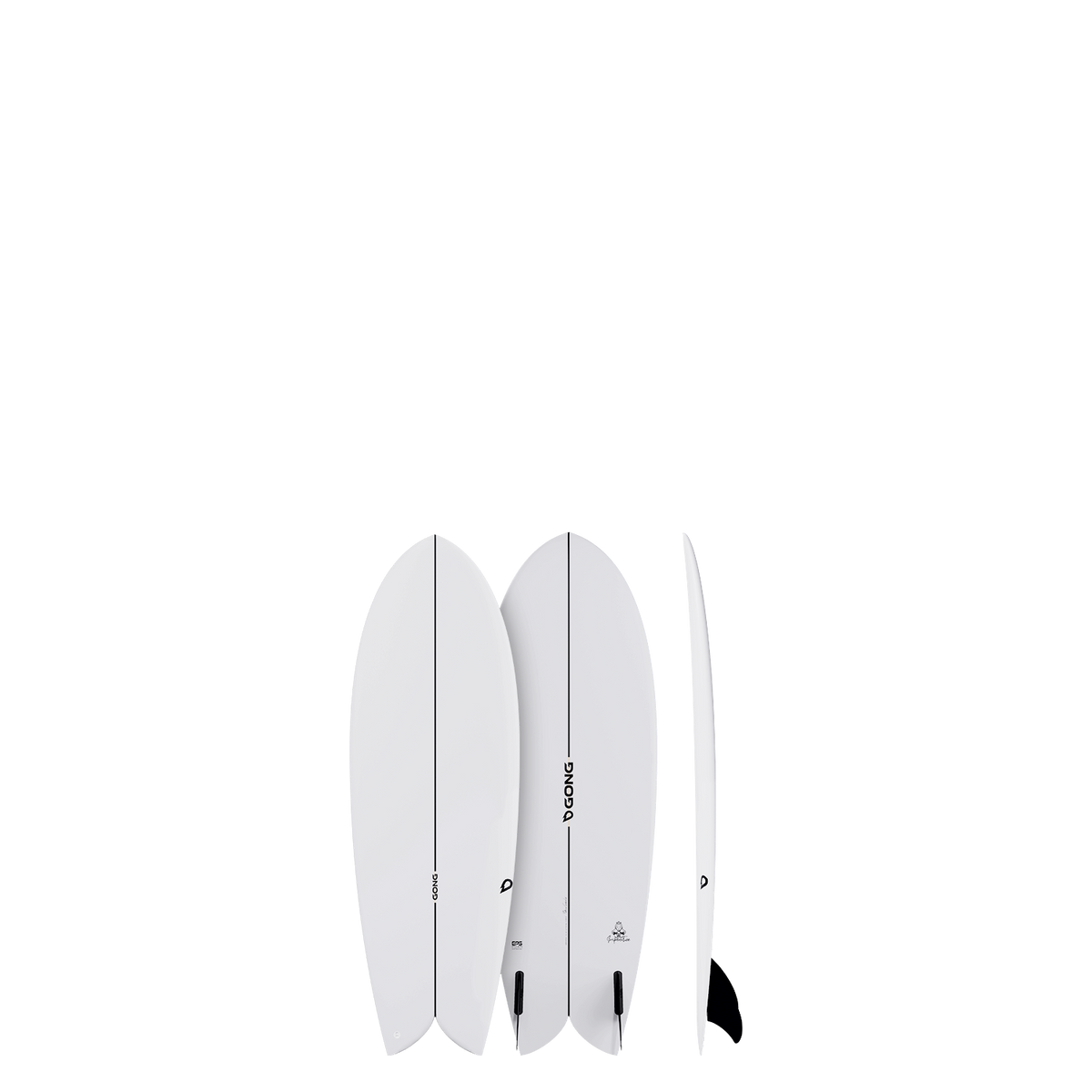
The fins provided with our boards are sufficient to use them properly.
However, since 50% of a board's performance comes from the fins, a pro surfer will undoubtedly want to adjust the fin setup to suit their body type, style, and preferences.
Some fins enhance speed, others turns, and others acceleration, etc. You can find detailed descriptions on their individual product pages—perfect reading material for a campfire evening!
To summarize:
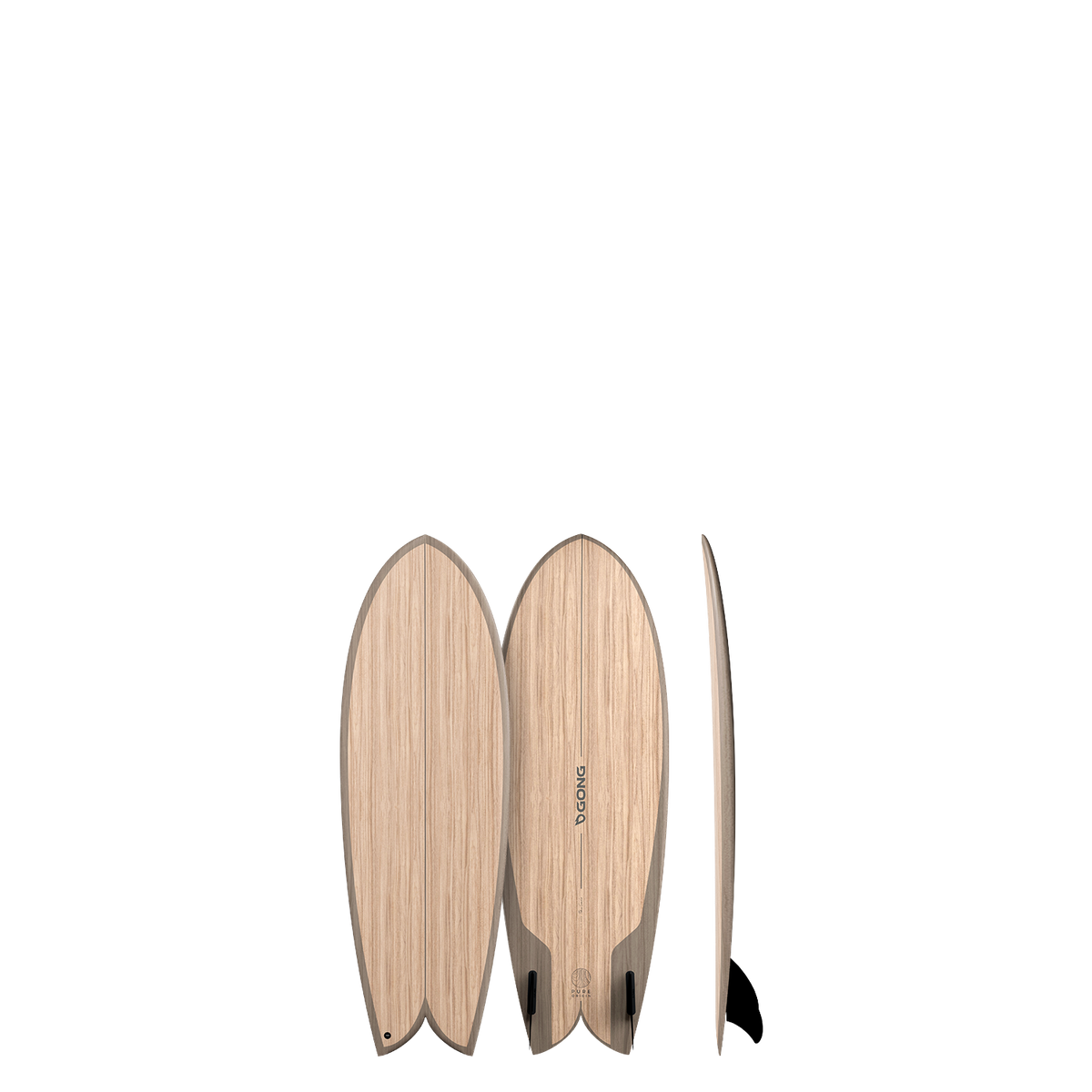
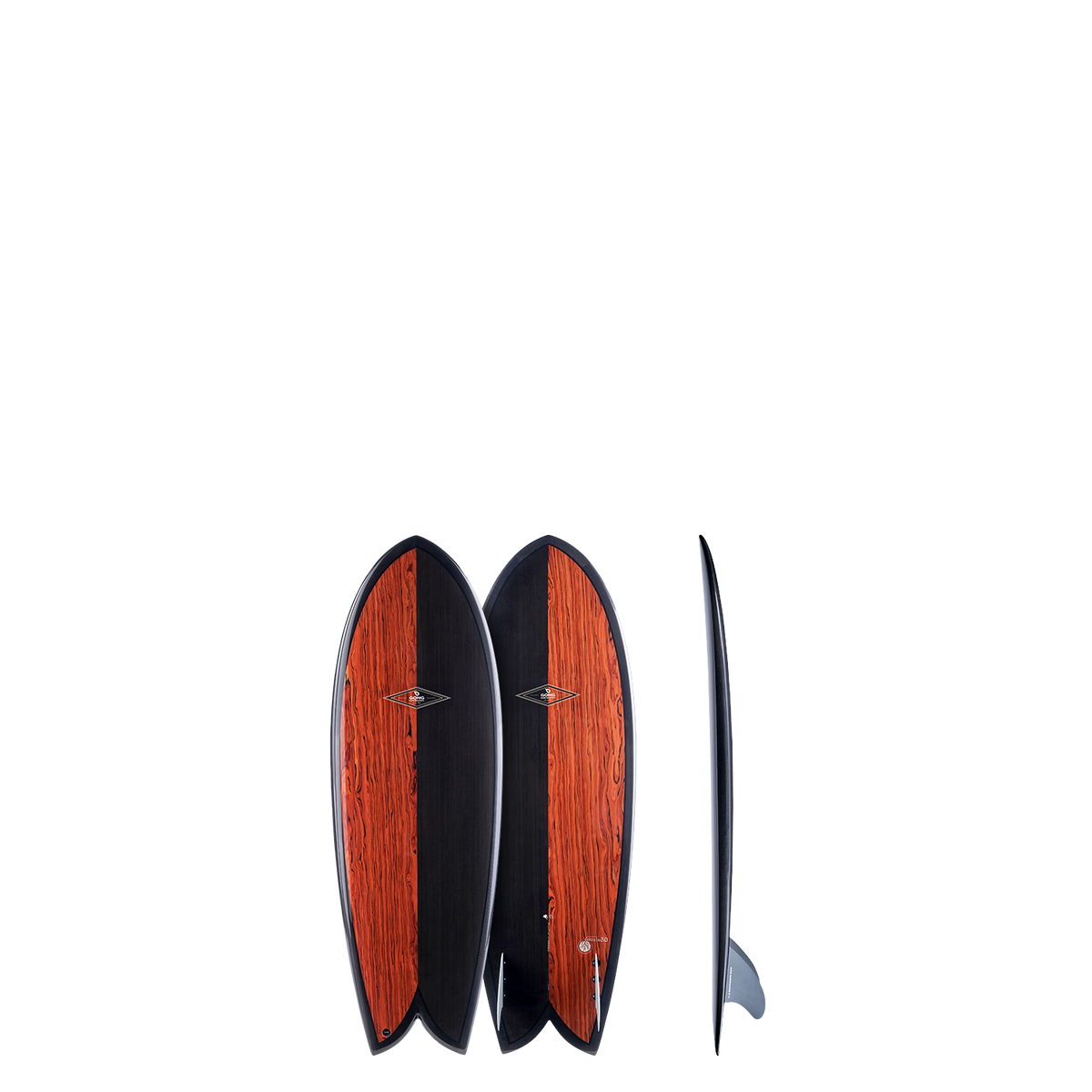
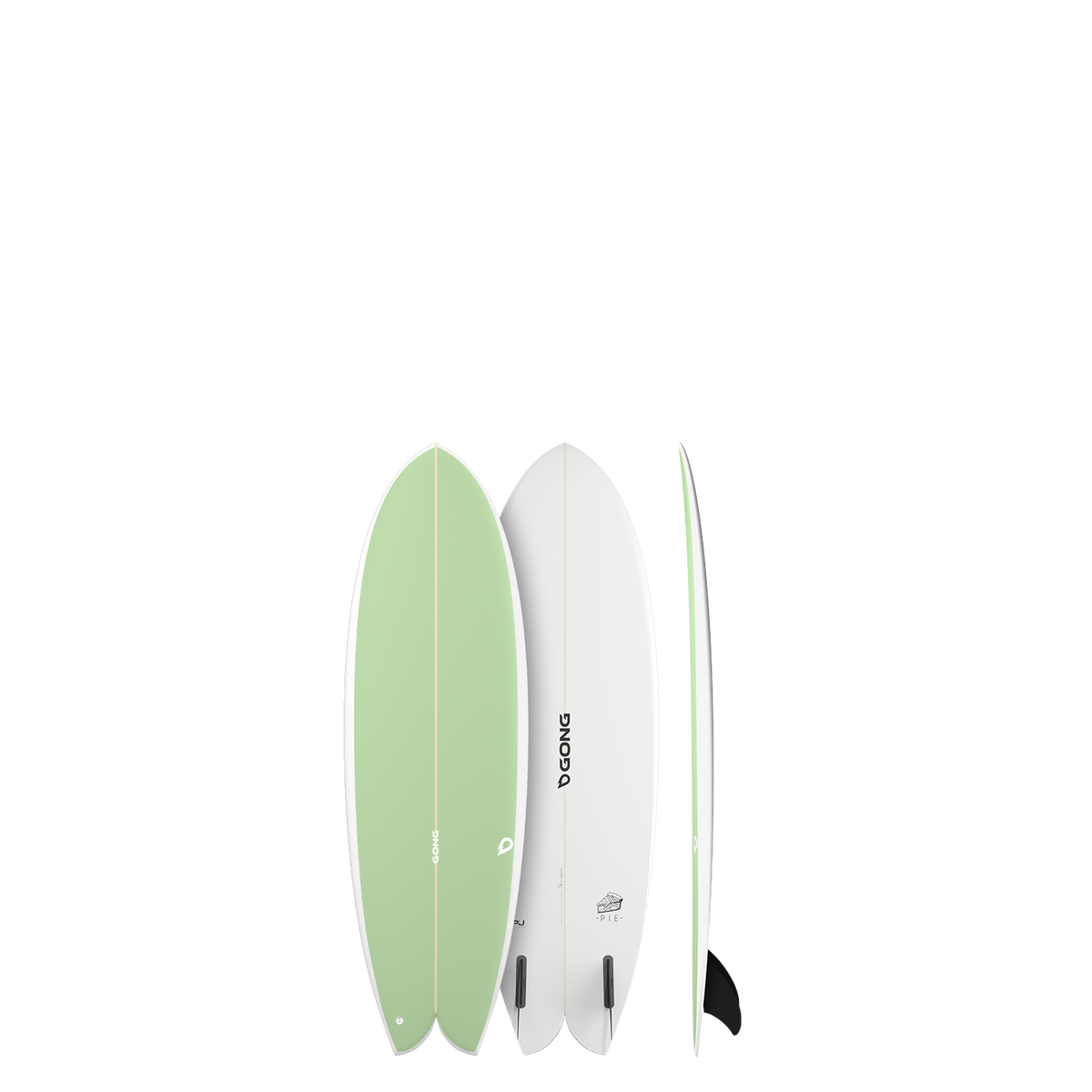
- Boards designed for acceleration: Typically fish shapes, large swallows, and bigger Simmons are often set up as twins with beautiful keel fins or as quads for modern variations. These fins promote speed by strongly aligning the rail with its trajectory.
- Maneuverable boards with round tails are often equipped with a thruster setup, 2+1 (two side fins and an adjustable central US fin), or a twin if the hull includes channels to guide water flow.
- Gunny boards with pinched tails are set up as singles for pure lines or thrusters for better maneuverability. The 2+1 setup (two side fins and an adjustable central US fin) remains the premium option as it offers versatility.
- Mini longboards are often singles for pure lines (though with limited performance) or thrusters for added maneuverability (but this diverges from their intended use). The 2+1 setup remains ideal for maximizing the potential of these smaller longboards.
A 2+1 setup consists of two smaller side fins and a larger central fin. It’s commonly found on many mid-length surfboards or longboards because it offers an excellent balance between the maneuverability of a thruster and the stability of a single fin. To put it simply 😉, you can fine-tune this balance by adjusting the central fin’s position as explained below.
Adjusting Your 2+1 Setup
While the smaller side fins are fixed in their boxes, the central fin can be adjusted along its US box. Although the standard rail of this box offers a wide range of settings, for a 2+1 setup, everything depends on a 2 cm range.
The base of the leading edge of the central fin in a 2+1 setup should be positioned 0 to 2 cm from the tips of the side fins. Use a straight edge or a taut string to verify the central fin’s position relative to these tips.
- At 0 cm separation, you maximize maneuverability.
- At 2 cm separation, as shown in the diagram above, you focus on greater stability for smoother control.
To understand this adjustment better, think of it like the wheelbase of a skateboard. Reducing the distance between the front and rear wheel axles results in a very agile skateboard that can turn on the spot. For relaxed cruising on a downhill skateboard, a longer wheelbase provides greater stability.
If you mount larger side fins with more rearward tips, you’ll also need to move the central fin back. This is a universal rule.
Optimizing Your 2+1 Setup
- A larger central fin stabilizes the board and extends turns.
- Larger side fins enhance speed during turns.
It’s a balancing act: having both oversized central and side fins is excessive and will make your board unmanageable.
Central Fin Sizes
- For 2+1 setups: 6’’ to 9’’, with 7’’ as the standard reference.
- For single fins: 8’’ to 11’’, with 10’’ as the standard reference.
Material Matters
The material of the fins is the most critical factor after their shape. Fiber fins are essential. Rigidity is the key to good fins. As you upgrade, aim for greater rigidity. Note that fiber fins are also easily repairable if damaged, for example, from hitting a rock.