Your cart is empty!
It's flat around here...
In 8 knots of wind, choosing a much bigger wing seems like the obvious answer. More surface area should capture more energy, generate more power and get you flying earlier.
That's true when the wind is established enough.
But in ultra-light wind, the challenge is no longer just capturing the wind. You need to create the missing relative speed, accelerate a board still held back by the water, build lift in the foil, then cross the threshold where drag suddenly drops.
It's a completely different operating regime. Here's why 👇

In these conditions, wing responsiveness, board glide, foil efficiency and precise pumping often matter more than extra wing area because below 10 knots, the available power drops dramatically.
The aerodynamic force generated by a wing depends on the dynamic pressure of the airflow it encounters.
It can be represented in this simplified form:
F = ½ × ρair × Vrelative² × S × C
Where:
ρair: air density
Vrelative: air speed relative to the wing
S: wing area
C: a coefficient combining factors such as profile, angle of attack, deformation and aerodynamic efficiency
Surface area directly affects the force produced. A 20% increase in area can theoretically generate 20% more force, assuming identical relative speed and coefficient.
But relative speed is squared.
A 10% increase in airflow speed generates around 21% more force:
1.10² = 1.21
Speed can therefore compensate for a difference in surface area very quickly. This is one of the fundamental principles behind using a compact wing in ultra-light wind.
 Wing foiler: Thomas, GONG staff rider, riding the Cruzader Point LW FSP Pro and Droid Light.
A 6 m² wing has 20% more surface area than a 5 m². Yet, with comparable efficiency and angle of attack, the 5 m² only needs to encounter airflow that's 9.5% faster to theoretically generate the same force:
√(6 ÷ 5) = 1.095
Between a 6 m² and a 4.5 m², the difference in area reaches 33%. But an increase of around 15.5% in relative speed is theoretically enough to compensate for that difference:
√(6 ÷ 4.5) = 1.155
These calculations don't mean that a 4.5 m² can systematically replace a 6 m². Profiles, aspect ratios, deformation, angles of attack and efficiencies all differ.
What they do show is that surface area is not the dominant factor you might imagine when the wing is being actively accelerated.
A few knots less changes the situation dramatically.
Between 12 and 8 knots, wind speed only drops by one third.
But the available dynamic pressure falls to:
(8 ÷ 12)² = 0.44
At 8 knots, the wing therefore has only around 44% of the dynamic pressure it encounters at 12 knots.
At 10 knots, it retains only around 69%:
(10 ÷ 12)² = 0.69
The wind doesn't disappear below 8 or 10 knots. But its aerodynamic potential drops much faster than the anemometer reading might suggest.
Adding surface area still helps. But simply increasing wing size cannot indefinitely compensate for dynamic pressure that has become extremely low.
More of almost nothing is still not much.
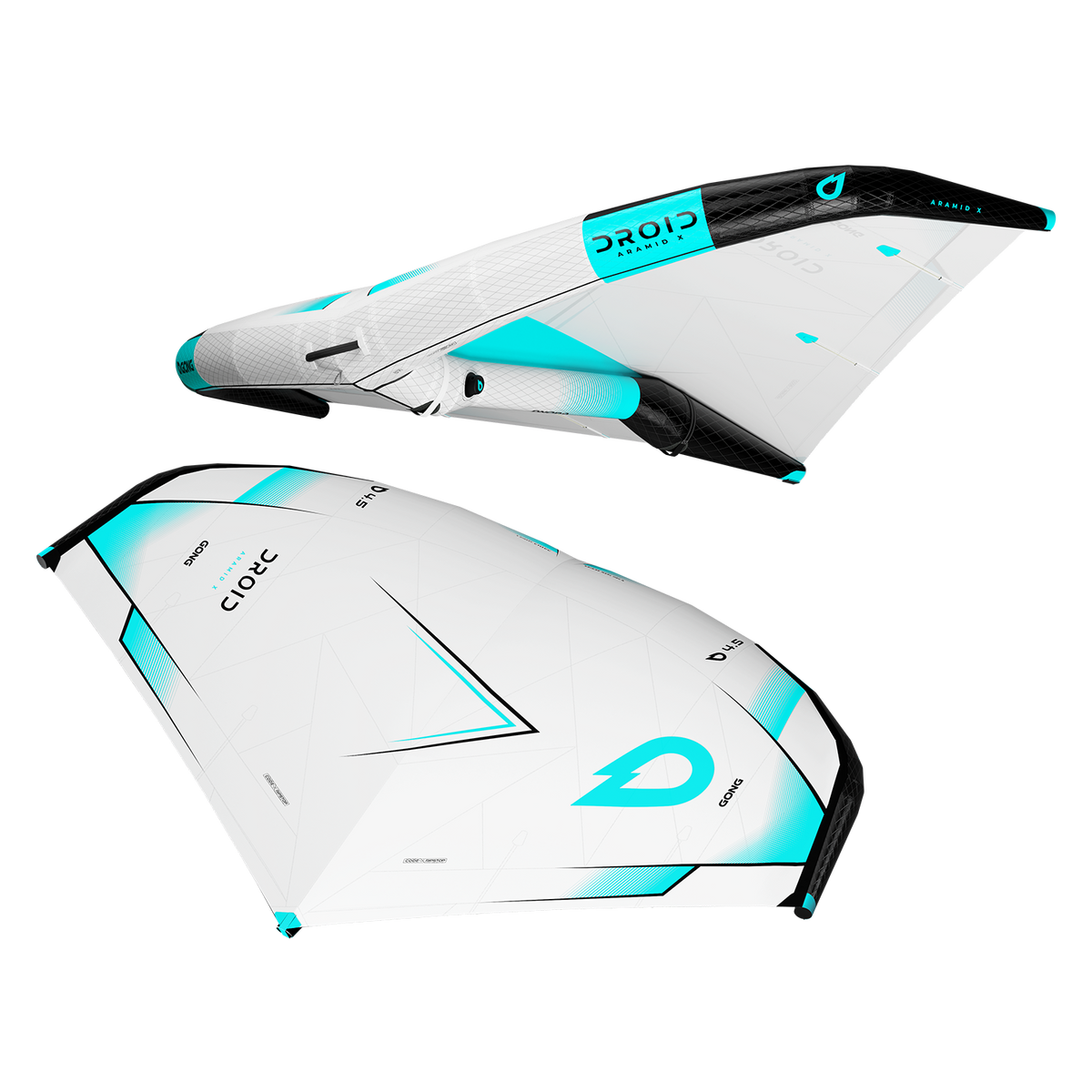
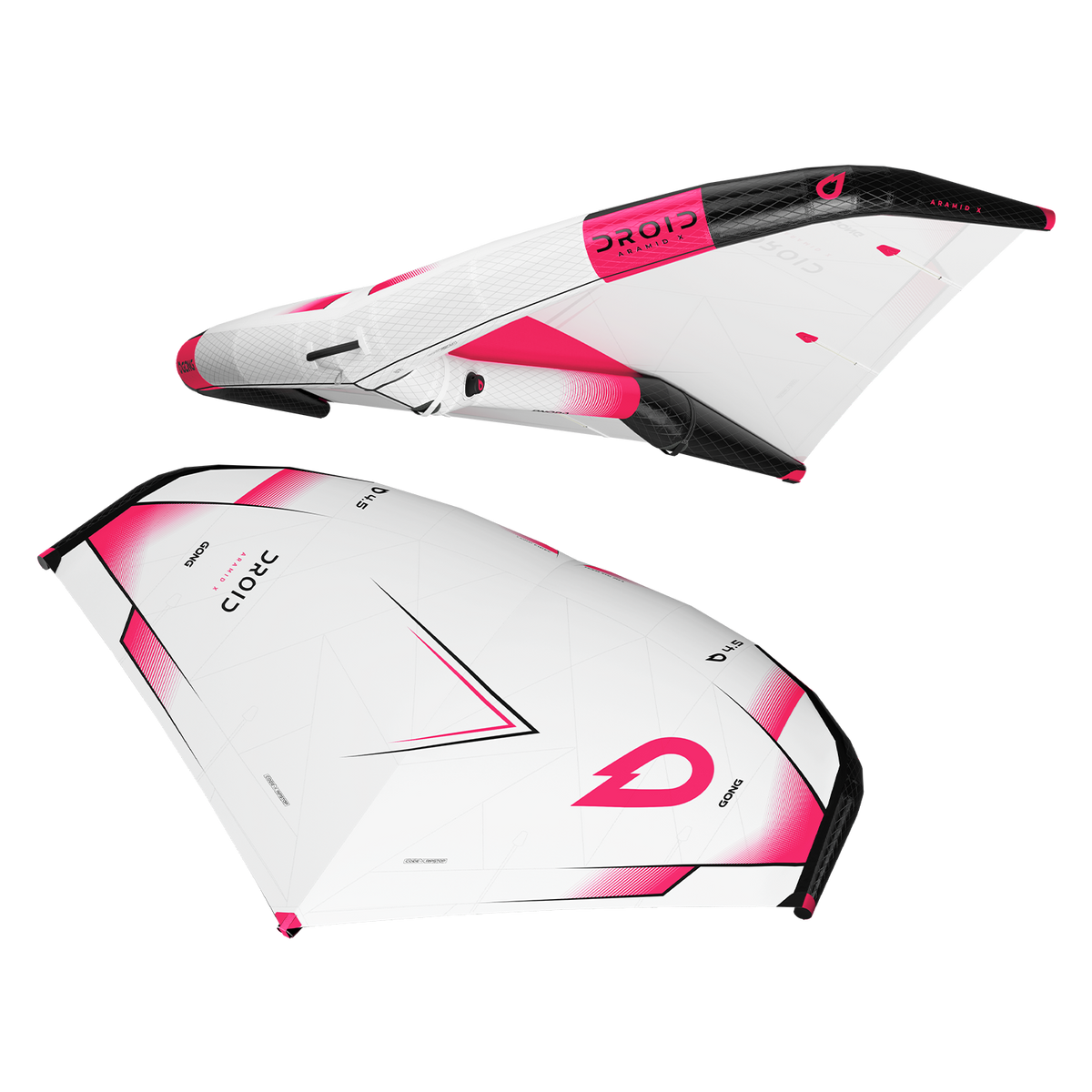
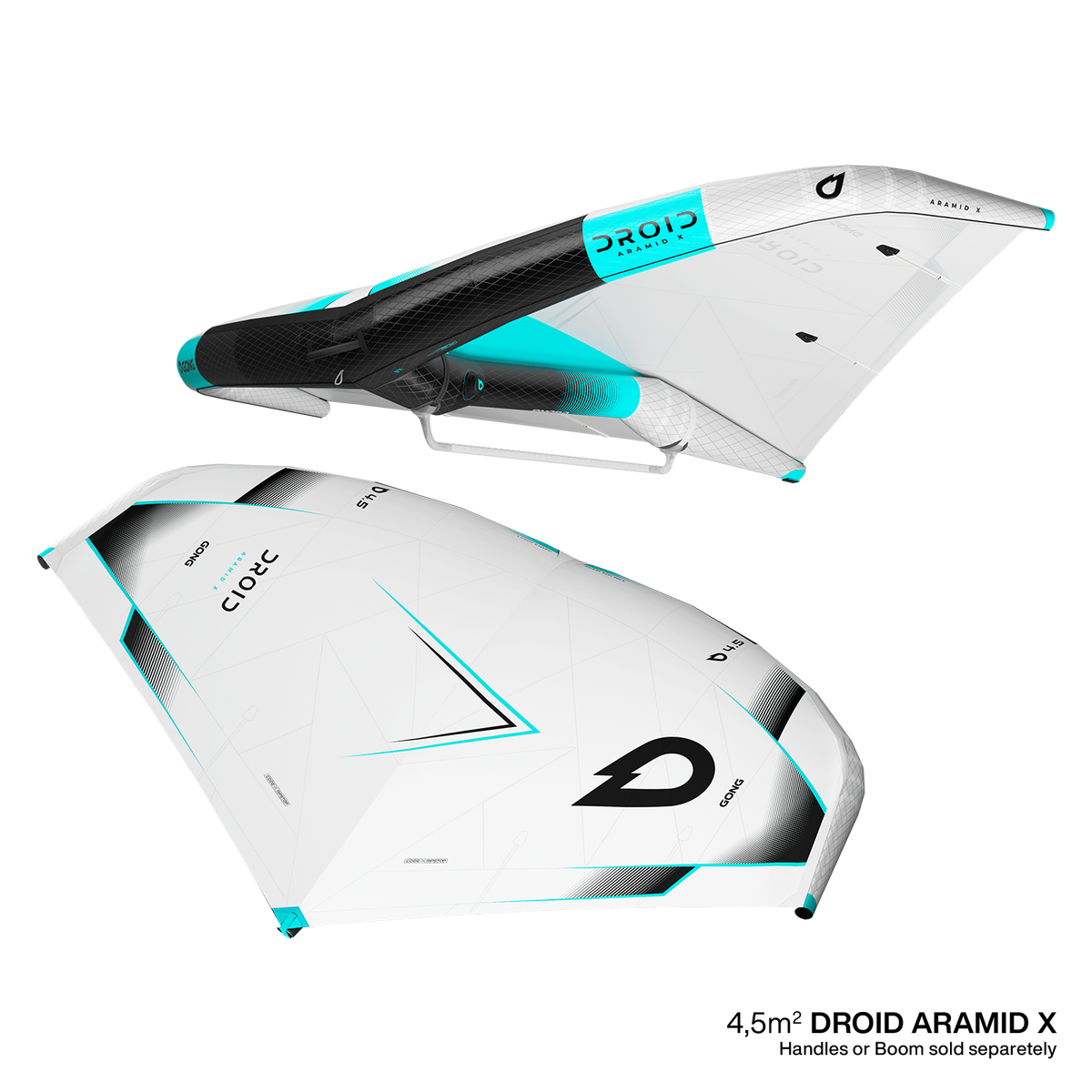
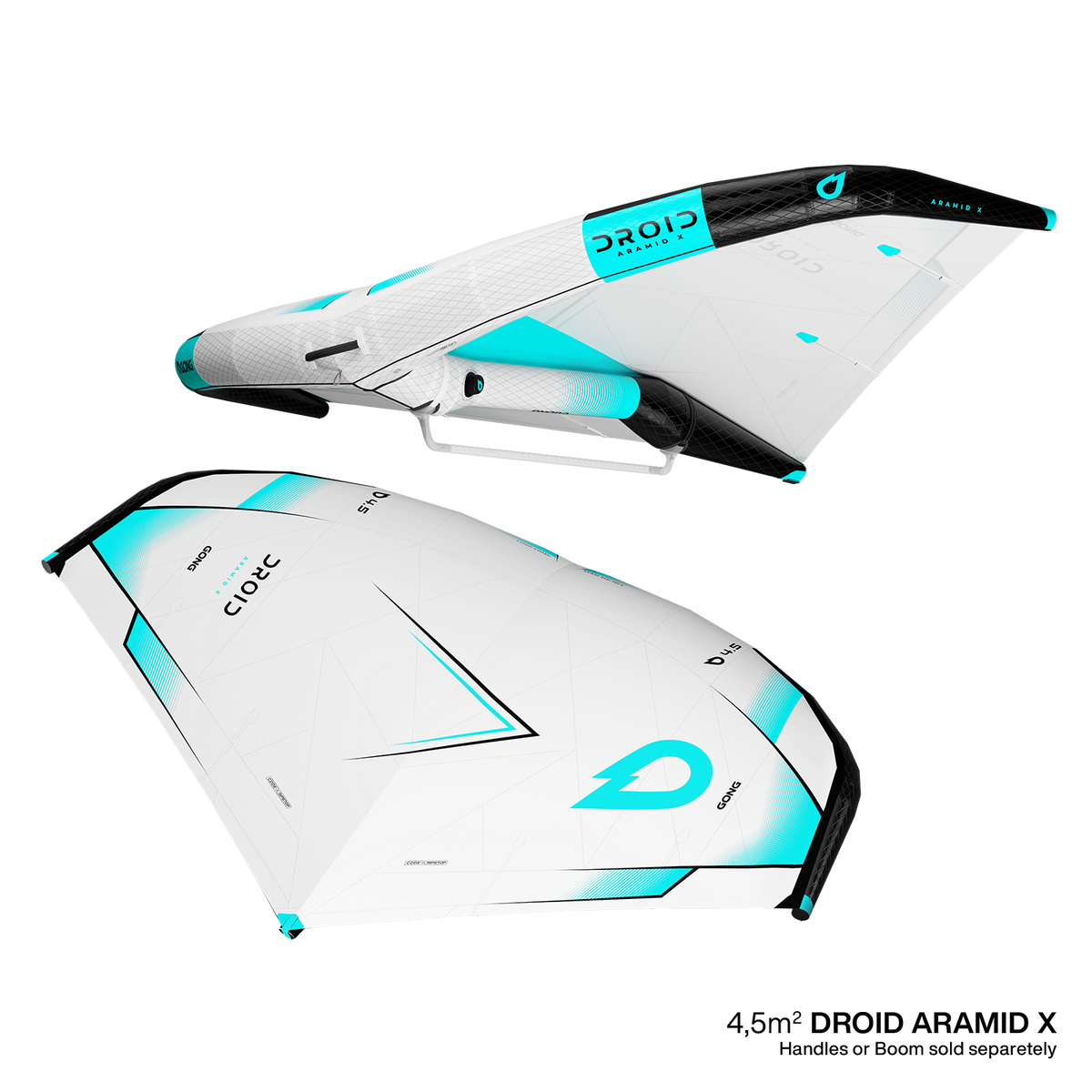
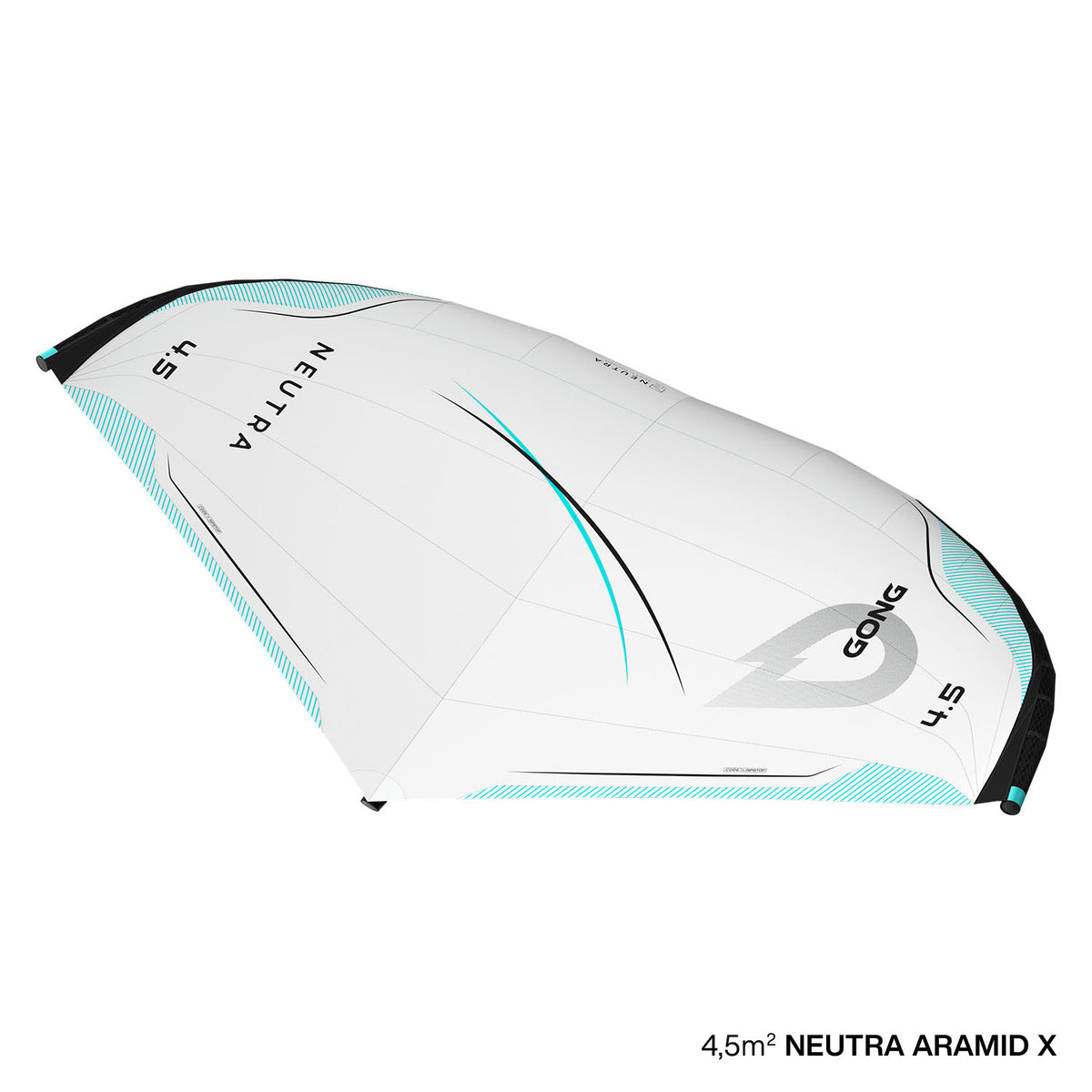
 Wing foiler: Patrice Guénolé, GONG founder and shaper, riding the HIPE Cruzader and a 4.5 m2 Droid Aramid X wing.
A wing is not powered by true wind alone.
It encounters a relative speed that results from the difference between air speed and its own movement:
Vrelative = Vair - Vwing
When the wing foiler pumps, they move the wing rapidly through the air mass. This movement locally creates additional relative speed, changes the angle of attack and increases dynamic pressure over the profile.
The wing can then generate far more force than it would if it remained stationary in the same wind.
Pumping therefore isn't simply about pulling repeatedly on the wing. It's about moving it through a trajectory that maximises airflow speed, maintains an efficient angle of attack and correctly directs the resulting aerodynamic force.
The wing must accelerate during the power phase, deliver forward impulse, then return into position without cancelling the previous gain.
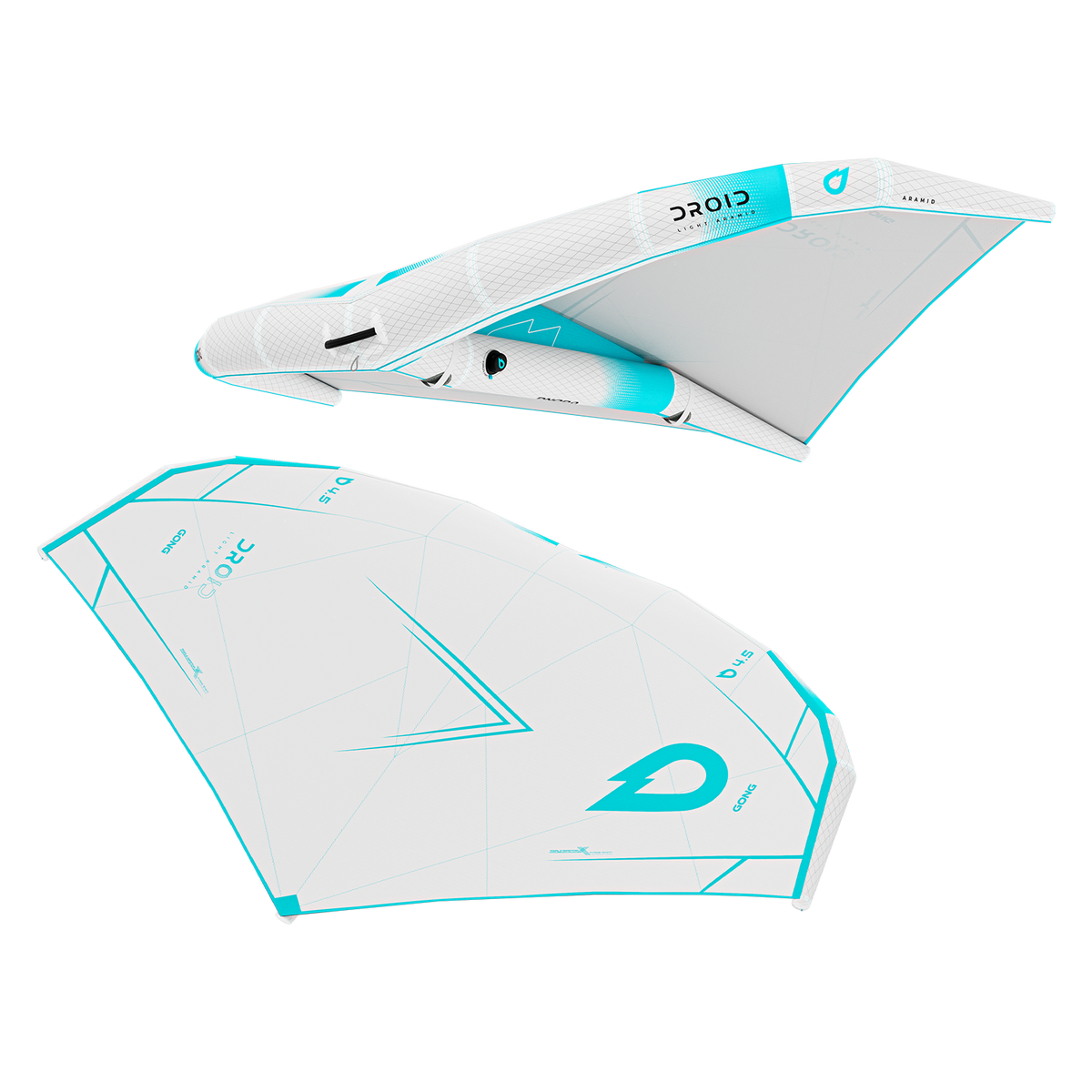
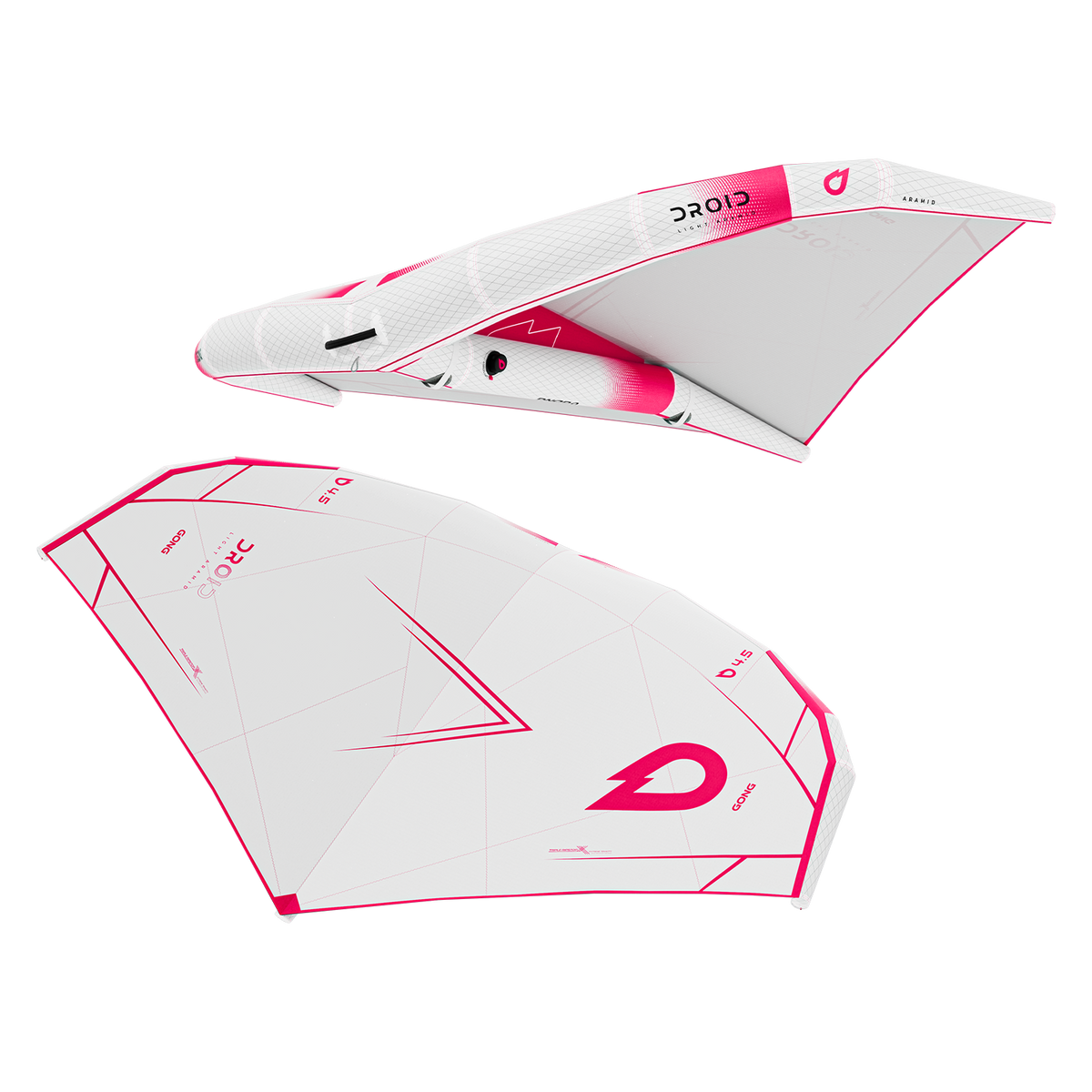
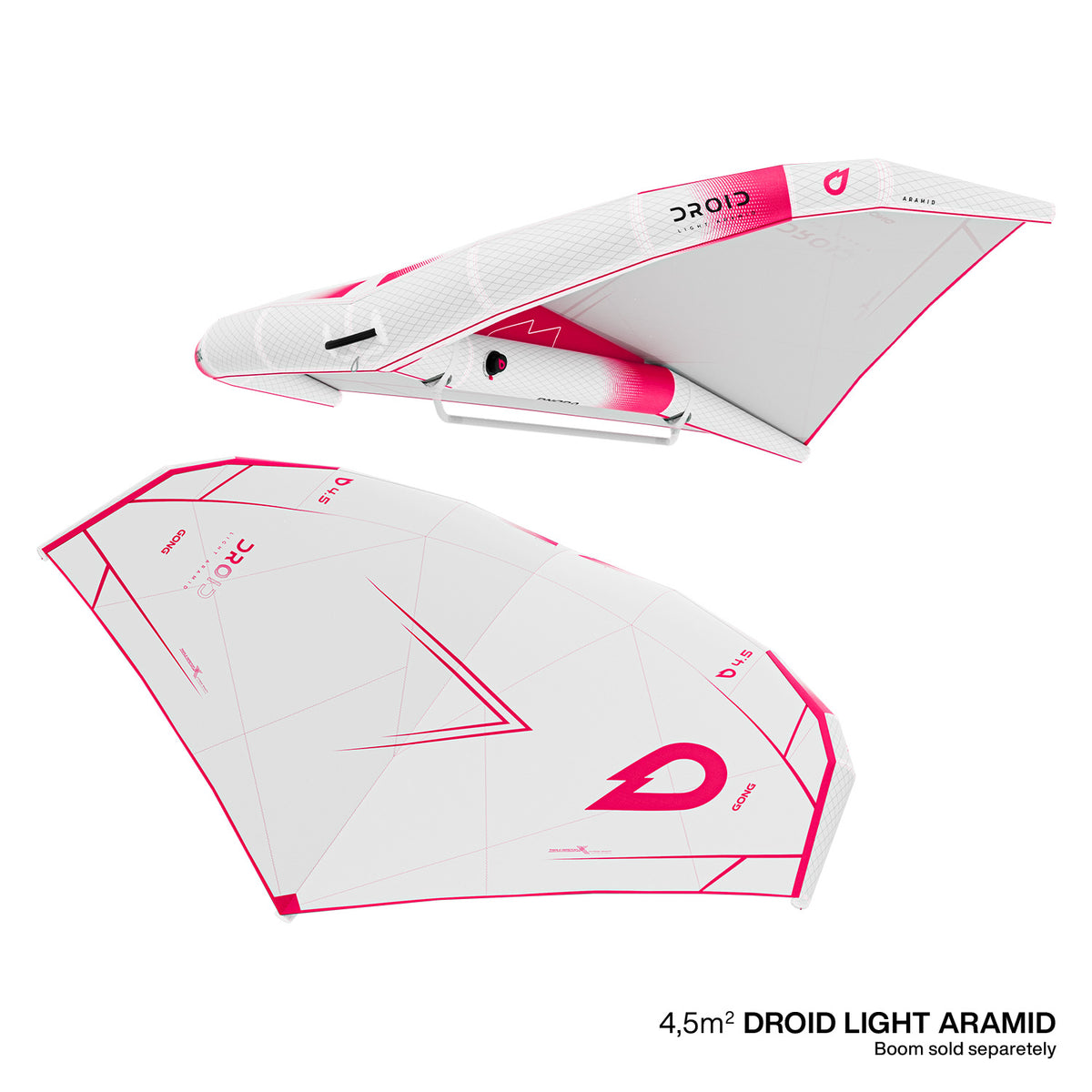
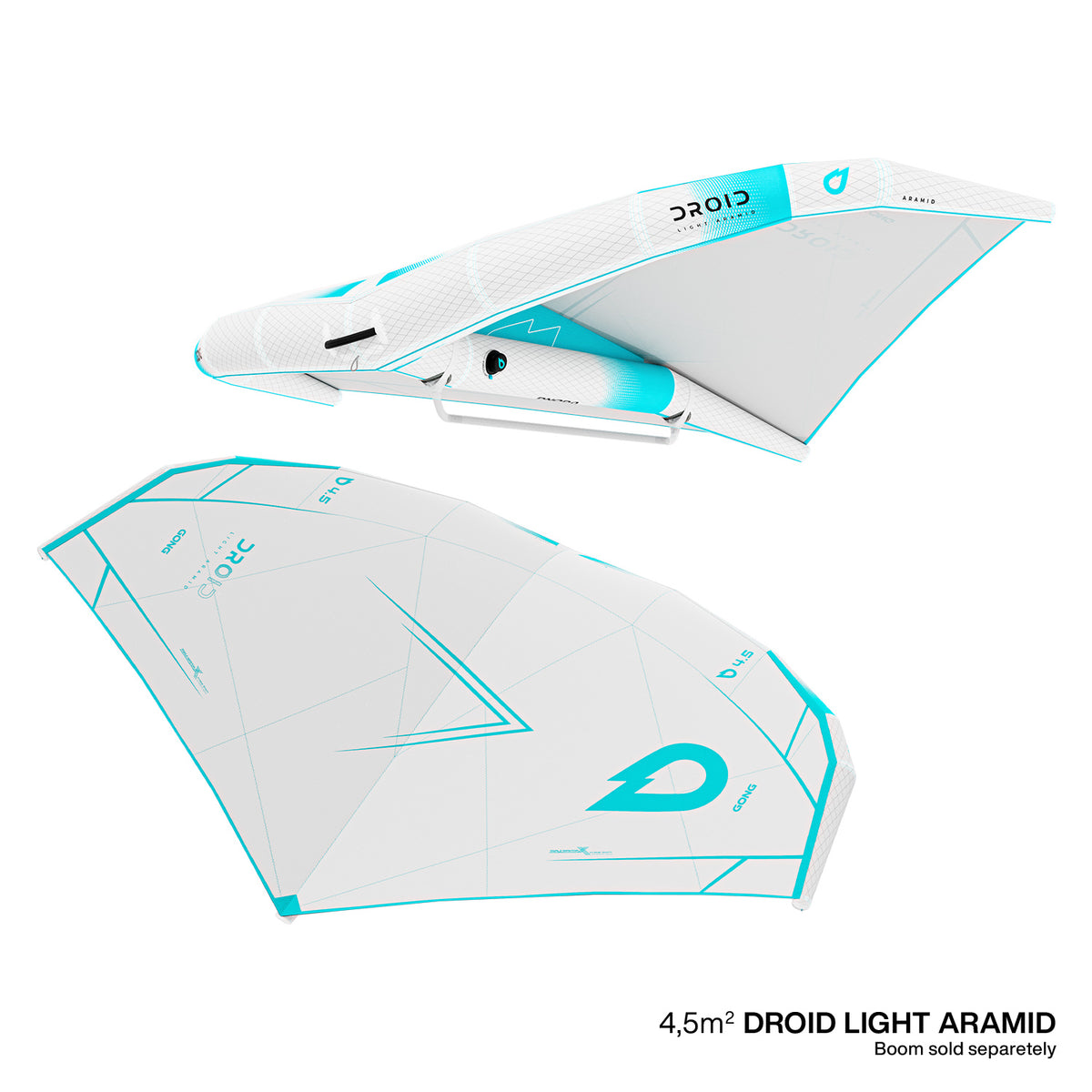
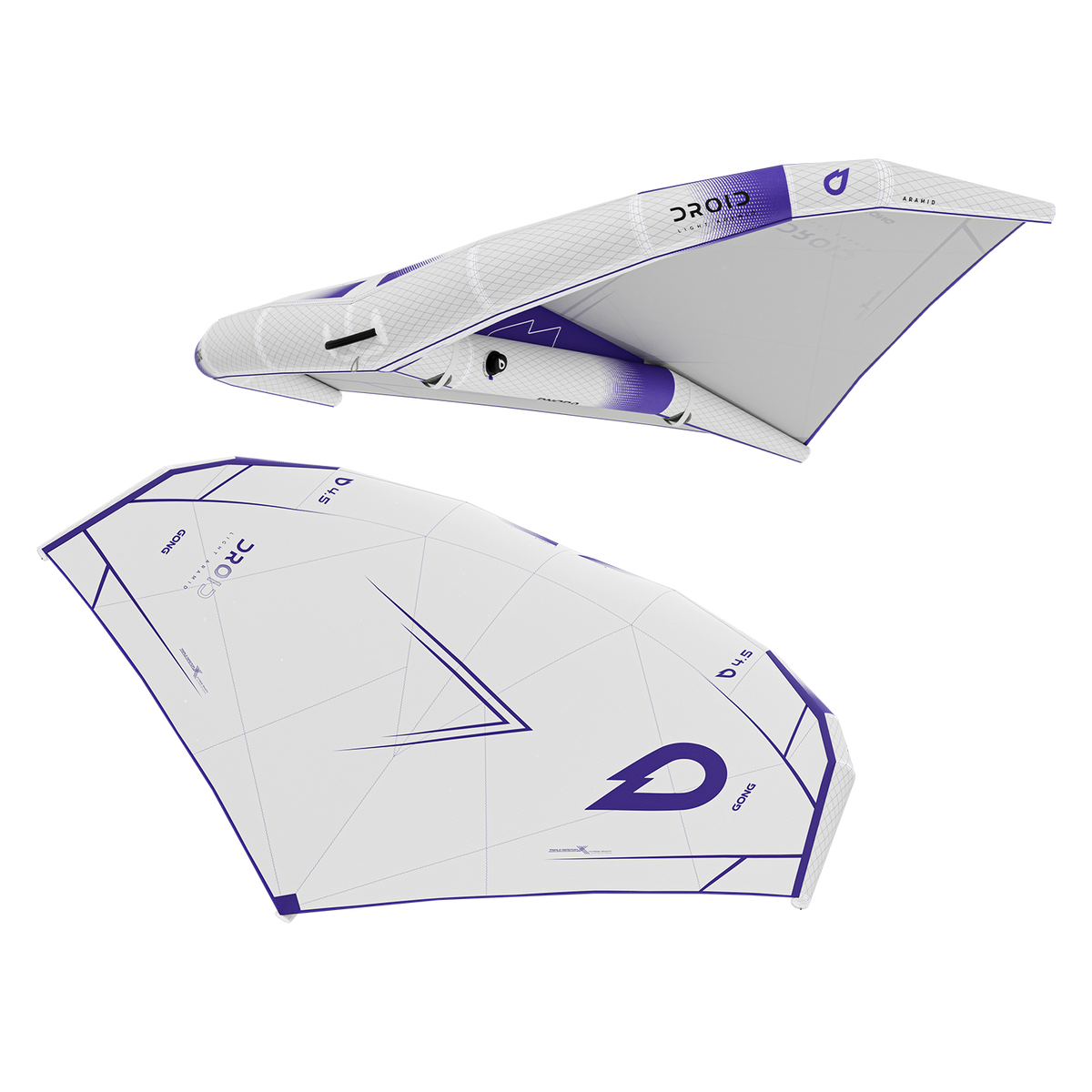
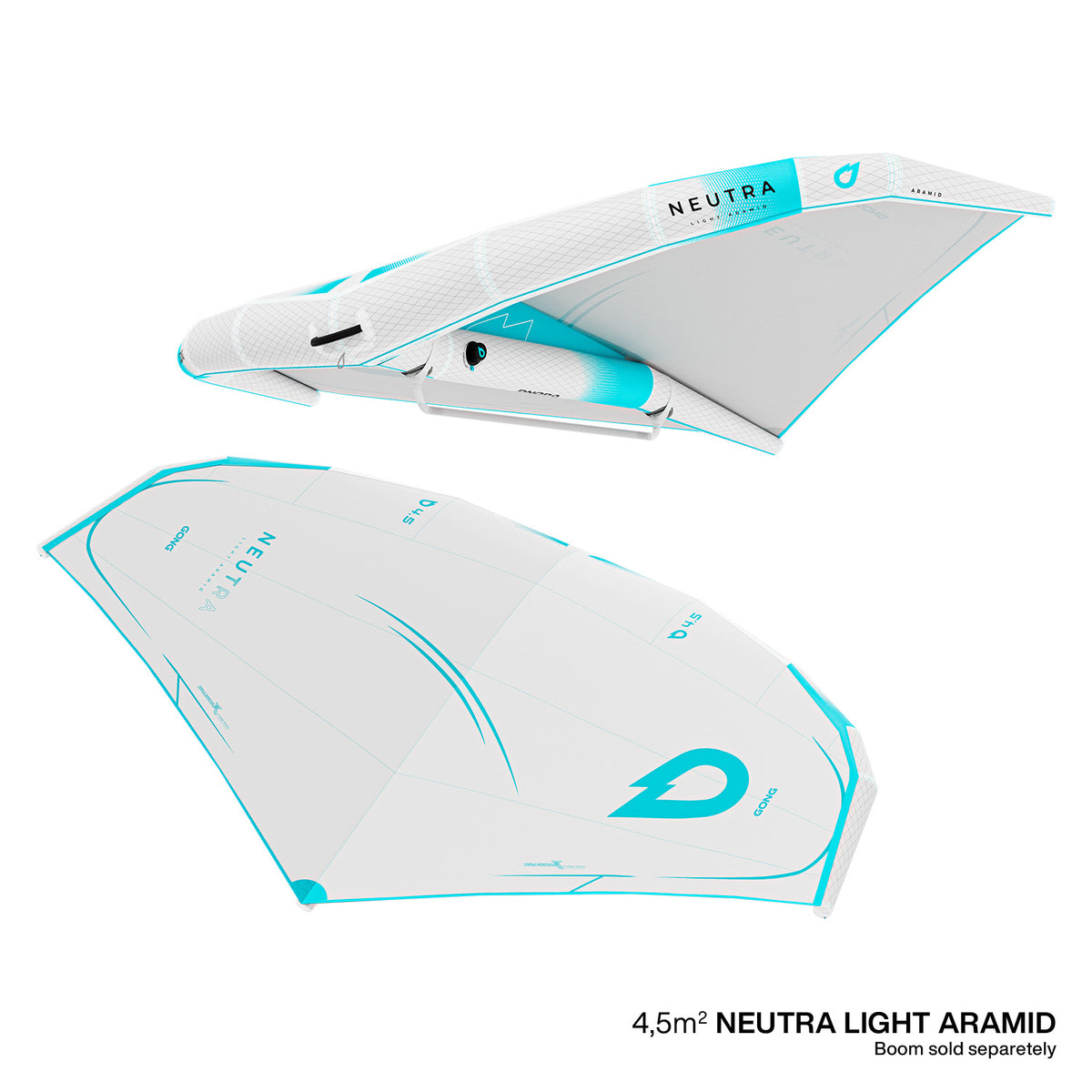
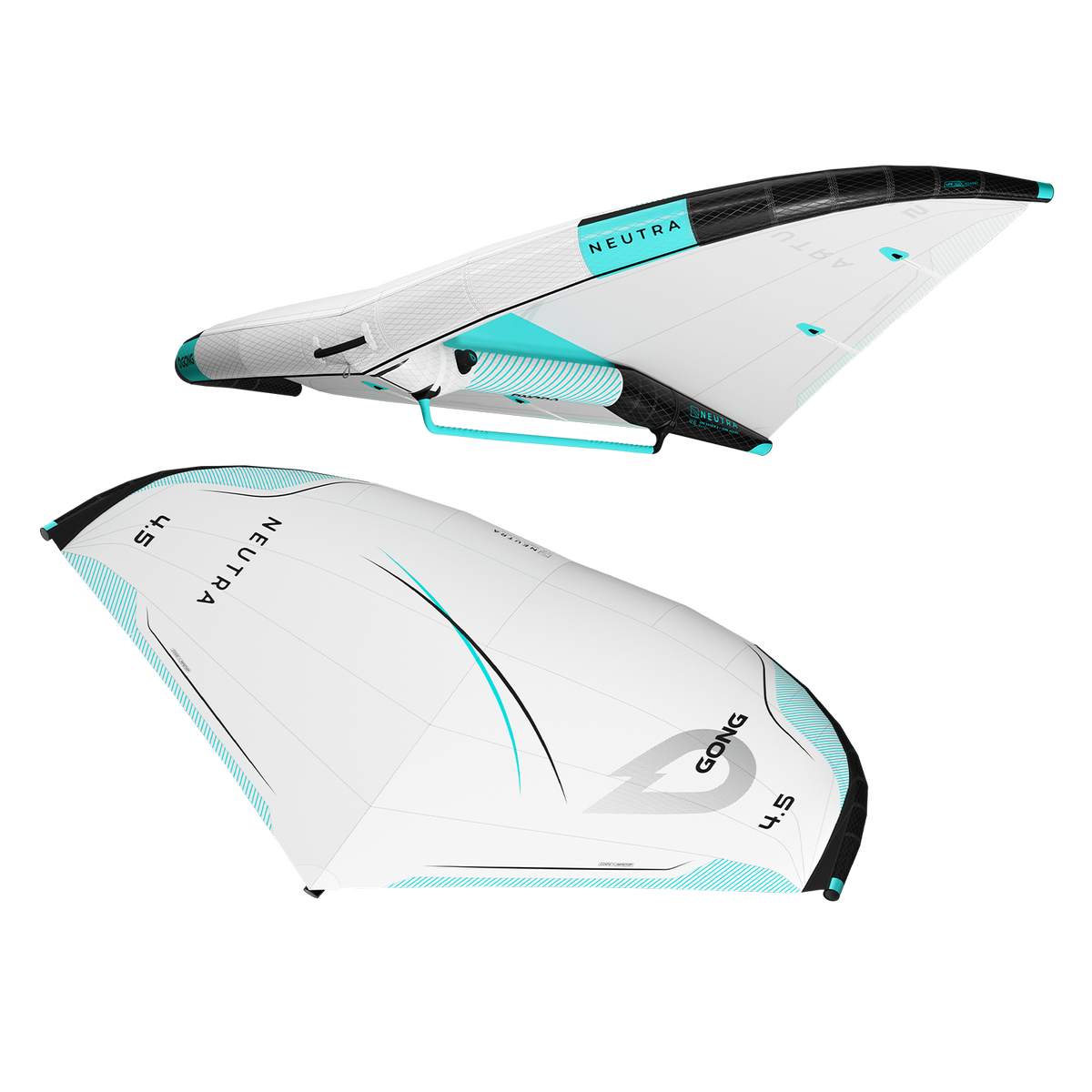
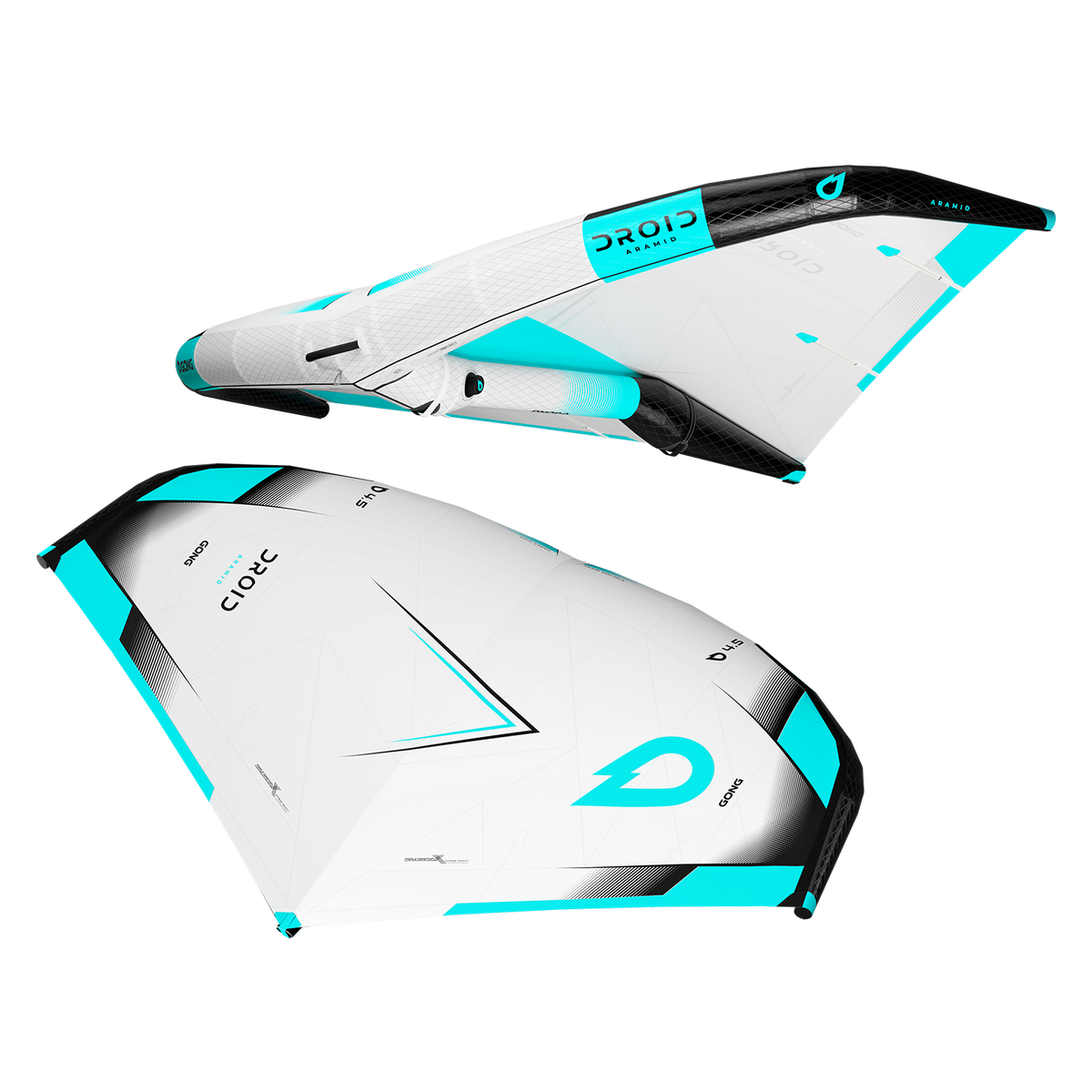
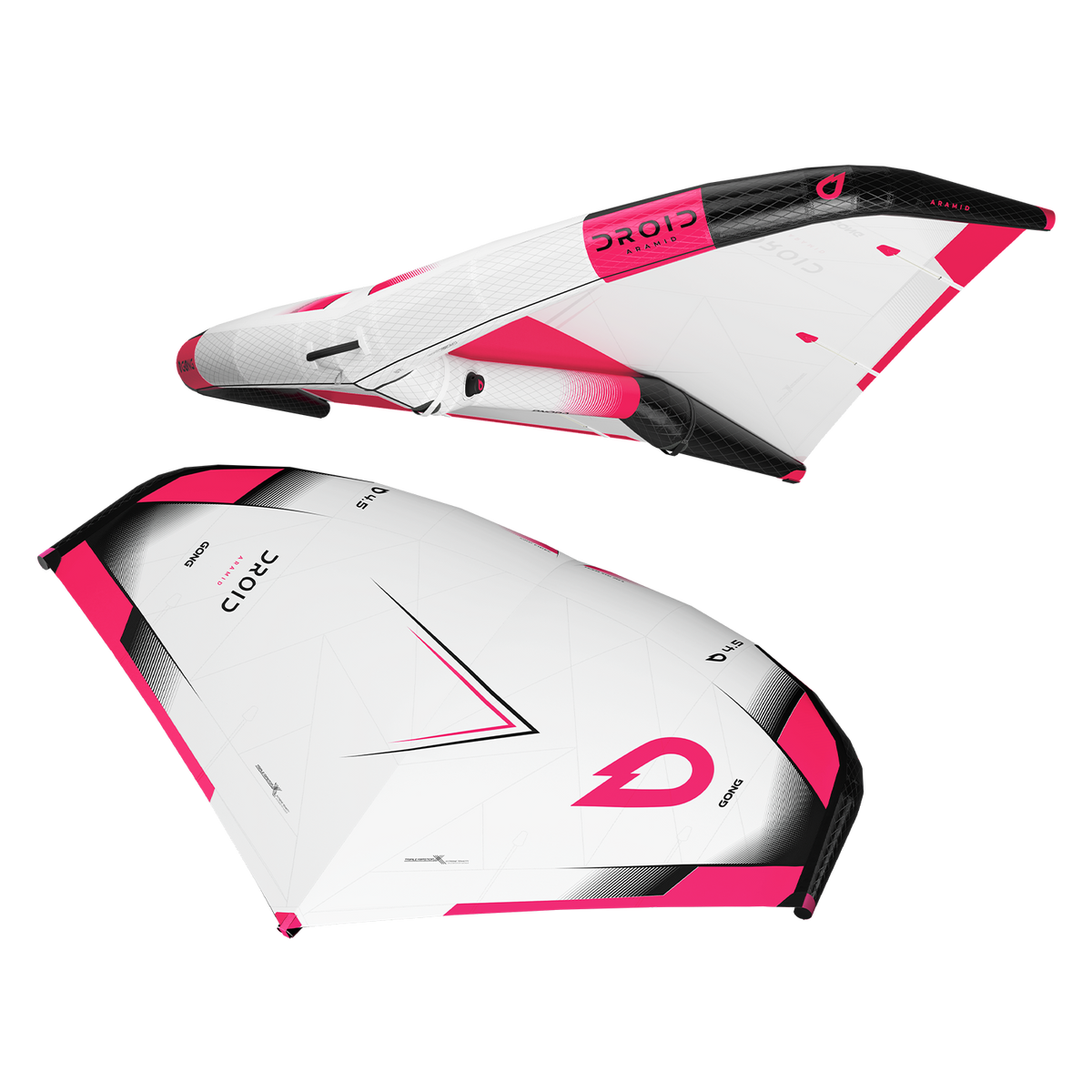
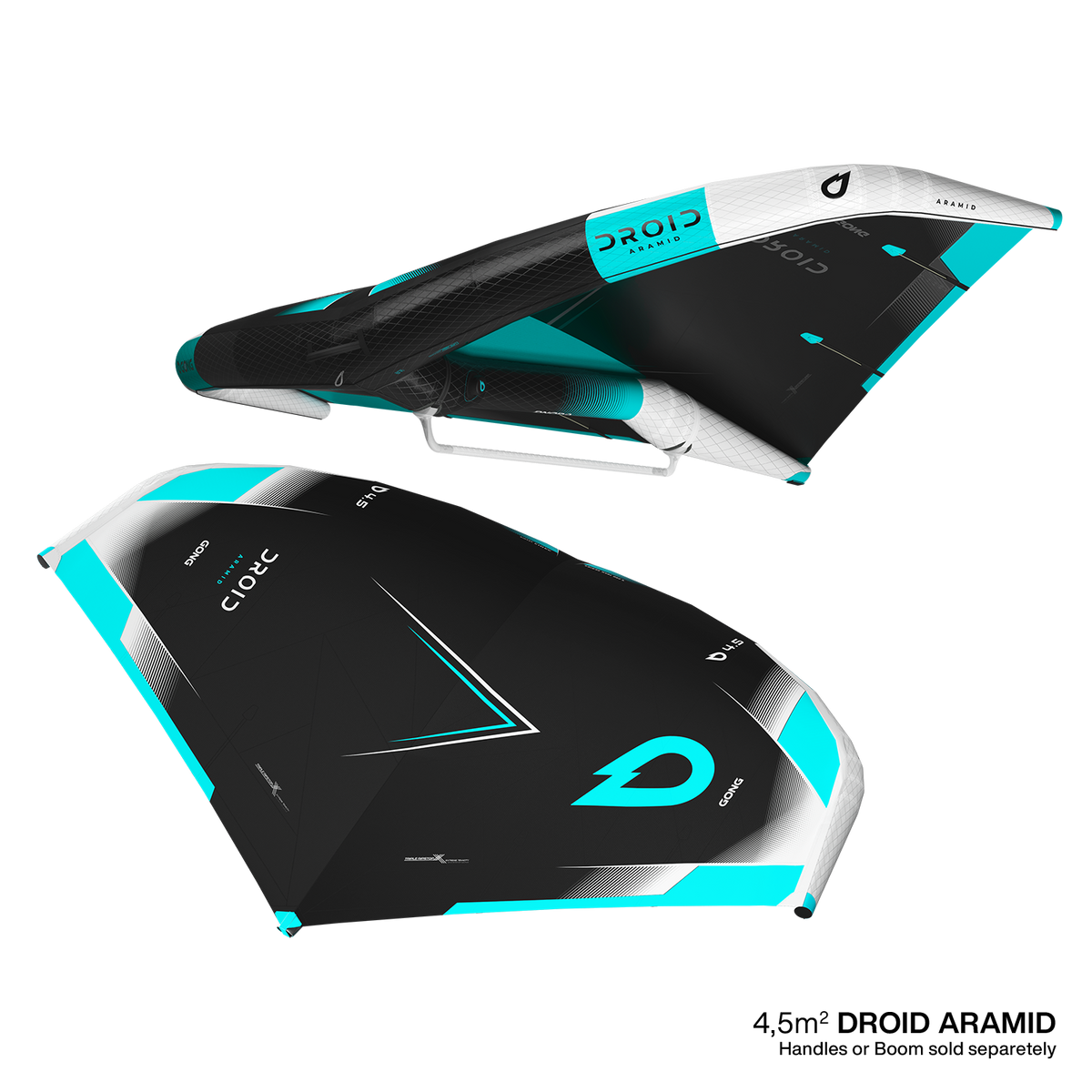
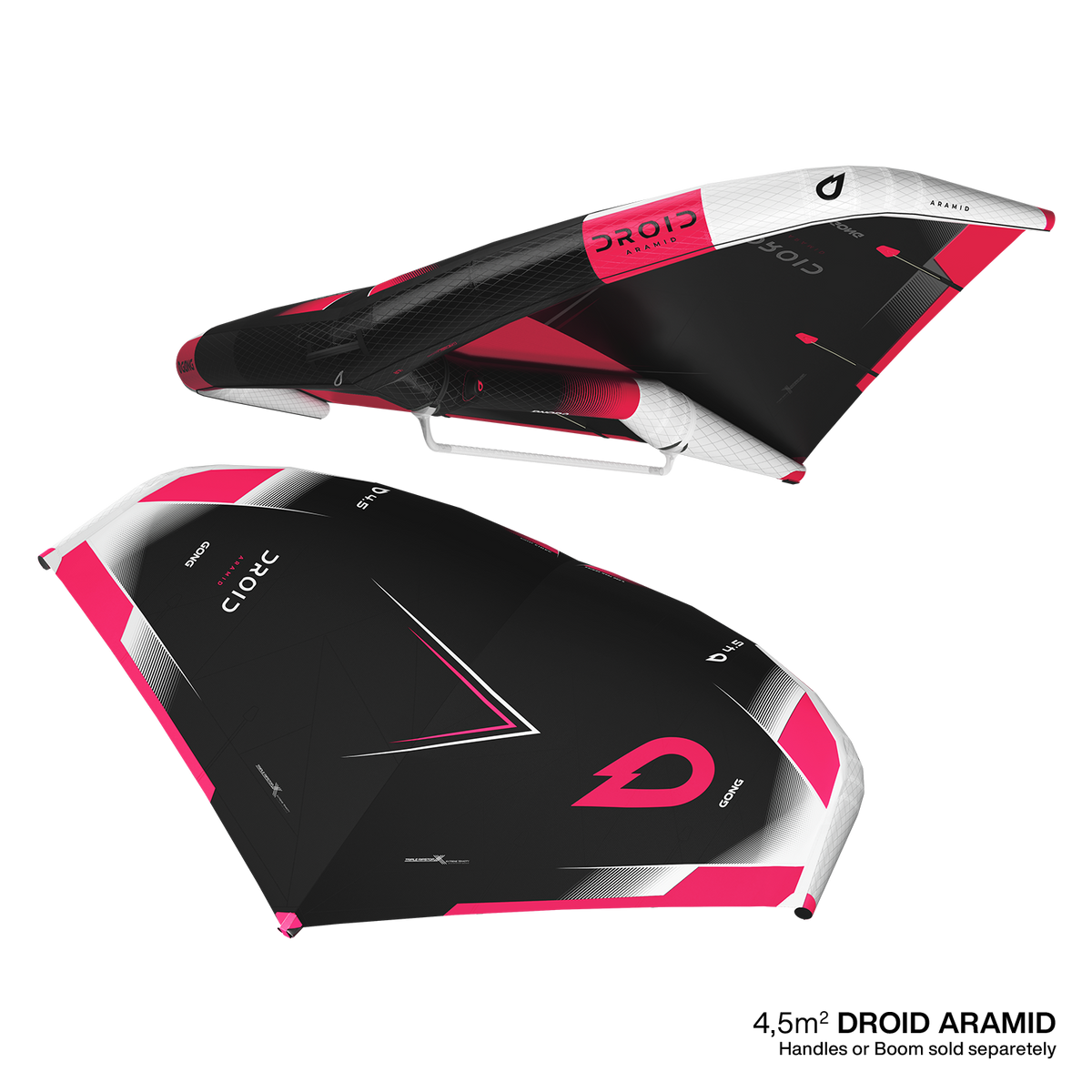
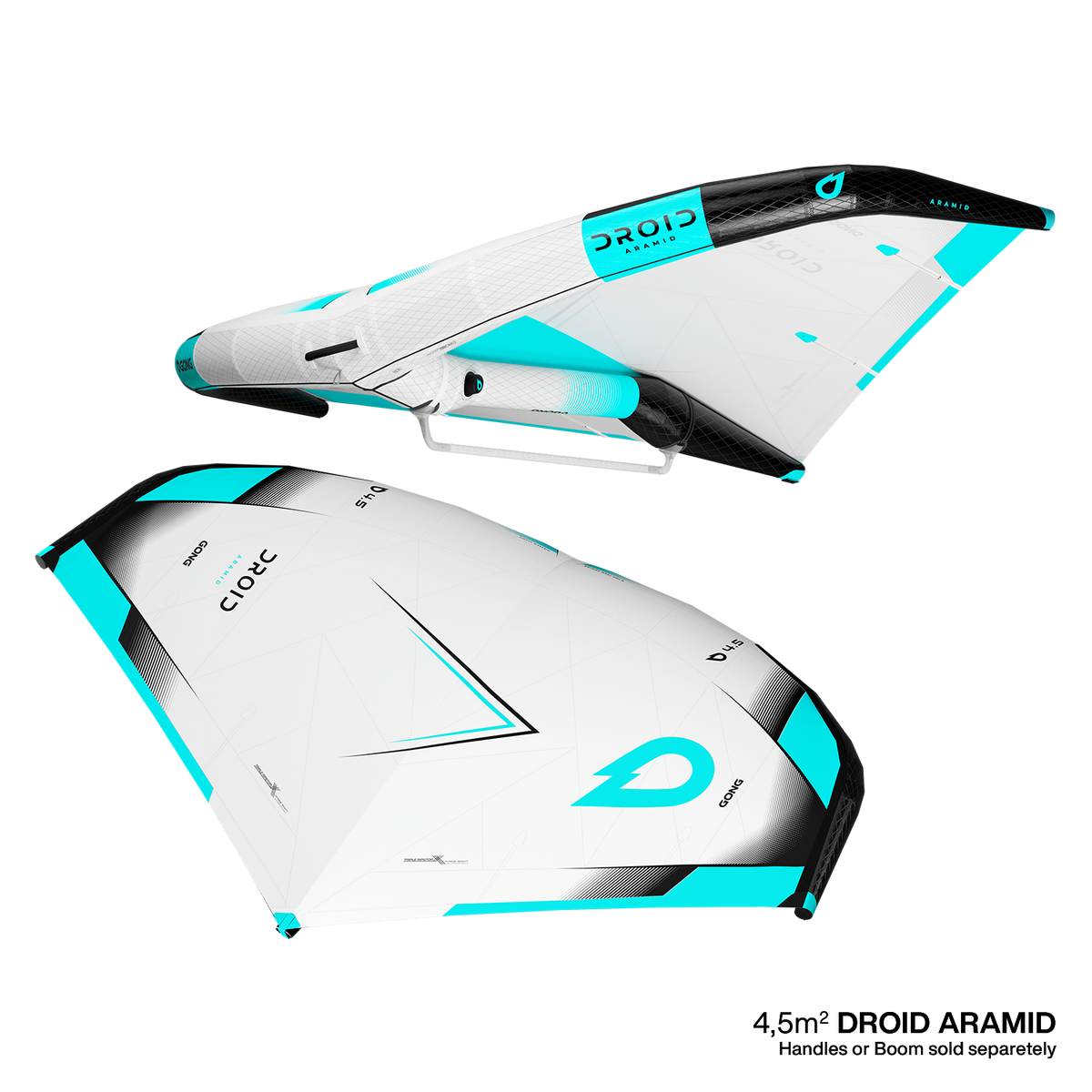
A light, compact wing such as the Droid Light is easier to accelerate, stop and relaunch.
A very large wing generally has more span, more mass and a greater moment of inertia. It takes more effort to change direction and can force the wing foiler to reduce the amplitude of the pumping motion to avoid touching the water.
That risk of contact can also force the rider to open the wing more or hold it higher. The force generated is then less effectively directed forward.
In ultra-light wind, a larger wing can therefore generate more theoretical force while being less efficient throughout the actual pumping cycle.
Before flying, the wing has to accelerate a system whose board is still largely in contact with the water.
The hull displaces water, creates waves and spray, and experiences friction. A large part of the traction generated by the wing is absorbed by this resistance.
At very low speed, the foil generates almost no lift. The board still has to support most of the weight of the wing foiler and their equipment.
Then speed increases and the foil starts generating lift.
The same equation structure applies:
Lfoil = ½ × ρwater × Vfoil² × Sfoil × CL
Water is around 800 times denser than air under typical conditions. That doesn't mean a foil is 800 times more efficient than a wing, because the areas, speeds, profiles and coefficients are different.
But this density explains why a relatively compact front wing can generate considerable vertical force at just a few metres per second.
As an order of magnitude, a foil area of 0.1 m², or 1,000 cm², moving at 4 m/s with a lift coefficient of 1 theoretically generates around 800 N of lift:
½ × 1,000 × 4² × 0.1 × 1 = 800 N
800 N is approximately equivalent to the weight of an 80 kg mass.
This calculation is deliberately simplified. It doesn't account for the stab, depth, interactions between components, three-dimensional effects, coefficient variations or vertical accelerations.
But it does show why a small submerged surface can progressively unload a much larger board.
The foil unloads the hull even before take-off.
As a first approximation, during a quasi-steady phase, the load still supported by the hull can be expressed as:
Hull load ≈ total weight - foil lift
 Wing foiler: Thomas, GONG staff rider, riding the Cruzader Point LW FSP Pro and Droid Light.
When the foil generates 20% of the total weight, the hull is already unloaded by 20%.
When it generates 50%, the board only has to support half of the initial load.
It sits higher in the water. Its wetted surface decreases. Wave resistance decreases. Every impulse from the wing then generates more acceleration.
This creates a positive feedback loop:
The transition into flight is therefore not linear.
For several seconds, your efforts may seem to achieve very little. Then the foil generates enough lift to significantly reduce hull resistance. The board suddenly accelerates much faster and releases from the water.
That's the threshold you need to cross.
Once you're flying, the traction requirement changes completely.
When the board leaves the water, hull resistance almost completely disappears.
What remains is the drag from the front wing, stab, fuselage and mast, along with the aerodynamic drag of the wing foiler, board and wing.
These resistances are not zero. But they are much lower than those of a loaded board still travelling across the water.
At a steady speed, the required traction can be summarised as:
The wing doesn't need to directly support the wing foiler's weight. The foil provides that lift thanks to its speed through the water.
The wing mainly needs to maintain that speed by compensating for losses.
This is why a relatively small wing can feel marginal before take-off, then become perfectly sufficient once the board is flying.
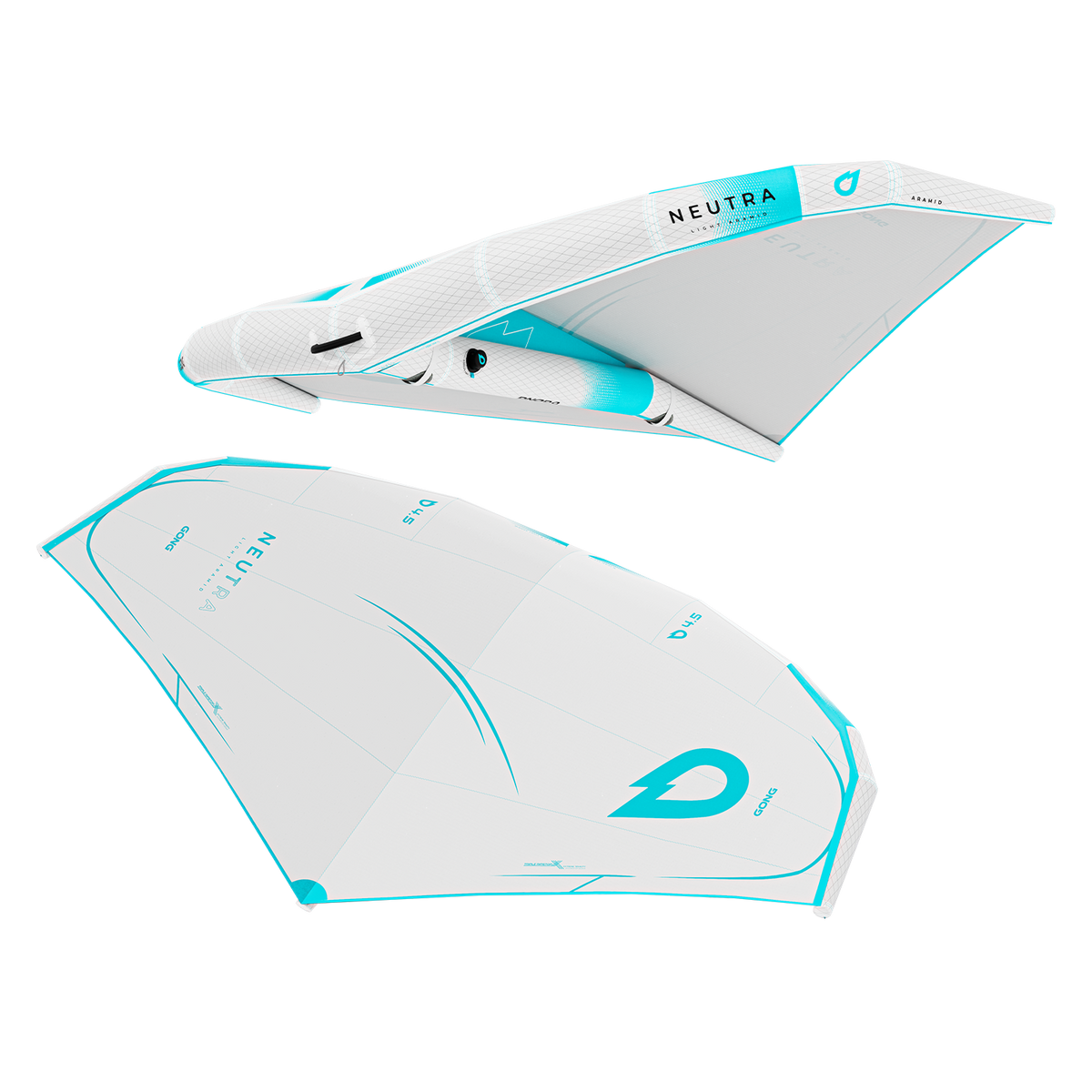
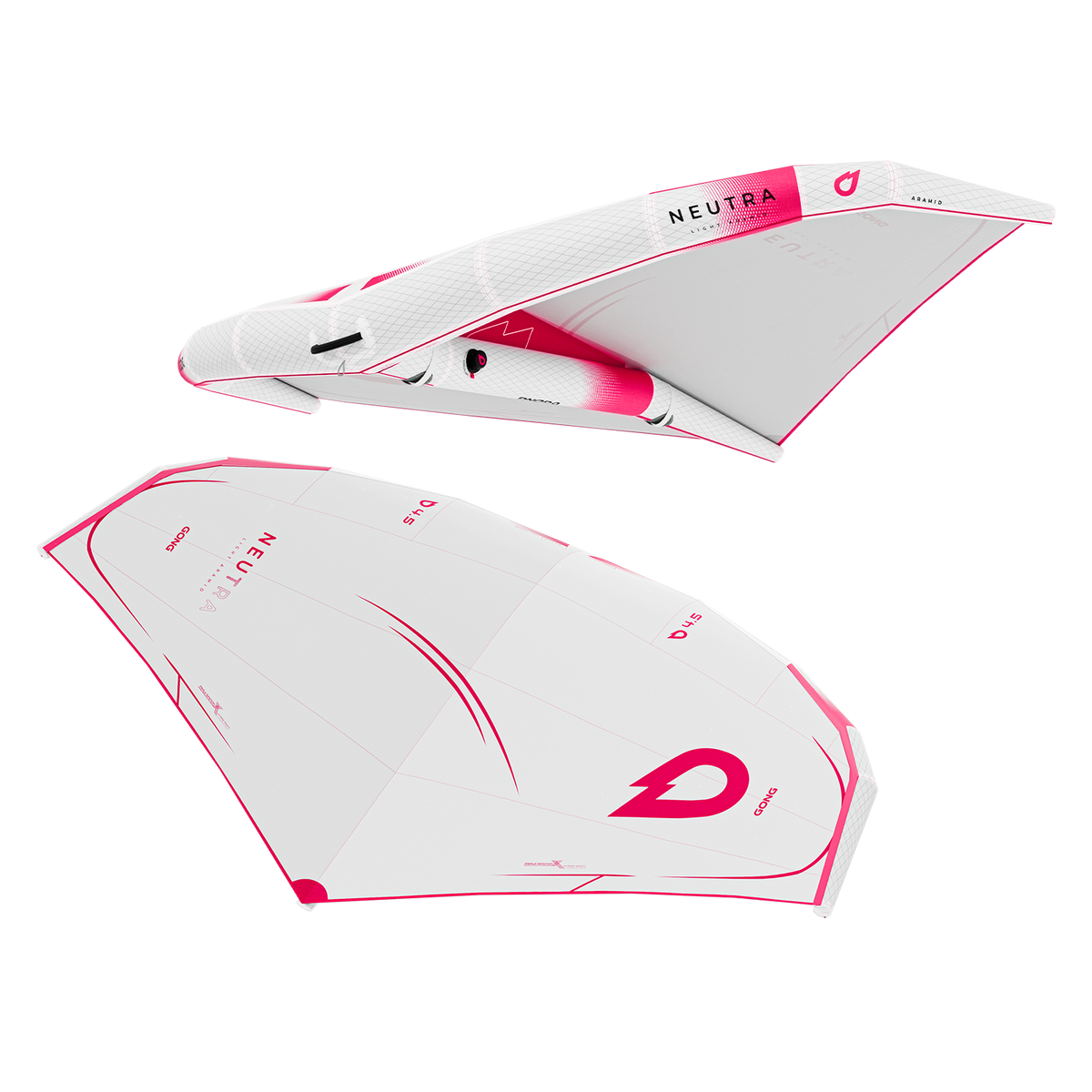
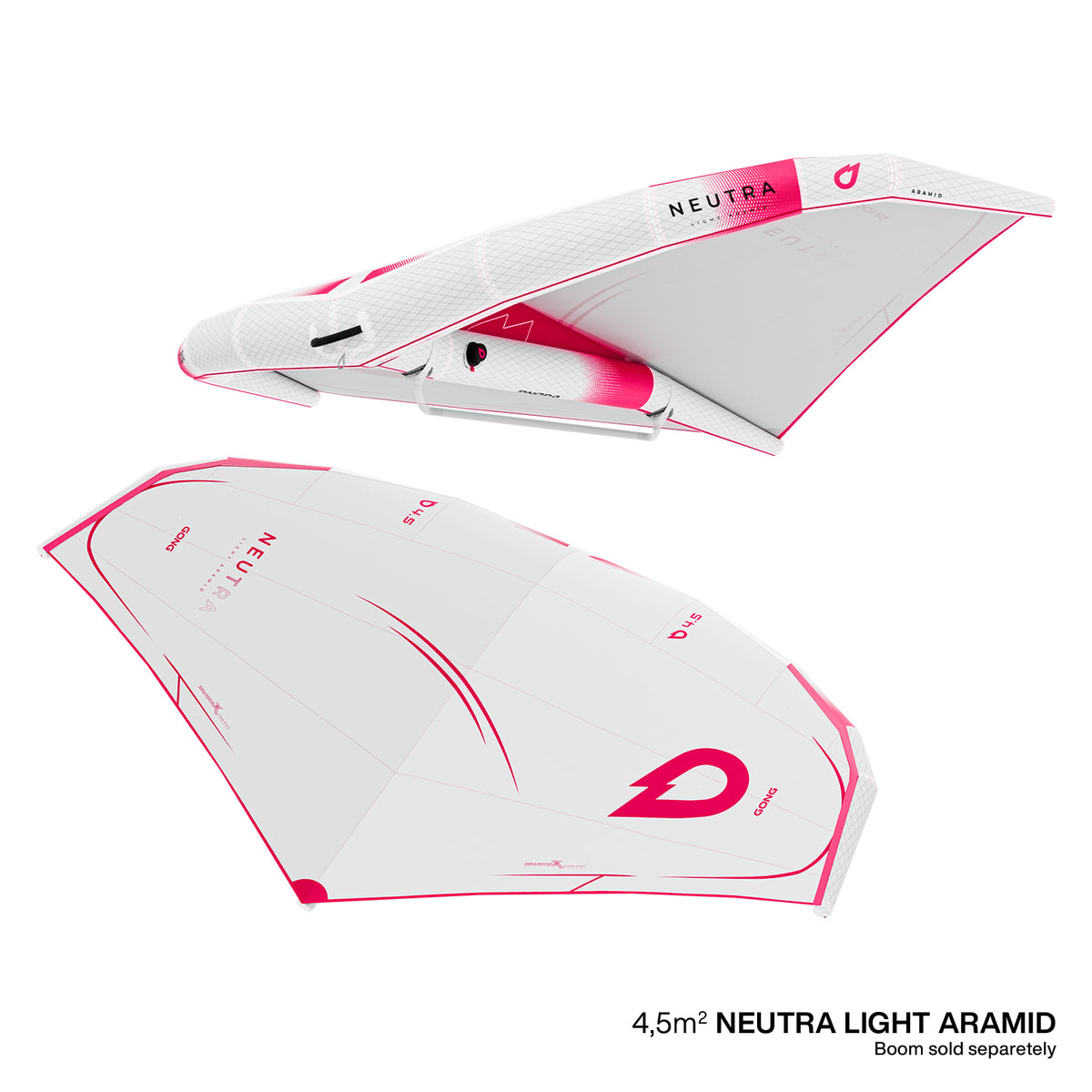
 Wing foiler: Malo, GONG team rider, riding the Cruzader Point LW FSP Pro and Neutra Light.
This is the paradox of light wind: the maximum traction requirement exists only during a very short phase, just before take-off; once flight is established, the required traction becomes much lower.
Choosing a huge wing solely to solve this transition can compromise the rest of the session.
The foil multiplies the benefits of a smaller wing.
Without a foil, a small sail has to continuously pull a board that remains in contact with the water.
With a foil, this high resistance only exists during the starting phase.
Once flying, a foil with plenty of glide can maintain its speed with very little traction. In a lull, the whole setup keeps moving thanks to its kinetic energy and low drag.
The evolution of speed can be summarised by the relationship:
traction - drag
When the wind drops, traction decreases.
But if drag is low, deceleration remains slow. The foil retains enough speed to stay flying until the next gust or until another burst of wing pumping accelerates the whole setup again.
The key quality of a light-wind foil therefore isn't just early take-off. It's also its ability to retain speed when the wing is providing almost nothing.
The foil doesn't replace wing power. It radically reduces the amount of power required.
Pumping the board isn't simply about moving it up and down.
Foil pumping combines two main movements.
The first is the foil's vertical movement, known as heave.
The second is its pitching rotation, known as pitch.
When a foil moves horizontally at speed U and vertically at speed w, the relative flow speed it encounters becomes approximately:
Vrelative = √(U² + w²)
The vertical movement slightly increases the total flow speed.
But its main effect is to change the direction of that flow. The foil's effective angle of attack then results from the combination of its geometric pitch and the angle induced by the vertical movement.
The foil therefore does not encounter the same flow while rising and descending.
Its lift changes in both magnitude and direction. When correctly synchronised with pitch variation, this force can generate both a vertical component and forward thrust.
The foil can transform vertical oscillation into thrust. In other words, a combination of heave and pitch can generate lift and thrust simultaneously.
The phase relationship between these two movements is critical. The movement that generates the most thrust is not necessarily the most efficient. Poorly synchronised pitch can create excessive angle of attack, sharply increase drag or cause flow separation.
Correctly synchronised pitch, by contrast, allows the foil to be loaded efficiently during the power phase and then reduces resistance during the recovery phase.
The mechanism doesn't rely solely on quasi-steady lift.
Foil accelerations also set a mass of water around the profile into motion. They generate added-mass forces, rotational effects and a vortex wake whose organisation can contribute to propulsion.
In all cases, the effective angle of attack must remain under control: when it becomes too high, flow separation and dynamic stall phenomena significantly alter hydrodynamic forces and can reduce propulsive efficiency.
A board kept almost horizontal can still move the foil up and down.
But it makes little use of pitch variation, which helps direct the forces generated throughout the cycle.
It also stays in contact with the water over a greater length of hull for longer. Each oscillation then has to overcome significant resistance in both directions.
The downward movement loads the board into the water.
The upward movement then has to pull this wetted surface free without benefiting from a sufficiently pronounced change in pitch.
An oscillation with genuine pitch variation organises the cycle more effectively.
The foil's downward movement, the change in angle of attack, the lifting of the nose and the unloading of the board can then work together rather than against each other.
The goal is not to move the entire mass of the wing foiler up and down as violently as possible.
The goal is to create a movement pattern in which every motion generates a useful force and prepares the next one.
Good pumping therefore seeks the best balance between:
Wing foiler: Malo, GONG team rider, riding the Cruzader Point LW FSP Pro and Neutra Light.
Taking off in ultra-light wind relies on a very precise sequence. Maximum violence is not the goal.
The wing is accelerated through the air and generates the first impulse.
The board converts that impulse into horizontal speed with as little loss as possible.
The foil starts generating lift and progressively unloads the hull.
The wing foiler oscillates the foil by combining vertical movement and pitch variation.
The board briefly descends, then the nose meets the water.
The water's reaction reverses the movement and creates a pitching moment.
The front wing's angle of attack increases as the board rises.
The foil takes more load.
The wetted surface decreases.
Board resistance suddenly drops.
The whole setup accelerates.
Apparent wind increases.
The wing generates more traction.
The foil fully lifts the board.
The loop is established.
The hard part isn't maintaining flight. It's getting through the first few seconds of this loop without wasting the available energy.
A large wing has more surface area.
In a steady 10 or 12 knots, that surface can generate enough almost-static traction to accelerate the board with very little pumping.
But in 7 or 8 knots, dynamic pressure remains extremely low.
The large wing also has to be accelerated to generate significant force.
Its span, inertia and bulk can then limit pumping frequency, amplitude and precision.
A smaller, lighter and more responsive wing can move through its path more quickly, maintain a better angle of attack and generate more relative speed.
Combined with a board that glides efficiently and a foil that takes off early, it can cross the flight threshold with less surface area.
Once flying, its size becomes more than sufficient because the high resistance of the hull has disappeared.
Moderate wind and light wind are two different programmes.
In moderate wind, the power already exists in the air mass.
A large wing can capture it and generate strong traction without needing extreme movement.
In ultra-light wind, part of the airflow has to be generated through wing movement, speed has to be created with the board, lift increased through foil pumping, and every change in pitch used to reduce resistance.
A moderate-wind session made easier by a large wing should therefore not be confused with a true light-wind session.
They operate differently.
Above a certain threshold, surface area wins through raw power.
Below it, responsiveness wins through its ability to create the conditions required for flight.
That threshold isn't universal. It depends on rider weight, skill level, water state, current and the efficiency of every element in the quiver.
But the principle remains the same.
Light wind is a problem of overall efficiency.
The best light-wind quiver isn't the one that simply stacks the biggest surfaces.
It's the one that most effectively reduces the energy required to transition from moving on the water to flying.
A compact, lightweight wing efficiently generates apparent wind.
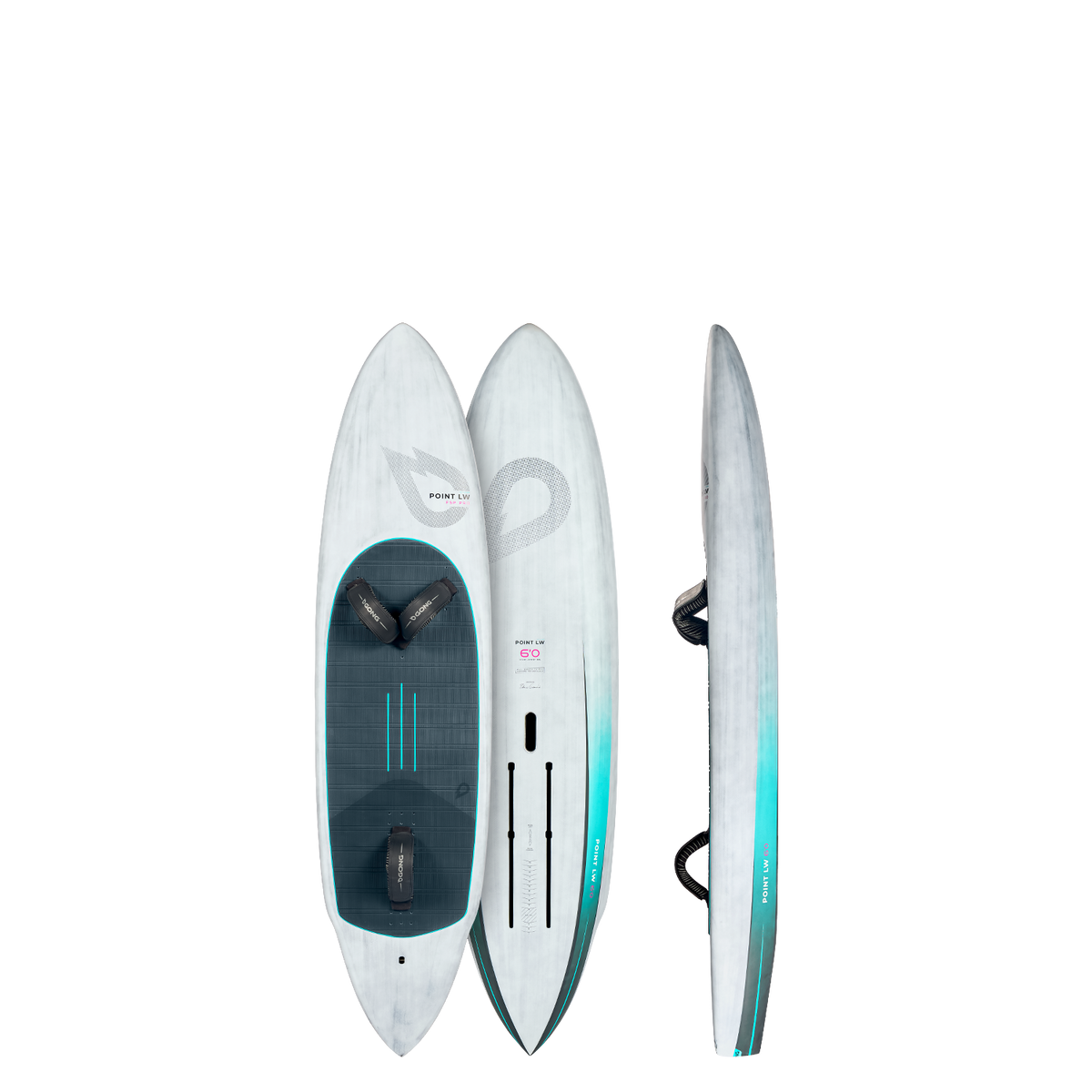
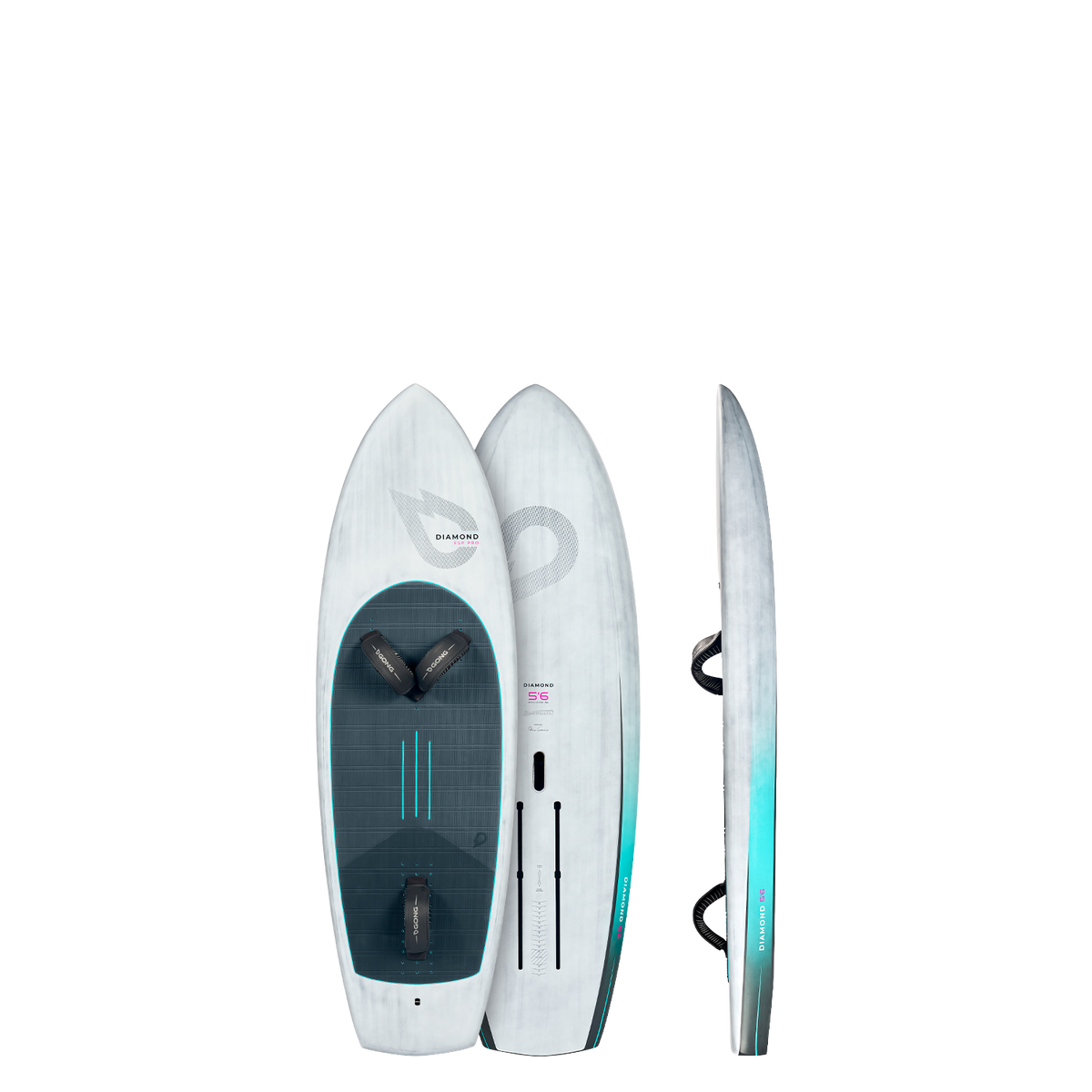
A long, efficient board converts each impulse into speed and retains that speed between movements.
A high-lift foil with plenty of glide quickly unloads the hull, then carries through lulls with very little traction.
Pumping synchronises these three elements.
Precise contact between the nose and the water can further reinforce the cycle by creating a vertical impulse and pitching moment at exactly the right time.
Every detail serves the same objective: reaching the flight threshold before the wing foiler runs out of energy or the available gust passes.
In ultra-light wind, surface area doesn't disappear from the equation.
It simply stops being the only answer.
Light wind isn't moderate wind ridden with a gigantic wing. It's a dynamic use of air, water, speed, lift and inertia.
With equipment designed as a complete system, 7, 8 or 9 knots no longer mean a day without riding.
They mean a different way to fly.
Every day becomes another opportunity for a session.
 Wing foiler: Malo, GONG team rider, riding the Cruzader Diamond FSP Pro, Neutra Light, HM85 V3 mast, Veloce Light Wind V3 Atmo front wing and Fluid V3 Atmo stab.









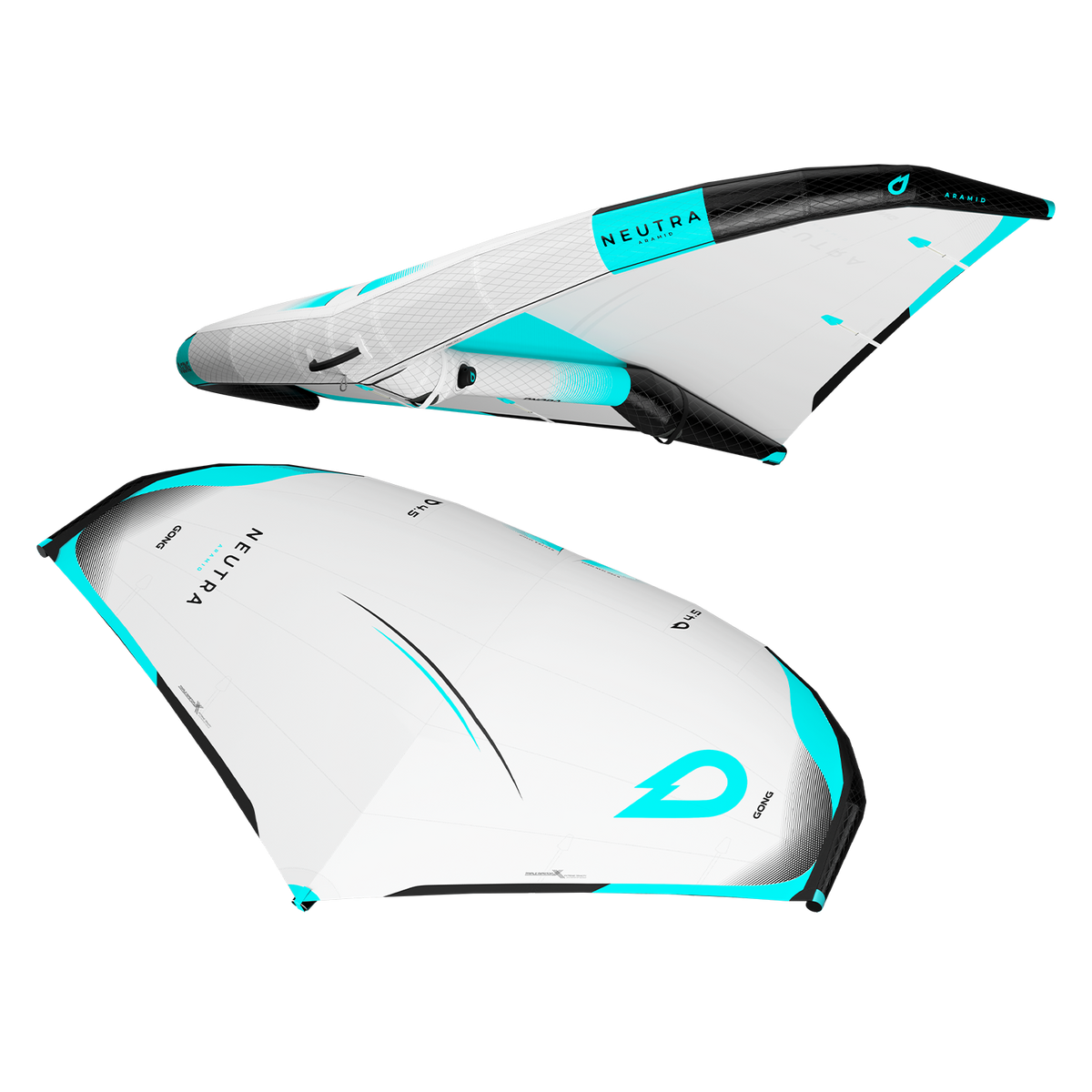
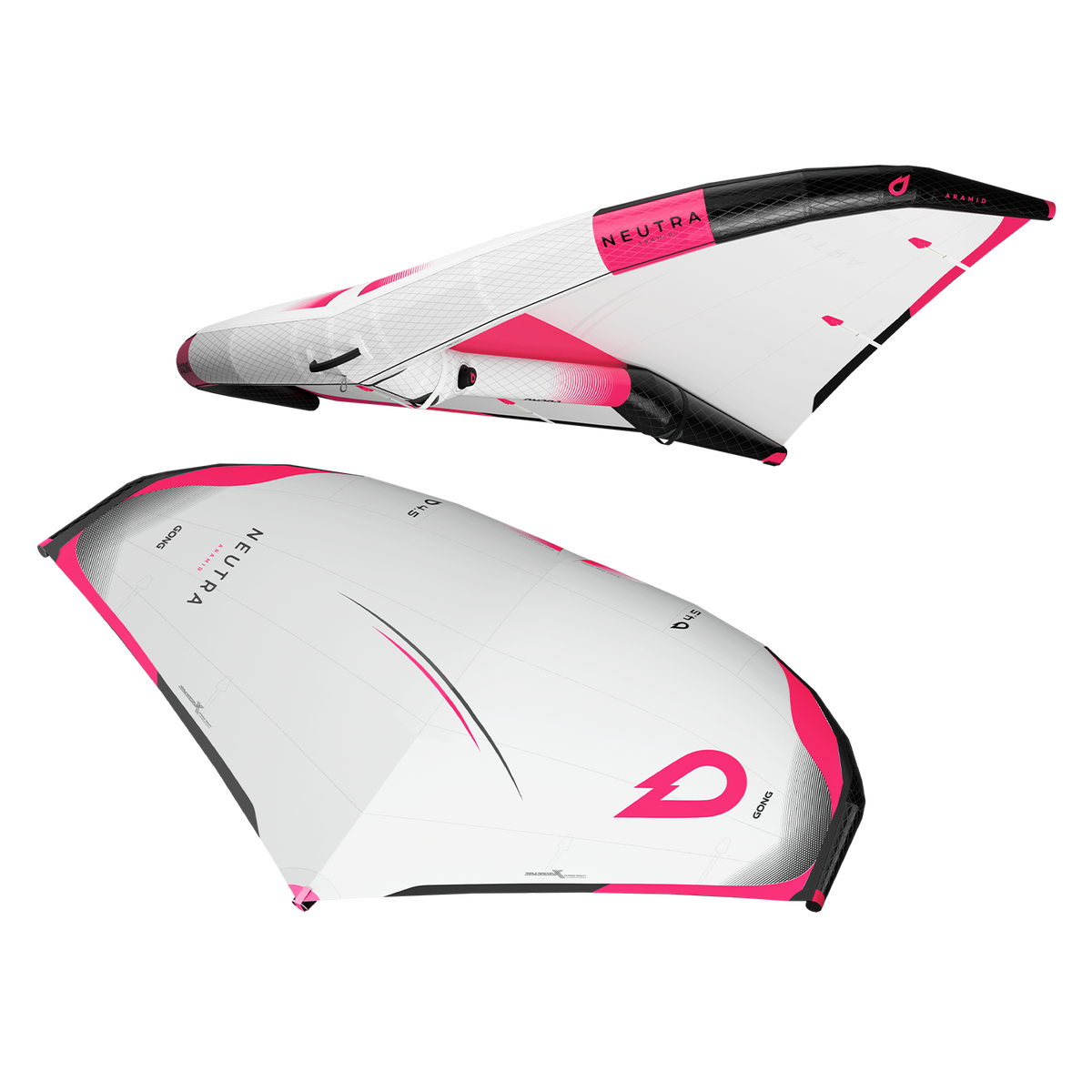
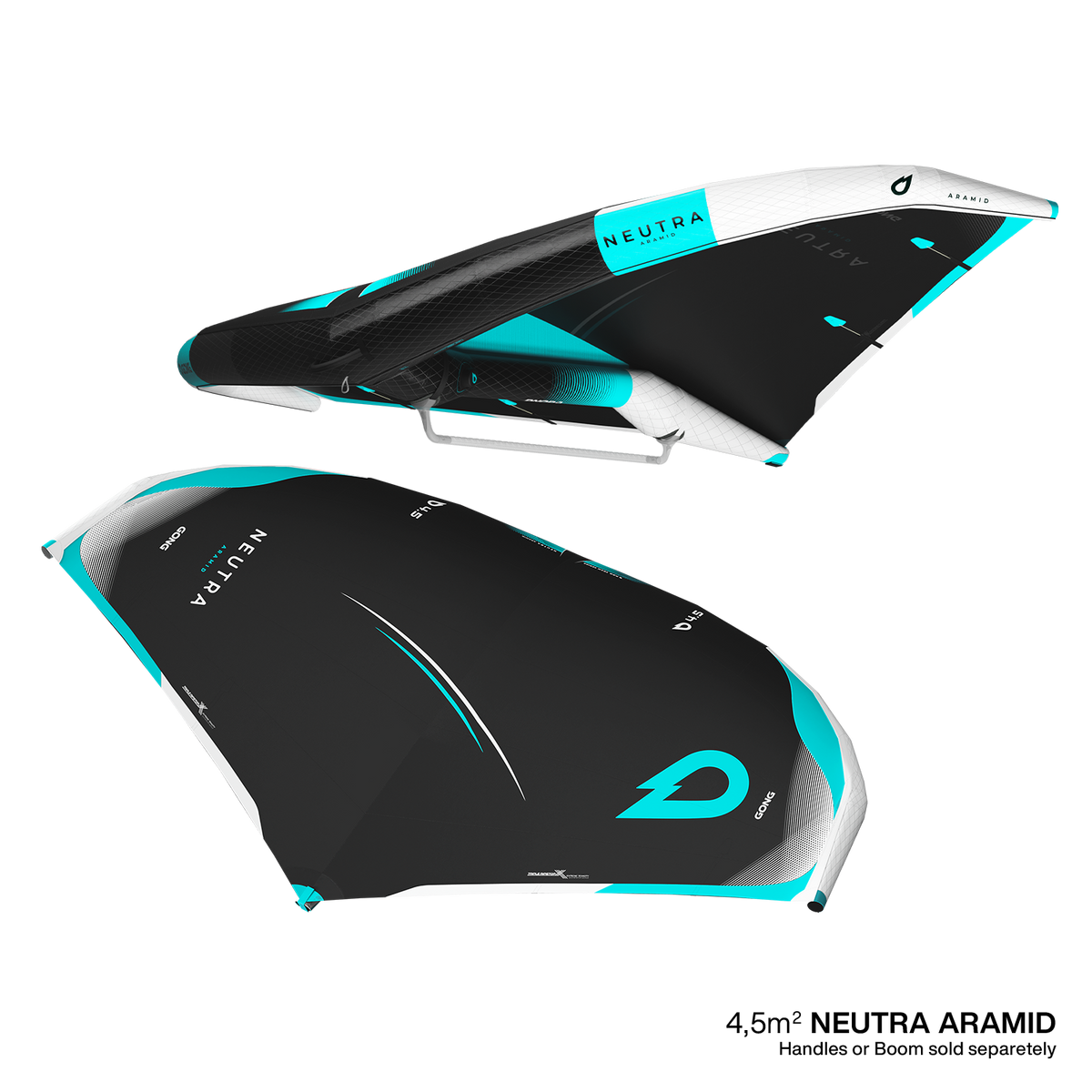
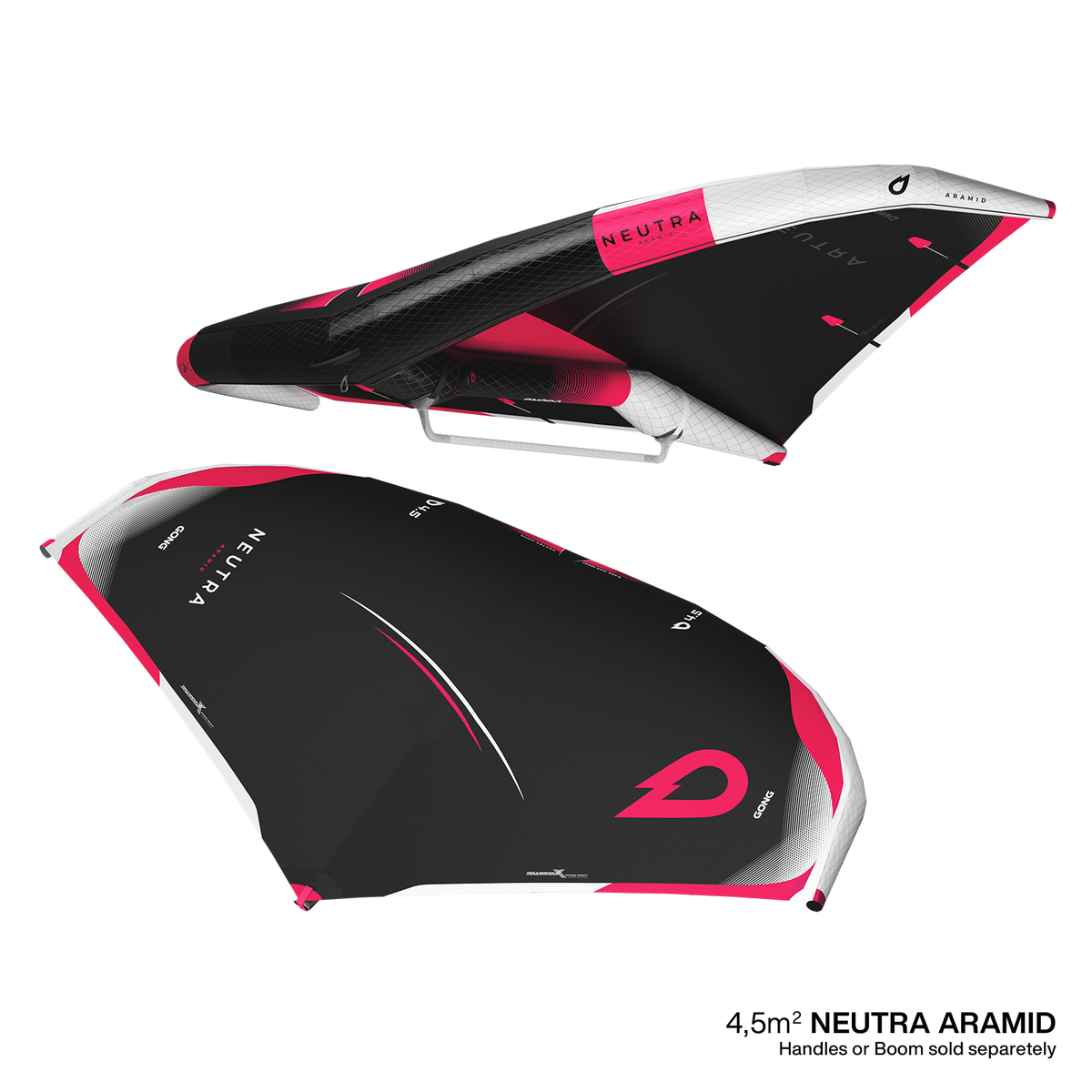


3 comments
Compliments for this balanced piece of physics. As a naval architect I can only agree. I like this writing much more than marketing language where every piece of equipment is unbelievably good. If I would have taken off the 200cm2 of area for each improved frontwing in the last 5 years, I would have ended up with almost no cm2 :-D. But again, this is well written story and it suits my experience. The only thing I miss in my quiver is indeed a wide, glidy foil like the Veloce FF or Sirus. Kudos for Patrice and team!
J’adore
J’adore