Your cart is empty!
It's flat around here...


The freeride and multisport front wing for rapid progression, offering more glide, more manoeuvrability, and more potential than a beginner wing, while maintaining a very stable and reassuring behaviour.
The Ascent V3 Atmo Perf Series is the ultimate rapid progression wing. It is designed for riders who already know how to fly or come with a strong background in board sports, and who want an easy, versatile, gliding, and highly progressive foil.
It sits between the X-Over and the Curve: more performant and playful than a pure beginner wing, but much more accessible than a specialised high aspect ratio wing. It's the perfect wing to take the next step without getting into trouble.
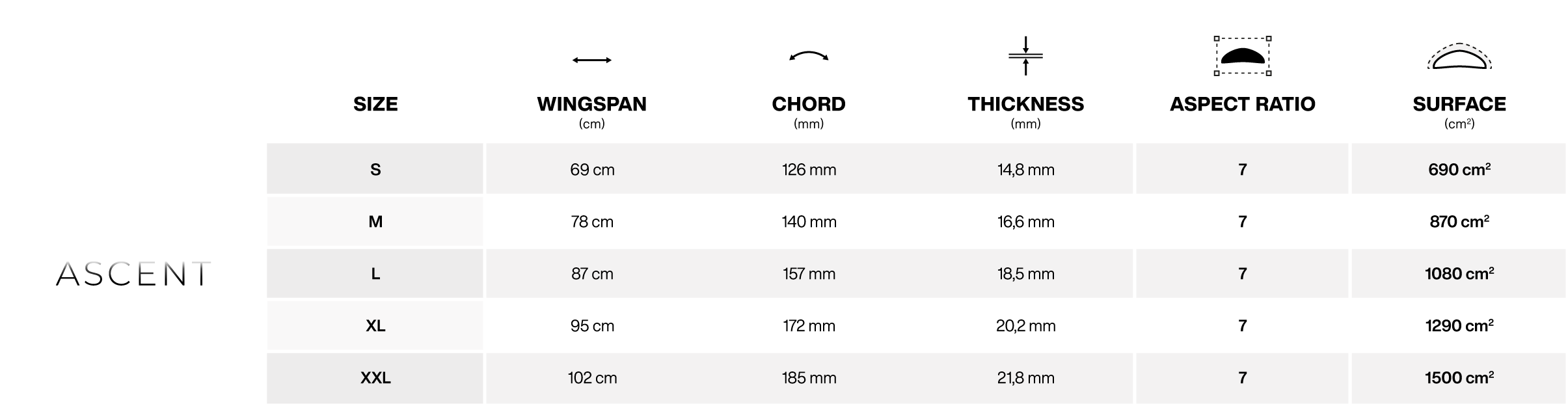
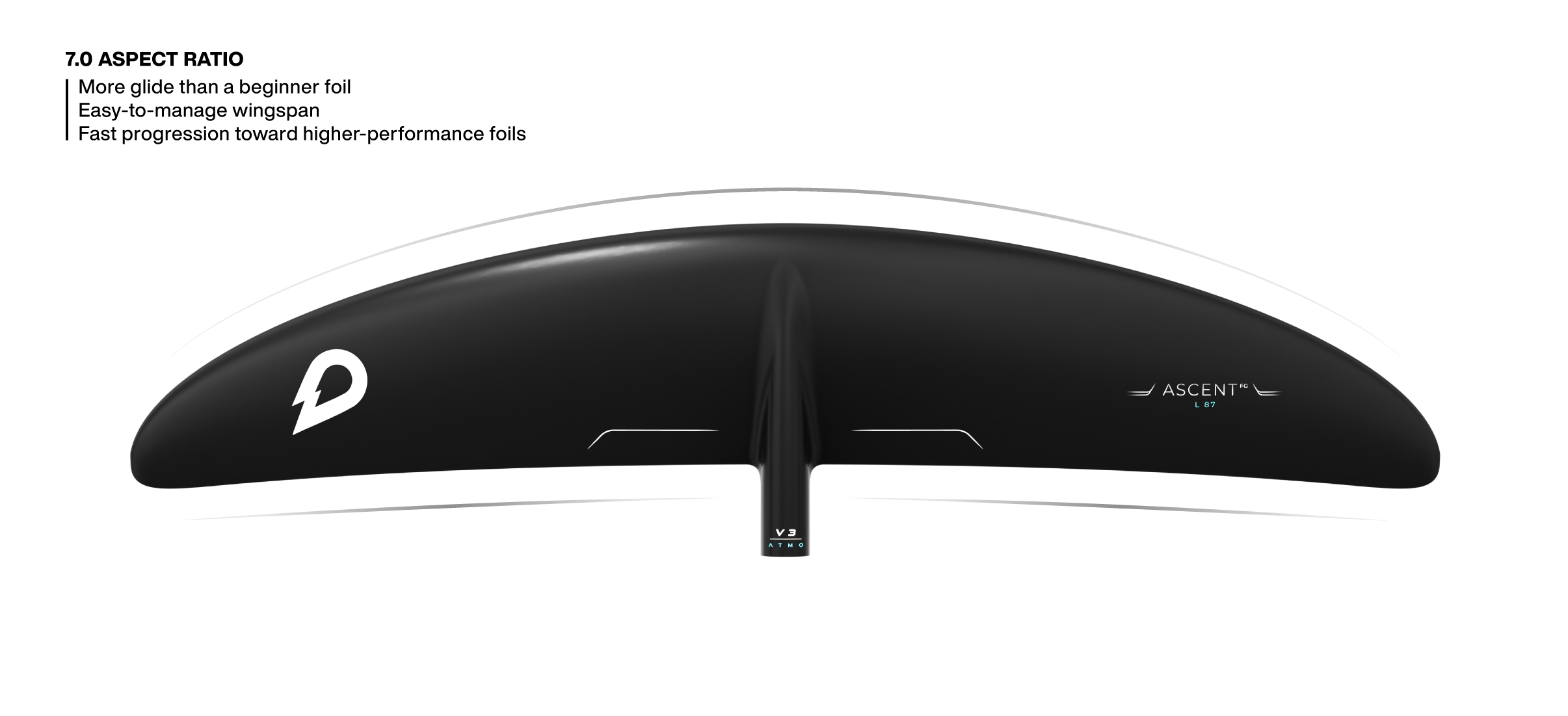
Its 7.0 ratio provides an excellent balance between glide, stability, manoeuvrability, and control. You gain in glide, average speed, and comfort in transitions, while maintaining a reasonable wingspan and very readable behaviour.
The Ascent takes off early, easily stabilises in flight, and retains real tolerance at low speed. It gives you time to correct, reposition your stance, and complete manoeuvres. It's exactly what you need to progress quickly: a foil that responds well without punishing too early.
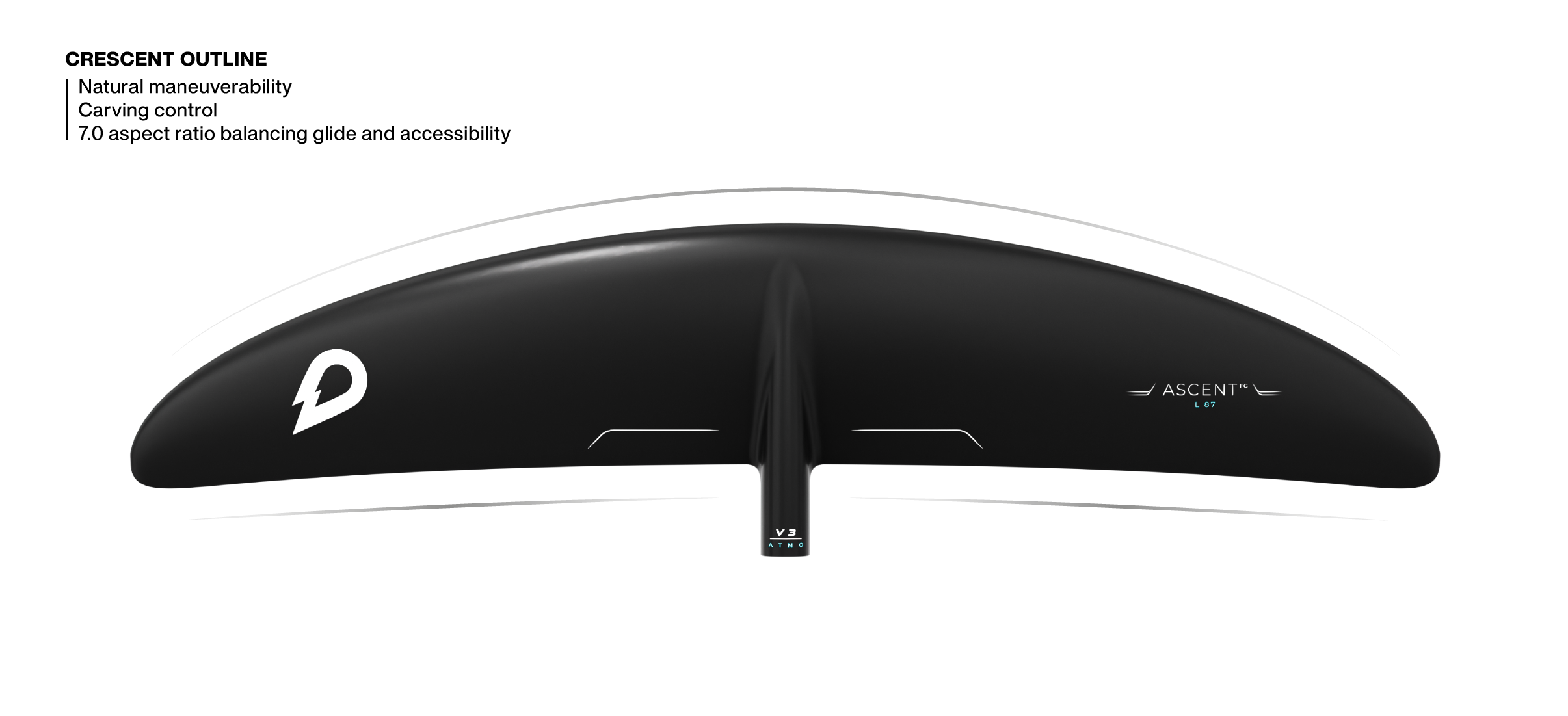
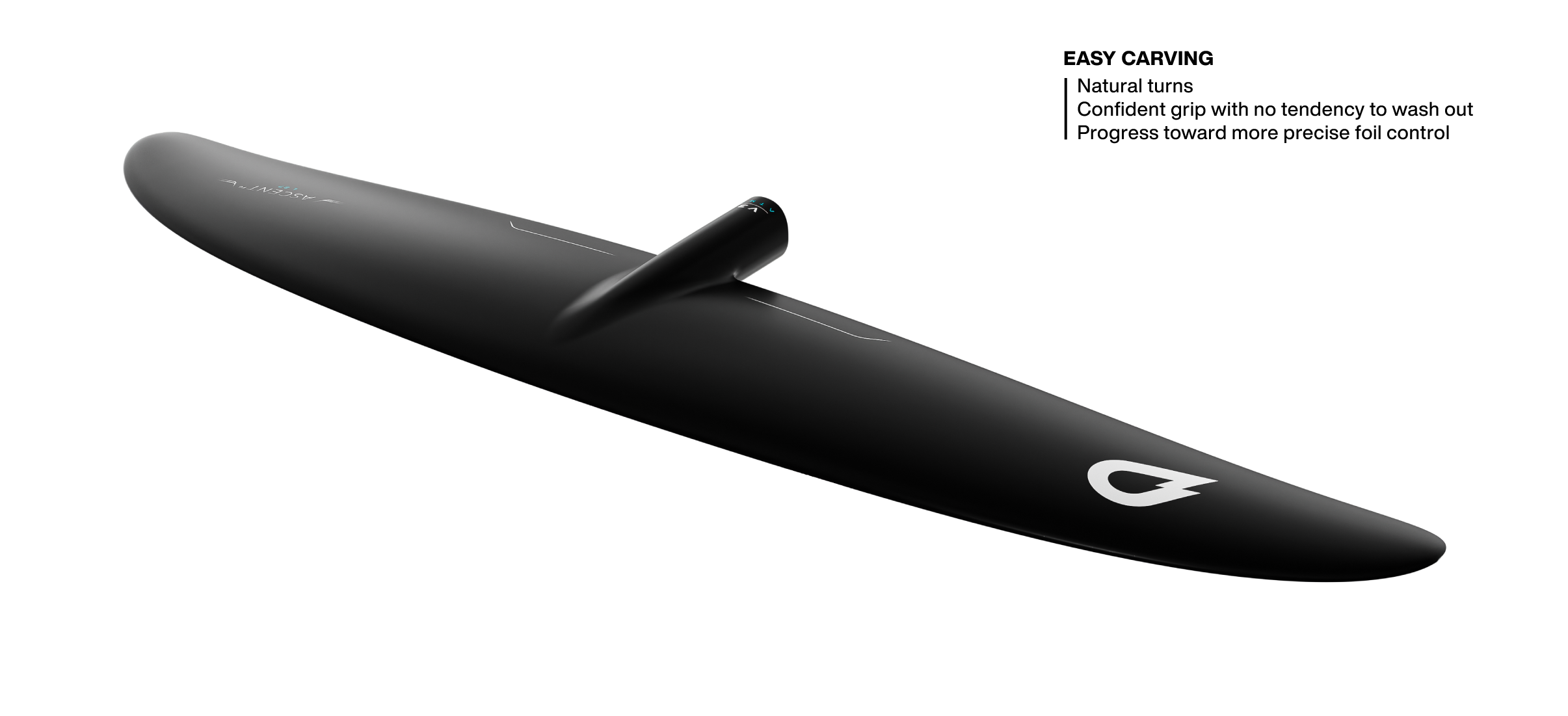
Its crescent outline provides a lot of manoeuvrability. The foil naturally enters carving turns, maintains grip and stability. The turns are easy, clean, progressive, with enough drive to feel that your level is truly improving.
The versatile profile allows for riding in all disciplines: wing foiling, surf foiling, sup foiling, wake foiling, kite foiling depending on the sizes. The Ascent loves varied conditions, imperfect waters, first waves, freeride runs, transitions, and sessions where you want to do everything with a single wing.
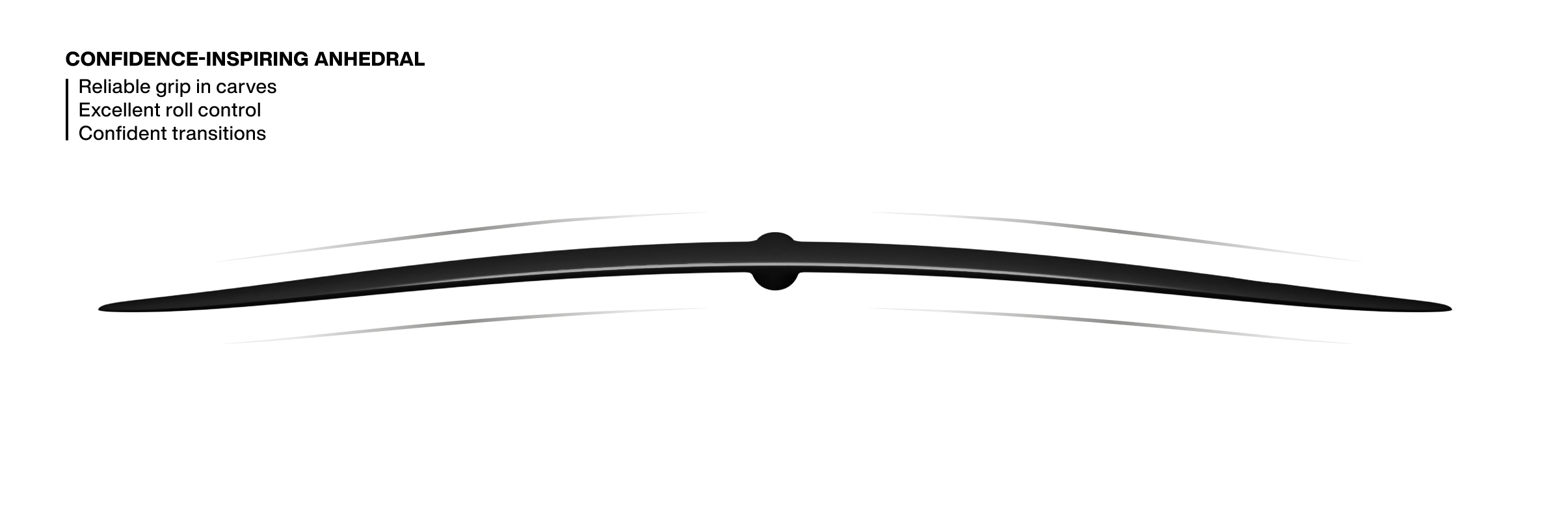
Its high anhedral provides great confidence. It secures the counter-heel, gives grip in carving turns, and makes the foil very reassuring underfoot.
Built in the Perf Series, the Ascent V3 Atmo makes this shape accessible with a solid, forgiving, and repairable prepreg fibreglass technology, while maintaining the V3 Atmo precision standard and the self-locking SuperLock connection.
The Ascent V3 Atmo Perf Series is the wing for those who want to progress strongly, ride often, try everything, gain in glide, and keep an easy, stable, and fun foil underfoot.

The crescent outline of the Ascent is one of the key aspects of its performance. It provides a wing that is very easy to engage in carving turns, with natural manoeuvrability and constant control. The foil turns effortlessly, stabilises in the turn, and remains reliable even when the stance is still imperfect.
This design frees up trajectories without making the wing unstable. You can carve, adjust, accelerate, and link carving turns with a foil that remains predictable. This is exactly what you expect from a freeride progression wing: enough manoeuvrability to have fun, enough stability to learn quickly.
The 7.0 ratio offers more glide and average speed than a wing heavily oriented towards beginners, while maintaining a compact wingspan. The Ascent does not feel cumbersome underfoot. It remains easy to handle in reaches, transitions, and the first waves.
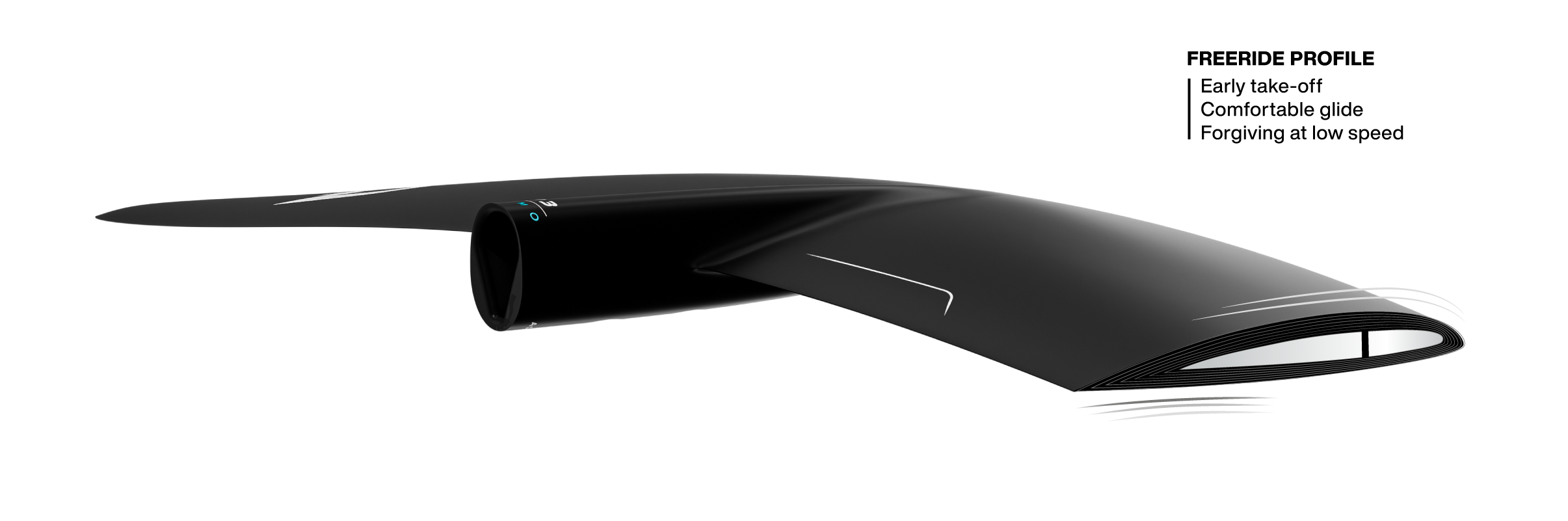
The profile of the Ascent is designed to cover a very wide range of freeride use. It should take off early, maintain lift at low speeds, offer glide, handle speed, pump easily, and remain forgiving when piloting lacks precision.
This versatility is the core of the program. The Ascent does not seek extreme performance in a single area: it must be good everywhere, all the time, in all disciplines. It supports progression without imposing a highly specialized piloting style.
The takeoff is gradual, the lift is stable, and the wing maintains a real margin before stalling. You can slow down in a transition, lack a bit of speed in a carving turn, pump with an imperfect rhythm, and still retain enough lift to complete the action cleanly.
With its 7.0 ratio, the Ascent is ideally positioned for progression. It offers more efficiency, more glide, and more speed than a pure beginner wing, but without the wingspan, technicality, or inertia of a more committed high ratio.
This ratio provides time in manoeuvres and comfort in transitions. The foil continues to glide despite stance switches, maintains its speed more easily, and allows for smoother piloting. It's a huge help for mastering jibes, working on tacks, following a wave, or starting to pump more effectively.
It also brings a real sense of performance. The Ascent is not only easy: it makes you want to accelerate, to carve, and to seek out better lines. This is what makes it so progressive.
The high anhedral of the Ascent provides very reassuring grip. On reaches, it facilitates heel-to-toe control and offers leeway when the pressure points are not yet perfectly balanced. The foil remains stable and predictable.
In carving turns, this anhedral helps the wing maintain grip. It enters the turn, holds its line, and exits cleanly, without any sensation of slipping or lateral stalling. This gives a lot of confidence for learning to carve, chaining turns, or catching your first waves.
This anhedral also contributes to comfort while riding. You can go upwind without breaching, correct a trajectory, navigate through chop, or make a transition with a wing that remains stable and controllable. For a progression freeride wing, this is a major element.
The Ascent has been designed to make a foil easy to place in carves. It doesn't require aggressive pressure or perfect technique to turn. It allows for a gradual edge engagement, maintains grip, and enables you to build a clean trajectory.
This behaviour is very important for progression. The rider no longer just wants to fly straight: they want to start surfing, carving, varying angles, accelerating, and feeling the foil respond underfoot. The Ascent provides this feeling without becoming too wild.
It remains playful but never tricky. It pivots well, glides smoothly, and maintains sufficient stability to give you time to understand the pressure points. It's a wing that teaches you to pilot better.
The Ascent V3 Atmo retains the benchmarks of the GONG V3 standard. The balances of lift, placement, and connection are calculated to allow switching from one front wing to another with a consistent feel.
This aspect is essential for building a quiver. You can start with an X-Over, move to an Ascent to gain glide and maneuverability, then progress to a Curve or a Fluid without losing all your tuning references and without incompatibility.
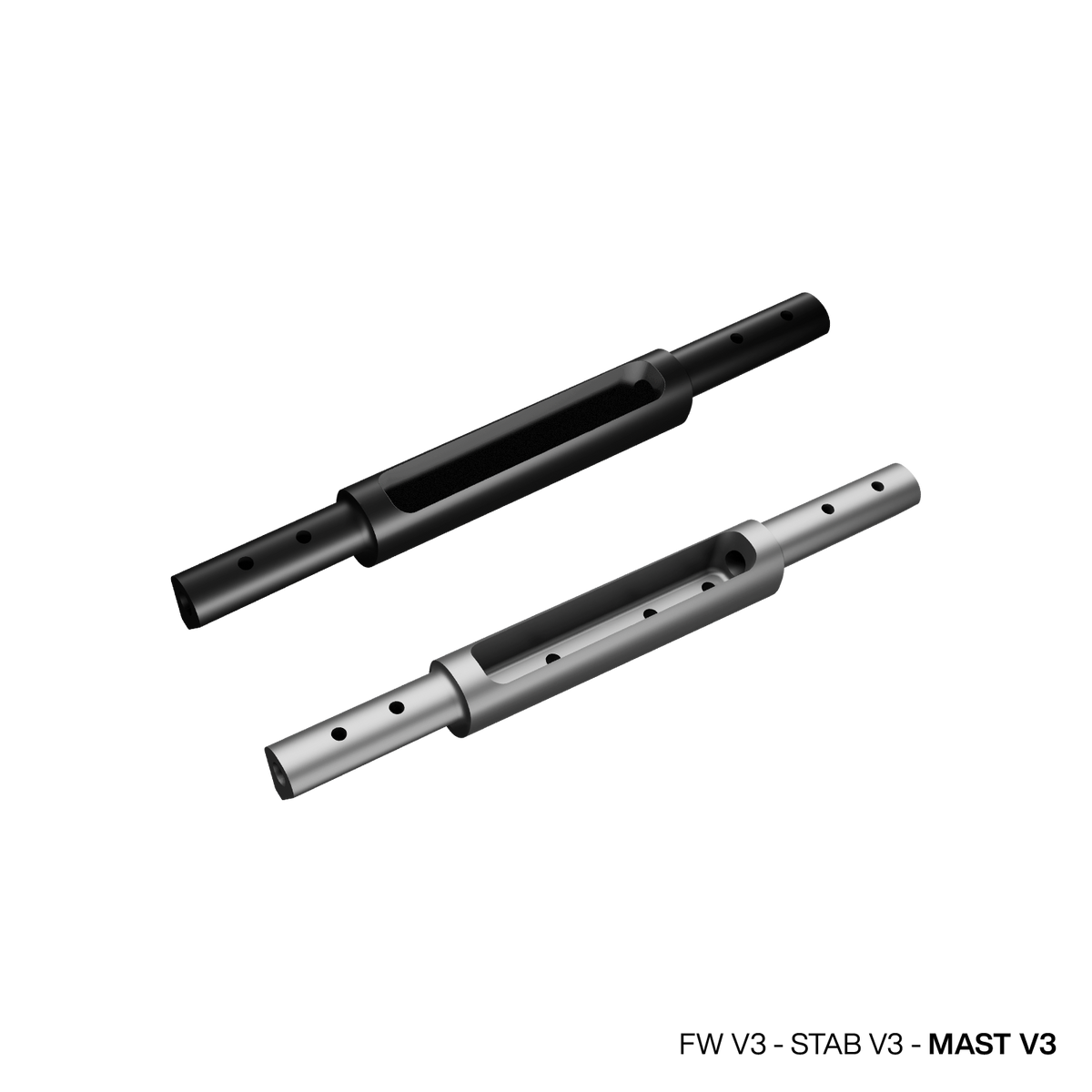
The V3 SuperLock self-tightening connection ensures a rigid, reliable, and easy-to-use assembly. Two screws under the front wing are sufficient. The more the wing is pressurized, the more the joint locks. The result is a clean, precise, and silent foil underfoot.
The Ascent V3 Atmo Perf Series is designed for riders who have already had a successful first experience in foiling and want to progress quickly without moving to a wing that's too technical. It's perfect after a X-Over, or as a first wing for a sporty rider, already comfortable with board sports, who wants an easy yet highly progressive foil.
It suits riders looking for a versatile freeride foil: easy to take off, stable in flight, manoeuvrable in carves, with enough glide to accelerate progression, and forgiving enough to remain reassuring in imperfect conditions.
This is the wing for riders who want to ride often, try multiple disciplines, go out in varied conditions, and not overthink it. A single wing can cover many situations: wing foiling, surf foiling, SUP foiling, wake foiling, kite foiling depending on the sizes.
It also appeals to those who don't want unnecessary physical challenges. The Ascent performs well but remains easy. It doesn't require pumping like crazy, piloting with precision, or enduring every acceleration. It delivers performance without becoming radical.
For a complete beginner, the X-Over remains the simplest and most reassuring choice. The Ascent can suit a sporty or highly motivated beginner, but it truly comes into its own once the first flights are mastered.
The Ascent is not the best choice if the goal is to start with the absolute maximum of stability and forgiveness. In this case, the X-Over is more suitable, simpler, more reassuring, and more permissive.
It is also not meant to replace a specialized wing. To maximize carving and wave riding, a Curve will go further. To radicalize piloting, accelerate hard, snap, and seek more responsiveness, a Fluid will be more relevant. For freefly, downwind, or long-distance pumping, a Veloce or a Sirus will be more suitable depending on the program.
The Ascent is a versatile progression wing, not an extreme wing. Its interest lies in its balance. If the goal is highly specialized performance, a more specific wing will be needed.
In wing foiling, the Ascent is perfect for progressing after the first flights. It helps stability on reaches, improve upwind performance, succeed in jibes, work on tacks, catch the first waves, and ride faster with a foil that remains reassuring.
In surf foiling, it offers a good compromise between lift, manoeuvrability, and glide. It allows easy take-off, wave following, clean carving, and starting to pump without having a wing that's too large or too technical. It is very interesting in gentle waves, small swells, and average conditions where you want to maximize fun without seeking radicality.
In SUP foiling, the Ascent provides a healthy take-off, good stability, and sufficient glide to exploit weak waves or accessible bumps. It allows working on carves and wave reading with an easy-to-manage wing.
In wake foiling, it offers very playful behaviour. It is buoyant enough to get out easily, manoeuvrable enough to carve, and stable enough to progress behind the boat or jet without being scared by a wing that's too fast.
In kite foiling, the smaller sizes of Ascent can suit those who want a simple, buoyant, and versatile wing, with enough speed to progress but without the technicality of a very thin or very fast foil.
The Ascent is therefore the wing for simple and effective sessions: easy take-off, clean flight, turning, progressing, trying new things, and keeping fun in almost all conditions.
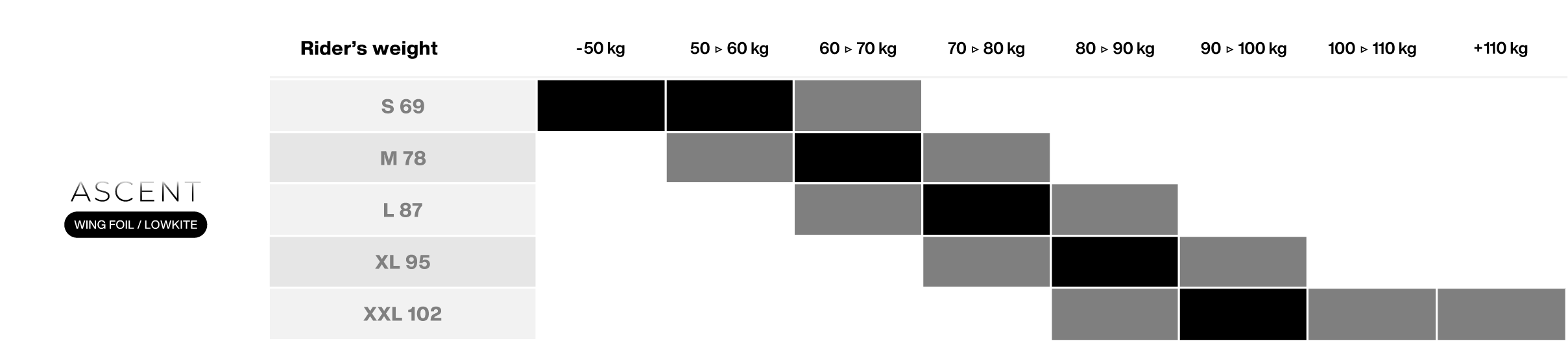
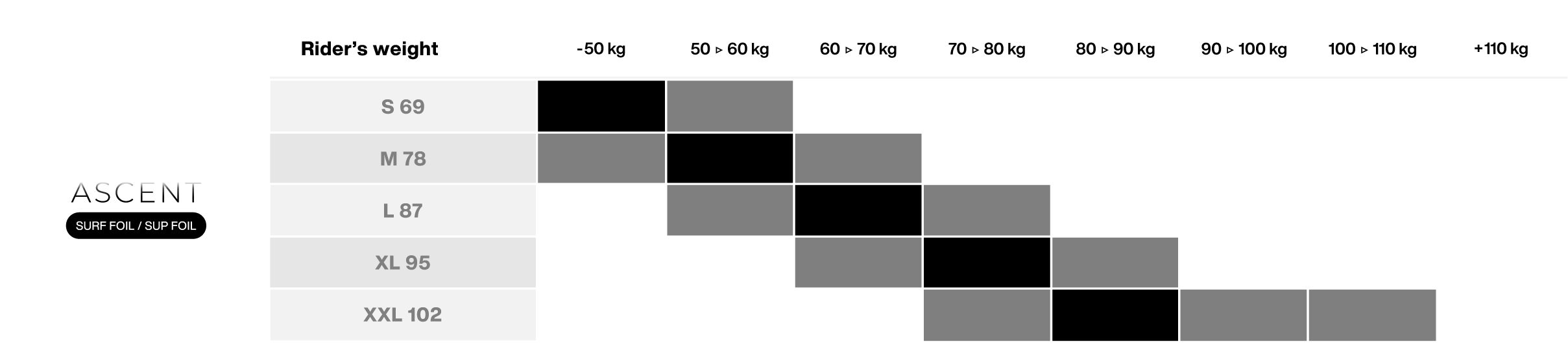
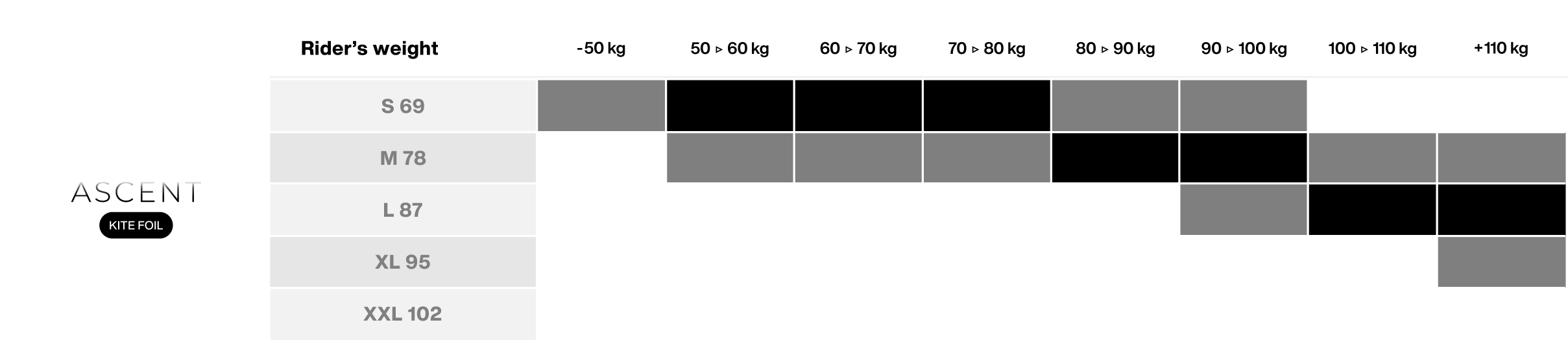
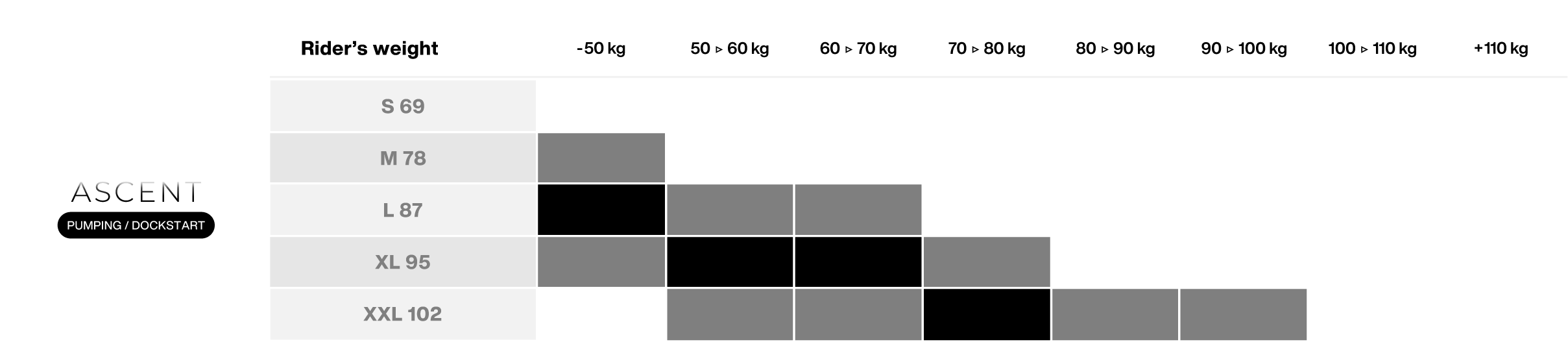
The choice of size depends on weight, level, support, board, conditions, and progression goal.
In wing foiling, all sizes can work. The heavier the rider, the weaker the wind, the smaller the board, or the more the level is progressing, the more you should go for a larger size. Conversely, a lighter rider, already comfortable with take-off, or riding in steady wind, can choose a smaller size to gain speed and manoeuvrability.
In surf foiling and SUP foiling, you need to keep enough surface area for comfortable take-off and pumping without exhausting yourself, but not too much to maintain manoeuvrability in the wave. A larger size will give more margin at take-off and more comfort at low speed. A smaller size will be more lively and enjoyable when the waves push more or when the level increases.
In wake foiling, choose a size adapted to the build, the speed of the boat or jet, and the desired style. A larger size facilitates take-off and slow flight. A smaller one frees up the carves and increases max speed.
In kite foiling, avoid too large spans, as the counter-heel and speed make the tips more exposed to breaching the surface. The smaller sizes of Ascent are therefore the most relevant.
If hesitating between two sizes, choose the larger one for ease, lift, and comfort at low speed. Choose the smaller one only if the level allows compensating for the loss of lift and if the primary goal is to gain speed, manoeuvrability, and precision.
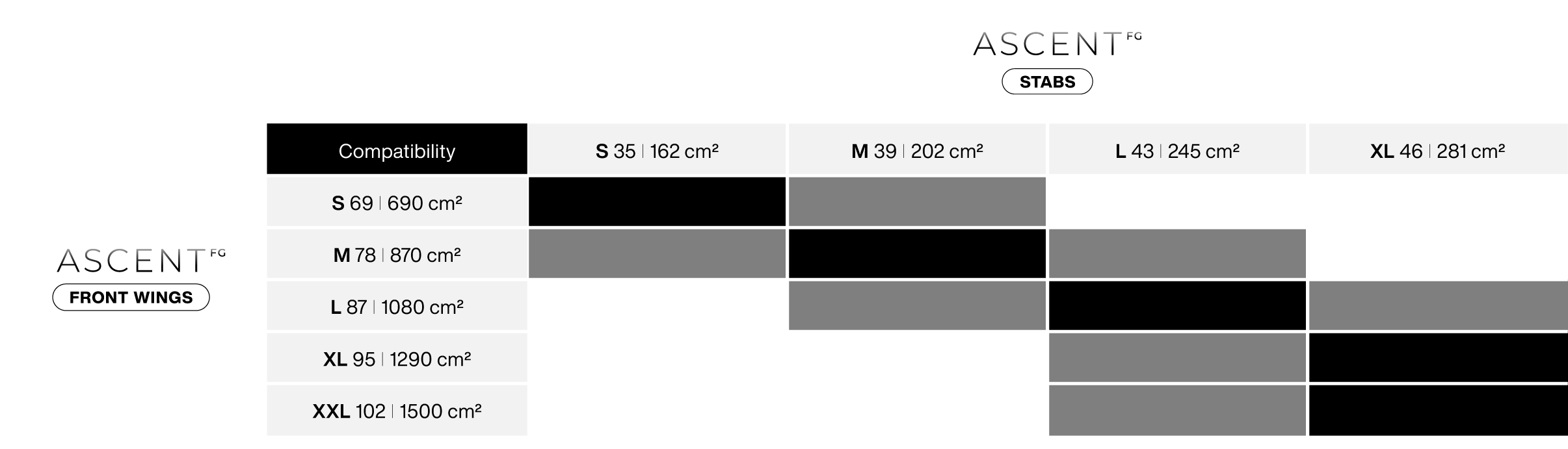
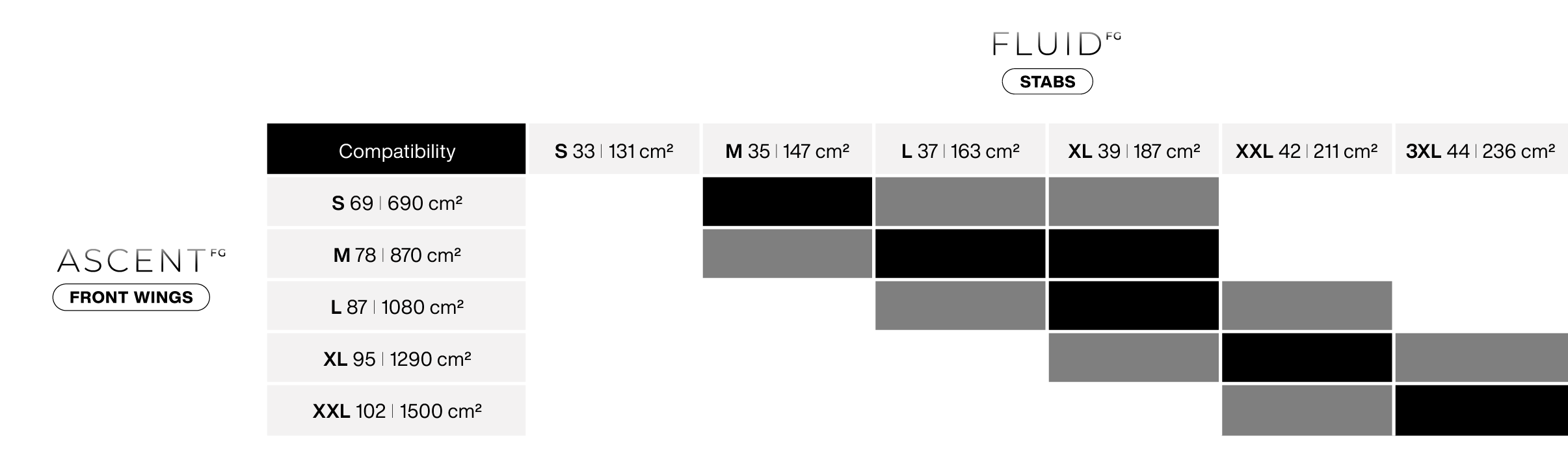
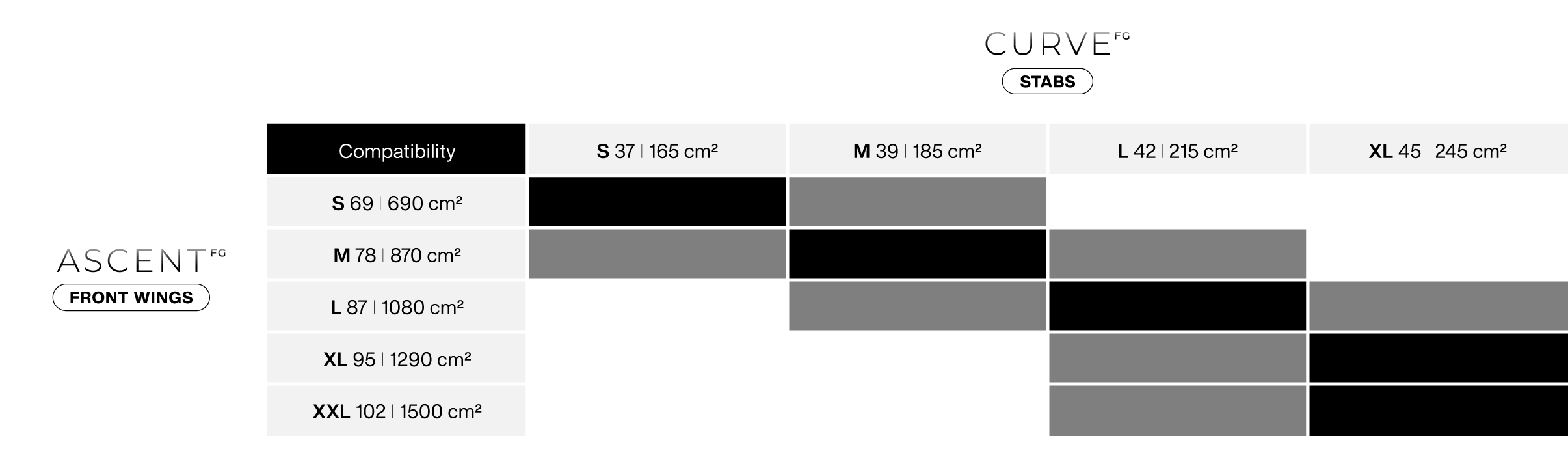
The Ascent V3 Atmo works ideally with a stabilizer that matches its freeride program: stable, manoeuvrable, and with enough glide to support progression.
A larger stabilizer provides more stability, more front foot pressure, and easier take-off. It's the most logical choice for learning transitions, riding in irregular conditions, or maintaining a lot of comfort.
A smaller stabilizer frees up the foil, increases speed, and makes carves more lively. It requires more precision but allows the Ascent to evolve towards a more playful and faster ride.
The right setup always comes from the front wing/stabilizer pair, but also from the foil's position in the boxes. If the stabilizer is smaller and the front foot pressure decreases, you will often need to move the foil slightly forward to regain a natural balance.
In case of doubt, prioritize a comfortable stabilizer that matches the front wing size. The goal of the Ascent is to progress quickly, not to make the foil unnecessarily technical.
The Perf Series range

The front wing comes with all the necessary screws to mount it on the fuselage: 2 screws M6 x 25 mm.