Your cart is empty!
It's flat around here...
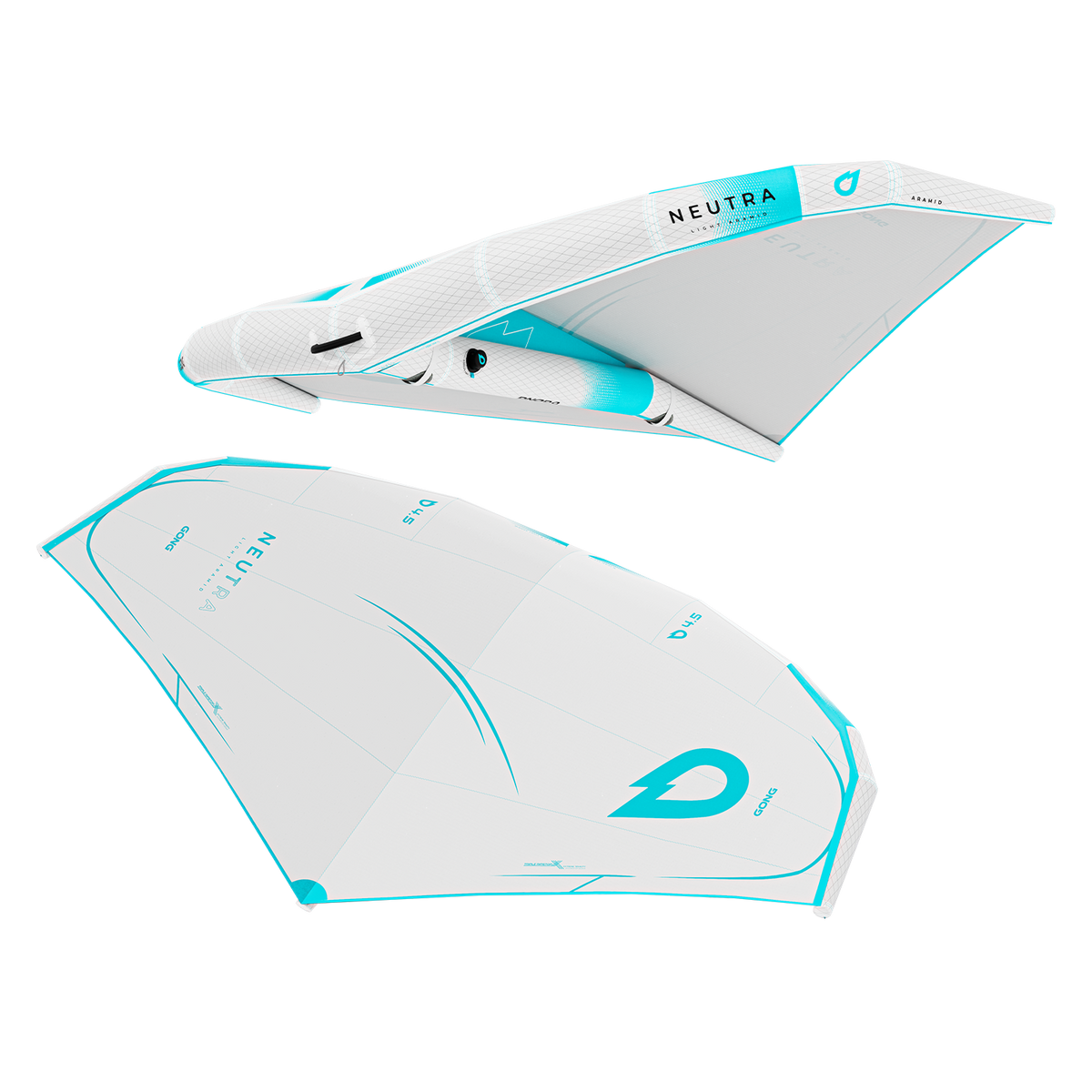
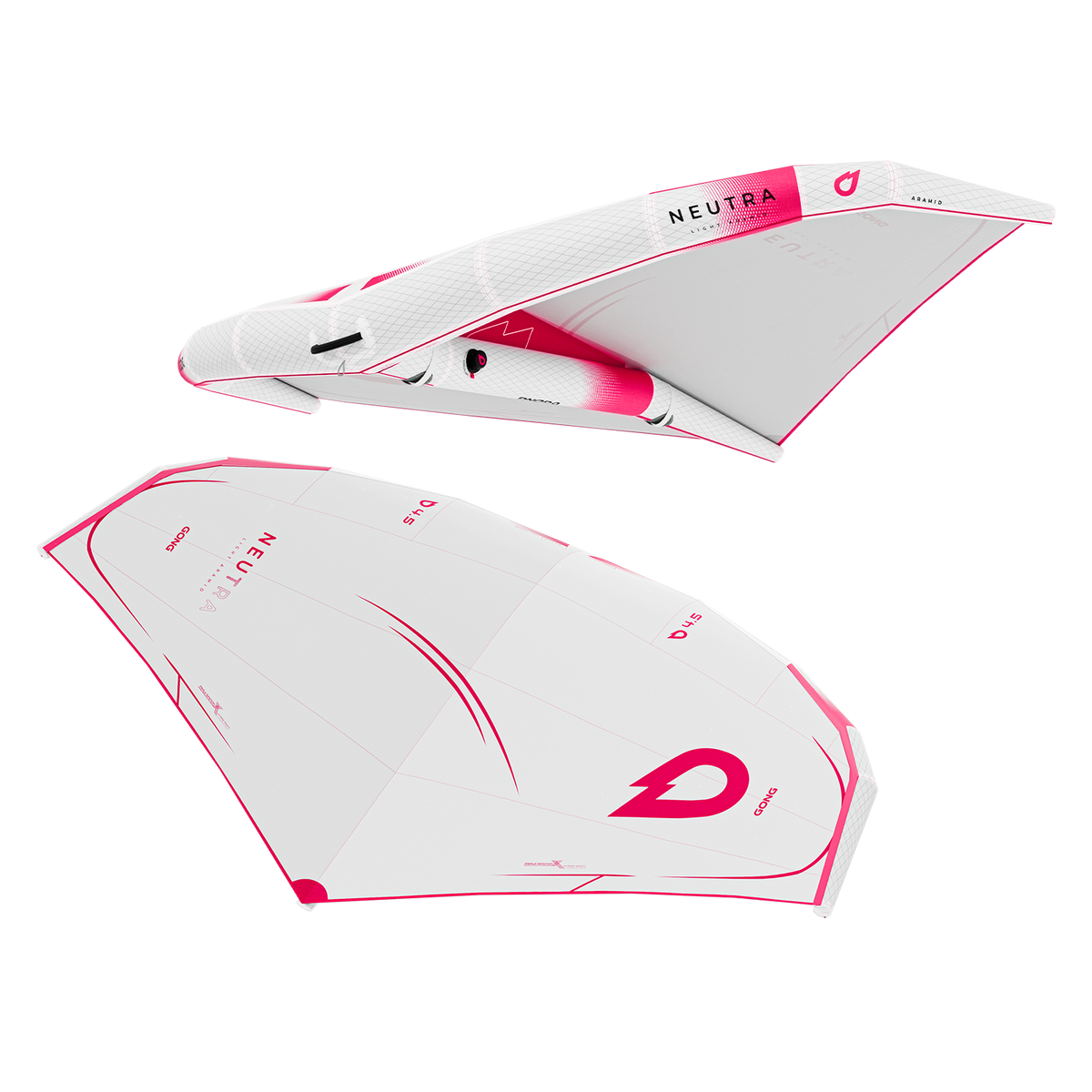
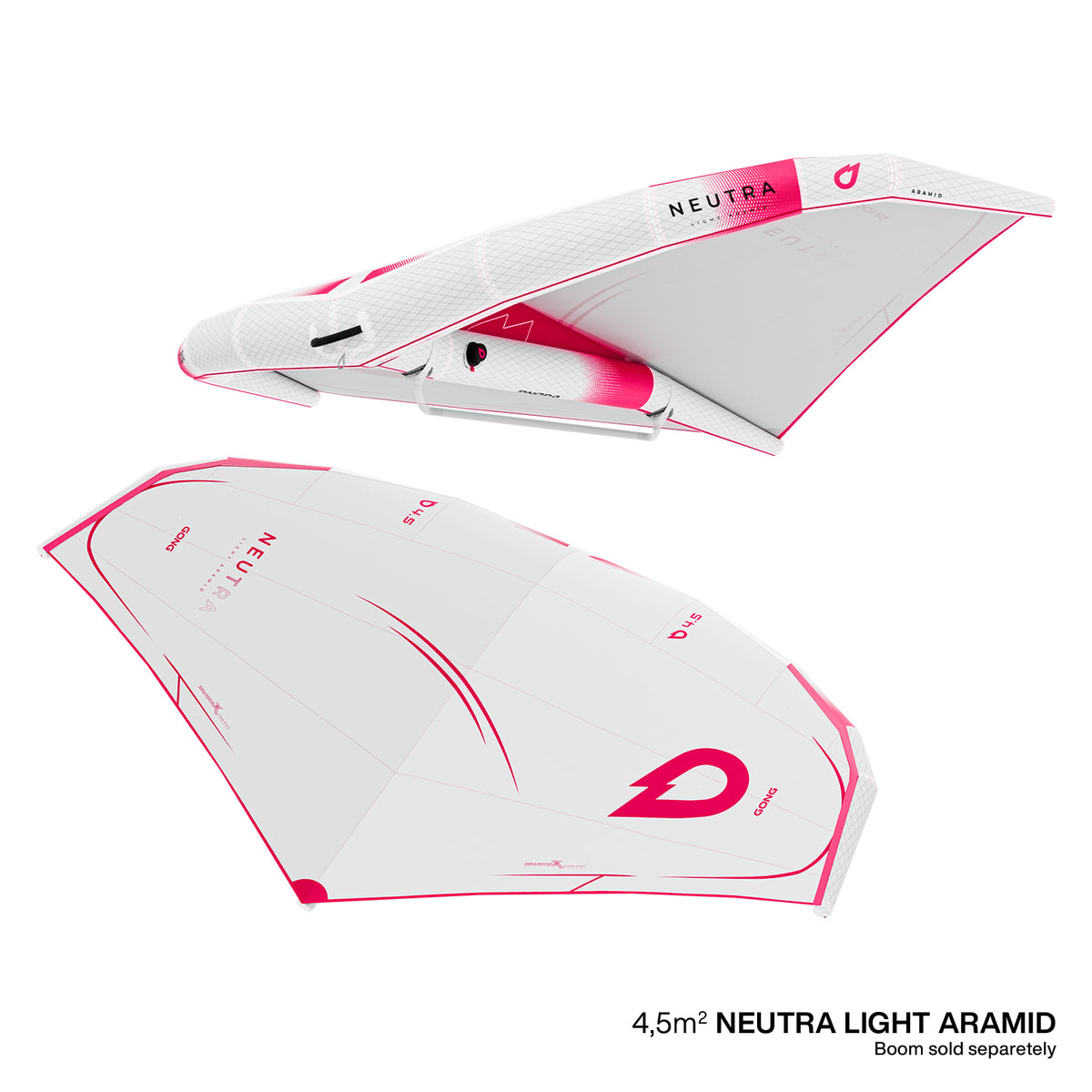
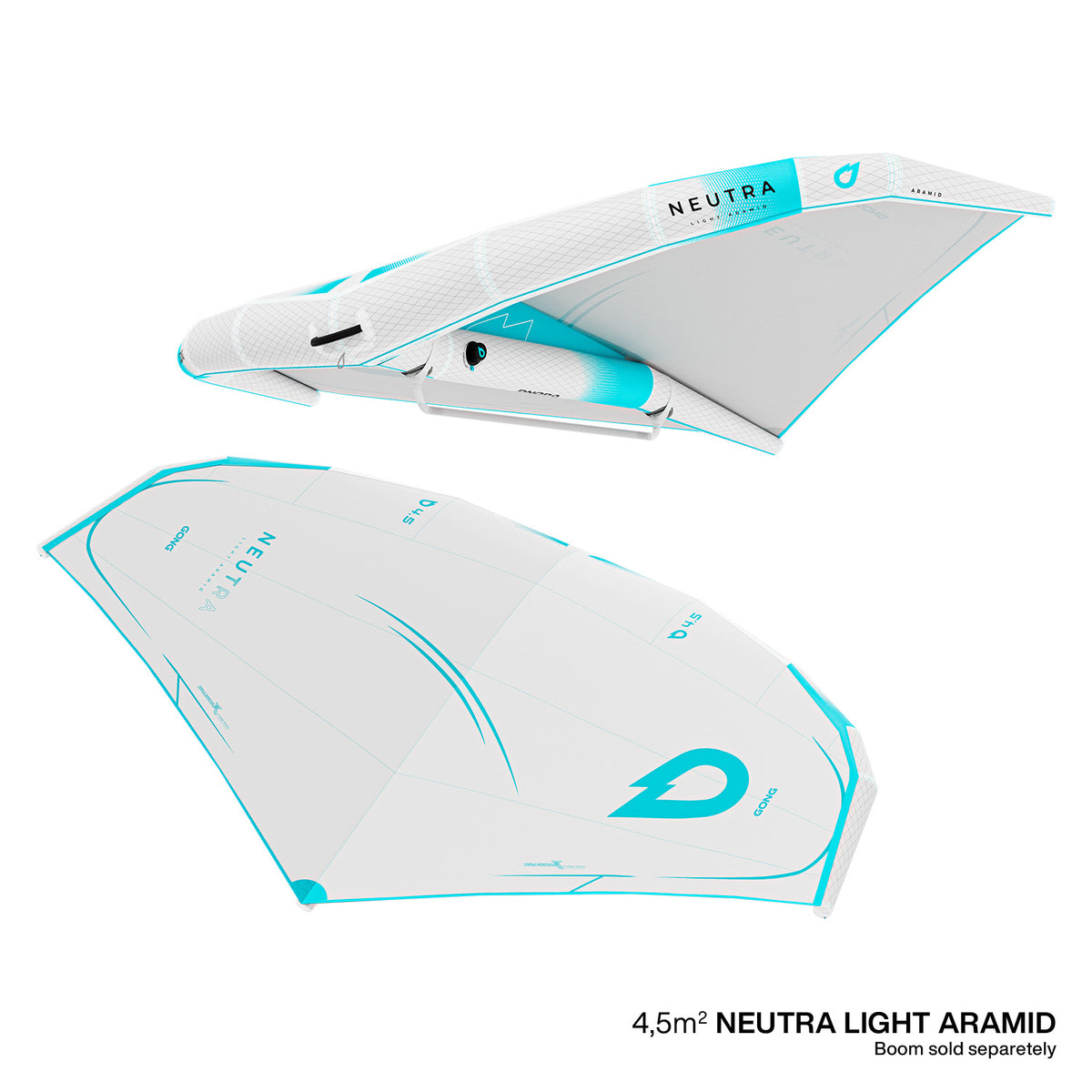
An Aramid Light wing offers huge advantages in light wind, surf, freefly, and in every situation where weight radically changes the feeling
An Aramid Light wing offers huge advantages in light wind, surf, freefly, and in every situation where weight radically changes the feeling:
But it also has limits you need to understand to choose the right gear 👇
 Wing foiler: Malo, GONG team rider, on a Cruzader Diamond FSP Pro and Neutra Light.
The first difference lies in the level of refinement in the shape. To save weight, the number of leading-edge sections is reduced, for example from an 18-section leading edge to a 10-section leading edge. Naturally, the wing cuts through the air with slightly less finesse, a slightly rougher feel, and a marginally less sophisticated aerodynamic touch. This is not disturbing when riding, nor even very noticeable for most riders, but it is the logical consequence of a simplified, lighter construction.
The second difference comes from the leech tension. To prevent the trailing edge from flapping in the wind, once the reinforcements and rigid anti-flap battens have been removed, the leech is held under more tension. The result looks very clean: the wing is beautiful, healthy, does not vibrate, and does not flap in the wind, which will surprise many people on such a light wing.
However, this tighter leech has a consequence: the wing traps a little more air than a classic Aramid, Dacron, or Aramid X wing. Pumping remains very efficient, because this is still an Aramid wing, with excellent response in the hands. The power comes in clearly, more directly, with immediate pull.
This instant power is excellent for starts, low-end range, and phases where you want to take off early. However, it can create a certain saturation at high speed, even in 8 knots of wind. Above around 20 knots of real speed, some experts will feel that the air does not renew itself as quickly in the Light wing as it does in the Aramid ranges, and especially the Aramid X. For someone who wants to ride very fast, cross the spot at high speed, accelerate hard, or generate a lot of apparent wind in light wind, the Light wing will reach a limit.
 Wing foiler: Patrice, GONG boss and shaper, on a HIPE Freefly and Neutra Light wing.
The Aramid X in particular keeps a more dynamic and responsive twist, because the leech is not over-tensioned in the same way as on an Aramid Light. It can therefore open more progressively under load, breathe more at high speed, and support a longer acceleration. The Light wing deliberately limits this behavior to eliminate vibrations and protect the canopy’s lifespan. If you ride below 20 knots, you are unlikely to feel it.
 Wing foiler: Malo, GONG team rider, on a Cruzader Diamond FSP Pro and Neutra Light.
For jumps, let’s be clear: if your main goal is to jump high, a Light wing is not the first choice. It will help with takeoff and ease of handling, but it will limit horizontal acceleration more, and therefore vertical acceleration too. To jump very high, you need a wing that accelerates without topping out, opens progressively through the leech, and generates a lot of apparent wind. That is more the territory of the Droid, or even the Neutra, in Aramid, and especially in Aramid X depending on the program.
 Wing foilers: Benji, Malo, and Ava, GONG team riders, on Droid and Neutra Light wings.
Riding heavily overpowered is another limit of this type of wing. An Aramid Light wing should not be used that way. It is designed to be as light as possible, catch the air very early, take off very early, and therefore allow you to use the smallest possible size for the given wind. Riding overpowered with an Aramid Light is a misuse.
When riding overpowered, you often end up never really sheeting in properly. The wing is then open, depowered, poorly held, and it can flap. But a Light wing does not have the reinforcements of a more classic wing to withstand this type of use. If it flaps for a long time because you are too powered up, it will wear out faster. That is not its program, and it should not be held against it: it is a usage mistake.
By contrast, a classic Aramid wing, and especially an Aramid X, handles this kind of very powered riding much better. You can rig big, ride heavily loaded, be fully powered, handle strong accelerations, and go fast in strong wind. These wings have won slalom world championship titles: they are designed to withstand speed, load, and continuous pressure. The Aramid Light is not designed for that register.
Regarding violent impacts, 60-micron bladders, even when reinforced and of excellent quality, will never have the same tolerance for extreme impacts as 80- or 100-micron bladders. The 60-micron thickness is used in kites to save weight, especially on light kites, and it works very well for this program. But in a very violent frontal crash, this type of bladder can burst.
In winging, the same risk exists. If you jump 10 meters and land face-first in the water without letting go of the wing, that is clearly not the right use for a Light. The same applies to a heavy frontal crash while hooked into a harness. It can handle normal, high-performance riding, but it is not made to withstand extreme crashes with all the inertia of the rider and the fall going into the structure.
 Wing foiler: Malo, GONG team rider, on a HIPE Pro and Droid Light wing.
In short, a Light wing is exceptional for low-end range, pumping, maneuverability, freefly, surf, and freedom in the hands. Its limits are logical: less aerodynamic refinement than a more segmented shape, lower top speed, less ability to generate apparent wind at high speed, less tolerance for overpowered riding, and less margin for extreme impacts. It is a wing built for finesse, efficiency, and lightness, not a wing to be abused.