Your cart is empty!
It's flat around here...
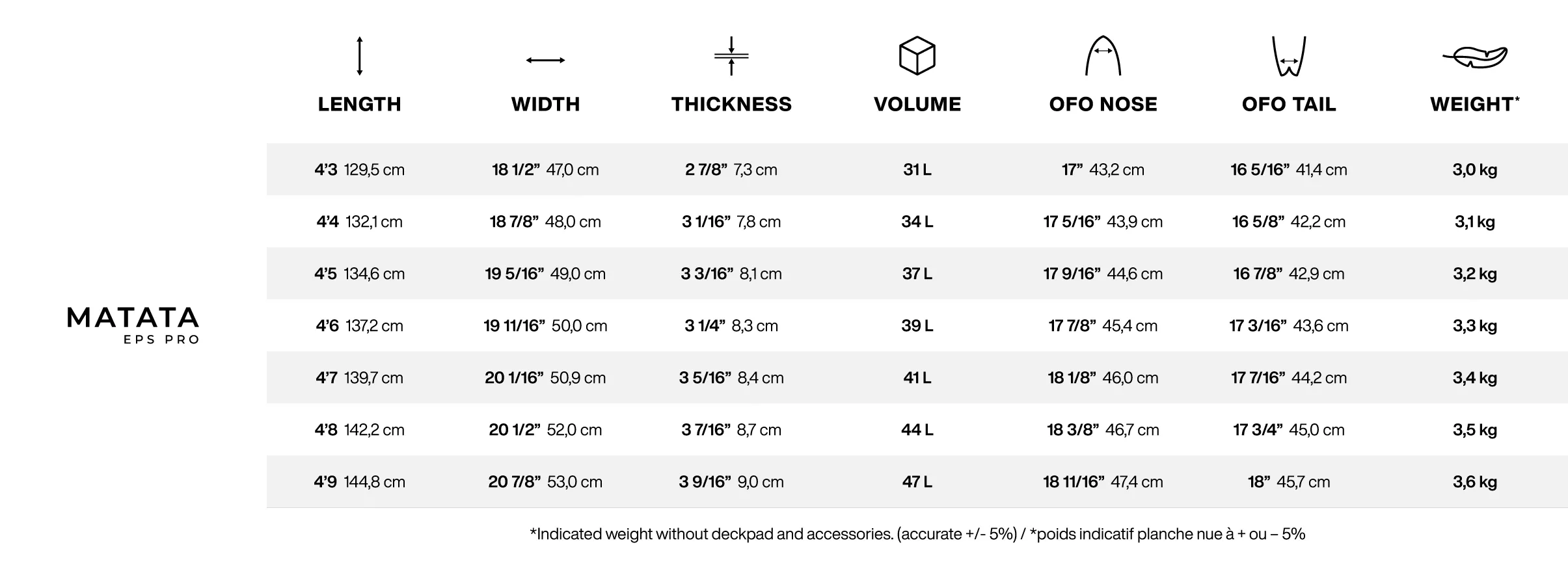

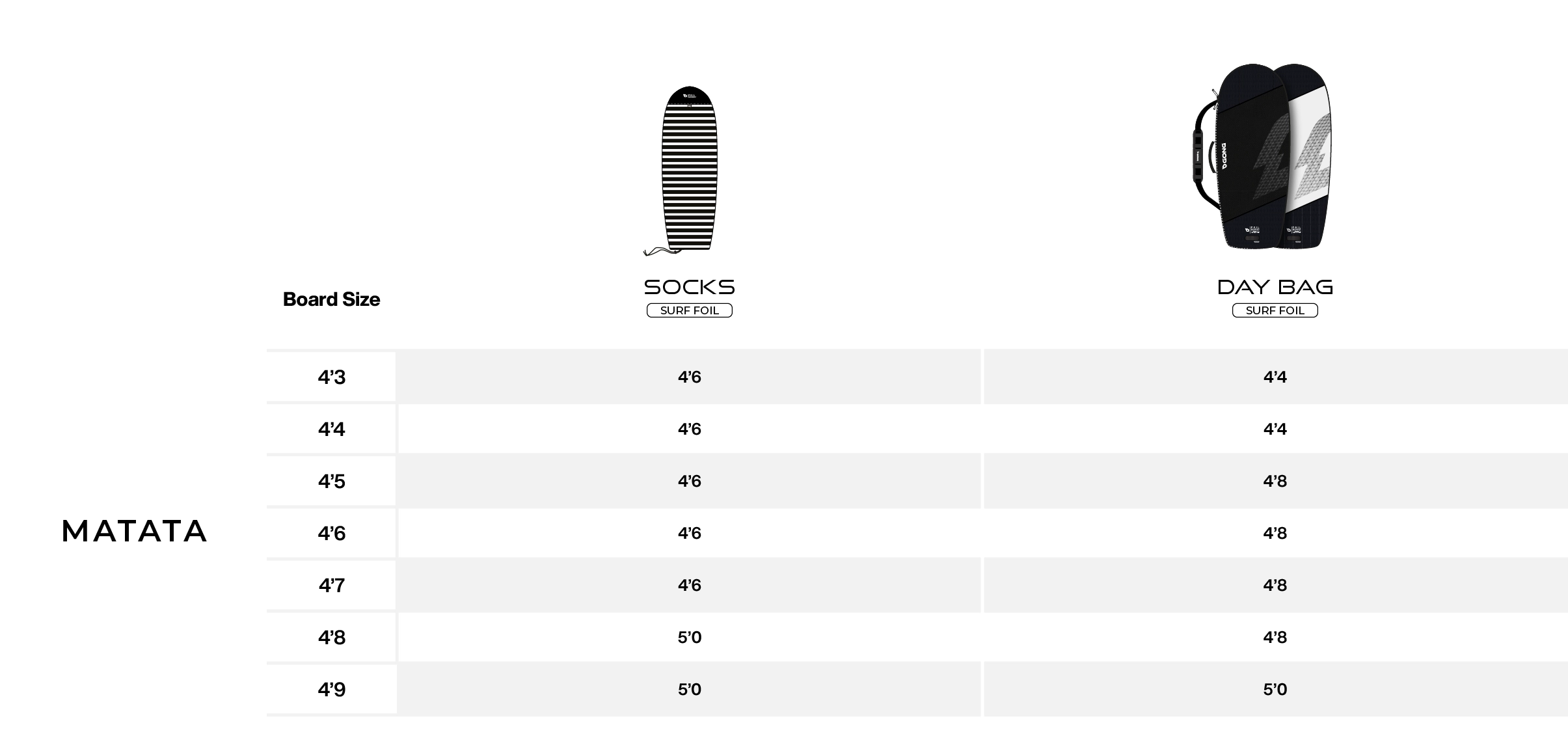


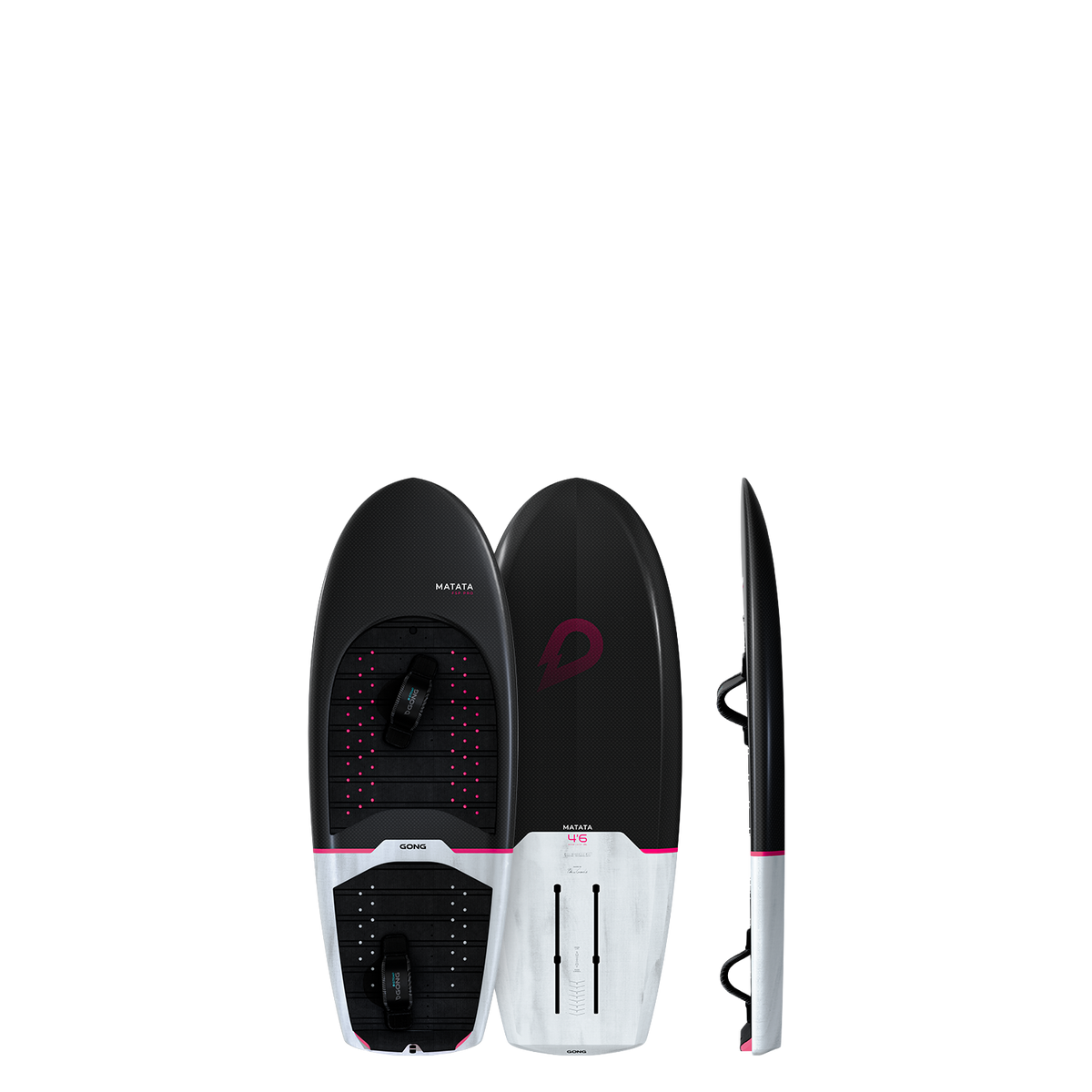
The compact surf foil board designed to maximise manoeuvrability, dynamism, and pumping, especially in sluggish waves.
The Matata encapsulates the essence of modern surf foiling in a compact, responsive, and ultra-lively shape. A board designed to maximise connection with the foil, trigger every movement instantly, and transform the slightest rider impulse into a direct response underfoot.
With its perfectly balanced volume-to-length ratio, the Matata is the most compact in the surf foil range. Its short outline minimises inertia and completely frees up steering. Weight shifts become quicker, turns more instinctive, and the board responds immediately to every intention.
This compactness does not compromise take-off. Its width and condensed volume provide stability under the chest, paddling support, and very effective pop at take-off. For its length, the Matata starts early, even in medium or weak waves, with an easy pop up provided by its wide, voluminous tail.
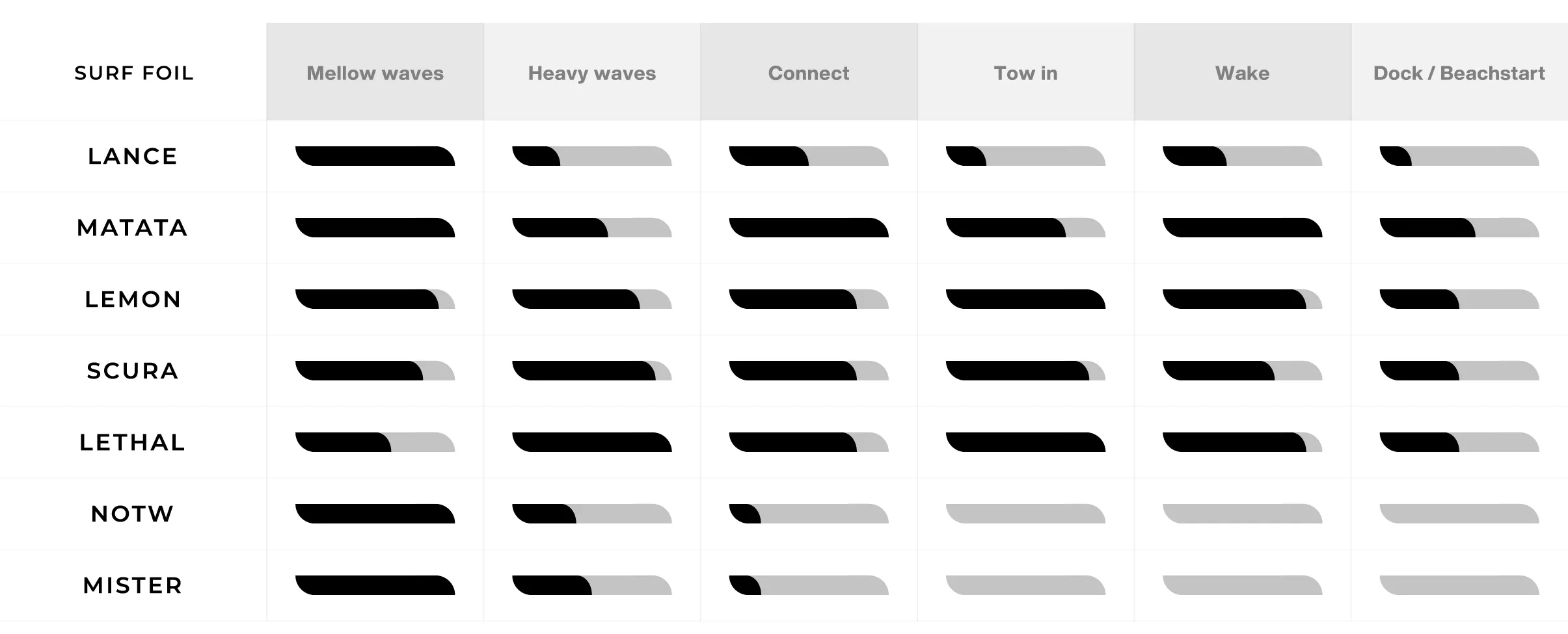
Its shape excels in small conditions and mushy waves, where pumping, efficiency, and precision make all the difference. The Matata allows for easy relaunching, connecting sections with less effort, and maintaining a fluid rhythm between each weight shift.
The overall width also facilitates more committed take-offs, especially in foam or very late. Short, wide, and easy to handle, the Matata allows for board control at the start, managing potential rebounds, and positioning perfectly in tight situations without the bulk of a longer board.
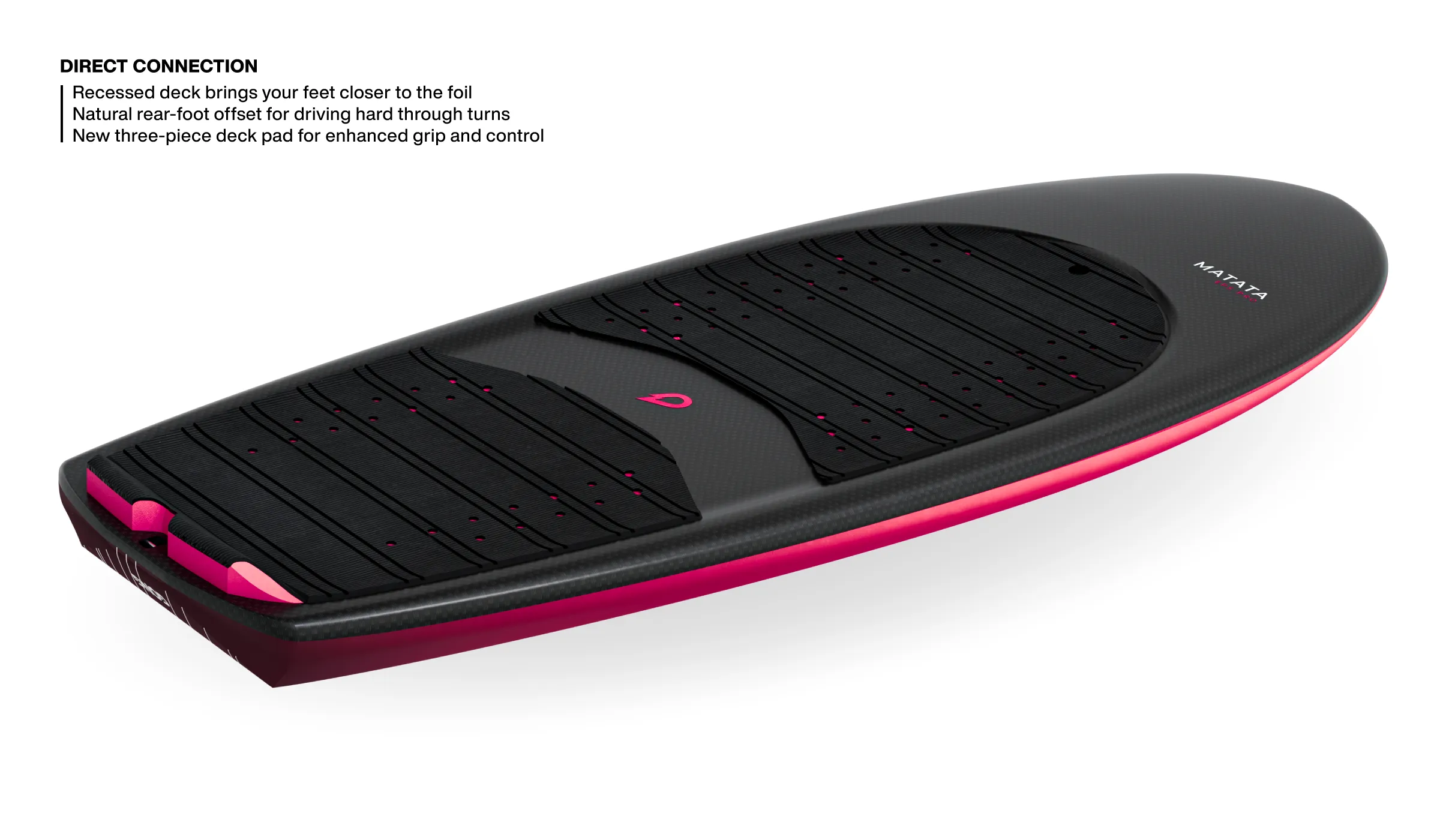
The concave deck brings the feet closer to the foil to enhance control and feel of the weight shifts. The significant width at the rear foot allows for a marked offset position, ideal for pushing hard in turns and with more precise, powerful, and committed strapless riding.
This significant offset at the rear foot provides a unique sense of control in strapless. You can carve hard without being overwhelmed, shift weight, and play with even large foils without being confined to the board's axis. The Matata remains compact underfoot but offers plenty of space to express a dynamic and radical style.
Under the board, the shorter, vertical kick tail limits drag when a touch occurs. The Matata quickly releases from the water and facilitates re-pop, allowing for easy return to flight and chaining the next manoeuvre without breaking rhythm.
This ability to glide smoothly on contact also changes the level of commitment. A touch, imperfect landing, or very low weight shift doesn't immediately result in punishment. The board recovers, glides, releases, and allows you to keep going without fearing a touch that sticks to the water indefinitely.
Built in EPS Pro, the Matata prioritises lightness, reactivity, and glide sensations. The low weight is immediately noticeable in pumping phases, weight shifts, and committed manoeuvres, with a lively board underfoot perfectly connected to the foil.
Its new deck pad ridge traction pad in three parts provides a very secure grip over the entire stance area, with more traction, comfort, and control. The central part offered as a spare allows for custom setup, lightening the board, and maintaining the most radical look possible according to individual preferences.
Finally, its compactness is also a real advantage in everyday life. In a trunk, on a plane, on a boat, or on a jet, the Matata is easy to transport. It's not the main argument of its shape, but it's often this kind of detail that makes a board as simple to use as it is effective on the water.
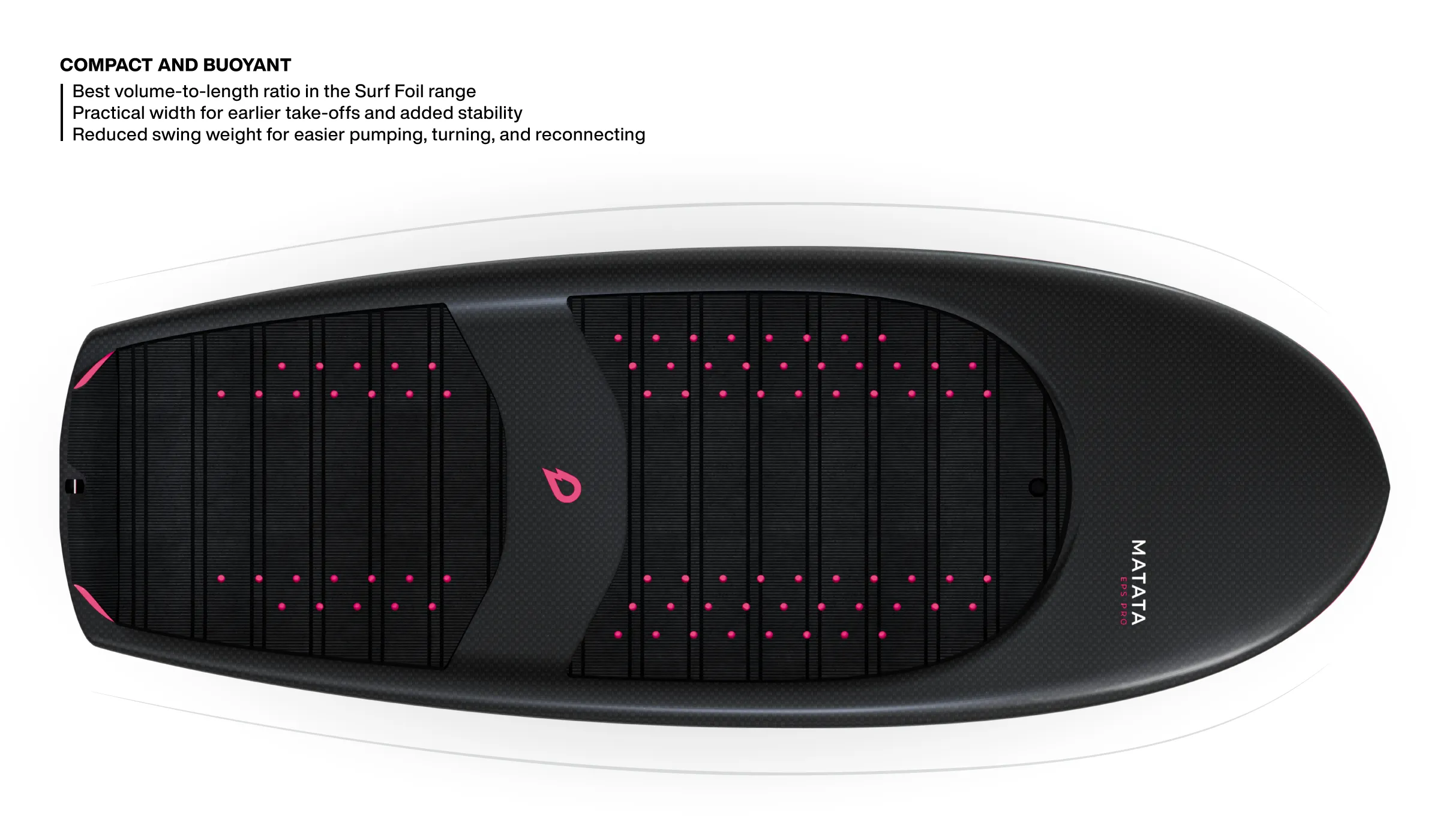
The outline of the Matata concentrates maximum volume in a minimal length. This is the core of its design: a short, wide board that is stable under the chest and very compact under the feet. It maintains the necessary support for paddling, catching waves early, and popping efficiently at take-off, even in small or weak waves.
The width is placed where it really matters: under the chest, under the front foot, and at the back foot. The nose remains round but tapered at the tip, with width at the shoulders without overloading the nose. The result: useful buoyancy, very little inertia, and ultra-free handling in flight.
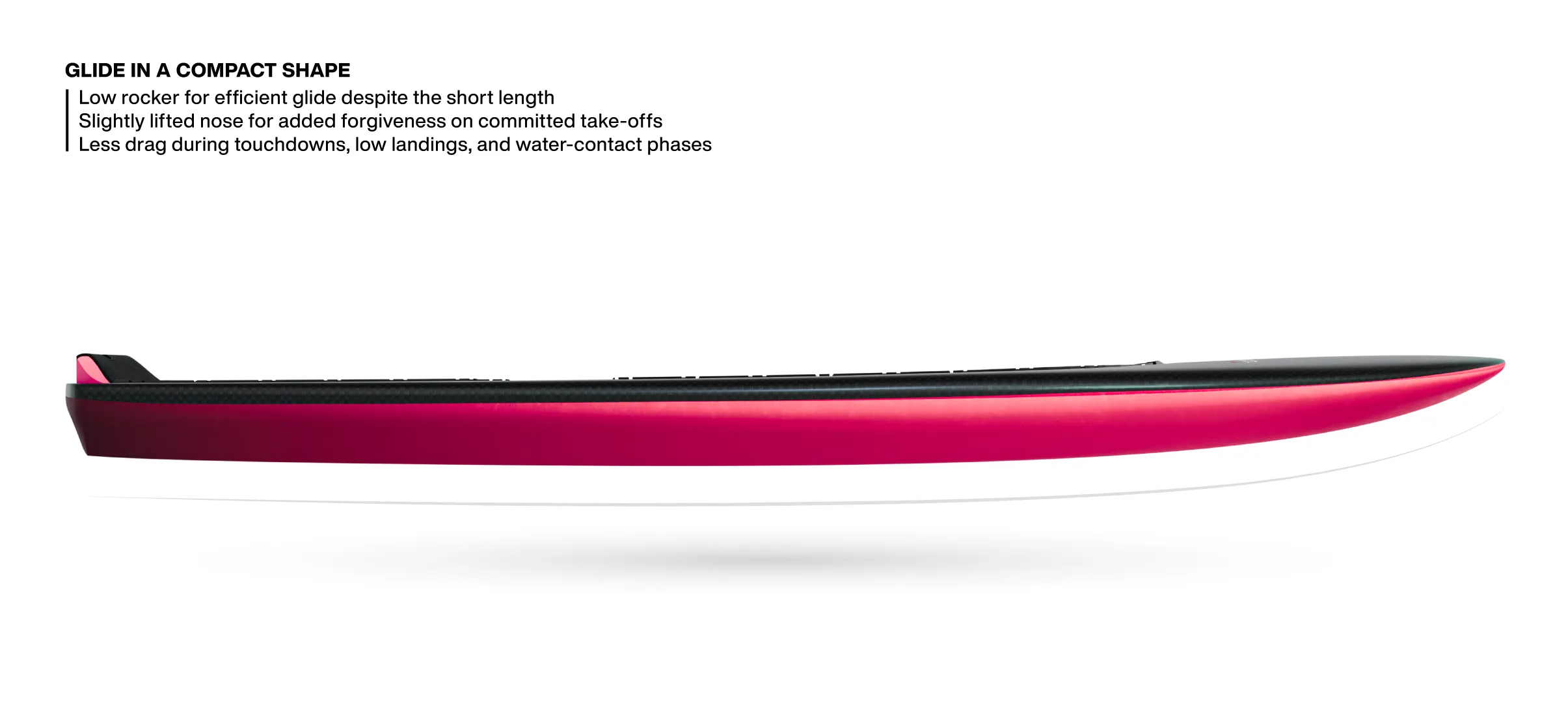
The rocker of the Matata is designed to maximise glide in such a short length. It remains a very short board, so the goal is not to compete in paddling speed with a longer board, but to get the best performance possible from its ultra-compact format.
Its slightly raised nose maintains tolerance in committed take-offs, foam, or tricky situations. The board remains easy to place and control, without the bulk of a longer board that can dig in, nose dive, or become difficult to manage when the wave pushes from behind.
This rocker also comes into its own during touchdowns, low landings, or when you need to settle the board before taking off again. The Matata glides on contact instead of braking abruptly, allowing you to maintain momentum, re-pop more easily, and keep sending it without being penalised at every water contact.
The lowered deck creates a concave cockpit in the stance area. The feet are closer to the foil, the footing is more readable, and the steering gains in precision. You feel the board better, fine-tune the pressure, and every movement is transmitted directly.
The significant width at the back foot allows for a marked offset position, ideal for strapless riding. You can load up the turns, shift your weight, and control large-span foils without being confined to the board's axis. The new three-part ridge traction pad enhances this connection with more grip, comfort, and control across the entire support area.
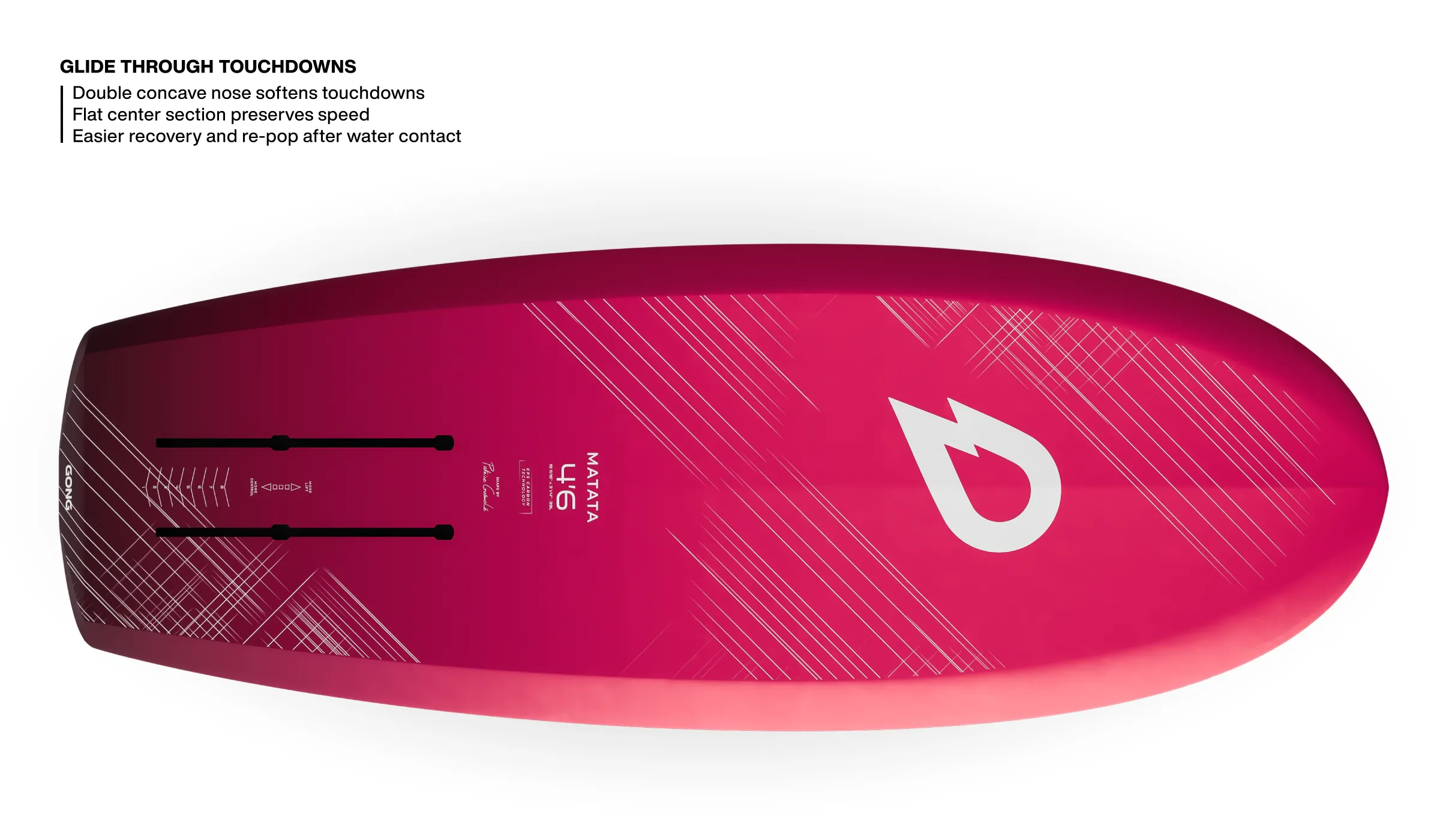
The hull of the Matata is designed to glide quickly before takeoff and remain stable during water contact. The double concave at the nose channels the flow, softens touchdowns, and prevents harsh stops when the board reconnects with the water.
Around the foil, the hull's core remains perfectly flat to maximise glide and maintain speed. This combination allows for efficient takeoff, tolerates touchdowns, and quickly regains speed without the sensation of a board that sticks or drags in the water.
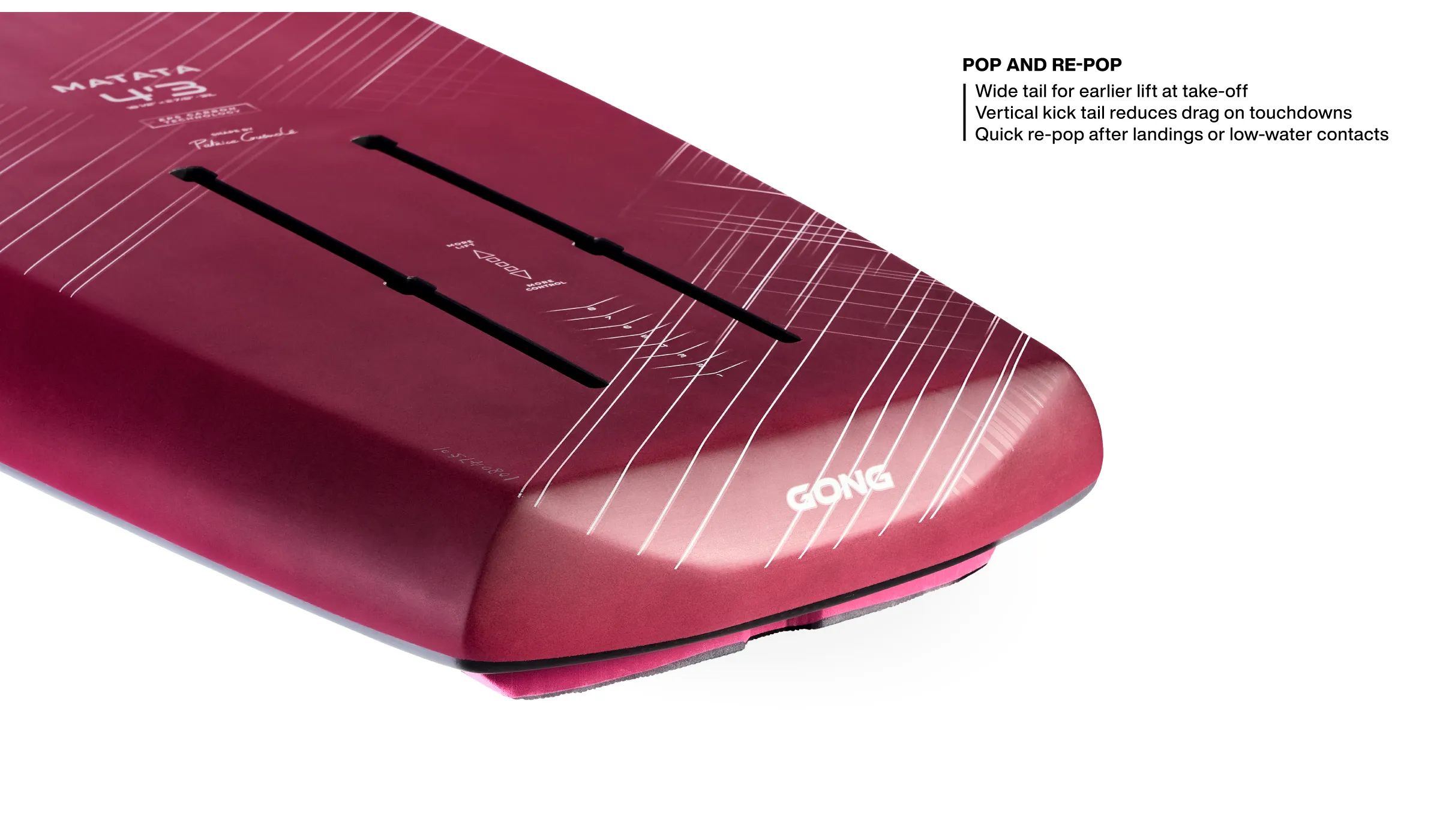
The wide and voluminous tail provides a real cork effect during take-off. It helps the board to pop decisively, especially in short starts, foam, or weak waves. This rear lift gives support without lengthening the board.
The kick tail is short, set back, and very vertical to reduce the surface that slows down when the board touches the water. The Matata quickly frees itself, maintains its momentum, and facilitates re-pop after a touch, a low landing, or an engaged manoeuvre. This is a key point for sending it without fearing contact.
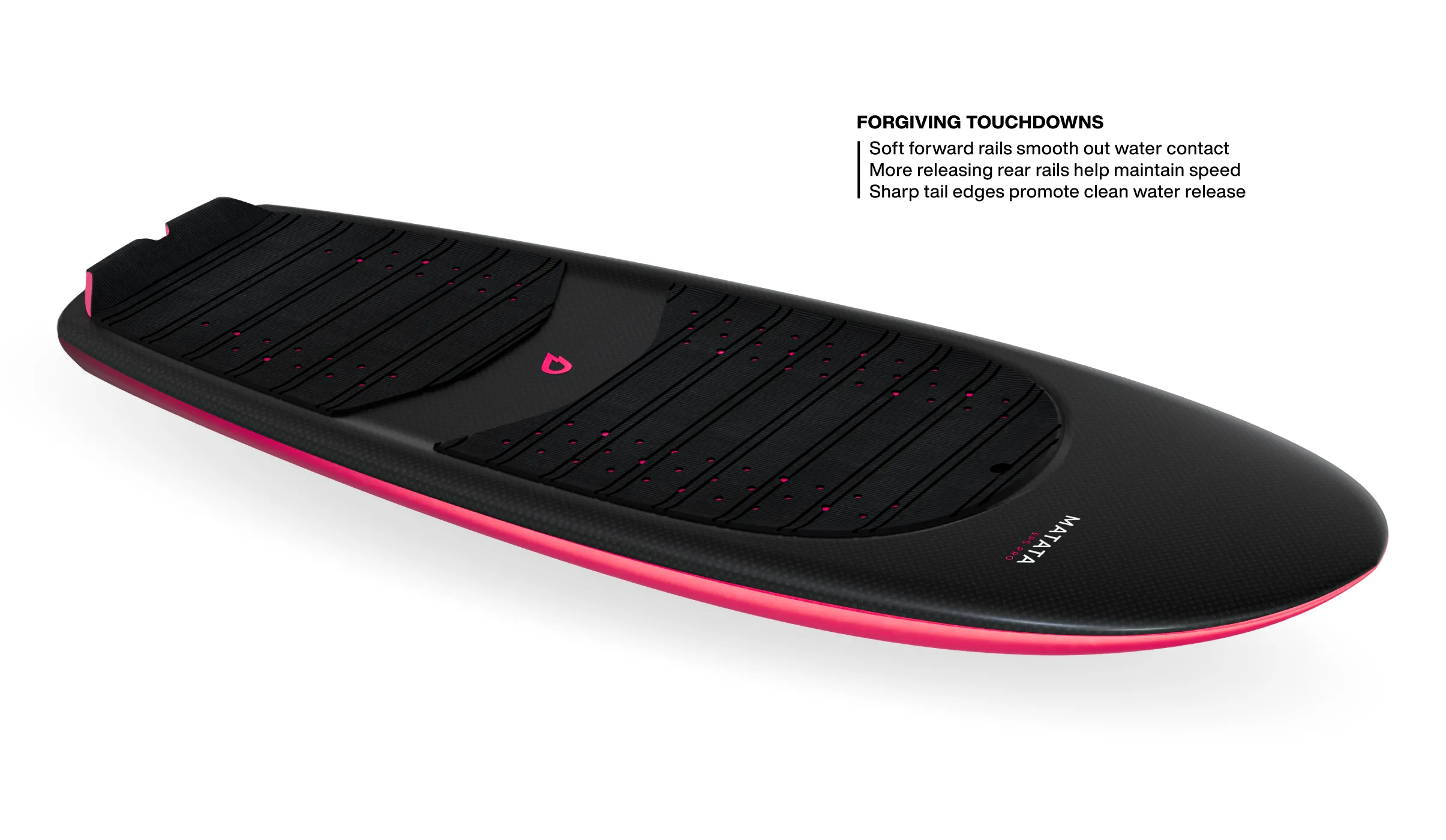
The rails of the Matata evolve significantly from the front to the back. At the nose, they are softened, with pronounced chines and gentle edges to facilitate water contact, channel the glide, and prevent abrupt reactions.
At the tail, the rails become more vertical, with less planing chines and sharper edges. This area releases water more quickly, limits disturbances in tight turns, and reduces braking during touchdowns. The transition remains smooth throughout the length to maintain a coherent, efficient, and clean board underfoot.


The Matata EPS Pro is aimed at advanced to pro riders who already have real surf foil experience and want a compact, lively board that is very connected to the foil.
It is suitable for those who know how to take off on short, mushy, or imperfect waves, exploit a piece of foam, get up quickly, pump efficiently, and multiply connections. Its appeal is greatest for those who want to spend as much time as possible flying, with a short board underfoot, little inertia, and immediate response in the supports.
It is not intended for beginners or those primarily seeking easy paddling. The Matata remains a very short board: it glides very well for its length, but it will never replace the paddling speed and ease of positioning of a longer board.
The Matata is not the best choice if the main goal is to catch waves early while paddling, cover a lot of distance paddling, or drop in early and from afar in powerful and fast conditions.
It will also require more technique if your pumping is not yet solid. Its program is opportunistic: catch a small piece of foam or an imperfect but supportive section, pop instantly, then use pumping to reach the wave or section you really want to surf.
It's not a board made for waiting for the perfect positioning like with a longer board. With the Matata, you need to be quick, get up very fast, accept lightning take-offs, and know how to turn a small opportunity into flight time. Otherwise, a longer board, with more glide while paddling and more margin in positioning, will be more suitable.
The Matata is designed to maximise flight time in surf foil: take off on a small piece of foam, pop quickly, pump efficiently, reconnect, return to the peak, take off again, and keep going.
It excels in small waves, mushy waves, pushing foam, and imperfect sections that are sufficient to trigger flight. Its compactness frees up pumping, facilitates weight shifts, and allows for very tight carving without the inertia of a longer board.
Its program is clear: rely less on long paddling and more on pumping efficiency. The Matata allows you to densify each session by adding connections, waves, and manoeuvres, with a board that remains extremely playful underfoot.
 `
`
The choice of size mainly depends on technical level, weight, type of spot, and desired style.
An advanced rider will choose a volume that retains enough stability under the chest to succeed in take-offs, maintain control in quick starts, and not lose too much energy before flying.
An expert or pro rider can go down in volume to gain radicality, further reduce inertia, and maximise sensations underfoot, provided they have the paddling, timing, and pumping necessary to compensate for the short length.
Do not choose the Matata too small out of ego. A board too tight in volume becomes more demanding in positioning, more physical at take-off, and less profitable in mushy conditions. The right choice is one that allows for effective take-offs and then fully benefits from its compactness once in flight.
Refer to the size chart to choose the appropriate volume based on weight, level, and usual conditions. If hesitating between two sizes, opt for the larger one to facilitate take-offs and gain consistency, or the smaller one for a more radical use if the technical level truly allows it.
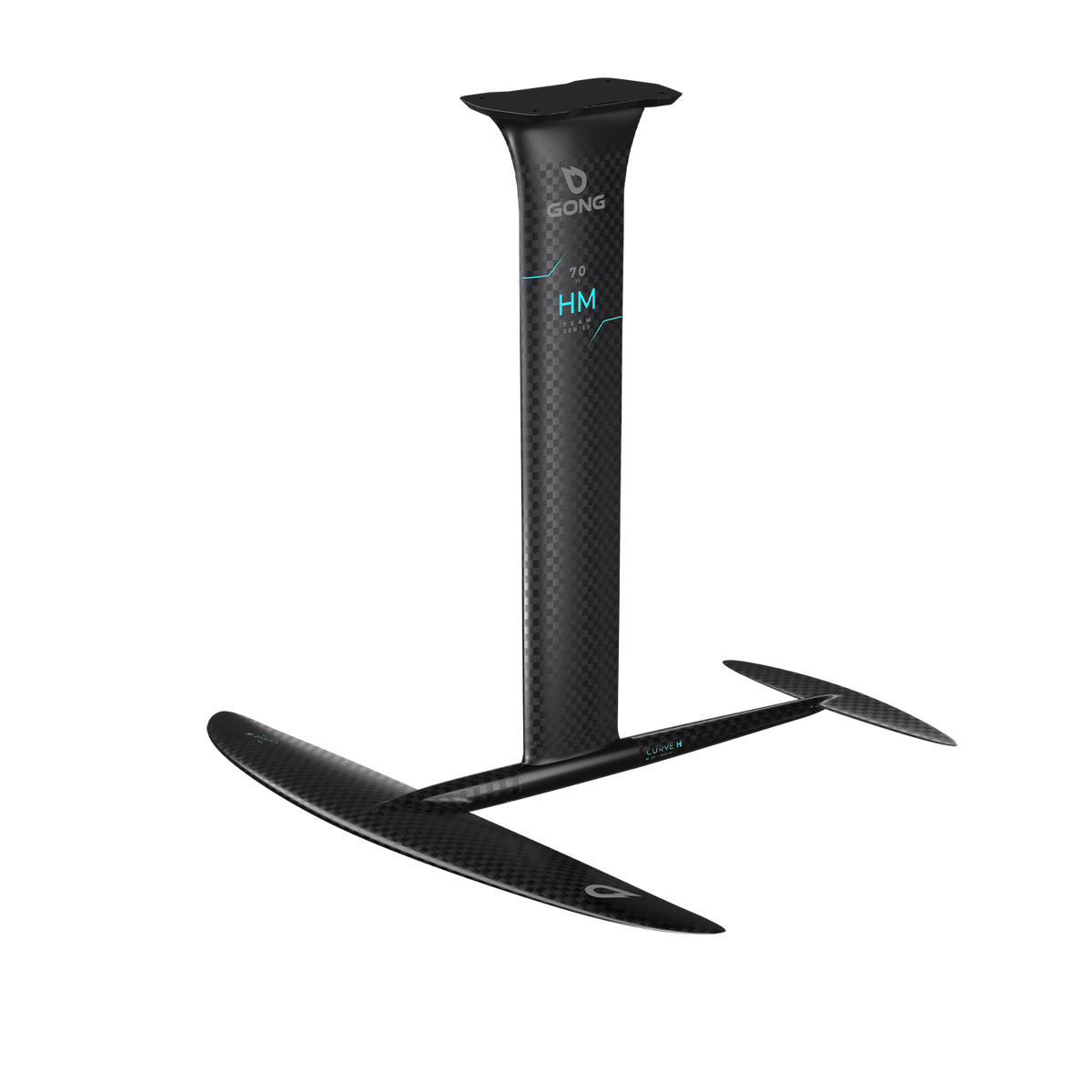
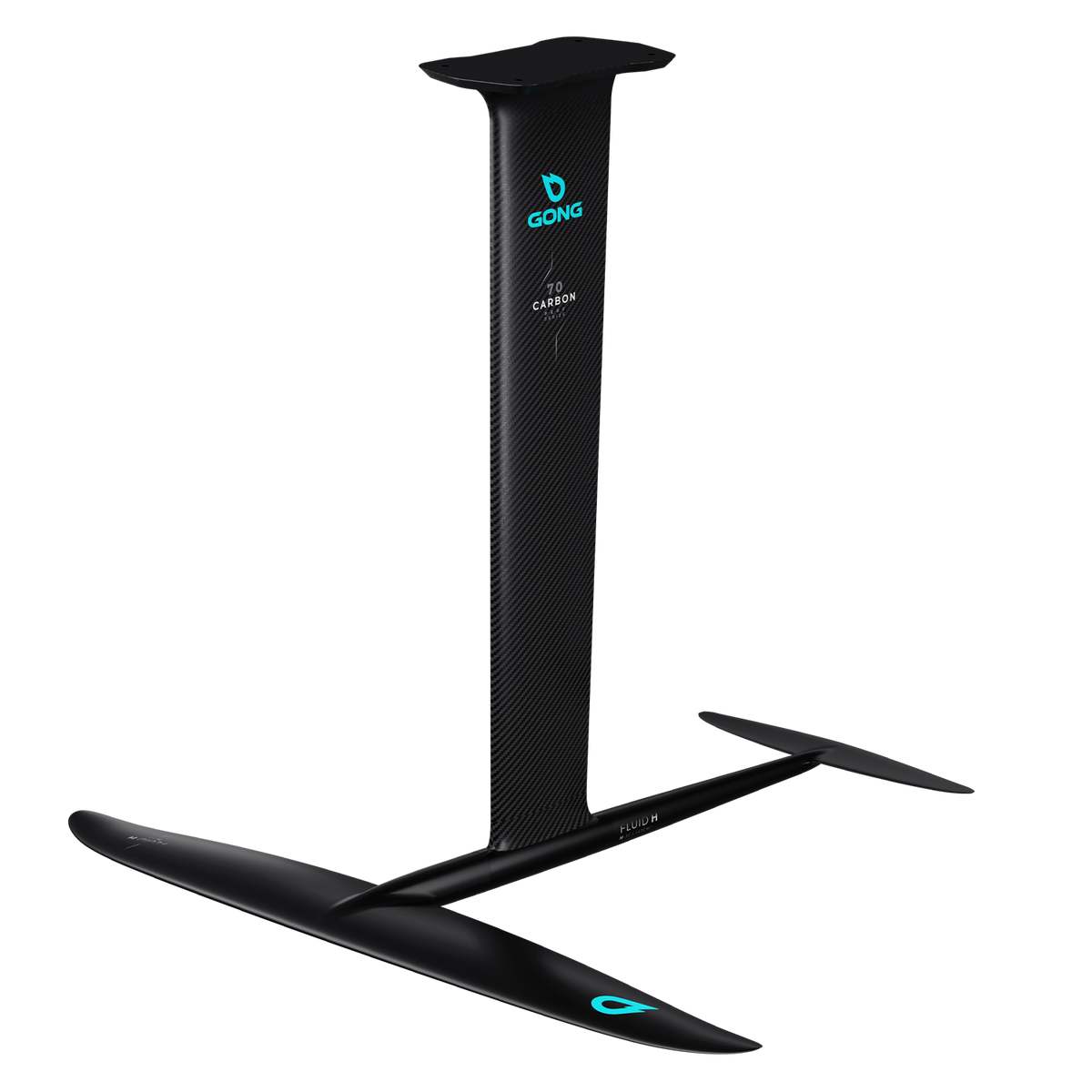
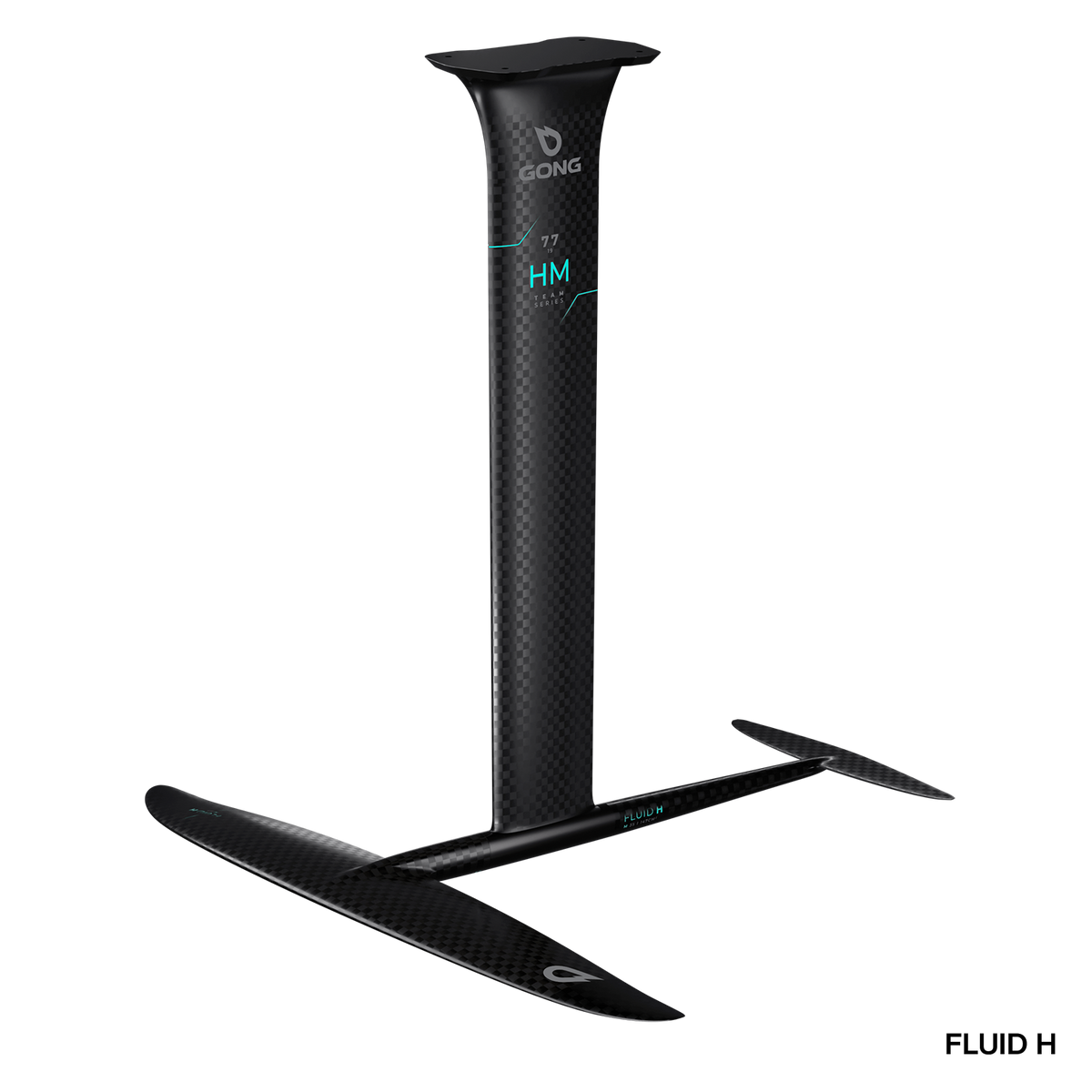
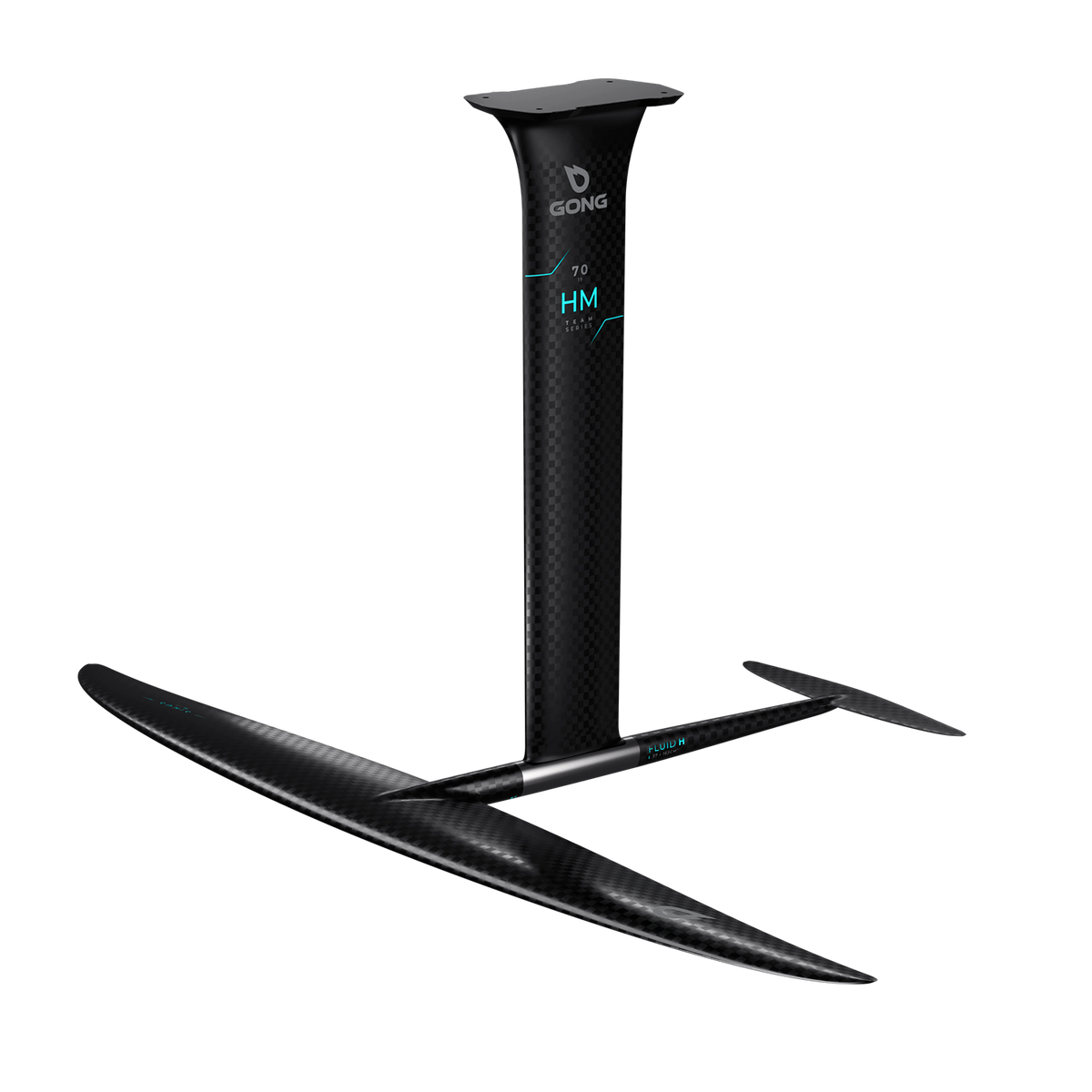
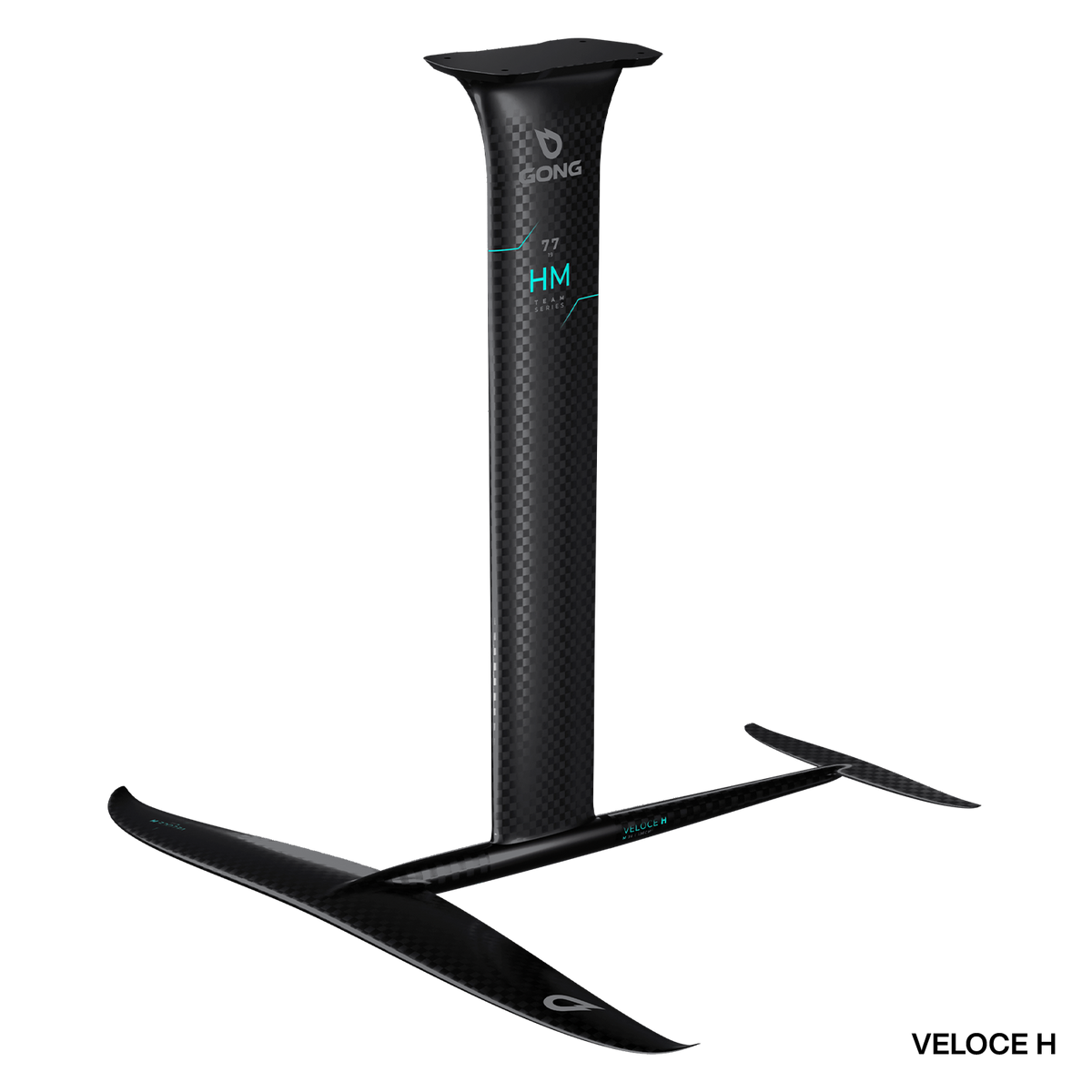
The Matata will be perfect with the Curve H, Fluid H, and Veloce H ranges.
Each of these high-performance wings has its strengths on which the development has been particularly focused:
The Curve H : the combo of manoeuvrability and lift.
It is the queen of carving and low range (which doesn't mean it can't rev up!). It is also the most comfortable for pumping, allowing for numerous connections without burning your thighs.
The Fluid H : the combo of manoeuvrability and speed.
Perfect for very tight turns, going fast, gliding, and having a very lively ride. Add to that a very powerful pop, and it's a foil that truly goes wherever you want, in the water or in the air!
The Veloce H : the combo of glide and versatility.
It is a freefly and downwind machine. With it, you glide and connect bumps without limit with incomparable fluidity. It has great acceleration capacity on the wave and a very low stall speed, making flight easy in any circumstance.
The Veloce HDW : 100% glide.
To be even more focused on the infinite glide program, the Veloce HDW. The queen of downwind.
The Sirus : wings with the ultimate ratio to fly longer than anyone else in marginal conditions and dock start.
Example: Preferably, we recommend pairing a Curve H stabiliser with your Curve H front wing, as these two components are designed for the same program and optimised to work in perfect harmony.
General guidelines on choosing stabiliser sizes:
The preferred size will depend on your support, level, weight, spot conditions, and also your front wing.