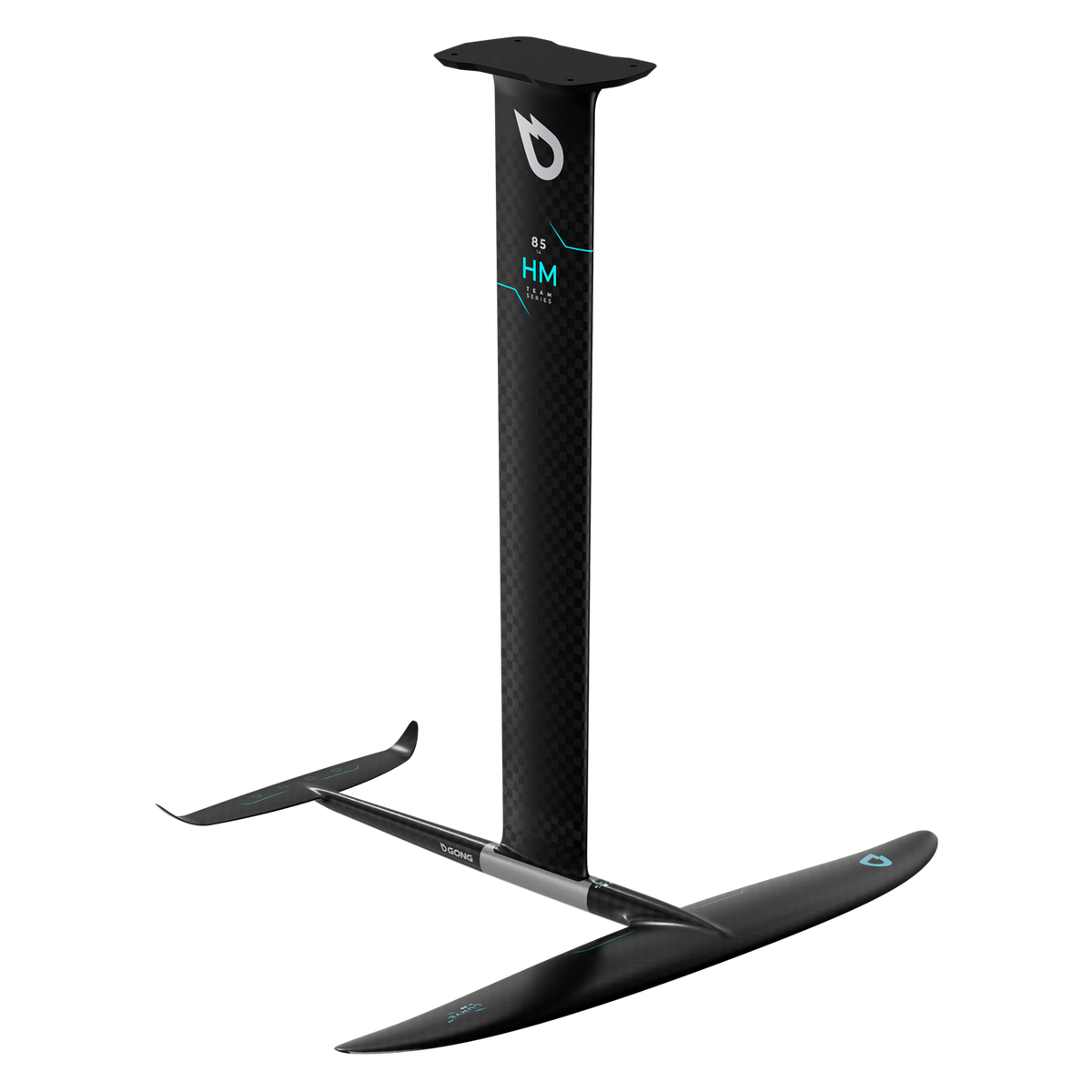
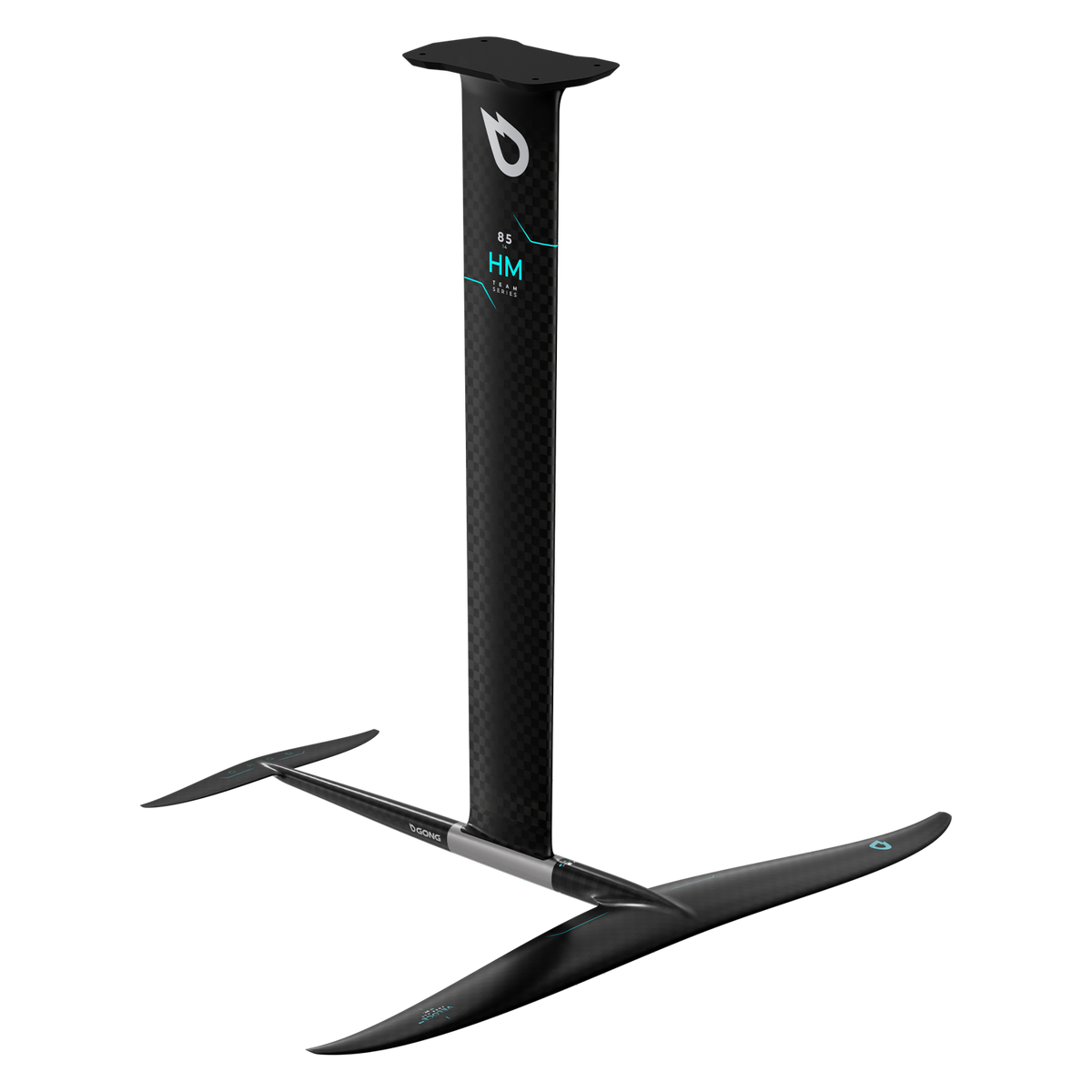
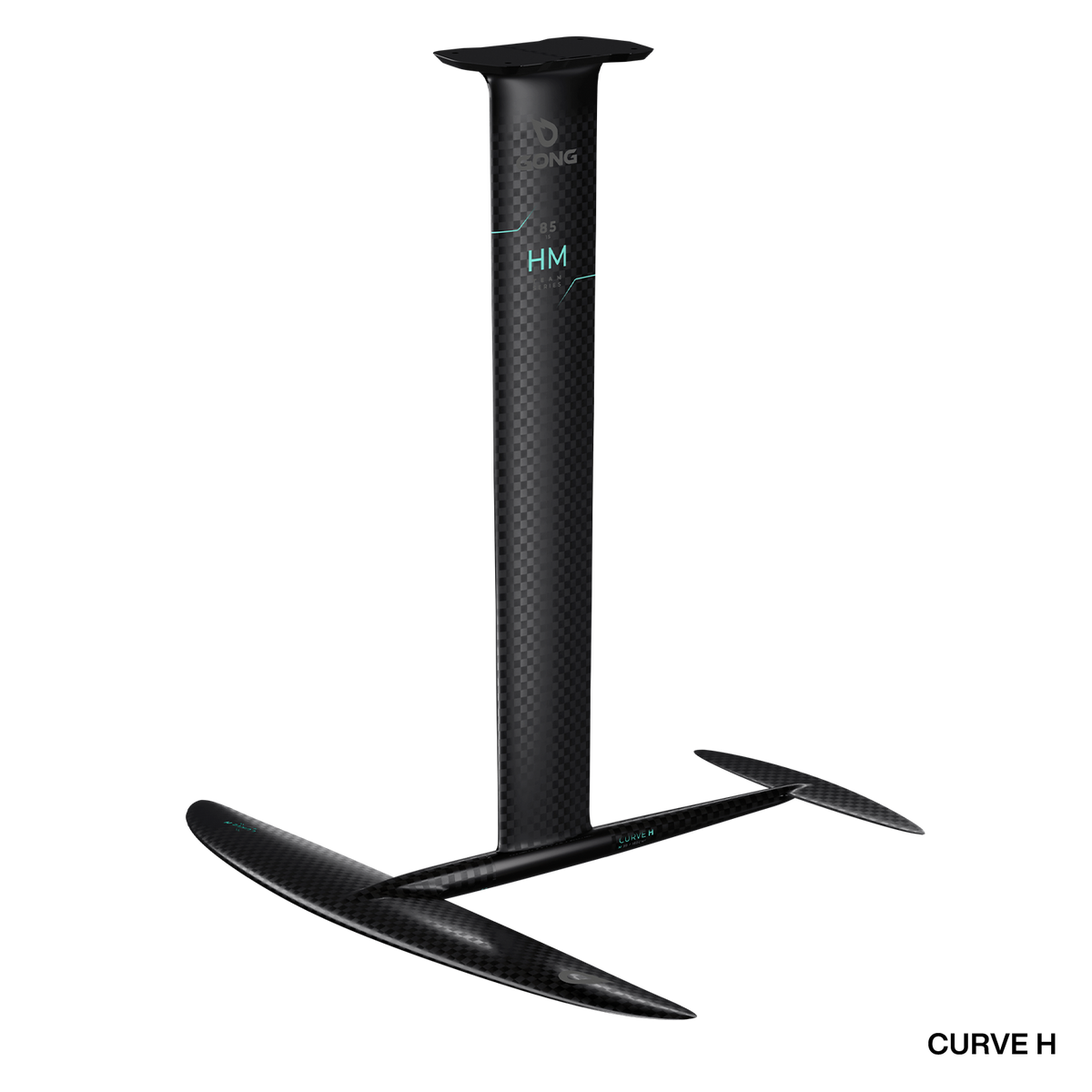
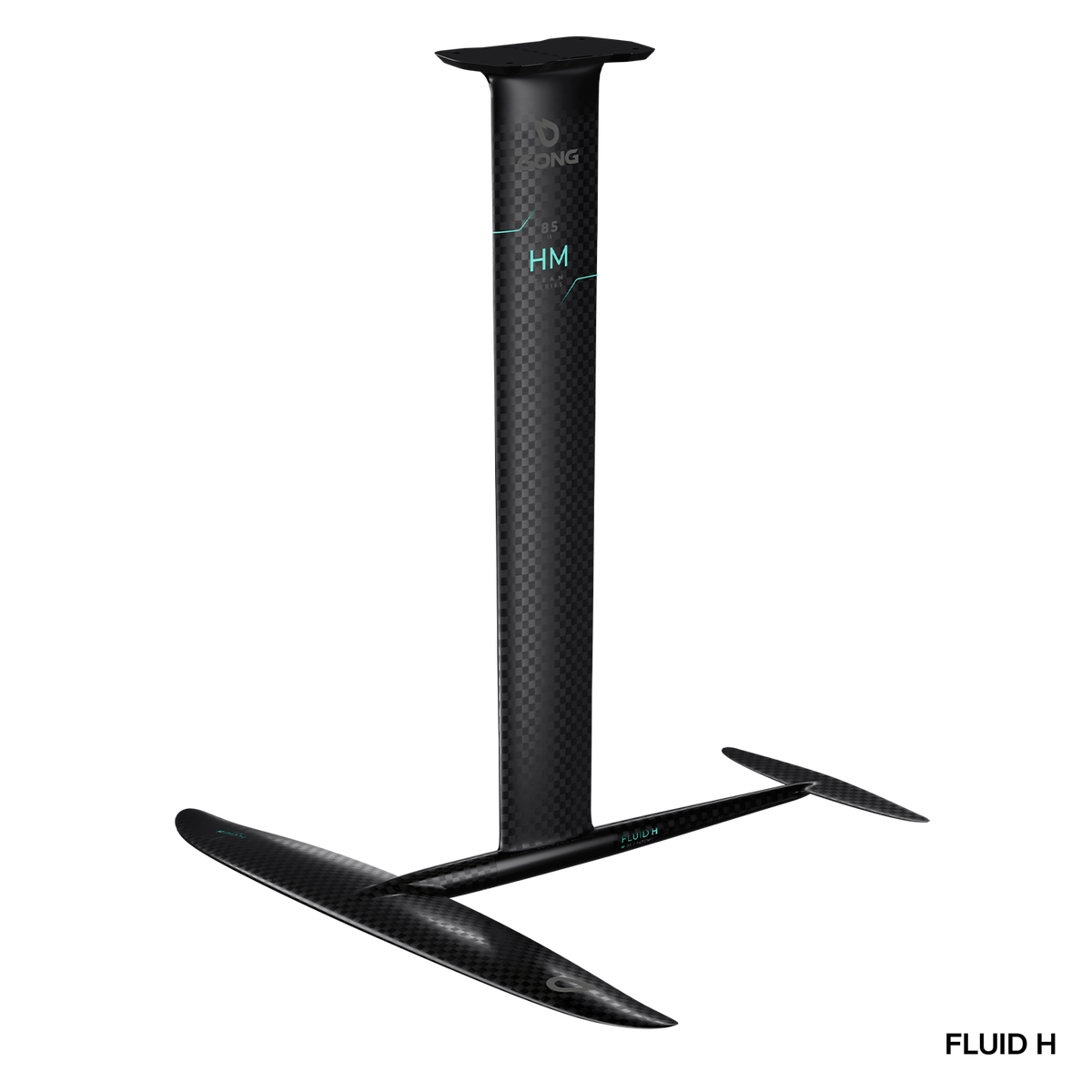
Choosing the ideal foil can quickly become complex with the numerous parameters to consider. Size, surface area, ratio, thickness, profile... These are all characteristics that influence glide, lift, and maneuverability. In this guide, we break down the essential elements to help you make the right choice.
Surface Area of the Front Wing
The surface area of the front wing is crucial for determining lift, speed, and maneuverability. Generally, a larger wing is more stable and offers better low-speed lift, making it ideal for beginners and light wind conditions. On the other hand, a smaller wing favors speed and maneuverability but requires more experience.
- Large Surface: Ideal for light wind, beginners, and riders looking for prolonged glide and high stability.
- Small Surface: Perfect for waveriding, racing, and freestyle, offering enhanced responsiveness for quick, dynamic maneuvers.
Aspect Ratio
The aspect ratio (the ratio between wingspan and surface area) directly influences stability, glide, and maneuverability. A high aspect ratio provides better glide and higher top speed, but may make the foil more technical to handle, whereas a moderate ratio improves control and tolerance. A low aspect ratio will be very forgiving but slower.
- Low Ratio (less than 6): For beginners seeking safety with a simple, tolerant foil.
- Moderate Ratio (6 to 9): A good compromise between maneuverability, smooth glide, and stability, ideal for freeride, surfing, freestyle, and varied conditions.
- High Ratio (9 to 12): For glide and speed, suitable for lightwind, downwind, and racing.
- Extreme Ratio (over 13): For pumping and maximum glide with minimal energy.
Types of Front Wing Outlines
Rectangular Outline
- Characteristics: Offers moderate wingspan and even surface distribution.
- Advantages: Very stable due to surface being spread evenly; offers predictable lift. Ideal for beginners and those seeking stability.
- Disadvantages: Less maneuverable and harder to react in tight turns; higher drag limits speed and glide.
Tapered Outline
- Characteristics: Diamond-shaped surface, concentrated at the center and tapering off towards the tips.
- Advantages: More maneuverable in turns, as the reduced surface at the tips helps change direction; lower drag for better glide.
- Disadvantages: Less stable due to smaller tips, requiring more technical control; sometimes abrupt behavior.
Elliptical Outline
- Characteristics: Surface is concentrated at the center, tapering smoothly to the tips.
- Advantages: More maneuverable in turns with smooth tip reduction, helping controlled direction changes; lower drag.
- Disadvantages: Less stable due to smaller tips, requiring more technical control; less glide due to significant cord length at the wing's span.
Crescent Outline
- Characteristics: Curved surface tapering toward the rear, with the lift concentrated at the center.
- Advantages: More stable and progressive in turns due to the rearward lift; smoother glide.
- Disadvantages: Less responsive.
Football Outline
- Characteristics: Surface concentrated at the tips with reduced center chord.
- Advantages: Ultimate lateral stability.
- Disadvantages: Poor maneuverability; significant mechanical stresses causing flex and torsion; risk of cavitation and abrupt turns.
Dihedral of the Front Wing
The front wing’s curve when viewed from the front is called the dihedral. This refers to the angle at which the two halves of the wing are tilted relative to the horizontal axis. Depending on this tilt, we talk about:
- Neutral Dihedral: Flat wing with no upward or downward inclination. Provides uniform lift and constant stability.
- Positive Dihedral: Tips are lifted upward, which increases lateral maneuverability and responsiveness without reducing lift.
- Negative Dihedral (Anhedral): Tips are downward, promoting stability in turns by keeping the tips engaged in the water, though this can reduce lift.
The dihedral plays a key role in lift, stability, grip, and maneuverability. The curvature of the tips is part of the dihedral, but it’s the central curvature that primarily defines the wing’s character. A negative dihedral is more grippy but can be made more maneuverable with positive tips or snappier with flat tips.
Detailed Dihedral Types
Flat Dihedral
- Characteristics: The wing is mostly flat with no significant upward or downward curve.
- Advantages: Provides regular, predictable lift and stable glide. Ideal for speed and flat or aerial maneuvers.
- Disadvantages: Less stable in sharp turns, as the lack of curvature reduces lateral engagement in water.
Lowered Dihedral
- Characteristics: The wing’s halves tilt downward, creating a descending shape at the center.
- Advantages: Better grip in the water during turns and reduces vibrations in choppy waters.
- Disadvantages: Reduces glide due to extra drag and less lift from the surface area.
Raised Dihedral
- Characteristics: The wing’s halves tilt upwards, forming a gentle upward curve.
- Advantages: Increases rail-to-rail movement, making the foil very maneuverable and reduces the behavior anomalies, supporting better glide.
- Disadvantages: Less control, particularly in chop and at high speeds. More demanding, suitable for advanced riders.
Seagull Wing Dihedral
- Characteristics: The wing takes on a double curve downward at the center, similar to a seagull's wings.
- Advantages: Significant stability, making the foil very stable and easy to control in flight.
- Disadvantages: Increased drag at high speeds, limiting glide and top speed.
Front Wing Tips
The curvature of the front wing tips influences overall lift, stability, grip, and maneuverability. The curvature of the tips is part of the dihedral, but it’s the central curvature that defines the wing’s character.
Flat Tips
- Characteristics: Tips are aligned without curvature.
- Advantages: Provides regular and stable lift, making the foil easy to control in straight lines and during takeoff, with predictable turns.
- Disadvantages: Less forgiving during steep angles; tips can cause a loss of lift.
Lowered Tips (Negative Dihedral)
- Characteristics: Tips are angled downward, further from the water surface.
- Advantages: Enhances grip in turns, increasing control in sharp turns or choppy conditions.
- Disadvantages: Increased drag, limiting glide and top speed.
Raised Tips (Positive Dihedral)
- Characteristics: Tips curve upward.
- Advantages: Increases maneuverability, especially in rail-to-rail transitions, and helps the foil lift a tip out of the water for slashing moves.
- Disadvantages: Requires tolerant profiles due to frequent "tip out" situations and can be dangerous when falling.
Wing Profile
The thickness and shape of the wing’s profile play a major role in lift and behavior:
- Thick Profile: Generates more lift at low speeds, offering more tolerance, making takeoffs easier, ideal for beginners and lightwind.
- Thin Profile: Reduces drag, offering faster glide and better control at high speeds, preferred for waveriding and racing.
Extrados vs Intrados
- Extrados Voluminous: High lift and tolerance, but low speed.
- Intrados Voluminous: Excellent glide with less lift.
Leading Edge Types
- Round Leading Edge: Great tolerance for all angles.
- Pinched Leading Edge: Fast but unstable, less forgiving.
Rear Section Profile
- Extrados Hollow: Fast, but less forgiving.
- Intrados Hollow: High lift but limited glide.
Fuselage Type
The shape and length of the fuselage influence stability and responsiveness:
- Long Fuselage: Offers better stability and is easier to control, ideal for beginners, lightwind, freeride, and glide sessions.
- Short Fuselage: More playful and dynamic, ideal for freestyle and radical surfing. Also useful for speed with quick corrections under load.