Your cart is empty !
It's flat around here...
The quad setup emerged around the turn of the 1980s, during a period of intense experimentation with fin configurations. The idea was to retain the speed and freedom of a twin-fin while adding more grip and control.
Long overshadowed by the thruster, which became the benchmark, the quad later made a major comeback thanks to its speed, particularly in fast, hollow waves. It established itself as a configuration in its own right, sought after for its speed, drive and excellent hold on the rail.

A quad setup uses four fins: two front side fins and two smaller rear fins positioned near the tail. Unlike a thruster, there is no center fin.
The absence of a center fin frees up the water flow beneath the board. Water flows more freely towards the tail, helping generate more speed.
The front fins play a similar role to those on a thruster: they generate lift when the board is on rail and help initiate turns. The rear fins channel the water flow and stabilize the board at high speed.
The quad is therefore a very distinctive setup: it combines the speed of a twin with grip close to that of a thruster.
It is particularly popular in fast waves, barrels and long sections where down-the-line speed is essential.
The thruster favors pivot and vertical surfing thanks to its center fin. The quad favors speed and long lines.
 Surfer: Moritz, GONG team rider, on a Fork EPS.

Rake
Rake influences the board’s ability to hold and draw a line. Fins with less rake favor pivot and make the board more reactive. Fins with more rake favor longer lines and drive. In a quad, the front fins generate most of the pivot, while the rear fins contribute more to drive.

Base
The base determines how effectively the fin transfers the surfer’s energy. A wide base generates plenty of drive and stability. A narrower base frees up the board and improves maneuverability. In a quad, the front fins generally have a wider base than the rear fins to maintain a good balance between pivot and drive.

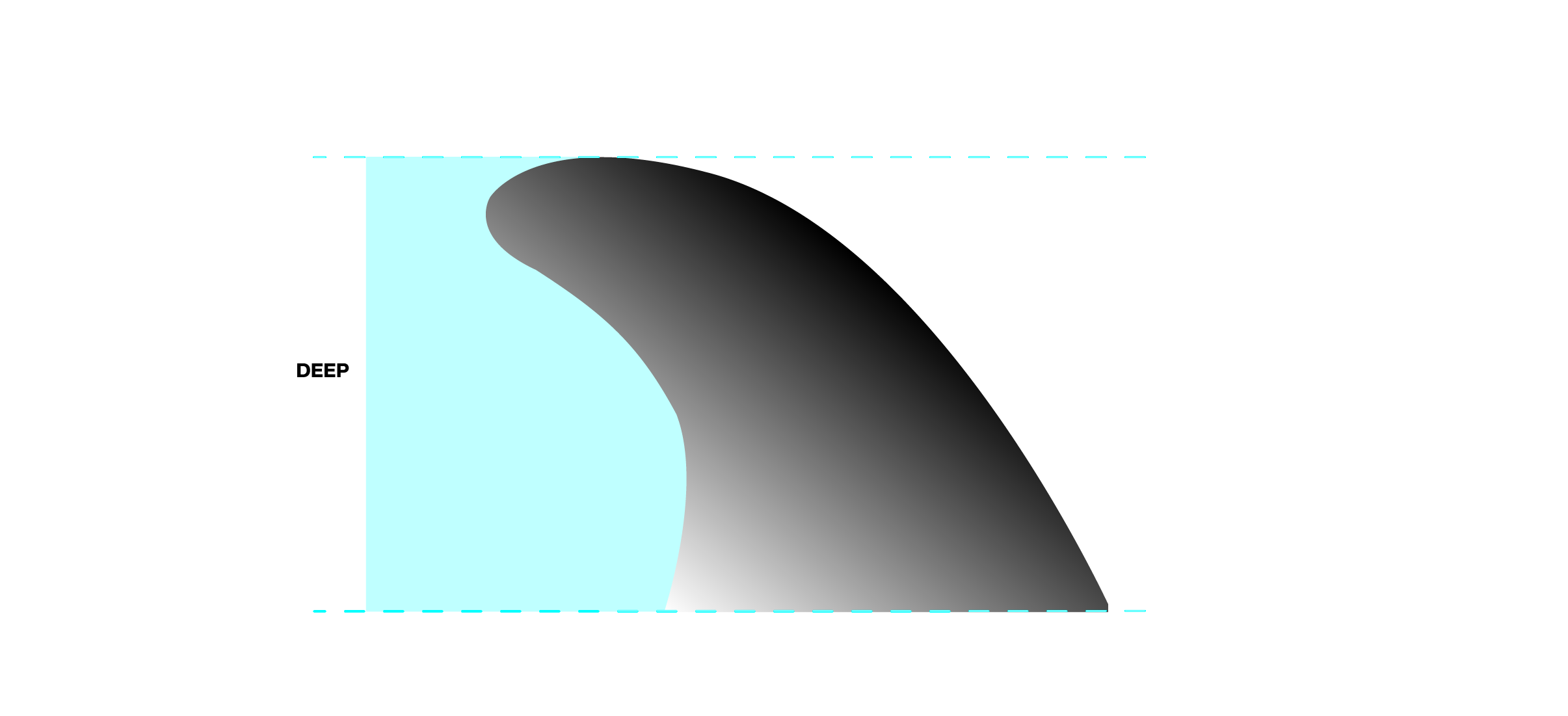
Depth
Depth influences grip in the wave.
Deeper fins provide more control in powerful waves. Shallower fins favor speed and glide. On a quad, the front fins are often slightly deeper than the rear fins to maintain good control through turns.
Surface area
Total surface area directly affects grip. More surface area increases control and stability. Less surface area favors speed and freedom. In a quad setup, the surface area is generally distributed across all four fins to maintain good grip while retaining fast glide.

Flex
Flex influences acceleration out of turns. Stiff fins provide very precise control and immediate response. More flexible fins can store energy and release it through transitions.

Foil
Side fins generally use an asymmetrical foil to generate lift when the board is on rail. The rear fins often feature a specific foil designed to optimize water flow towards the tail of the board.
 Surfer: Mateia, GONG team rider, on a Fork EPS.
The twin favors speed and freedom.
The thruster favors control and pivot.
The quad favors speed and long lines.
The quad maximizes speed because water flows freely between the fins.
Lift is generated mainly by the front fins when the board is on rail. Drive remains consistent thanks to the rear fins channeling the water flow. Projection is highly effective through long sections. Pivot is less pronounced than with a thruster because there is no center fin acting as a pivot point. Grip remains excellent in fast waves.
This is why the quad is often favored in barrels or long, fast waves.
Quad fins are particularly well suited to:
They are often used in conditions where speed is essential.
 Surfer: Malo, GONG team rider, on a Fork EPS.
How a quad setup performs is closely linked to the width of the board’s tail.
On a board with a wide tail, such as a fish or some hybrid shortboards, a quad becomes particularly effective. The width of the tail creates plenty of lift and naturally generates speed, but it can also make the board harder to control. The two rear fins stabilize this wide tail by channeling the water flow towards the back of the board. They create an “extra rail” effect that helps maintain control while preserving high speed.
This is why quad setups are so popular on modern fish boards, wide boards and speed-oriented boards.
On a board with a narrower tail, such as a performance shortboard or certain boards designed for powerful waves, the quad also adds speed, but its behavior becomes more directional. Since the tail is naturally easier to control, the rear fins primarily serve to increase drive and projection.
In short:
Understanding the relationship between tail width and fin setup makes it easier to choose the right configuration for your board.

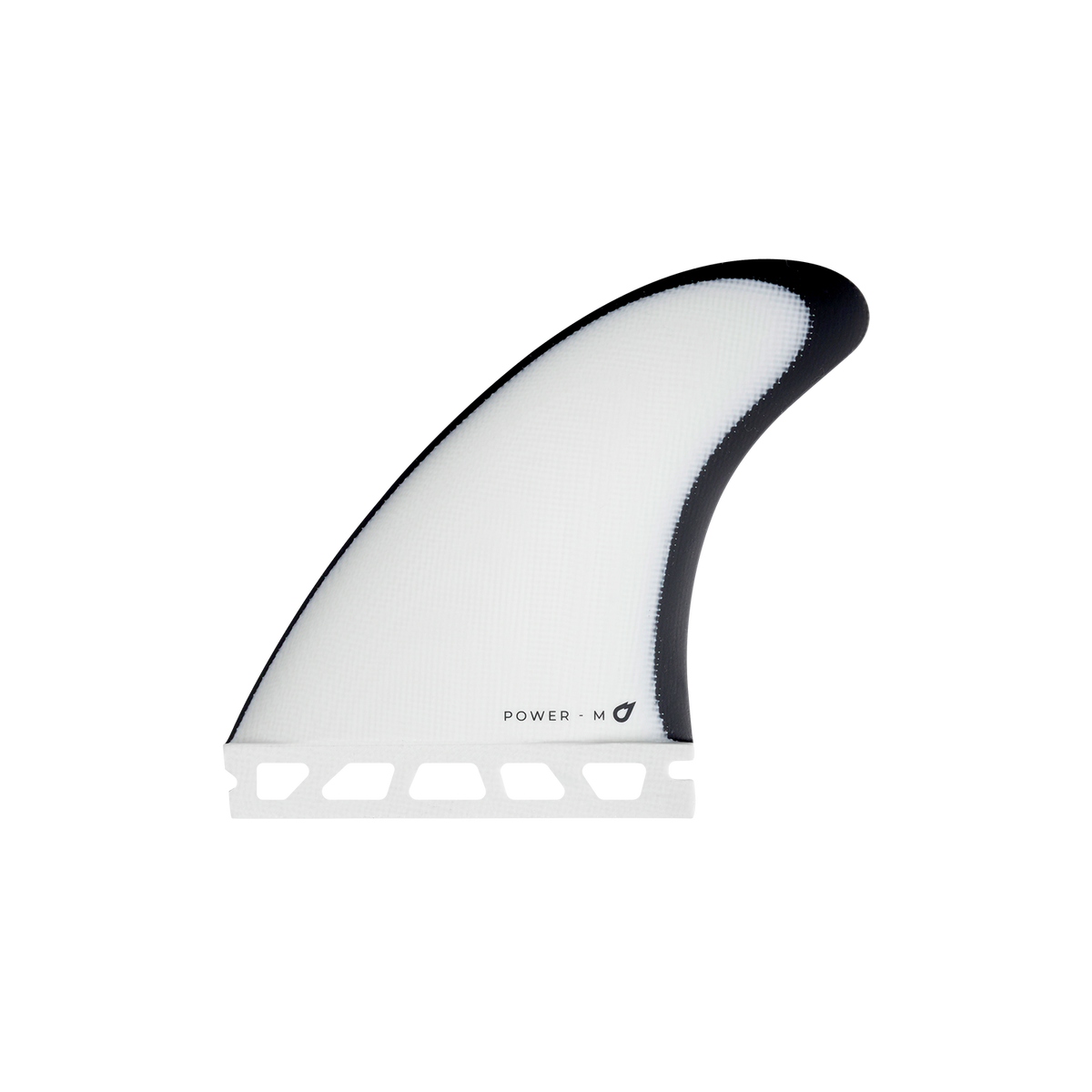
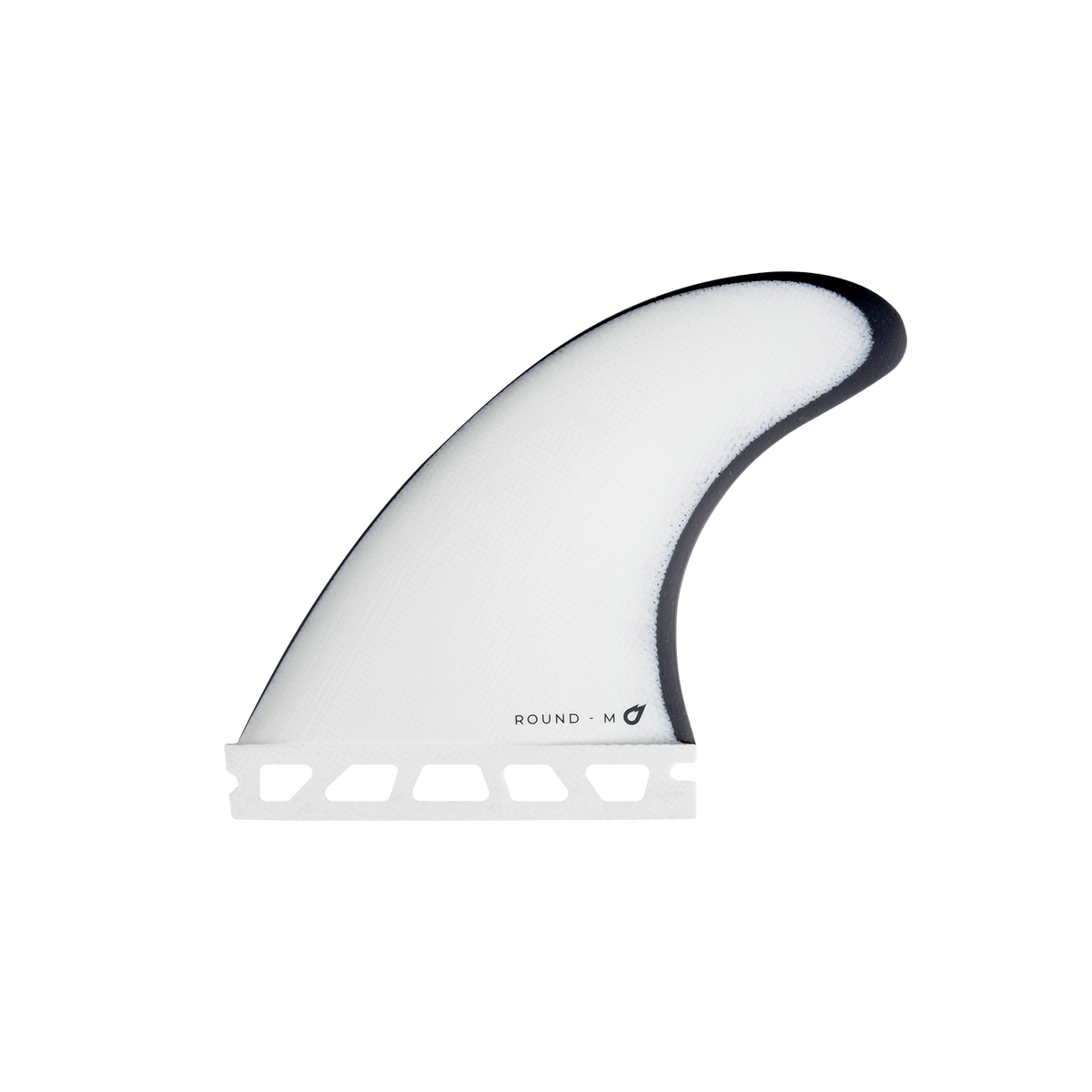
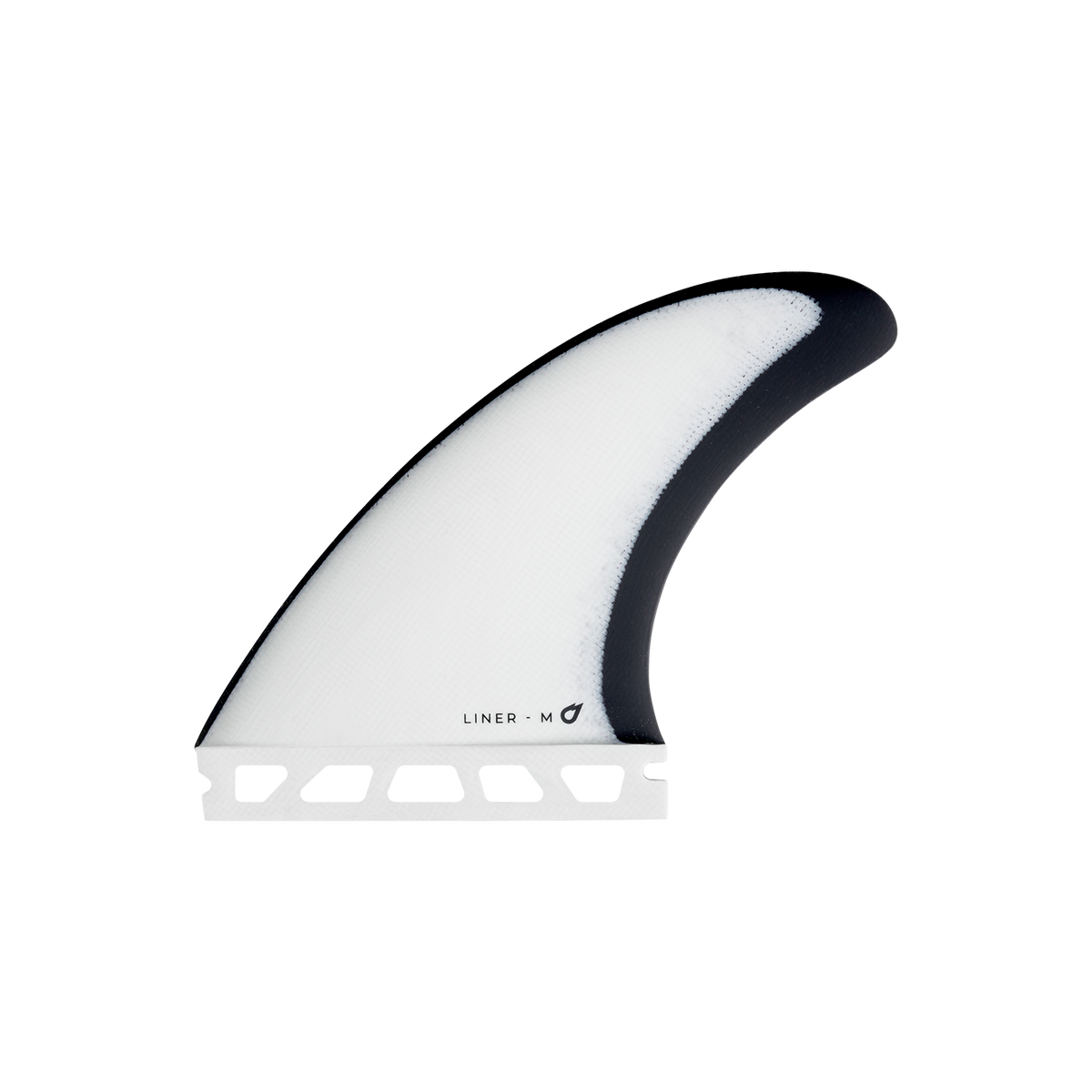
The models presented here follow a logical progression, from the most pivot-oriented template (Power) to the most drive-oriented template (Liner).

The Power brings responsiveness and an upright pivot to a setup that naturally tends to become directional. It livens up the quad, makes the board more maneuverable in the pocket, and brings its behavior closer to that of a reactive thruster while retaining the speed of a four-fin setup.
 Surfer: Moritz, GONG team rider, on a Fork EPS.
The Round in a quad setup is the everyday option. Easy to read, predictable and adaptable to a wide range of boards and conditions. It doesn’t go to extremes, it performs across the board.

The Liner in a quad setup is all about drive and projection. With its highly raked template, it stabilizes the board along the line of the wave and maximizes speed through long sections. This is the setup for point breaks and reef breaks where down-the-line speed is the priority.
 Surfer: Mateia, GONG team rider, on a Fork EPS.
Pivot and responsiveness → Power
Versatility and control → Round
Drive and long lines → Liner

Fin size mainly depends on these factors:
A heavier or more powerful surfer will need larger fins to maintain enough surface area in the water for sufficient grip and control.
A lighter surfer can use smaller fins to reduce drag and make the board more maneuverable.
Surfing style also plays an important role. A surfer who favors quick turns and tight transitions can choose slightly smaller fins for greater responsiveness. A surfer who pushes hard through turns or surfs powerful waves will benefit from larger fins for greater stability and projection.
As a general rule:
The more volume a board has, the more fin area is needed to control it.
Finally, conditions also influence the choice. In small or weak waves, slightly less surface area will help generate more speed. In fast or hollow waves, larger fins will provide more grip and confidence through critical sections.
In short, the right size is the one that gives you the best balance between speed, control and maneuverability, depending on the surfer, the board and the waves being surfed.