Your cart is empty!
It's flat around here...
The keel is not simply a "large twin". It is a fin with a strong identity, deeply rooted in the history of modern surfing.
Its origins date back to the early 1970s, most notably in San Diego with Steve Lis. Originally, these short, wide, flat boards were designed for kneeboarding before being adapted for stand-up surfing. Their compact outline and low rocker required a solution to generate speed despite their short length.
The answer was simple and brilliant: use very wide fins with an exceptionally long base. These fins, known as keels, created continuous drive beneath the tail, allowing the board to accelerate naturally without excessive pumping.
The keel was therefore born from a specific need: maximize projection and speed in soft or underpowered waves while stabilizing a wide, low-rockered tail.
Over time, two main approaches emerged:
The old school keel, very wide, heavily raked, sometimes featuring a 50/50 foil, designed for flow, glide and long, drawn-out lines.
The modern or performance keel, sometimes slightly shorter, with a more refined foil, offering increased maneuverability while maintaining excellent drive.
Despite these evolutions, the philosophy remains the same: natural speed, continuous drive and smooth, flowing turns.

Keels are instantly recognizable by their large surface area and, above all, their exceptionally long base. While a modern upright twin is designed to pivot, a keel is designed to draw lines.
Mounted on a fish or any board with a wide tail, they completely change the way the board feels on the wave. They are not intended for tight snaps or vertical surfing. Instead, they reward long arcs, sustained speed and down-the-line surfing.
A board equipped with keels asks for a progressive approach: set the board on rail, let the fins do the work, and the projection comes naturally. It's a style of surfing that is more fluid than explosive.
 Surfer: Vilayta, GONG team rider, riding the Matata EPS.
Not all twin fin setups deliver the same feeling. Upright twins and keels are often confused, even though their design and performance characteristics are fundamentally different.
Keels are twin fins, but not all twin fins are keels. A keel is a specific type of twin fin defined by its very long base, generous surface area and pronounced rake.

Upright twins are generally more vertical, with a shorter base and less rake. This type of fin favors pivot and responsiveness. The board turns tighter, changes direction quickly and suits a more dynamic, vertical approach. They are commonly found on modern twins, performance fish and twin shortboards designed to surf actively in the pocket. They can also be paired with a trailer, a small center fin that adds extra control.
Keels, on the other hand, feature a much longer base and greater surface area. They generate more linear drive and a feeling of continuous pull through the wave. The ride becomes smoother, with longer lines and natural speed that carries effortlessly through the wave. Keels are particularly well suited to traditional fish, retro boards, wide swallow tails and Mini Simmons, shapes designed to maximize glide and projection in small to medium-sized waves.
In practice, choosing between upright twins and keels depends as much on the board as on the style of surfing you're after. Upright twins prioritize maneuverability and modern performance, while keels favor natural speed and long, flowing lines.
 Surfer: Moritz, GONG team rider, riding the J.Low EPS.
Not all twin-fin boards are designed to work the same way. Some are specifically shaped around keels, while others perform better with upright twins.
Keels are particularly well suited to boards with low rocker and wide tails, such as traditional fish. They excel in small to medium-sized waves with open faces, where natural speed is essential. Several key indicators can help determine whether a board is designed for keels.

1. Tail width
Keels perform exceptionally well on boards with a wide tail. This includes many traditional fish as well as retro-inspired shapes like the Mini Simmons.
The wider the tail, the more the keels help stabilize the board and convert that lift into forward speed.
2. Rocker
Keels are highly effective on boards with low rocker. These boards generate speed naturally, and the long base of the keels helps maintain that speed through the line.
3. Fin placement
On traditional fish, the fins are often positioned:
close to the rail
fairly far back
This configuration works particularly well with keels.
4. The style of surfing you're after
Keels are ideal if you're looking for:
natural speed
long, flowing lines
smooth, stylish surfing
 Surfer: Arihi, GONG Team Rider, riding the Impératrice EPS.

Rake
A keel is almost always heavily raked, with its tip sweeping noticeably toward the tail. This rake promotes long, drawn-out lines and strong projection. It's not designed for tight pivots, but for holding a committed line.

Base
This is the defining feature of a keel. Its long base generates tremendous drive, creating constant forward pull through every turn, as if the board were being drawn forward. The longer the base, the greater the projection.

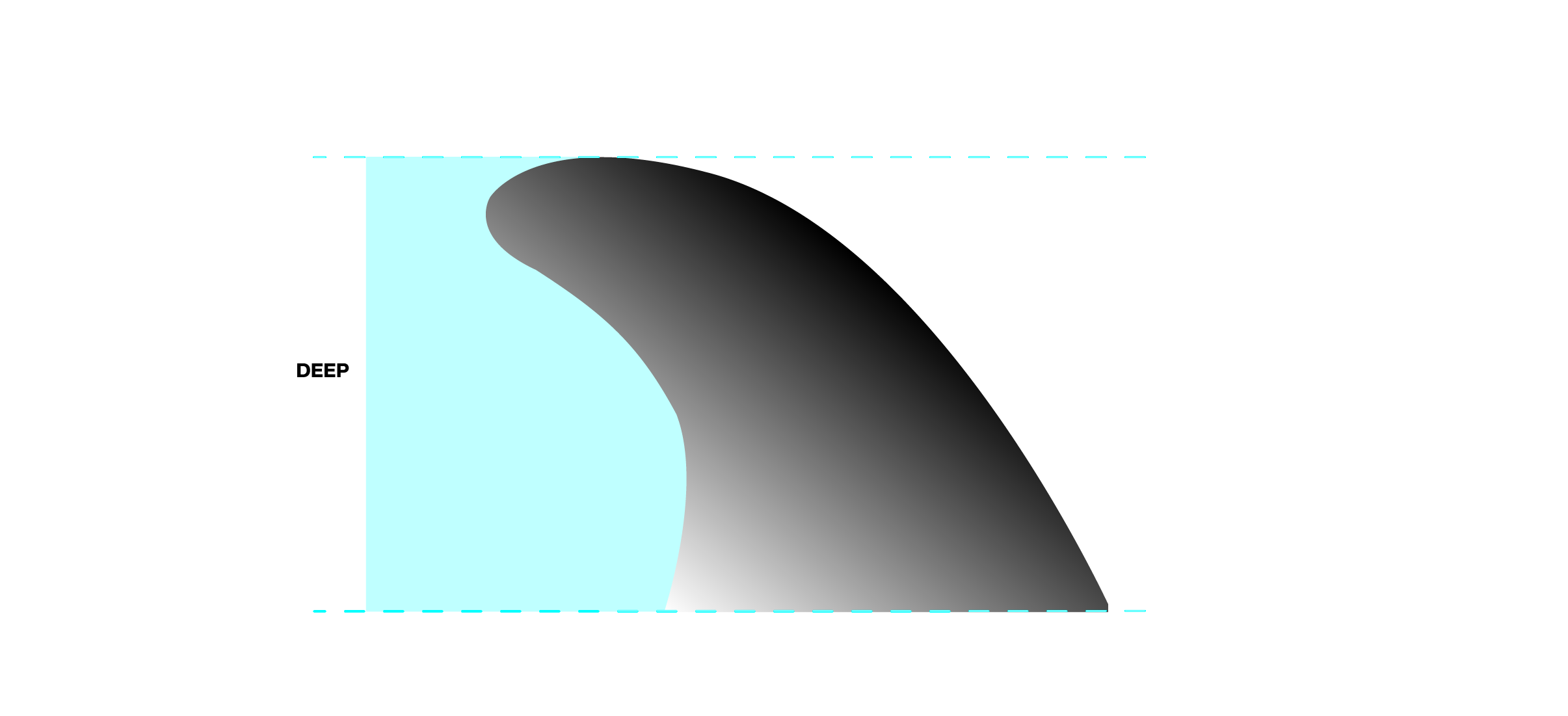
Depth
Compared with the base, depth is generally moderate. This preserves excellent glide while maintaining a balanced blend of stability and freedom.
Surface area
The generous surface area increases lift and therefore grip. It compensates for the absence of a center fin by stabilizing the tail.

Flex
Flex is virtually nonexistent in keel fins. They are designed above all to deliver drive, speed and hold, with a stable, direct feel.
A keel typically has a large surface area spread horizontally, with a very long base and relatively little depth. It is this geometry that naturally minimizes flex.

Foil
Some traditional keel fins use a symmetrical 50/50 foil. This design reduces lift and prevents an overly locked-in feel on very wide, high-volume boards.
Most modern keels, however, feature an asymmetric foil to increase lift when the board is put on rail. This enhances drive, grip through turns and control at high speed.

 Surfer: Moritz, GONG team rider, riding the Impératrice Origin 2.0.
Lift is significant thanks to the large surface area and long base. Drag is also present, but it remains in balance with the fin's projection and overall performance.
Drive is smooth and consistent. The board accelerates naturally along its line without requiring aggressive pumping or sudden bursts of speed.
Projection is strong and continuous. Pivot is more limited than with an upright twin. Grip is stable yet progressive. A keel rewards flow over explosiveness.
A keel never forces the surfing. It follows the line. It rewards smooth, precise surfing and good wave reading. It is the direct legacy of an era when speed came from board design and fin placement rather than aggressive pumping. And as always, a fin is never just a detail, it is the board's invisible engine.
 Surfer: Pablo riding the J-Low EPS.
Not all keels deliver the same feeling. Their template, rake and surface area determine the balance between pivot, drive and projection.
The five models in this range follow a logical progression, from the straightest and most maneuverable template to the most retro, drive-oriented design. Understanding this progression makes it easy to choose the fin best suited to your style and the waves you surf.

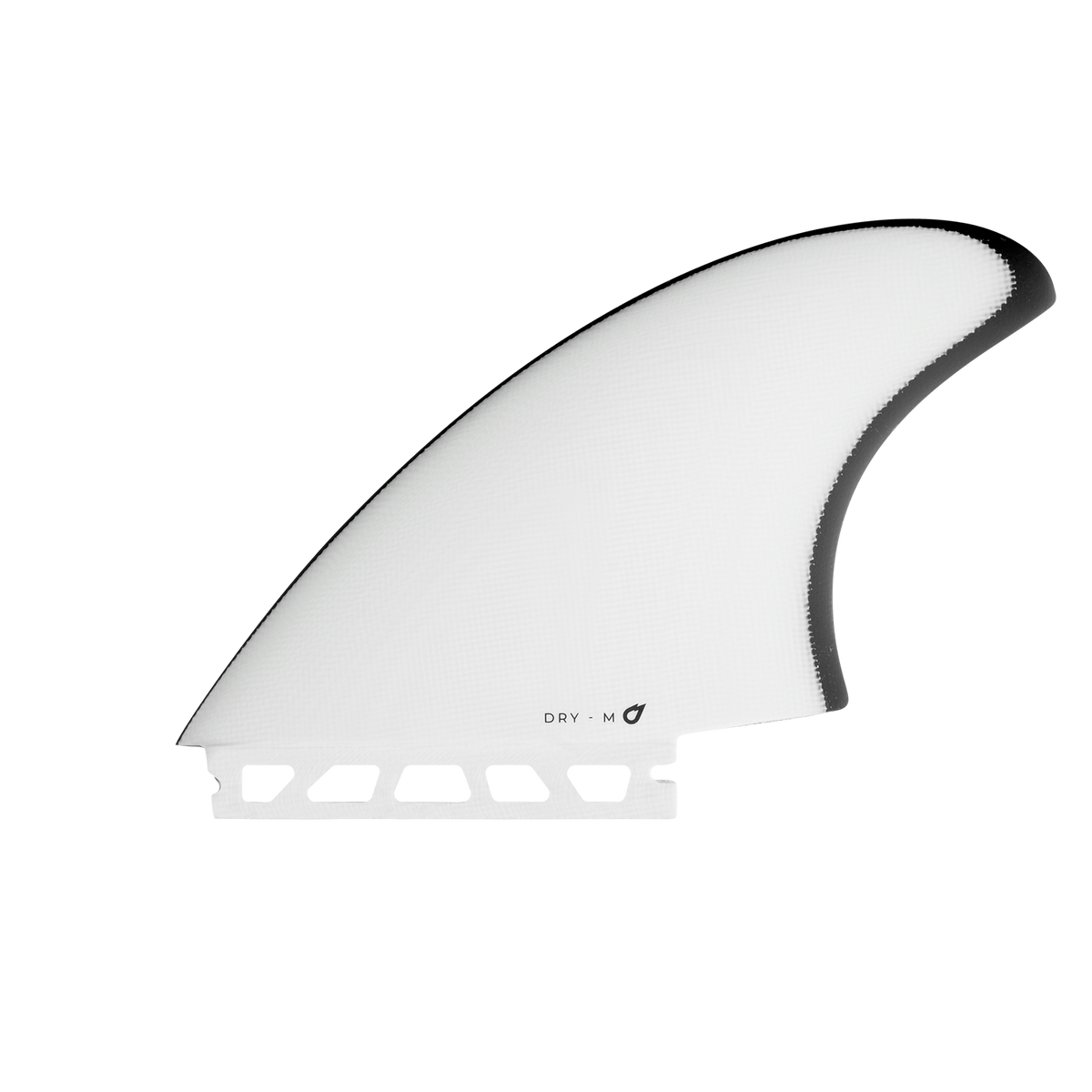
The Dry is the keel that comes closest to an upright twin. With a straighter template than traditional keels, a reduced center area and a livelier feel, it delivers greater maneuverability while preserving the fish's natural speed. The ideal compromise between a keel and a twin.

Board type: modern performance fish and twin shortboards.
Wave type: waves requiring quick direction changes, typically fast beach breaks with small to medium-sized surf.
Surfing style: dynamic surfing, tight turns and quick transitions.
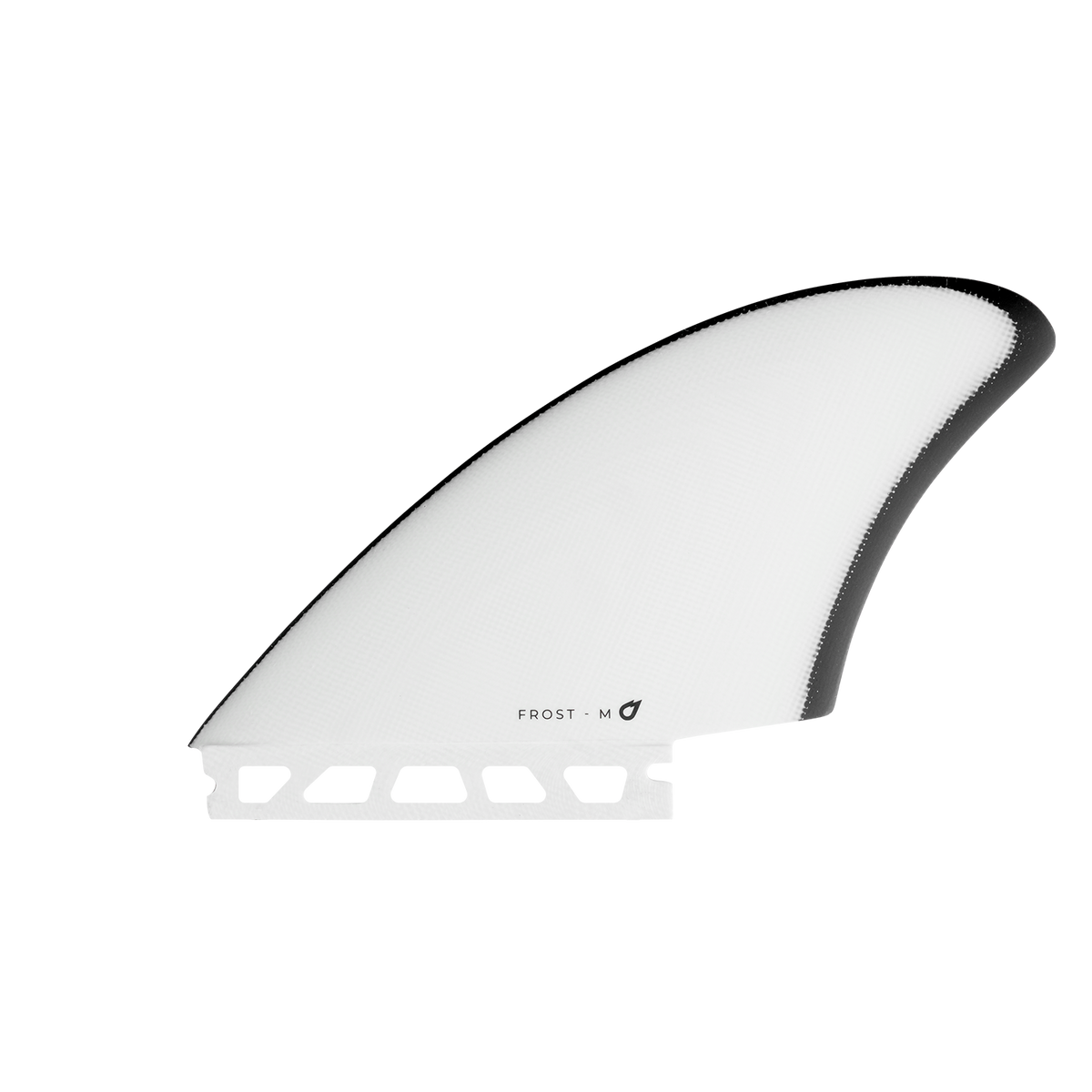
The Frost sits in a slightly more classic category while retaining a modern feel. Compact and precise, it strikes an excellent balance between glide and maneuverability. Versatile, high-performing and dependable.

Board type: modern fish, hybrid fish and performance twin boards.
Wave type: clean waves, reef breaks, point breaks and beach breaks with open faces.
Surfing style: fluid surfing with committed arcs, modern without being overly radical.
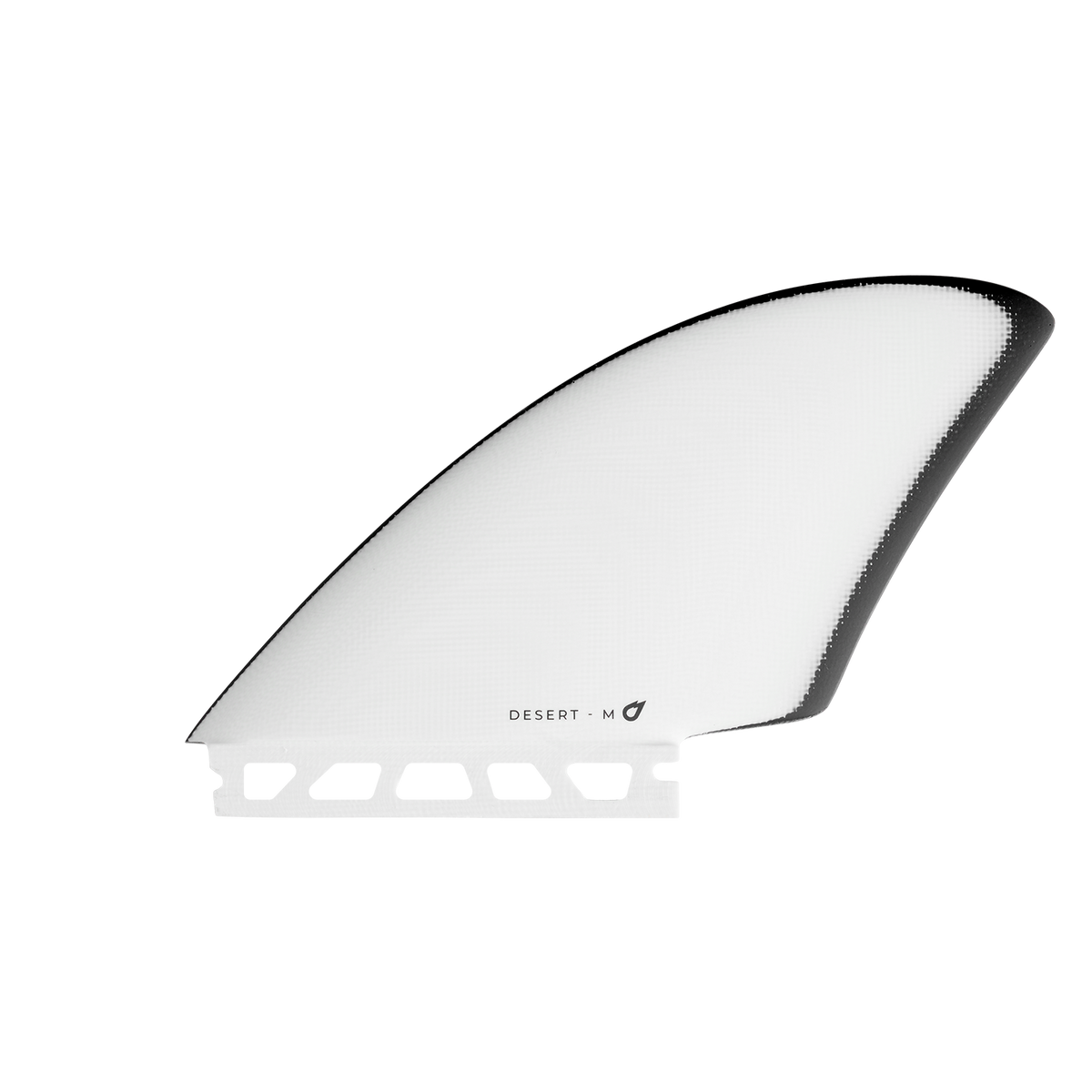
The Desert sits at the heart of the keel range. A wide base for drive, moderate rake to retain maneuverability and a stable yet lively feel. It performs across a wide variety of conditions, on both classic fish and retro-modern twin boards. The all-round keel.

Board type: classic all-round fish and retro-modern twin boards.
Wave type: a wide variety of conditions, from average beach breaks to point breaks.
Surfing style: versatile surfing built around smooth flow and natural arcs.
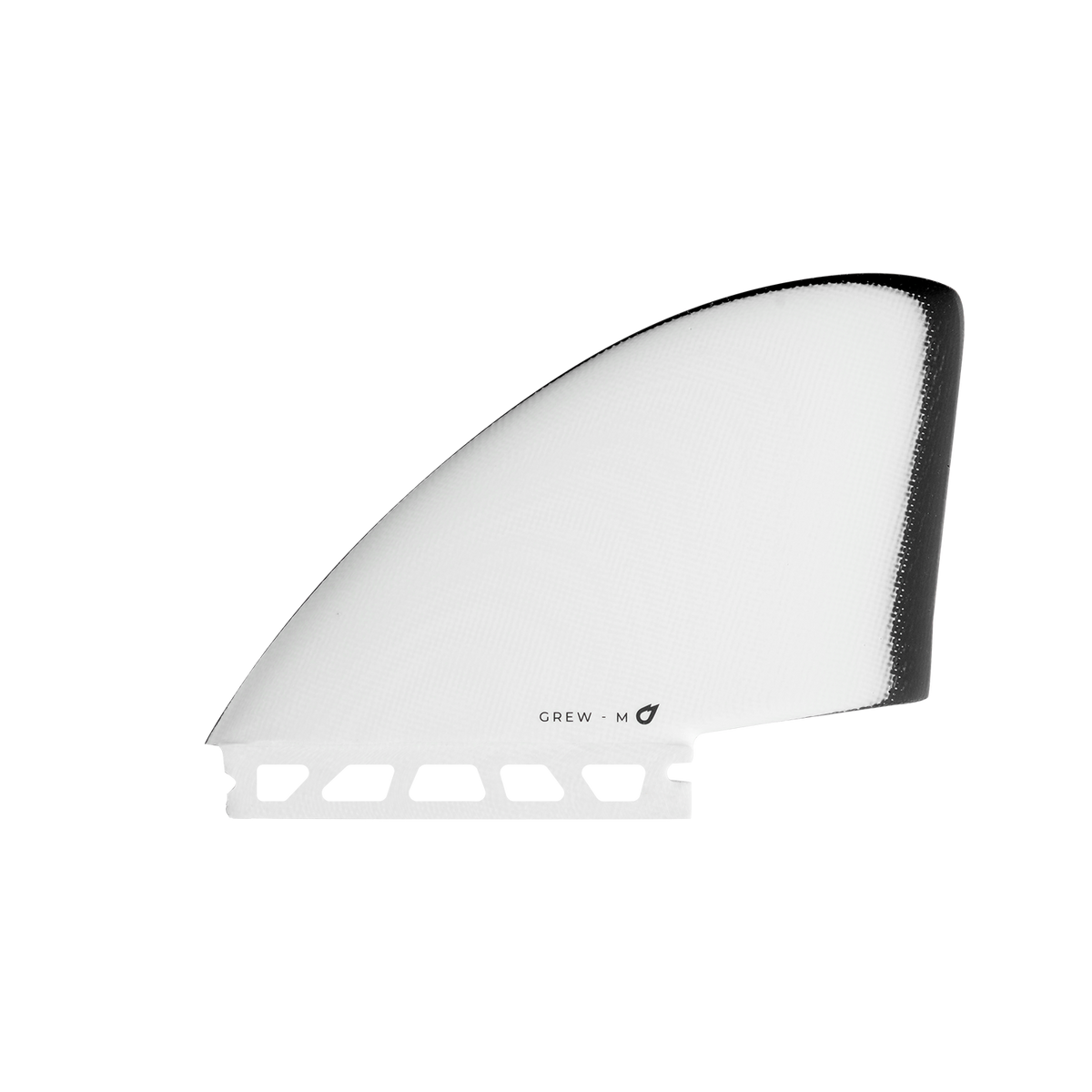
The Grew embodies the traditional keel in its purest form. Directly inspired by the first fish boards of the 1970s, it features an elongated template, a very long base and powerful, consistent drive. It generates effortless speed, links sections naturally and delivers an almost mechanical sensation of forward pull. Perfect for stylish, retro-inspired, down-the-line surfing.

Board type: all retro and traditional fish boards.
Wave type: ideally long point and reef break waves.
Surfing style: pure flow and long, retro-inspired lines.
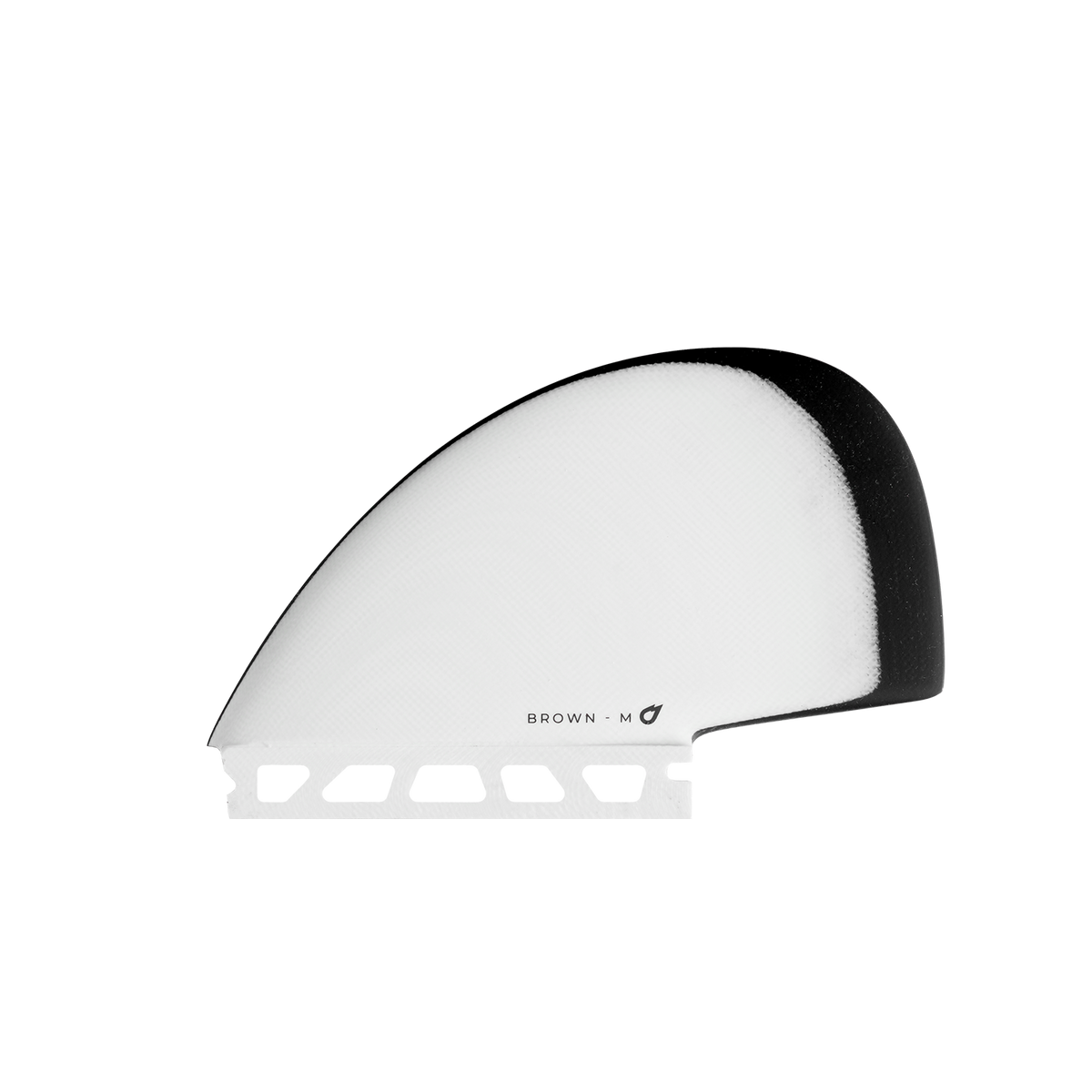
The Brown is designed for Mini Simmons and other very wide boards. With a wide base and shallow depth, it generates instant planing and a unique sensation of speed, as though the board is flying over the water rather than cutting through it. It is not designed for tight pivots. It is built to go fast in small, weak waves.

Board type: wide boards such as Mini Simmons and retro fish.
Wave type: small waves and soft, underpowered conditions.
Surfing style: pure glide, retro surfing and open, flowing turns.
 Surfer: Adrien, GONG staff, riding a Matata EPS equipped with Brown Keel fins.
Quick guide to choosing your model
Modern and highly maneuverable → Dry
Performance / glide balance → Frost
Versatile, performs in a wide range of conditions → Desert
Classic, built for long flowing lines → Grew
Retro, designed to maximize speed on wide boards → Brown

Choosing the right keel size depends on several factors that work together:
the surfer's weight
tail width
the board's overall volume
the type of waves you surf
A heavier or more powerful surfer will benefit from a larger fin surface to maintain control and projection. Conversely, a lighter surfer can opt for slightly less surface area to gain maneuverability and a looser feel under the back foot.
Tail width also plays a key role. Fish boards typically feature wide tails that generate plenty of lift and natural speed. To stabilize that tail and fully harness its speed potential, keels with a larger surface area generally perform best. On a narrower fish or a hybrid board, a slightly smaller keel will preserve greater maneuverability.
The board's overall volume also influences the choice. A high-volume or particularly wide board requires more fin surface to remain stable at higher speeds. A more compact or lower-volume board can perform well with slightly smaller fins.
Finally, the wave conditions also influence fin size. In small or underpowered waves, a larger surface area helps maintain speed and projection. In faster or hollower waves, a slightly smaller keel provides greater maneuverability and improved control through transitions.
In practice, the goal is to find the right balance between drive, stability and maneuverability, according to your board and the style of surfing you're after. A larger keel favors long, flowing lines and effortless speed, while a slightly more compact keel delivers a looser, more responsive feel.