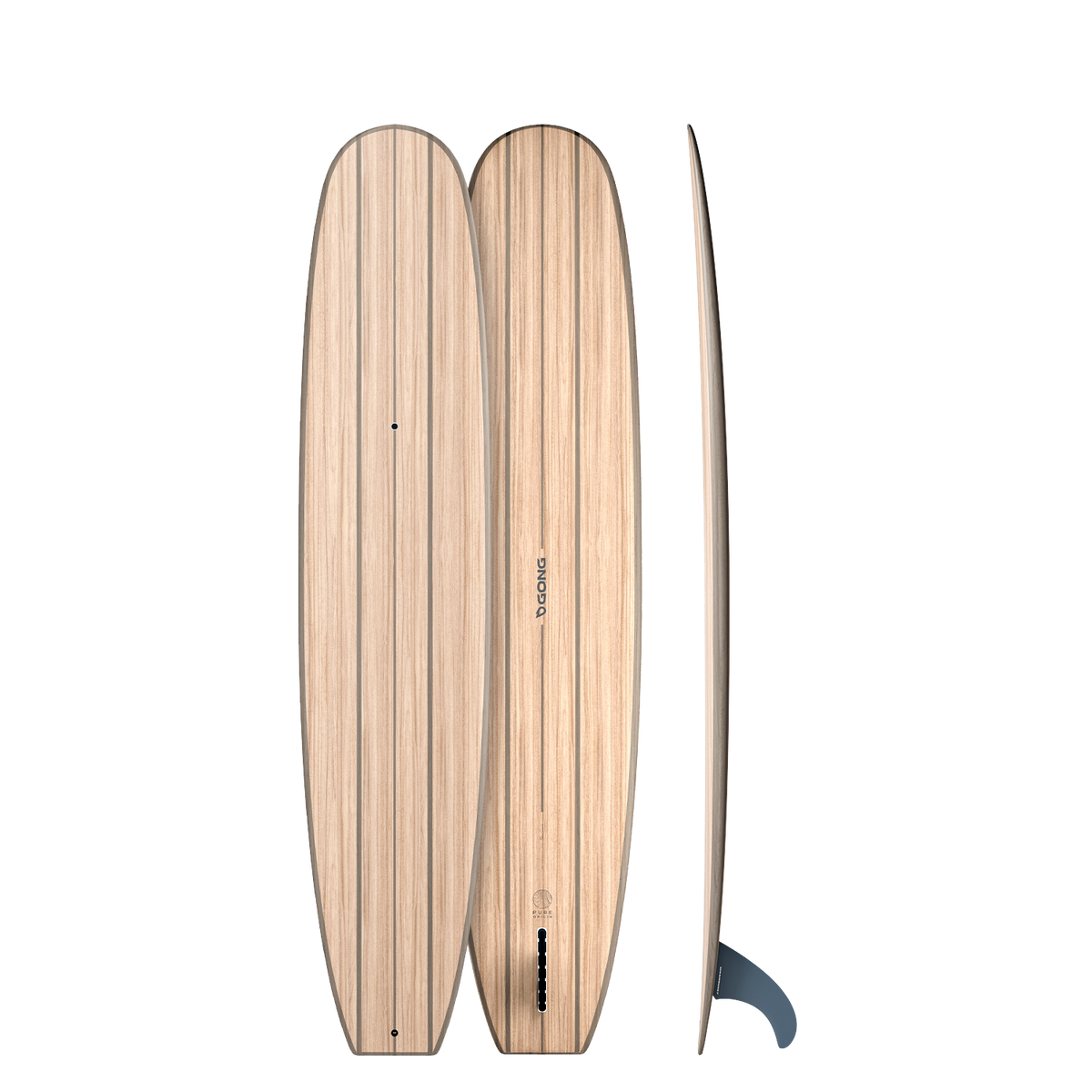
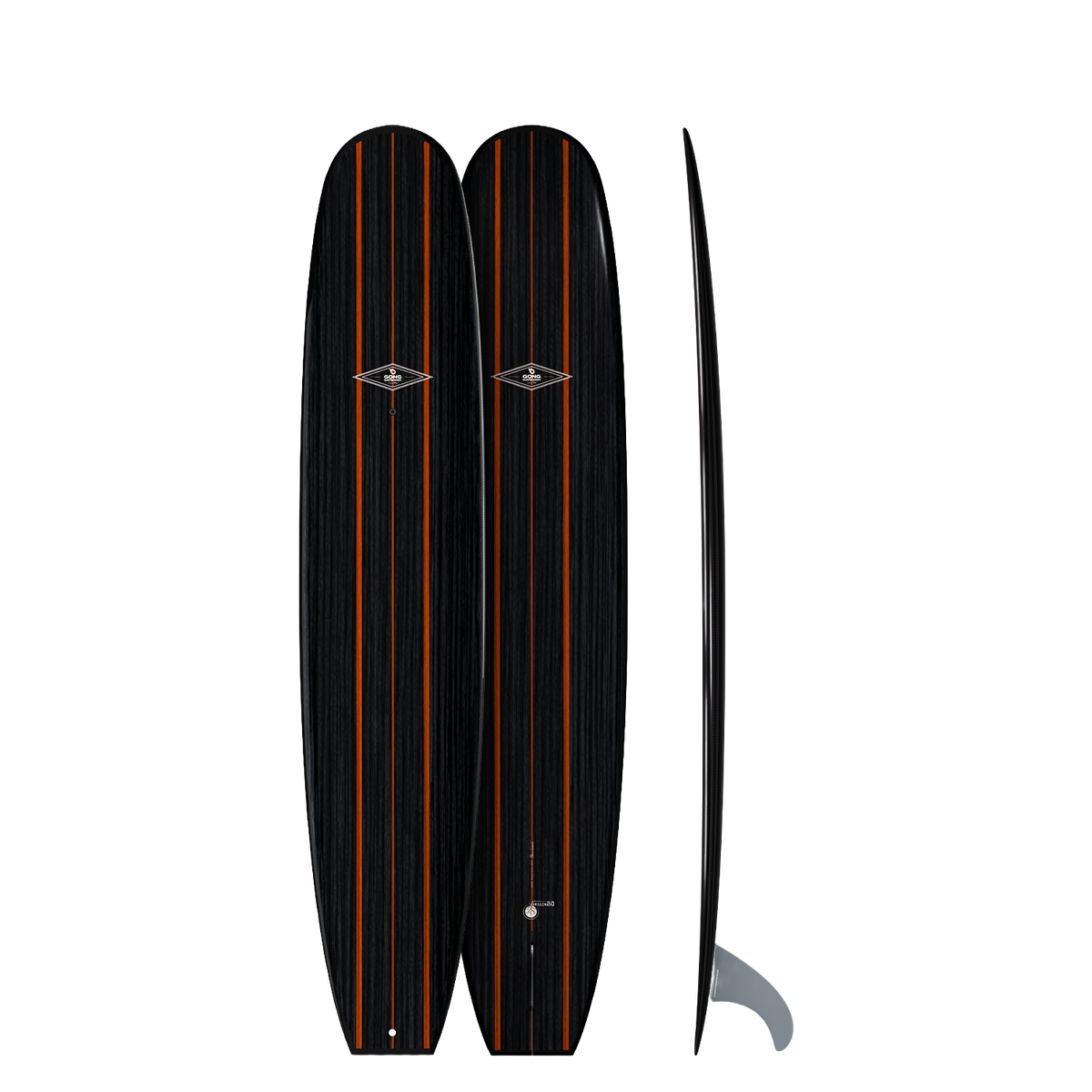
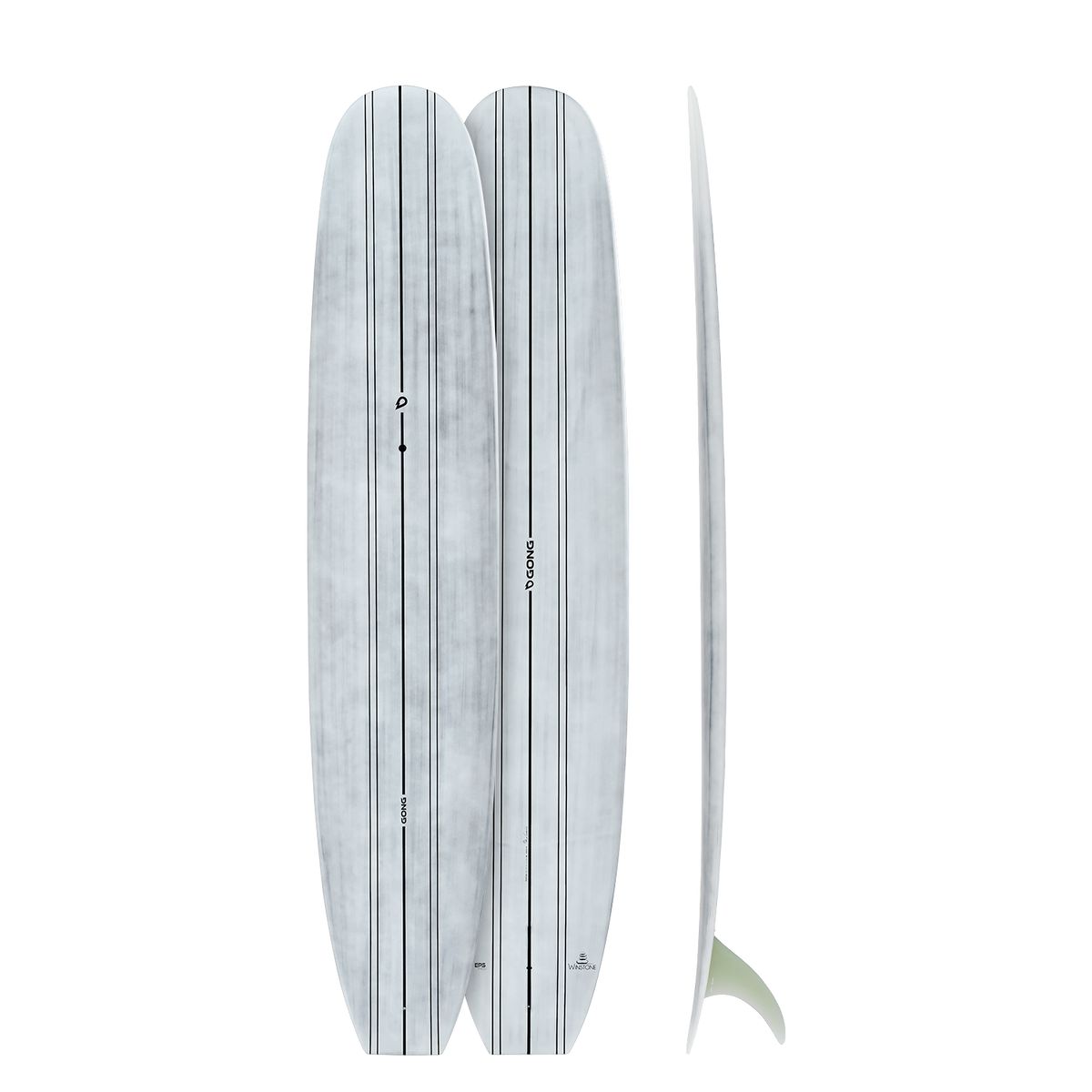
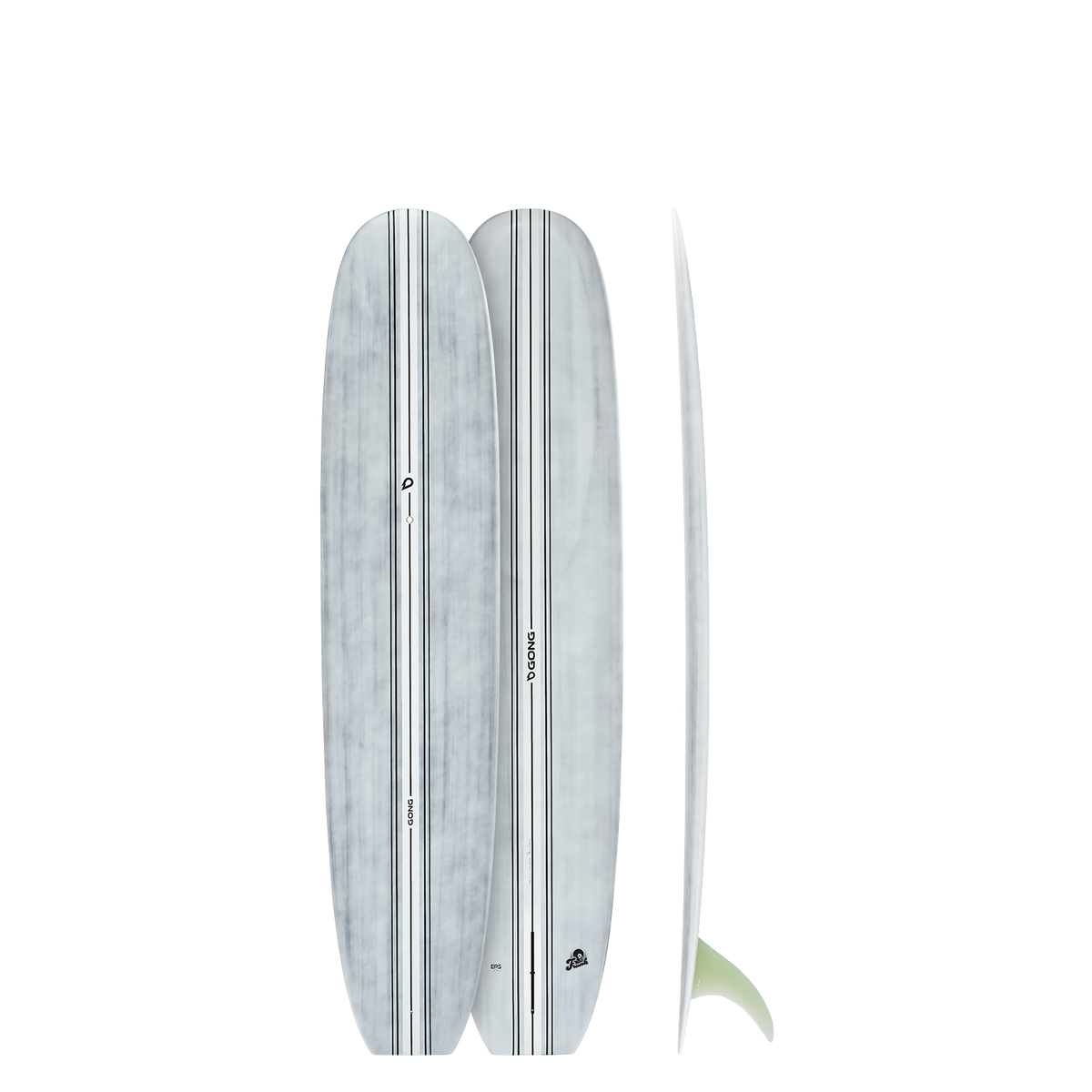
Your cart is empty!
It's flat around here...

In the early days of surfing, boards were long, heavy, and not very maneuverable. Radical turns were almost impossible. Surfers therefore explored other ways to express their mastery: walking on the board and positioning themselves on the nose was one of them.
With the modernization of surfing in the 1970s (shortboards and more radical maneuvers), noseriding remained the signature of the classic longboard. Even today, it’s what sets “logging” apart from modern surfing: an art of movement and flow.
The term “Log” literally comes from the idea of a log of wood. Its origin in surfing is directly linked to the size, weight, and inertia of longboards at the time. The very first boards were shaped from solid wood, in extraordinary dimensions. They were extremely long (10 to 12 feet and more), very wide, very thick, and above all very heavy, each one easily reaching 40 kg (88 lbs). Shapes closer to a tree trunk than to a toothpick!
With the arrival of foam and fiberglass, boards and surfing itself evolved toward lighter and more radical designs. But to distinguish modern boards from classic longboards, surfers continued to call the latter “logs,” which naturally led to the term “logging.”
What we call a retro longboard is a shape that promotes this art of movement and flow. This type of board incorporates specific design elements, inherited from that iconic era of surfing on the one hand, and from continuous innovations up to the present day on the other.
Let’s take a closer look at these elements together.
 Surfer: Evelin, GONG team rider, on her custom Pampa.
The outline of a retro longboard is defined above all by generous, harmonious curves, designed for glide, stability, and classic style. It is both a visual and functional signature that reflects the philosophy of early surfing: long, smooth rides, gentle turns, and walking all the way to the nose.
The nose is generally wide and rounded to provide a large planing surface, making noseriding easier. The lines are soft and continuous, promoting constant flow and a style of surfing based on natural transitions rather than abrupt direction changes. These curves are designed to surf along the rail, to stay connected to the wave, and to use the full length of the board rather than relying solely on the power of the back foot.
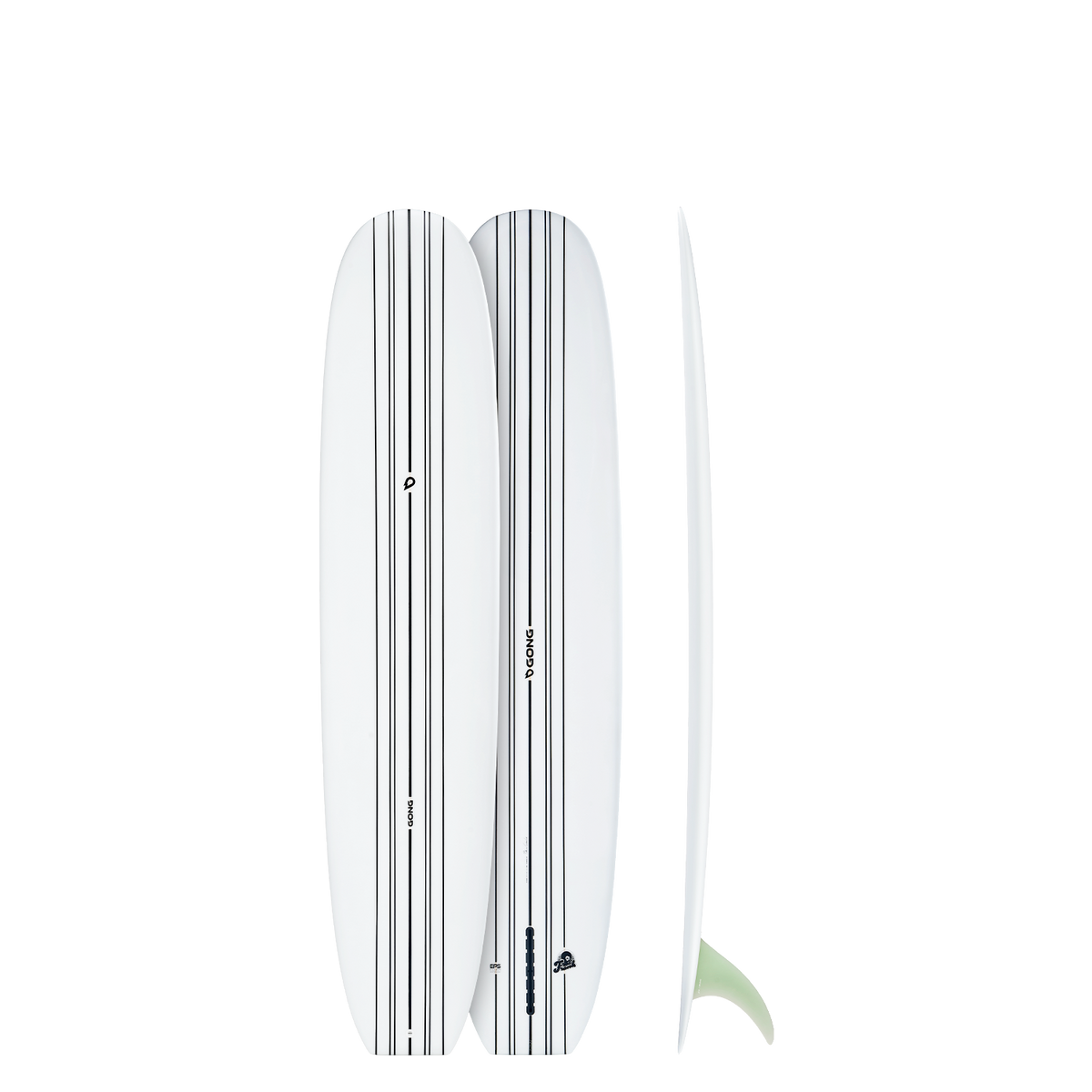
The outline of the Frank is a good illustration of this:

The wide point corresponds to the maximum width of a surfboard. Its placement has a major influence on the board’s behavior. To better understand its impact, let’s assume that any board can be divided into two equal halves.
When you engage the rail into the face of the wave, the front half of the board mainly provides speed, hold, and stability. The back half, on the other hand, controls maneuverability and responsiveness.
So depending on where the wide point is positioned, you’ll favor one of these components, either increasing speed and hold, or enhancing maneuverability and responsiveness.
Noseriding relies on a combination of skills: maneuverability to position yourself properly on the wave, but also speed and stability to ensure lift and support on the nose.
A Wide Point Back enhances maneuverability, allowing tighter turns and quicker rail-to-rail transitions. In return, you lose some lift and stability in the front section. Although modernized, this placement is typical of the original “pig” shapes.
On this type of board, the nose is narrower than the rear. Moving the widest point back increases the curve in the rear half of the board, making the board easier to turn.
Another consequence: by reducing the width of the nose, you decrease its surface area and therefore its weight, which reduces swing weight during maneuvers. A narrower nose also lowers the risk of catching a rail, making it easier to surf hollow sections close to the curl.
However, this reduction in surface area impacts lift. Walking to the nose in slow, soft sections with little slope becomes more difficult. This type of shape requires faster waves with more slope, as well as greater technical skill to hold the nose.
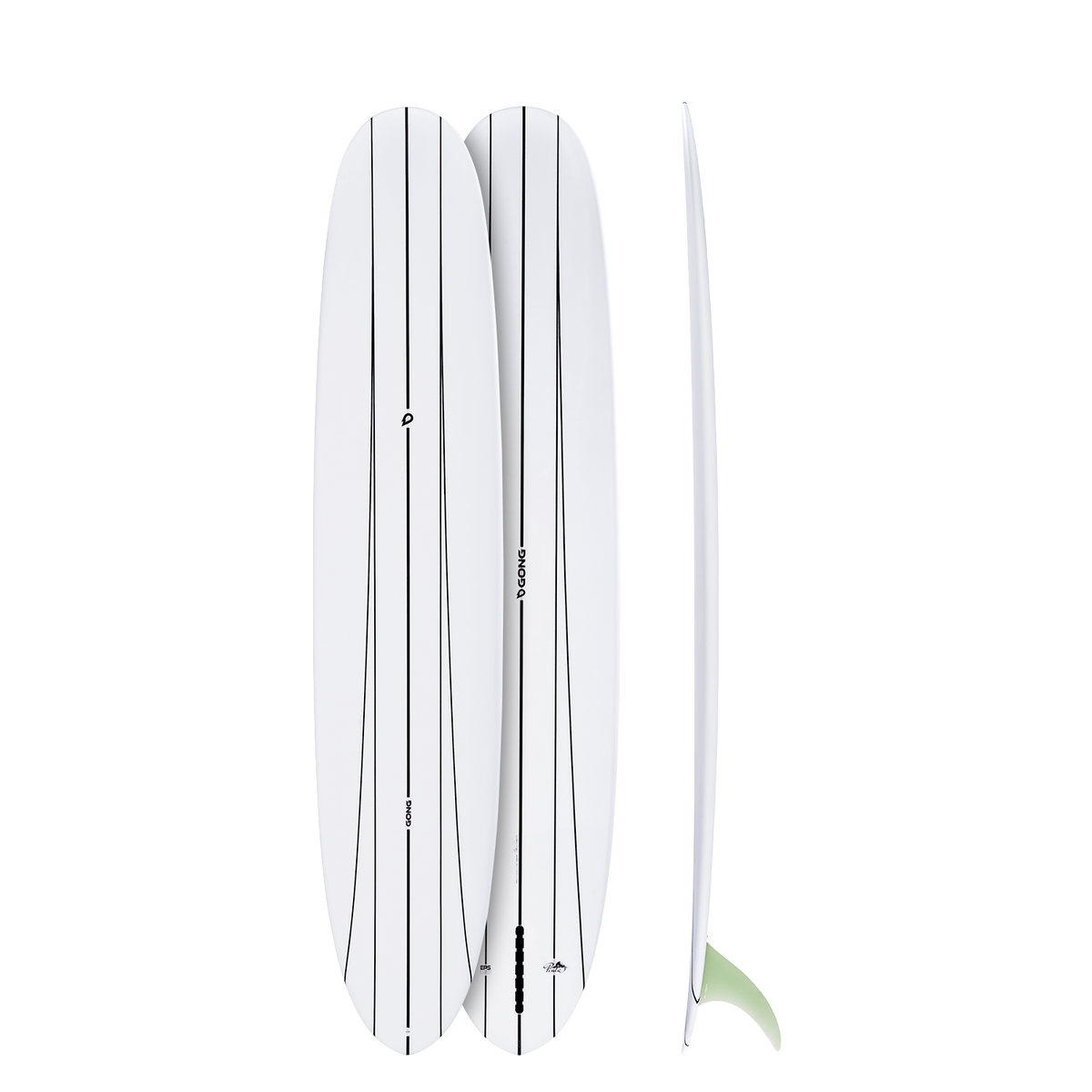
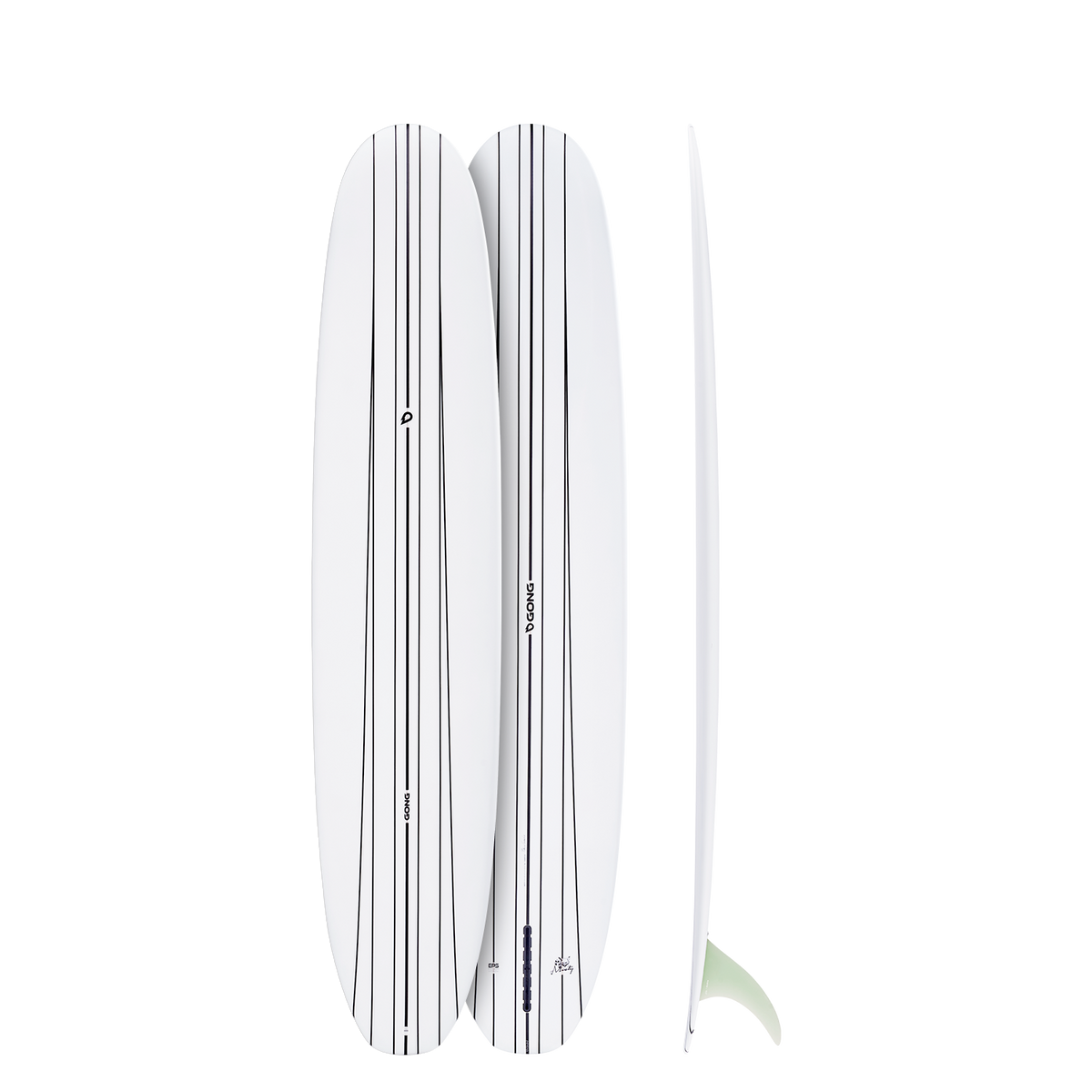
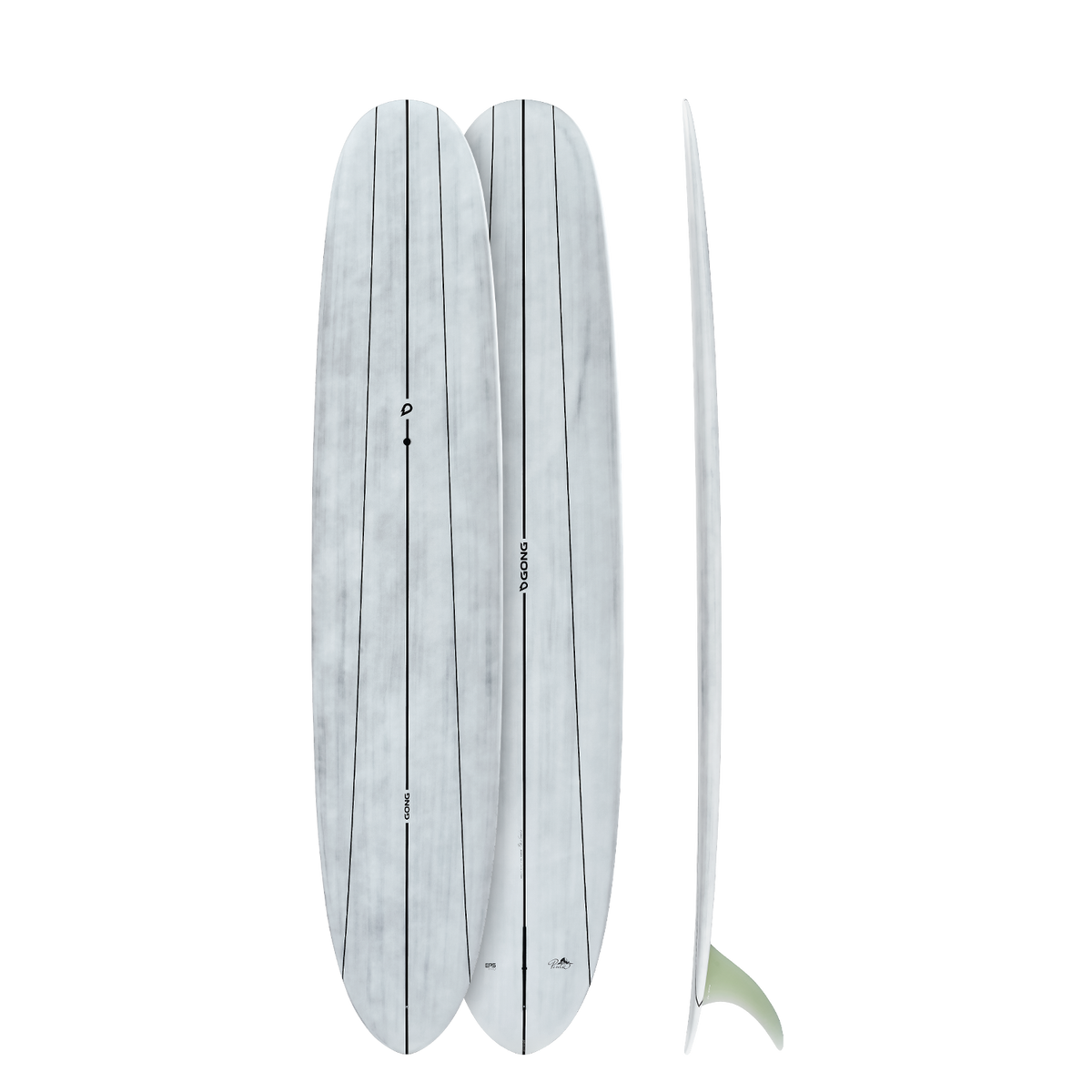
Examples: Misty, Pampa, or Pinta.

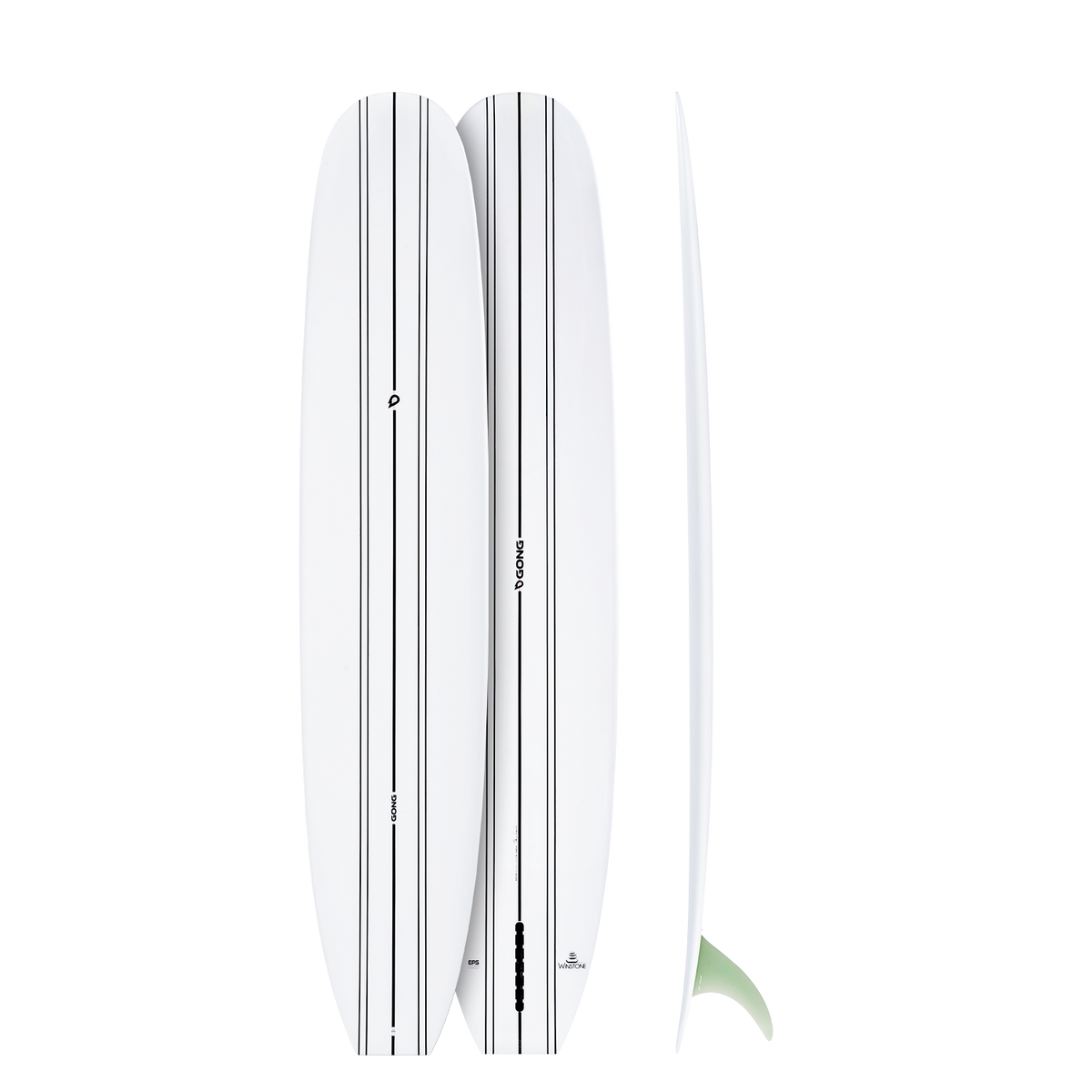
A Wide Point Center provides the perfect balance between maneuverability and stability, making it suitable for most surfers and a wide range of conditions.
By moving the wide point toward the center, you get a more balanced outline, with similar widths at the nose and the tail.
As the nose width increases, trim stability also improves, and the additional surface area generates more lift and drive. This becomes especially useful in soft waves or during noseriding. This type of outline is also known as parallel rails, allowing for the longest possible rail line in contact with the water. The result is excellent hold in a straight line, which makes it possible to stay on the nose in a variety of wave sections, not just in hollow ones.
This tolerance is what makes this design accessible and popular. However, these straighter rails are less easy to release during turns, which affects maneuverability. Another point is that control becomes more difficult in bigger, faster, or more powerful sections, as this surface area can reduce grip.
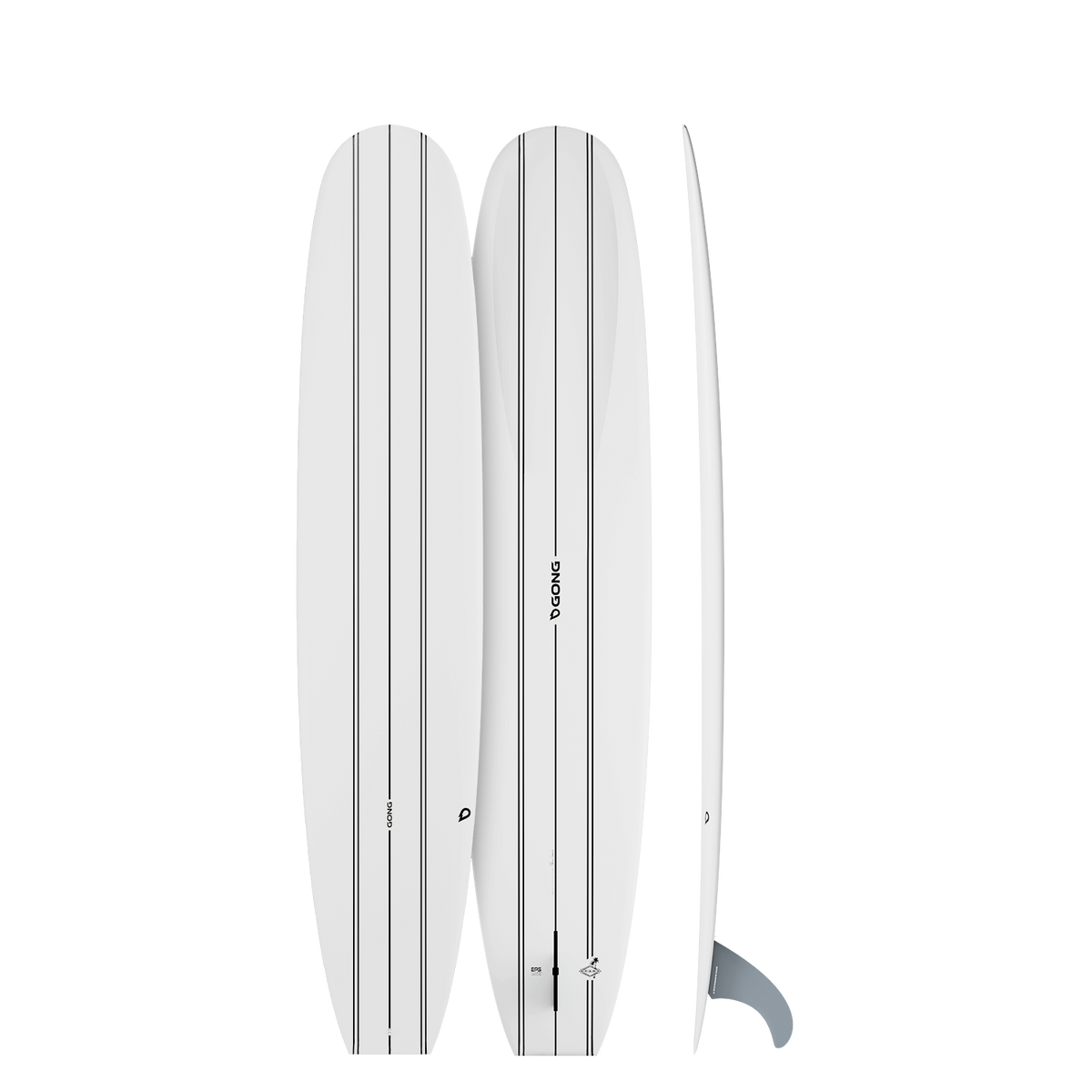
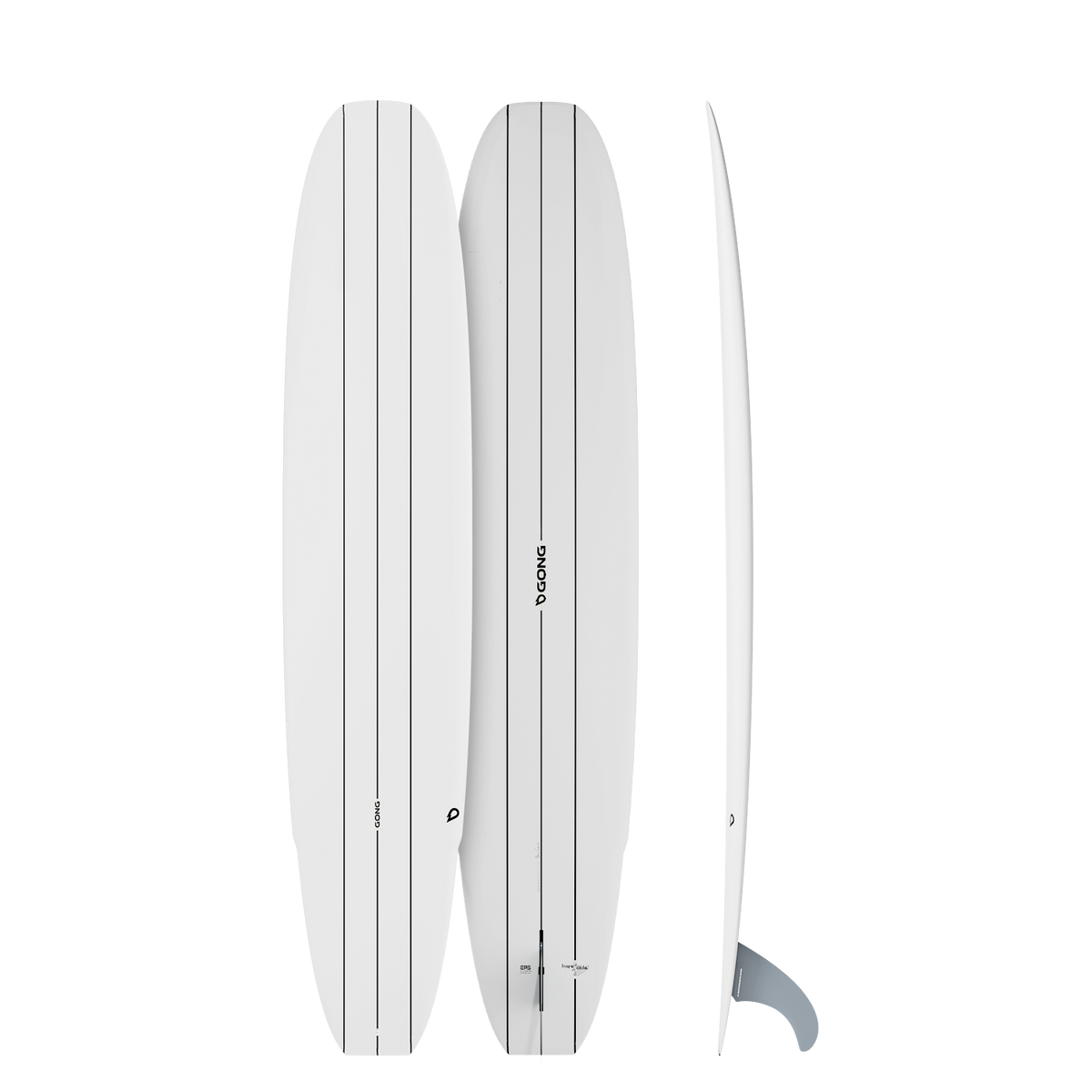
Examples: Deano, Winstone, Franck, or Incredible.

A Wide Point Forward increases stability in the front of the board and makes moving around easier. It is therefore a great option for learning noseriding.
Two questions to ask yourself:
A surfer who already knows how to noseride can go for a wide point back outline, which can feel more playful and stimulating.
For a surfer who is still learning the basics of noseriding (positioning the board near the curl, walking on the board, etc.), a wide point forward outline will make the learning process easier.
Soft / less steep waves: centered or forward width.
Steep waves / pronounced curl: wide point back.
 Surfer: Patrice Guénolé, GONG founder and shaper, on a Frank EPS Pro.
On noseriding-oriented longboards, there are two main types of nose: narrow noses like the Pampa, and wide noses like the Franck.
The shape of the nose is closely linked to the position of the wide point. When the wide point is positioned further forward, it naturally creates a wider nose that maximizes the surface area in contact with the water, providing more support and stability.
Conversely, on a shape with the wide point positioned further back, the nose will be narrower and finer. It offers less lift and stability for noseriding, but more maneuverability and precision, with the ability to turn tightly from the tail. The board feels livelier, especially in faster waves, but requires a little more technique when moving around on the deck.
A wide nose will generally be recommended for waves with a gentle slope and for surfers who are progressing or just getting into noseriding. The extra volume in the nose improves paddling efficiency and also provides more support when moving toward the nose, particularly in slow, less powerful waves. This lift is simply the result of having a larger surface area in contact with the water.
A narrow nose, on the other hand, is better suited to expert surfers and waves with a steeper face, as it generates less lift and requires greater precision.

Surfer: Malo, GONG team rider, on a Deano Pure Origin.
The tail shape greatly influences the board’s speed, since the tail is the area where water exits the board.
A narrow or tapered tail allows water to flow off more quickly, reducing drag and increasing speed.
A wide, flat tail retains more water, creates more drag, slows the board down, and provides more lift.
Thin, narrow tails such as round pin tails and pin tails favor speed and release.
A narrow tail concentrates the rear surface area along the central axis: water flows away quickly, without building up or creating resistance. The board is therefore faster, smoother, and more maneuverable. Control is more precise in turns and in fast sections.
However, this requires better positioning to remain effective on the nose, as it offers less hydraulic resistance to keep the board locked into the wave when the surfer is up front. This effect is less noticeable in fast waves, since part of the lift comes from speed, but the loss of nose stability becomes more significant in slower waves.
For example, the round pin tail of the Pinta releases water so the board doesn’t get held back in steeper sections, while its overall surface area still allows it to perform perfectly in small waves. The goal is not to hold the board back, but to let it glide.

A wide tail prioritizes stability over speed, acting like a stabilizing brake. But on a noserider or retro longboard, this resistance is not a flaw. It is intentionally sought after to stabilize the board and maintain balance when the surfer is on the nose.
The goal is to combine moderate speed, maximum nose stability, strong hold in slow waves, and a smooth, steady glide.

To sum up, a wide, full tail retains water and provides stability, while a narrow, tapered tail releases water and increases speed. These principles generally apply to all surfboards. Simply looking at a board’s tail already gives you a clear indication of what it is designed for.
 Surfer: Patrice Guénolé, GONG founder and shaper, on a Deano EPS.
Another fundamental element in the shape of a noserider longboard is the rocker. Rocker refers to the board’s longitudinal curve, from nose to tail. This curve determines how the board glides, accelerates, turns, and locks into the wave.
In general, rocker affects how much of the board’s surface is in contact with the water:
Less rocker: more surface in contact, therefore more speed and projection, but less maneuverability.
More rocker: less surface in contact, therefore greater maneuverability and control, but naturally more moderate speed.
On a noserider longboard, rocker is not just a tool for turning: it also helps regulate speed, hold the board in the wave, and stabilize it when the surfer is on the nose.
The overall rocker refers to the board’s global curve.
Longboards with a wide point set back, already more maneuverable by design, generally feature a flatter rocker. This setup promotes speed, projection, and long lines. The tail, often narrower, retains less water, allowing the board to accelerate easily. These boards are particularly suited to fast waves with slope and energy, where the wave’s natural speed compensates for reduced lift.
Conversely, longboards with a centered wide point, naturally more stable but less maneuverable, use a more pronounced rocker to regain responsiveness. This added rocker helps the board turn more easily despite straighter rails and a large surface area in contact with the water. This type of rocker is especially effective in soft or slow waves, where control and the ability to stay locked into the wave matter more than pure speed.
The nose rocker determines the board’s ability to avoid pearling and remain forgiving when the surfer moves forward.
A moderate nose rocker favors glide and speed but requires precise positioning.
A more pronounced nose rocker helps keep the nose clear of the water when the surfer is in a hang five or hang ten, especially in critical sections.
On longboards designed for noseriding, the nose rocker is generally progressive: present enough to secure the front of the board, but not excessive, in order to preserve glide and effective rail length.
Tail rocker is one of the most important parameters on a noserider longboard.
It plays several key roles:
It acts as a pivot point, facilitating turns.
It helps hold the board in the wave.
It stabilizes the board when the surfer’s weight shifts toward the nose.
Boards with a centered wide point and wide tail, designed for soft waves, generally use a more pronounced tail rocker. This rocker increases hydrodynamic resistance at the rear, slightly slows the board down, and helps it stay locked in the pocket. This hold is essential for long, stable noserides at low speed.
In contrast, boards with a wide point set back and a narrower tail often feature a flatter tail rocker. The tail releases water more easily, promoting speed and responsiveness. Turning relies more on the board’s outline geometry than on rocker curvature. This setup performs better in fast waves but requires more precision for noseriding in softer conditions.
Example: the tail rocker of the Winstone.

To sum up, rocker should never be analyzed on its own. It works in direct interaction with:
the placement of the wide point,
the width of the tail,
and the type of waves being surfed.
Wide point back + narrow tail + flatter rocker = a fast, maneuverable board suited to fast, hollow waves.
Example: Misty.

Wide point centered + wide tail + more pronounced rocker = a slower but very stable board, ideal for soft waves and noseriding.
Example: Winstone

In this second configuration, the rocker is not just used for turning: it acts as a tool for control, hold, and anchoring in the wave, essential to fully unlock the potential of a noserider longboard.
On retro longboards, you’ll find the classic 50/50 rails, emblematic of traditional longboards dedicated to noseriding. Their rounded and symmetrical shape places the air/water transition line exactly in the middle of the rail, hence the name 50/50.

You’ll also find, as on the Pampa for example, rails with a more defined edge, which provide more bite when setting a rail and make it easier to generate speed. The overall feel is much more responsive: when you push on the board, the reaction is almost immediate.

This is an important choice, as the rail shape directly influences your surfing style. Modern rails with a harder edge, meaning a more angular edge, allow for acceleration through pumping, more committed rail engagement, tighter turns, and a generally more dynamic ride.
With 50/50 rails, the glide is slower but also smoother, because you drive the board by letting it breathe. You don’t attack it aggressively; instead, you rely on body movement, positioning, and economy of motion.
This type of rail delivers a very fluid feeling: the board naturally locks into the wave, glides smoothly, and maintains a stable line as long as it remains properly engaged in the face. This neutral water flow is what helps maintain hold on the nose in softer sections, as the board anchors into the wave thanks to the lift of the nose and the centered volume.
 Surfer: Evelin, GONG team rider, on her custom Pampa.
However, this rail shape makes the board more technical to maneuver. The surfer must constantly adjust pressure and rail angle, because a 50/50 rail does not naturally “bite” into the wave face. In turns, the board tends to slide and wash out if positioning is imprecise, especially in hollow or fast waves.
The Coandă effect (named after engineer Henri Coandă) describes the tendency of a moving fluid to stay “attached” to a convex surface instead of continuing in a straight line. Most people have experienced this in everyday life, for example, when pouring liquid from one glass into another. If you pour too slowly and the rim of the glass is rounded and thick enough, the stream of water follows the curve of the rim instead of falling directly into the intended container.
On a longboard, rounded and symmetrical 50/50 rails use this same principle of water flow. Their lack of a sharp edge creates smooth, uninterrupted flow that literally wraps around the board. The water’s tendency to “stick” to the surface of a 50/50 rail and follow its curve increases rail stability in the wave. The flow of water hugs the contour of the rail, generating a kind of “suction” sensation that keeps the board pressed against the wave face.
It is not true suction, but rather a combination of pressure forces: the water and the board “pull” on each other. The board then feels almost “stuck” to the wave, allowing the surfer to hold a hang five or hang ten, even in very soft waves.
When a surfer moves forward onto the nose, their weight tends to push the front of the longboard down. To avoid pearling, an opposing force must act at the rear. This balance relies on a subtle phenomenon: the counterbalance between the weight applied at the front and the hydrodynamic forces generated at the back. This is precisely where 50/50 rails and tail shape play a fundamental role.
As water naturally follows the curve of the rail, it flows from underneath the board (the hull) up and over onto the deck, where it spreads and accumulates to create a counterweight. The water literally wraps around the board; this mass of water on the deck generates pressure that opposes the surfer’s weight.
While a hang five can be performed on almost any longboard, as it is mainly a matter of speed, holding a true hang ten requires making much greater use of this balancing, seesaw-like effect.
 Surfer: Patrice Guénolé, GONG founder and shaper, on a Pampa EPS.
In slow, low-powered waves, the speed of the water flow around the board is reduced. The rounded, full 50/50 rail allows the water to remain in contact with the board for longer. This prolonged contact maintains pressure on the tail and creates distributed lift. Remember the glass example: the slower you pour, the more likely the liquid is to follow the curve and miss the intended container.
The surfer then feels a sense of controlled float: the board doesn’t slip out, it glides slowly, anchored in the wave by the rail’s “suction” and the tail’s resistance. This subtle balance makes noseriding possible in conditions where a shape with sharper rails would release more easily.
 Surfer: Evelin, GONG team rider, on a custom Pampa.
This setup, so stable at low speed, becomes restrictive in faster or more powerful waves. The 50/50 rail continues to wrap water, creating significant drag: the board struggles to release water and accelerate. Without a sharp edge to let it disengage, the flow remains “attached” and slows the glide.
That’s why classic noseriders are perfect in slower waves, while longboards designed for modern maneuvers, featuring more pinched rails and sharper edges that release water and generate more speed, are better suited to hollow, faster waves and surfing deeper in the pocket.
An important factor to consider when choosing your future longboard: are the waves you surf mostly fast or mostly slow?
 Surfer: Evelin, GONG team rider, on a custom Pampa.
A heavy longboard provides more glide and paddling speed because it has greater inertia, resulting in smoother and more consistent trim. Ideal for soft waves and classic-style sessions. It holds its line more easily and anchors into the wave, which helps with noseriding. In return, it is slower to maneuver and harder to redirect in faster waves.
A light longboard is more agile and responsive in turns because it is easier to move and pivot. This makes it an excellent choice for a modern style and for surfers who enjoy powerful, committed curves. However, it paddles a bit slower and loses speed more quickly in small, soft waves. It is also less stable when noseriding.
Longboards designed specifically for noseriding are intentionally heavier. This weight is partly achieved through multiple layers of fiberglass. For example, on the deck of a Pinta EPS, there are three layers of 6oz fiberglass and one layer of 4oz fiberglass. This results in a weight aligned with the performance expectations of a noserider longboard, as well as excellent durability thanks to the added strength.
 Surfer: Patrice Guénolé, GONG founder and shaper, with the Frank.
The spoon, in a longboard shape, is a concave under the nose whose form simply resembles the hollow of a spoon. Its purpose is to provide lift and hold during a noseride. This design element also adds control, as the spoon makes it easier to engage the rail near the nose. This allows for micro-adjustments to correct your line while standing on the nose.
The water flow directed by the spoon tends to concentrate toward the center of the board, limiting lateral imbalance. The board does not slide out when the surfer is on the nose.

On a longboard without a spoon, this flow is not directed; it disperses toward the tail and toward the rails, making the board more prone to releasing in soft sections.
The spoon acts like an invisible fin: it channels the water flow and keeps the board aligned.
 Surfer: Malo, GONG team rider, on a Deano Pure Origin.
Here is a quick summary based on the concepts discussed above to help you choose the retro longboard that matches your needs and desires.
Pinta
What most characterizes the Pinta is its released tail, providing glide and enough speed in faster sections so it doesn’t lag behind in bigger waves. Its wide point is set back for maneuverability, while the tail remains wide enough to perform in softer waves. A shape to choose when you don’t want to limit yourself to knee-high surf.
Wave type: The Pinta is designed for clean waves with slope and some power, from small to overhead, such as well-shaped beach breaks, accessible reefs, or slightly hollow point breaks. Its round pin tail and pronounced tail rocker allow it to stay deep in the pocket, deliver stable noserides even on steeper faces, and link tighter, more committed turns than a classic noserider.
Misty
The pronounced tail lift of the Misty allows it to slow down on demand. It’s not as released as the Pinta, but remains faster than the Winstone, for example. Its wide point set back, combined with tight tail curves, makes it one of the most maneuverable boards in the range, despite offering plenty of surface area to stay effective in flatter sections.
Wave type: The Misty is intended for small to medium, clean waves that peel, with gentle to moderate slope and a well-defined pocket. Typical beach breaks or long point breaks, where its wide round tail and marked tail rocker maximize nose stability and allow long, flowing, controlled noserides.
Pampa
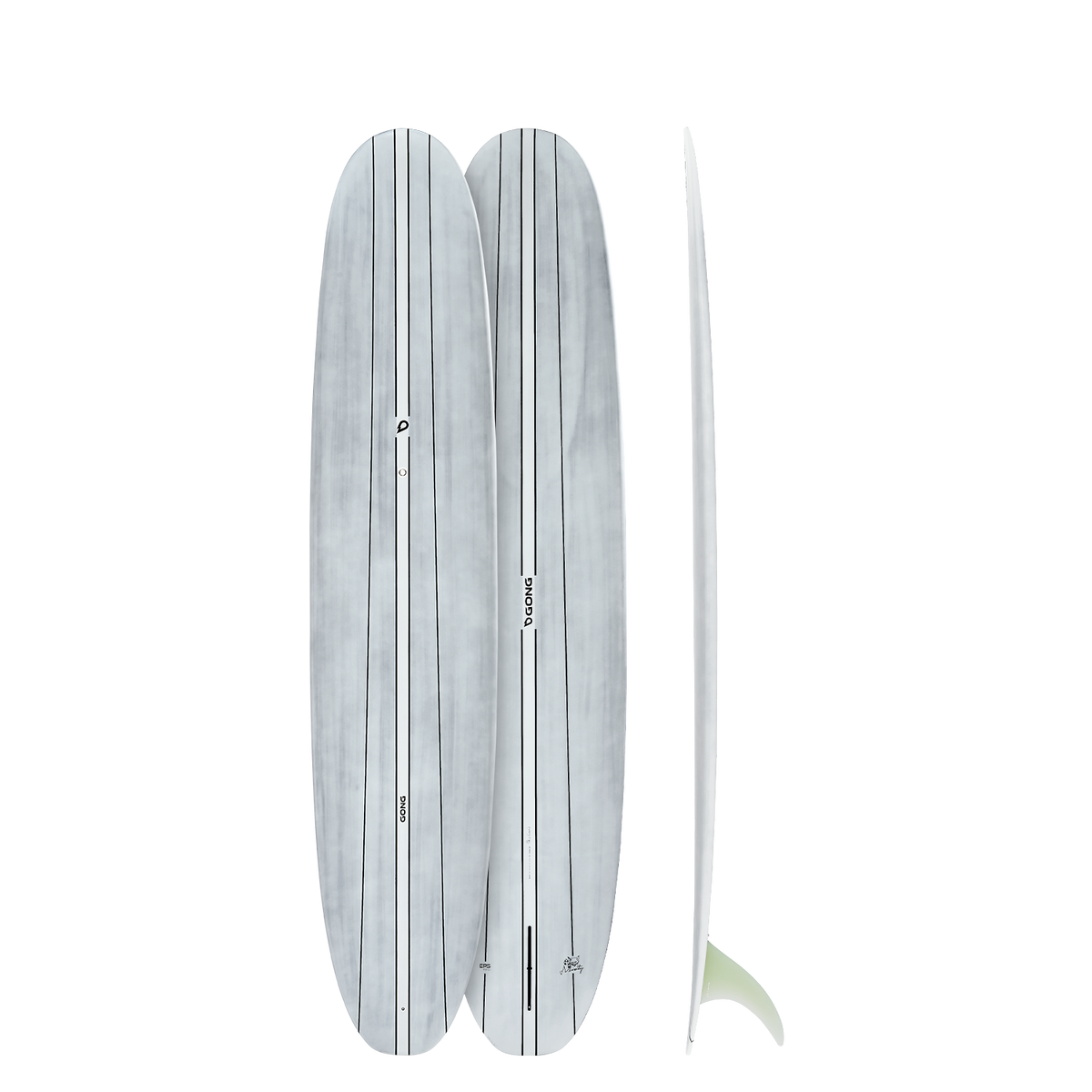
The Pampa embodies a modern pig. Its wide point is set back, but its rails are much more grippy than classic 50/50 rails. The result is a log positioned between a maneuver-oriented modern longboard and a traditional retro longboard. It’s the ideal choice to alternate between noseriding, accelerating through a building section, and linking modern turns and moves.
Wave type: The Pampa is designed for small to medium, clean, and rather soft waves with an open face. Conditions where it can express its natural retro glide and easy noses while maintaining enough drive off the tail to accelerate, pass sections, and surf dynamically when the wave offers more length or energy.
 Patrice Guénolé, GONG founder and shaper, on a Pampa EPS.
Deano
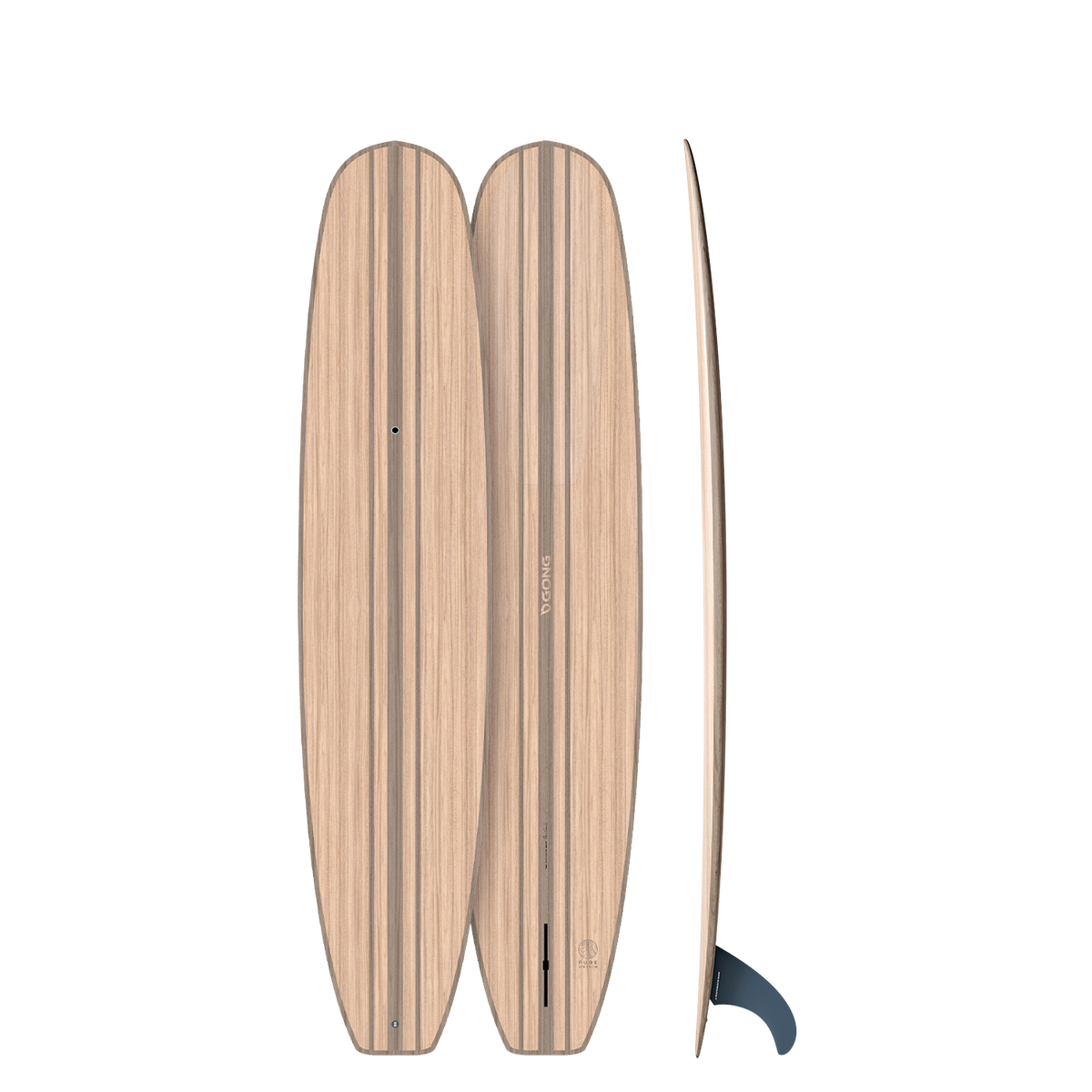
Once launched and properly positioned, the Deano is extremely stable on the nose. Its tail lift sets it perfectly in rhythm with the section. Its centered wide point makes it an easy longboard to handle, capable of adapting to a wide range of conditions. It’s a great choice for learning noseriding on a versatile board.
Wave type: The Deano is designed for small to medium, clean, and rather long waves with progressive slope and steady breaking, such as point breaks or smooth beach breaks. Waves long enough to exploit its retro glide without resistance, linking noses, stalls, and pivots while naturally maintaining speed and flowing through sections.
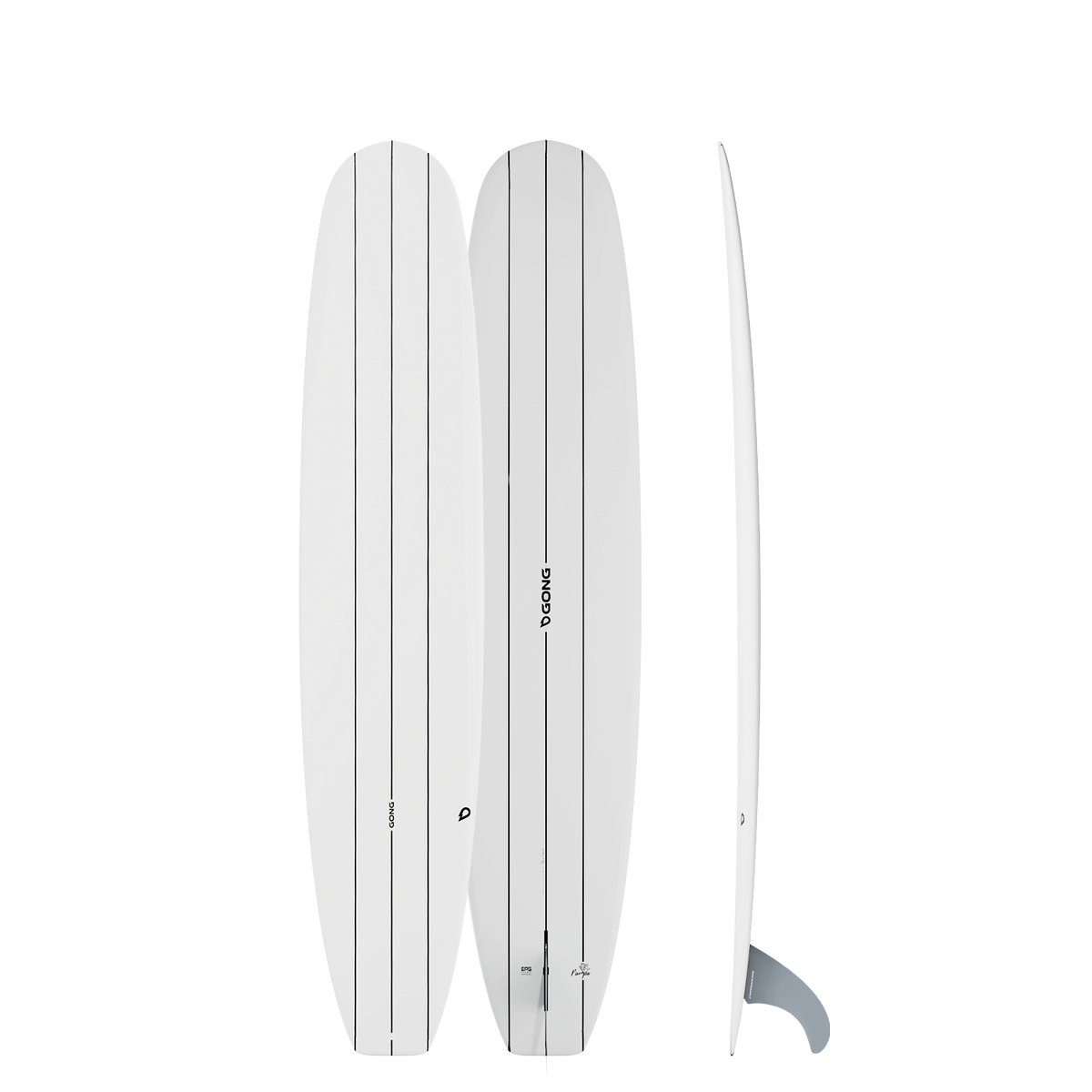
Winstone
Everything about the Winstone is designed to maximize nose performance in small, soft, slow waves. The combination of its very wide tail, strong tail lift, and 50/50 rails that retain water as much as possible results in exceptional ability to hold long noserides at extremely low speed.
Wave type: The Winstone is intended for small, soft, low-powered waves with gentle slope and a wide but not hollow pocket. Typical weak beach breaks, long summer waves, or very soft point breaks. Its extremely wide tail, generous volume, and pronounced tail rocker naturally slow the board down, accumulate water at the tail, and create exceptional leverage for long hang fives and hang tens — maintaining stable noses in conditions where most boards would lack lift and time on the nose.
Franck
The Franck’s centered wide point provides impressive stability, both while moving around the board and during nose maneuvers. Its overall rocker is pronounced yet consistent, resulting in plenty of glide and strong maneuverability despite generous dimensions. Extremely forgiving, it feels like a shape that pardons everything. It’s the ideal option to combine ease, outstanding nose stability, and unrestricted glide.
Wave type: The Franck is designed for small, soft to moderately weak waves with gentle slope and an open face. Typical summer beach breaks or long, low-powered waves. Its generous volume and very wide tail allow early takeoffs, capture the slightest available energy, and stabilize the board for long, suspended noserides — while retaining enough maneuverability to link transitions smoothly when the wave offers more structure.
Incredible
The goal of the Incredible is simple: paddle easily to take off as early as possible, then plane even in ridiculous waves. In these conditions, you don’t hold back — you let it glide, aiming to accelerate and make it through sections. The Incredible is the ideal choice for effortless glide in small waves, whether paddling or noseriding.
Wave type: The Incredible is designed for small to very small, soft, low-powered waves, from barely breaking to head-high, such as weak beach breaks or long glassy waves without much slope. Its high volume, fast and buoyant nose, and more refined, maneuverable tail allow ultra-early takeoffs, maintaining speed in soft sections, accelerating from the nose to clear sections, and linking hang tens and retro cutbacks with maximum lift and fluidity.
 Surfer: Malo, GONG team rider, on an Incredible EPS.
Understanding the shape of a noserider longboard means understanding that no element exists in isolation. The outline, wide point placement, tail width, rocker, rails, weight, and spoon, every detail influences the board’s overall balance and defines its personality.
A retro longboard is not simply a longer board. It is a tool designed for a specific way of surfing: maximizing glide, playing with speed rather than fighting it, moving fluidly, and finding balance on the nose.
Some shapes prioritize speed and maneuverability in fast waves. Others focus on stability, lift, and anchoring in slow waves to extend noserides. The goal is not to determine which board is “better,” but which one best matches your level, your style, and the waves you surf most often.
Choosing a noserider longboard means choosing a feeling, a way to connect with the wave, slow down time, and let the flow speak.
Now it’s up to you to find the one that will carry your style.
 Surfer: Evelin, GONG team rider, on her 9’4 Pampa.