Your cart is empty!
It's flat around here...



Take your floating base camp with you: bring the group’s full quiver and make the most of a whole day at the spot.
The Outback takes the compromise out of packing for big days on the water: deciding what stays on shore.
One board or two? A wing or a kite? The backup foil? Dry bags? The cooler? Your mates’ gear?
Choosing means leaving something behind. With the Outback, load up, strap down and go.
The goal is simple: a floating base camp wherever your jet can take you. The Outback sled makes your jet the meeting point for the session. With room to organise your riding gear, a quick trip to the spot becomes a full day on the water.
Ride, return to the jet, switch craft, take a break and head back out. Your quiver stays accessible, organised and securely strapped down, giving you more options as conditions change.
At 9′2″ long and 5″ thick, with generous volume and nearly 3 m² of usable deck space, the Outback provides a stable, rigid and practical platform. Load gear, move around, brace yourself and organise equipment: the deck becomes the hub of the day, keeping everything within reach between sessions.
Everything is designed for long sessions and jet trips: volume, deck space, stability and compatibility with racks, tie-down points, bungees and handles. You can bring a full quiver, organise group sessions and adapt the setup while keeping space clear for access and handling gear.
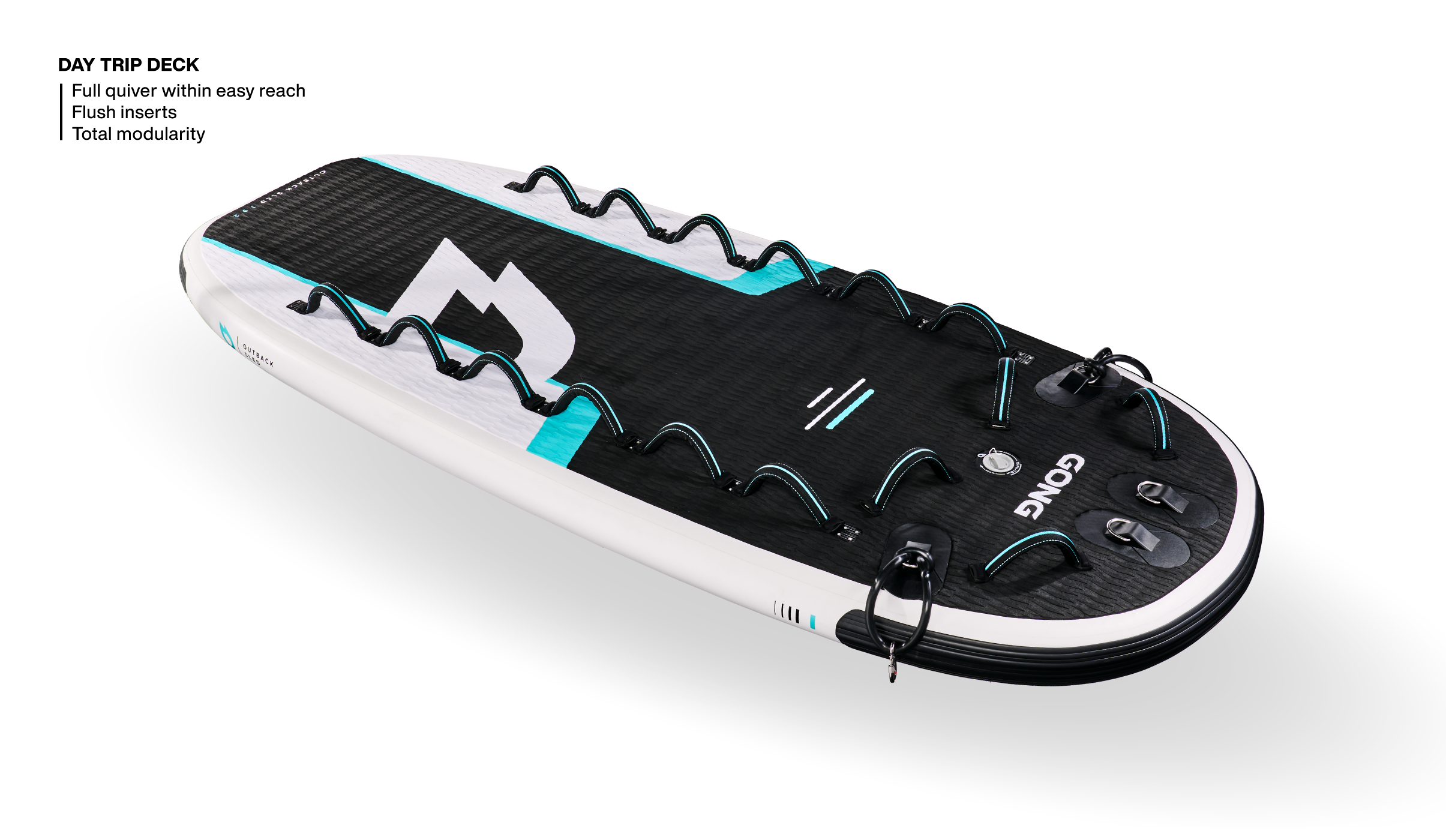
The GONG modular system comes into its own here. Multi-position stainless steel threaded inserts sit flush with the deck pad, keeping the deck clear when accessories are removed and letting you equip it to suit the day.
With just a few turns of a screw, fit modular side handles and last-chance grab handles, available in soft or rigid versions, to place handholds where you need them. Add new-generation racks inspired by roof bars to carry equipment securely, or use tie-down points, straps and bungees to secure gear directly to the deck.
Each accessory can be fitted or removed to suit your plans, keeping the setup adaptable from one session to the next. You adapt the sled to your riding, not the other way around.
Inflatable, easy to transport and configurable with compatible accessories, the Outback opens up more possibilities with your jet: explore further, ride longer, wait for the right conditions, switch craft and spend the whole day on the water, with the gear you need close at hand.
The whole quiver behind the jet, the whole day ahead of you.

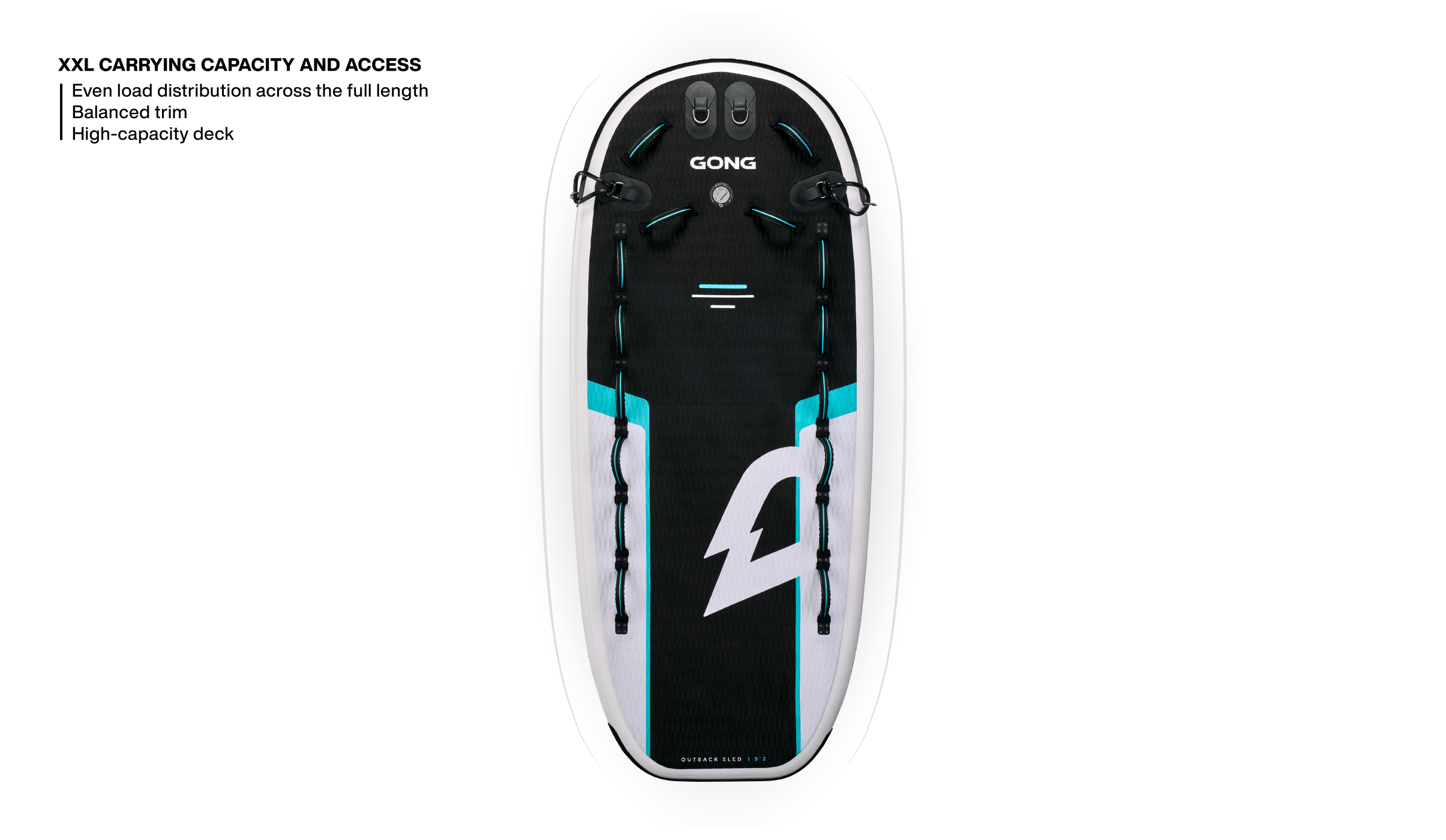
The high-capacity outline sets a new standard while retaining the range’s standard width. Its generous deck area and usable length create a floating base camp behind your jet.
At 9′2″ long, the Outback offers longitudinal stability, ample volume and an extended deck to distribute loads evenly, organise your quiver and keep access areas clear.
Volume is distributed along the full length to maintain balanced trim, both empty and loaded. With gear on board, the sled stays easy to handle, stable under load and predictable through maneuvers.
The Outback makes the most of its size: an XXL deck, stable and practical, built for day trips and sessions where you bring the full setup.
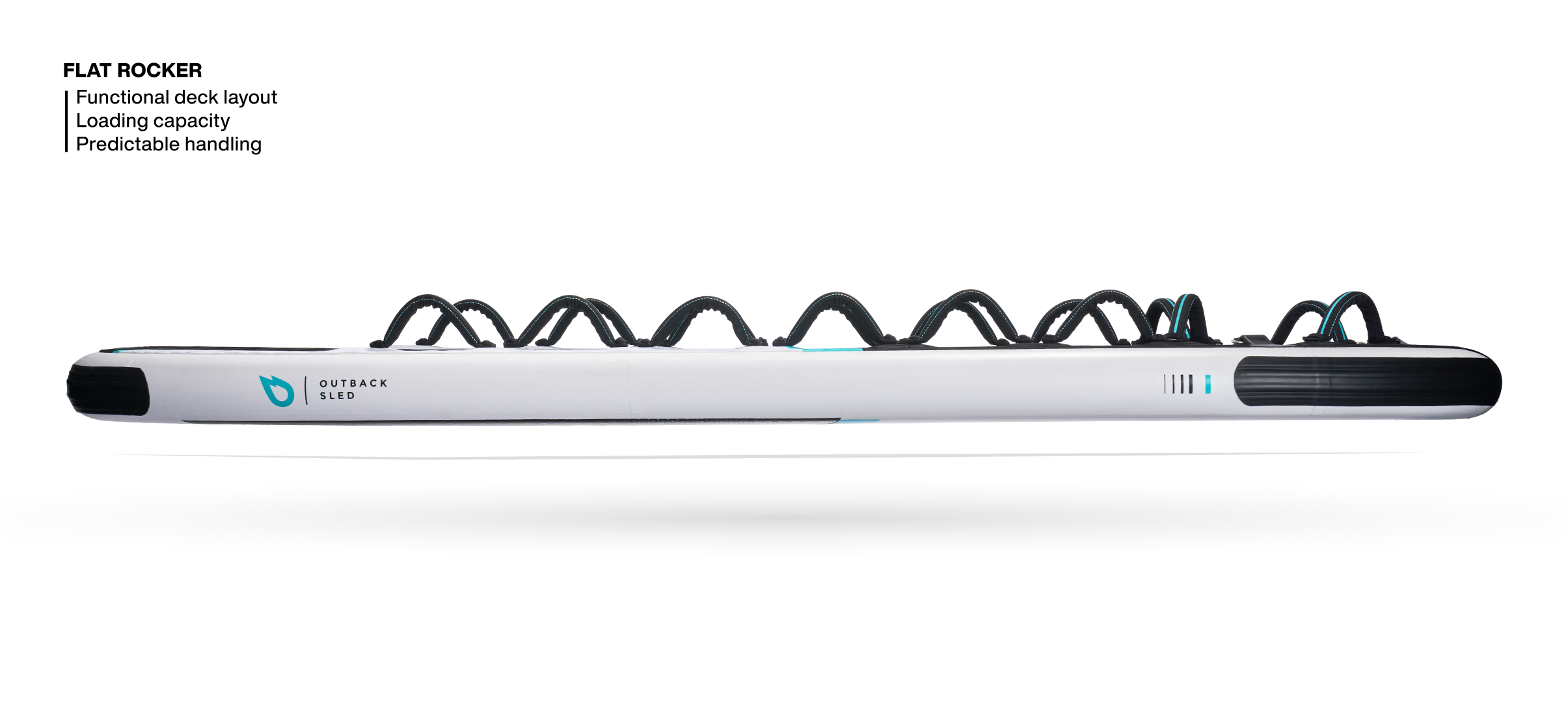
Its flat rocker prioritises stability and predictability behind the jet. The sled stays settled on the water, limiting unwanted movement even when fully loaded or travelling at sustained speed.
The flat deck makes loading easier: everything lies flat, the deck stays usable, and the sled maintains balanced, predictable handling while being towed.
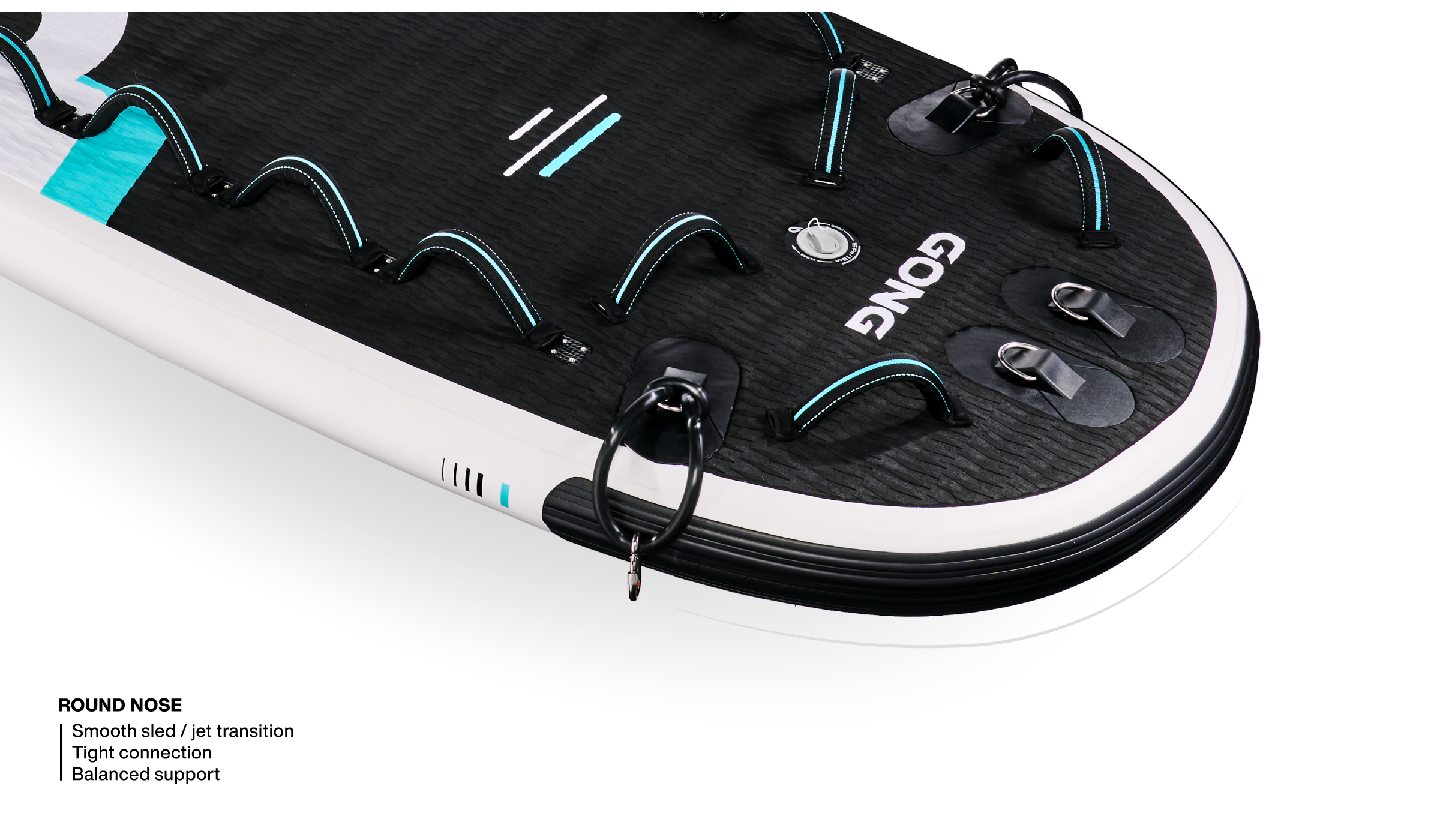
The Outback’s nose creates a wide contact area between the sled and the jet’s transom. Its rounded shape distributes loads across this area and helps keep the sled stable while underway.
This shape provides a smooth transition between the jet and the sled, with the deck widening further back to maximise usable space. Loads are spread across the contact points, helping maintain balanced trim when carrying gear.
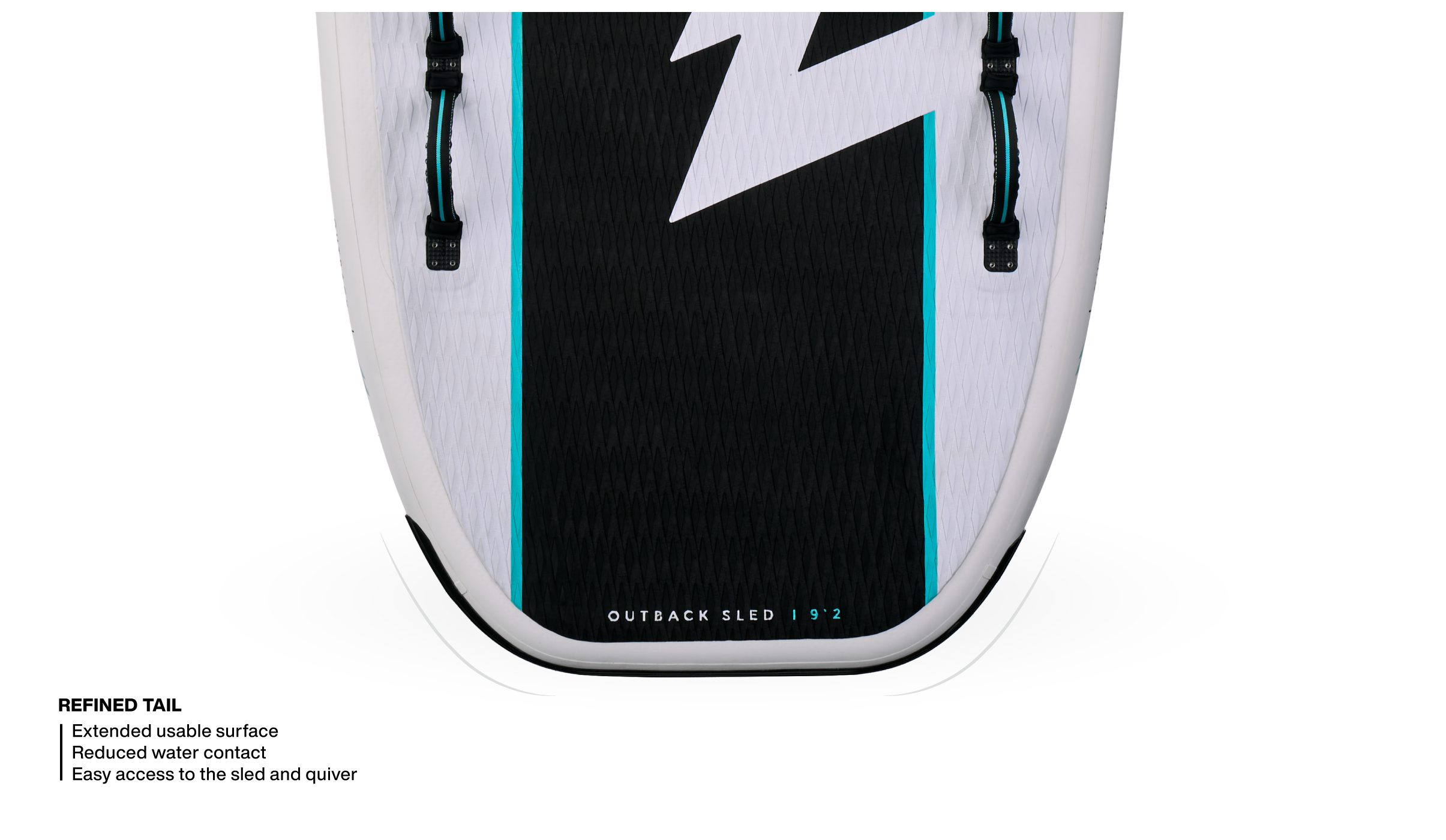
The Outback’s tail extends the usable deck area without adding unnecessary width through the rear third.
Its tapered outline reduces drag and helps keep the sled easy to handle despite its 9′2″ length. That length provides deck space, volume and stability without requiring an overly wide tail.
The bumpers protect the areas most exposed to impacts and abrasion, helping extend the sled’s lifespan.
The Outback deck is designed as the rear base for your day trip : a large, usable, modular and flush area for loading, strapping, moving around and keeping equipment accessible.
With racks, bridges, bungee cords and handles, each configuration adapts to your needs : tow, waves, wind, a mix of all of these, and group sessions. You keep all the options at your fingertips.
The deck remains clean when space is needed, and fully equipped when that's the theme of the day.
Who is it for?
The Outback sled is designed for riders who want to make a full day of it, with their jet as a floating base camp.
It gives you room for the group’s gear, day-trip essentials and backup options, so you can stay out longer and adapt as conditions change.
AVOID IT IF...
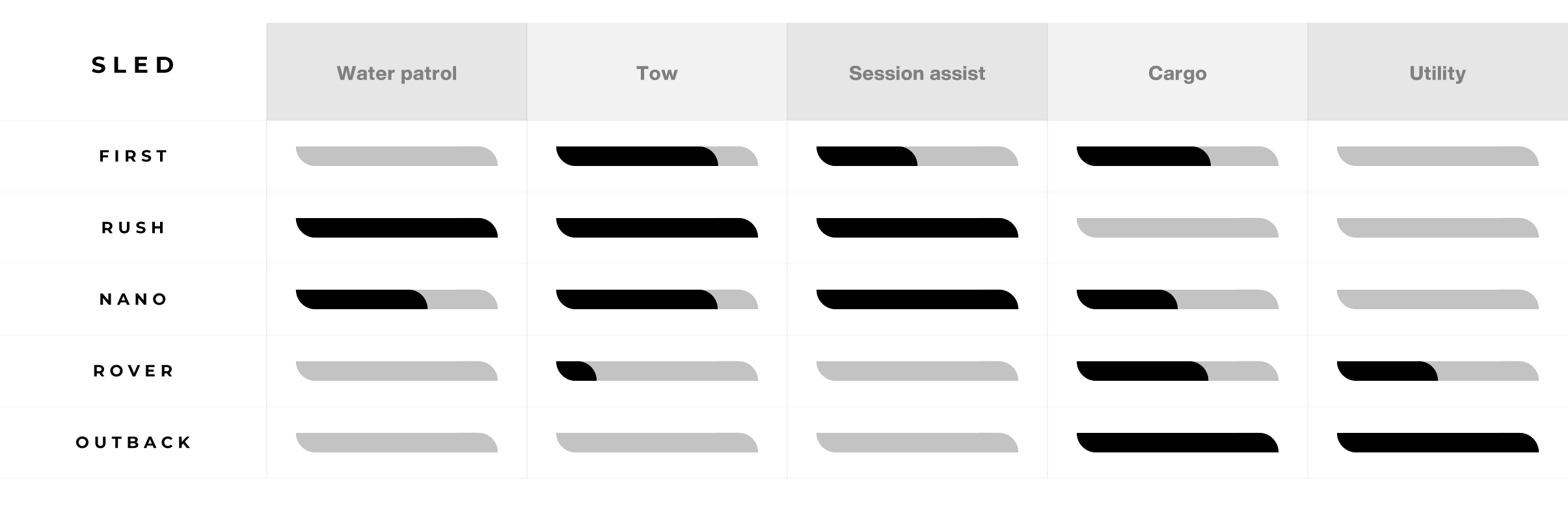
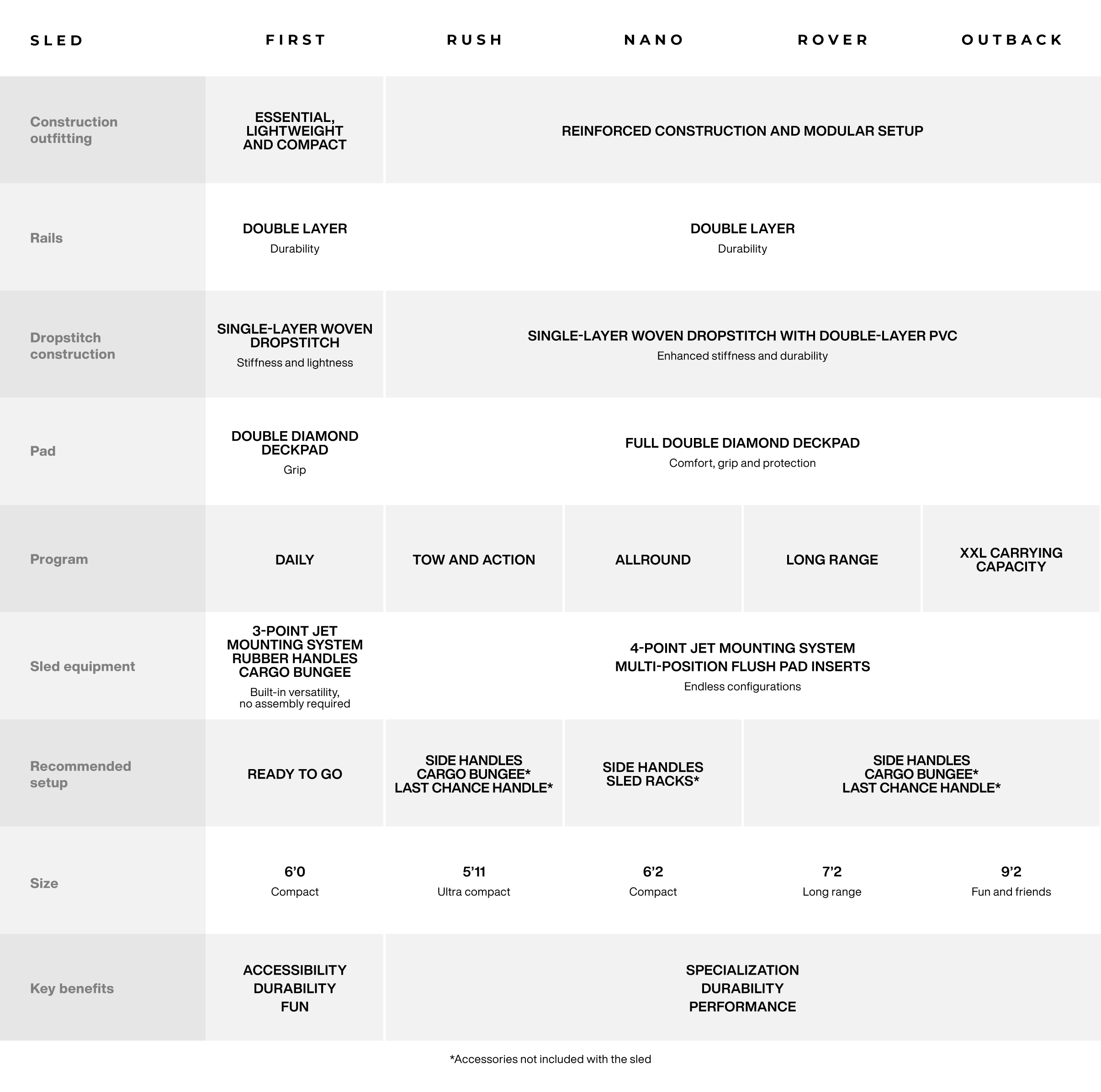
The Outback is built for long days on the water, substantial loads and group sessions. If you mainly want a simple, ready-to-use sled for added comfort around the jet, the First is a better fit. For a compact, highly versatile platform, the Nano is easier to manage day to day.
Its 9′2″ length makes carrying capacity and organisation its priorities. For tow-in, step-off, quick recoveries in the impact zone or precise positioning in heavy conditions, the Rush remains the dedicated model.
The Rover makes more sense if you want to bring extra gear while keeping the setup maneuverable. The Outback comes into its own when the plan is to stay out longer, with more equipment, several craft and a group of riders using the jet as their base camp.
To turn a quick outing into a full day on the water.
Bring your quiver, bags, cooler, your mates’ gear and backup equipment for changing conditions, with everything organised around the jet.
The Outback is made for fully equipped sessions and group adventures. Load up, head out, adapt the plan, switch craft and enjoy the day: the jet becomes the hub of the session.
In the world of sleds, size defines the programme: shorter models prioritise responsiveness, while longer models offer more deck space and carrying capacity.
At 9′2″ long, the Outback provides GONG’s largest sled platform for carrying everything you need for a full day.
Boards, wings, kites, foils, bags, a cooler and your mates’ gear, including longboards and SUPs: its length gives you room to distribute the load rather than pile everything up.
It’s the largest format in the GONG sled range, built for day trips when having the right gear and essentials on hand makes all the difference.
Understanding the GONG Range
What quiver?
The Outback is built for XXL quivers: longboards, SUPs and complete setups with boards, wings, kites, lowkites and several foils, giving you plenty of options for the day.
Sled racks let you carry boards and gear securely above the deck, keeping the platform organised and leaving room below for smaller accessories.
Choose your load to suit your plans and make the most of the day.
GOOD TO KNOW
The sled is a floating jet accessory. It must always remain attached to the jet, using the original equipment, with all components in good condition and in accordance with the user manual.
Take time to familiarise yourself with its handling in a safe environment. The sled can affect how the jet handles, especially when turning, accelerating or carrying a heavy load. For your first sessions, choose flat water and light winds, keep your speed low and avoid rough seas.
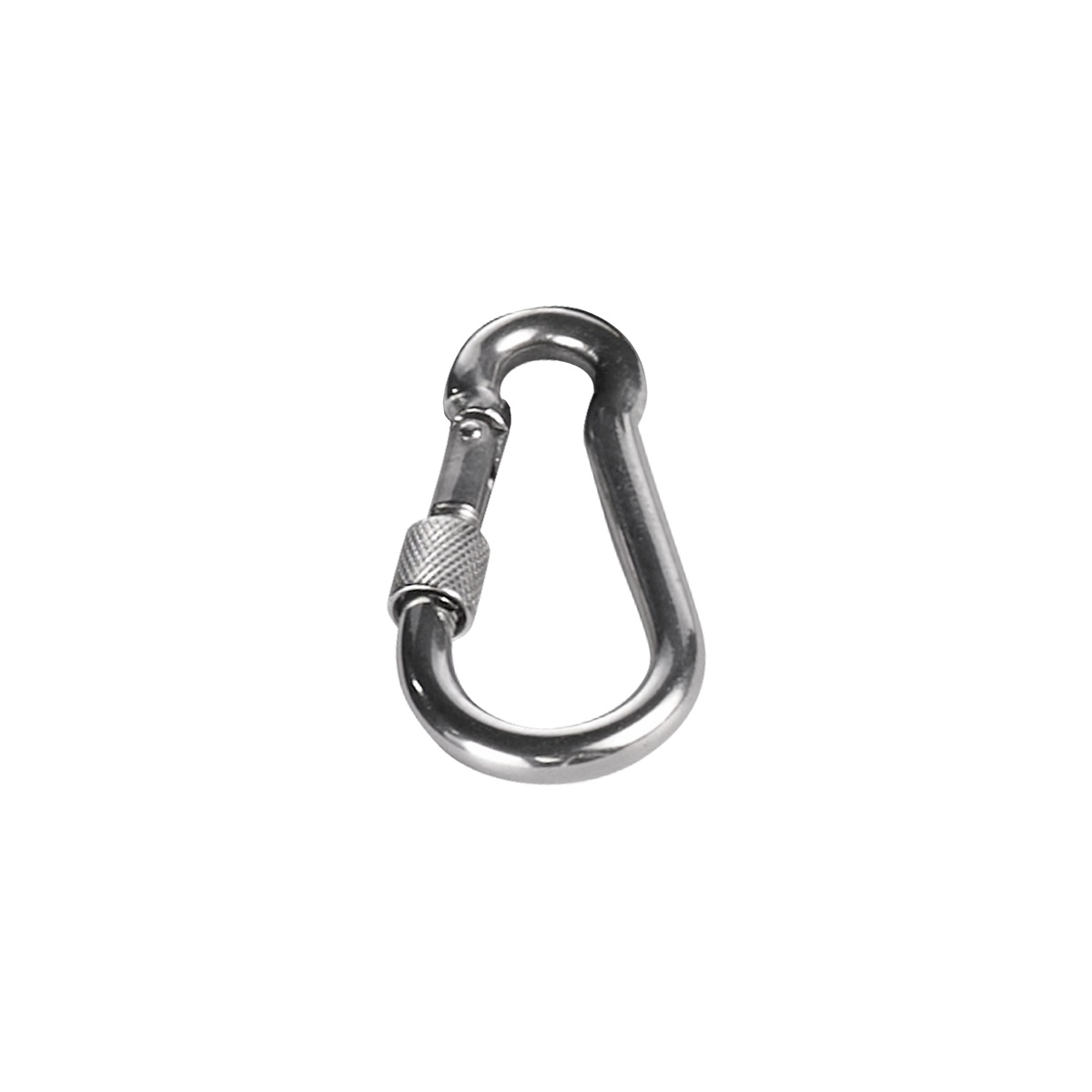
Before every outing, check your setup: attachment points, line tension, carabiners, sled condition, inflation pressure, fitted accessories and load. The sled must remain firmly secured behind the jet.
As with any inflatable product, do not leave it in direct sunlight or behind a car window. Heat increases internal pressure and can damage the seams. Store it in the shade, away from heat sources, and adjust the pressure if needed.
Avoid prolonged rubbing against pontoons, boats, concrete, rocks or other abrasive surfaces. Repeated friction can wear the material and cause leaks.
Take care with foils, fins, board rails, boxes, coolers and any rigid or sharp equipment. Load carefully, secure everything properly and avoid direct or repeated contact with vulnerable areas of the sled.
Do not let the sled get knocked around in waves, especially near the shore. A wave can flip it, throw it or compress it with the gear on board. Anticipate water movement and never position yourself between the sled, the jet, the gear and an approaching wave.
The sled is not a standalone craft, a rescue device or equipment intended for transporting passengers. The jet ski driver is responsible for its use, taking local regulations, weather conditions, sea state and the crew’s abilities into account.
If in doubt, simplify the setup, reduce speed, unload the sled and return to calm water in a sheltered area.
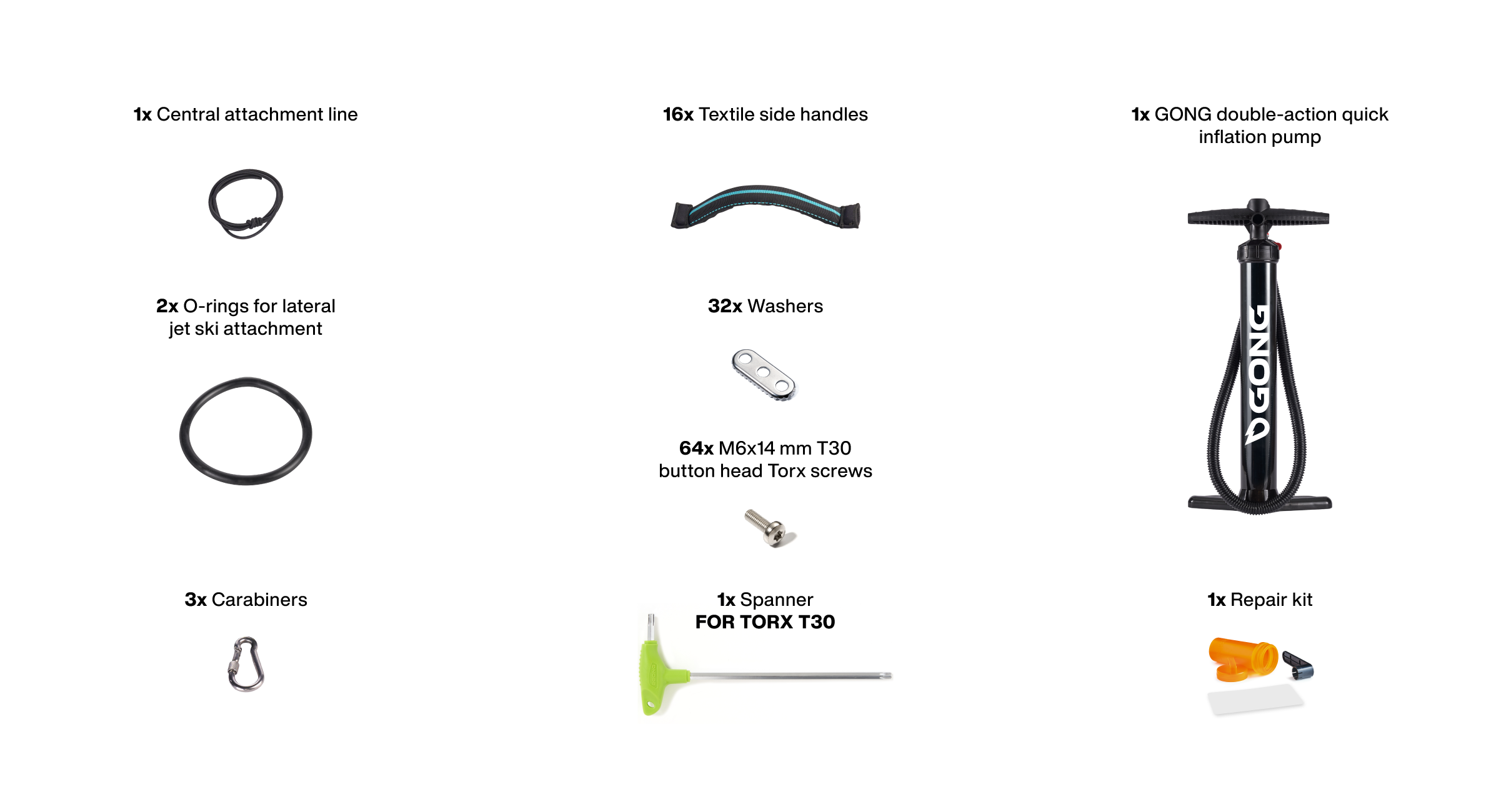
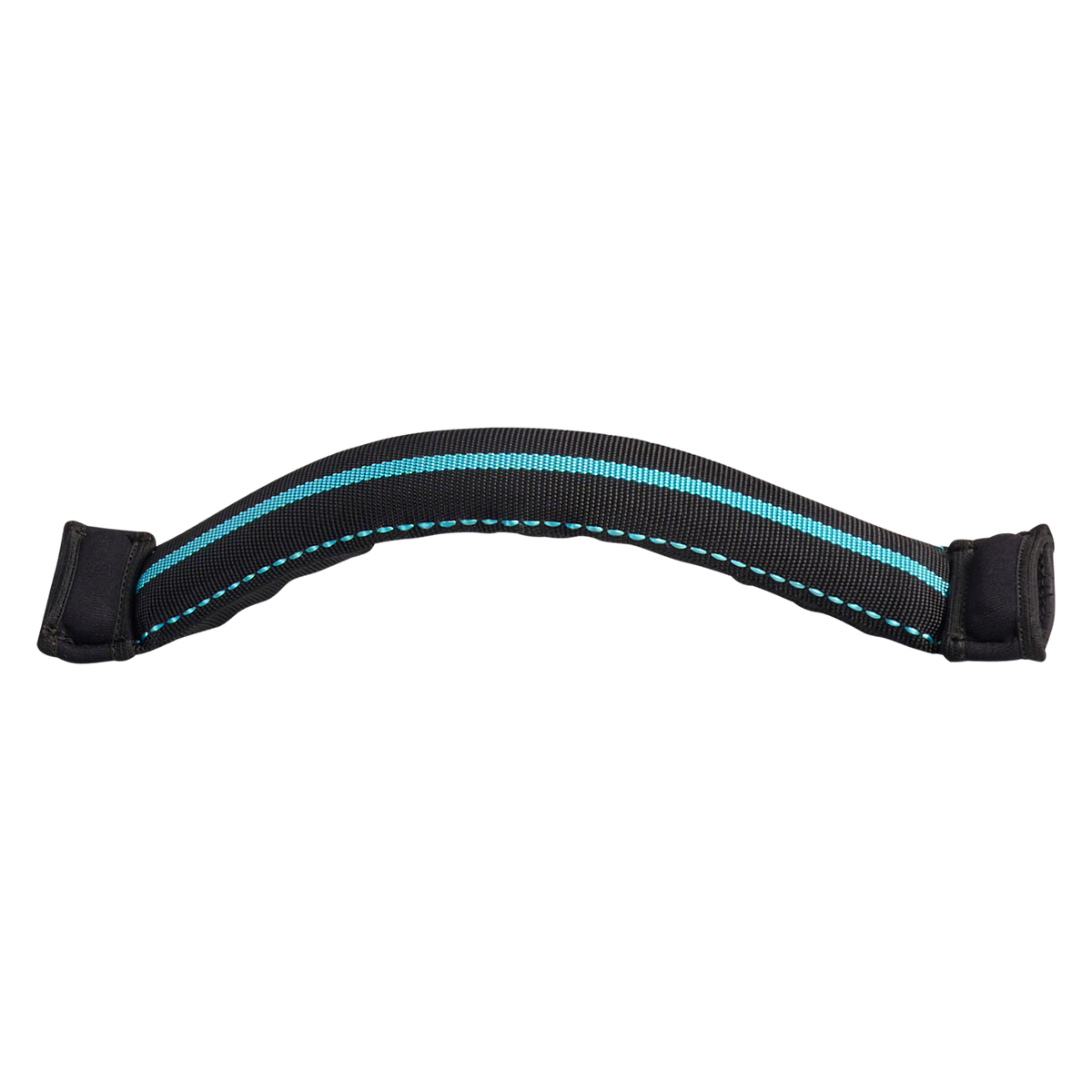
The Outback sled comes with handles and all the equipment needed to attach it to your jet.
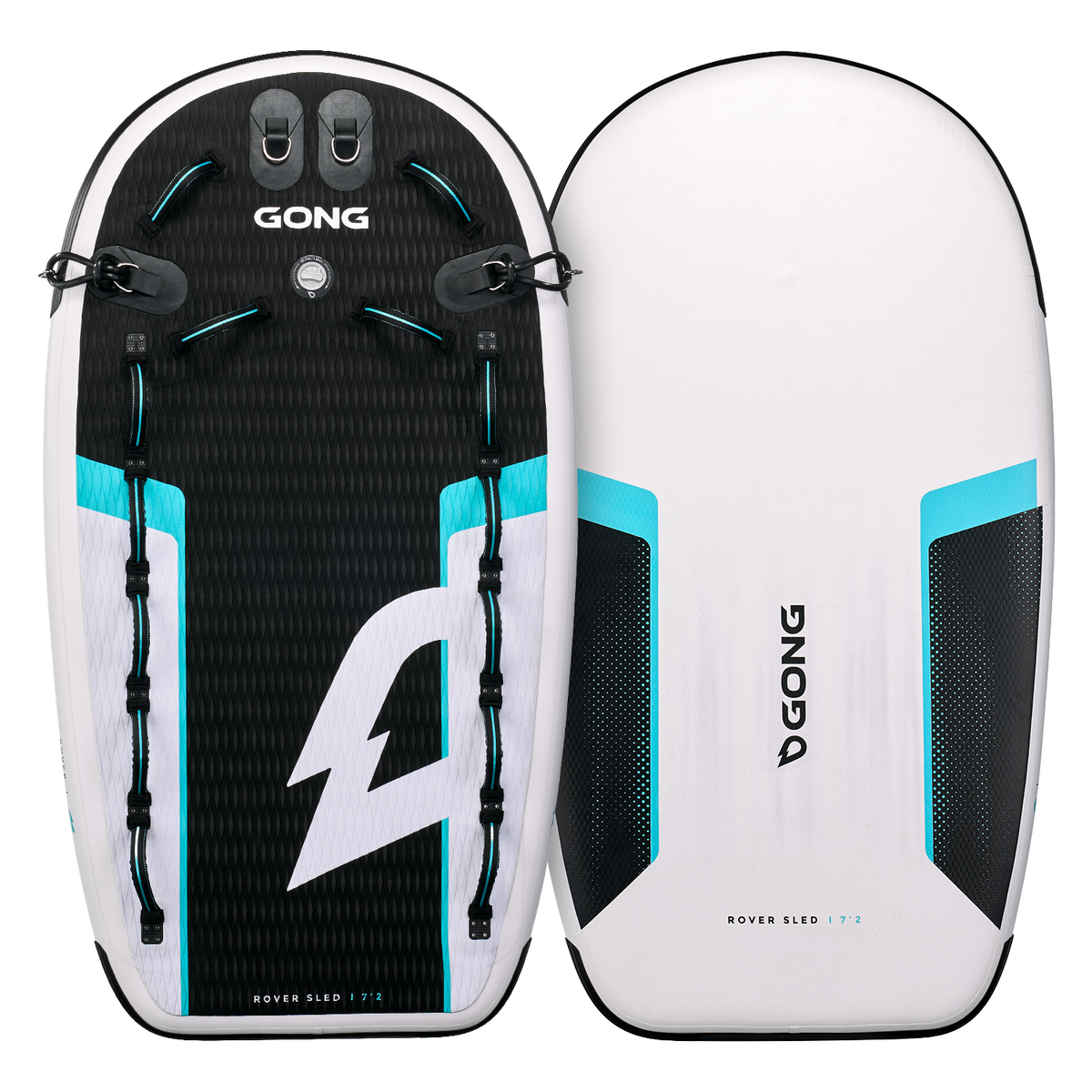

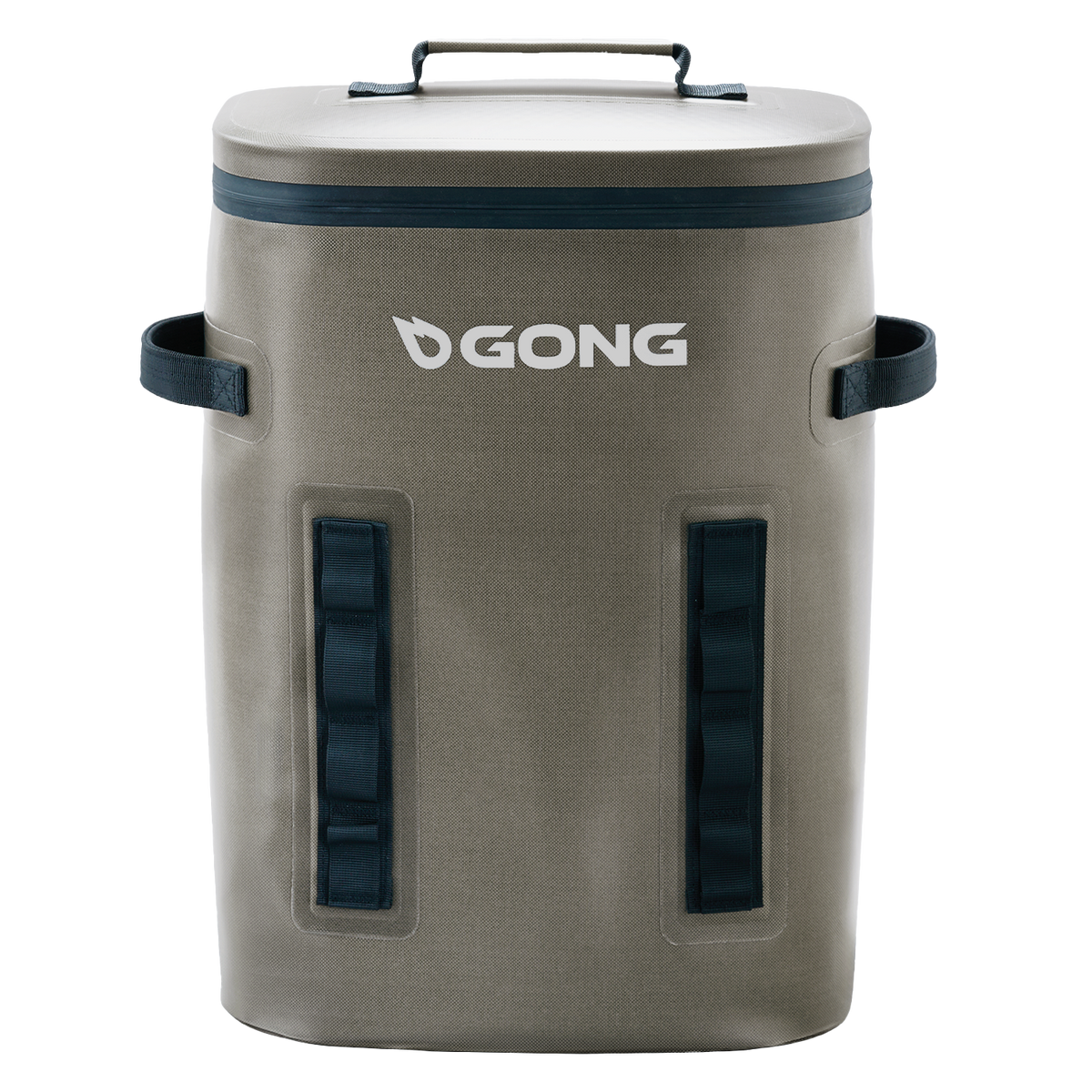










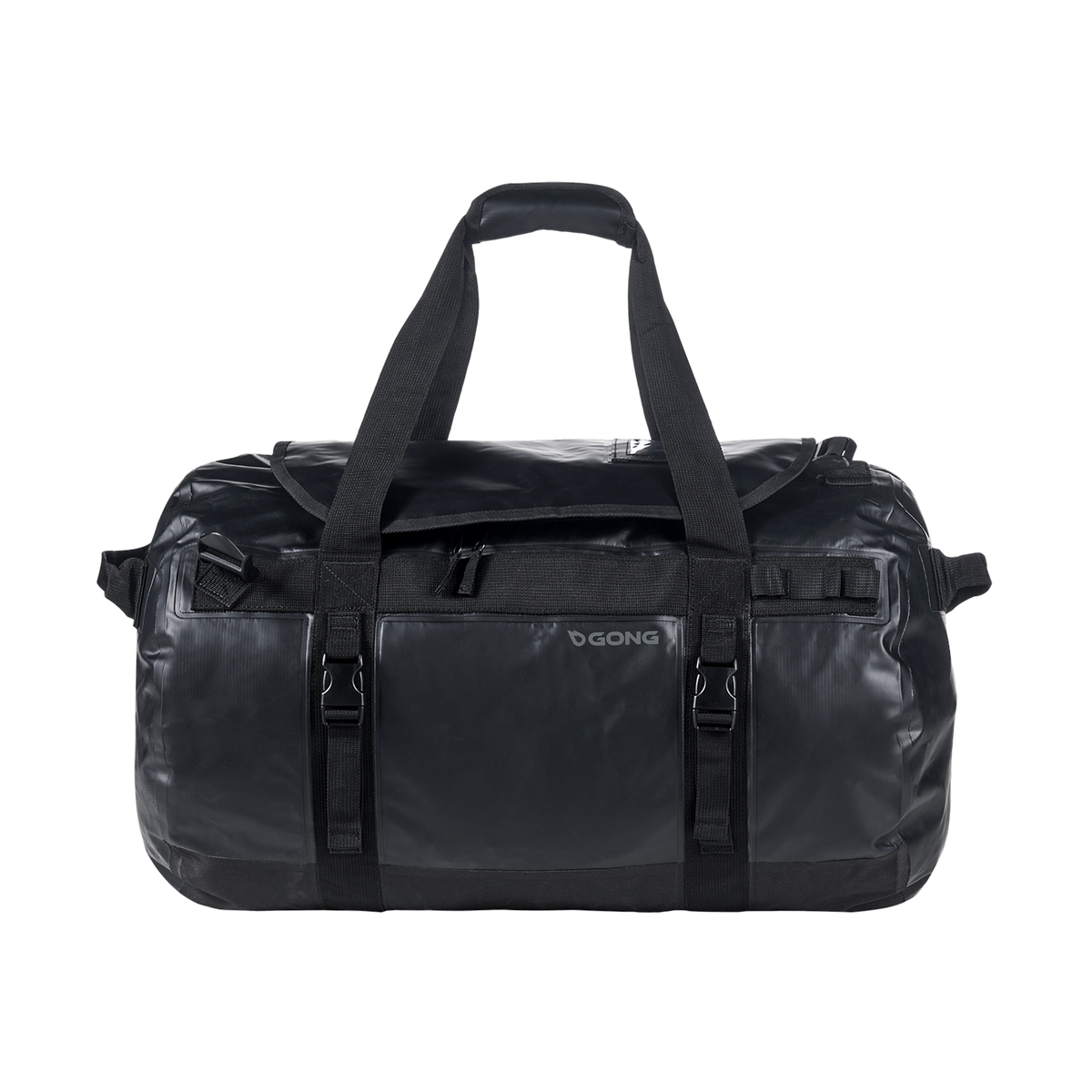

The Outback sled is the floating base camp in the GONG range.
It turns your jet into the hub of a full day on the water: explore further and stay out longer, with your full quiver, your mates’ gear, bags, a cooler and backup options for changing conditions.
It must always remain attached to a suitable PWC during water sports activities, under the supervision of the jet ski driver.
Choose the Outback when you want extra space behind your jet and room for everything you need for the day.
The Outback sled is the largest model in the GONG range.
While the First prioritises ease of use, the Rush action and demanding tow-in, the Nano compact versatility and the Rover a balance between carrying capacity and maneuverability, the Outback focuses on maximum capacity: day trips, XXL quivers, group sessions and a fully organised setup around the jet.
At 9′2″ long, it offers the most deck space, volume and usable length in the range, with room for gear you might otherwise leave on shore.
Its integrated multi-position inserts let you configure the sled for each session while keeping the deck clear when accessories are removed.
Sled racks, handles, last-chance grab handles, pad eyes, bungees, straps and other compatible accessories let you adapt the Outback to your plans, from carrying a full quiver to spending the day switching between craft with your jet as a base.
The Outback sled is designed to be compatible with most modern PWCs used in water sports, particularly models from major brands such as Sea-Doo and Yamaha, or comparable PWCs, provided they have suitable rear attachment points: ideally two side points on the transom and one central point under the seat.
It attaches to the PWC at several points to stay aligned and track smoothly behind it. This multi-point connection helps keep the sled stable when accelerating, changing direction, carrying a heavy load and performing maneuvers.
Before use, always check:
As with any accessory towed behind a PWC, the sled must be attached according to the user manual, using the original equipment, then tested gradually in calm water.
The Outback sled is designed to carry a full quiver: boards, longboards and SUPs depending on the setup, foils, wings, kites, lowkites, dry bags, life jackets, fins, safety gear, a cooler and your day-trip essentials.
Its purpose is clear: bring more gear and enjoy greater comfort, with options close at hand when conditions or plans change.
Keep the load organised, low, evenly distributed and slightly forward on the sled, with every item securely strapped down. Pad hard items, position foils carefully and keep sharp edges from rubbing or knocking against the sled.
Compatible sled racks are particularly useful here: they hold boards and bulky equipment securely above the deck, leaving room below for bags, a cooler and accessories.
Yes, provided it is used as intended: the Outback is a high-capacity utility sled rather than a compact action sled.
At 9′2″ long, it requires the driver to plan ahead more than with a Nano, Rush or Rover, especially when loaded. With properly organised gear, the jet and sled remain stable and predictable underway.
Keep the load low, centred and slightly forward on the sled. Too much weight at the rear can increase swinging behind the jet. A well-distributed load positioned slightly forward helps the whole setup stay aligned and track smoothly.
As the water gets rougher, speeds increase or loads get heavier, handle the jet more gently: make wide turns, control your speed and keep changes of direction and acceleration smooth.
The Outback is designed as a floating base camp. Organise the deck into clear zones without overloading it.
Place boards, SUPs, longboards and other long or bulky equipment on compatible sled racks to free up deck space and avoid piling gear up. Keep bags, buoyancy aids and smaller accessories low on the deck and securely strapped down. Centre the load along the sled’s length and position it slightly forward.
Keep the layout clear: long equipment on the racks, heavier items low and centred, access points unobstructed and nothing rubbing or knocking against the sled or jet.
An organised setup helps you make the most of the Outback for a full day on the water.
Yes, that’s exactly what it’s designed for.
The Outback is built for days with several craft, a group of riders and gear for changing conditions. It makes the jet the hub of the day, with the deck organised into distinct zones.
The front section sits against the jet, providing space to get back on board, brace yourself and pass gear to or from a rider in the water. Keep this area clear for access between the sled and the jet.
The central zone holds the gear: boards on compatible sled racks, with bags, buoyancy aids, accessories and a cooler kept low, evenly distributed and securely strapped down.
The rear stays clear for access from the water, giving riders room to climb on, switch equipment and head back out.
One rule remains essential: the Outback is a platform attached to the jet for water sports, session organisation and carrying gear. It is not intended for transporting passengers.
The Outback is the high-capacity model in the range. The Rush is better suited to demanding action, while the Rover offers a more maneuverable setup for active sessions.
At 9′2″ long, the Outback prioritises carrying capacity, stability and space to organise a full day on the water. Its size requires the driver to plan ahead, especially when loaded: take wider turns, adjust speed, organise the load carefully and choose conditions suited to its intended use.
For demanding tow-in, quick recoveries after a wipeout or precise positioning in big waves, the Rush remains the dedicated model.
Choose the Outback when your priority is to carry more, stay out longer and keep the full quiver available behind the jet. The jet ski driver is responsible for its use and must exercise sound judgement, taking weather, water conditions and riders’ abilities into account and complying with local regulations.