Your cart is empty!
It's flat around here...




Make the most of light wind with very early take-off in a shape that still keeps length under control.
The Cruzader Point LW is our ultimate light wind specialist. Its mission is simple: generate maximum glide with minimum energy to get you flying when the wind is barely noticeable.
It takes all the DNA of the Cruzader Point, but pushes every parameter towards efficiency. Longer, very slim and exceptionally fast-gliding, it turns the slightest breath of wind into speed. In wing foiling as in lowkite, it gets you going early without having to oversize your wing or multiply your pumping efforts.
Its shape keeps that famous "aircraft carrier" concept: lots of usable surface under your feet despite an extremely narrow hull. You still get the comfort you need to find your stance and handle big foils, while keeping only the minimum width working in the water. That slenderness is what gives the Point LW its almost drag-free glide sensation.
The even more recessed deck now brings your feet closer to the foil. The board feels thinner underfoot and the connection becomes more direct. Volume is also distributed more effectively around the rider to maintain the support needed before take-off, without losing what makes the LW so magical: moving forward on almost nothing.
At the rear, volume plays a key role. The board provides support under the back foot, then gradually releases towards its pin tail. Every pump naturally supports acceleration, gets the foil working quickly and makes the transition into flight easier.
Once up to speed, the Point LW is not just an early take-off machine. Its low bulk, slim nose and clean tail let you make the most of the foil, glide in the swell, freefly and link long lowkite runs with great fluidity.
The Hollow Full Carbon construction really comes into its own here. On a board so focused on efficiency, reducing weight and inertia makes every pump more effective and the ride much lighter once flying. The length needed for glide then feels surprisingly discreet underfoot.
The Cruzader Point LW turns days you thought were too light into real sessions: maximum glide, incredibly early take-off and all the freedom you need once in flight.

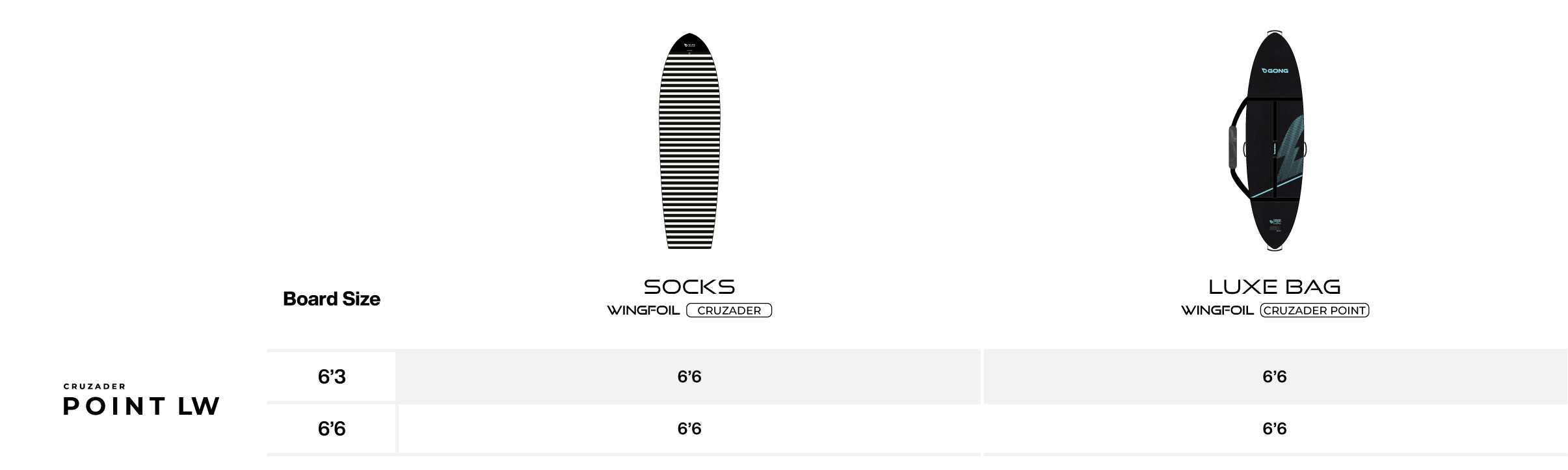
The very long, very narrow outline remains the key to the Cruzader Point LW’s efficiency. Its narrow width reduces drag to build speed with minimal energy and quickly turn the slightest breath of wind into take-off.
Yet the "aircraft carrier" concept still delivers real usable surface area under your feet. The generous deck and wingers keep things comfortable around the stance while maintaining an extremely thin hull where it works in the water.
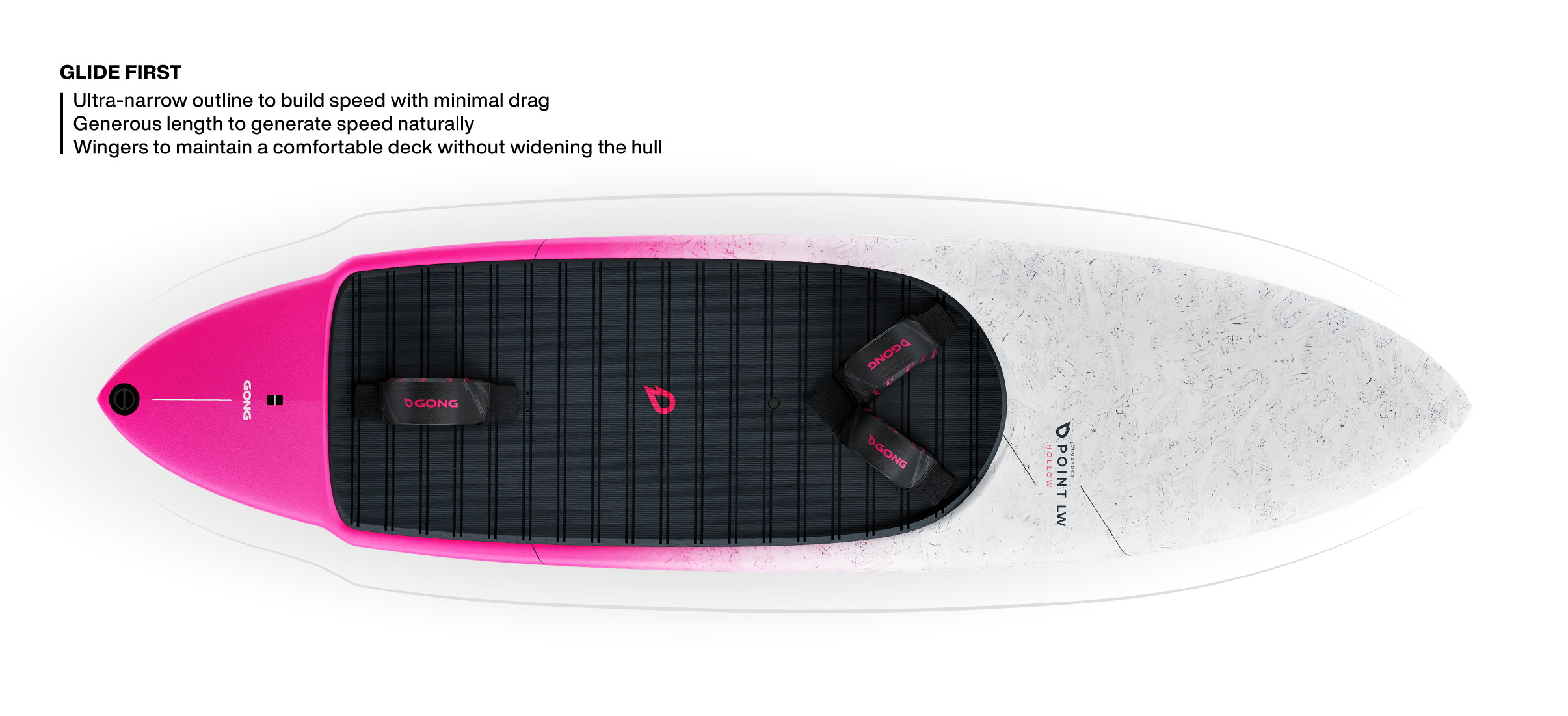
The very flat rocker maximises the effective waterline length and allows the Point LW to maintain its speed with very little energy. Every pumping movement is efficiently converted into acceleration to get up on foil as early as possible.
At the rear, the slight kicktail releases the hull in the final metres before take-off and limits contact with the water once the foil is up and running. You keep all the efficiency of a clean, stretched rocker line with just the tail clearance you need.
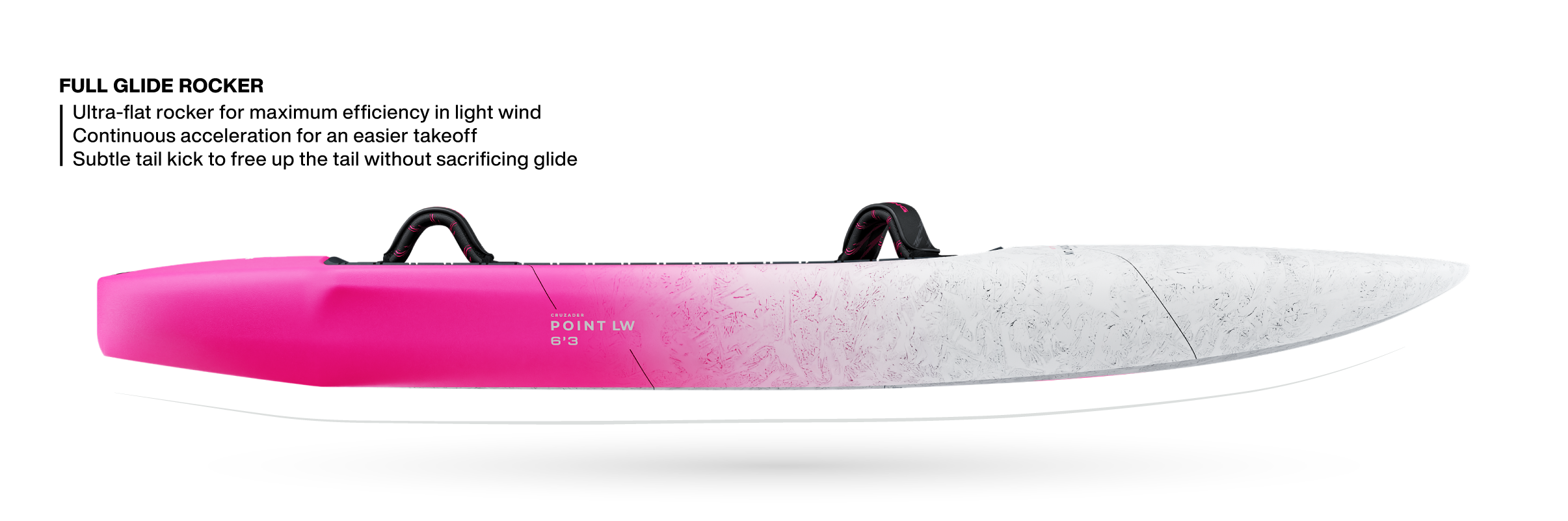
The hull combines a very piercing bow with a much flatter central section. The nose slices through the water with very little resistance, while the central area supports acceleration all the way through to take-off.
The front also gains a slight amount of supporting surface to better handle phases where the nose is under load. The Point LW therefore keeps its very pure glide while getting through light touches with the water more easily.
The very fine pin tail minimises drag at the rear and extends glide all the way to take-off. Its slight kick also keeps bulk to a minimum when the board touches the water or rolls onto its rail.
The rear volume distribution has evolved, with more support around the back foot. This reserve creates more rebound when pumping: when you load the tail, the board recovers its trim more easily and drives forward again to get the foil engaged even earlier.
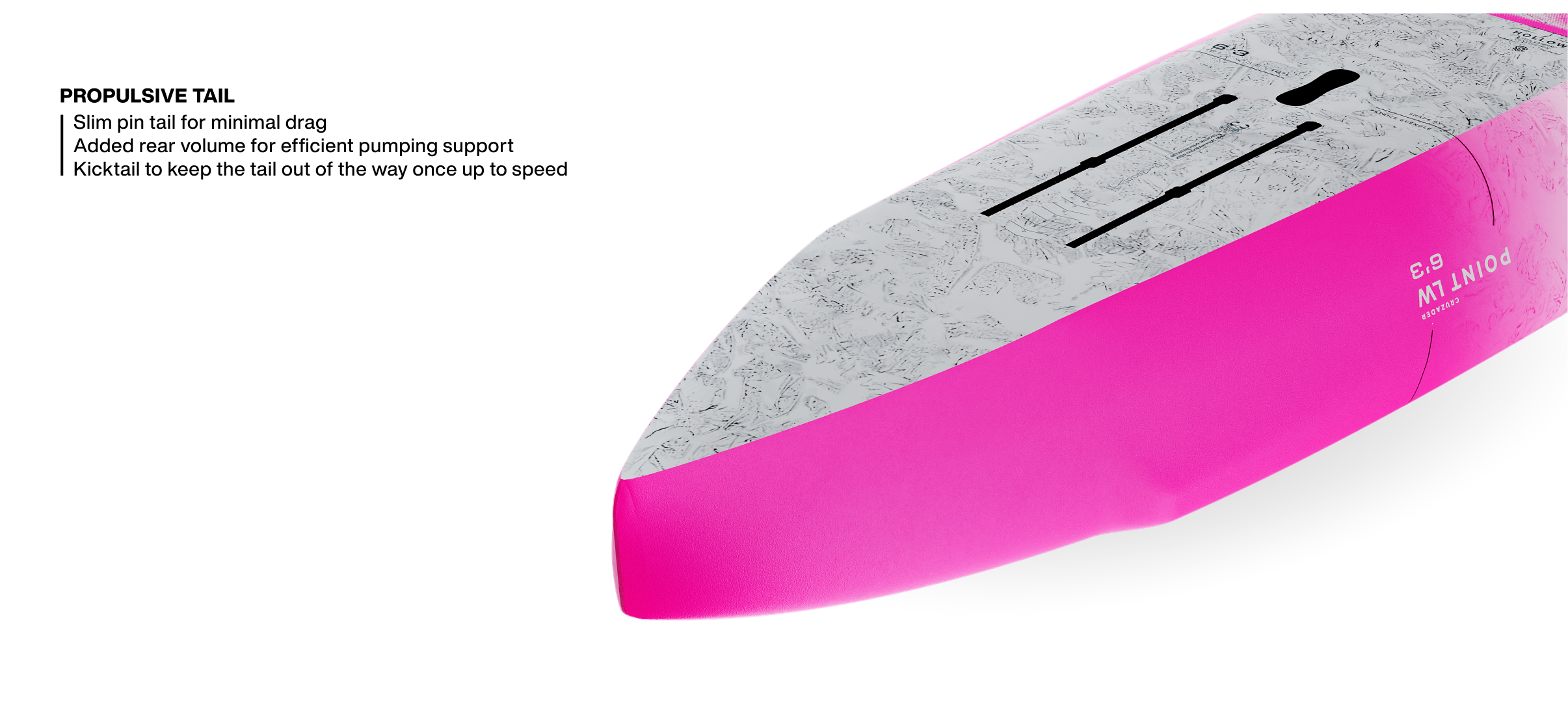
The rails are sharp in the tail to deliver a very clean water release. The water separates cleanly from the hull, which enhances drive and helps retain all the speed generated before take-off.
Over the front two thirds, the rails progressively become more tucked and softer. The Point LW therefore moves through the water with less resistance and handles contact with chop without causing any sudden loss of speed.
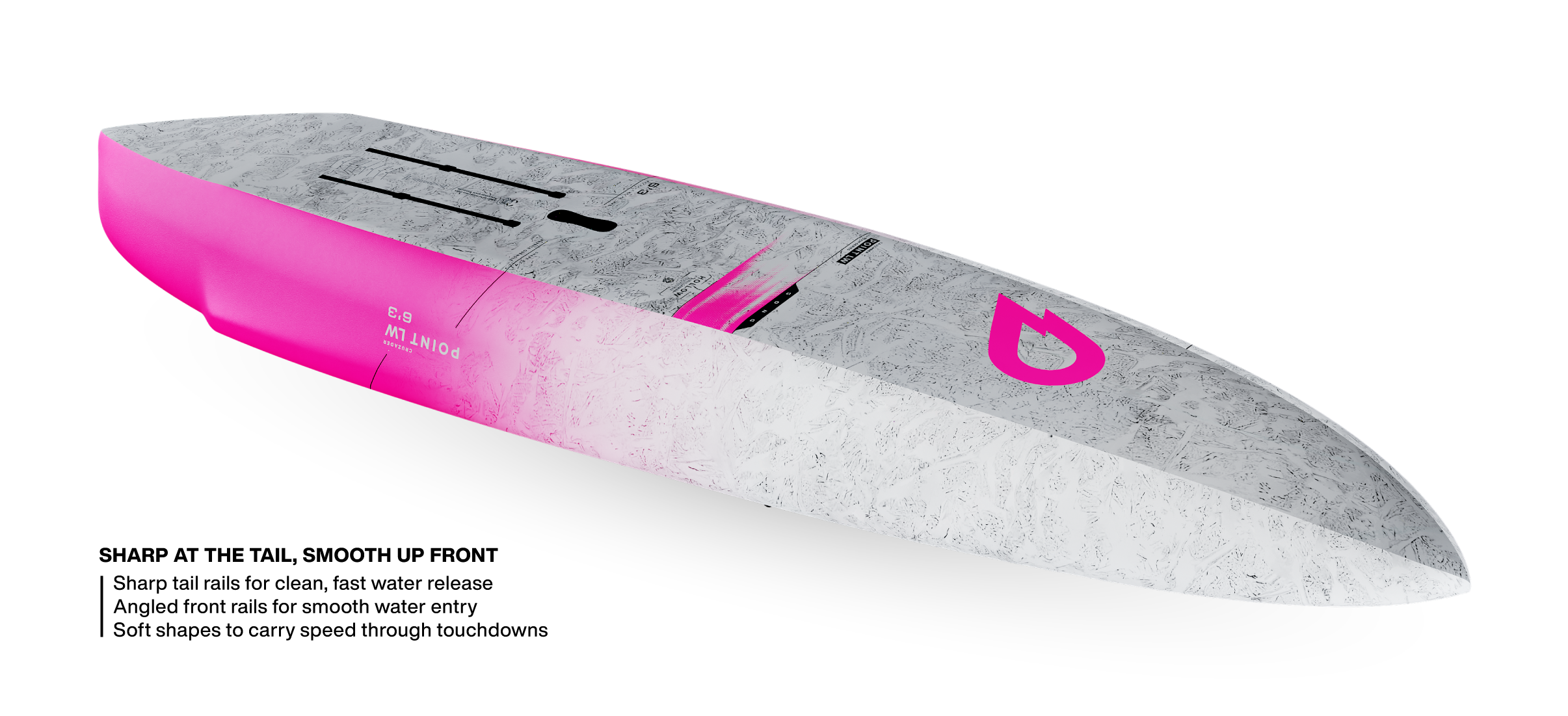
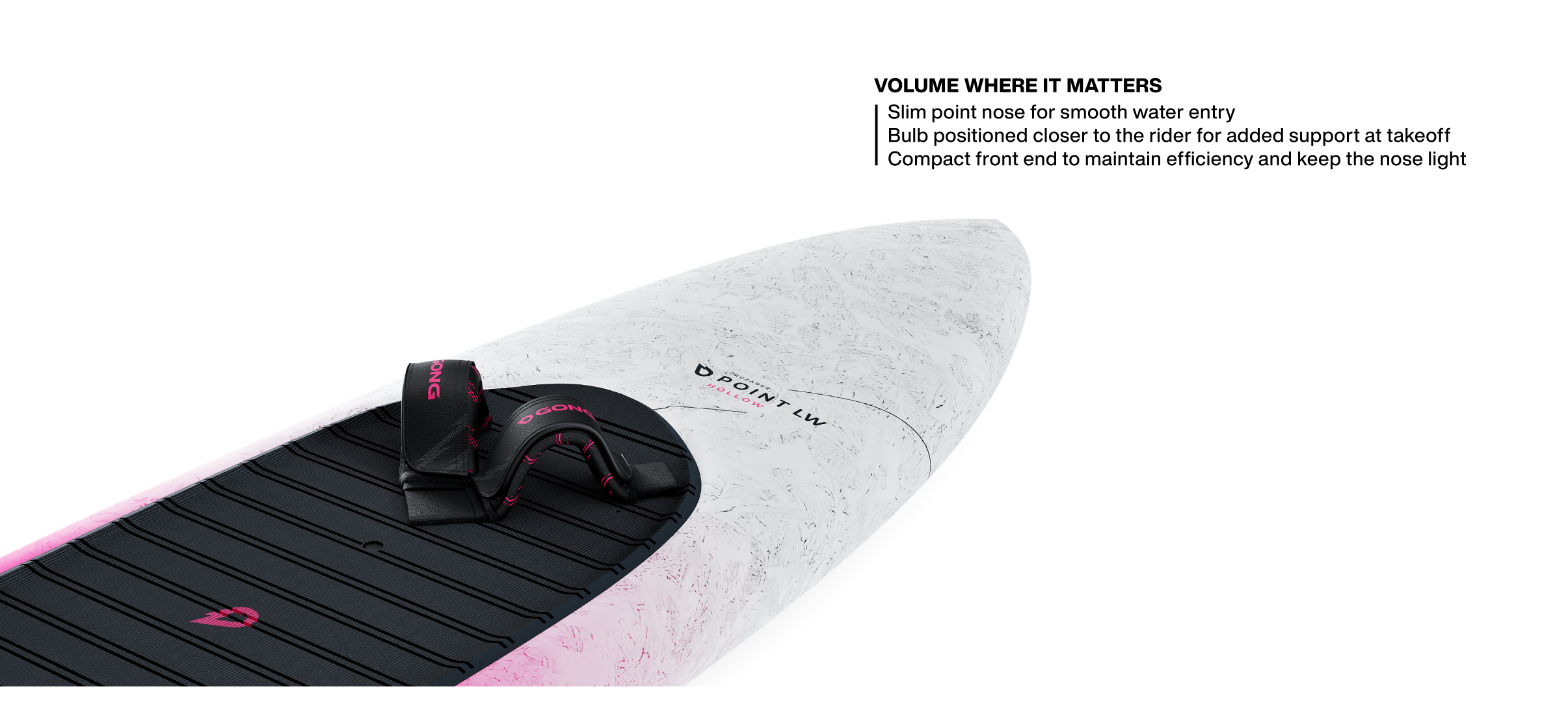
The pointed, refined nose keeps water entry exceptionally clean and avoids putting unnecessary load on the front of the board. It contributes directly to that continuous glide sensation that defines the Point LW.
The bulb has evolved, with its maximum volume brought closer to the rider. The buoyancy reserve is therefore positioned where it genuinely supports the board at take-off, while still keeping a fine, low-bulk nose.
The Cruzader Point LW is designed for experienced riders who want to get up and flying as early as possible. So for session addicts, or just plain addicts ;-)
This ability to get going in very little wind is also a huge advantage on inconsistent spots: lakes, river arms, wind shadows or places where every puff counts. It is also the ideal board if your home spot rarely sees big wind numbers. Don’t stay on the beach: fly on the Point LW.
Its very slim shape still requires solid balance. So you already need good foil experience and to stay dynamic in the phases before take-off, even if light wind conditions generally offer flatter water.
Its whole programme is focused on making the most of light conditions:
The Point LW is capable of getting up extremely early while still delivering real performance once flying. Riding in under 8 knots remains demanding: you need gear capable of turning very little energy into speed. That is exactly what it is built for.
It delivers a very specific mix: early take-off, long glides, swell riding and fast handling, without needing to multiply your pumping efforts.
The Cruzader Point LW should be paired with foils that truly extend its programme: lots of lift to get going very early, or lots of glide to turn the little available energy into speed.
The Sirus V3 ATMO: for chasing the absolute lowest end.
It is the logical match when the goal is to fly in as little wind as possible. Its strong lift gets the foil working very early, while its glide helps maintain flight when the wind becomes almost imperceptible. With the Point LW, you get a setup entirely focused on early take-off and maintaining flight with very little energy.
The Veloce Light Wind V3 ATMO: light wind with more speed.
It keeps an excellent low end while bringing more speed and efficiency once up and running. The Point LW easily generates the speed needed for take-off, then the Veloce Light Wind takes over to extend the glide and make the most of apparent wind. An excellent choice for those who do not just want to get up early, but also ride fast and freely in light wind.
The Veloce DW: to turn light wind into downwind.
On a lowkite, the Point LW and the Veloce DW make a particularly efficient combo for covering long distances. The board easily generates the speed needed to get going, then the foil’s glide lets you link bumps with very little effort. You keep the glide between swells and can surf for a long time with very little pull.
The Veloce XTR: to push speed in downwind.
Still on a lowkite, it is aimed at riders who want to go beyond simply linking bumps and start making more use of speed. The Point LW makes take-off easier, while the Veloce XTR lets you raise the pace, accelerate between swells and reach higher top speeds in downwind.
On a Cruzader Point LW, the choice of tail wing should extend the front wing’s programme: keep speed easily, limit energy loss and tune the foil depending on whether you are aiming for light wind, freefly or downwind on a lowkite.
The benefit of the V3 ATMO system is that it lets you easily evolve the rear end of the foil depending on the session. You can keep more support to make the most of light wind, or prioritise even more glide when the goal is to cover distance.
The Veloce: glide and versatility.
It offers an excellent balance between speed retention and freedom in the ride. It is a particularly consistent choice for a Point LW used in light wind, in freefly or to start linking swell on a lowkite.
The Veloce DW: to maximise glide in downwind.
Paired with a Veloce DW, it pushes the setup’s efficiency even further. The foil retains more energy between bumps and needs less speed build-up when the lowkite’s pull disappears. This is the setup to favour for linking sections and covering long distances with maximum flow.
The Tail Shaft then lets you fine-tune the foil’s character:
Tail wing size then lets you fine-tune the feel: bigger for more support and stability, smaller to reduce pressure, free up the foil and favour speed.
On the Point LW, the logic is simple: a rear end with enough lift to make the most of minimal wind, then an increasingly more gliding setup as the programme shifts towards freefly and downwind.
These boards are equipped with 2 GONG US Box Double Entry tracks compatible with standard 4-bolt plate foils and the SCS system with 9 cm spacing, Luxe footstraps with multi-position anti-twist inserts, a Ridge Traction Pad, an integrated carry handle, a leash plug, an automatic pressure relief screw and a high-flow drainage valve.
The Double Entry system allows very fast installation of GONG foils while remaining compatible with standard square-nut setups. The SCS is not supplied with the board.
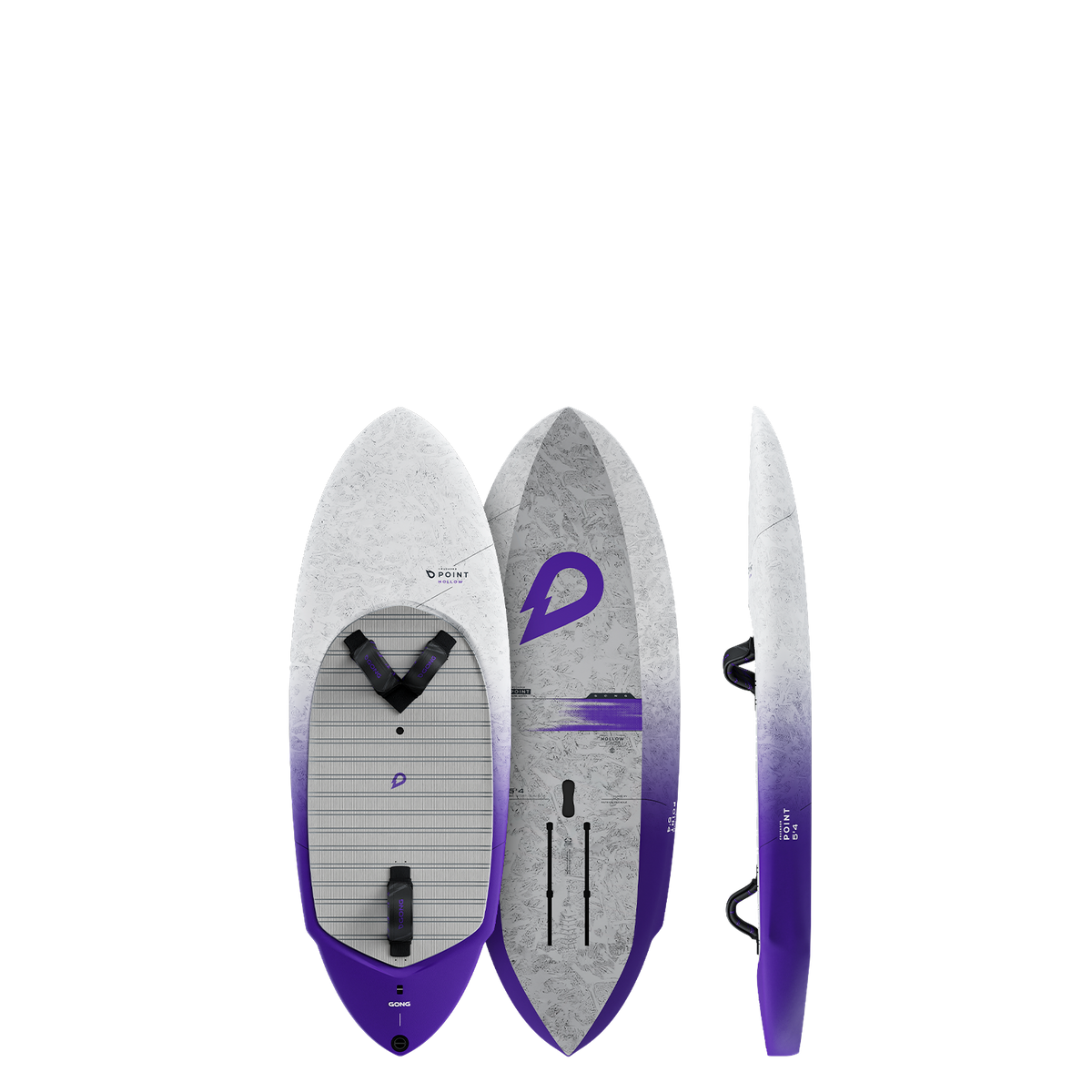

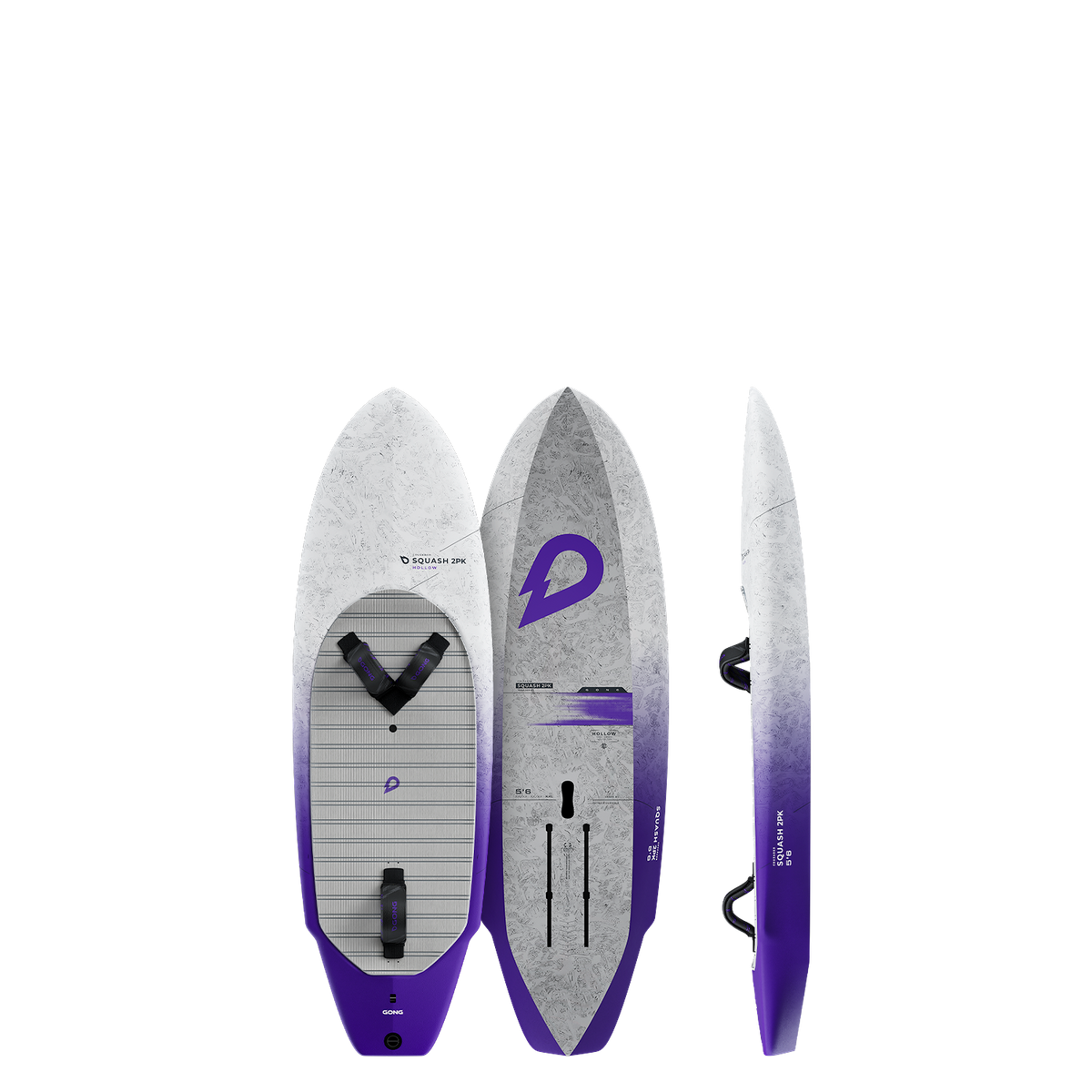


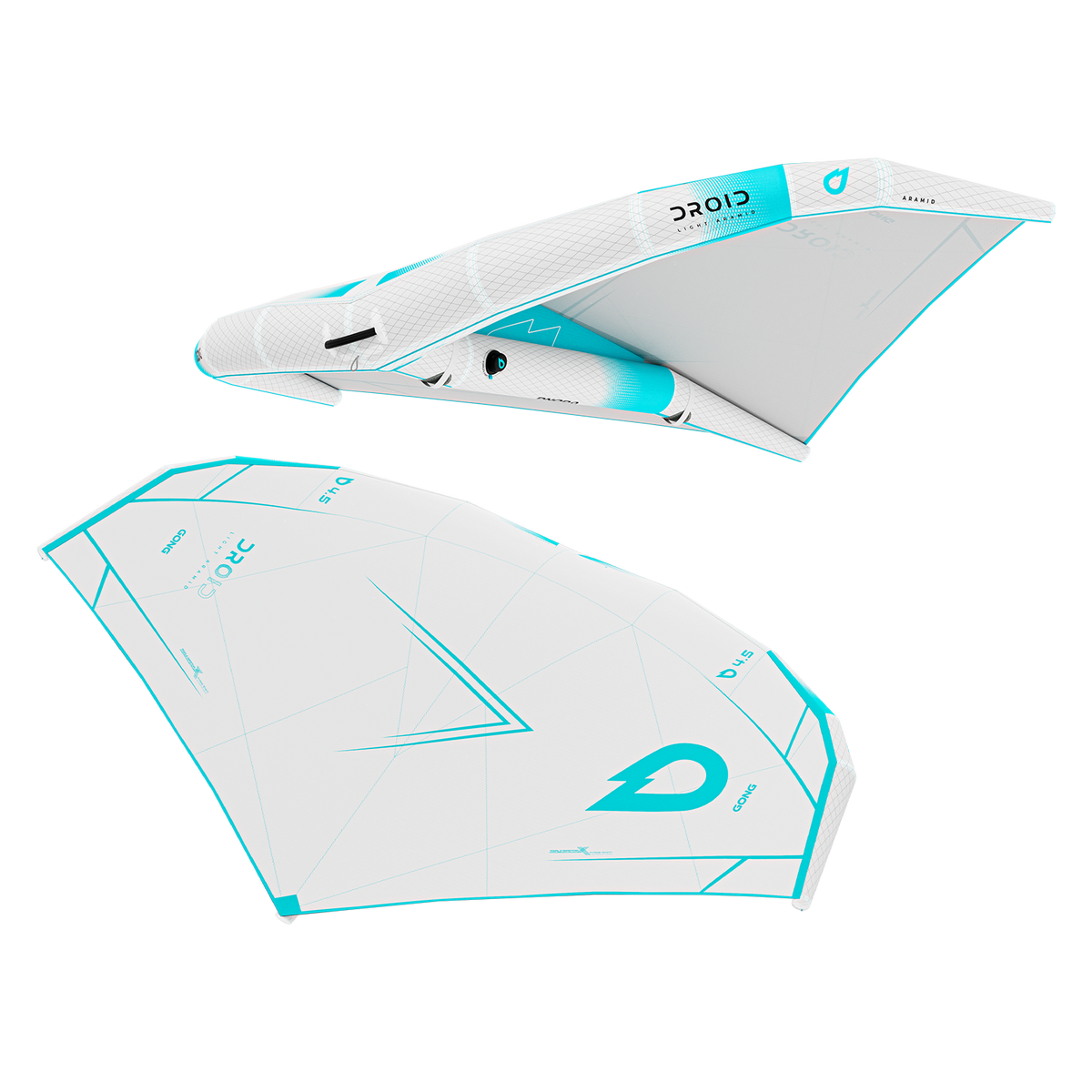
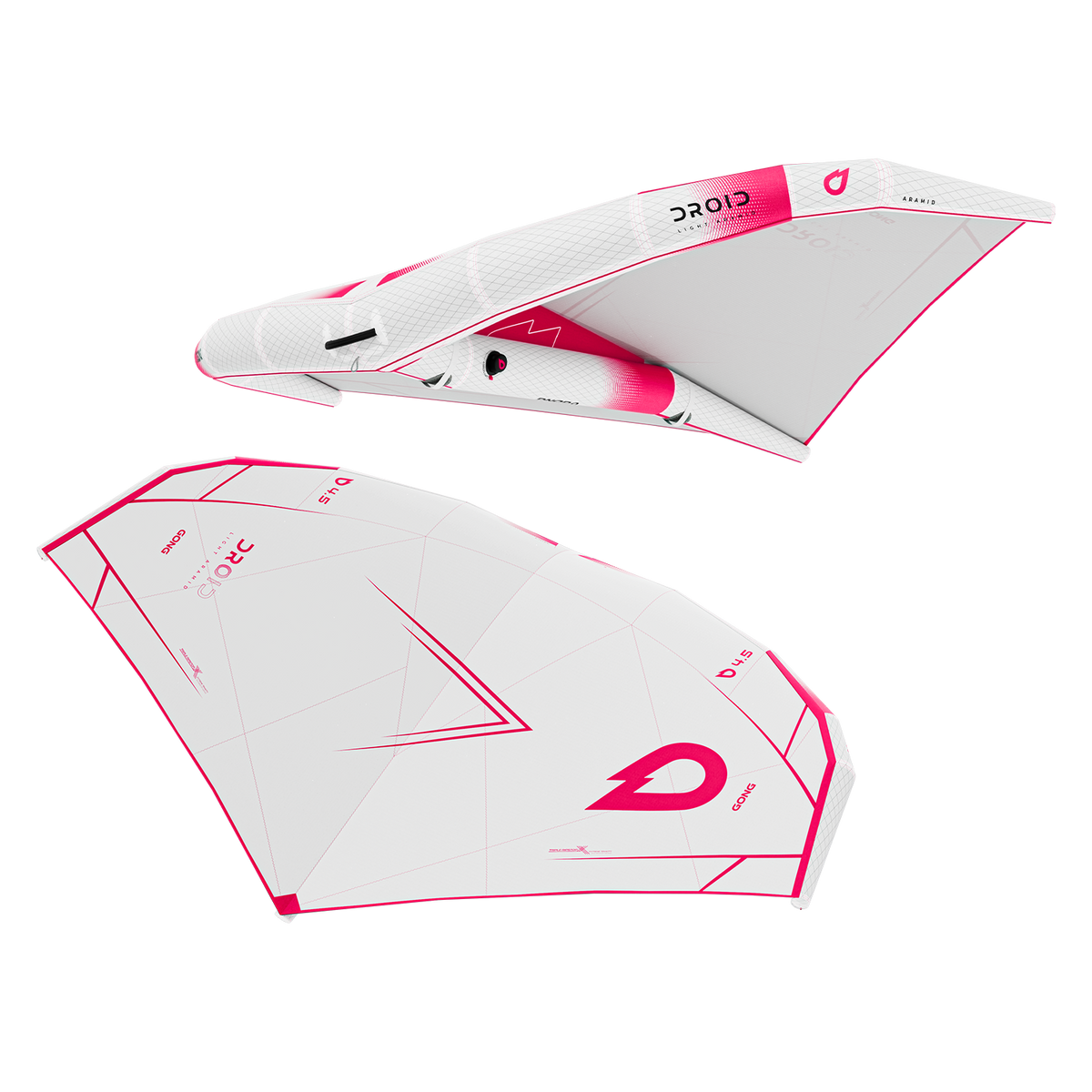
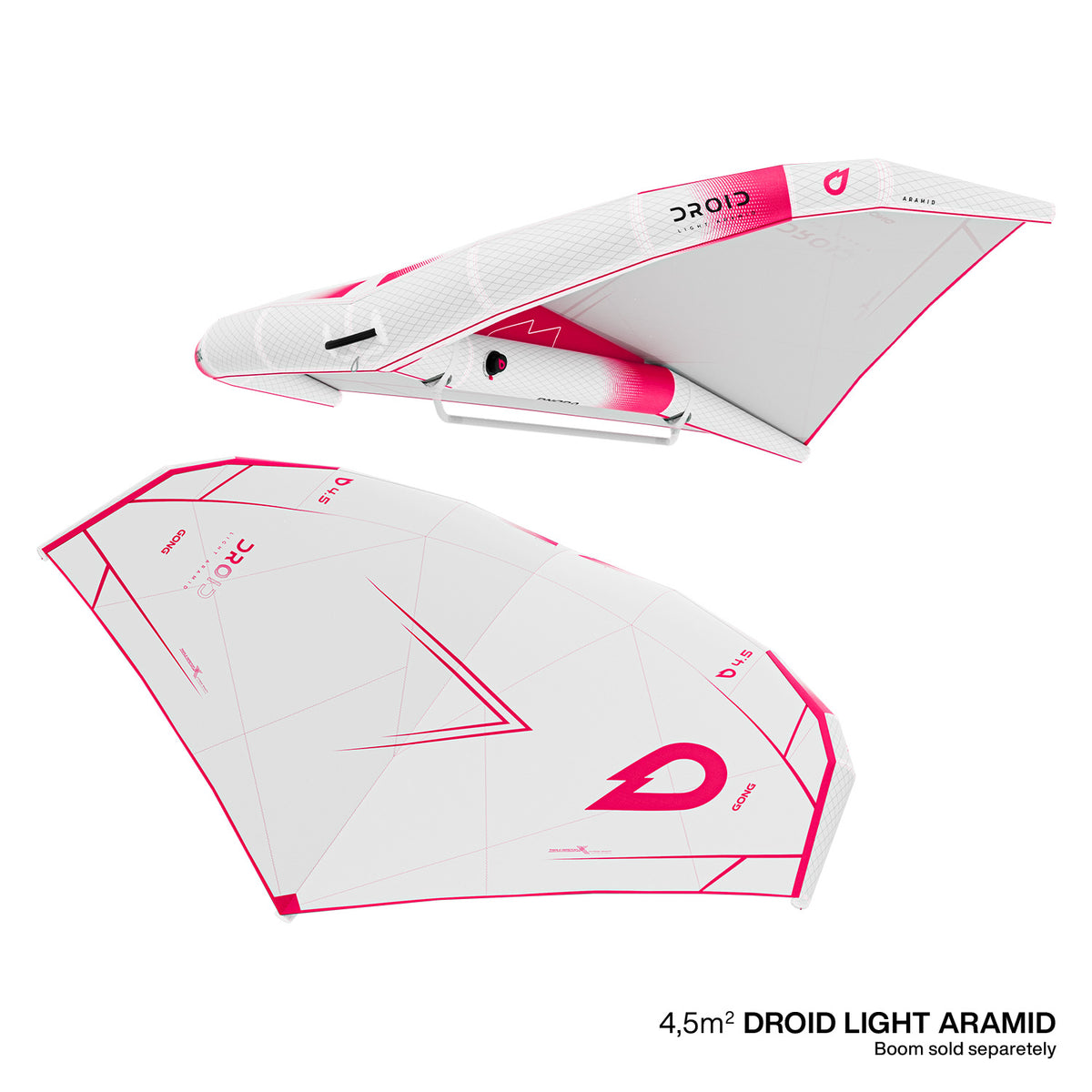








The Cruzader Point LW is aimed at experienced riders looking to maximise their low end in wing or lowkite. Its long, very narrow shape requires more precise balance than a wider board, but delivers remarkable efficiency in return to get up and flying in very little wind.
Light wind is clearly its main focus, but it does far more than just get you up early. Once flying, it also lets you freefly, surf the swell and head out downwind with a lowkite with plenty of fluidity.
Its real strength is turning a highly efficient board before take-off into a platform that stays lively and enjoyable once up and running.
The Point LW takes the search for glide and early take-off much further. Its extra length and very narrow hull generate more speed when the wind is light.
The standard Point is more versatile and more surf / freefly oriented, while the Point LW is the better choice when pushing the low end is the priority.
No, quite the opposite. Its shape is designed to generate speed with minimal effort. The stretched rocker, narrow hull and support under the back foot help efficiently turn a few pumping movements into acceleration.
Technique still matters when the wind gets very light, but the board is clearly working to help you reach take-off speed.
A narrow hull meets less resistance in the water. It therefore accelerates more easily and carries its momentum better, which is essential when very little power is available.
The “aircraft carrier” concept still provides enough usable surface area under your feet to maintain solid support without needlessly widening the part of the board that is working in the water.
Yes, especially. Its ability to accelerate with very little power makes take-offs easier, while its glide then lets you link up the swell while relying less and less on the lowkite.
With a suitable foil such as a Veloce DW, it becomes an excellent option for covering long distances downwind with smooth handling and minimal effort.
A Sirus V3 ATMO will be particularly well suited if your priority is to get up on foil in the least wind possible.
A Veloce Light Wind V3 ATMO will maintain an excellent low end with more speed once up and running. For downwind lowkite, a Veloce DW will favour long connections and glide, while a Veloce XTR will let you start pushing the speed further.
On a long board built for efficiency, the low inertia of Hollow Full Carbon is especially noticeable. The board takes less energy to move when pumping and feels much lighter underfoot once up on foil.
You keep the length needed for glide before take-off, without getting that bulky big-board feel once the foil is flying.


