Your cart is empty!
It's flat around here...



To pack, to glide: the Cruzader designed to get up early, pack away your lowkite and make the most of the downwind.
The Squash 2PK was born from a very simple idea: with a lowkite, the best part of the session often starts when you no longer need it.
You build speed, take off, pack the wing away... then let the foil do the work. That is exactly what its name says: 2PK, “to pack”. A Cruzader developed for freeride and downwind with a lowkite, with one clear goal: make the whole phase leading into freefly easier, so you can then spend as much time as possible gliding.
To achieve that, it brings together several qualities that have shaped the Cruzader character. The reassuring support of the Diamond up front, the efficient drive of the Squash at the rear, and the very free glide of the Point all come together in a shape dedicated to this new way of riding. This is not a mix of borrowed recipes: every element has been reinterpreted around the specific demands of the lowkite.
The Squash 2PK is all about efficiency. With limited pull available, every metre of glide counts. It accelerates with very little effort, efficiently converts the lowkite’s input into speed, and makes the transition into flight easier without constantly having to force the pumping.
But its appeal does not stop at take-off. Once in the air, it becomes a true freefly board: thin underfoot, direct, compact, and free enough to follow the bumps, link carves and make the most of the swell without feeling like you are piloting a big early take-off board.
That is where the concept really makes sense. The board needs to be there when you need it to get going, then disappear as soon as the foil takes over. That way, you can leave the lowkite neutral, pack it away as soon as the line allows, and fully enjoy the silence and freedom of downwind.
The Hollow Full Carbon construction perfectly supports that philosophy. Its low inertia makes the board more discreet once flying and strengthens the connection with the foil, with that feeling of having under your feet only what is truly useful.
And while its natural playground remains lowkite freeride and downwind, its huge efficiency before take-off also opens up a very interesting secondary use in light wind wing foiling, for riders looking for a thin, fast-gliding and high-performance Cruzader in marginal conditions.
So the Squash 2PK is not just a board you can use with a lowkite. It is designed for the whole sequence: build speed, take off, to pack... then let the swell decide what comes next.
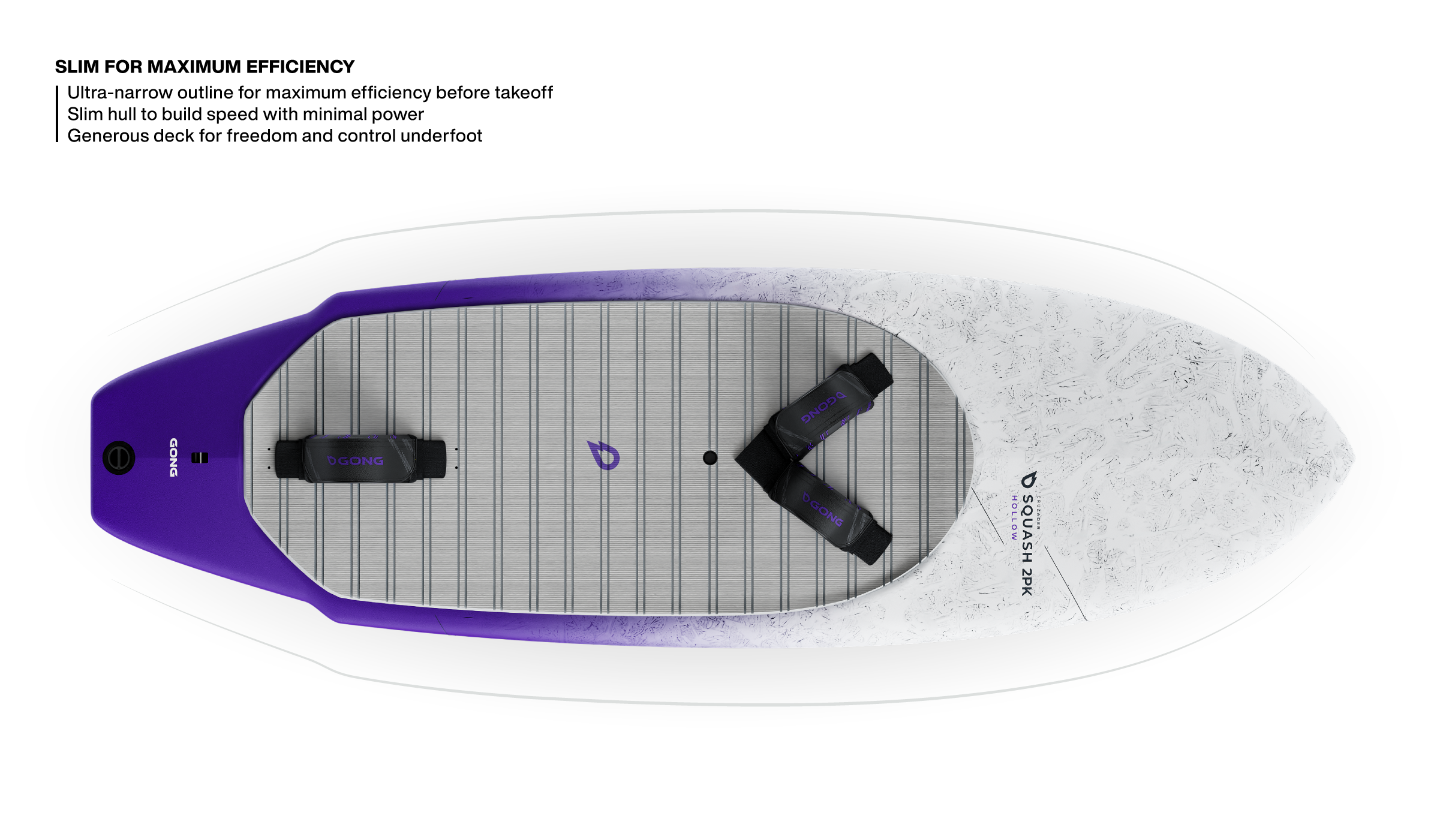
The Squash 2PK features the second narrowest outline in the range, just behind the Point LW. This slim shape greatly limits drag in the water and turns the lowkite’s light pull into useful speed, with very little energy lost before take-off.
Once up to speed, this narrow width also reduces bulk under your feet: the board can be rolled hard onto the rail without touching the water unnecessarily.
The flat rocker works with the 2PK’s narrow outline to promote continuous glide and build speed quickly with the low pull of a lowkite. The board moves naturally across the water and efficiently turns every input from the wing into acceleration.
The curve stays progressive enough towards the front to keep some margin when the water surface gets messy or the nose reconnects with the water, without compromising the efficiency that makes this shape so appealing.

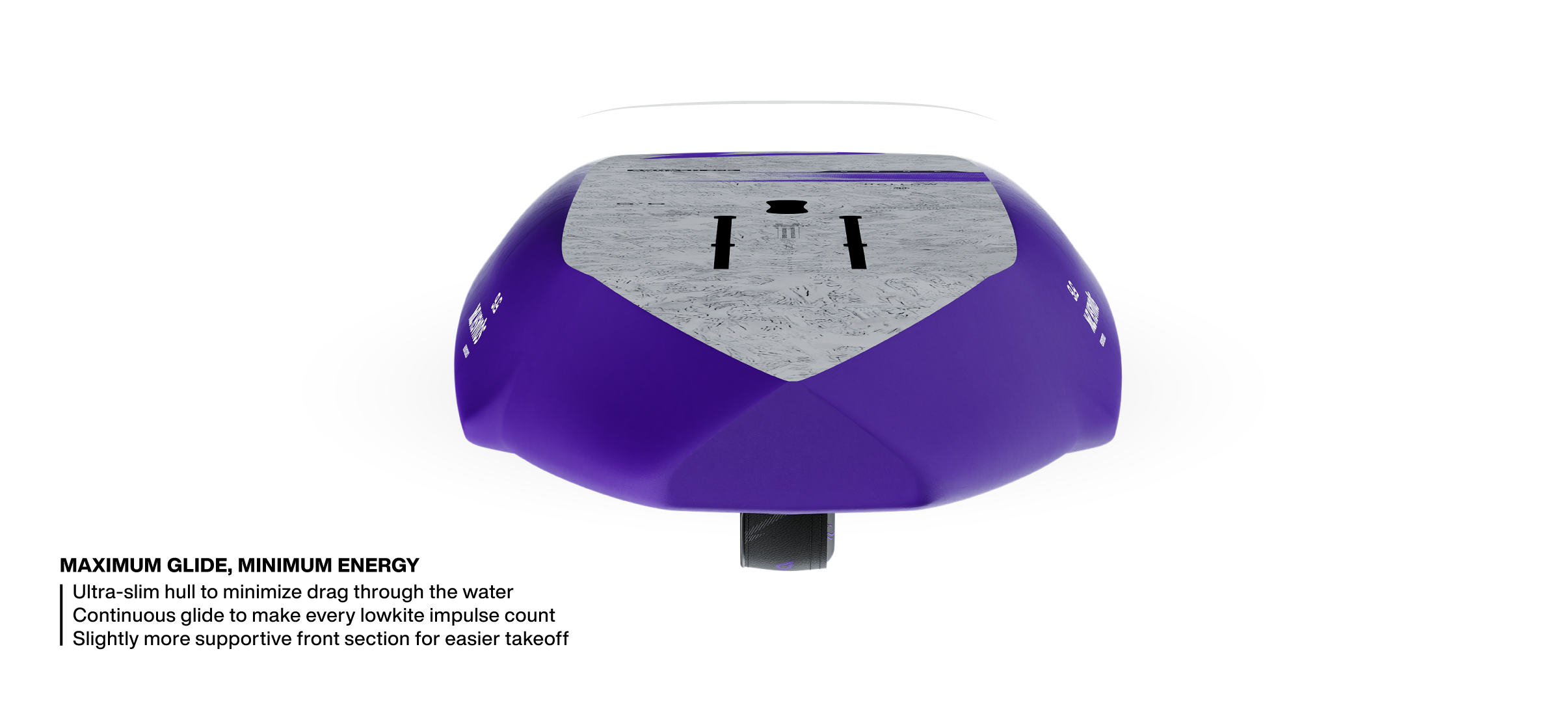
The hull takes on the ultra-gliding philosophy of the Point, with a particularly fine submerged section that cuts through the water with minimal resistance. The 2PK easily carries its speed between two lowkite inputs and requires less energy to get up on foil.
A small more supportive area under the nose provides just the right amount of support in slower phases and at take-off, without compromising the glide that is the shape’s top priority.
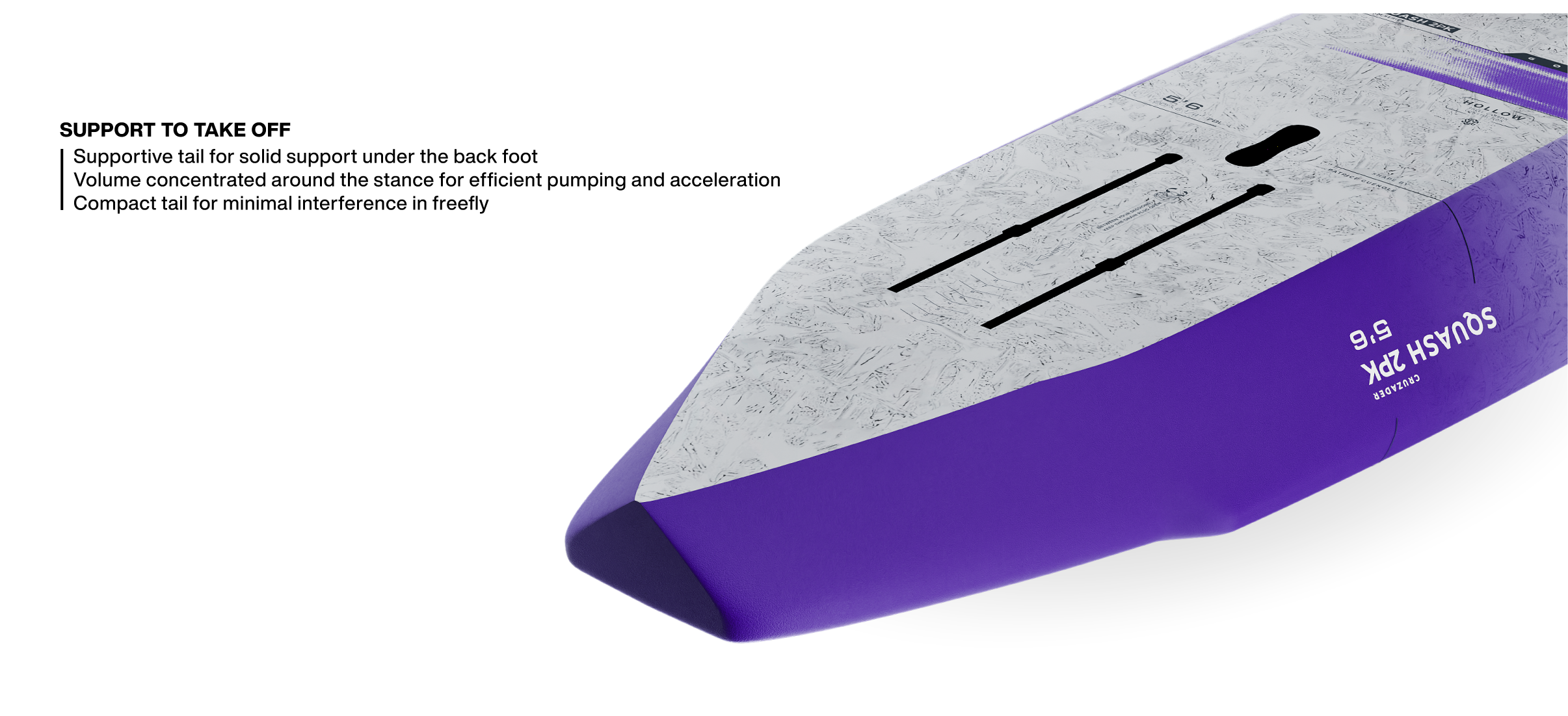
The tail follows the Squash logic, with a compact tail that still provides enough lift to create real support under the back foot. This surface helps stabilise the board in slower phases and lets you load your pressure points efficiently when you need to accelerate or pump.
The volume distributed around the tail further reinforces this support before narrowing towards the tip. You gain efficiency on take-off without turning the tail into cumbersome volume once flying.
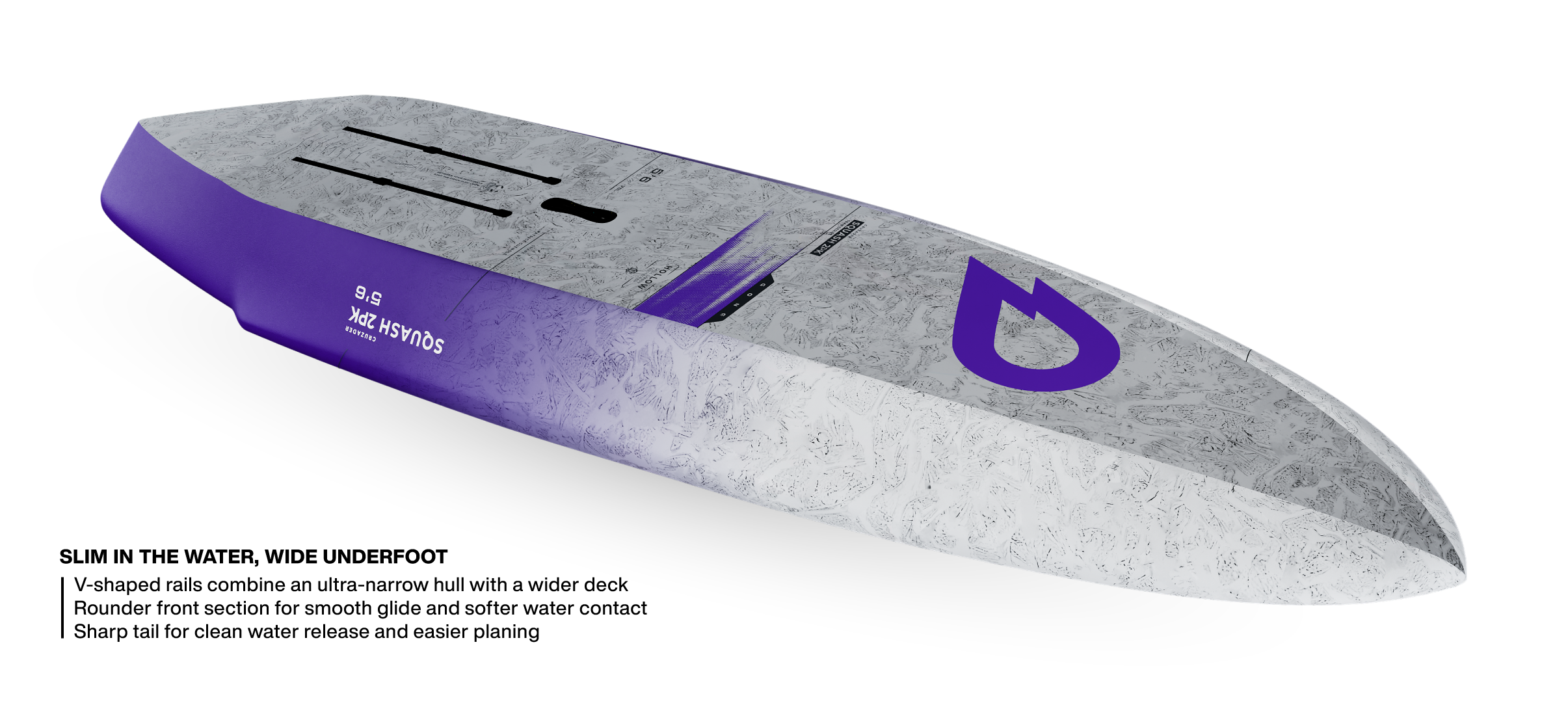
The hull stays very narrow all the way through, with V rails that keep that slim profile in the water while giving you more width back on the deck. The 2PK combines an ultra-slim, high-glide submerged section with a more generous stance area for control.
The rails are rounder up front to smooth out the passage through the water and make touchdowns more progressive, then become sharper towards the rear to release the hull cleanly and promote acceleration into flight.
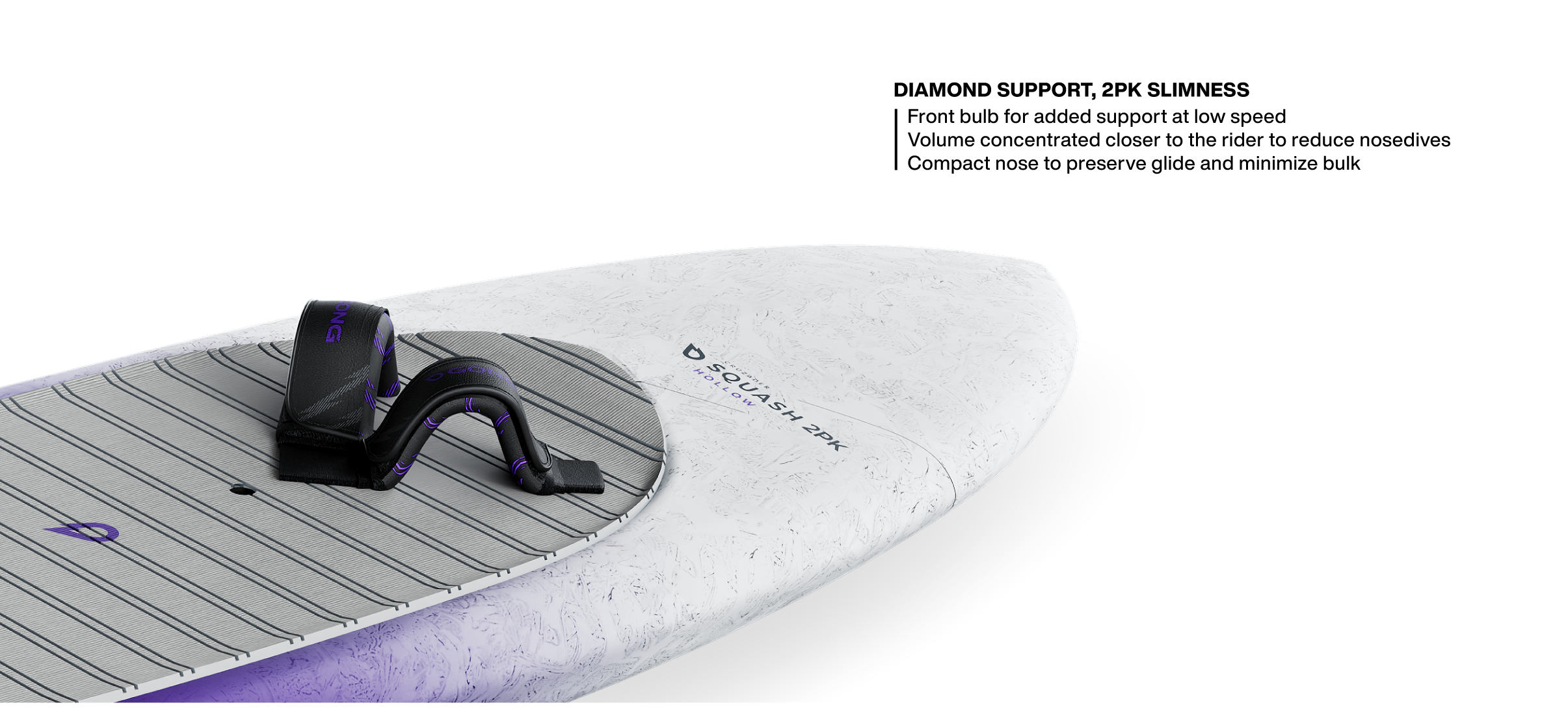
The front end follows the Diamond philosophy, with a nose that concentrates its volume close to the rider. The bulb provides support when the front foot loads the board and helps maintain a healthy trim through the glide and take-off phases.
This volume reserve is achieved without needlessly widening the entire tip. The nose therefore stays fine and efficient in the water, while giving you more margin when the front end is under load.
The Squash 2PK is aimed at riders who already have foil dialled in and want to make the most of lowkite in a freeride, downwind and freefly setup.
Its very narrow shape puts efficiency first. It therefore requires a little more precision in the kneeling phases and before take-off than a wider Cruzader, but immediately rewards the rider with very natural glide and a board that feels especially unobtrusive once up to speed.
It is ideal for riders who like to use the lowkite as a power source to get going, then pack it away as soon as the swell or bumps take over.
Take off efficiently with a lowkite, pack your wing away and make the most of freefly.
The Squash 2PK is designed first and foremost for high-glide freeride and downwind. Its slim shape lets it build speed with very little pull, then its low bulk completely frees up handling once flying.
Its name sums up its programme: 2PK, “to pack”. You build speed, take off, stow the lowkite as soon as conditions allow, then let the foil link the bumps.
It is also highly relevant in light wind wing foiling, for riders who want to make the most of its huge efficiency before take-off with a slim, direct board.
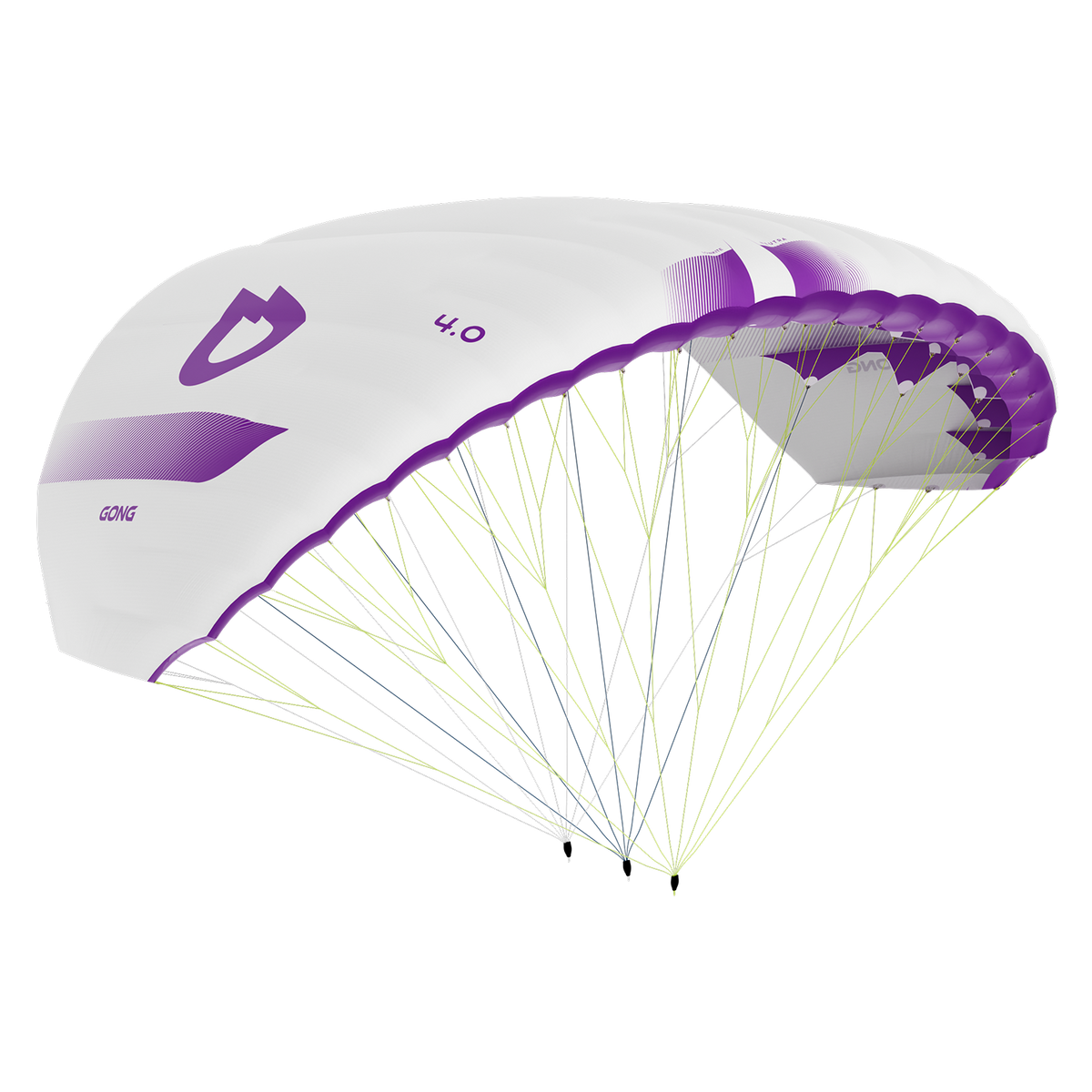
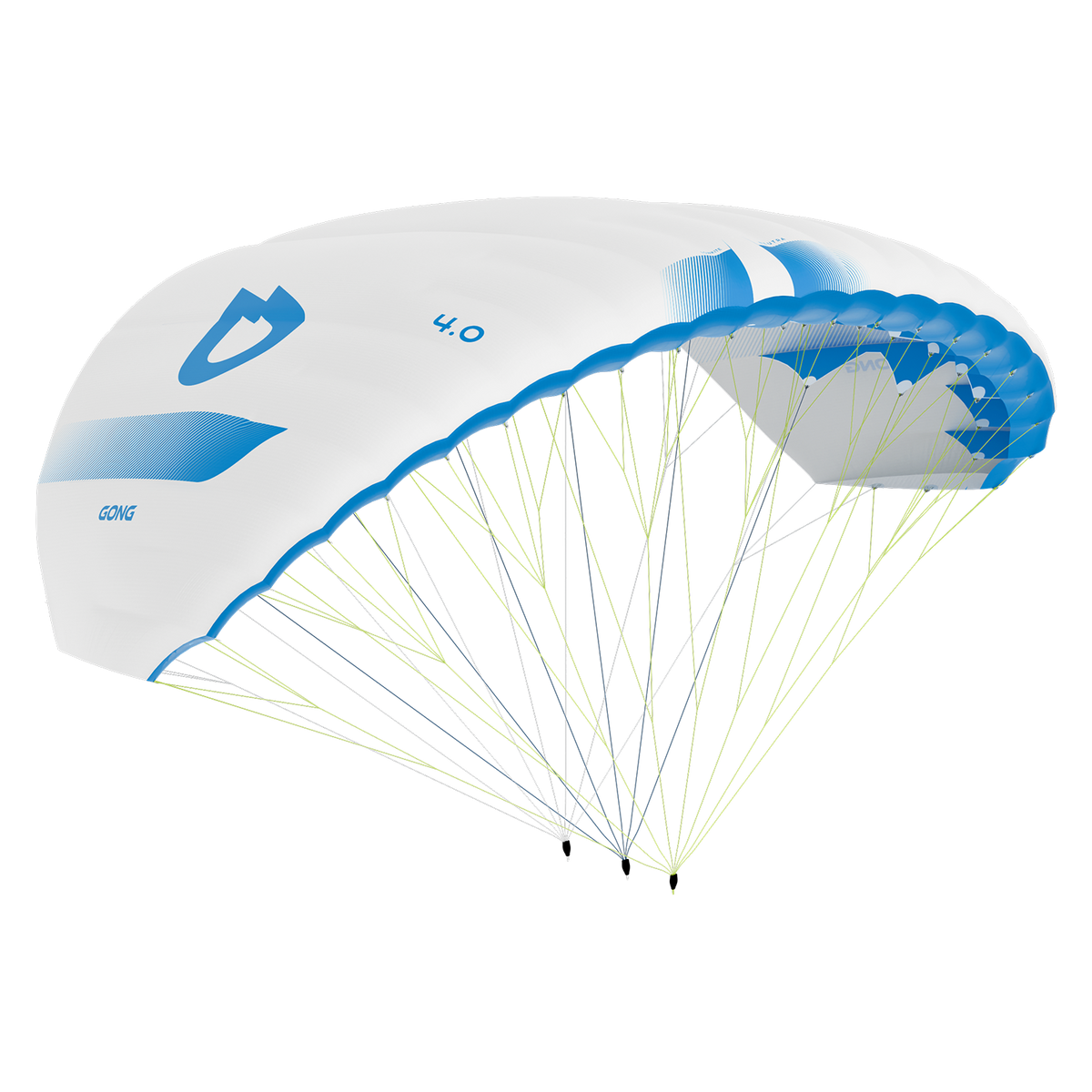
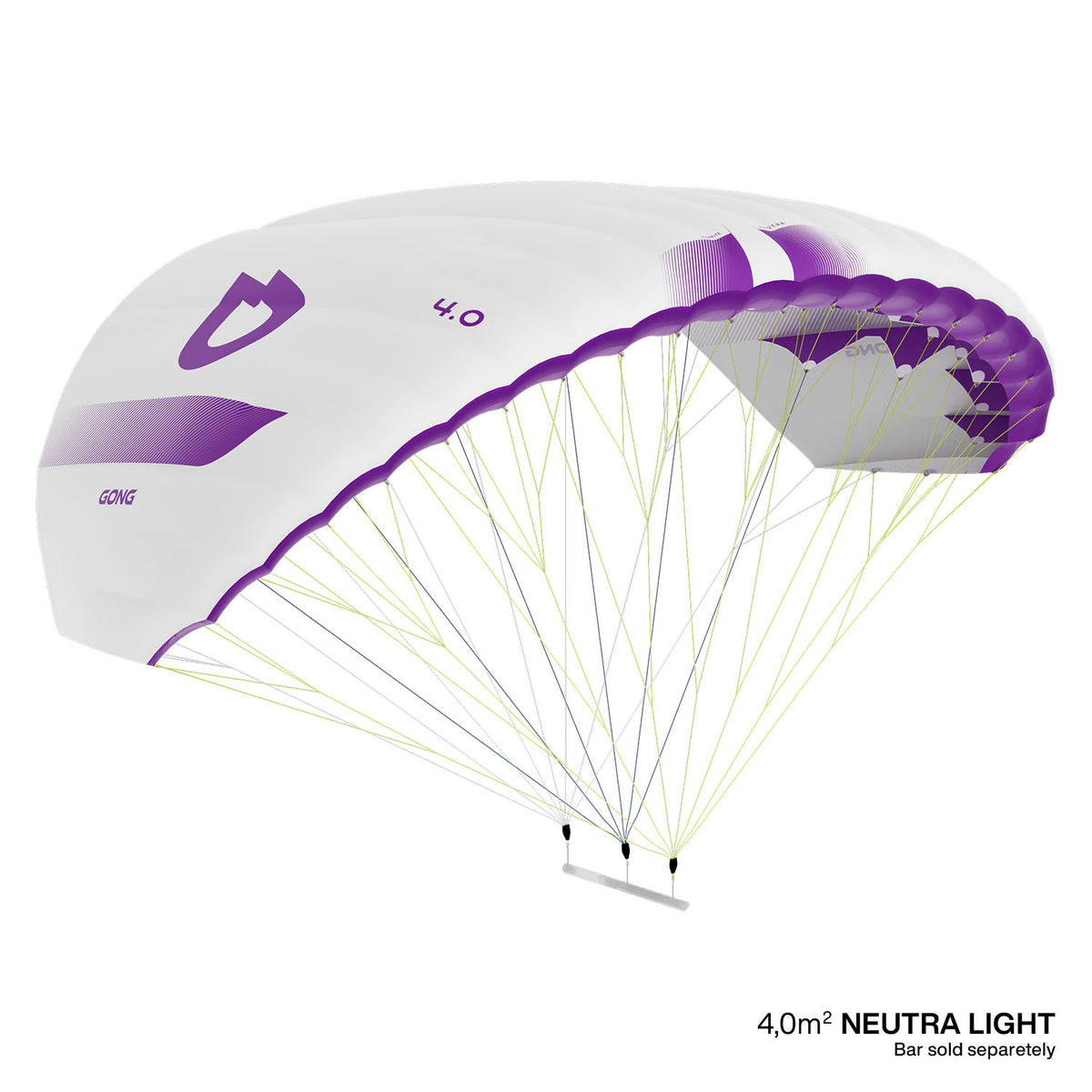
The Neutra Light is one of the most natural combos with the Squash 2PK.
Light, precise and very enjoyable in freefly, it lets you accelerate efficiently to take off, then disappear from the equation as soon as the rider wants to let the foil do the work. This pairing is especially coherent for freeride and downwind, with a very simple logic: get going easily, pack quickly, glide for a long time.
Other lowkites can of course work depending on skill level, conditions and the intended programme, but a light wing geared towards freefly makes particularly good use of the 2PK concept.
On the Squash 2PK, the foil needs to extend its two main qualities: early take-off with very little pull and sustained glide once the lowkite is packed away.
The Veloce Light Wind V3 ATMO: to get going as early as possible.
It is one of the most coherent setups with the 2PK in light conditions. Its lift and low-speed efficiency make the transition to flight easier with very little pull, while still keeping enough glide to carry on moving efficiently once up to speed. In lowkite as in light wind wing foiling, it is the logical choice to make the most of the board’s early take-off.
The Veloce DW V3 ATMO: to maximise downwind.
Its priority is glide. Once the lowkite is packed away, it lets you hold speed for a long time and stretch the connections between bumps. It is the natural choice for pushing the 2PK concept towards pure downwind.
The Veloce Free Fly V3 ATMO: for more manoeuvrability.
It keeps very good efficiency while giving more freedom through carves. It is an excellent choice for a more playful freeride/downwind programme, when you want to link bumps but also make the most of every bit of swell energy.
The Veloce XTR V3 ATMO: to speed up downwind.
More speed-oriented, it is aimed at riders who want to push their average speed further in the bumps. It keeps strong efficiency while allowing faster, more committed lines.
In short: Veloce Light Wind to get going as early as possible, Veloce DW to maximise glide, Veloce Free Fly for more freedom and Veloce XTR to push speed.
The tail wing needs to complement the programme without compromising the setup’s overall efficiency. On the Squash 2PK, the main focus is on glide, stability and freedom through carves.
The Veloce: for versatile freefly.
It brings a good balance of glide, speed and manoeuvrability. It is a coherent choice when you want to keep a foil that is playful, fluid and easy to use in the swell.
The Veloce DW: to stretch the connections.
It is particularly well suited to downwind-oriented setups, with priority given to speed retention and efficiency between bumps.
The Tail Shaft Medium offers a good compromise for freeride/freefly use, with enough manoeuvrability to play with the swell. The Long can be preferred when you are looking for more stability and glide on long lines.
The tail wing size then lets you fine-tune the feel:
On the Squash 2PK, the best setup is the one that lets you take off easily, then keep maximum efficiency once the lowkite is packed away.
These boards come equipped with 2 GONG US Box Double Entry tracks compatible with standard 4-bolt plate foils and the SCS system with 9 cm spacing, Luxe footstraps with multi-position anti-twist inserts, a Ridge Traction Pad, an integrated carry handle, a leash plug, an automatic pressure relief screw and a high-flow drainage valve.
The Double Entry system allows very fast installation of GONG foils while remaining compatible with standard square nut setups. The SCS is not supplied with the board.
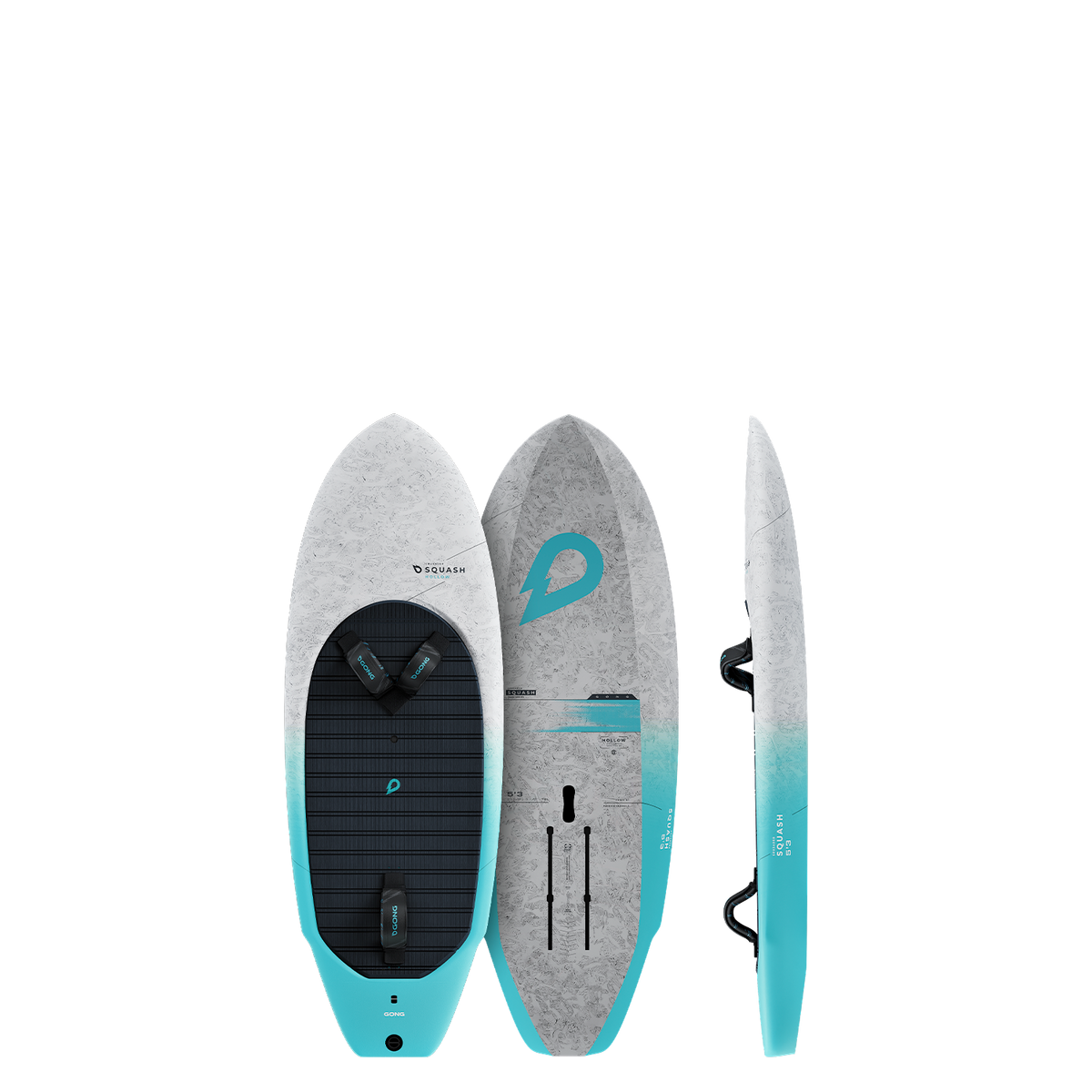

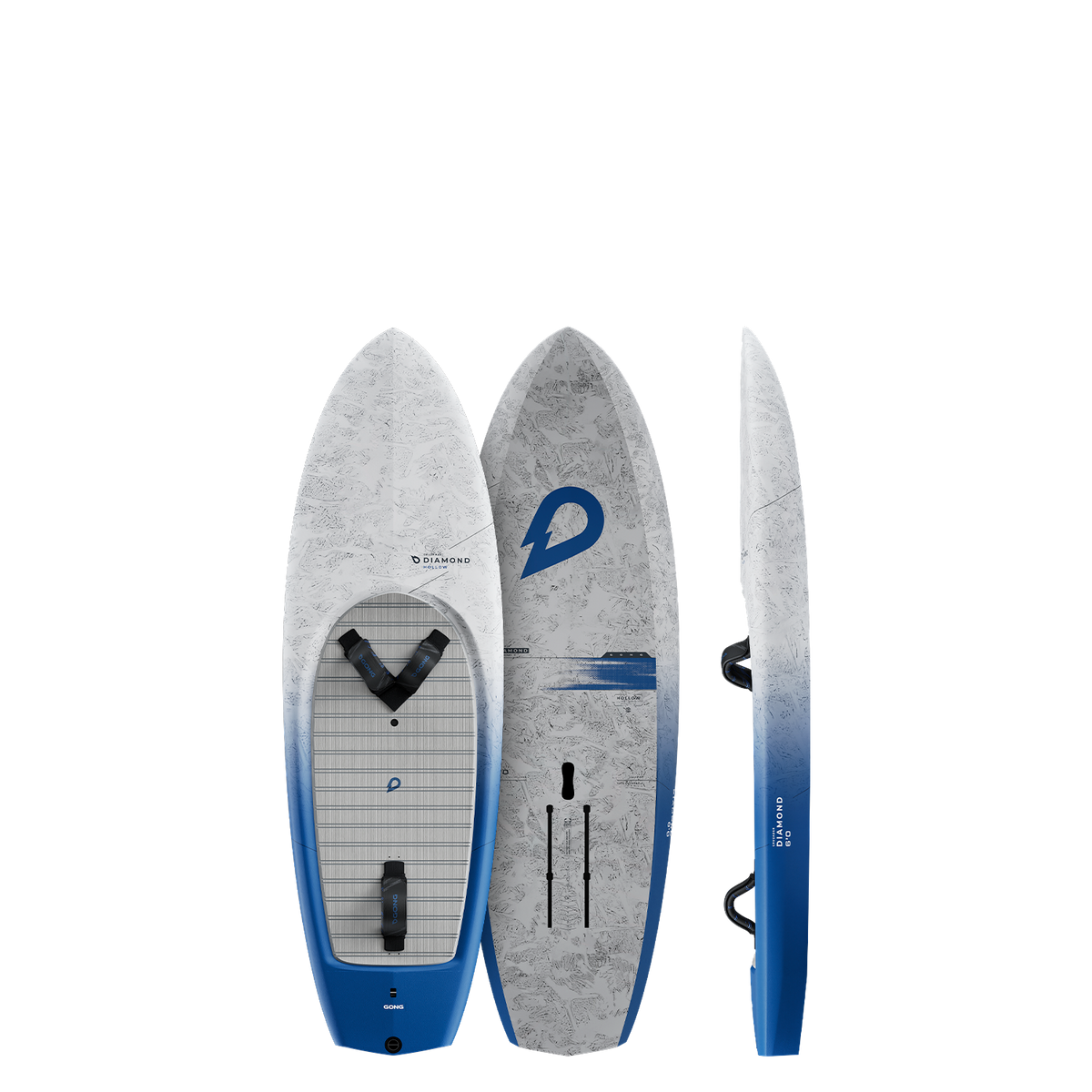










2PK means “to pack”. The whole board has been designed around this sequence specific to lowkite: using the wing to build speed and take off, then packing it away when the swell lets you keep going in freefly.
Its name directly sums up its programme: take off, to pack, then glide.
The 2PK combines several qualities developed across the Cruzader range in a shape specifically designed for lowkite: the support of the Diamond up front, the drive of the Squash at the rear, and the glide quality of the Point.
The goal is not to be the most versatile board in the range, but to bring these qualities together around a very specific use: getting going efficiently with minimal pull, then making the most of the foil in freefly.
It’s the second narrowest board in the range, behind the Point LW. This reduced width cuts drag in the water and lets you maintain plenty of speed with limited pull.
In lowkite, that’s essential: rather than relying solely on the kite’s power, the 2PK banks on its efficiency to naturally reach take-off speed.
Its narrowness naturally requires more precision than a wider Cruzader, but the shape makes up for it by placing the volume where it genuinely provides support.
The forward bulb supports the front foot, the rear volume stabilises the tail, and the usable width of the deck remains greater than that of the hull. So you keep a very narrow hull without reducing the space available under your feet to the same extent.
It’s the principle behind the “aircraft carrier” shape. The part slicing through the water stays extremely narrow to maximise glide, while the V rails rise up towards a wider deck.
This gives you two advantages that are normally hard to combine: minimal surface area in the water and enough width under your feet to control the foil efficiently.
They maintain a thin hull right across the board while progressively recovering width on the deck.
Their geometry then evolves according to the intended function: rounder at the front to soften the passage through the water and touchdowns, then sharper at the rear to release the water cleanly and make it easier to get up and gliding.
The recessed deck brings your feet closer to the foil. This reduction in height improves the transfer of pressure and gives a much more direct feel once flying.
It also keeps volume in the ends rather than under your feet: support to get going, but less thickness between the rider and the foil.
Yes, and that’s precisely one of the key benefits of the concept. The narrow hull greatly reduces bulk when the board is put on rail, while the deck keeps enough width around the stance to let you move your feet off-centre.
The rider can therefore create leverage through the feet and commit to carves without the hull width quickly touching the water.


