Your cart is empty!
It's flat around here...
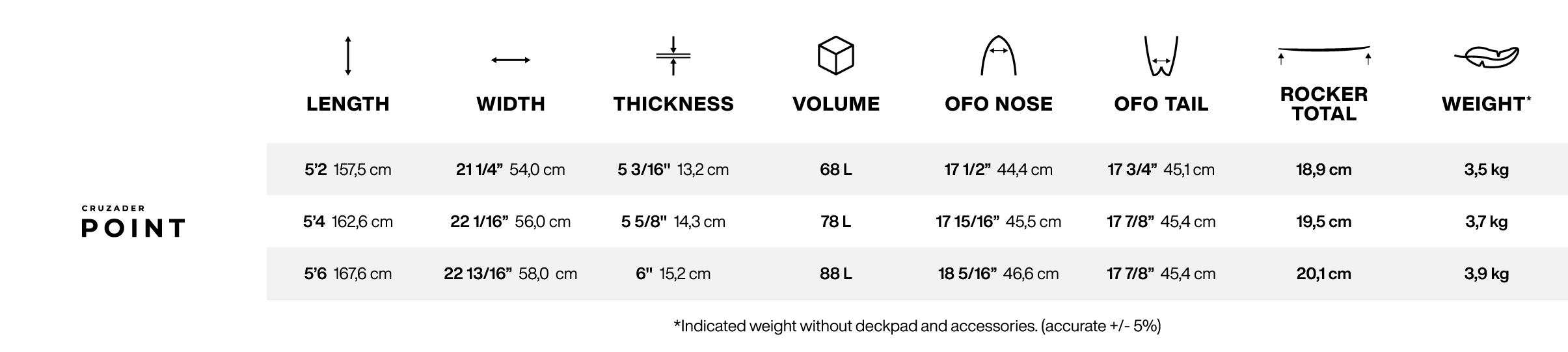

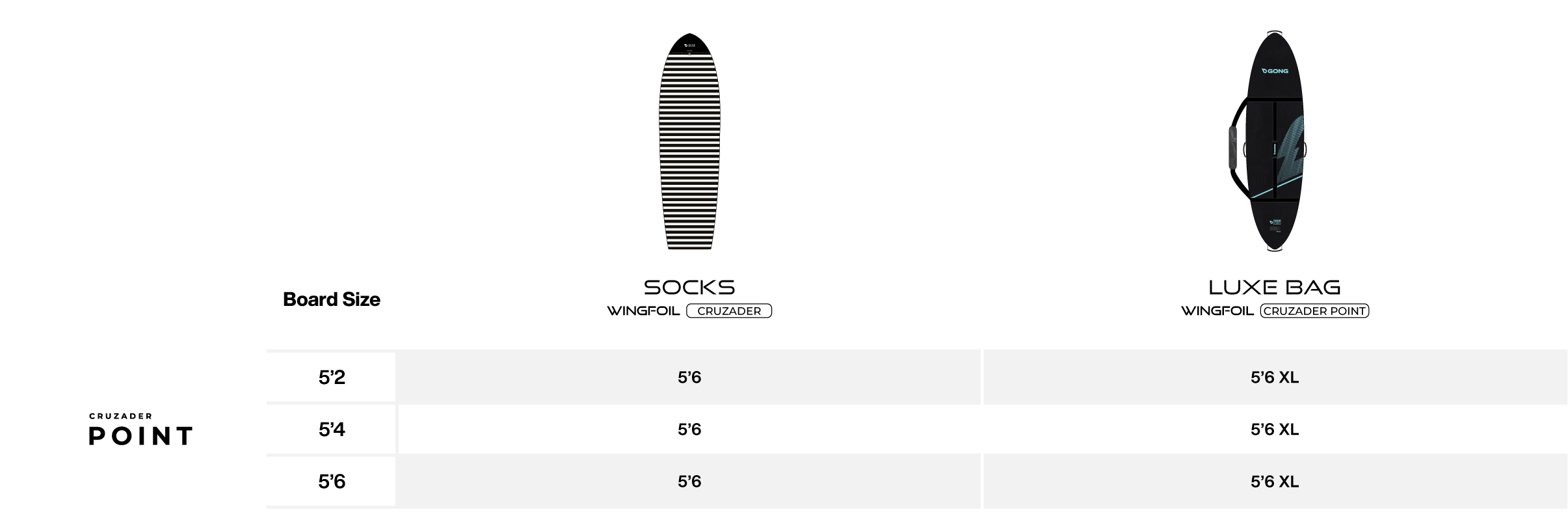


Glide, precision and freedom in a shape designed for surf and freefly.
The Cruzader Point is a versatile surf-inspired board with insane glide, designed to get the most out of wing and lowkite, well beyond pure light wind use.
It keeps everything that makes it so special: a slim board, quick to get going and incredibly discreet once flying. But it goes even further with more connection, more support and even more freedom through carves.
The more recessed deck naturally brings the rider closer to the foil. The board feels more direct underfoot, pressure transfers more easily and handling becomes even more intuitive, especially in surf and freefly.
The volume distribution has also been refined to keep comfort where it really matters. You get more support up front and at the back, without losing the Point’s ultra-slim, ultra-free character.
On the water, it keeps all its magic: it glides, accelerates easily and lifts off early. You can ride with less power, make the most of lighter conditions for longer, and even downsize your foil to unlock more speed and sensation.
Once flying, the Point disappears beneath you. Its slim nose, very clean tail and centred stance create that famous “no nose” feeling: very little board in front of your feet and huge freedom to carve, freefly or simply let the foil glide.
The Hollow Full Carbon construction pushes that feeling even further. The board feels lighter, livelier and more natural underfoot, with less inertia in every weight transfer.
The Cruzader Point stays true to its DNA, while pushing even further what makes it stand out: loads of glide before take-off, loads of freedom once in the air, and a real feeling of lightness through every phase of the ride.

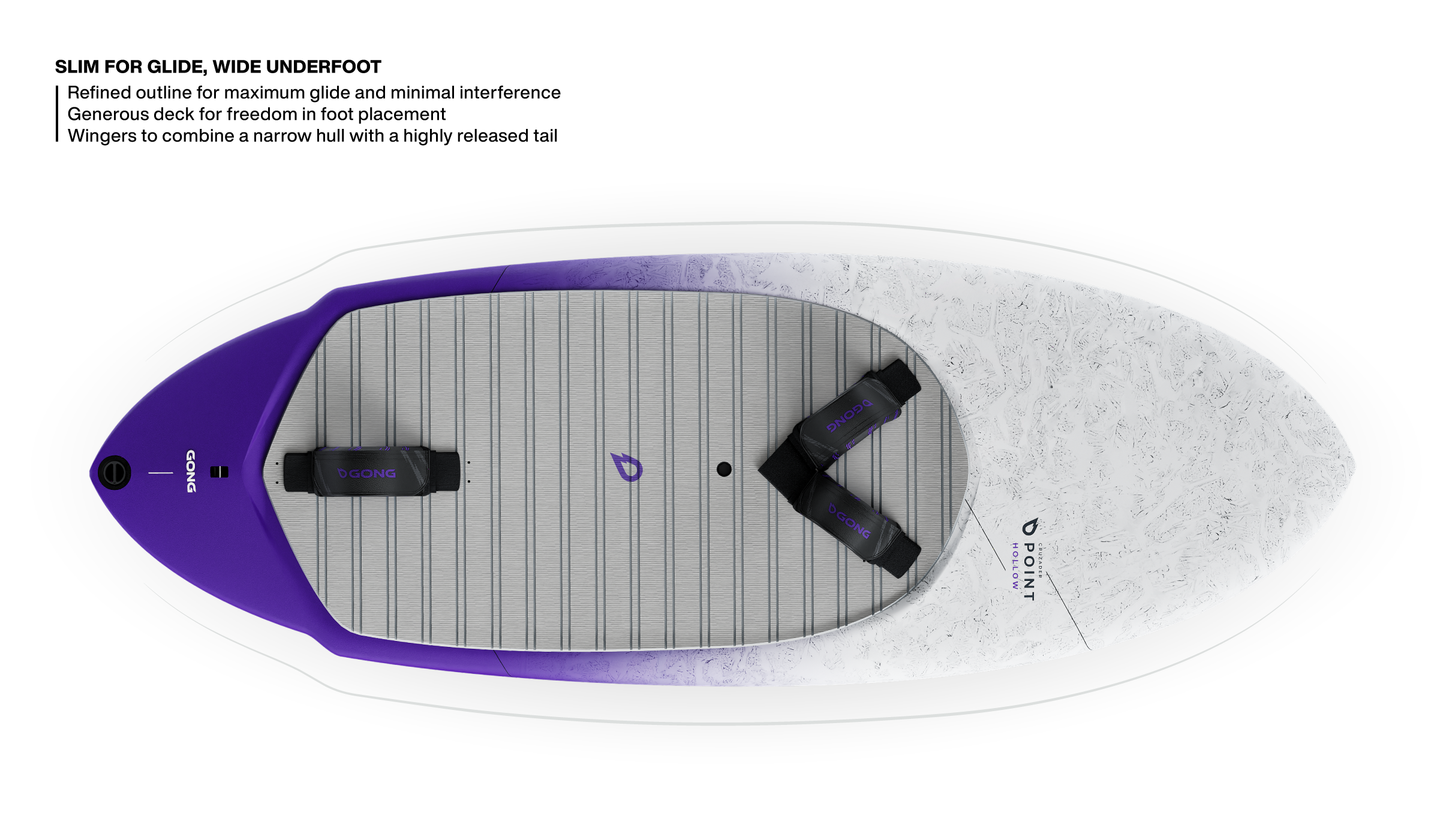
The mid-length outline stays slim and highly refined at the tips to preserve that exceptional glide and, above all, keep swing weight to a minimum in carves. The Point accelerates easily on the water, then becomes extremely discreet as soon as it lifts off.
The "aircraft carrier" concept evolves with a more recessed deck that still stays generous around the stance. The wingers let you keep room under your feet while maintaining a very narrow hull and a particularly clean pin tail.
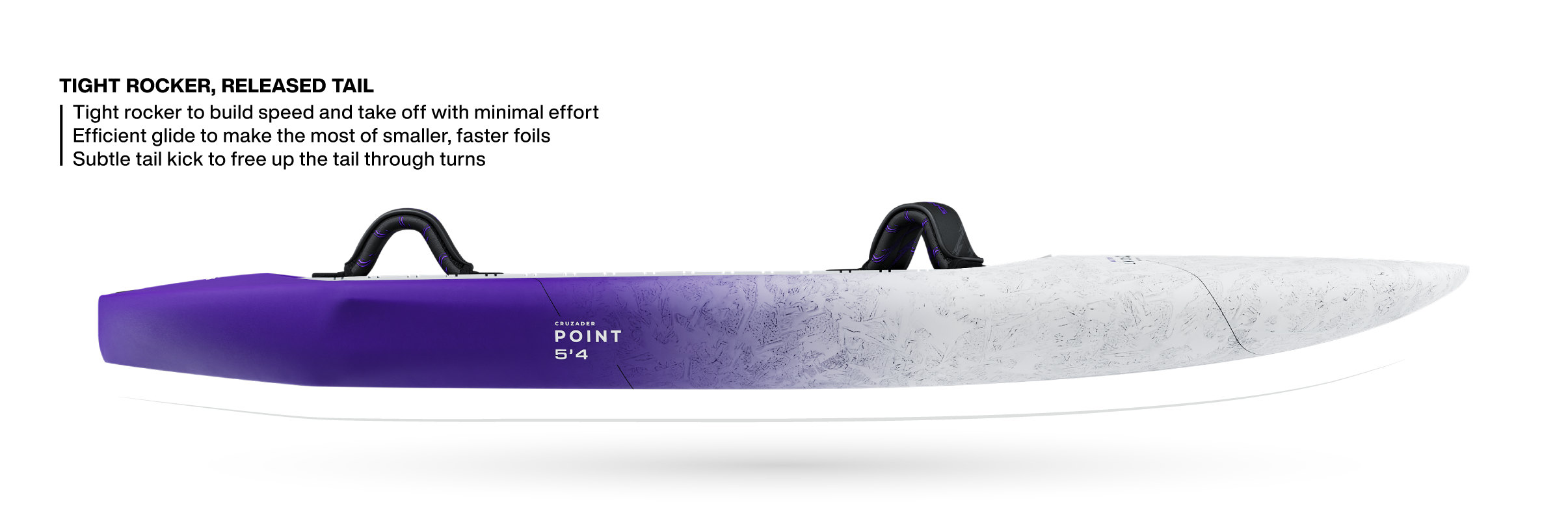
The very flat rocker remains a key element of the Point. It promotes natural acceleration before take-off and lets you lift off early without having to oversize your wing or force the pumping.
The slight kicktail keeps just the right amount of clearance at the rear. It frees up the pin tail when the board is put on rail and limits touchdowns in carves without compromising glide.
The Point keeps a very flat area around the boxes, ideal for releasing water and efficiently converting speed into take-off. Up front, the more progressive hull supports glide and smooths out contact with the water.
A small more supportive area under the front now provides extra support when the nose is under load. The board keeps its excellent glide while gaining comfort during touchdowns and take-off phases.
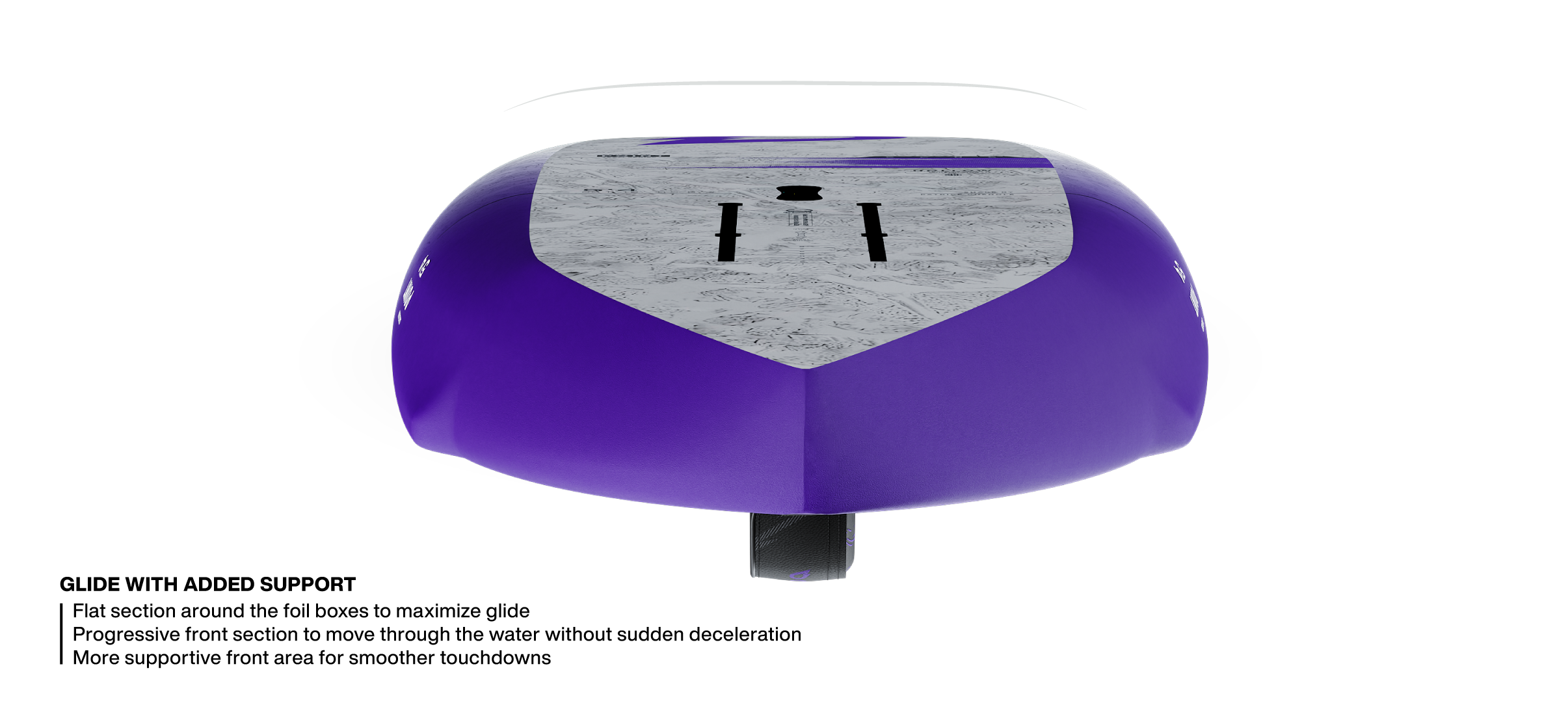
The very pulled-in pin tail remains one of the Point’s signatures. Its narrow width behind the back foot drastically reduces bulk and lets you commit to carves without feeling the board interfere with the foil.
The new volume distributed around the tail provides more support under the rider before gradually fading out towards the tip. You gain comfort when pumping and getting back up, while keeping an extremely free-feeling tail in flight.
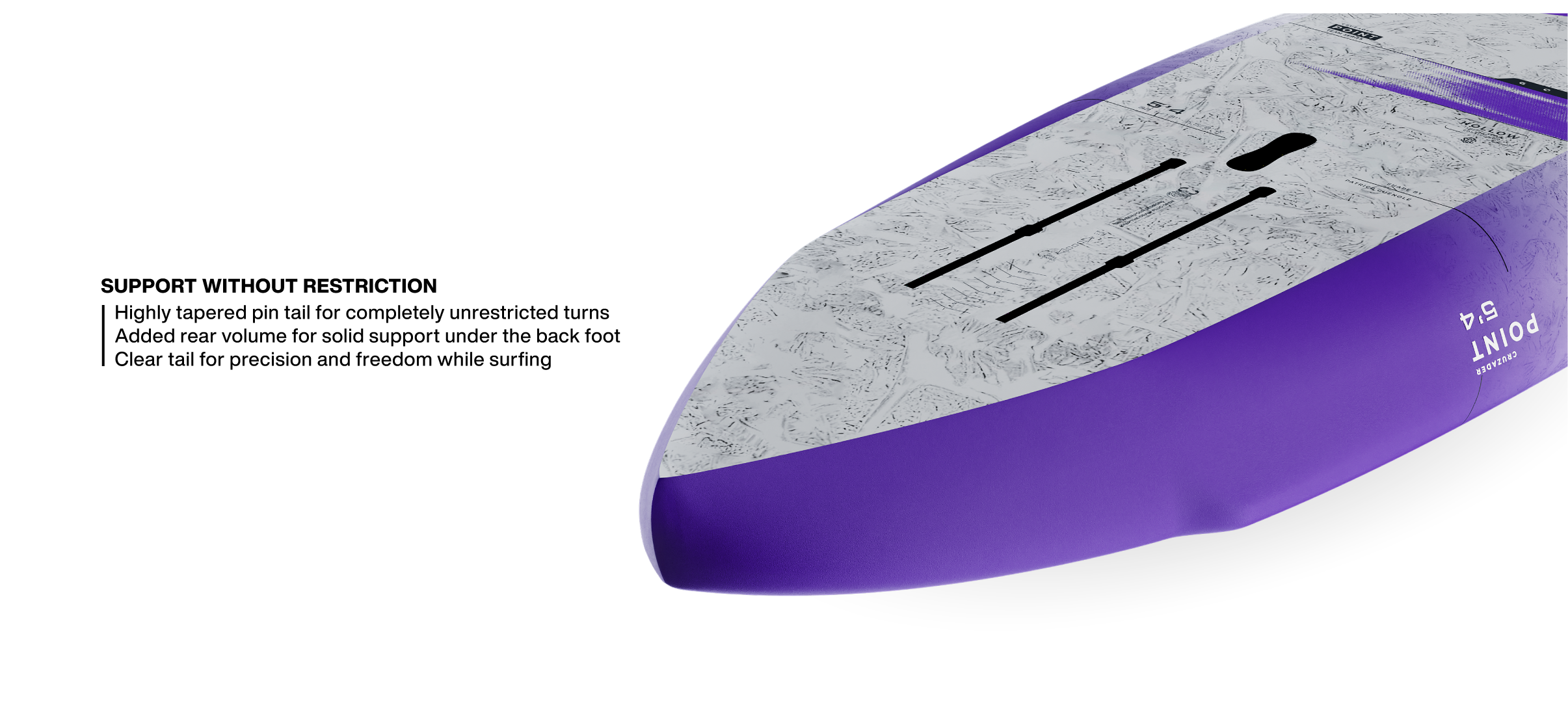
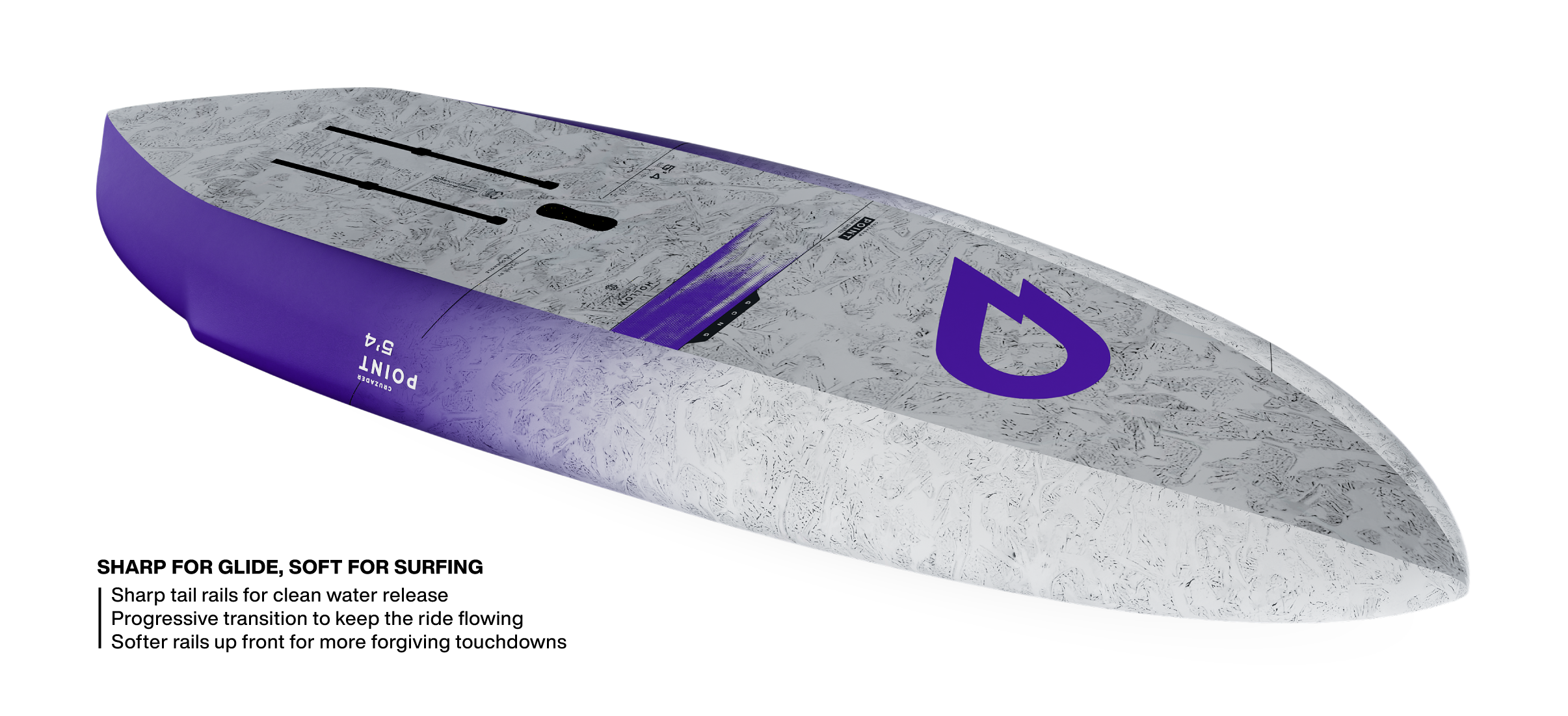
The rails stay straight and sharp at the tail to deliver clean release and promote glide throughout the acceleration phase. The water releases cleanly off the hull to make take-off and relaunches easier.
Further forward, they gradually become softer and rounder. This lets the Point handle contact with chop or the water better through a carve, without any sudden braking effect.
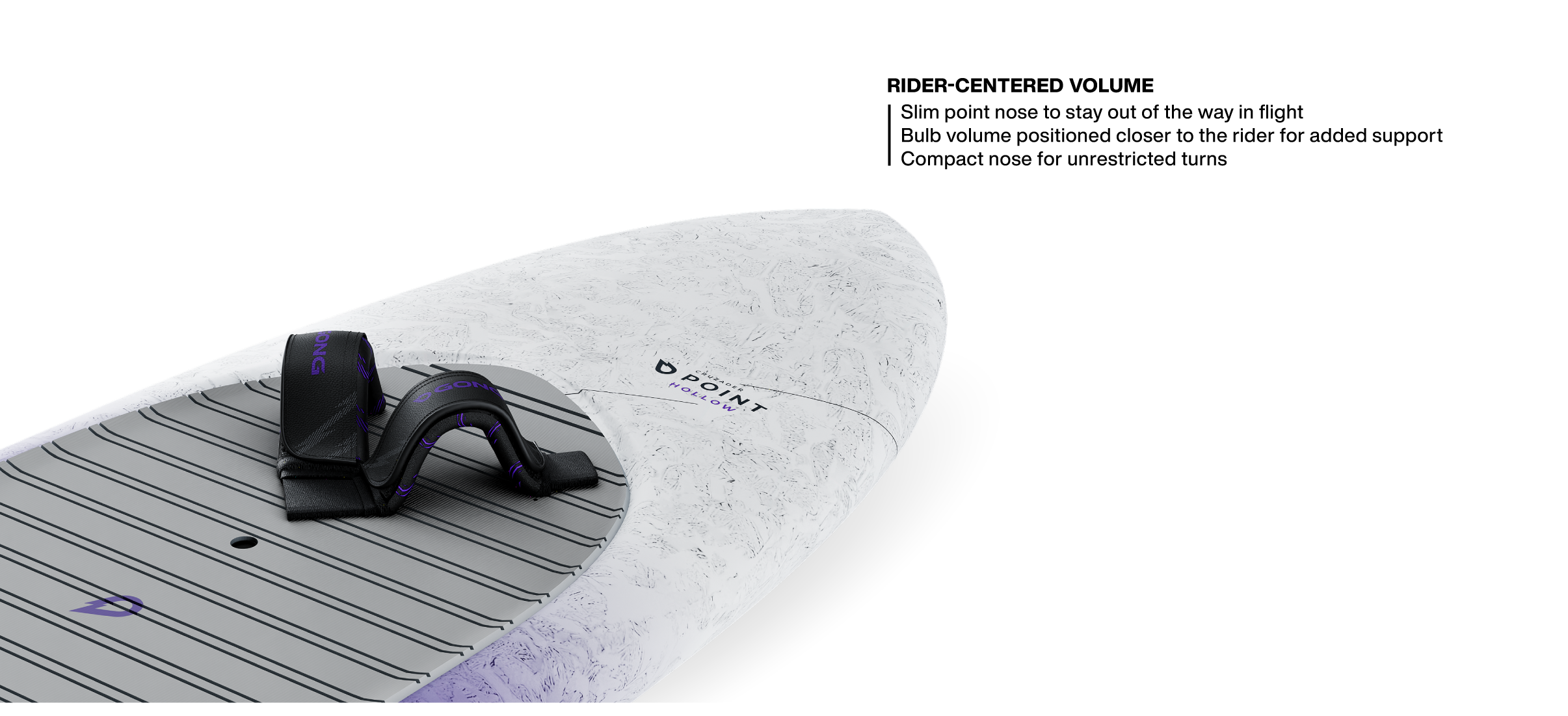
The fine point nose keeps a minimum of surface area in front of the feet to preserve the freedom and responsiveness that define the Point.
The bulb evolves with its maximum volume brought closer to the rider. Support is therefore positioned closer to the stance, where it is truly useful when the board accelerates or loads up the front. You gain more forgiveness without needlessly thickening the tip.
The Cruzader Point is designed for experienced riders who want to make the most of glide while keeping a board that feels very free in surf and freefly.
It makes take-off much easier thanks to its glide, but its narrow nose and, above all, its pin tail require more precision in balance than a Diamond or a Squash. So you already need to be comfortable on a foil and know how to handle a relatively narrow board, both on your knees and when getting going again.
In return, the Point delivers a very distinctive feel: plenty of board when you need to glide, very little board as soon as you're flying. It's an excellent option for riders who want to ride with smaller wings, use smaller foils and enjoy a very free feel through carves.
In lowkite, its efficiency and compact size make even more sense for those who want to surf the swell, connect bumps and cover distance smoothly.
Its range is broad:
The Point can take off early without demanding a huge amount of effort, then become almost unnoticeable once in flight. That duality is what gives it so much personality.
It also remains highly efficient when the conditions pick up: surf, freefly, fast freeride or mellow freestyle, it mainly makes you want to link more carves.
The Cruzader Point is above all a board built for glide, surf and freefly, with huge appeal in lowkite. So the foils that suit it best are the ones that keep plenty of speed while still leaving enough freedom to carve.
The Fluid V3 ATMO: for a surf-focused setup.
Its manoeuvrability and responsiveness make the most of the Point's low bulk. It lets you turn tight, switch pressure quickly and enjoy a very free feel in the waves. It's the choice for riders who want to put surf at the heart of their programme.
The Veloce V3 ATMO: the best balance of glide and carving.
Its excellent efficiency naturally complements the Point's glide. It holds speed easily in freefly and lets you draw out your carves without making the foil feel too locked in. A very versatile combo for surf, freeride and freefly.
The Veloce Free Fly V3 ATMO: to make the most of the swell.
It pushes glide even further while keeping real freedom in the ride. It's especially interesting for connecting bumps, letting the foil run and enjoying long freefly phases, both in wing and in lowkite.
The Veloce DW: for downwind in lowkite.
It's the logical pairing to get the most out of the Point over long distances. The board's responsiveness combined with the Veloce DW's glide lets you connect bumps with very little effort and keep a fast, fluid surf feel between swells.
The Veloce XTR: to accelerate in downwind.
It's aimed at riders who already have their connections dialled and want to start seriously increasing the pace in lowkite. It lets you tap into more speed between bumps and faster lines, while still benefiting from the Point's low bulk through the turns.
The same logic applies at the back of the foil: on the Point, the tail wing choice should above all allow the whole setup to evolve between surf, freefly and downwind.
The V3 ATMO architecture does exactly that, making it easy to change the foil's character without changing the whole setup. That's especially interesting on a board as sensitive and responsive as the Point.
The Fluid: to free up the surf feel.
It favours quick pressure changes and tighter carves. Paired with a Fluid or even with a front wing that has more glide, it gives the foil more mobility and lets you fully enjoy the Point's surf character.
The Veloce: for the balance between glide and manoeuvrability.
It's the versatile choice for freefly, long carves and fast freeride. It holds speed efficiently without taking too much freedom away from the foil.
The Veloce DW: to maximise glide.
Paired with a Veloce DW front wing, it lets you push energy retention a long way. The foil carries more easily through the soft sections between bumps and needs less speed build-up. It's the natural setup for long-distance lowkite.
The big advantage is being able to quickly evolve the same foil depending on the session: a Fluid to go surf, a Veloce for a versatile freefly session, then a Veloce DW when the goal becomes linking swell over several kilometres.
The Tail Shaft then lets you fine-tune that behaviour:
Lastly, tail wing size remains one final tuning lever: bigger for more support and control, smaller to free up the foil and gain responsiveness.
On the Point, the idea is simple: Fluid for surfing, Veloce for gliding and freeflying, Veloce DW for going long in lowkite. That's also the logic I'll keep for the next product sheets: only the foils that genuinely match each board's programme.
These boards are equipped with 2 GONG US Box Double Entry boxes compatible with standard 4-bolt plate foils and the SCS system with 9 cm spacing, Luxe footstraps with multi-position anti-twist inserts, a Ridge Traction Pad, an integrated carry handle, a leash plug, an automatic pressure relief screw and a high-flow drainage valve.
The Double Entry system allows very fast mounting of GONG foils while remaining compatible with standard square nut setups. The SCS is not supplied with the board.
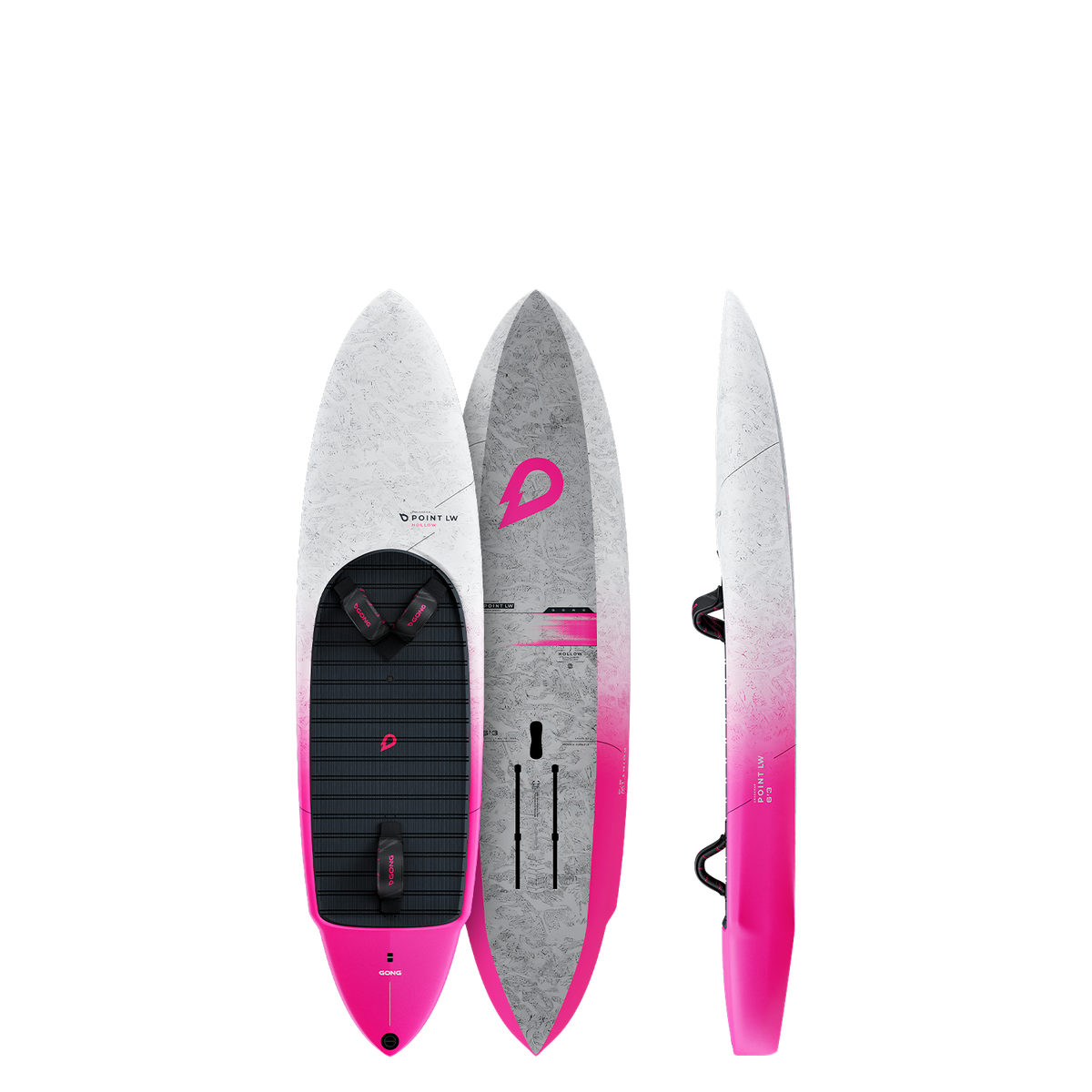

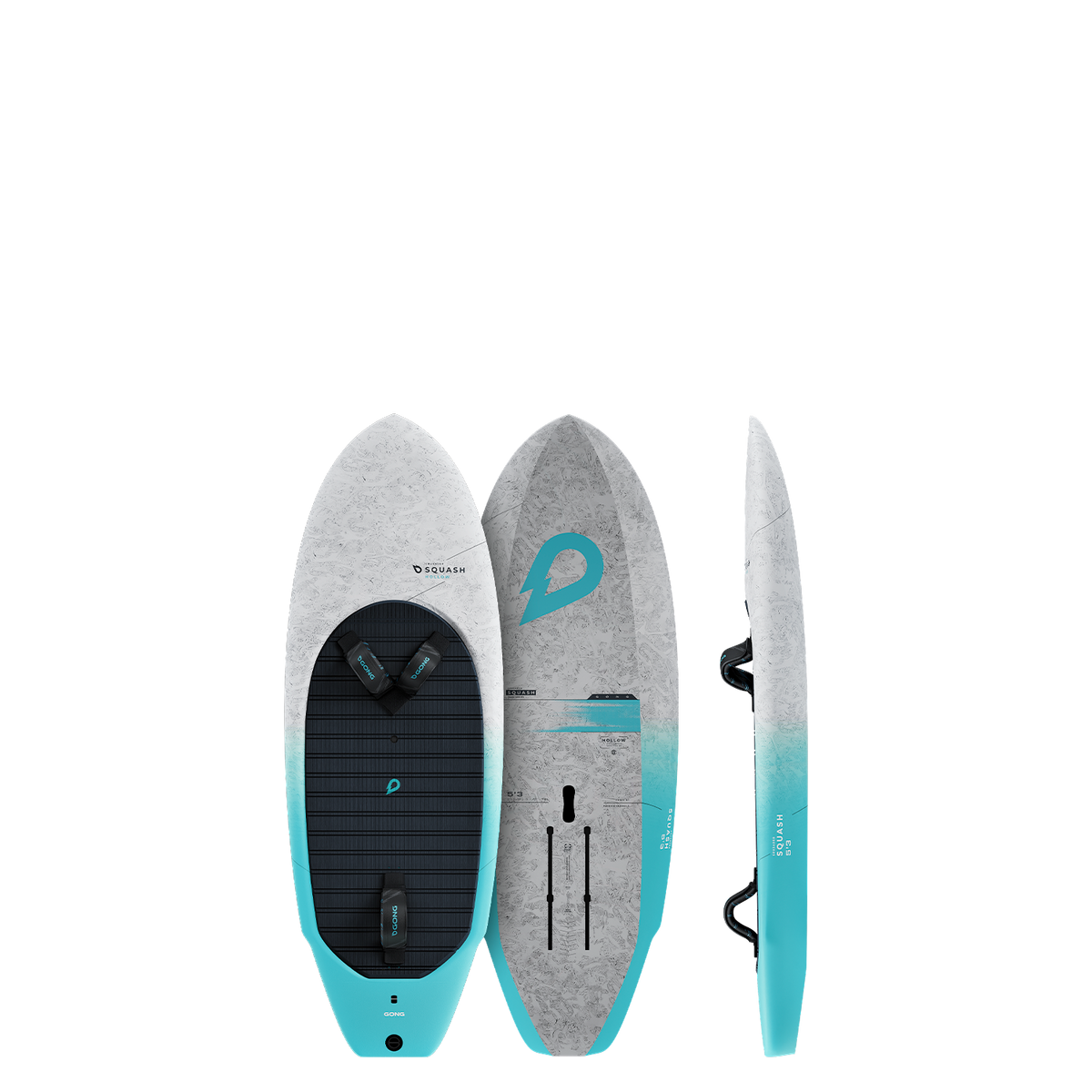


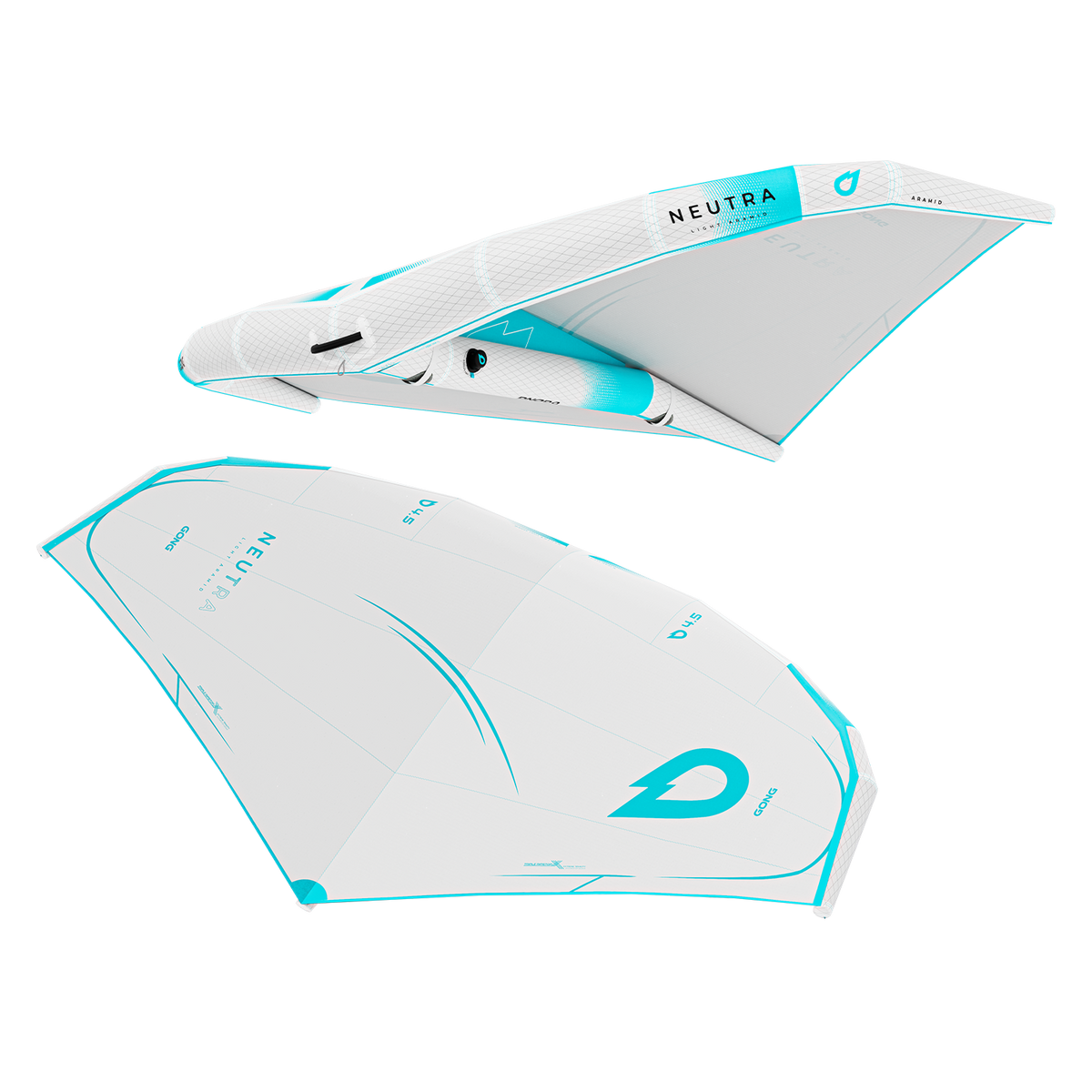
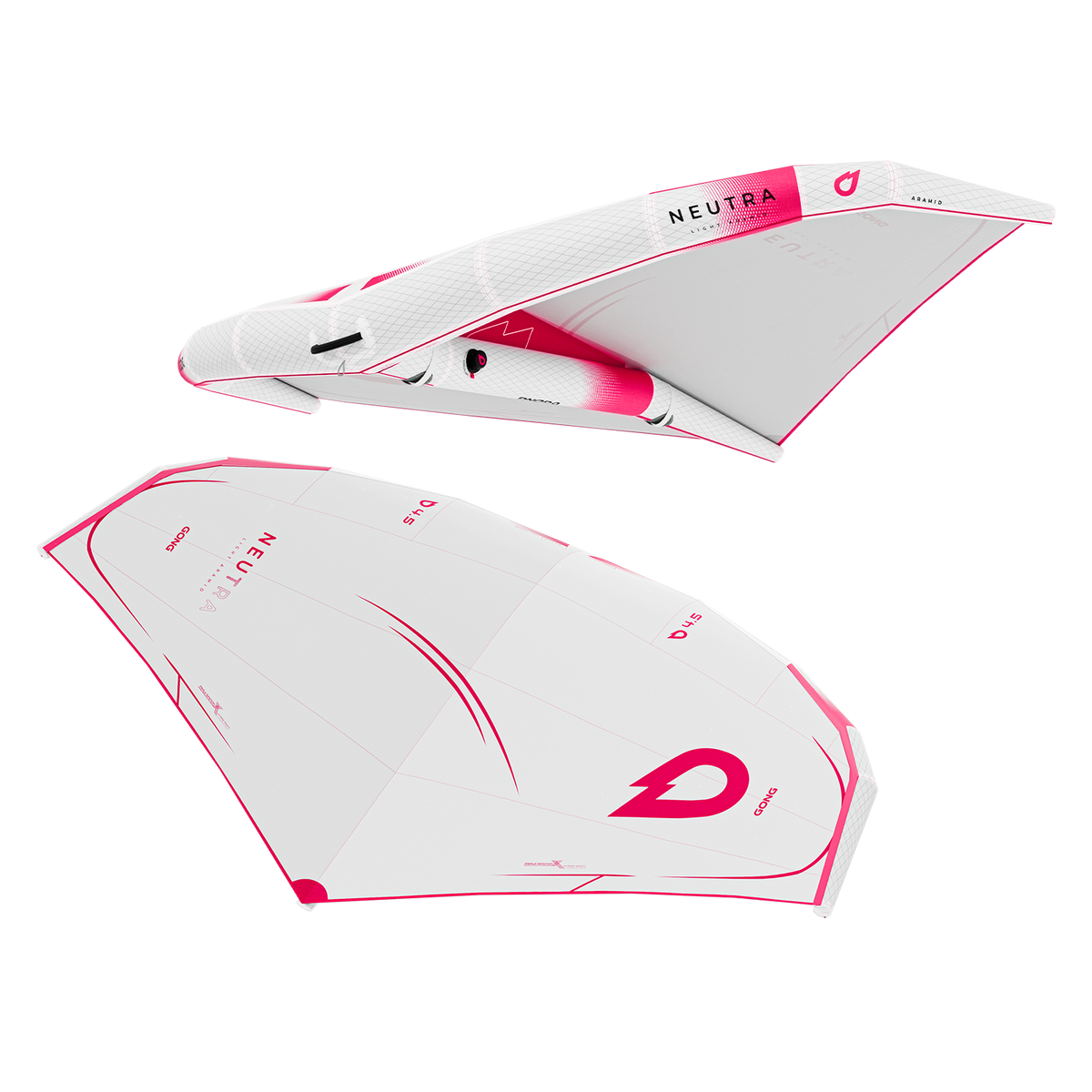








The Cruzader Point is aimed at experienced riders who want plenty of glide before take-off, but minimal bulk once in the air. Its fine nose and pin tail require more precise balance than a Diamond or a Squash, but in return deliver a very free feel in surf and freefly.
Because it combines early take-off, loads of glide and huge freedom in the carves. It is particularly appealing for riders who want to ride with less power, size down their foil and enjoy a board that feels incredibly unobtrusive in flight.
No. Its efficiency obviously makes it very effective in light wind, but its appeal goes far beyond that. Once flying, its compact size makes it very enjoyable in surf, freefly and fast freeride. That versatility is exactly what makes it so appealing.
Yes, a little. Its finer ends and pin tail provide less support at low speed. It therefore requires more precision when kneeling or during restarts.
In return, it feels much less present in carves and offers a freer feel once flying.
Yes, very clearly. Its glide lets you build speed easily with very little power, while its compact feel in flight is ideal for surfing the swell and linking bumps.
It really comes into its own with glide-oriented foils like the Veloce Free Fly, Veloce DW or Veloce XTR, depending on whether you’re looking for more surf, distance or speed.
Yes. It’s actually one of its most natural uses. Its glide makes take-offs easier, and its responsiveness then lets you quickly follow changes in line through the swell.
With a Veloce DW, the focus is on long connections and fluidity. With a Veloce XTR, you can start pushing the speed more between the bumps.
The pin tail significantly reduces the width behind the back foot. The board therefore has much less surface area likely to touch the water when carving.
The result is a board that feels very free through carves, following the foil without getting in the way of weight shifts, while still retaining the glide needed before take-off.
Yes. Strapless, its deck lets you move your feet freely and make the most of its surf and freefly character.
With straps, the different positions let you adapt your stance for a more surf-oriented or more freeride feel. In both cases, the recessed deck brings your feet closer to the foil and strengthens the connection with the board.


