Your cart is empty!
It's flat around here...
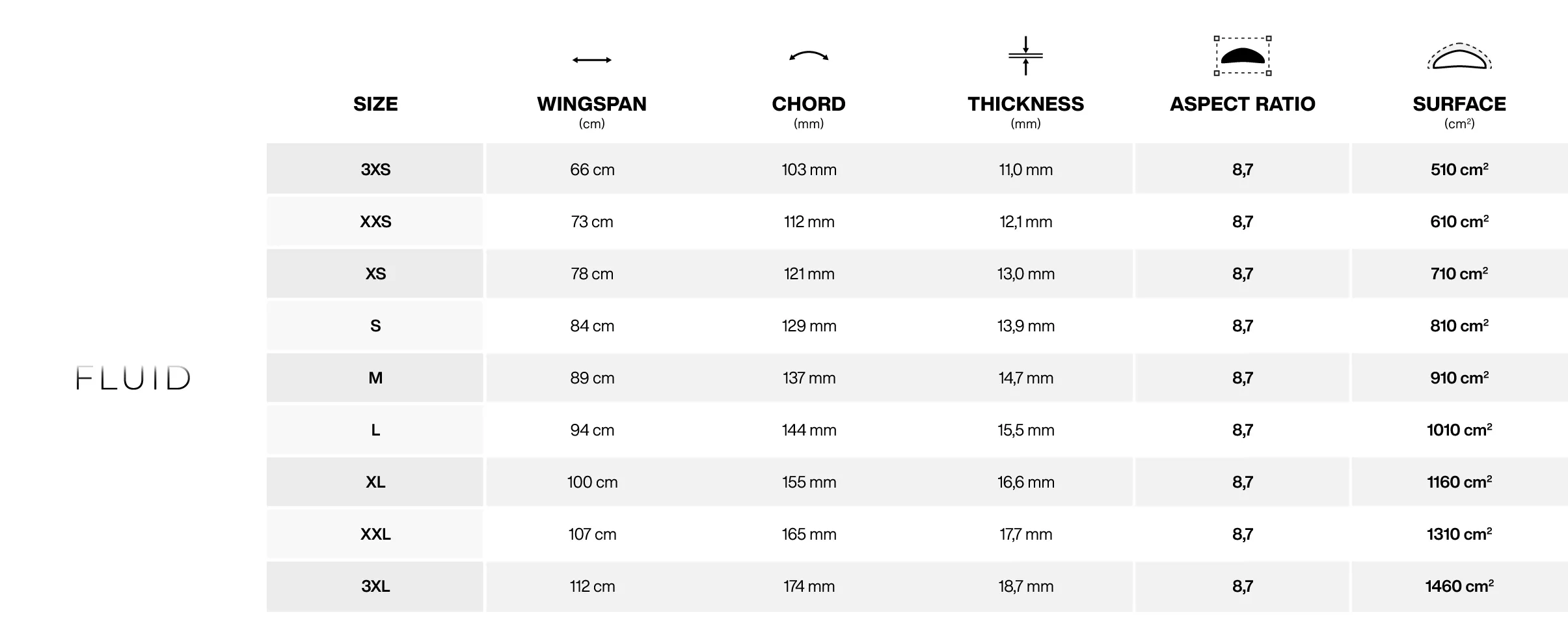
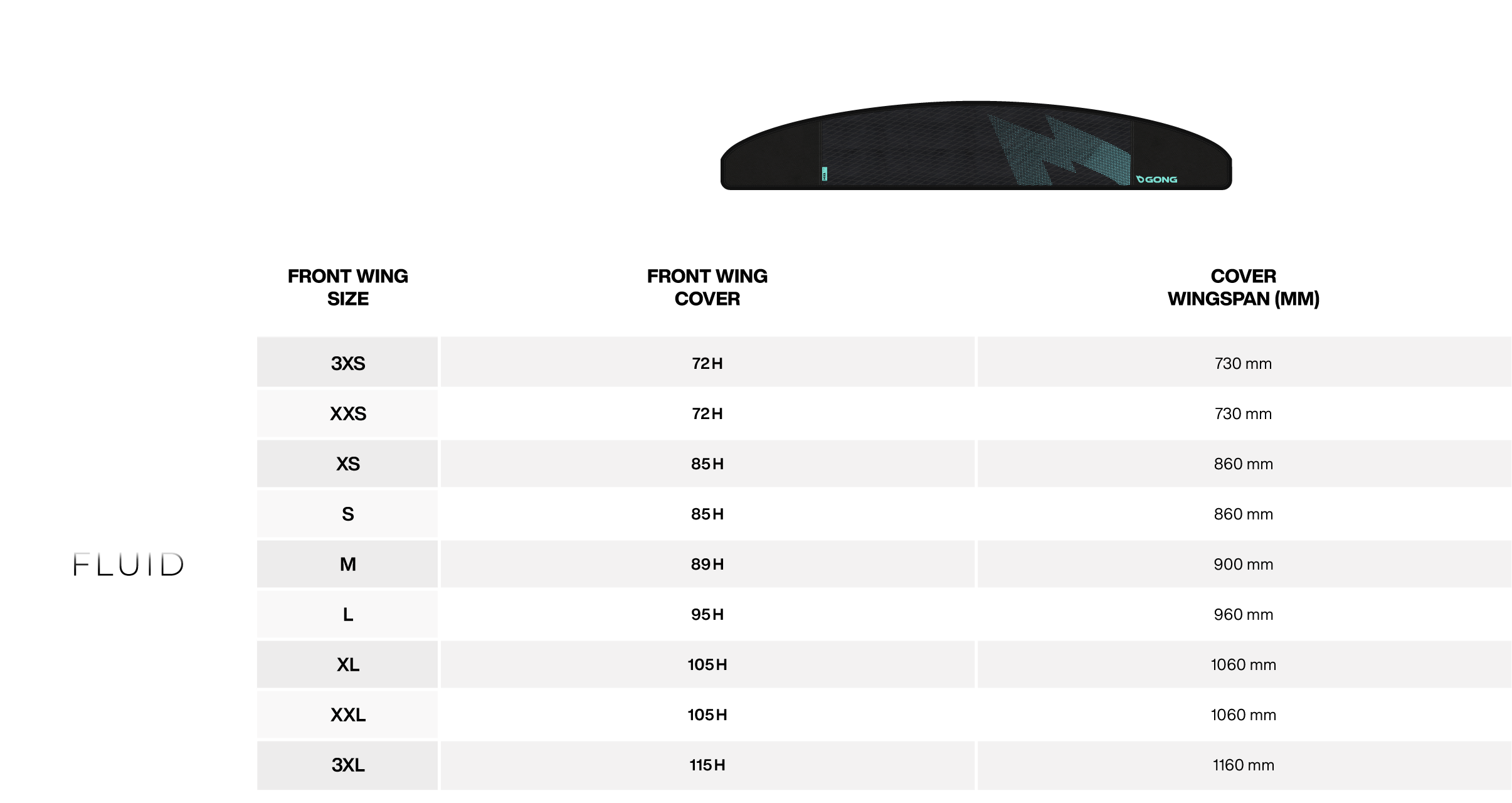


The carbon mid/high aspect front wing for committed waveriding, performance freeride, basic freestyle, and riders who want a fast, agile, responsive foil with pop, snap, and immediate feedback underfoot.
The Fluid V3 Atmo Team Series is the carbon mid/high aspect wing to radicalize your foil without switching to an ultra-specialized wing. It goes fast, turns tight, snaps, relaunches strongly, pumps efficiently, and gives that direct feeling that encourages more committed riding.
Its V3 Atmo shape is a true next-generation design. It retains the Fluid DNA: speed, agility, rail to rail, pop, committed waveriding, performance freeride, basic freestyle, and dynamic versatility. But everything has been modernized for improved efficiency: 8.7 ratio, more effective outline, better-centered lift, advanced tips, faster profile, better-controlled flow, and 12K clear carbon construction.
The Fluid Team Series is positioned above the Curve in terms of responsiveness. The Curve accompanies the carving turn with lift and comfort. The Fluid attacks harder: it accelerates in the carve, reduces radii, varies trajectories, and responds more directly to inputs. It's the wing for riders who want to transform every pressure into speed, pop, and relaunch.
Its 8.7 ratio provides more glide, lift, average speed, and efficiency without losing the mobility that defines the model. Efficiency is improved, and the wing is never cumbersome underfoot. It remains lively, playful, and very enjoyable in transitions.
Its modern outline centers the lift at the heart of the pressure points. This centered lift reduces perceived inertia, frees the tips, and makes the wing very lively in yaw. You can change axis quickly, correct easily, tighten carves, and maintain a very connected foil underfoot.
The advanced tips project the center of lift forward. They free the pop, increase the stabilizer's leverage, and allow for reduced rear surface or shaft length. Less stabilizer means less drag, more speed, more glide, more responsiveness, and tighter carving turns.
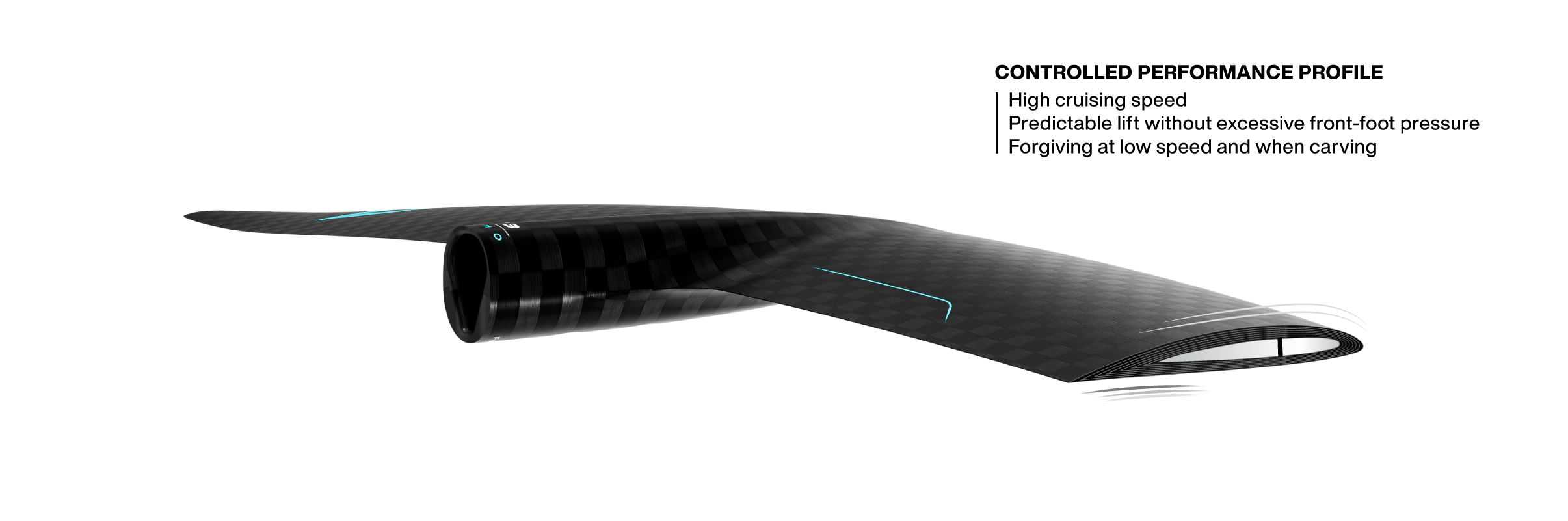
The profile is designed to maximize average speed and high range while maintaining real stall tolerance. The Fluid remains navigable at low speeds, takes off correctly, pumps well, and can slow down in a carve without immediately stalling.
The lift also gains in docility. The wing rises under pressure but without excessive pressure on the front foot. It doesn't rise indefinitely as if ignoring the surface: it stays under control, even in aggressive take-offs. This gain in serenity allows for more committed riding.
Its pumping is relatively fast, enduring, and efficient for such a high-performance wing. It requires more precision than a Curve but better transforms pressure into speed. Coming out of a wave, in a lull, in freefly, or between sections, it immediately picks up with the right inputs.
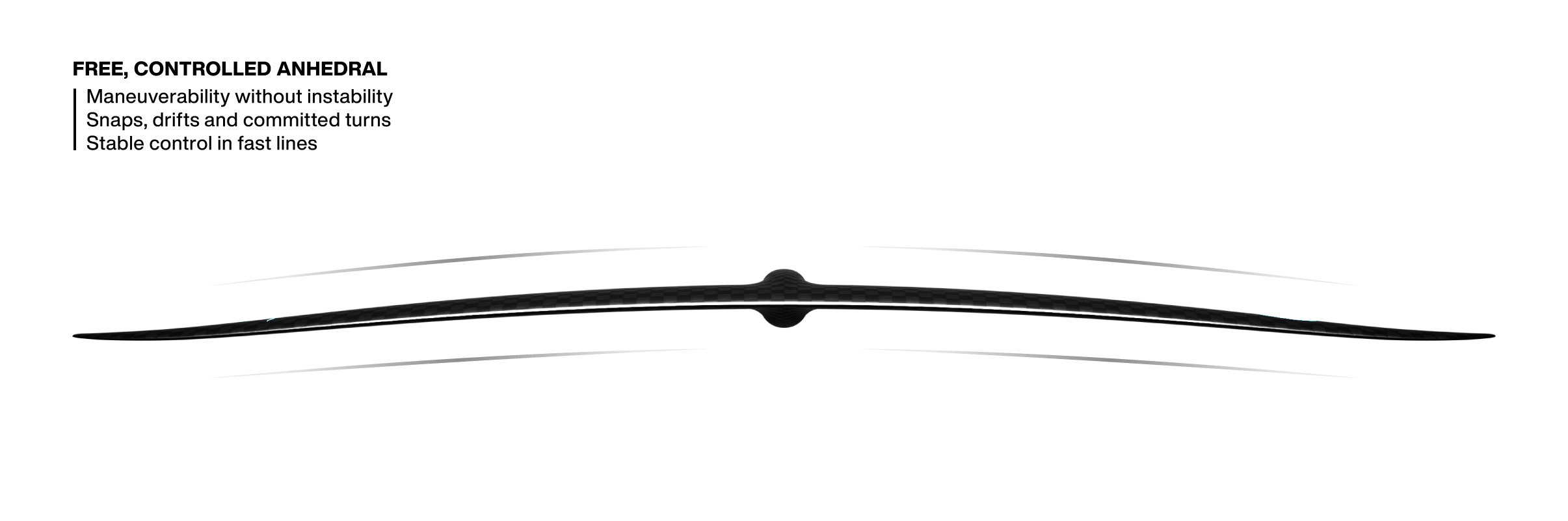
The very moderate dihedral and horizontal tips provide that free rail to rail and tip out tolerance that changes everything. You can ride very high, engage hard, approach the surface, touch the limits, and continue without stress. Tip out becomes a non-event.
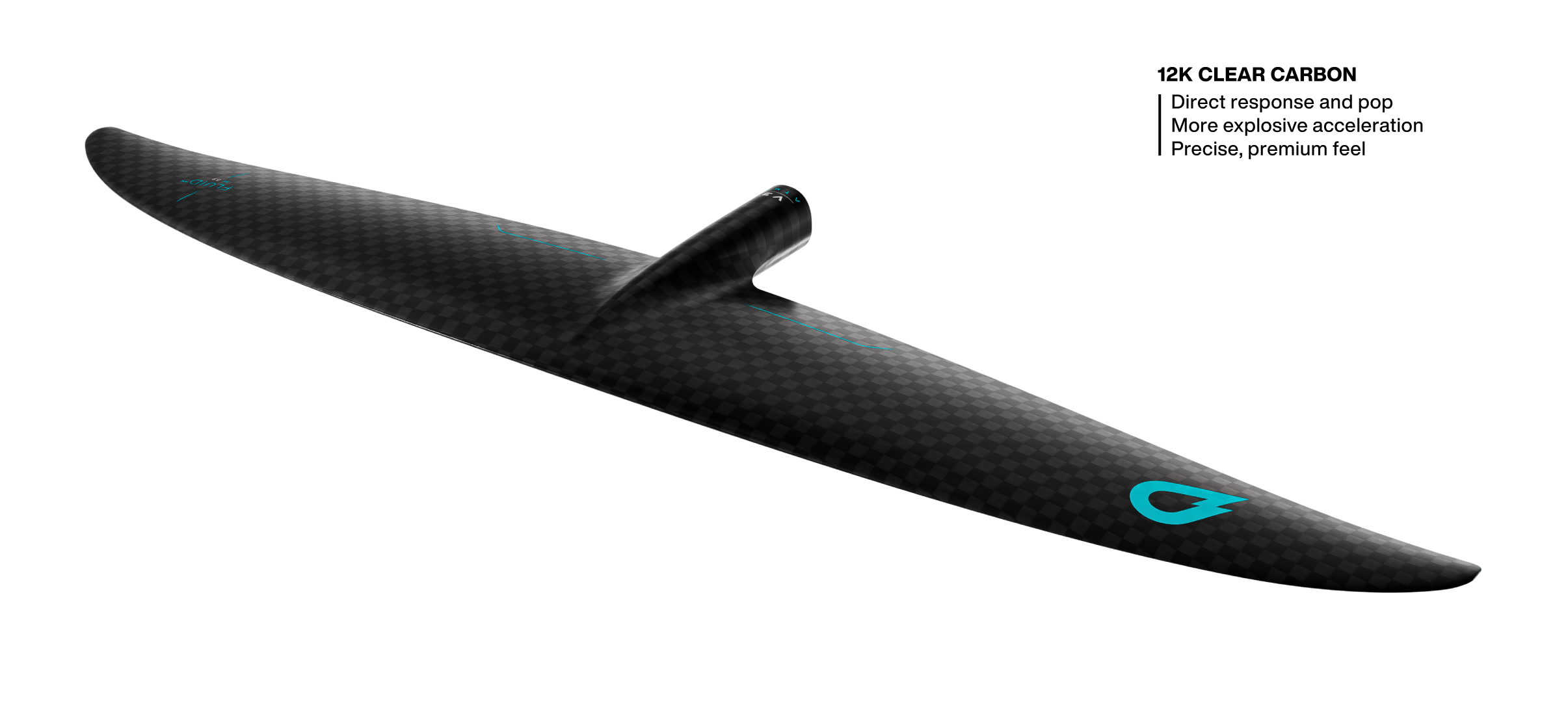
The 12K clear carbon construction amplifies the entire Fluid personality. More rigidity means more response, less energy loss, and a clearer read of the foil. In pumping, carving, and acceleration, the feeling is more direct, cleaner, and more precise.
The Fluid V3 Atmo Team Series is the wing to ride faster, harder, and more precisely. It retains true versatility, but its program is clear: free up the handling, tighten the carves, snap, relaunch, and push the foil's performance hard.

The outline of the Fluid V3 Atmo Team Series has been modernised to improve efficiency without losing the playful character of the model. The lift is centred at the core of the pressure points, keeping the foil very lively, responsive, and easy to pivot.
This centred surface reduces the perceived inertia and frees the tips. The wing quickly shifts from one rail to the other, accepts changes in axis, and remains very connected underfoot. This is what gives the Fluid its fast rail-to-rail and direct feel.
The advanced tips project the centre of lift forward. They free up the pop, increase the stabiliser's leverage, allow for a reduction in rear surface or shaft length, and decrease drag. The foil accelerates more freely, maintains its speed better, and reduces carving turn radii.
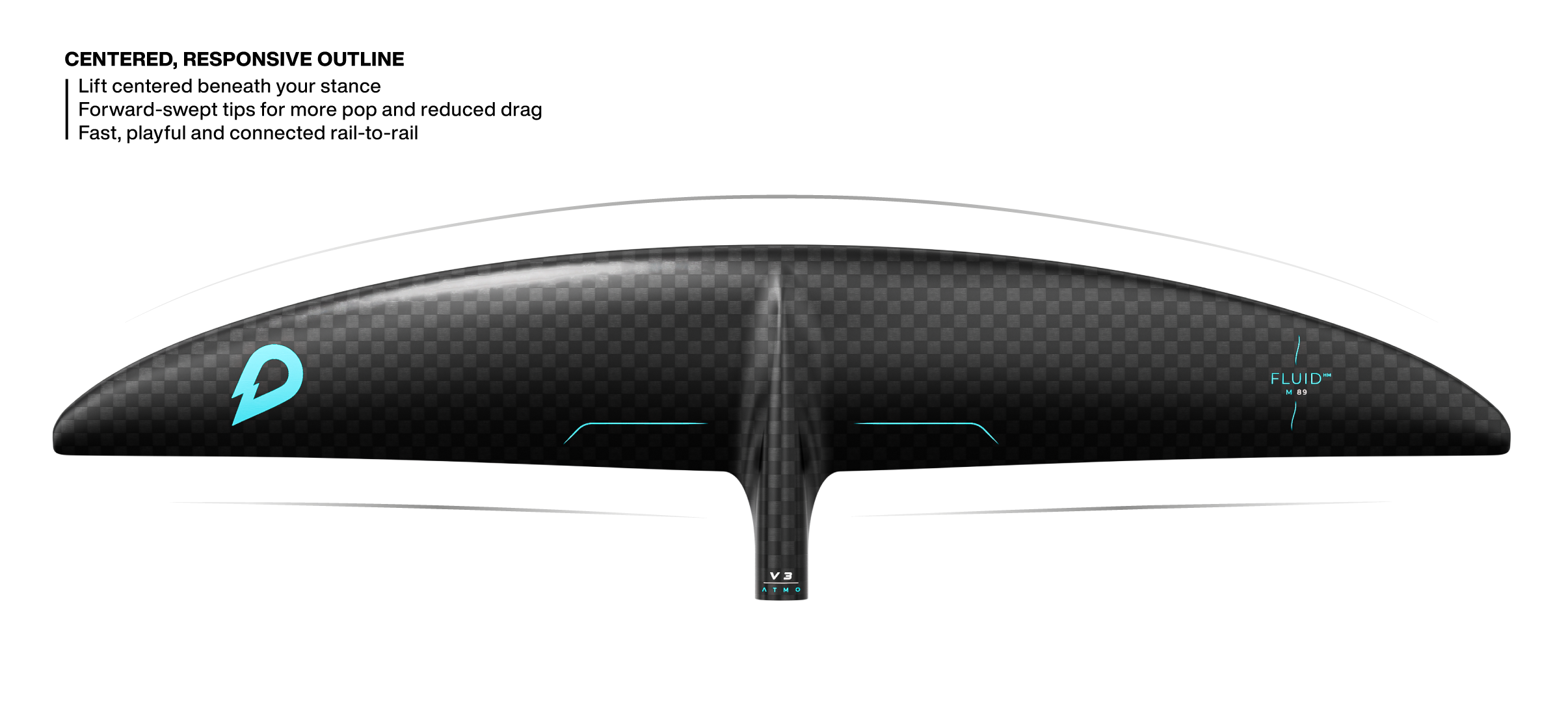
With its aspect ratio of 8.7, the Fluid is positioned in the mid/high-performance ratio. It gains in glide, lift, average speed, and efficiency, while maintaining a mobile wing feel.
This ratio provides more efficiency between manoeuvres. The foil better retains its speed, crosses soft sections more effectively, and accelerates with less energy loss. In waveriding as well as in performance freeride, this gain is immediately noticeable.
The Team Series carbon construction allows full exploitation of this ratio. The wing deforms less, transmits pressure better, and provides a sharper response. Performance is enhanced without losing the lively and playful character of the Fluid.
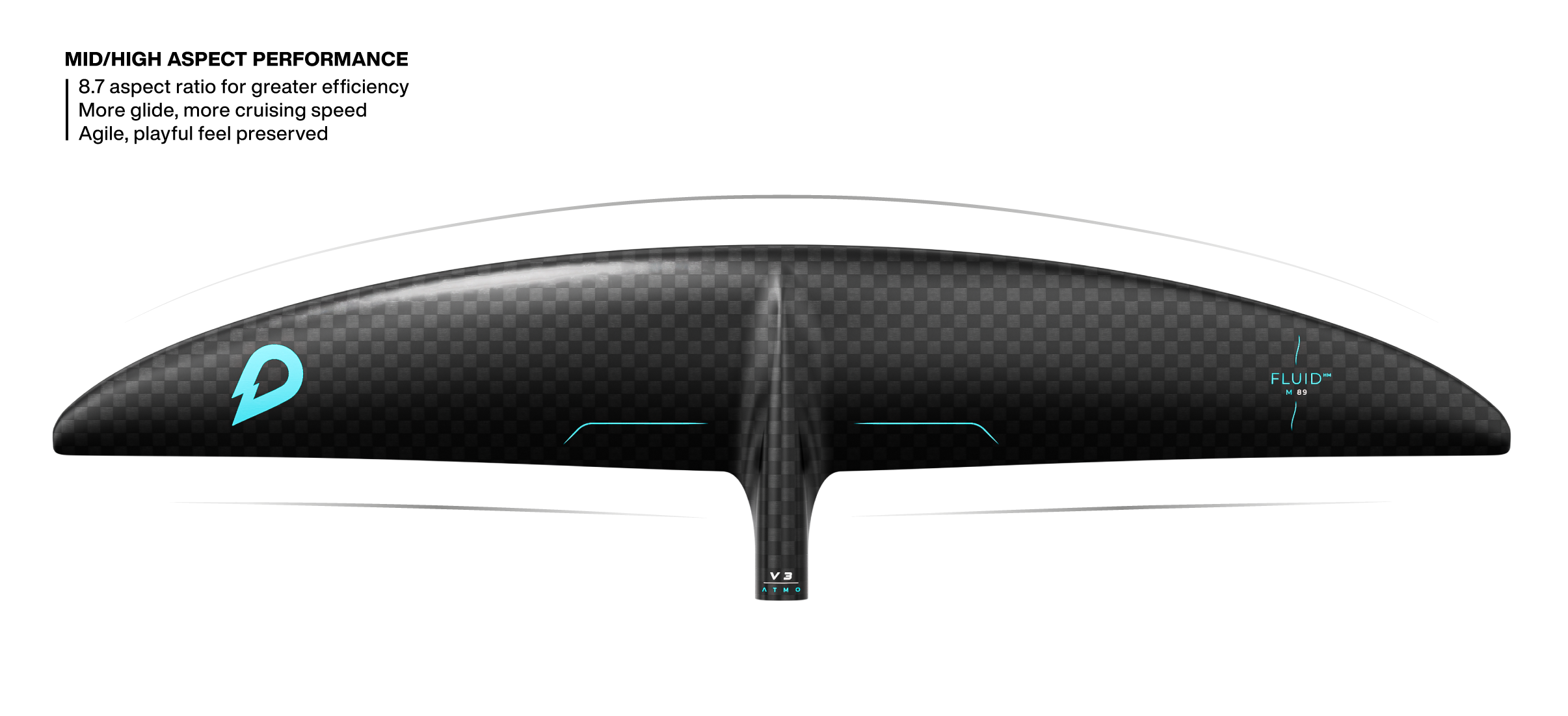
The Fluid's profile is designed to maximise average speed and high-end range. It provides a wing that moves forward strongly, accelerates quickly, and maintains an efficient feel when pushing the foil.
This profile remains forgiving of stalling. The Fluid retains lift at low speeds, allowing you to slow down in a carving turn, relaunch with pumping, or cross a soft section without getting caught immediately.
The major improvement also comes from the docility of the lift. The wing rises under pressure, but without excessive front foot pressure. It doesn't rise indefinitely, stays under control near the surface, and provides real confidence during aggressive take-offs or highly committed phases.
The very moderate anhedral of the Fluid seeks the best balance between lift and control. It keeps the wing lively without falling into unstable or skittish behaviour.
In committed carves, the wing maintains grip while remaining free. You can lean, accelerate, adjust, snap, drift, relaunch and keep a foil that remains responsive underfoot.
This anhedral contributes to the character of the Fluid: lively, driftable, snappy, manoeuvrable yet controllable. It accepts dynamic handling without locking into a trajectory.
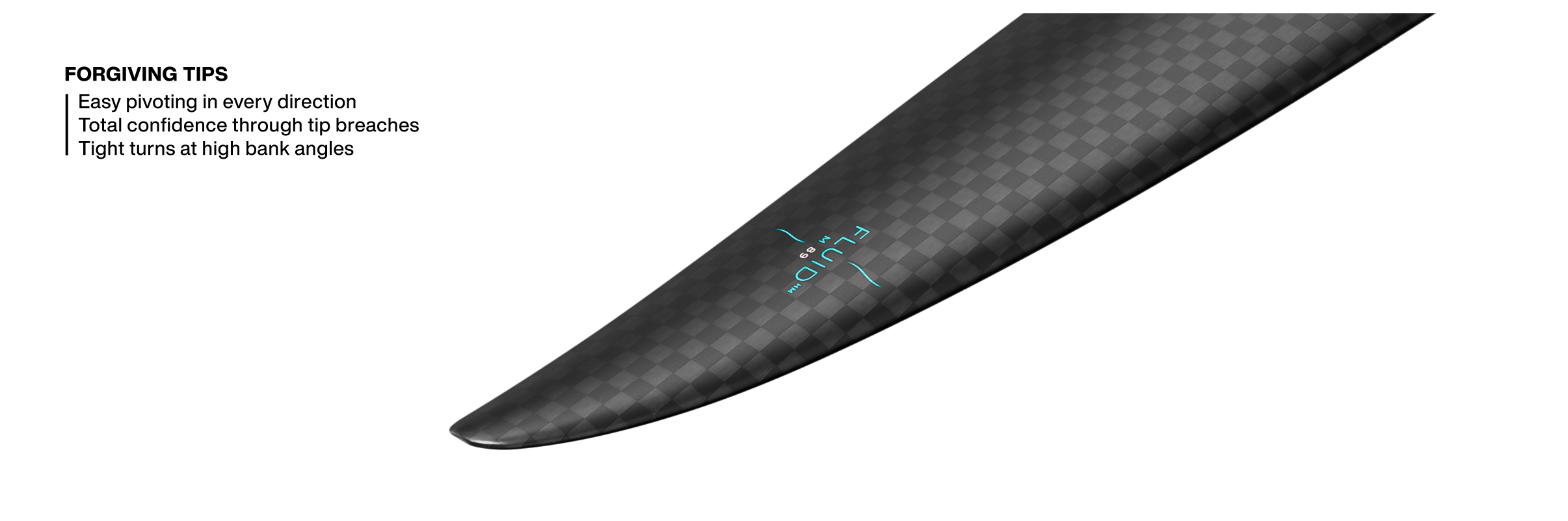
The horizontal tips enhance the manoeuvrability of the Fluid. They facilitate pivoting on all axes, ease angle changes, and make the foil easier to reposition in tight lines.
This design also provides complete tolerance to tip out. You can ride high, engage hard, approach the surface, or pop a tip out without triggering a violent reaction. Tip out becomes a non-event, which brings great peace of mind in fast freeride as well as in carves with a lot of angle.
The horizontal tips thus contribute to the aggressive yet stable character of the Fluid. You can foil higher, more engaged, while maintaining a clear feeling.
The Team Series carbon construction is fundamental on a wing like the Fluid. Its program is based on speed, precision, pop, snaps, and immediate response. The carbon stiffness allows you to fully exploit this character.
When pumping, the pressure transfers more directly into the wing. In carving turns, the foil responds faster. In relaunch, energy is more efficiently transformed into acceleration. You gain in responsiveness, precision, and control.
The 12K clear carbon finish highlights the structure and marks the Team Series level. You maintain a solid, high-performance, repairable, and very high-end foil, with a much more direct feel than fiberglass.
The Fluid V3 Atmo Team Series is aimed at riders who already fly at a good level and want to switch to a faster, more responsive, and more maneuverable mid/high ratio carbon wing than the Curve.
In wing foiling, it is perfect for those who want a more dynamic foil: more speed, more rail to rail, more pop, more energetic transitions, committed waveriding, maneuverable freefly glide, cool freestyle, and a more direct feel underfoot.
In surf foiling and SUP foiling, it suits riders who want to tighten their carves, snap, relaunch strongly, surf faster, and exploit more dynamic waves. It requires more precision than a Curve, but it offers a significantly more lively ride.
In wake foiling, it appeals to riders who want to carve hard, vary trajectories, get out of the wake, and enjoy a very responsive foil. It provides a lot of freedom in handling.
In kite foiling, the smaller sizes of the Fluid are suitable for riders who want a fast, maneuverable, and precise wing for cruising, chaining beautiful transitions, riding underpowered, and gliding without switching to a more Pro-oriented wing.
The Fluid Team Series is also very logical for those who like the Fluid Perf Series but want to move up a notch: new V3 Atmo shape, nearly 20% more efficiency, more rigidity, more response, more precision, more pop, more snap, and better performance in high wind ranges.
The Fluid Team Series is not the most logical choice for beginners or for progressing calmly after the first flights. For learning, the X-Over remains simpler. For easy freeride progression, the Ascent will be more comfortable. To access mid/high ratio with more lift and smoothness, the Curve will be more accessible.
It is also not the most suitable wing if the main goal is to maximize low-end range, easy pumping, or ultra-efficient glide. In these areas, the Curve on one side, and on the other the Veloce, Sirus, or Trail will be more relevant depending on the program.
The Fluid requires more precise handling. If the rider wants a wing that smooths everything out, provides a lot of lift, and allows plenty of time, it's better to stick with an easier wing. If the goal is to have a faster, more responsive, snappier, and livelier foil, the Fluid makes perfect sense.
It is not a long-distance freefly or downwind wing. For these programs, the Veloce FF, Veloce LW, or Sirus will be more coherent depending on the need.
The Fluid V3 Atmo Team Series is designed to accelerate handling. It allows for increased speed, maneuverability, pop, snap, relaunch, and precision, while maintaining strong versatility.
In wing foiling, it provides a more energetic ride. It loves strong carves, trajectory changes, quick transitions, waves in a more dynamic style, cool freestyle, maneuverable freefly, and sessions where you want a foil that responds immediately.
In surf foiling, it allows for faster, tighter, more aerial surfing with more relaunch than a Curve. It loves all waves, especially those that push, faster sections, committed carves, snaps, and riders who want a foil closer to a high-performance shortboard feel.
In SUP foiling, it offers a livelier and more precise behavior for riders who want to maintain speed in carves and exploit more powerful or cleaner waves. It is more surf-oriented than infinite pumping connections.
In wake foiling, it provides a very playful foil, capable of varying lines, carving hard, and exploiting every bit of energy with immediate response.
In kite foiling, it offers good speed, control, and maneuverability in the very small sizes, for riders already comfortable who want to cruise, chain transitions, and ride with minimal traction, preferably underpowered.
The Fluid is therefore the wing for committed waveriding, performance freeride, basic freestyle, and dynamic handling: it does not aim to make the foil passive, but rather encourages piloting, accelerating, tightening carves, snapping, and exploiting every support.
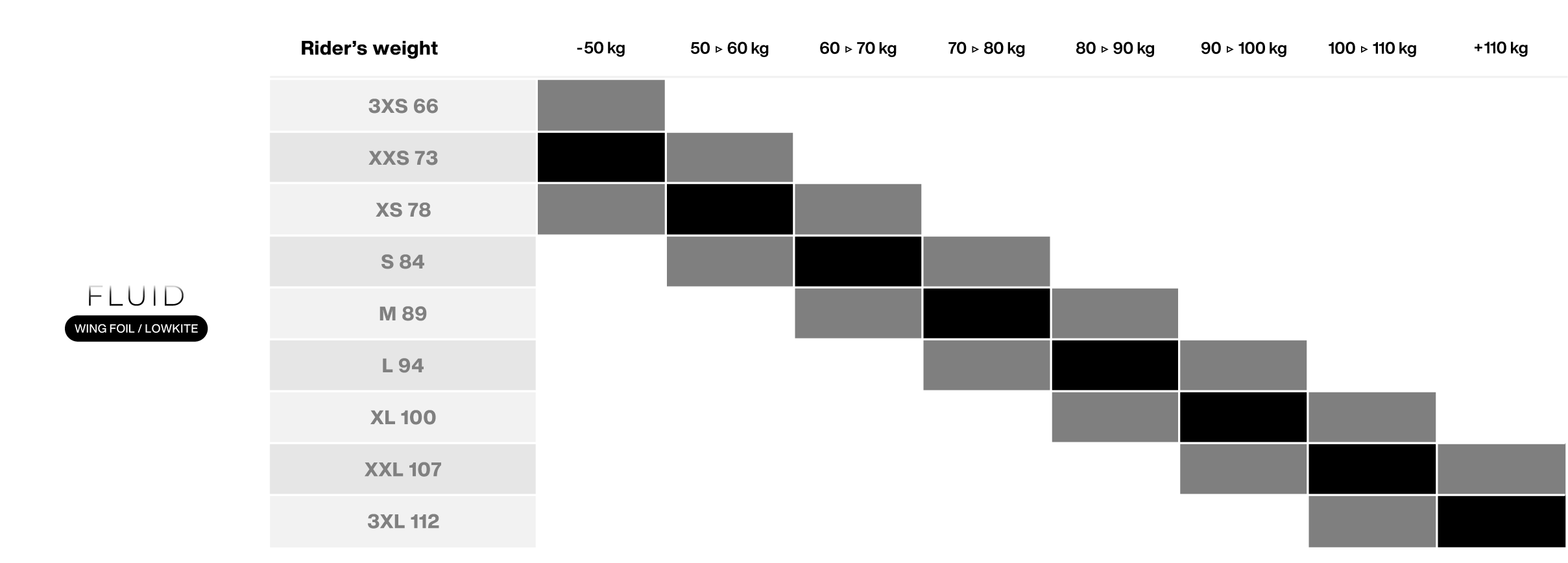
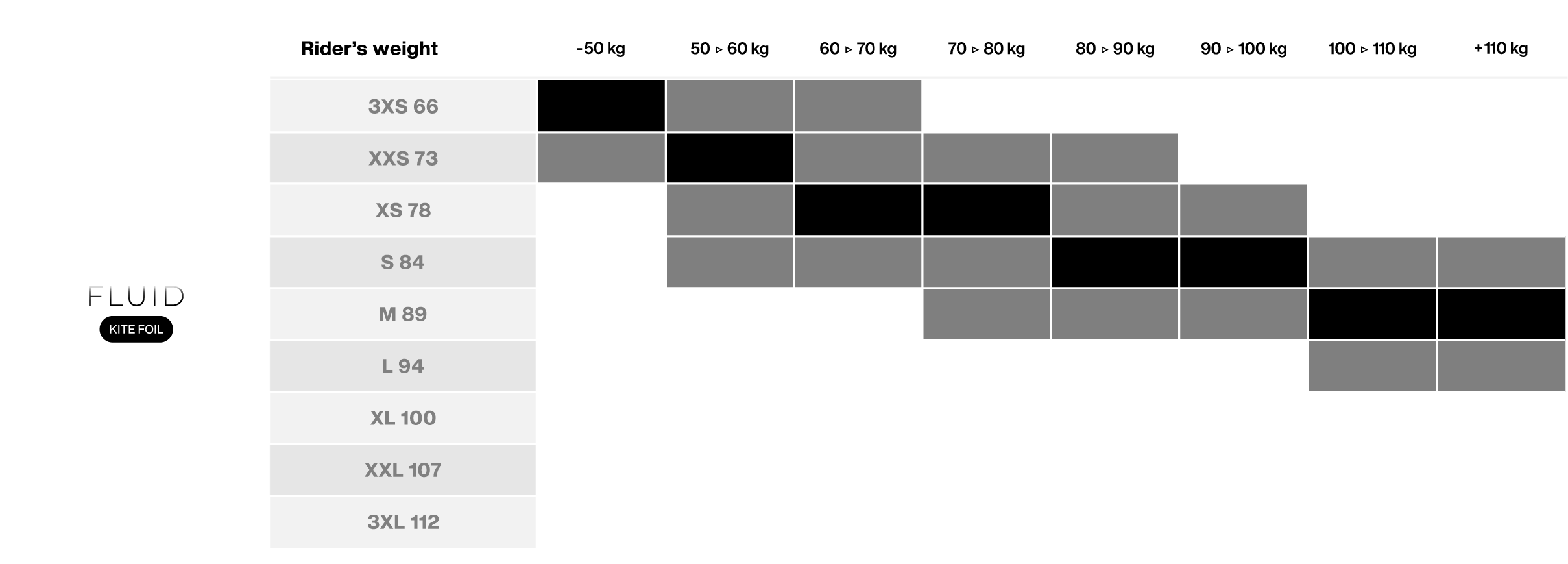
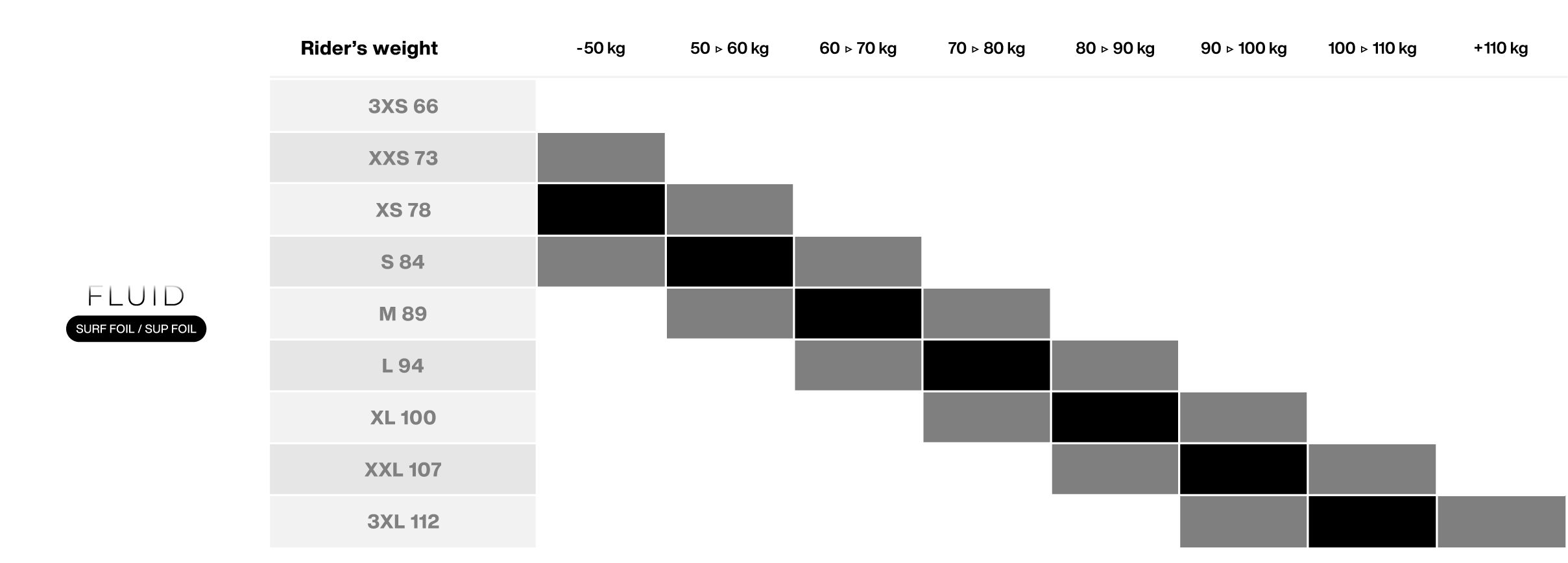
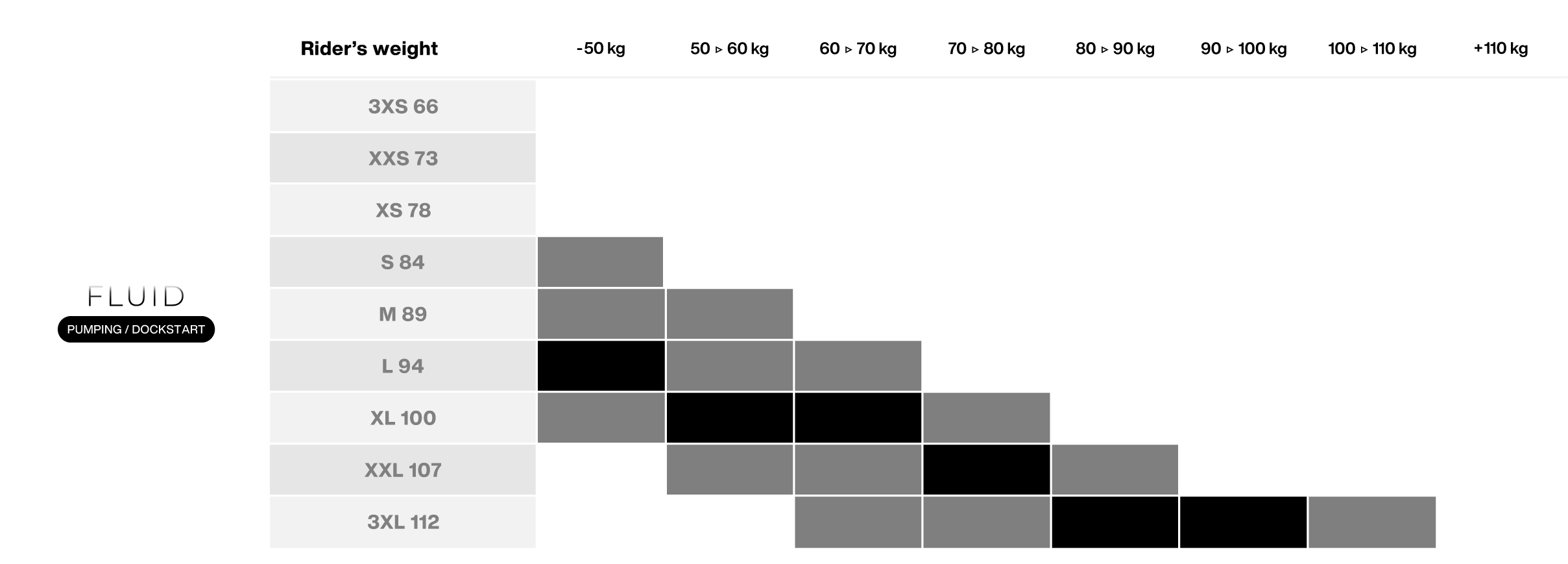
The Fluid is less oriented towards low-end range than the Curve, but it remains sufficiently forgiving to maintain accessible take-off and good lift at low speed. Its efficiency often allows for choosing a reasonable surface without losing too much comfort.
Choosing a larger size allows for earlier take-off, comfort in lulls, and easier pumping. It's the logical choice for heavier riders, weak conditions, less powerful waves, or riders who want to keep some margin.
Choosing an intermediate size allows for exploiting the best balance of the Fluid: speed, maneuverability, relaunch, glide, pop, and versatility. It's often the most coherent choice for a rider who wants a high-performance all-round wing.
Choosing a smaller size allows for increased speed, precision, and liveliness. It's the choice for experienced riders, more powerful waves, faster conditions, or those who want a more responsive foil underfoot.
In wing foiling, all sizes can work depending on weight, wind, board, and level. The weaker the wind or the heavier the rider, the more you will lean towards a larger size. The higher the level, the more you can reduce the surface to gain speed and maneuverability.
In surf foiling and SUP foiling, you need to keep enough surface to take off properly and relaunch, but avoid oversizing if the goal is to tighten carves, snap, and keep a lively foil. The right size is the one that provides enough lift without hindering handling.
In wake foiling, a larger size facilitates low speeds and use on a small wave. A smaller size frees up trajectories and provides more speed.
In kite foiling, you should stick to smaller sizes to limit wingspan, maintain control, and avoid an overly lift-oriented foil at high speed.
If in doubt between two sizes, choose the larger one to maintain comfort, low-end range, and margin. Choose the smaller one only if the level, conditions, and primary objective justify more speed, precision, and maneuverability.
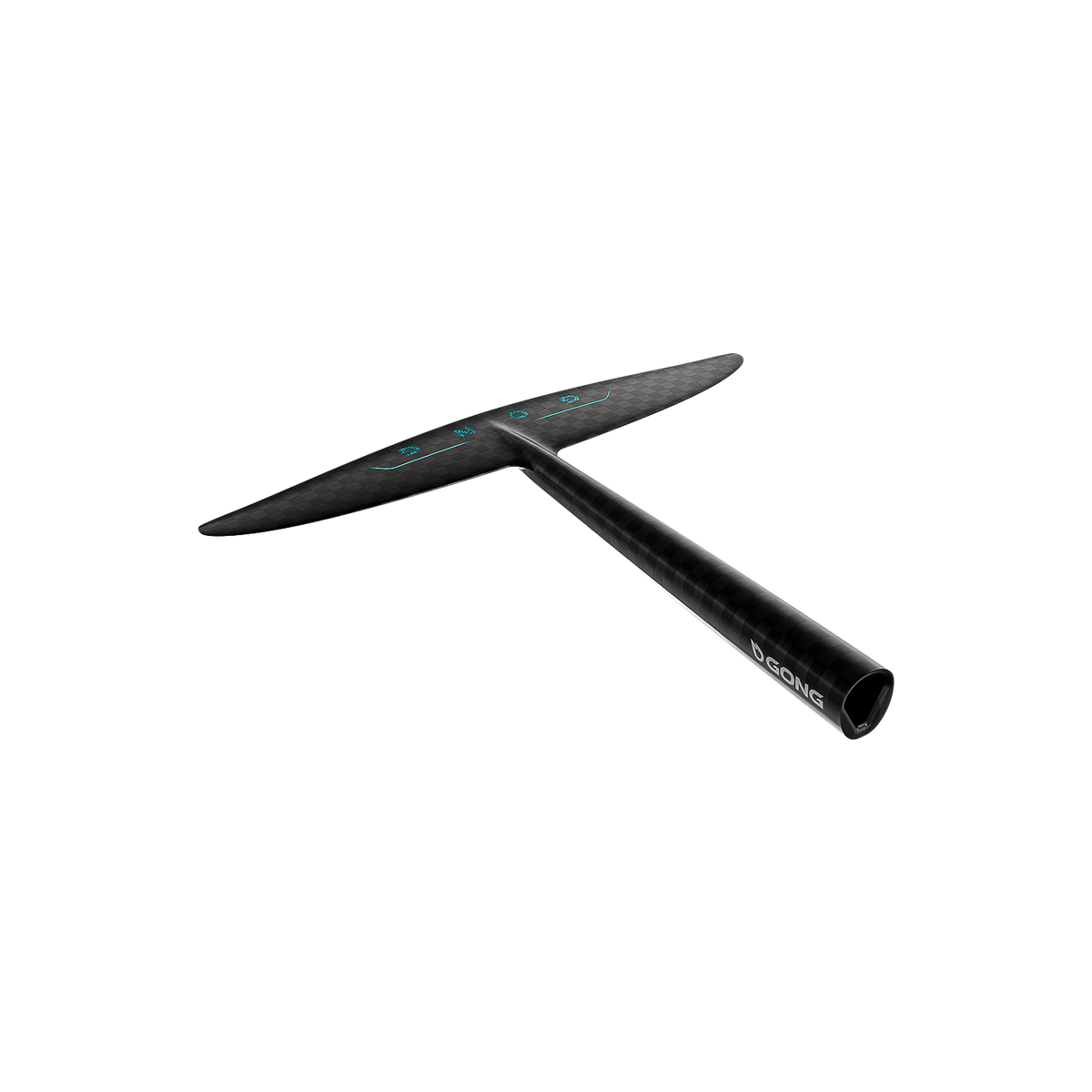
The Fluid V3 Atmo Team Series works ideally with a Fluid V3 Atmo Team Series stabilizer. Both components are designed for the same program: speed, maneuverability, pop, snap, relaunch, committed carving, and control.
A larger stabilizer provides more stability, more front foot pressure, and more comfort during take-off. It's the most reassuring choice for a rider discovering the Fluid, for larger front wing sizes, or for irregular conditions.
A smaller stabilizer significantly frees up the Fluid. It increases speed, improves maneuverability, makes rail to rail faster, and provides a more playful foil. It's often the natural choice when the level rises and you want to fully exploit the wing's potential.
The Fluid works very well with reasonably compact stabilizers, as its advanced center of lift allows for maintaining balance with less rear surface. This is one of the important levers to reduce drag, gain speed, and free up carves.
The right setup always depends on the front wing/stabilizer combination, but also on the foil's position in the boxes. If the stabilizer is smaller and front foot pressure decreases, you will often need to move the foil slightly forward to regain a natural balance.
If in doubt, start with a comfortable stabilizer, then gradually reduce to free up speed and maneuverability. The Fluid loves fine-tuning: well-adjusted, it becomes fast, precise, snappy, and very lively.
The range

The front wing comes with all the necessary screws for mounting on the fuselage.

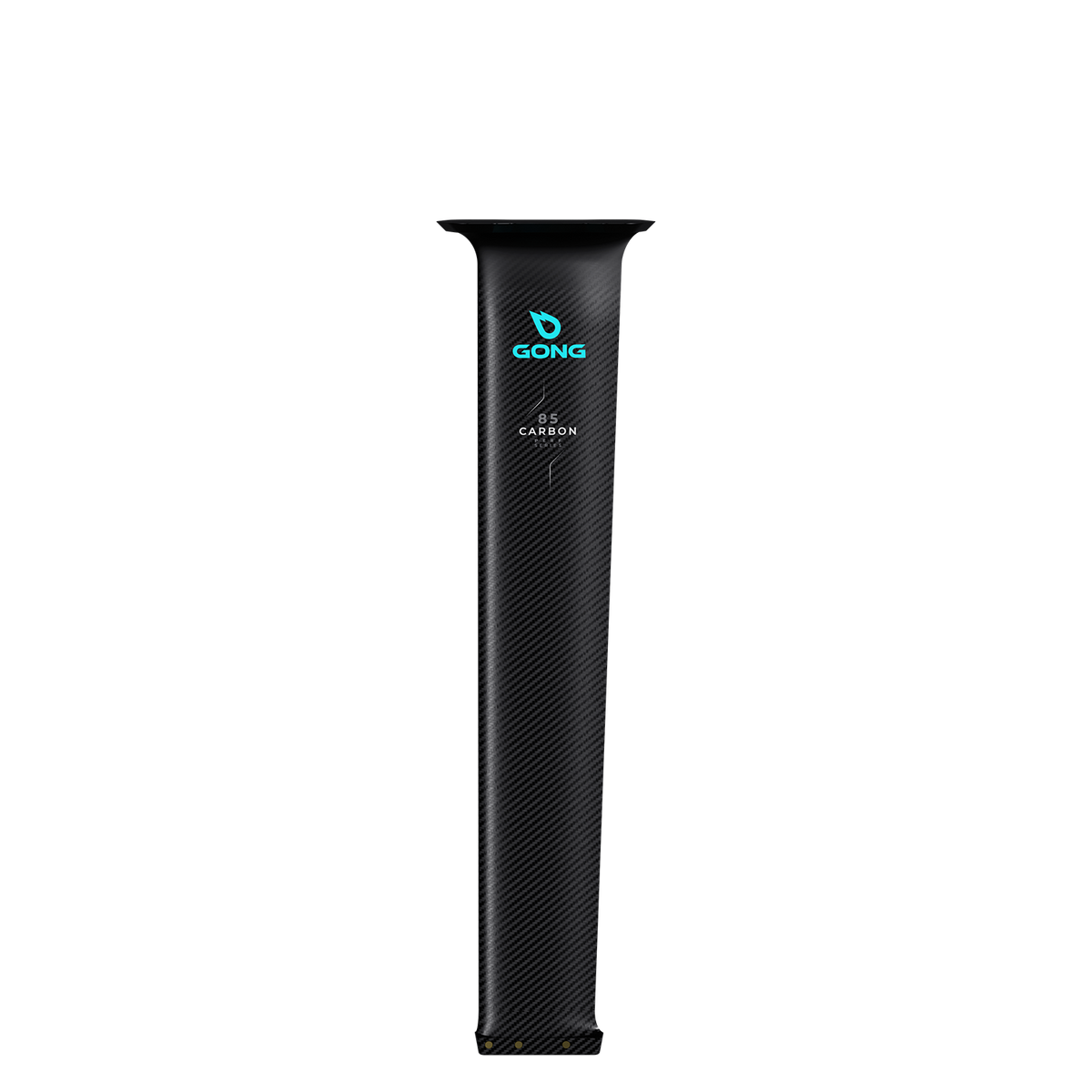

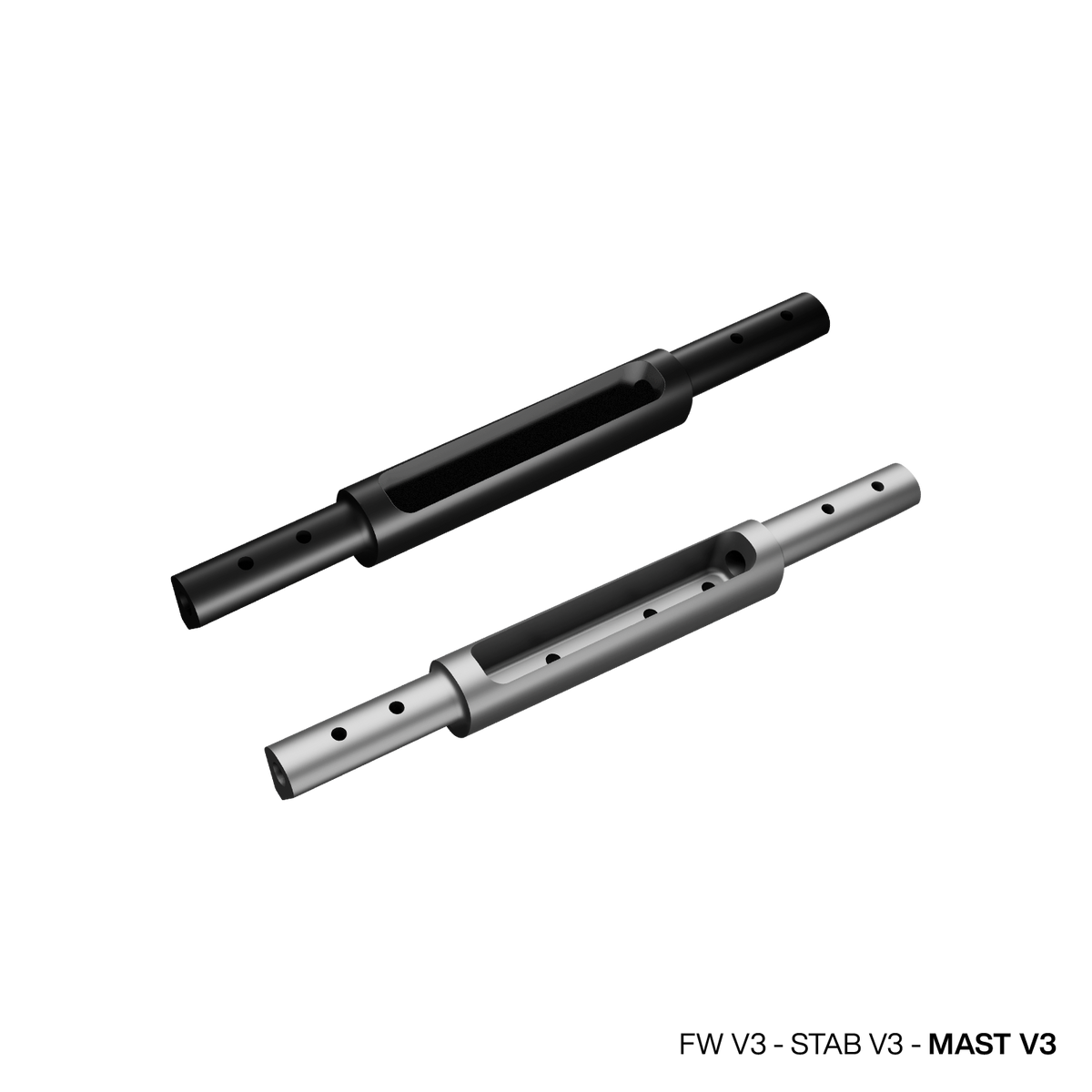

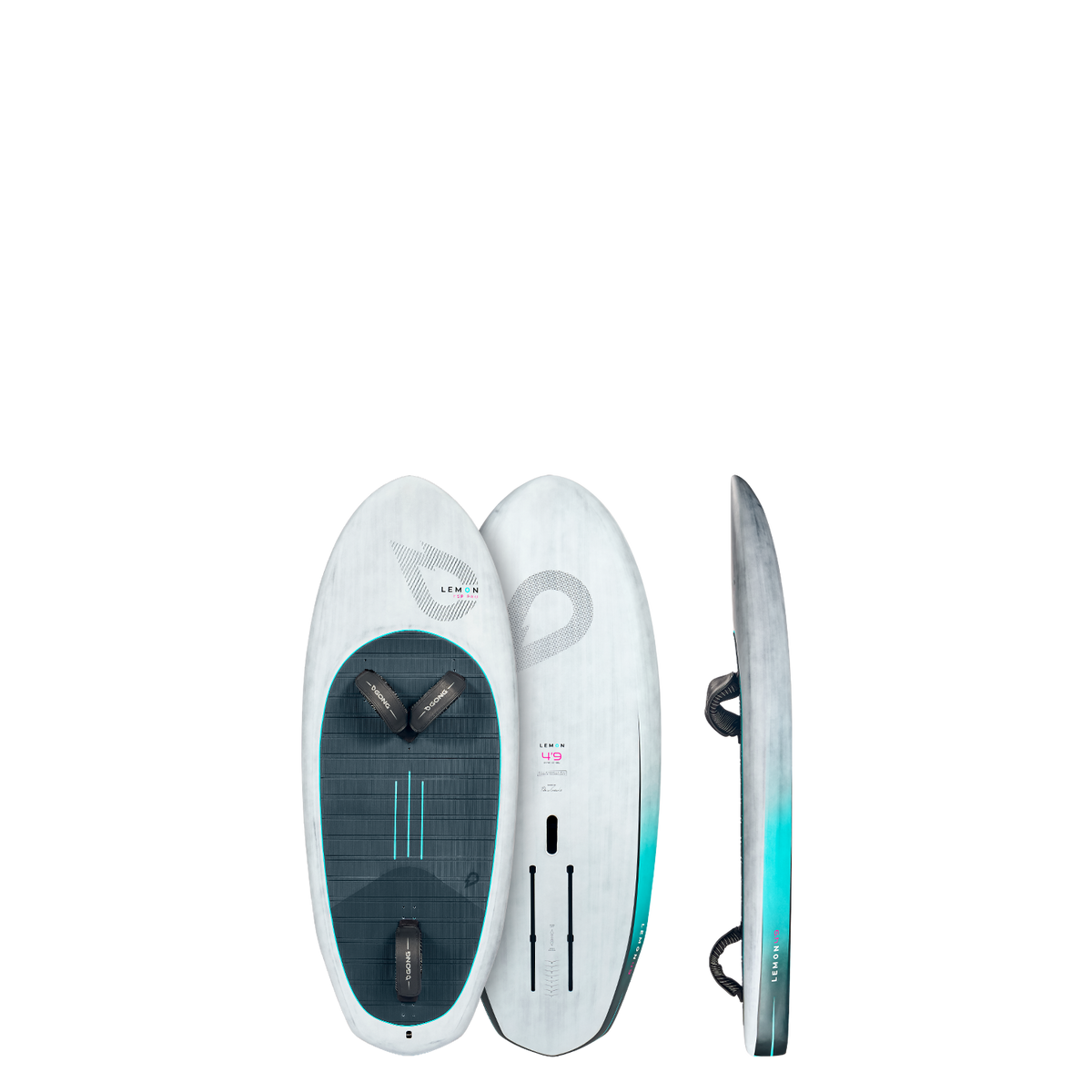









The Fluid Perf Series makes the Fluid program accessible with a solid, forgiving, and more affordable fibreglass prepreg construction. The Fluid Team Series moves to 12K clear carbon, with an updated V3 Atmo shape that is stiffer, more precise, and more performant. We retain the Fluid DNA, but with nearly 20% more efficiency, more response, more pop, more snap, better high-end control, and a much more direct feel.
Yes, for a high-performance mid/high aspect ratio carbon wing, but it requires more skill than a Curve. It remains forgiving at low speeds, but its program is faster, more responsive, and more committed. It is aimed at riders who are already proficient and want to push their piloting skills further.
The Curve is more buoyant, more comfortable at low speeds, more carving-oriented, and more accessible. The Fluid is faster, more responsive, more direct, and better suited for aggressive riding. The Curve helps progress in an accessible mid/high ratio program; the Fluid is designed to make riding more radical.
The Fluid is more manoeuvrable, more responsive and better suited for tight carves, snaps and quick recoveries. The Veloce is more focused on pure glide, freefly, downwind and long connections. The Fluid transforms pressure into immediate reaction. The Veloce maximises "long-distance" efficiency.
Yes, it's one of its very good programs for advanced riders. It allows for tight carves, snapping, strong re-acceleration, maintaining speed, and surfing with more commitment than a Curve. It loves powerful waves, fast sections, and precise handling.
Yes, but it's not a pure pumping wing like a Trail or a Sirus. Its fast profile, 8.7 ratio, and carbon construction provide a lively and efficient pumping for relaunching, passing lulls, or connecting. It requires more rhythm than a Curve, but generates more speed.
Choose the larger one if you want more low-end range, more comfort, and more margin. Choose the smaller one if you have the skill to compensate and if you're looking for more speed, more precision, more manoeuvrability, and a more responsive foil.
The Fluid V3 Atmo Team Series stabilizer is the most consistent choice to maintain the balance of the program: speed, manoeuvrability, pop, snap, responsiveness, and control. A larger stabilizer will provide more stability and ease. A smaller stabilizer will unleash speed, rail to rail, and the playful character of the foil.


