Your cart is empty!
It's flat around here...
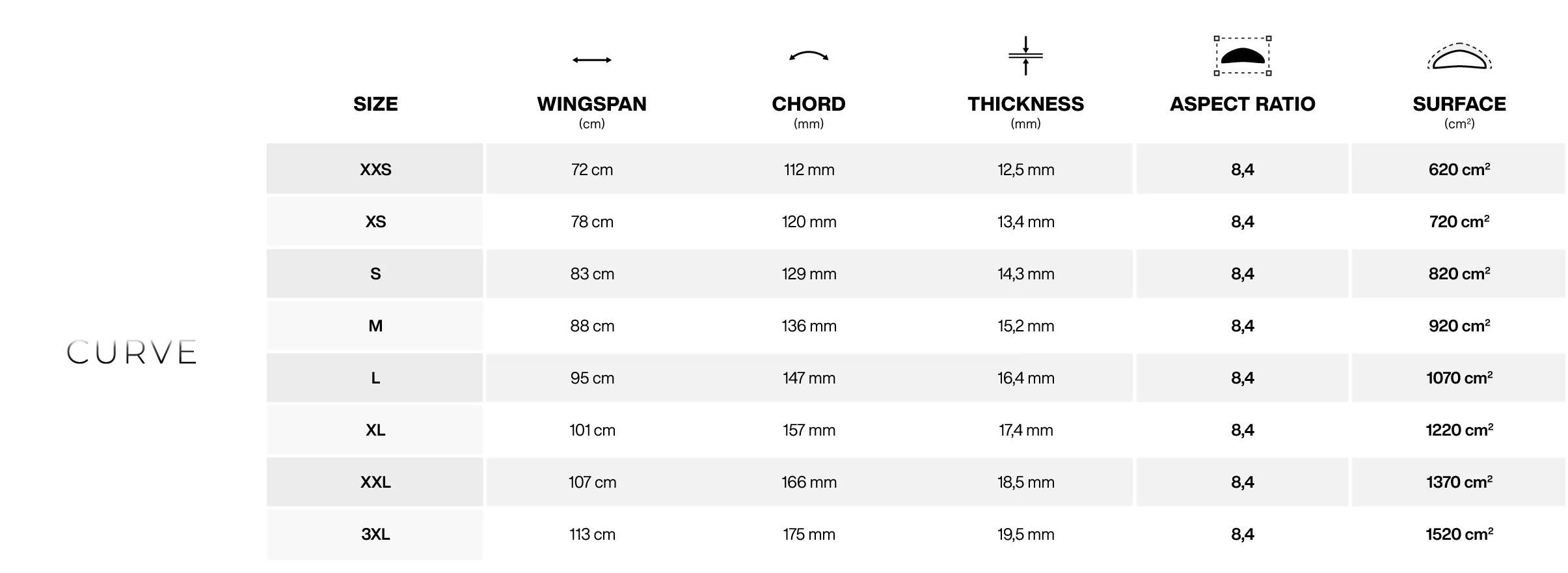
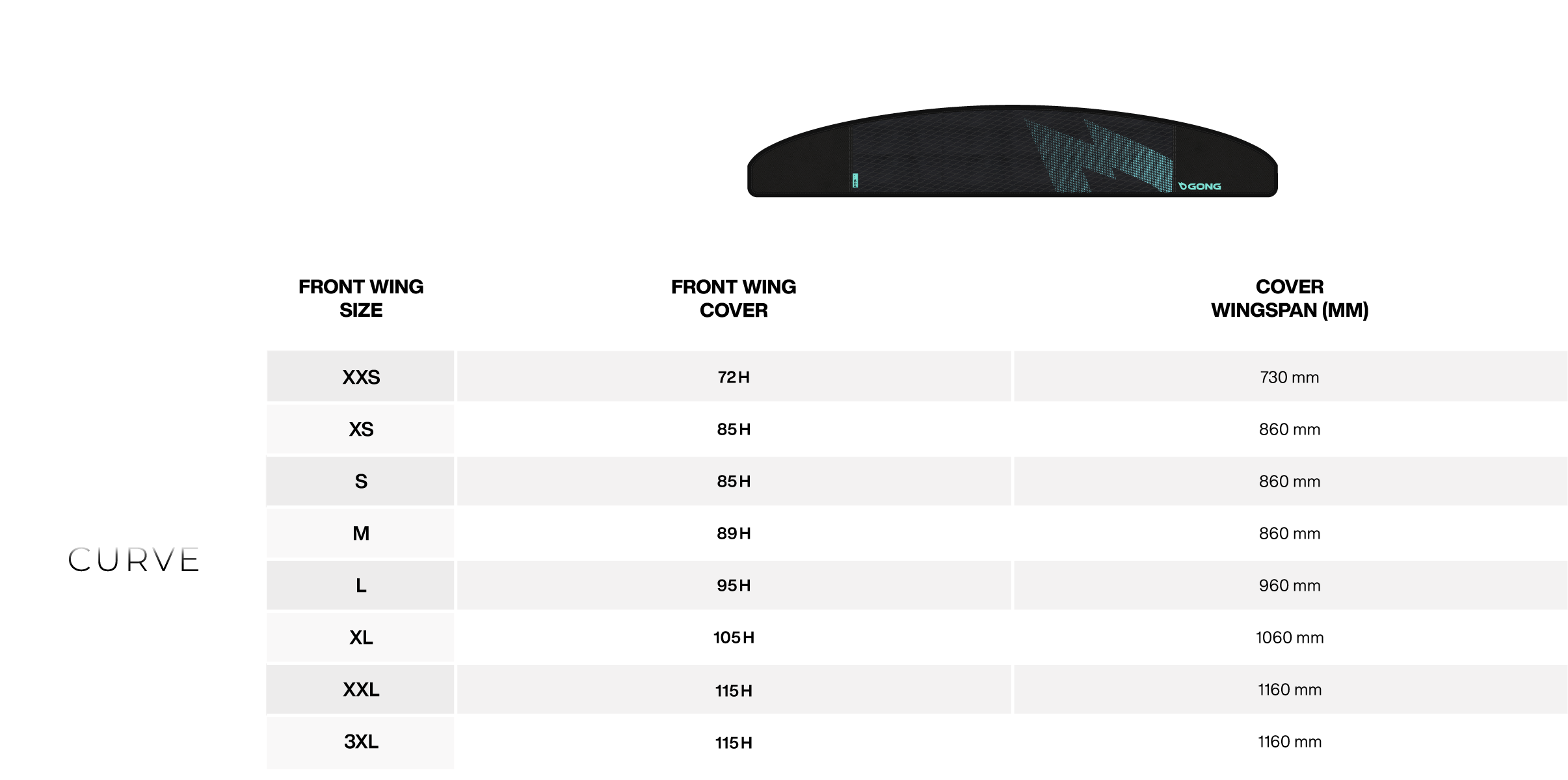


The carbon mid/high ratio front wing for waveriding, cool to performance freeride, beautiful carves, and easy pumping. It combines the accessibility that defines the Curve DNA with the efficiency, stiffness, and precision of a V3 Atmo Team Series shape.
The Curve V3 Atmo Team Series is the carbon wing that provides access to a high-performance mid/high ratio without losing ease. It carves, glides, pumps, accelerates, and maintains the healthy, supportive, and readable behavior that defines the Curve DNA, but with more precision, efficiency, and responsiveness underfoot.
Its V3 Atmo shape is a true new-generation design. It retains the Curve spirit: an accessible, supportive wing that is very enjoyable in carving turns and capable of instilling confidence in many disciplines. But everything has been modernized to go further: the profile, transitions, fillets, trailing edges, stiffness, high-speed stability, and flow quality.
The Curve Team Series is not just a stiffer Curve. It's a more refined new Curve. It retains its role as an entry wing to the mid/high ratio, but with nearly 20% more efficiency, higher average speed, more control when accelerating, and much more direct pressure transmission.
Its aspect ratio of 8.4 provides a real gain in glide, planing, pumping, and average speed compared to a progression wing. The foil maintains its speed better, crosses soft sections more easily, gives more time in maneuvers, and allows for relaunching without having to force. You enter high efficiency, but without suffering from a wing that is too wide, too long, or too technical.
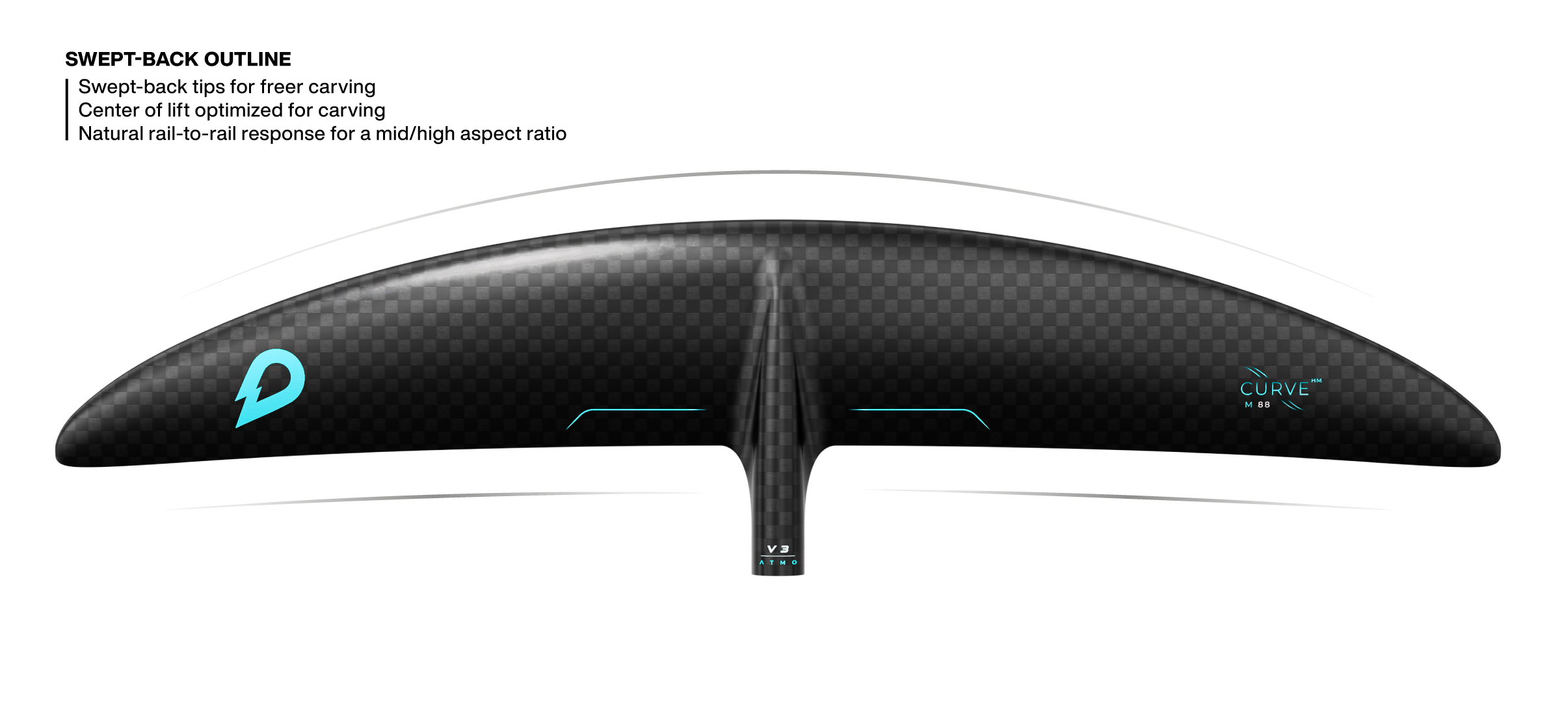
Its rearward-curved outline projects the tips backward and frees the foil in yaw. This is the signature of the Curve feeling: a wing that naturally turns, maintains grip, and accompanies the trajectory. It doesn't escape the carve, doesn't skid, and allows for clean trajectories with a lot of control.
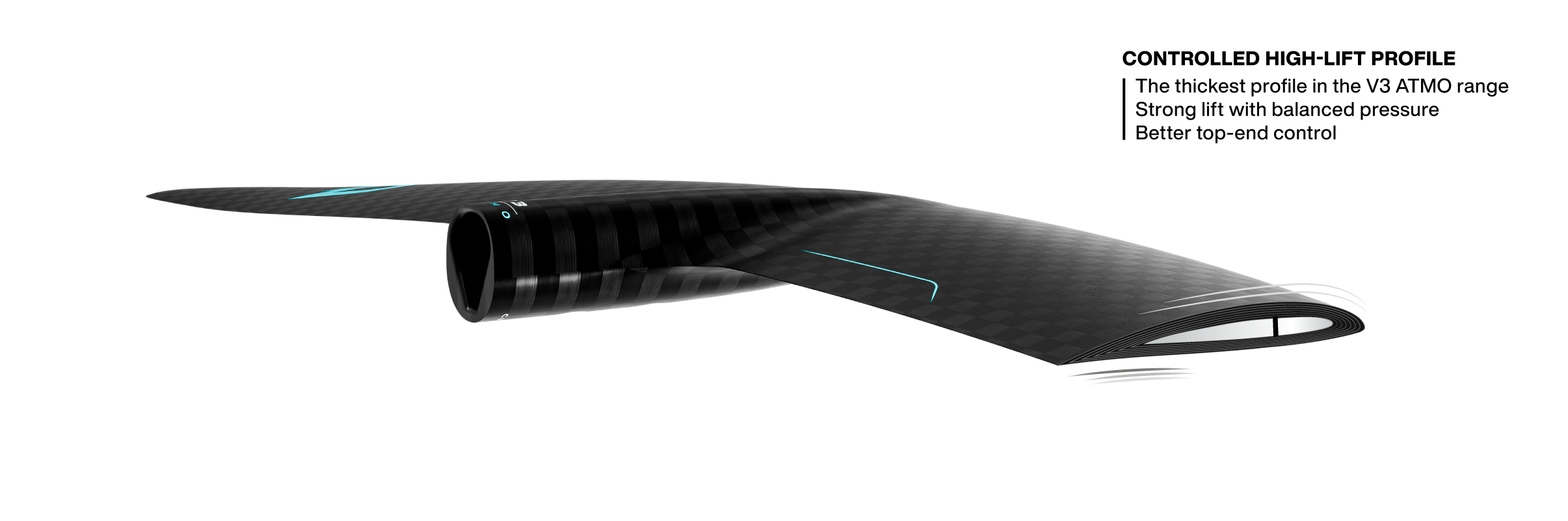
The high-lift profile is one of its great assets. It's the largest of the new V3 Atmo profiles, providing generous lift, early takeoff, and a lot of comfort at low and medium speeds. But this profile has been designed to remain under control as speed increases: the foil doesn't give the sensation of endlessly rising or excessively pushing. It maintains glide, lift, and a stable attitude.
This improved high range is essential. A supportive wing quickly becomes limited if it forces, vibrates, or saturates as soon as you accelerate. The Curve V3 Atmo Team Series remains stable, silent, readable, and efficient when pushed. You can ride faster without losing the confidence that is the model's strength.
The 12K carbon clear construction significantly changes the feeling compared to a Perf. The additional stiffness transmits pressure with less loss. In pumping, energy transfers more directly to the wing. In carving turns, the foil responds faster. In acceleration, the whole setup remains cleaner, more precise, and more responsive underfoot.
In wing foiling, the Curve Team Series allows you to reach a new level: higher average speed, more freefly, more carving, more pumping efficiency, more comfort in waves, and smoother transitions. In surf foiling and SUP foiling, it allows for early takeoff, following the wave, carving with grip, and pumping effectively to connect.
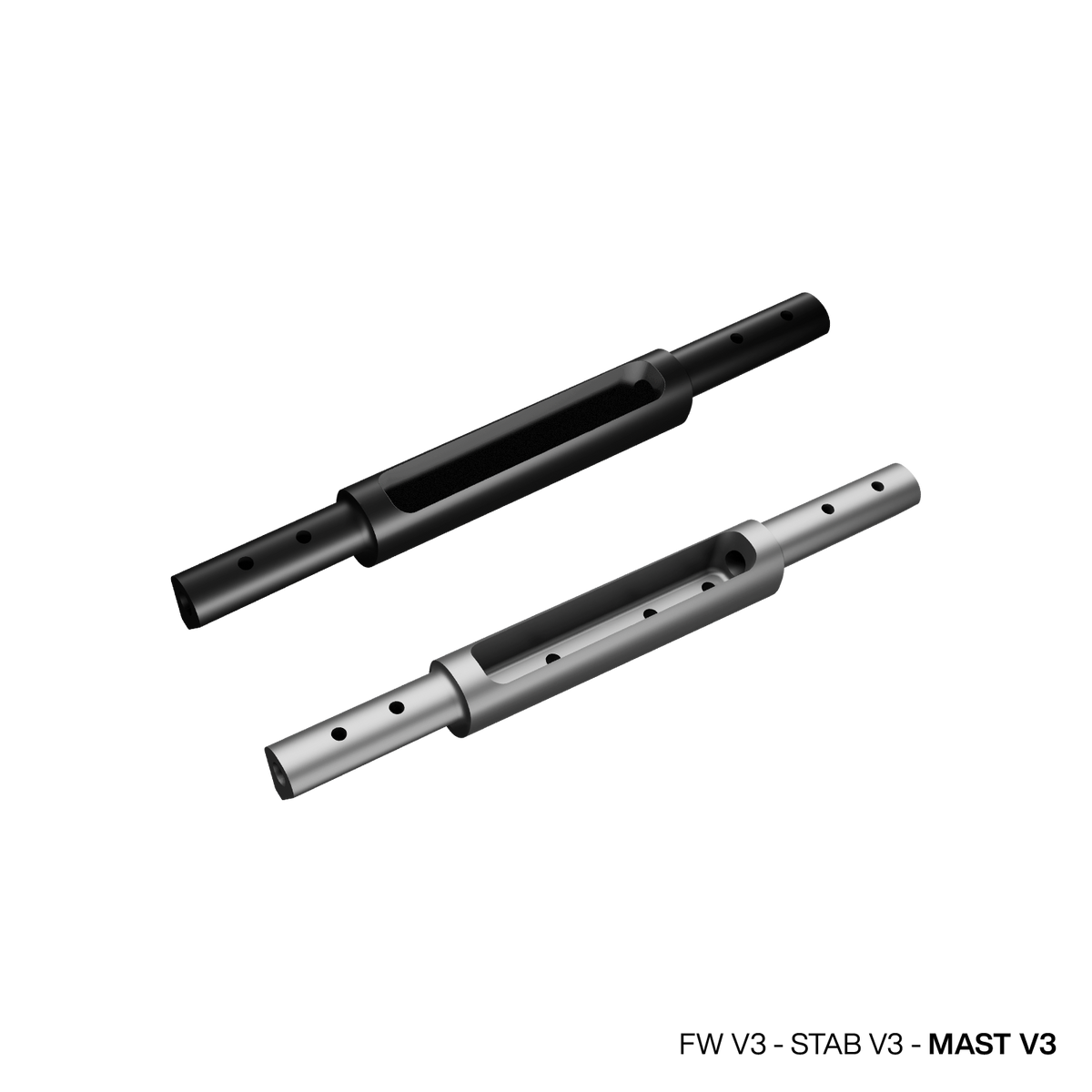
The V3 SuperLock self-locking connection completes this direct feeling. Two screws under the front wing are enough, and the more the wing is under pressure, the more the joint locks. The foil remains stiff, stable, and precise, even under strong pressure.
The Curve V3 Atmo Team Series is the wing for better carving, stronger gliding, longer pumping, and accessing a mid/high carbon ratio with confidence. It retains the Curve ease, but in a faster, more precise, and more performant version.

The outline of the Curve is curved towards the back to move its centre of lift rearward. This design choice frees the foil in yaw and makes carving turns much more natural for a mid/high aspect ratio wing.
The tips projected backwards reduce the perceived wingspan of the foil. You benefit from the glide and efficiency of an 8.4 aspect ratio, but without having a wing that feels stiff or difficult to reposition. The Curve turns tightly, maintains grip, and remains easy to control even at low speeds.
In waves or performance freeride, this geometry provides a very specific feeling: the wing accompanies the trajectory instead of being subjected to it. It allows for continuous carving, transitioning from one rail to the other, and cleanly re-engaging without a skittish behaviour.
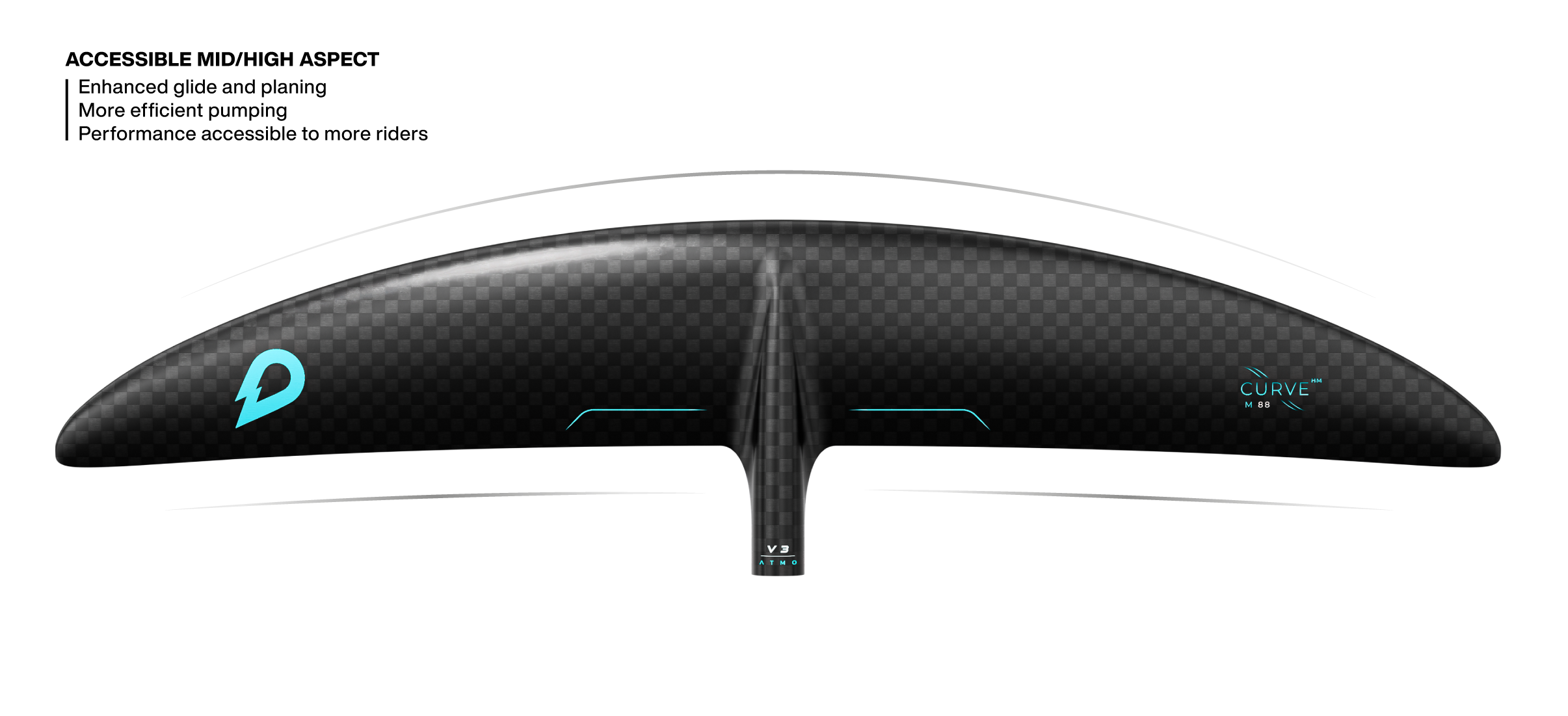
With its 8.4 aspect ratio, the Curve is positioned in the accessible mid/high ratio range. It gains in glide, lift, average speed, and pumping, while still maintaining a wingspan that is easy to handle.
This ratio provides more time in manoeuvres. The foil better retains its speed, crosses soft sections more effectively, and allows for relaunching without having to pump violently. In surf foiling, sup foiling, or wing foiling in waves, this additional lift changes everything.
The Curve Team Series uses this ratio with a stiffer and more precise carbon construction. You can feel the performance of the shape more directly: less loss in flex, more response in pressure, and more useful speed.
The Curve profile is the largest of the new V3 Atmo profiles. It provides generous lift, early take-off, and a lot of comfort at low and medium speeds. This is what makes the wing very accessible despite its superior performance.
In this V3 Atmo Team Series version, this profile has been optimized to gain glide and better handle higher speeds. The Curve maintains its low-speed tolerance but becomes cleaner, more stable, and more efficient when pushed.
The key point is control. The wing provides strong lift, but it doesn't feel like it's climbing indefinitely or pushing excessively. The foil remains under control, without any unwanted lift, with a stable attitude and very predictable behavior.
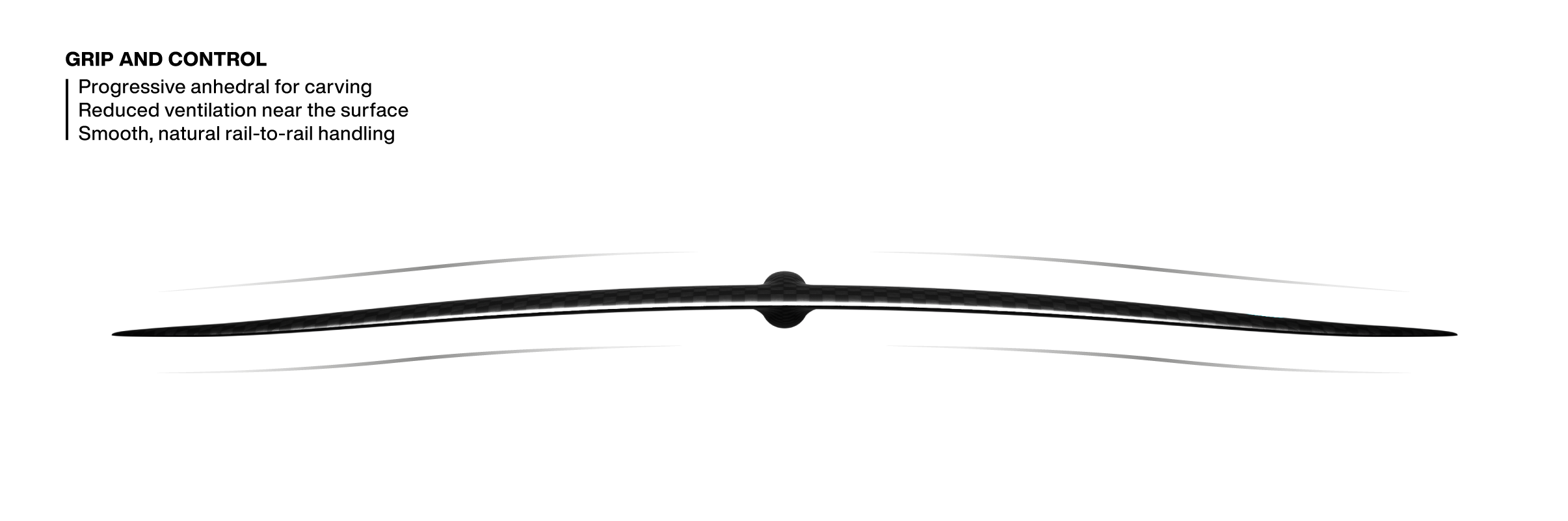
The anhedral of the Curve is light and progressive to provide grip without disrupting the glide. It helps the wing remain stable during carving, especially when flying high or at steep angles.
This anhedral also facilitates rail to rail transitions. The Curve naturally shifts from one edge to the other, with a smooth and predictable feel. It encourages angling because it maintains control.
In waves, this geometry limits ventilation and instills confidence in long or powerful carving turns. The foil remains grippy, predictable, and progressive, without any slipping sensation.
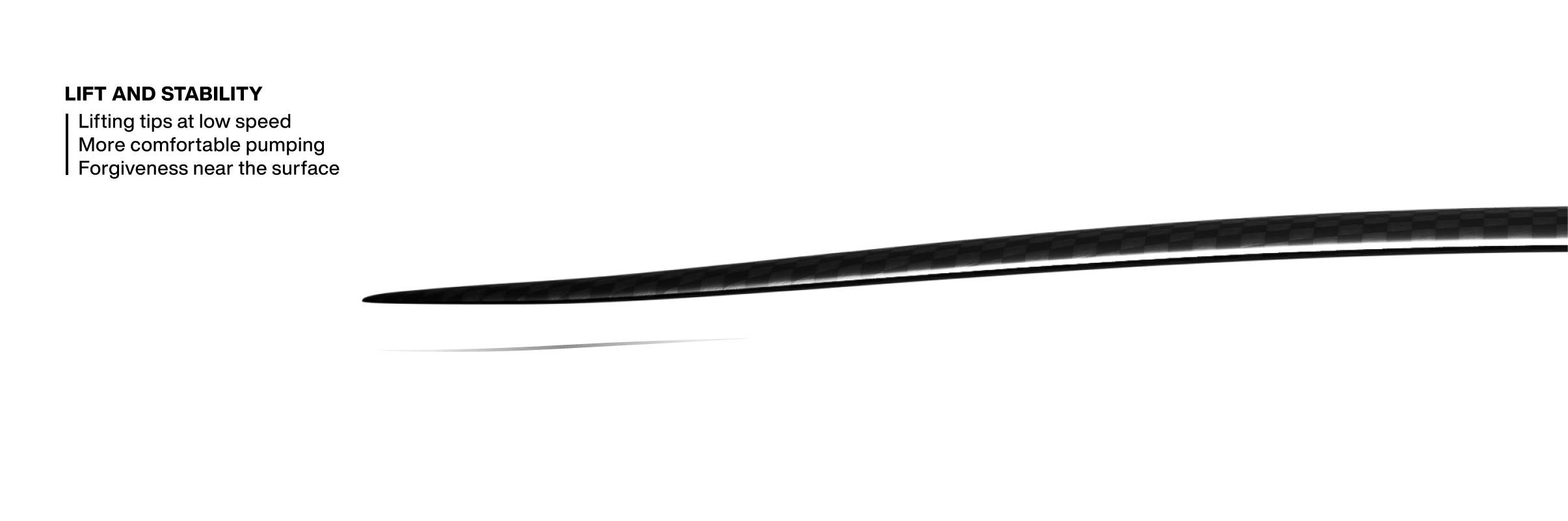
The horizontal tips of the Curve maximise lift and stability, especially when pumping and in low wind conditions. They allow the wing to maintain significant support when the speed decreases.
This geometry provides a lot of comfort during relaunches. The foil remains buoyant between two supports, retains lift, and allows for extended flight with less effort. This is a real advantage in surf foiling, sup foiling, freefly, or pumping.
The horizontal tips also improve tolerance near the surface. You can fly high, ride tip out, carve, adjust a trajectory, and maintain control without the stress of breaching a tip.
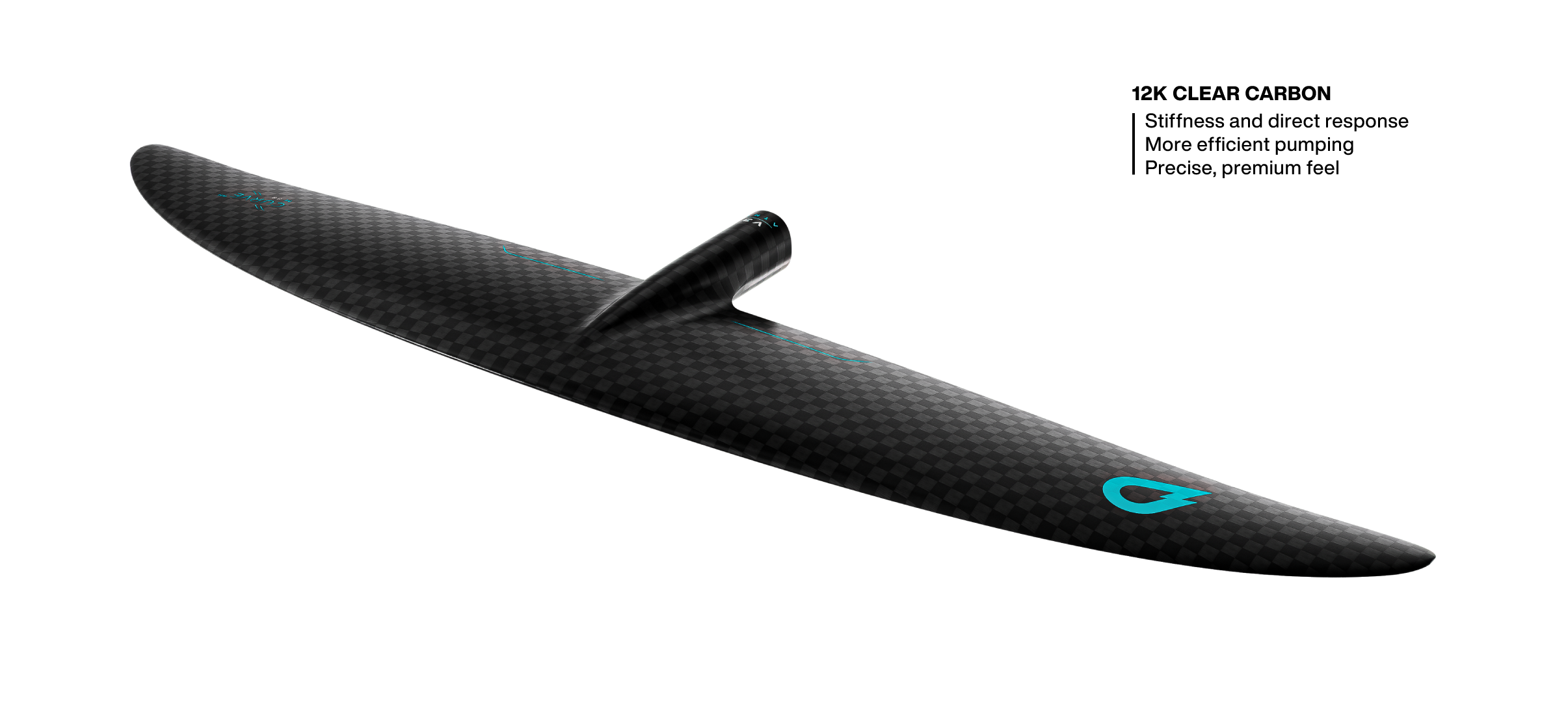
The Team Series carbon construction offers more stiffness, more responsiveness, and more precision than fibreglass construction. On a mid/high ratio wing like the Curve, this gain is immediately noticeable.
When pumping, the pressure is better transmitted. The wing deforms less, more cleanly returns energy, and allows covering more distance with fewer losses. In carving, the foil responds faster and provides a clearer feel of the pressure.
The 12K clear carbon finish highlights the structure and signifies the Team Series level. You get a strong, high-performance, repairable, and very high-end foil, with a more direct feel underfoot.
The Curve V3 Atmo Team Series is aimed at riders who are already flying well and want to move to an accessible, high-performance, and versatile mid/high ratio carbon wing.
In wing foiling, it is perfect for those who are mastering their jibes, starting to catch waves, wanting to improve their freefly, increase average speed, and progress towards smoother riding. It allows transitioning from simple flying to true piloting: better trajectory, better pumping, better carves, and more efficiency.
In surf foiling and SUP foiling, it suits intermediate to advanced riders seeking more glide without sacrificing low-speed grip or maneuverability. It is ideal for working on clean curves, catching small waves, following the swell, pumping efficiently, and connecting to another wave.
It also suits riders who want a versatile high-ratio wing that is not too radical, capable of performing in many disciplines. The Curve is an excellent quiver wing for those who want a single carbon front wing that is lift-efficient, maneuverable, and offers excellent glide.
It can appeal to advanced riders who like to undersize their wing to gain speed and maneuverability while maintaining enough lift and forgiveness for comfortable riding.
The Curve Team Series is also very logical for those who like the Curve Perf Series but want to step up: new V3 Atmo shape, nearly 20% more efficiency, more rigidity, more response, more precision, and better high-end performance.
The Curve Team Series is not the best choice for complete beginners in foiling. For learning the first flights, stabilizing your stance, and progressing without stress, the X-Over or the Ascent will be more suitable.
It is also not the most radical wing for hard snaps, seeking very responsive piloting, or maximizing short accelerations. In this area, the Fluid will be more suitable.
If the main goal is long-distance glide, fast freefly, or downwind with a thinner and more elongated wing, the Veloce FF or the Veloce LW will be more logical.
If the goal is very low-speed pumping, flat start, or specific dockstart, the Trail or the Sirus will be more relevant depending on the level and style sought.
The Curve Team Series is a versatile mid/high ratio wing with carving capabilities. Its interest lies in its balance. If you want an extreme wing in a unique register, you should choose a more specialized model.
The Curve V3 Atmo Team Series is made for carving, gliding, pumping, and surfing with an excellent balance between lift, control, and efficiency; with an excellent balance between performance and accessibility.
In wing foiling, it allows for gains in low-end, average speed, and freefly. It handles lulls better, provides comfortable lift in transitions, and allows catching waves with a foil that glides without stalling. It's a very pleasant wing for riding with less power in hand as the level increases.
In surf foiling, it excels in small peeling waves, wind waves, soft swells, and conditions where glide must be maintained. It allows for early take-offs, following the swell, carving cleanly, and pumping efficiently to catch another wave.
In SUP foiling, it provides a lot of comfort at take-off and very effective glide once in flight. It allows enjoying weak swells, bumps, and pushing waves without stalling abruptly.
In pumping, it can be very interesting for those who want a versatile wing with good efficiency. It requires more technique than a Trail, less efficiency than a Sirus, but offers real pumping pleasure with the possibility to surf, wing, or ride differently with the same wing.
In kite foiling, the smaller sizes can offer a lift-efficient, gliding, and pleasant foil, with maneuverability and comfortable speed. It will simply be necessary to avoid too large spans, less suited to counter-heeling and kite speed.
The Curve is therefore the wing for beautiful carves, accessible glide, and controlled efficiency: it allows surfing longer, flying cleaner, relaunching more easily, and progressing towards a smoother and more performant foil.
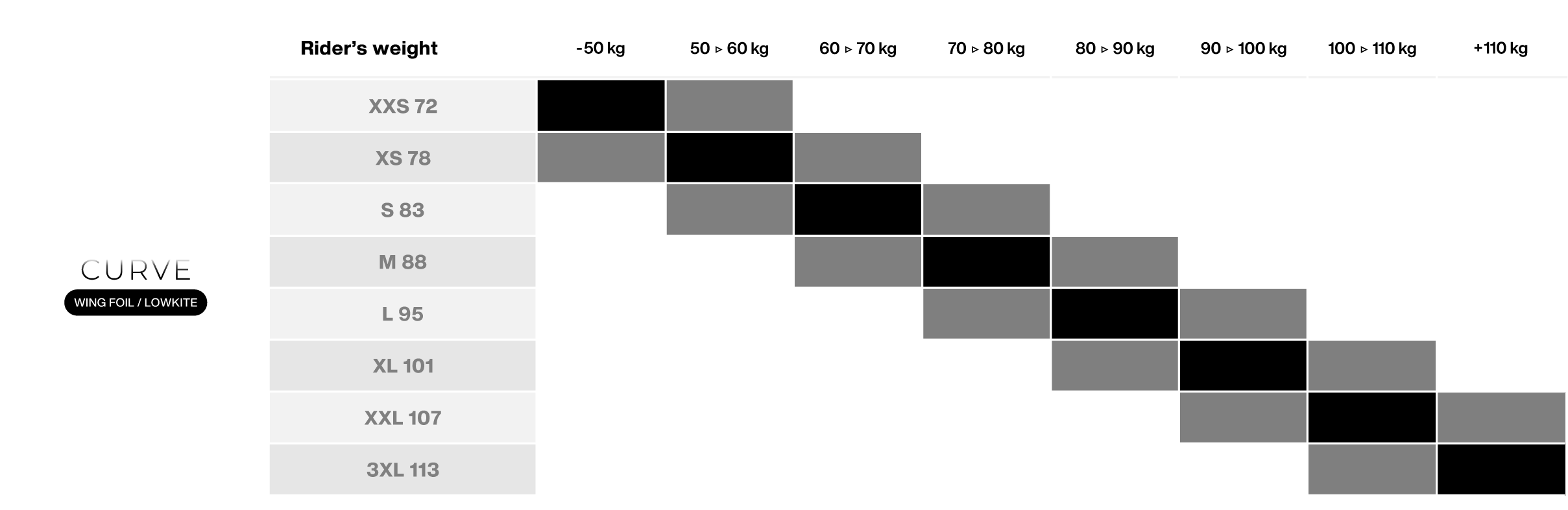
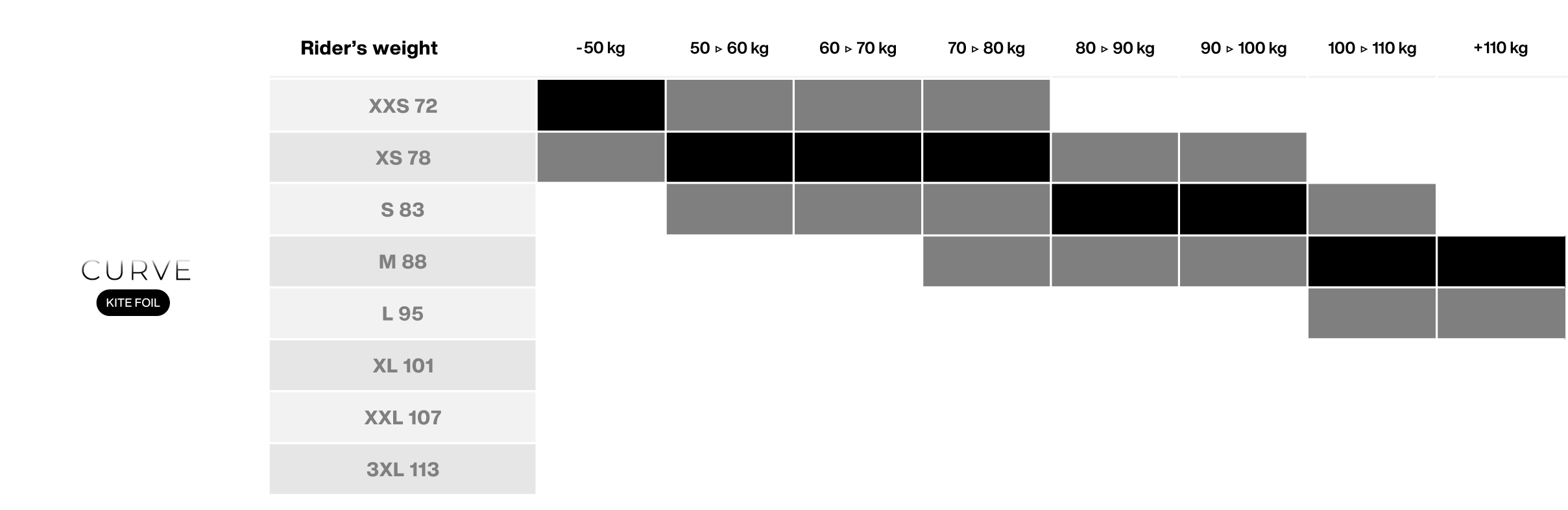
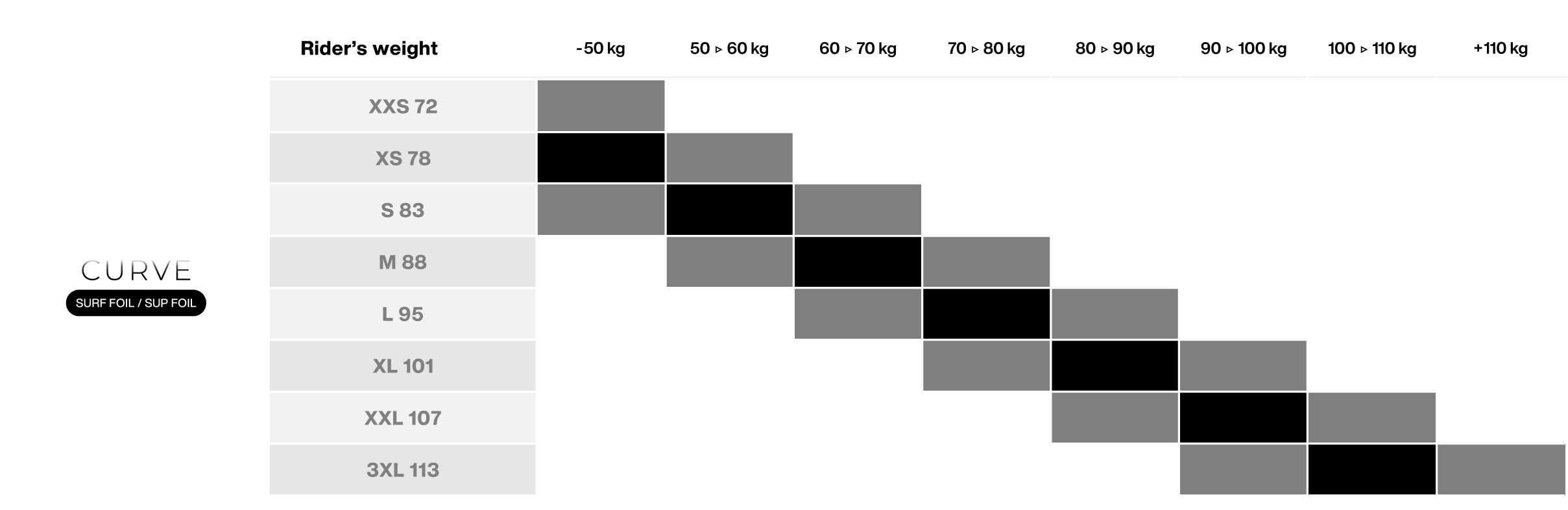
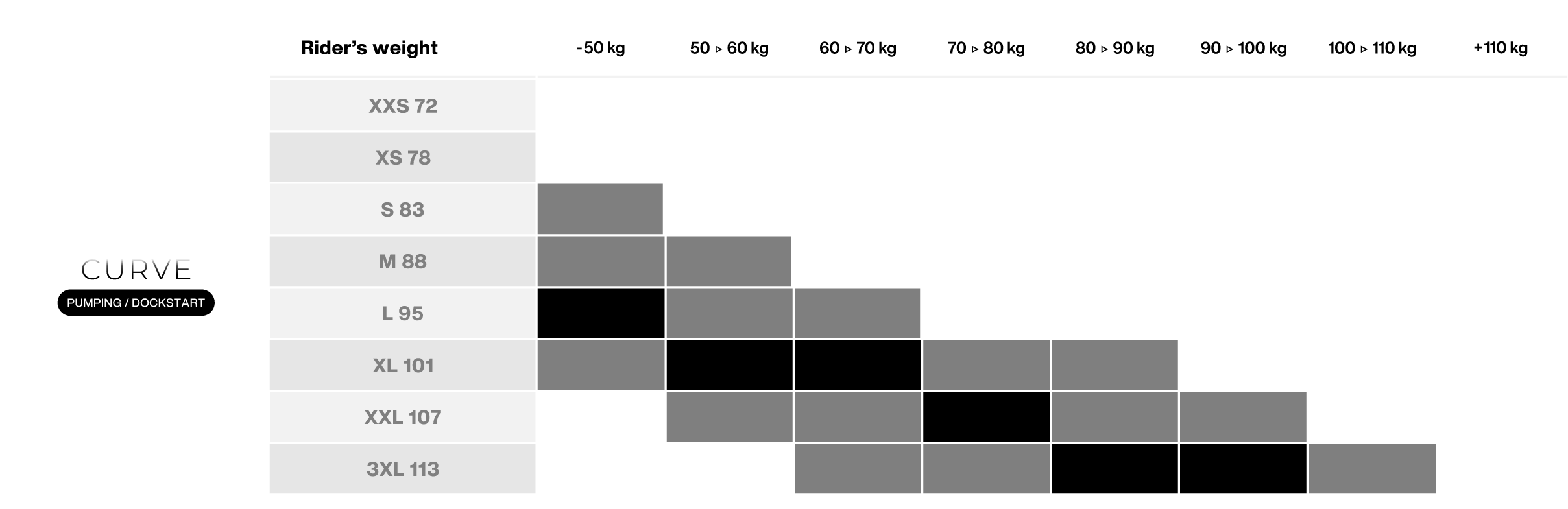
The Curve has strong lift at low speed. Therefore, it is not necessary to choose a huge surface to enjoy its program. At equivalent surface, it offers more glide and more planing than a more freeride wing, which often allows slightly reducing the size without losing too much comfort.
Choosing a larger size maximizes early take-off, lift, low-end comfort, small waves, and pumping. It's the logical choice for heavier riders, light winds, small swells, soft waves, or riders who want a lot of margin.
Choosing an intermediate size allows enjoying the best balance of the Curve: lift, glide, maneuverability, carving, and pumping. It's often the most coherent choice for a rider who wants a versatile high-ratio wing.
Choosing a smaller size allows gaining speed, maneuverability, and precision. It's interesting for advanced riders, more powerful waves, faster conditions, or those who want a more lively wing underfoot.
In wing foiling, all sizes can work depending on weight, wind, board, and level. The weaker the wind or the heavier the rider, the more you will go for a larger size. The higher the level, the more you can reduce the surface to gain speed and carve.
In surf foiling and SUP foiling, you need to keep enough surface to take off comfortably and pump, but avoid oversizing if the goal is to carve hard. The right size is the one that allows early take-off without blocking the carves.
In kite foiling, you should stick to smaller sizes to limit span, avoid tip breaches, and maintain a comfortable foil in counter-heeling.
If hesitating between two sizes, choose the larger one for more comfort, low-end, and pumping. Choose the smaller one only if the level, spot, and primary goal justify more speed and maneuverability.
The Curve V3 Atmo Team Series works ideally with a Curve V3 Atmo Team Series stabilizer. Both components are designed for the same program: carving, lift, glide, stability, and control.
A larger stabilizer provides more front foot pressure, more stability, and easier take-off. It's the logical choice for a progressing rider, a larger build, soft conditions, or a focus on low-end and easy pumping.
A smaller stabilizer frees up the Curve, increases speed, improves rail to rail, and gives a more playful foil. It requires more precision but allows better exploitation of the wing's high-ratio potential.
The Curve accepts being paired with a reasonably compact stabilizer very well, as its high-lift profile and outline that moves the center of lift back already provide a lot of comfort. Reducing the stabilizer can therefore be a good way to gain glide and maneuverability as the level progresses.
The right setup always depends on the front wing/stabilizer pair, but also on the foil's position in the boxes. If the stabilizer is smaller and front foot pressure decreases, you will often need to move the foil slightly forward to regain a natural balance.
If in doubt, prioritize a comfortable stabilizer to maintain the ease that is the strength of the Curve. The goal is to enjoy the mid/high ratio carbon efficiency, not to make the wing unnecessarily technical.
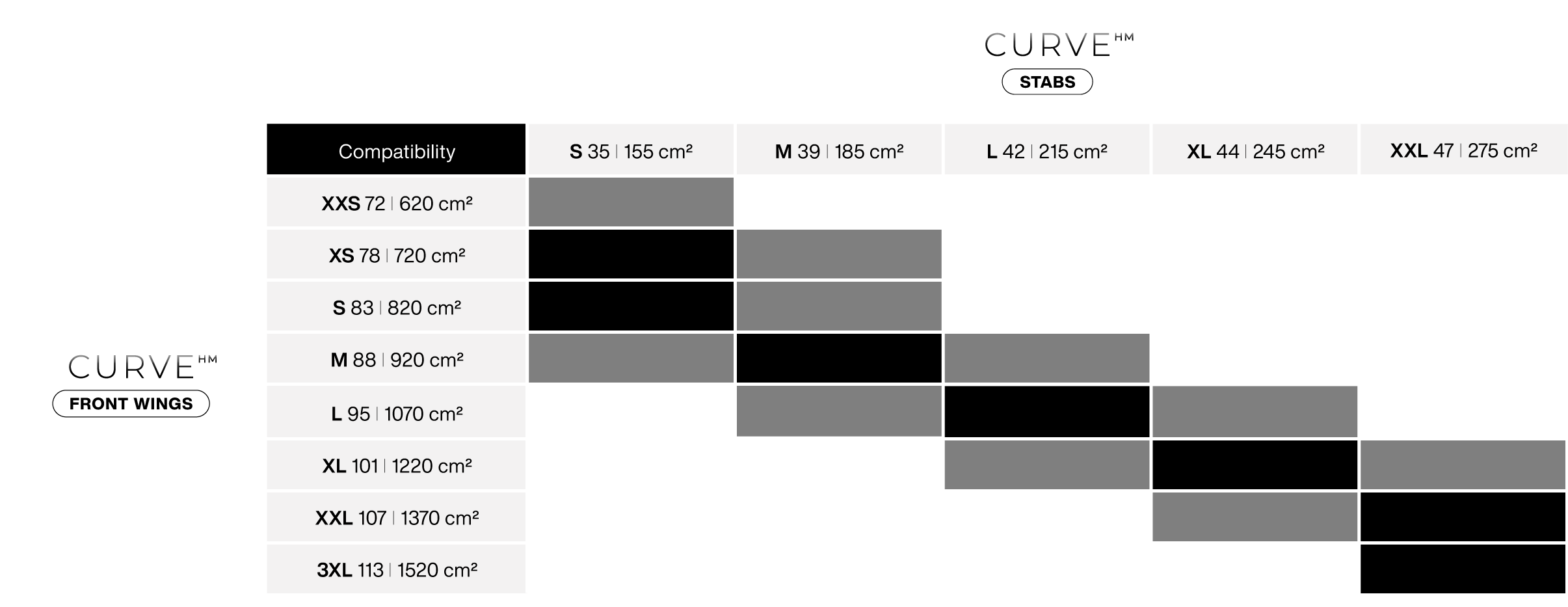
The range

The front wing comes with all the necessary screws for mounting on the fuselage.
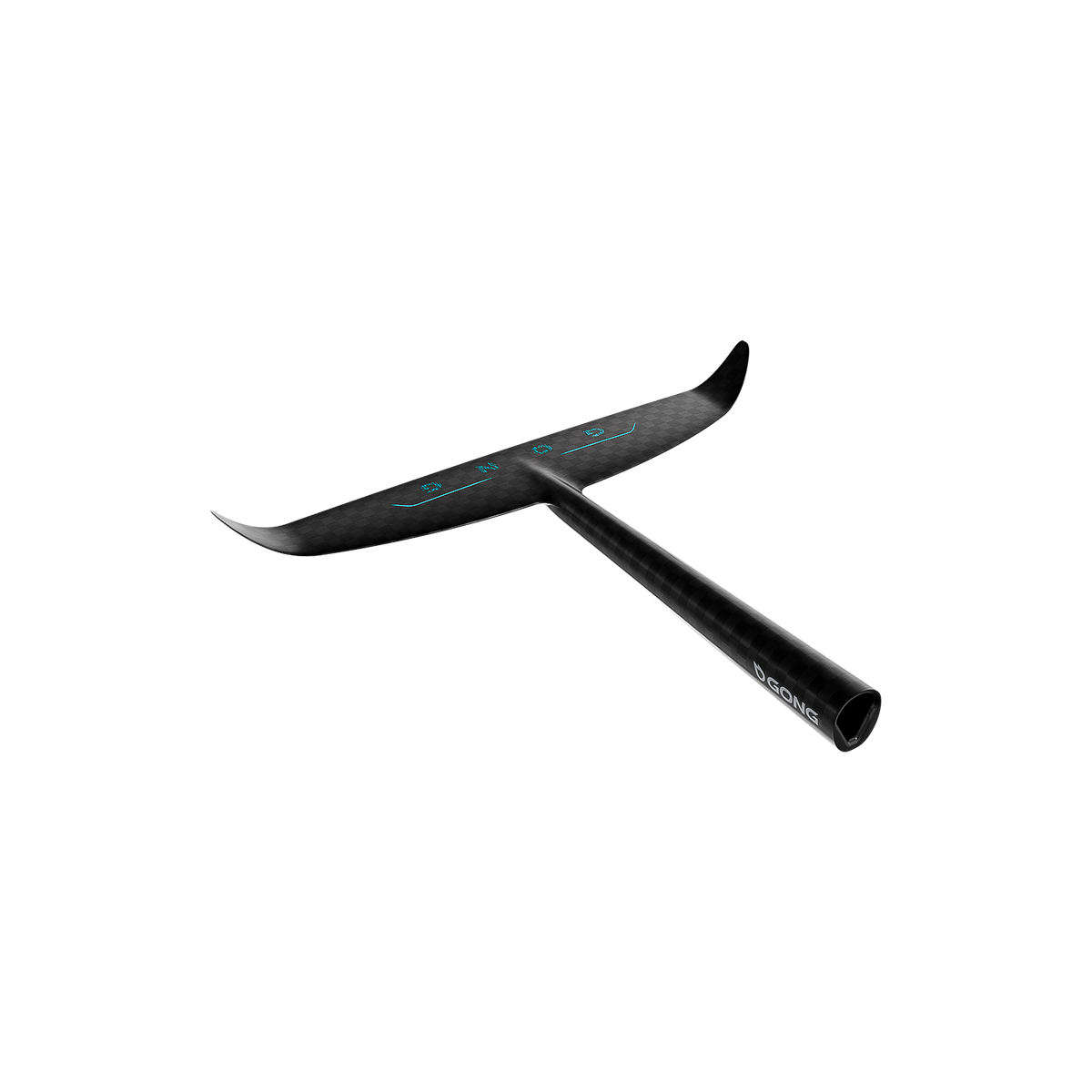

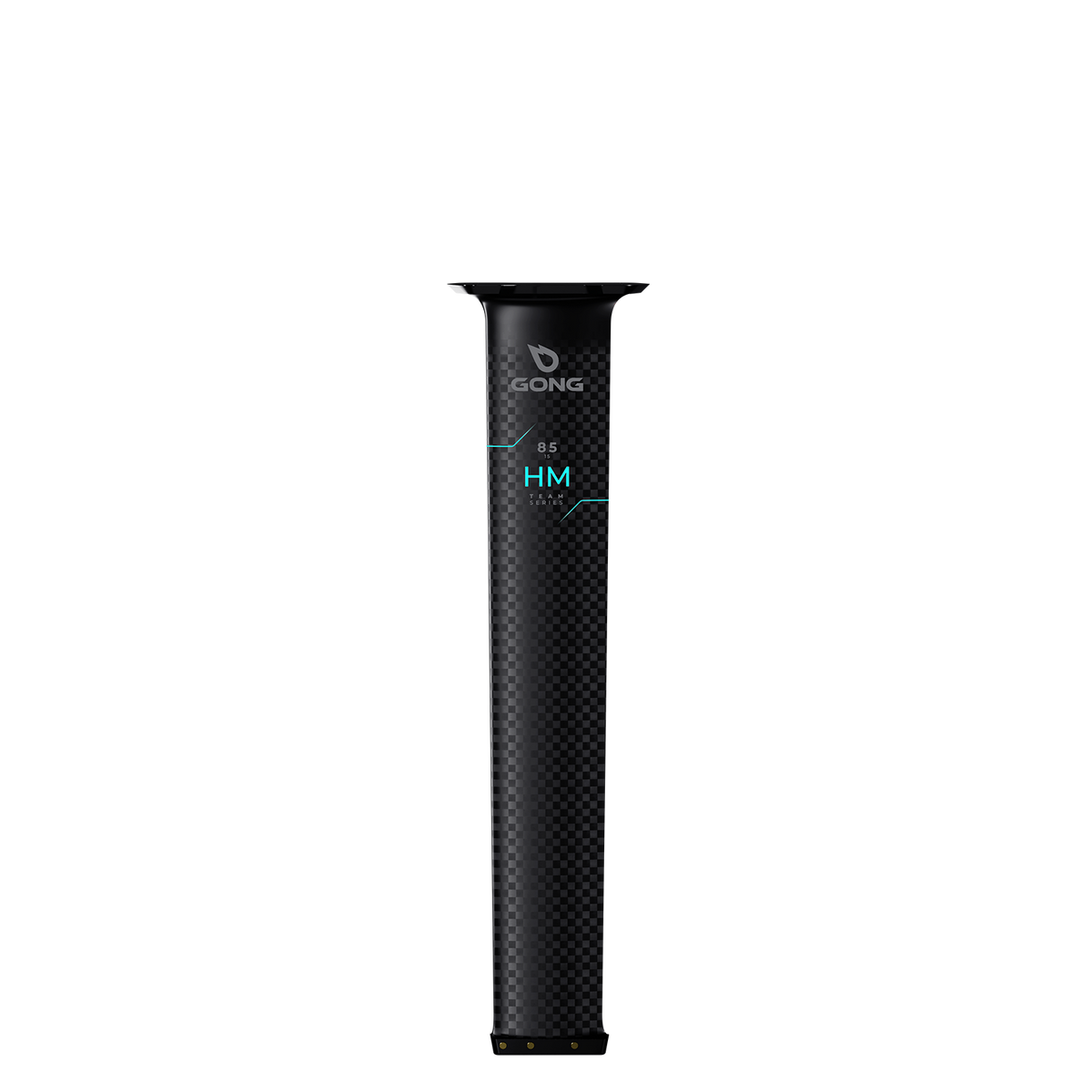











The Curve Perf Series makes the Curve program very accessible thanks to a solid, forgiving, and more affordable fiberglass prepreg construction. The Curve Team Series moves to 12K clear carbon, with a modernized V3 Atmo shape, offering more stiffness, precision, and performance. We retain the Curve DNA, but with nearly 20% more efficiency, increased responsiveness, better high-end control, and a much more direct feel.
Yes, for a mid/high aspect ratio carbon wing. It's not designed for beginners, but it remains very accessible for a rider who is already foiling competently. Its high-lift profile, set-back outline, and stable behaviour in carves provide plenty of leeway.
The Curve is more buoyant, more comfortable at low speeds, more carving-oriented and more accessible. The Fluid is faster, more responsive, more direct and better suited for aggressive riding. The Curve is the best choice for gliding, carving smoothly and progressing in a mid/high ratio program. The Fluid is the choice for radicalizing your riding style.
The Curve is more manoeuvrable, more buoyant at low speeds, and easier to carve. The Veloce is more oriented towards pure glide, freefly, downwind, and long connections. The Curve is more versatile and more accessible. The Veloce goes further in long-distance performance.
Yes, it's one of its very good programs. It's perfect for small peeling waves, mushy waves, wind waves, and sessions where you need to take off early, glide, carve, and pump to reconnect. It's not the most radical wing for tight snaps, but it excels in beautiful lines and carves with grip.
Yes, that's one of its strengths. It's not a pure pumping wing like a Trail or a Sirus, but its high-lift profile, 8.4 ratio, and horizontal tips give it a lot of lift between two supports. The Team Series carbon construction makes pumping more direct, more responsive, and more efficient for relaunching, getting through lulls, or connecting to another wave.
Choose the larger one if you want more low-end range, more comfort, more lift, and easier pumping. Choose the smaller one if you have the skill to compensate and if you're looking for more speed, more manoeuvrability, and more precision.
The stab Curve V3 Atmo Team Series is the most consistent choice to maintain the balance of the program: lift, carving, glide, and control. A larger stab will provide more stability and ease. A smaller stab will release speed and rail to rail.


