Your cart is empty!
It's flat around here...



The Rover sled is built for exploration: seek out the best conditions, reach the line-up with the right gear and make your jet the hub of every session.
The Rover sled was created for sessions that begin with the urge to explore further afield.
The Rover raises the bar for usable carrying capacity: boards, bags, wings, kites, foils and session gear all have their place without overcrowding the deck.
Its modular setup lets you adapt the sled to your destination and plans for the day. Load your gear, strap everything down securely and keep enough deck space to move around, brace yourself and handle equipment.
Seeking out the best conditions means following your instincts, exploring a more promising stretch of coast or heading for a distant peak and an uncrowded line-up. Having the right gear opens up possibilities, but taking it all often means making compromises. The Rover sled helps you get more from your jet: explore further, keep your options open and have the right quiver within reach.
Once you arrive, the Rover becomes the hub of the session. Return to the jet, switch craft, grab a wing, drop off a board, pick up a surfer and head back out. The gear stays accessible, the platform stays clear and the session flows around the jet.
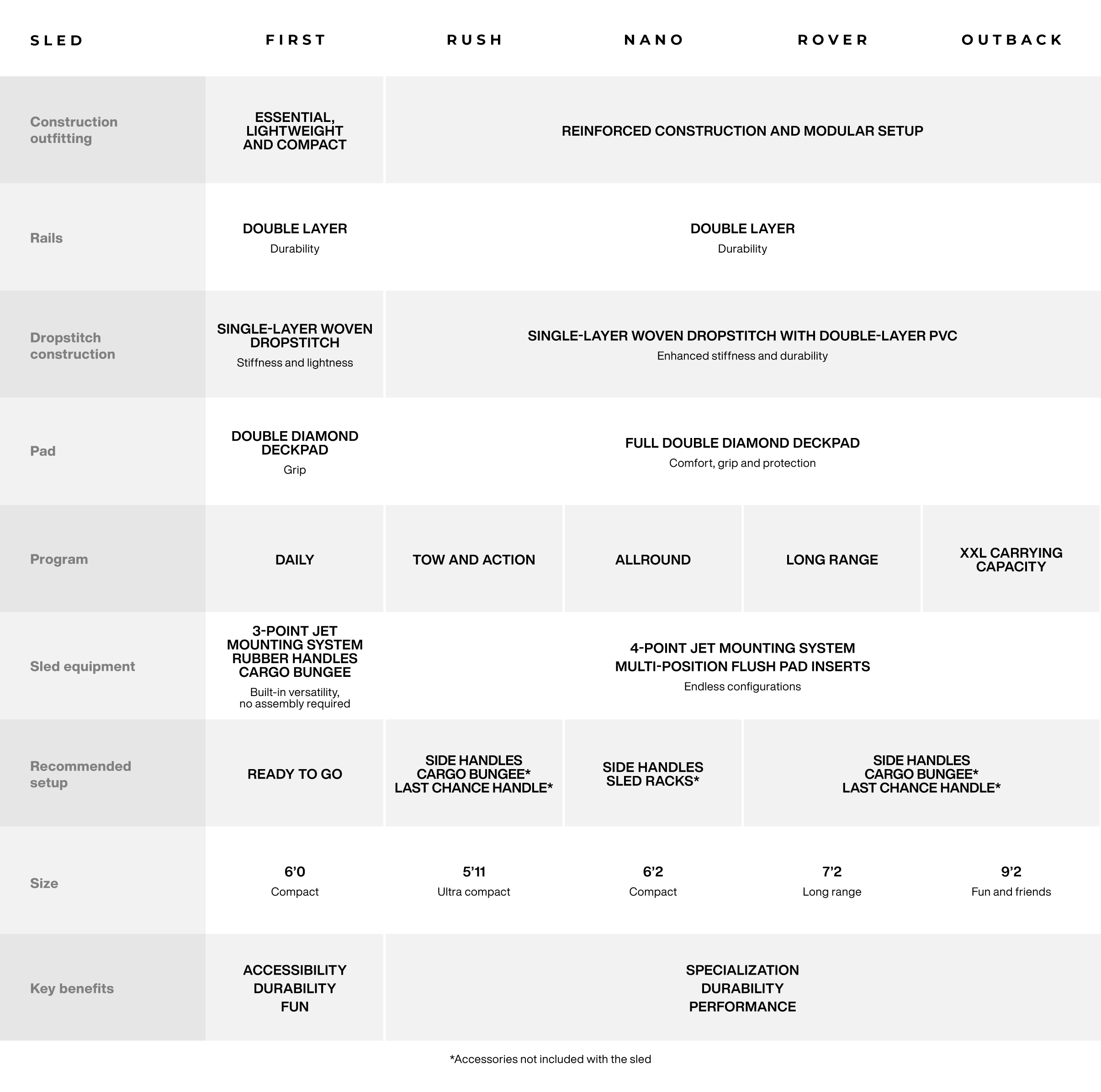
At 7′2″ long, it offers the space and comfort needed to bring your chosen gear and organise group sessions, while remaining more compact than the Outback sled. It strikes the right balance: more space and carrying capacity than the Nano, with more possibilities, while staying light, maneuverable and easy to handle behind the jet.
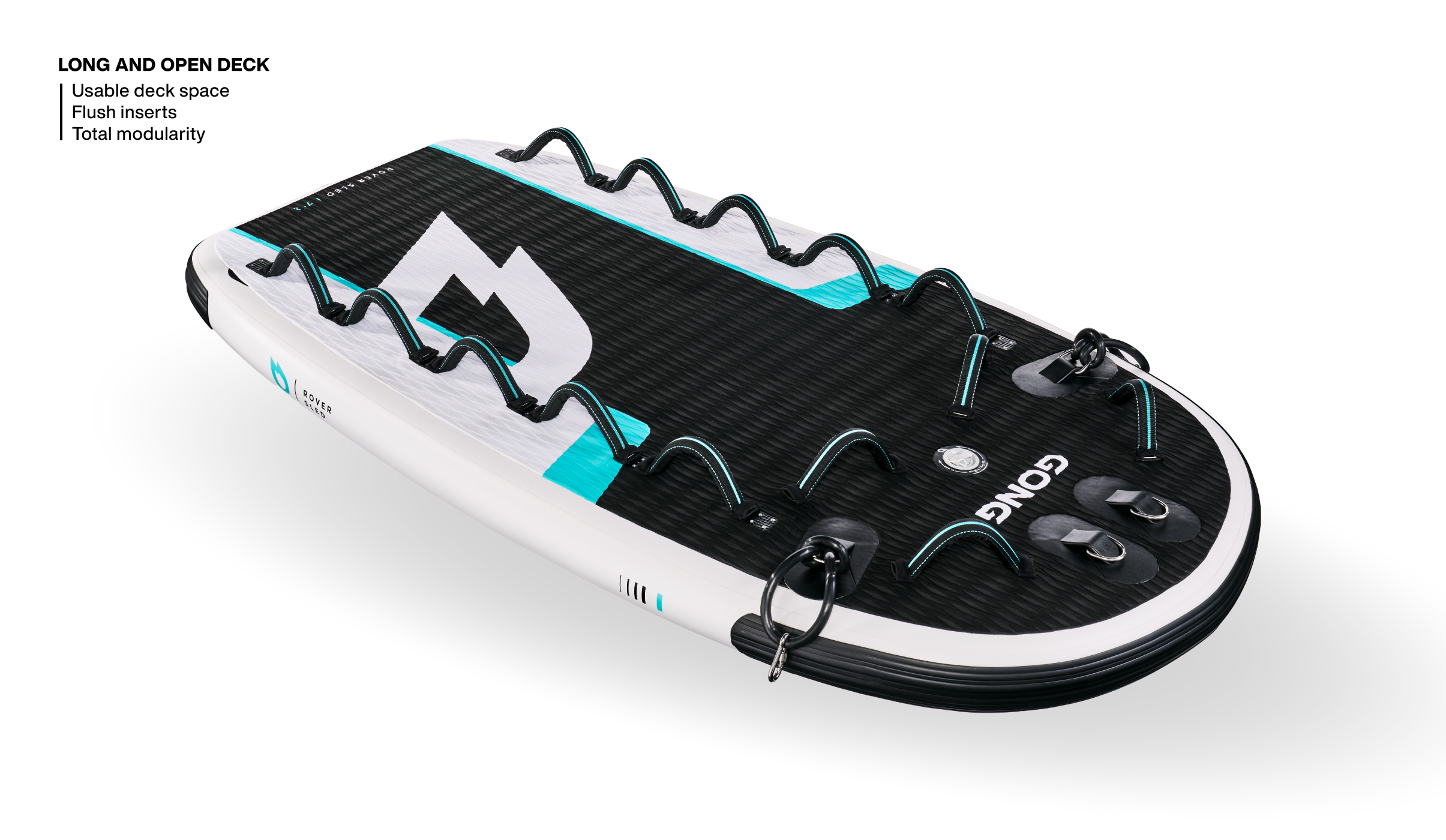
This is where GONG’s modular design comes into its own. Multi-position stainless steel threaded inserts sit flush with the pad, keeping the deck clear when accessories are removed and letting you equip it to suit the session.
With just a few turns of a screw, you can fit modular side handles and last-chance grab handles, in soft or rigid versions, to position handholds where you need them. Add new-generation racks inspired by roof bars to carry equipment securely, or use attachment points, straps and bungees to secure gear directly to the deck.
Each accessory can be fitted or removed to suit your plans, keeping the setup adaptable from one session to the next. You adapt the sled to your riding, not the other way around.
Head out fully equipped, keep your quiver organised and explore new possibilities: the Rover sled embodies exploration the GONG way.

A versatile outline built for exploration, designed to carry your gear and keep the session active.
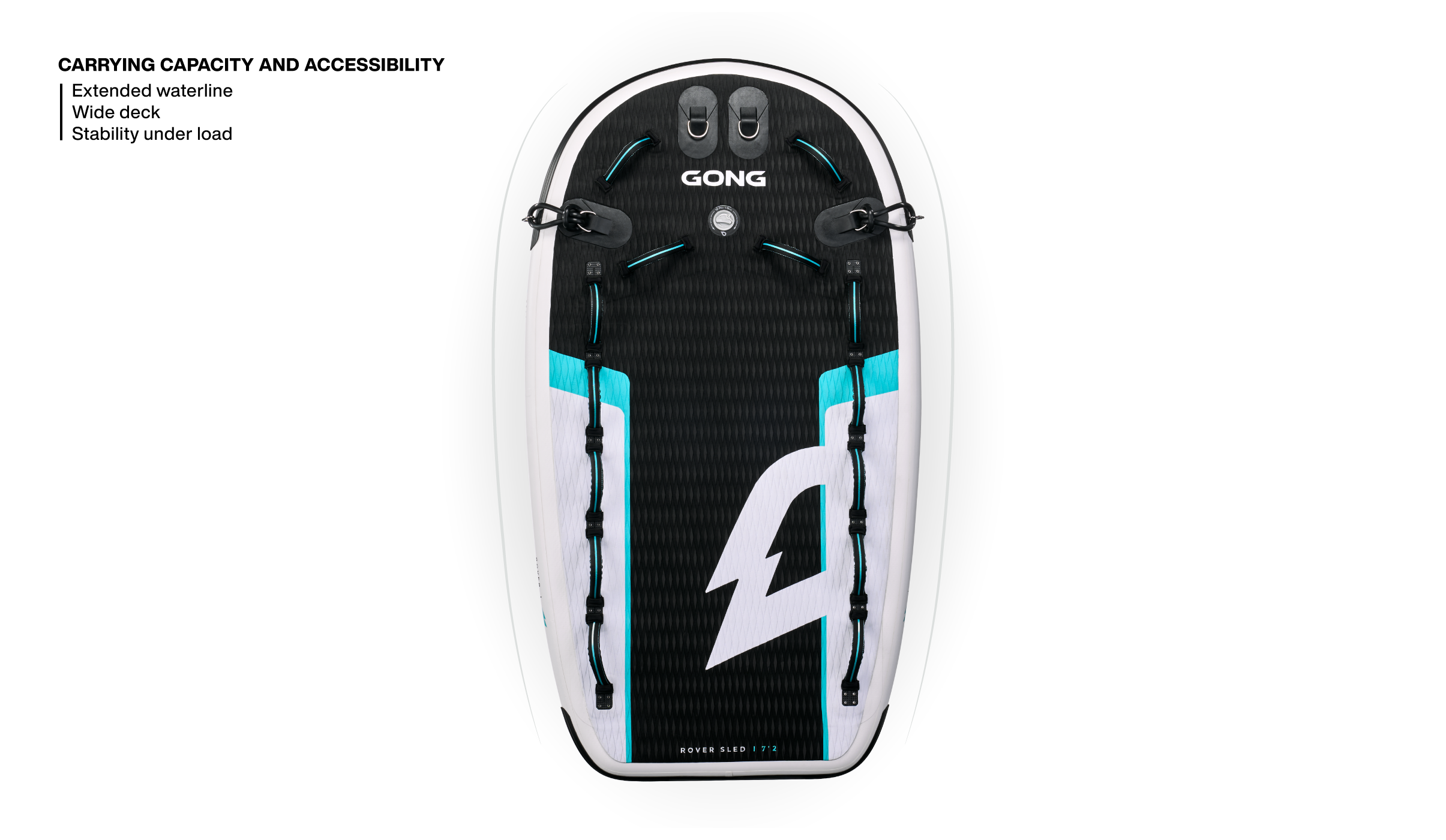
At 7′2″ long, the Rover offers an extended waterline for stability and a spacious deck to distribute loads evenly and keep different areas clear for specific tasks. Its consistent width helps maintain balanced trim behind the jet, even with gear on board.
Volume is evenly distributed along the full length to promote predictable handling, both empty and loaded. The sled stays stable underfoot and easy to control while being towed, including through maneuvers.
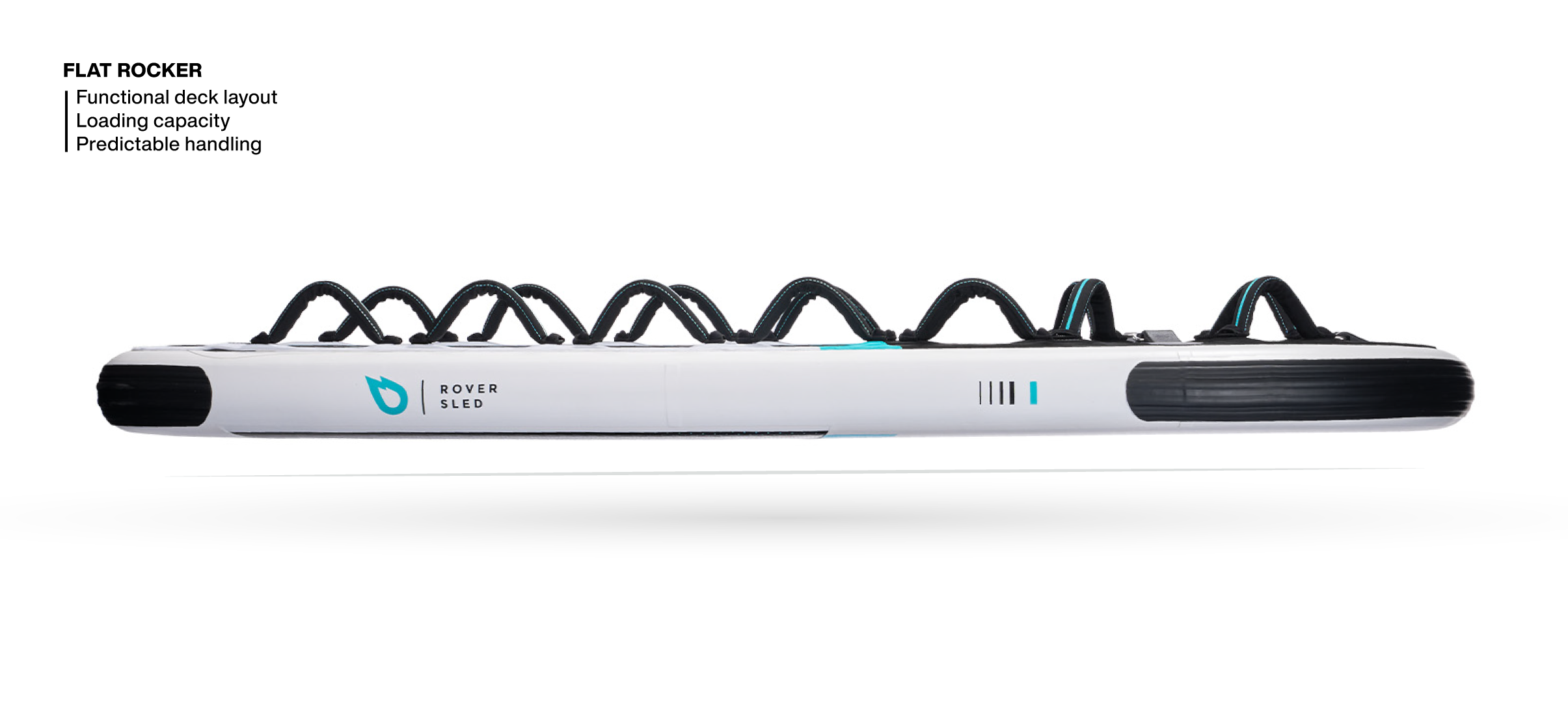
Its flat rocker prioritises stability and predictability behind the jet. The sled stays settled on the water, limiting unwanted movement even when loaded or travelling at sustained speed.
The flat deck makes loading easier: everything lies flat, the deck stays usable, and the sled maintains stable, predictable handling while being towed.
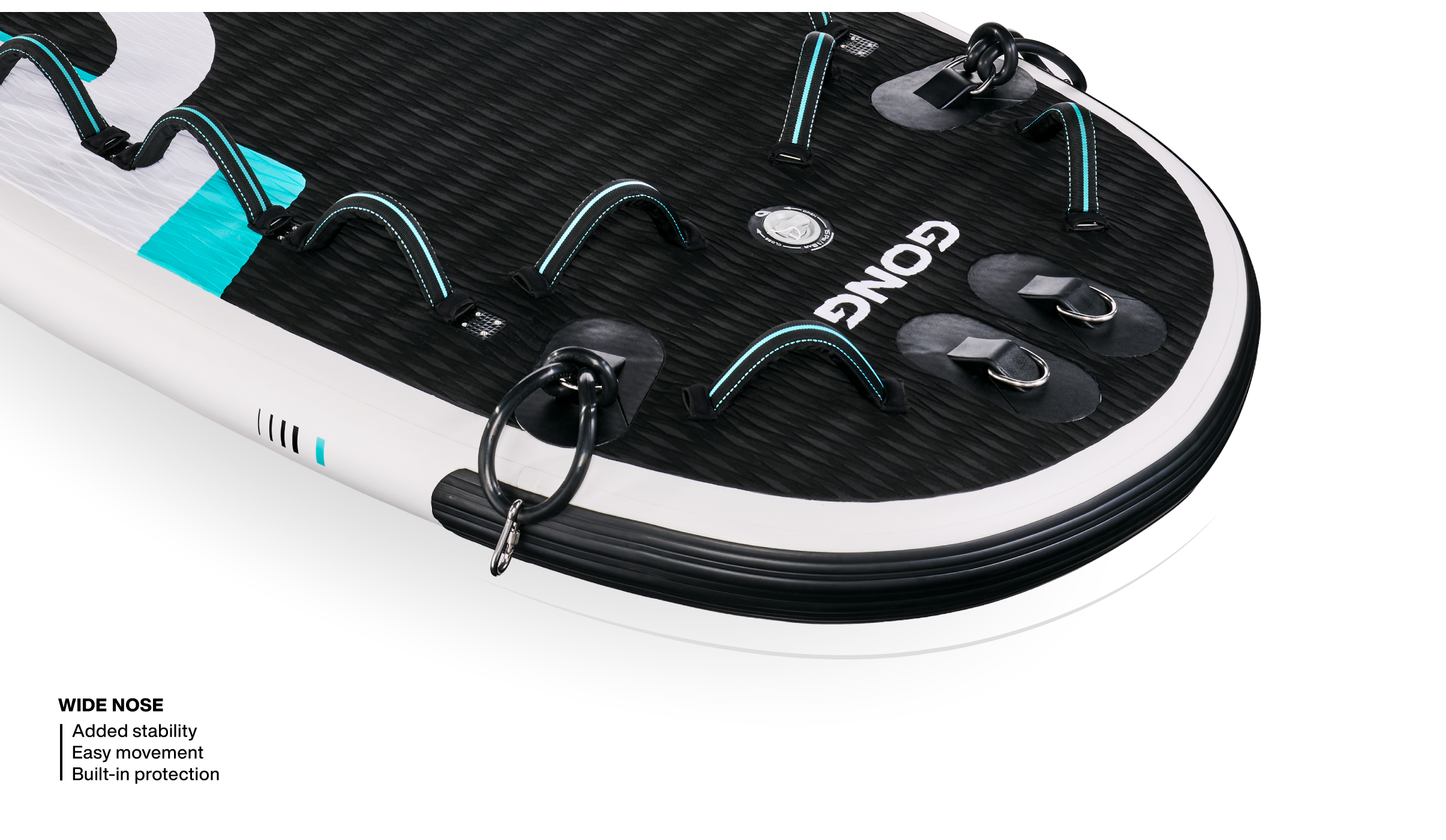
The wide nose provides a stable platform right next to the jet, where you step on and off and move gear most often. It adds comfort and usable space while keeping the sled easy to access.
Its width helps keep the sled stable when climbing on or carrying gear. The bumpers protect exposed areas and points of contact with the jet, helping the sled withstand intensive use.
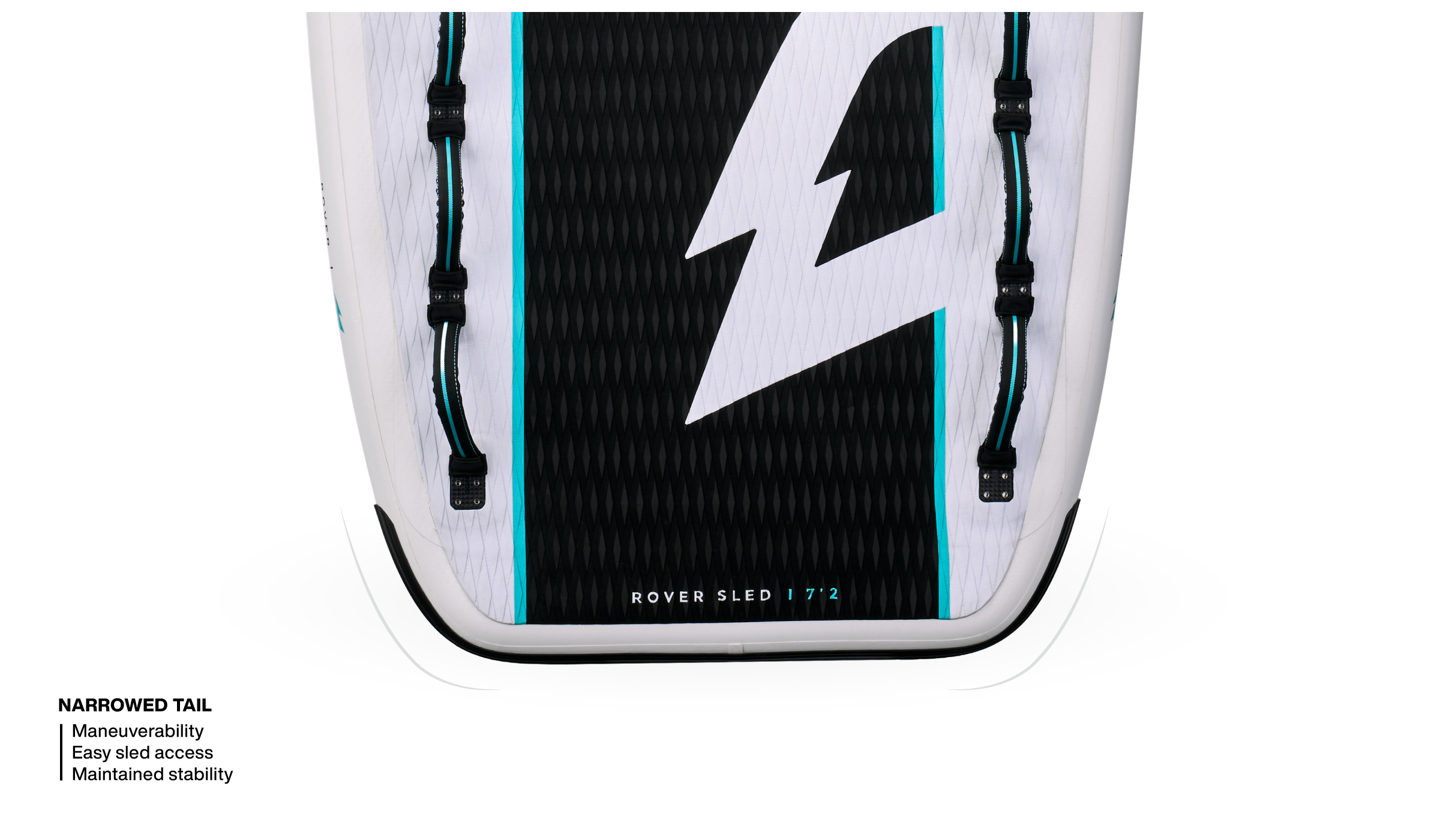
The narrowed tail reduces bulk through turns and changes of direction. It keeps the Rover responsive behind the jet, even during tight maneuvers.
The tail remains wide enough to provide usable space at the rear for climbing on, finding your footing and handling gear. You retain maneuverability alongside the stability needed for these tasks.
The bumpers protect exposed areas from impacts and abrasion, helping extend the sled’s lifespan.
The wide deck is flat and unobstructed . This is the true usable surface of the Rover sled.
Returns to the jet, support, movement, equipment storage: this is the base camp that we organize according to the session.
The multi-position inserts, flush with the pad, allow for a clean and minimalist surface without any accessories. Nothing protrudes unnecessarily, movement is natural, and the deck retains its full functionality.
As the level of commitment increases, the sled is equipped accordingly : modular handles, racks, bridges, bungee cords. Each element is positioned according to the use, allowing for a completely flush deck setup to a full, but never fixed, configuration .
Who is it for?
The Rover sled is for riders who value versatility and want to explore with their jet, keeping the right gear on hand without an overloaded setup.
It offers more usable deck space, carrying capacity and comfort than the Nano, while remaining geared towards active sessions.
AVOID IT IF...
The Rover lets you carry more gear while keeping your jet and sled easy to handle. If you mainly want a simple, ready-to-use platform for added comfort around the jet, the First is the more straightforward option. For a compact, premium and highly versatile platform, the Nano remains an excellent all-round choice.
The Rover is less suited to sessions focused entirely on action: committed tow-in, step-off, quick recoveries in the impact zone or precise positioning in big waves. It can support active sessions, but the Rush remains the dedicated model when every maneuver counts.
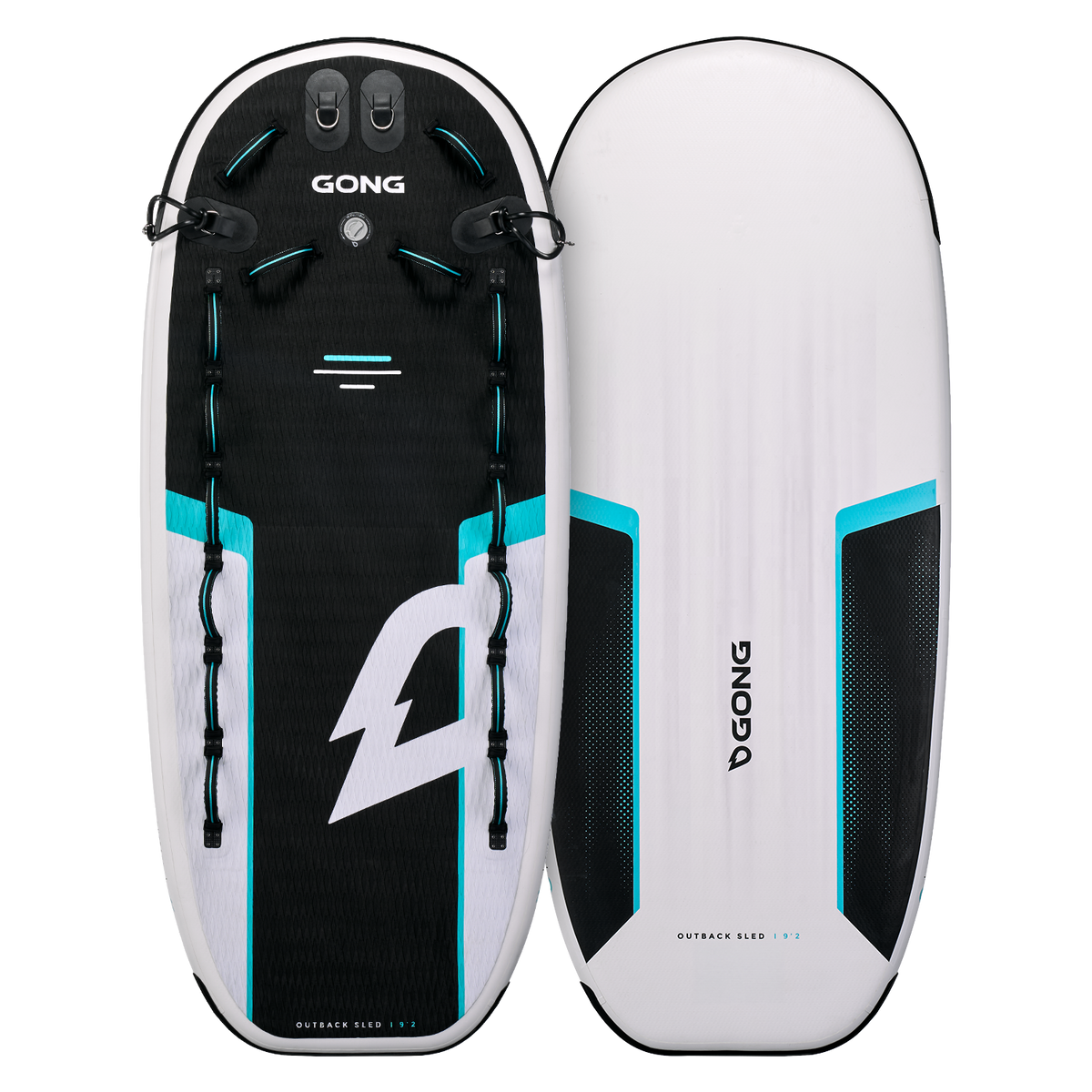
For group outings with an XXL quiver, longboards, SUPs, bags, a cooler and everything needed for a full day, the Outback offers more space. The Rover strikes a balance between carrying capacity and maneuverability.
To find the right conditions and make the most of them, with your gear close at hand.
The Rover lets you explore with the quiver you need: an extra board, a wing or kite setup, a foil and bags, giving you options when conditions change or your plans evolve.
The jet remains the hub of the session: gear stays accessible, the deck stays clear and you can switch between craft while keeping the setup easy to move from one riding area to another.
In the world of sleds, size defines the programme: shorter models prioritise responsiveness, while longer models offer more deck space and carrying capacity.
At 7′2″ long, the Rover adds usable length while retaining the range’s standard 115 cm width. This gives you room to organise the deck: attachment points at the front, a central loading area and space at the rear for climbing on, recovering and handling gear.
It’s a load-and-ride format: long enough to carry your chosen quiver, with enough clear deck space to keep the session flowing around the jet.
What quiver?
The Rover lets you bring a versatile quiver, with a backup option if conditions at your destination differ from what you expected.
For example, bring two surfboards: a performance shortboard for the better sets and a playful twin for smaller or softer waves.
You can also pack a surfboard for glassy morning conditions, then switch to wing or kite gear when the wind picks up.
Or bring your gear and a friend’s, so you can share the session without compromising on board choice.
Sled racks help keep boards and equipment securely strapped above the deck, leaving space below for bags and smaller accessories.
GOOD TO KNOW
The sled is a floating jet accessory. It must always remain attached to the jet, using the original equipment, with all components in good condition and in accordance with the user manual.
Take time to familiarise yourself with its handling in a safe environment. The sled can affect how the jet handles, especially when turning, accelerating or carrying a load. For your first sessions, choose flat water and light winds, keep your speed low and avoid rough seas.
Before every outing, check your setup: attachment points, line tension, carabiners, sled condition, inflation pressure, fitted accessories and load. The sled must remain firmly secured behind the jet.
As with any inflatable product, do not leave it in direct sunlight or behind a car window. Heat increases internal pressure and can damage the glued seams. Store it in the shade, away from heat sources, and adjust the pressure if necessary.
Avoid prolonged rubbing against pontoons, boats, concrete, rocks or other abrasive surfaces. Repeated friction can wear the material and cause leaks.
Take care with foils, fins, board rails, boxes, coolers and any rigid or sharp equipment. Load carefully, secure everything properly and avoid direct or repeated contact with vulnerable areas of the sled.
Do not let the sled get knocked around in waves, especially near the shore. A wave can flip it, throw it or compress it with the gear on board. Anticipate water movement and never position yourself between the sled, the jet, the gear and an approaching wave.
The sled is not a standalone craft, a rescue craft or a platform intended for transporting passengers. The jet ski driver is responsible for its use, taking local regulations, weather conditions, sea state and the crew’s abilities into account.
If in doubt, simplify the setup, reduce speed, unload the sled and return to calm water in a sheltered area.
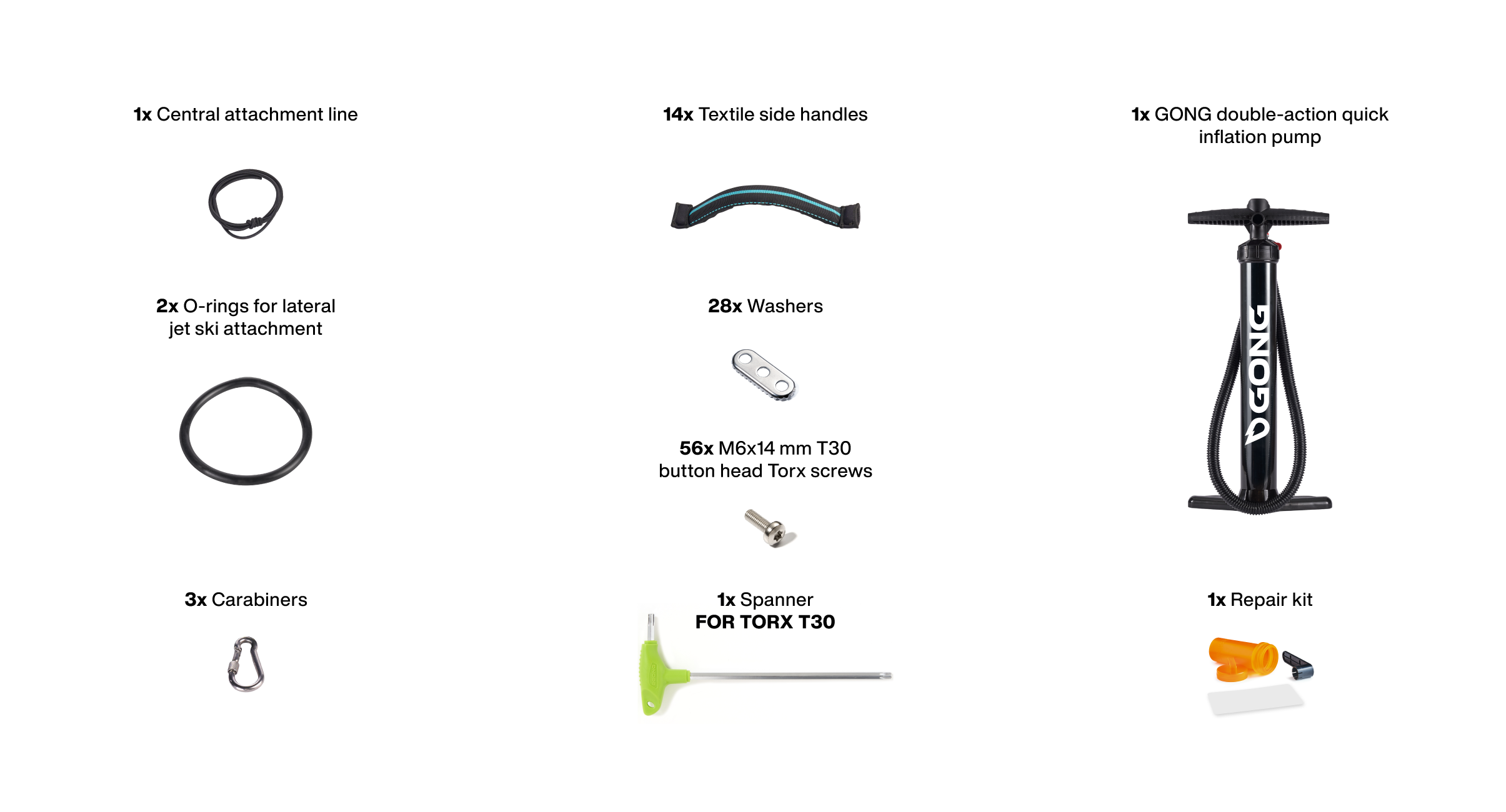
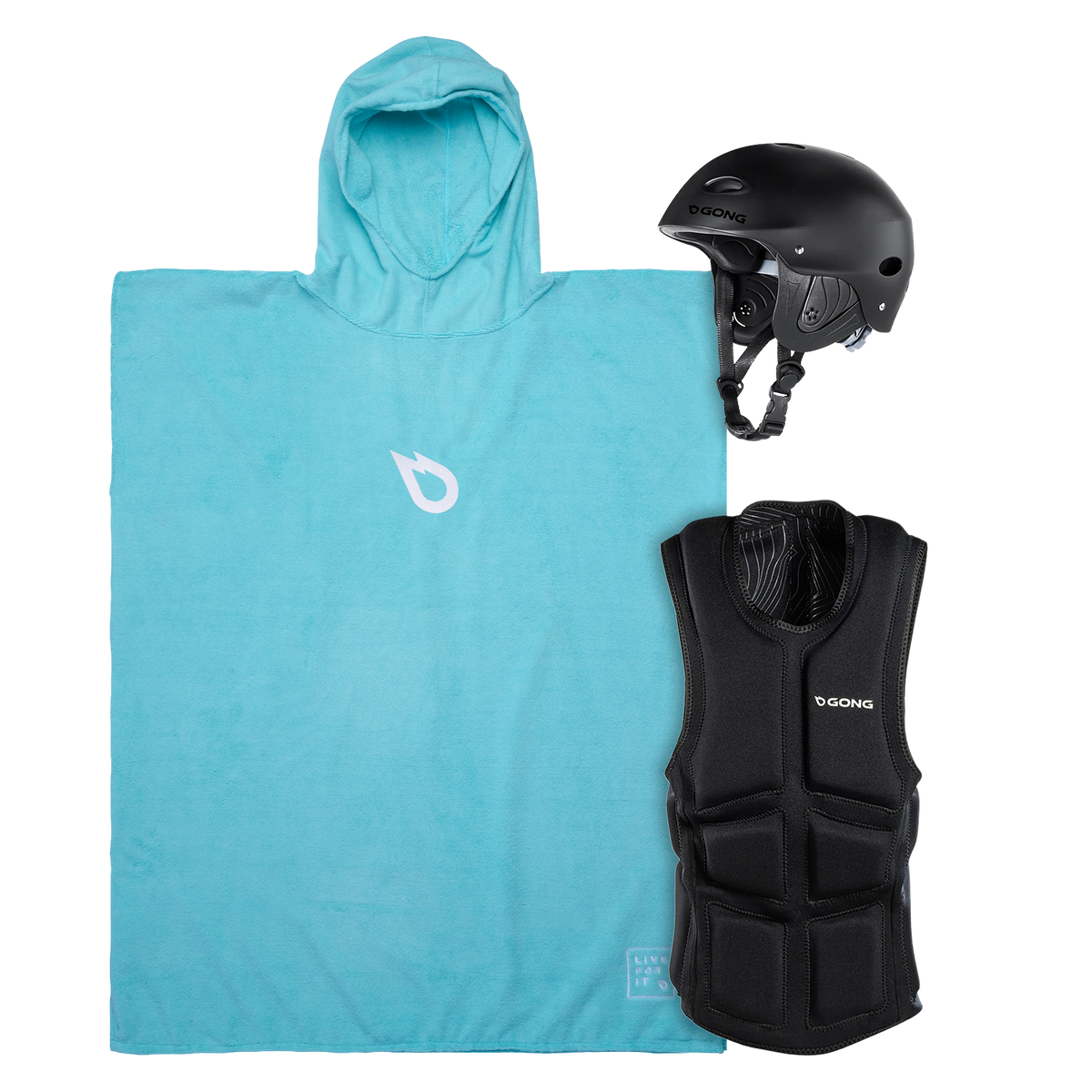
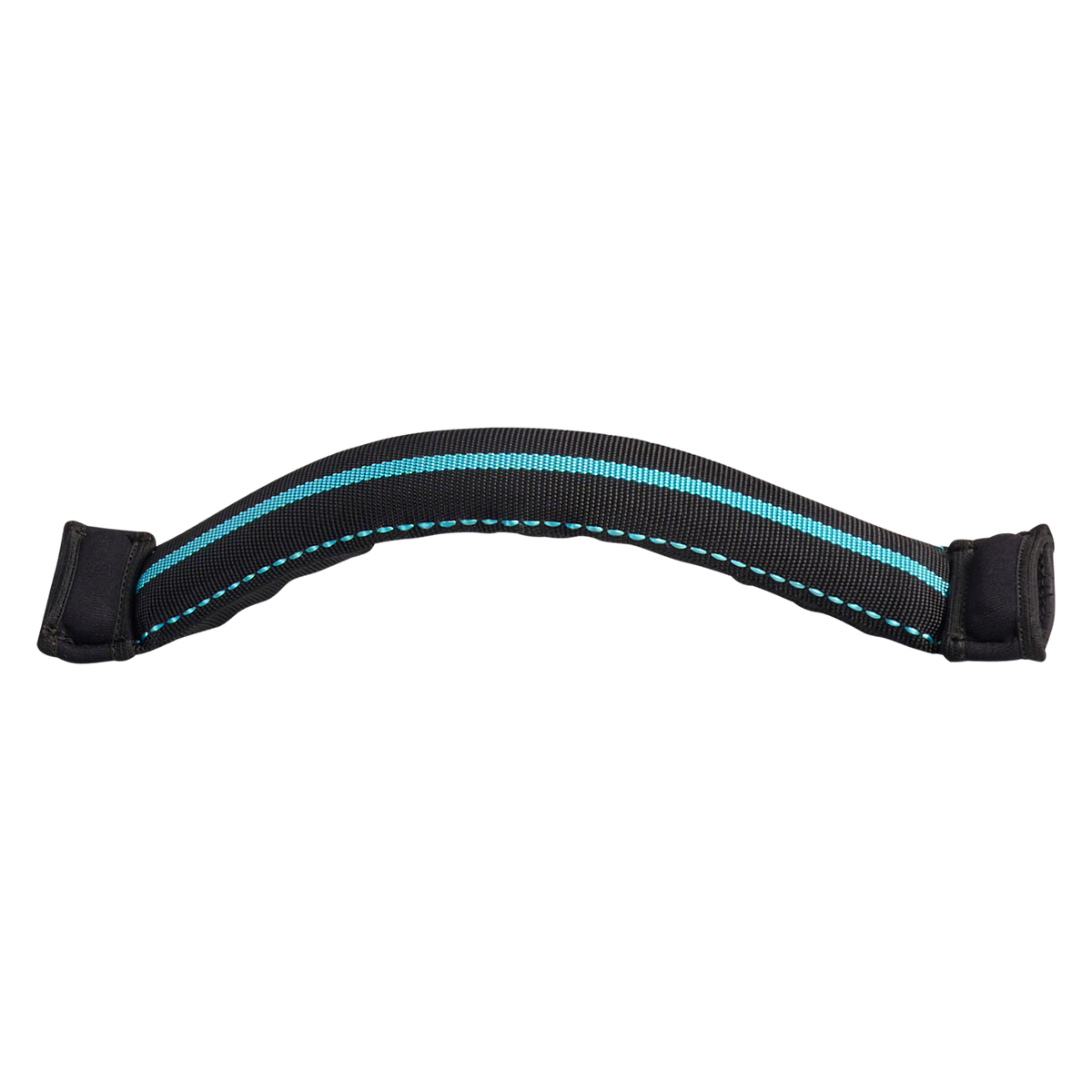
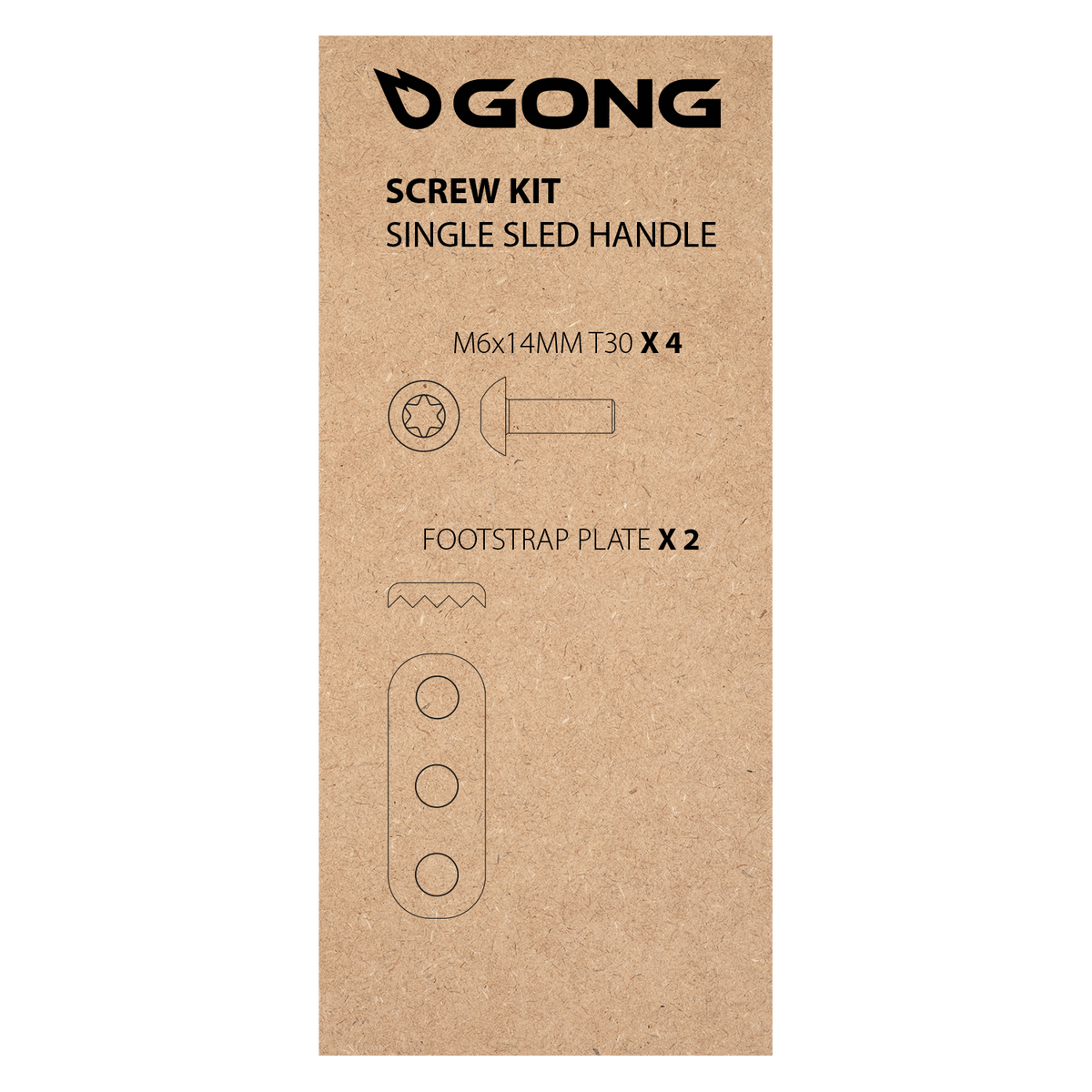
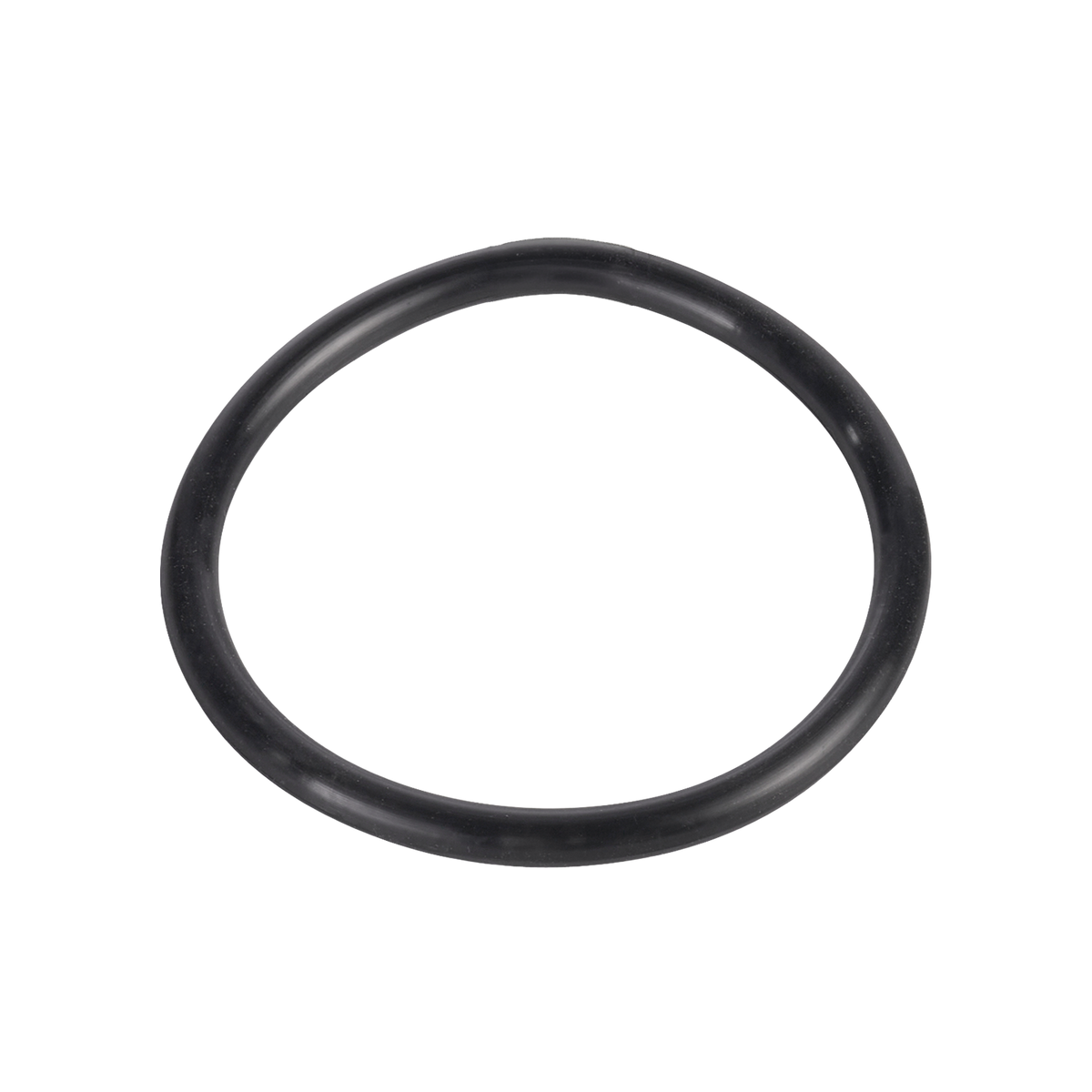
The Rover sled comes with handles and all the equipment needed to attach it to your jet.
Included equipment:

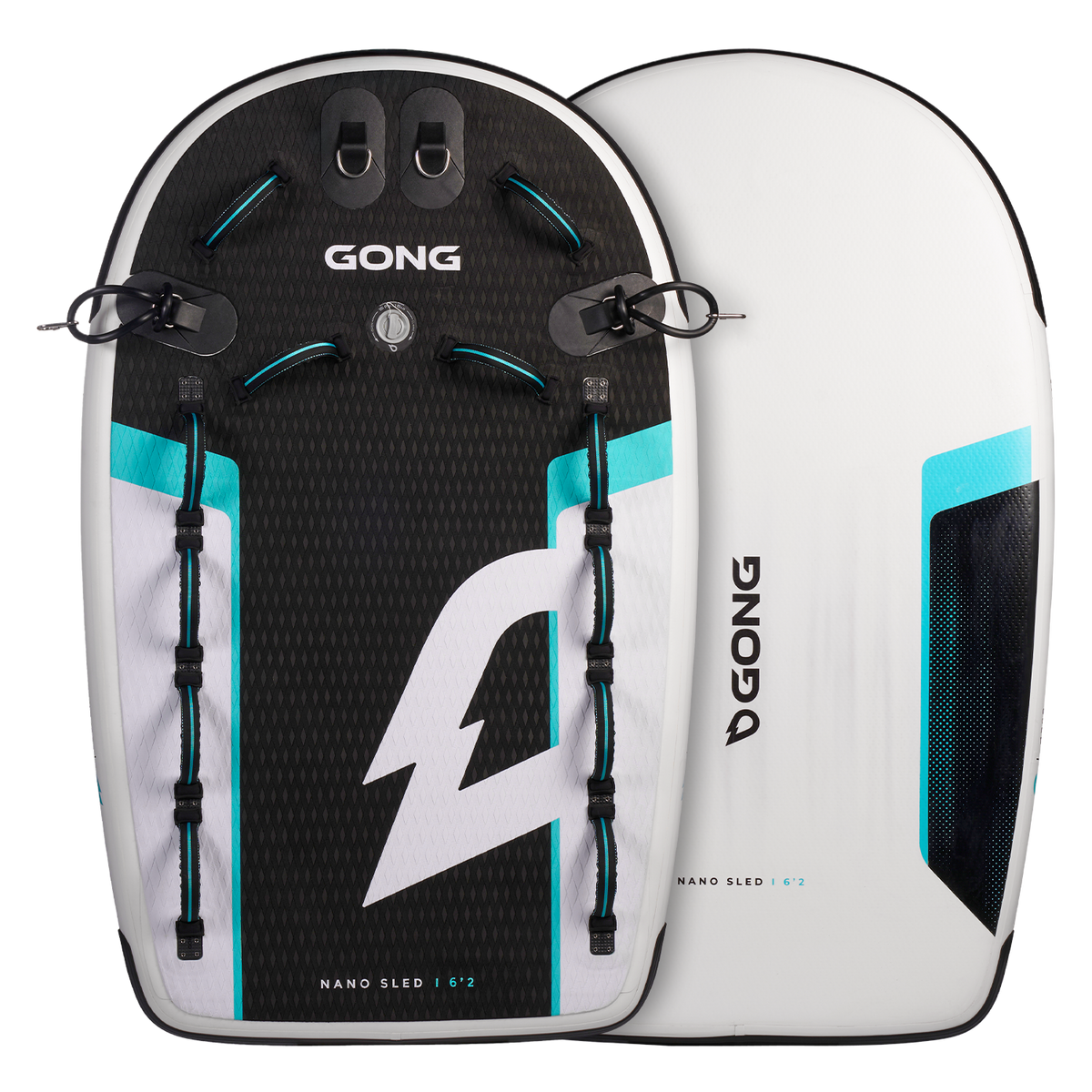
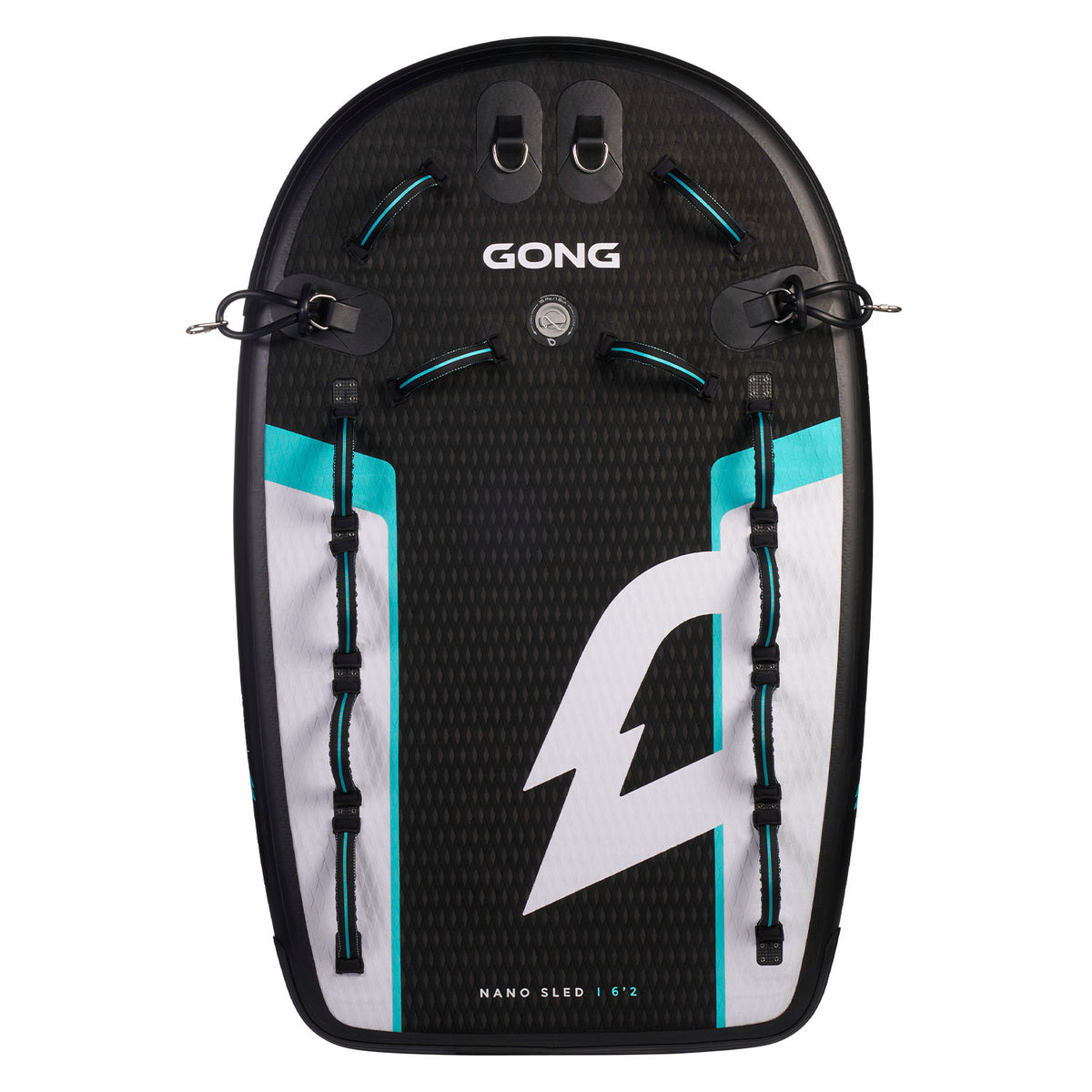













The Rover is GONG’s long-range sled, designed to help you seek out the best conditions with the right gear behind your jet.
It lets you bring extra gear when conditions are uncertain or likely to change, switch between activities and keep the session flowing around the jet. The deck provides a practical platform for handling equipment and getting back onto the jet.
It must always remain attached to a suitable jet ski during water sports activities, under the supervision of the jet ski driver.
At 7′2″ long, the Rover offers more usable deck space and room to organise gear than the Nano, while remaining more compact than the Outback.
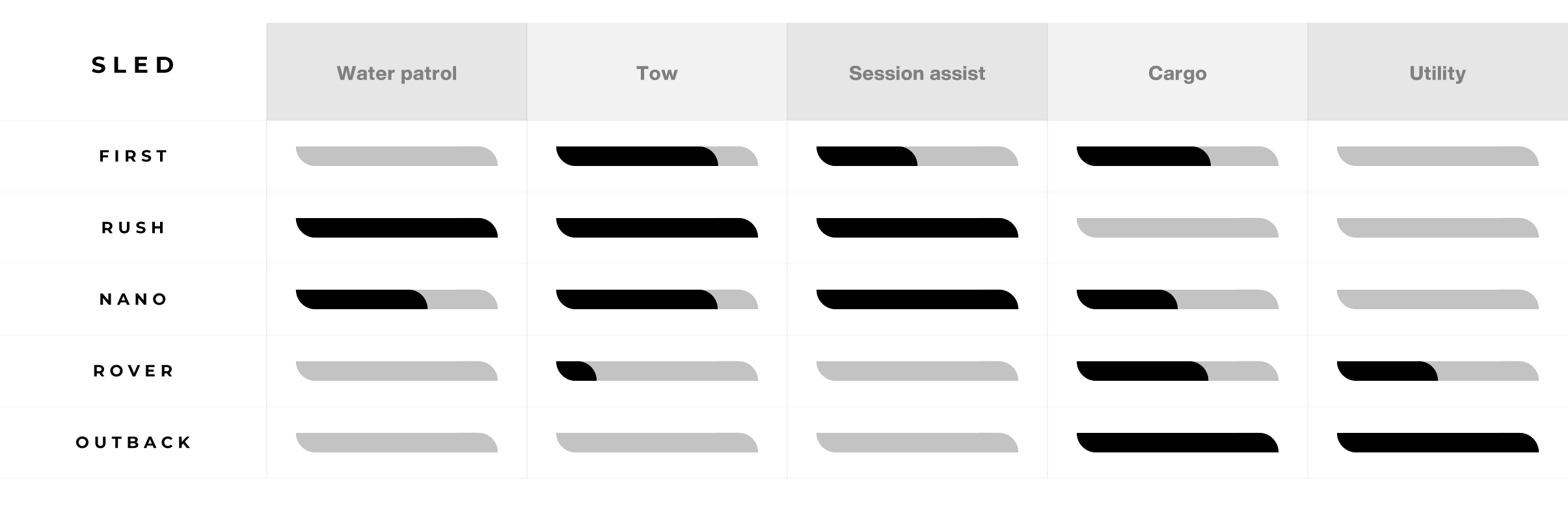
While the First prioritises ease of use, the Rush action and demanding tow-in sessions, the Nano compact versatility and the Outback fully equipped day trips, the Rover balances carrying capacity, maneuverability and an active session setup.
Its integrated multi-position inserts let you configure the sled for each session while keeping the deck clear when accessories are removed.
Sled racks, handles, last-chance grab handles, pad eyes, bungees and compatible straps let you adapt the Rover to your plans, from carrying your quiver to surf, foil, wing or kite sessions around the jet.
It’s a practical everyday choice for heading out fully equipped, keeping usable deck space and retaining the jet’s maneuverability.
The Rover sled is designed to be compatible with most modern PWCs used in water sports, particularly models from major brands such as Sea-Doo and Yamaha, or comparable PWCs, provided they have suitable rear attachment points: ideally two side points on the transom and one central point under the seat.
It attaches to the PWC at several points to stay aligned and track smoothly behind it. This multi-point connection helps keep the sled stable when accelerating, changing direction, carrying a load and performing maneuvers.
Before use, always check:
As with any accessory towed behind a PWC, the sled must be attached according to the user manual, using the original equipment, then tested gradually in calm water.
The Rover sled is designed to carry the gear that gives you options at the spot: a second board, a surf foiling setup, wing or kite gear, dry bags, buoyancy aids, fins, small safety essentials or a compact cooler.
Its main advantage is letting you bring a backup option if conditions change, while keeping the deck organised and your gear secure during transport. Keep the load low, centred, evenly distributed and securely strapped down.
Compatible sled racks are particularly useful here: they hold boards and gear securely above the deck, leaving space for climbing on, finding your footing and storing smaller accessories.
The Rover offers substantial carrying capacity, but the Outback is better suited to larger loads: an XXL quiver, your mates’ gear, longboards, SUPs or everything needed for a full day on the water.
Yes, provided the load stays within its intended capacity, is well organised and properly secured.
At 7′2″ long, the Rover offers more usable deck space than the Nano while remaining maneuverable behind the jet. It lets you head out fully equipped with a setup that stays easy to handle underway, through changes of direction, routine maneuvers and recoveries.
Correct loading is key: keep gear low, centred and slightly forward on the sled. A load placed too far back can increase swinging and make the sled less predictable behind the jet. Proper weight distribution helps the whole setup stay aligned, stable and predictable.
Secure all equipment, pad hard items and adapt the setup to the conditions. As water gets rougher or speeds increase, keeping the load compact and firmly secured becomes even more important.
The Rover is built to extend your range and keep the session active. The Outback offers more space for carrying everything needed for a full day on the water.
The flush, multi-position inserts are central to the Rover’s modular design, letting you configure the sled to suit each session.
Fit only the accessories you need: side handles, specialist handles, racks, pad eyes, bungees or other compatible components. Remove them when they’re not needed to leave the deck flat and uncluttered.
That flexibility makes a practical difference: nothing protrudes unnecessarily, leaving room for your feet, your gear and moving around the deck. Keep the setup simple for a casual session, then add equipment for tow-in, jet-assisted recoveries, more demanding conditions or carrying gear.
The setup stays adaptable.
The session dictates the configuration.
No. The Rover sled is not a rescue craft, a standalone craft or regulated equipment intended for rescue operations or transporting people.
It can, however, help improve organisation and safety around the jet: it provides a stable platform, makes getting back onto the jet easier, keeps gear within reach and supports sessions further from the launch point.
It must always be used responsibly, under the supervision of the jet ski driver, taking weather, water conditions and riders’ abilities into account, and complying with local regulations.
The further you go or the more gear you carry, the more preparation matters: thoroughly checked equipment, a manageable load, securely fastened gear, a sheltered fallback location, suitable conditions and a crew capable of handling the session.
The Rover sled can be used for towing and jet-assisted sessions, but it is not the most specialised model for demanding tow-in or fast recoveries in the impact zone.
For heavy sessions, step-off, precise positioning and maneuvers requiring maximum responsiveness, the Rush remains the dedicated model.
The Rover serves a different purpose: carrying more gear, keeping your options open and your quiver organised, while providing a practical platform behind the jet.
It is the ideal choice when your priority is reaching the spot with the right gear and staying ready to adapt as conditions change.