Your cart is empty!
It's flat around here...
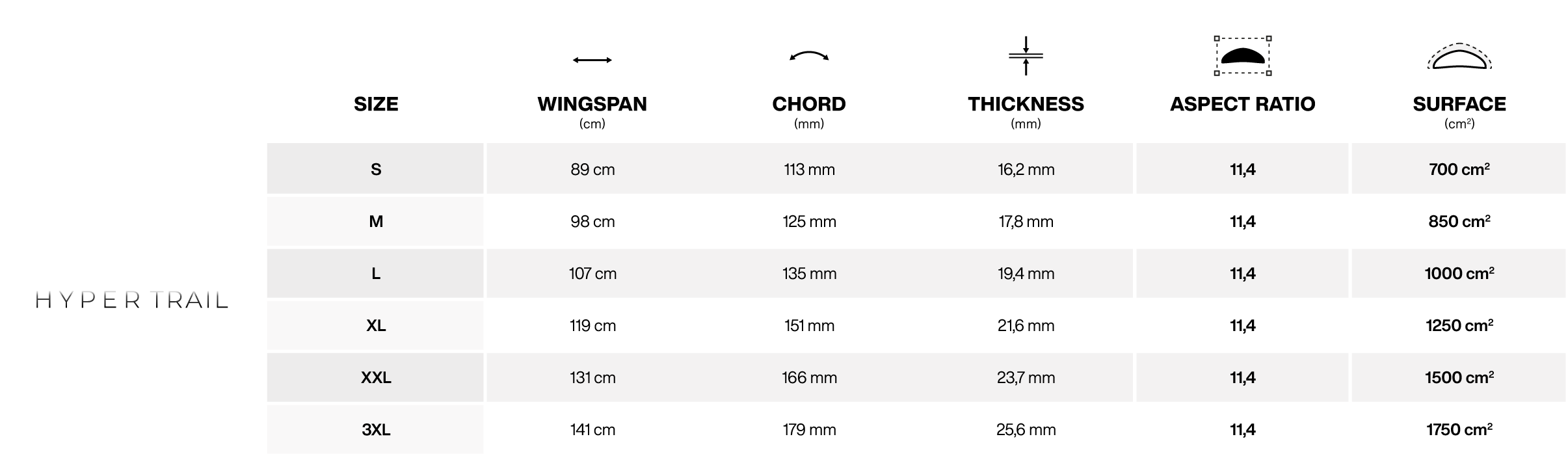
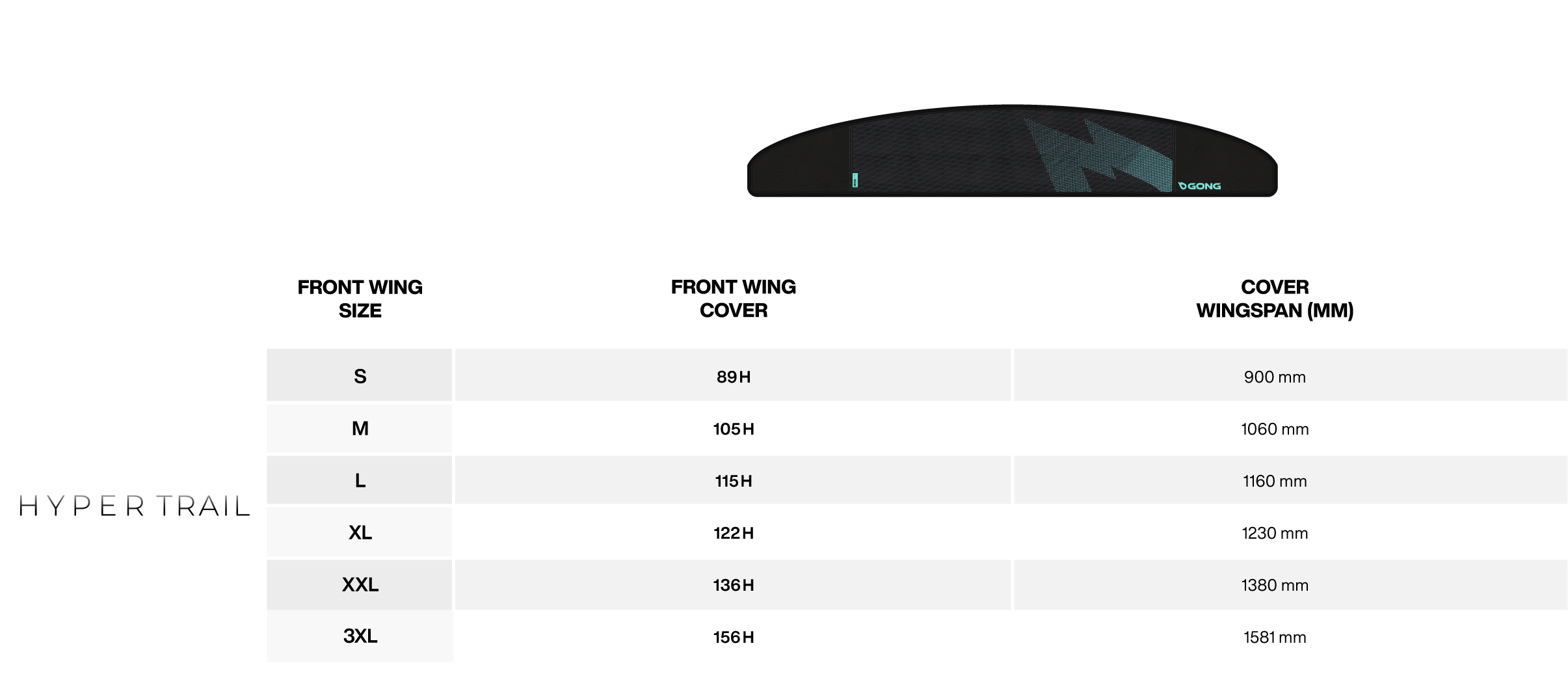


The high aspect carbon front wing for transitioning to fun high-performance pumping: fast dockstart runs, slalom pumping, explosive accelerations, carves on the flat, buoys, varied trajectories, and fun sessions with friends.
The Hyper Trail V3 Atmo Pro Team Series is the high aspect carbon front wing dedicated to fun yet pure performance pumping. Its program is clear: fast dockstart runs, slalom pumping, explosive accelerations, carves on the flat, buoy turns, varied trajectories, and fun sessions on the flat.
It's the post-Trail foil setup. The Trail builds the foundations of pumping with a lot of forgiveness and pedagogy. The Trail in its Team Series version already pushes things further with glide, efficiency, and precision. The Hyper Trail takes over when the rider knows how to pump and wants to accelerate their practice: more speed, more acceleration, more rail to rail, more projection, and much more freedom on a course.
It doesn't seek the same performance as a Supra Trail or an Ultra Trail. The Supra extends the line, stabilizes the rhythm, and optimizes distance. The Ultra pushes extreme efficiency and records. The Hyper Trail plays a different tune: fast pumping, slalom, buoys, carves, short accelerations, and varied trajectories. It's less about endurance but much more playful.
Its aspect ratio of 11.4 provides the right balance between glide, average speed, acceleration, and maneuverability. It maintains enough speed between two pumps to not break the rhythm but remains sufficiently free underfoot to turn, correct, build speed, and change direction without being locked by the wingspan.
Its outline concentrates a lot of chord in the center to place lift at the heart of the supports. This central surface provides powerful lift, a readable support, and a real sense of projection. You push into the wing, it responds immediately. It's that pumptrack feeling: you load, it responds, it accelerates.
The center of pressure close to the mast further enhances this sensation. The foil reacts directly underfoot, with very little delay between support and speed build-up. In pumping, it's exhilarating: each impulse becomes a useful acceleration, each exit from a carve allows for a strong restart, each change of rhythm remains exploitable.
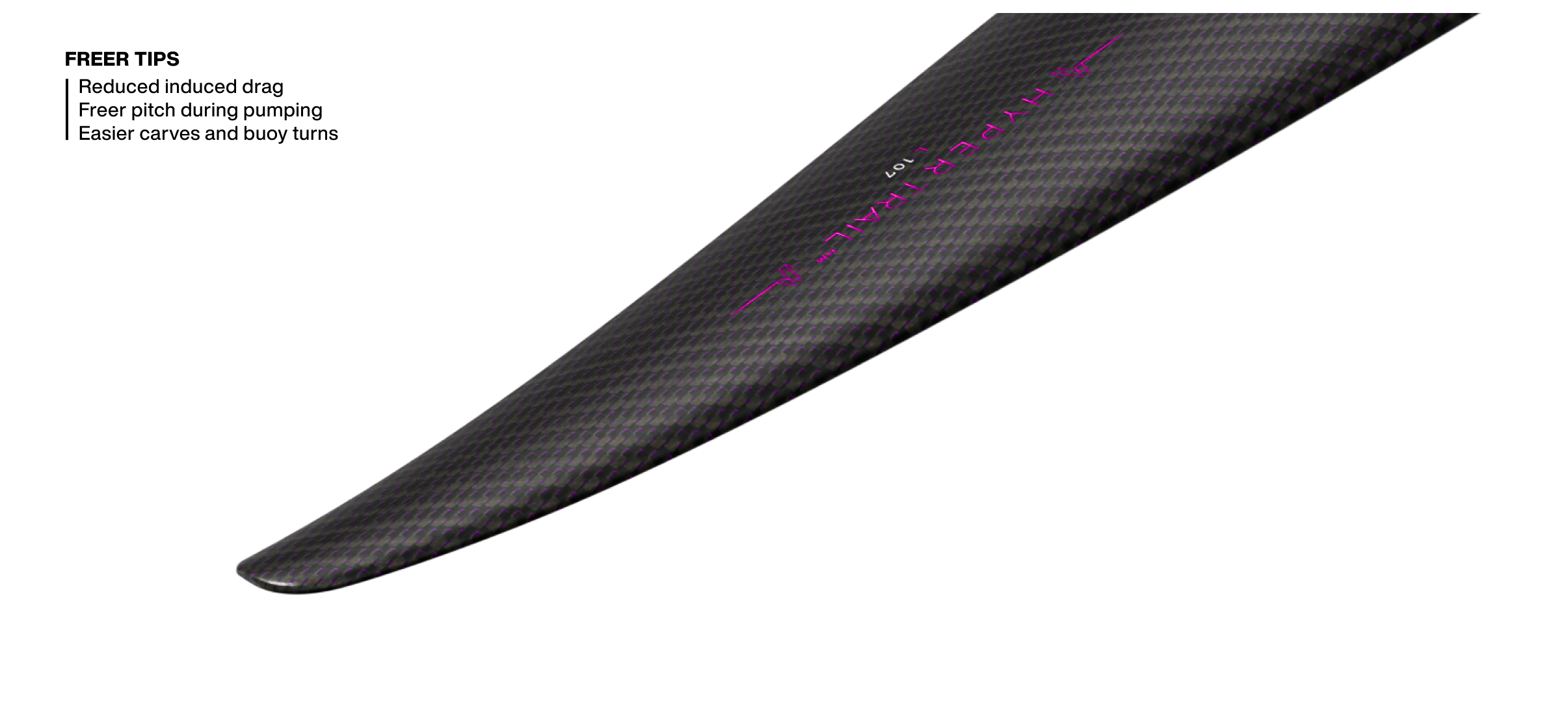
The thin and advanced tips reduce induced drag and free up pitch oscillations. The foil brakes less in pitch variations, better accepts changes in cadence, and accelerates more sharply between pumps. This geometry also brings real maneuverability: you can carve on the flat, round a buoy, change lines, and maintain flow on a course.
The tips remain sufficiently squared to provide some protection in case of a fall, contact, or handling around a dock. In such a playful program, close to the dock, where you multiply attempts, starts, and tight trajectories, this detail really matters.
The profile is powerful, forgiving, and efficient. It provides enough lift to maintain a real margin in dockstart and pumping, but it doesn't just lift. It allows for acceleration and maintaining a high average speed without consuming all the rider's energy with each movement.
This tolerance is essential in a slalom pumping program. A course wing must go fast, but it must also forgive variations in support, timing errors, overly tight carves, or slightly late accelerations. The Hyper Trail remains stable, recoverable, and very pleasant to pilot for its level of performance.
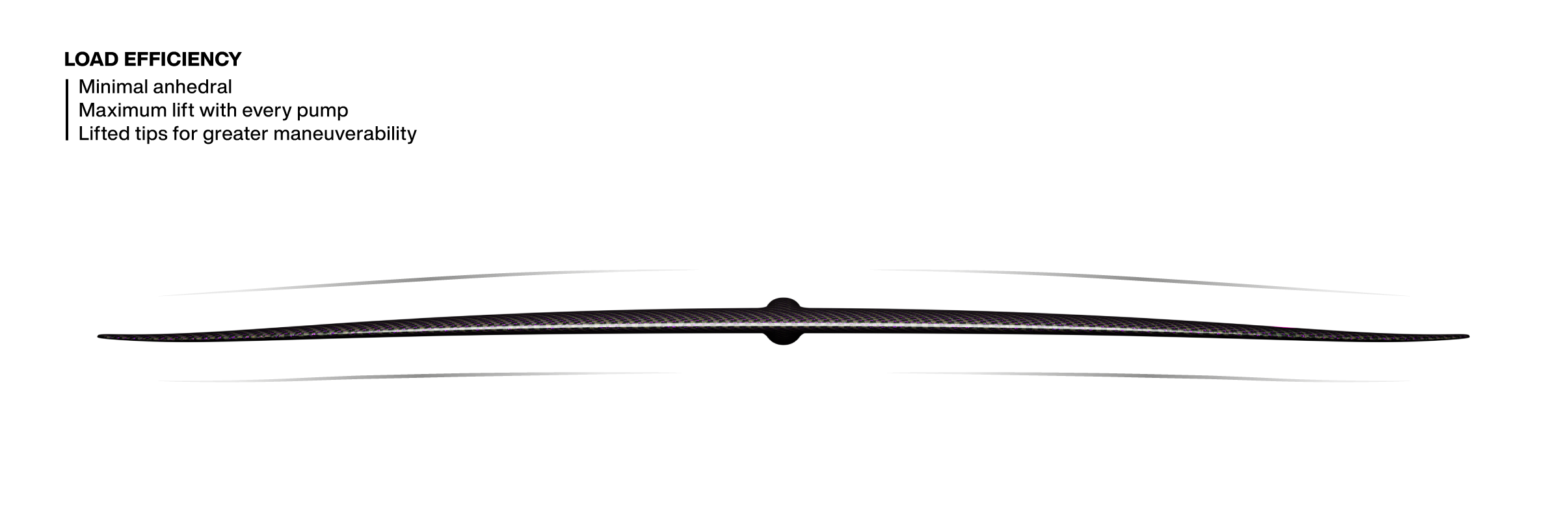
The almost flat, slightly negative anhedral maximizes lift under load and the efficiency of each impulse. The wing provides maximum useful surface in the direction of lift. The slightly raised tips add the necessary margin when the foil flies high, when supports become less clean, or when engaging in a strong carve.
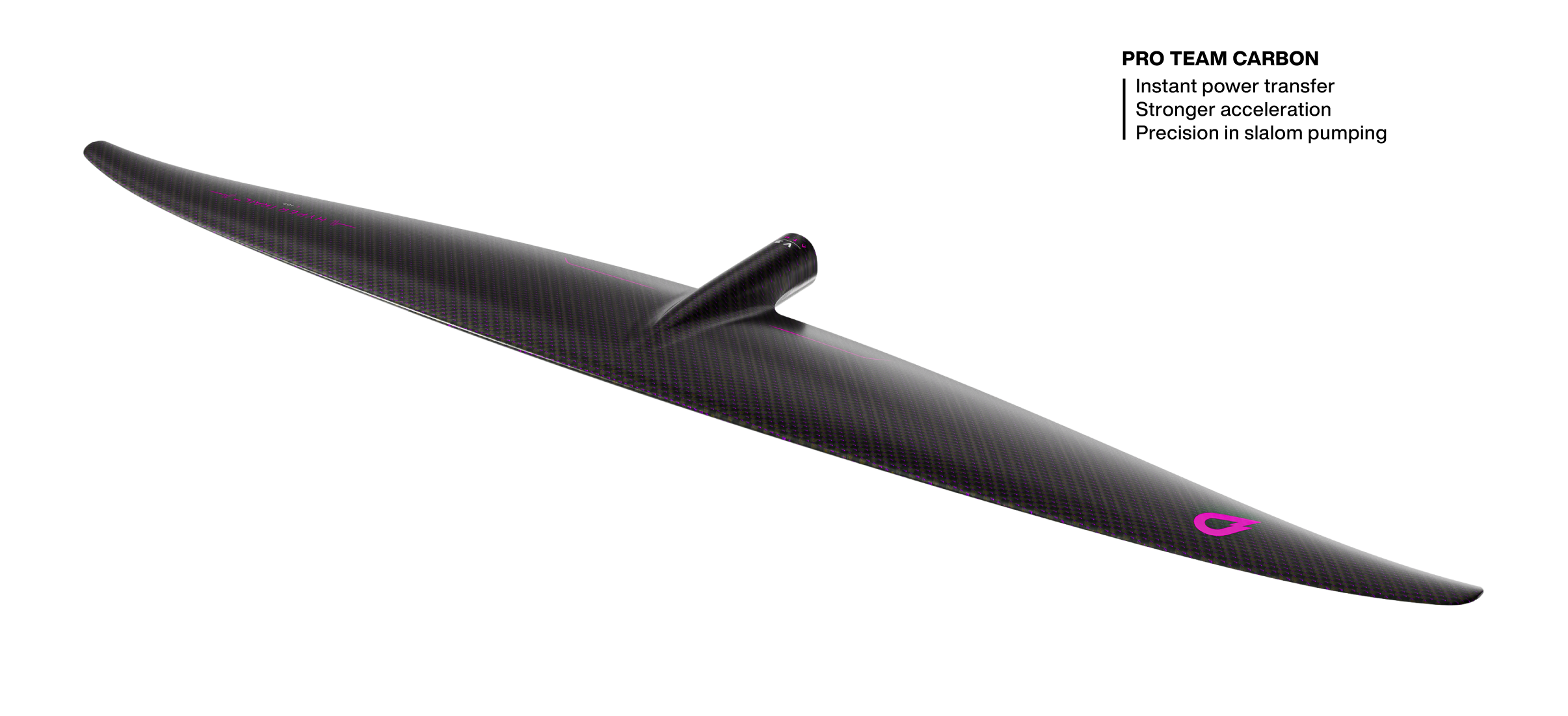
The Pro Team Series construction in 3K Texalium Purple clear carbon amplifies this entire program. In slalom pumping, each support must transfer into the wing, each pump must produce speed, each correction must remain readable. The high-modulus carbon, calculated layup, and structural locking provide this direct and precise feeling.
The Hyper Trail is not a front wing for navigation with a rig. In wing foiling or lowkite, it will fly, but that's not its focus. It's not meant to replace a Veloce or a Sirus. Same in downwind: it can work, but its natural playground remains pure pumping, fast dockstart runs, slalom pumping, and carves on the flat.
The Hyper Trail V3 Atmo Pro Team Series is therefore the wing for transitioning to high-performance pumping without shifting into pure endurance: a fast, playful, maneuverable, precise, forgiving wing for its level, and incredibly fun as soon as you turn the flat into a course.

The Hyper Trail features an aspect ratio of 11.4 to offer an excellent balance between glide, average speed, acceleration, manoeuvrability, and control in a dynamic pumping programme.
This ratio provides enough efficiency to maintain speed between two supports, without shifting into a locked endurance wing. The Hyper Trail thrives on rhythm, acceleration, cadence variations, and carving turns.
It's a high ratio designed for slalom pumping: accelerate, carve, accelerate again, and keep going. The foil moves powerfully but remains lively underfoot.
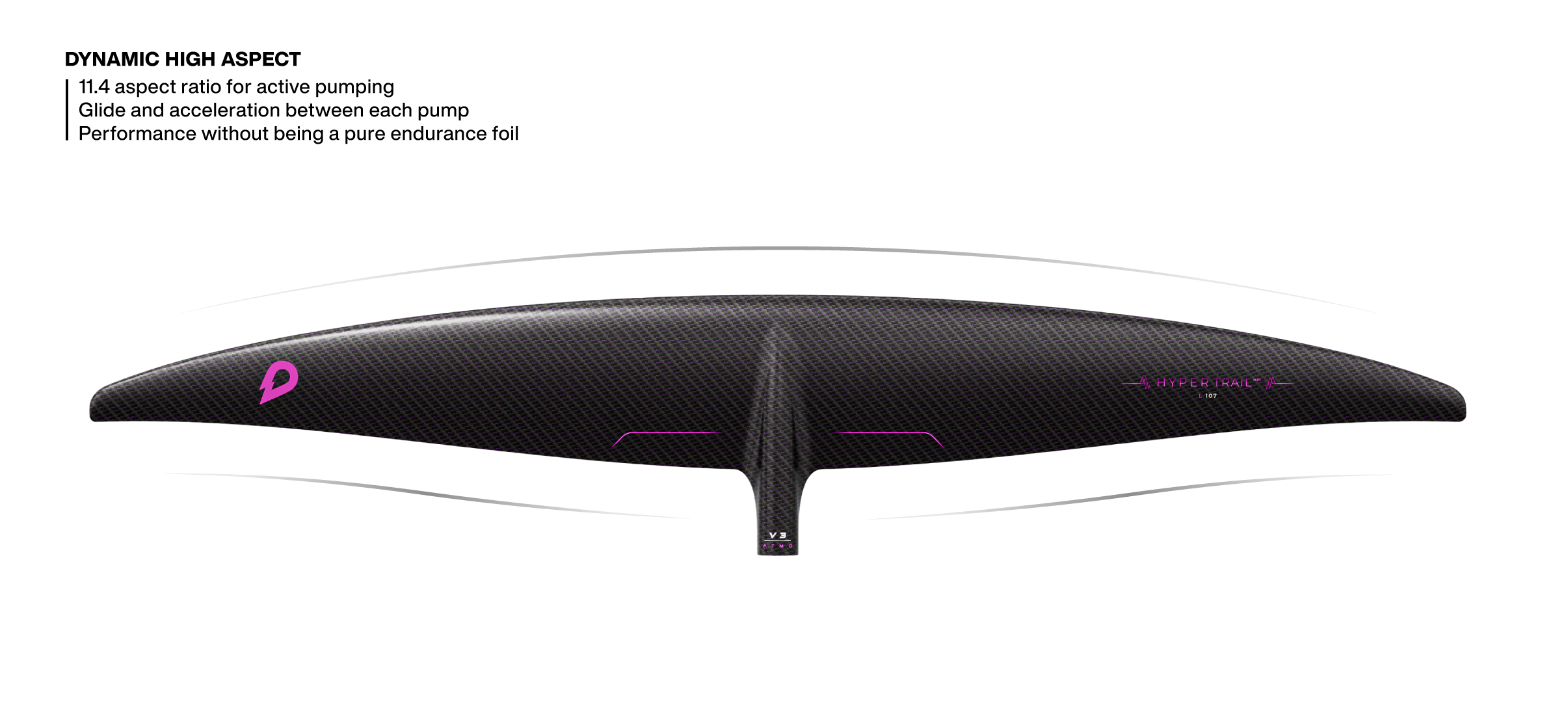
The outline of the Hyper Trail concentrates a lot of chord in the centre to place the lift at the heart of the supports. This central surface provides powerful lift, clear support, and a true sense of projection.
The centre of pressure close to the mast improves energy transfer. The rider loads directly under their feet and immediately gains speed. It's that pumptrack feeling: you push, the wing responds, the foil accelerates.
This central lift also allows for firm support in dockstart and pumping, without making the wing heavy during changes in trajectory.
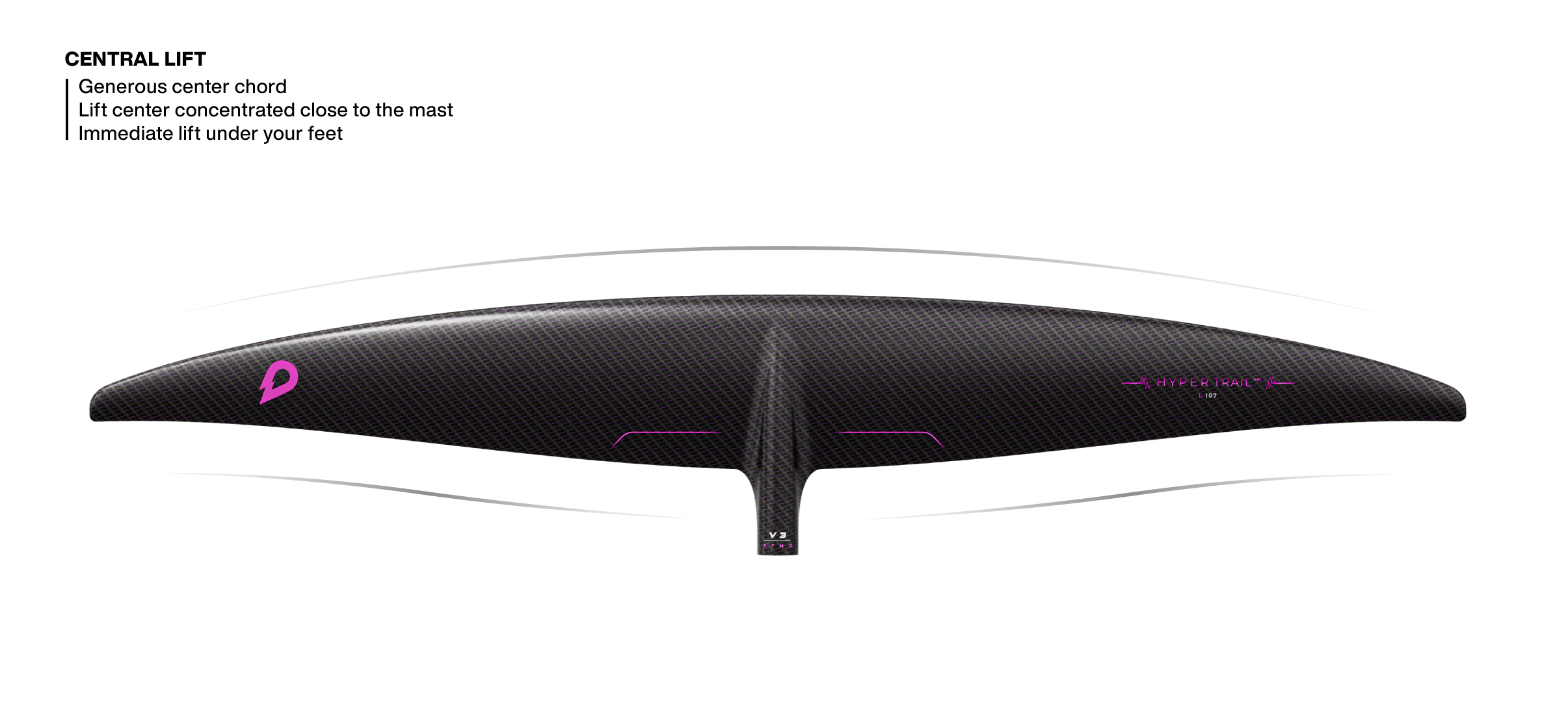
The thin and advanced tips reduce induced drag and release pitch oscillations. The foil brakes less during pitch variations and accelerates more decisively between pumps.
This geometry also provides a lot of maneuverability. The wing remains free, pivots easily, and maintains a very lively rail to rail for a pumping front wing. You can carve on the flat, round buoys, and vary trajectories without being hindered by the wingspan.
The tips are sufficiently squared to offer some protection to the rider and the wing in case of a fall, contact, or handling around a pontoon. In this playful and dockside-friendly program, it's a real advantage.
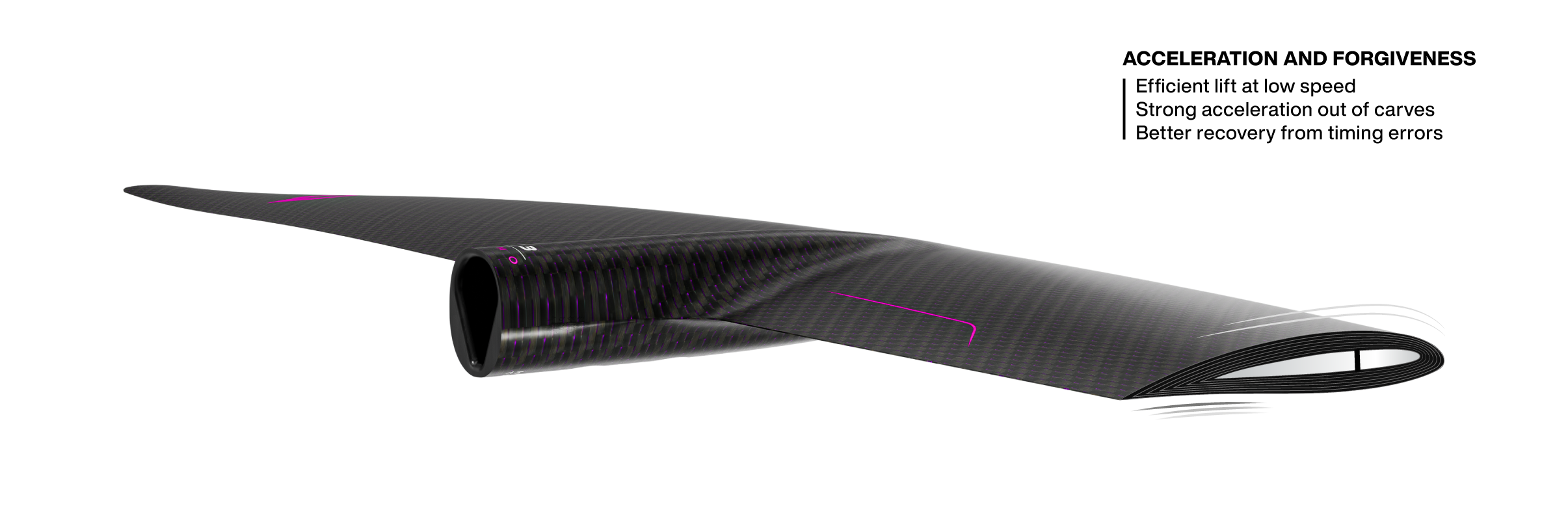
The profile of the Hyper Trail is powerful, forgiving, and efficient. It generates lift at low speeds, provides margin in dockstart, and allows you to maintain flight during imperfect speed build-up.
This profile is not limited to providing lift. It enables rapid acceleration, maintains a high average speed, and allows for strong accelerations out of carving turns. Every push becomes more effective.
This forgiveness is essential in slalom pumping. A course wing must accommodate timing errors, tight carves and height variations. The Hyper Trail remains stable, recoverable, and very pleasant to pilot for its level of performance.
The anhedral of the Hyper Trail is almost flat, slightly negative, to maximize lift under load, glide, and the efficiency of each impulse. The wing offers maximum usable surface in the direction of lift.
This geometry allows energy to be concentrated in pumping rather than in unnecessary control. Push, and the foil moves forward. Get to speed, and it responds. The performance remains very direct.
The slightly raised tips add maneuverability, good tolerance to tip out, and a more composed behavior in strong carves or beach starts.
The Pro Team Series carbon construction is fundamental on the Hyper Trail. Pumping slalom requires an immediate response: every pressure must transfer to the wing, every speed build-up must generate speed, every correction must be clear.
The 3K Texalium Purple clear carbon, high modulus layup, and structural locking provide this direct feel. When pumping, the foil responds faster. In a carve, it maintains a clear trajectory. Exiting a buoy, it accelerates decisively.
We gain in precision, dynamism, and enjoyment, without losing the tolerance that makes the wing usable. This is exactly what we expect from a Pro Team dedicated to pumping performance.
The Hyper Trail V3 Atmo Pro Team Series is aimed at riders who already know how to pump and want to move on to high-performance pumping, with more speed, more responsiveness, more maneuverability, and more fun.
It's perfect for those coming from a Trail or Trail Team and looking to accelerate their practice. The Trail builds the foundations; the Hyper Trail opens up the game: buoys, slalom pumping, carves on the flat, quick accelerations, and varied trajectories.
It speaks to riders who want to tackle a course rather than just extend a straight line. If you enjoy changing direction, accelerating out of a carve, carving on the flat, and playing with the foil like on a pump track, this is its program.
It's also for practitioners who want a high-performance Pro Team wing, but not a pure endurance wing like the Supra Trail or Ultra Trail. The Hyper Trail is more playful, more maneuverable, more slalom-oriented, less focused on maximum distance.
The Hyper Trail is not designed for learning the basics of pumping. To discover dockstart, understand the rhythm, and make your first flights, the Trail or Trail Team will be more educational.
It's also not the wing to choose for pure distance. If your goal is to pump for a long time, stabilize your cadence, and push distances, the Supra Trail will make more sense. If you're looking for extreme efficiency and records, the Ultra Trail will go further.
It's not a front wing designed for navigation with a rig. In wing foiling or lowkite, it will fly, but that's not its program. It's not meant to replace a Veloce or a Sirus.
It's not made for downwind. It can work occasionally, but its true playground remains pure pumping, quick dockstart, slalom pumping, and carves on the flat.
The Hyper Trail V3 Atmo Pro Team Series is made for performance pumping. Its job is to transform every push into useful speed, every pump into projection, and every course into a playground.
In dockstart, it allows you to start with a wing already oriented towards performance. It requires more skill than a Trail, but it remains buoyant and forgiving enough for a rider who knows how to get on the board, establish the rhythm, and seek speed.
In slalom pumping, it excels. You go down in size and fire. It accelerates hard between buoys, carves cleanly, gets to speed fast out of a carve, and maintains enough glide to keep the rhythm.
In flat pumping, it makes the session much more lively. You can vary trajectories, carve, play with the pushes, and keep a fast foil without switching to a pure endurance wing.
In beach start, it can be very fun for riders who already have the level. The slightly raised tips and forgiving profile provide useful leeway, but the program remains more technical than with a Trail.
In flat start, it's a fun and easy wing to take off, but its maneuverability may seem quite unnecessary on a large stand-up paddleboard.
The choice of size depends on weight, skill level, explosiveness at the start, type of course, and objective: quick dockstart, slalom pumping, carves on the flat, or performance pumping.
Choosing a larger size allows for more lift, more leeway in dockstart, and more comfort in imperfect accelerations. It's the logical choice for discovering the Hyper Trail or securing a technical course.
Choosing an intermediate size provides the best balance between speed, glide, maneuverability, and acceleration. It's often the most coherent choice for a practitioner who wants a true slalom pumping wing without losing too much forgiveness.
Choosing a smaller size allows for more speed, cadence, liveliness, and rail-to-rail action. It's the choice of more energetic, more technical riders, or those who want to push hard on courses.
In slalom pumping, you'll tend to reduce the size as soon as the level allows. Less surface area gives more speed and maneuverability but requires more explosiveness and precise pumping.
If hesitating between two sizes, choose the larger one to secure the dockstart and keep some leeway. Choose the smaller one only if your skill level, build, and explosiveness justify more speed and agility.
The Hyper Trail V3 Atmo Pro Team Series is ideally expressed with a Hyper Trail Tail Wing, designed for the same program: fast pumping, slalom, glide, and speed.
This combo offers a coherent foil: enough lift to keep leeway, enough freedom to carve, and enough efficiency to accelerate hard between two buoys.
A more stable tail wing will provide more stability, more support, and more comfort in starts or initial quick speed build-up. It's the most reassuring choice for discovering the Hyper Trail.
A thinner, smaller, or freer tail wing will give more speed, more glide, and more agility. It's the choice of riders who want to push slalom pumping, carves, and speed build-up.
The right Hyper Trail setup is the one that allows you to pump quickly, accelerating without suffering, round buoys cleanly, and keep enjoying the entire course.
The front wing comes with all the necessary screws for mounting on the fuselage.










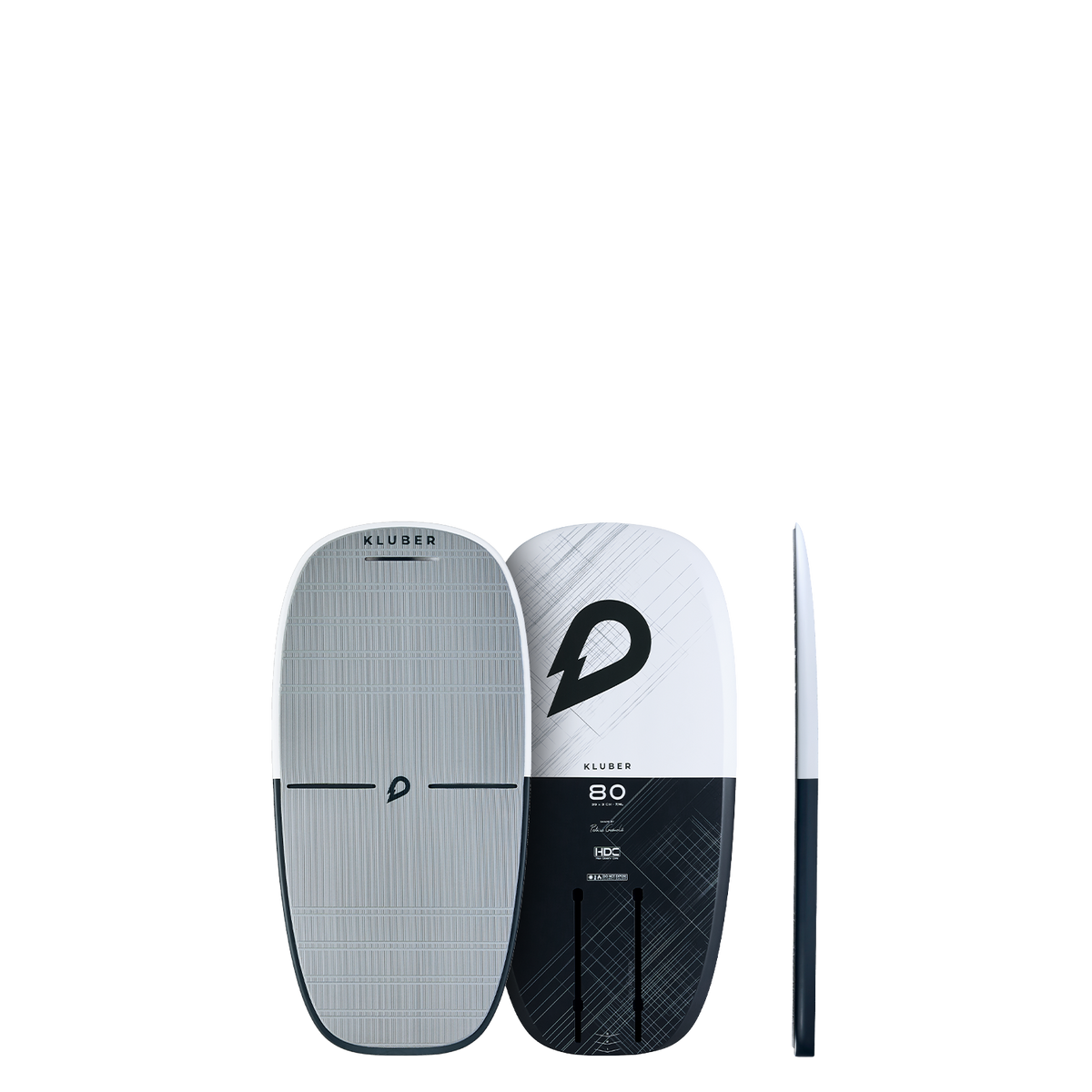
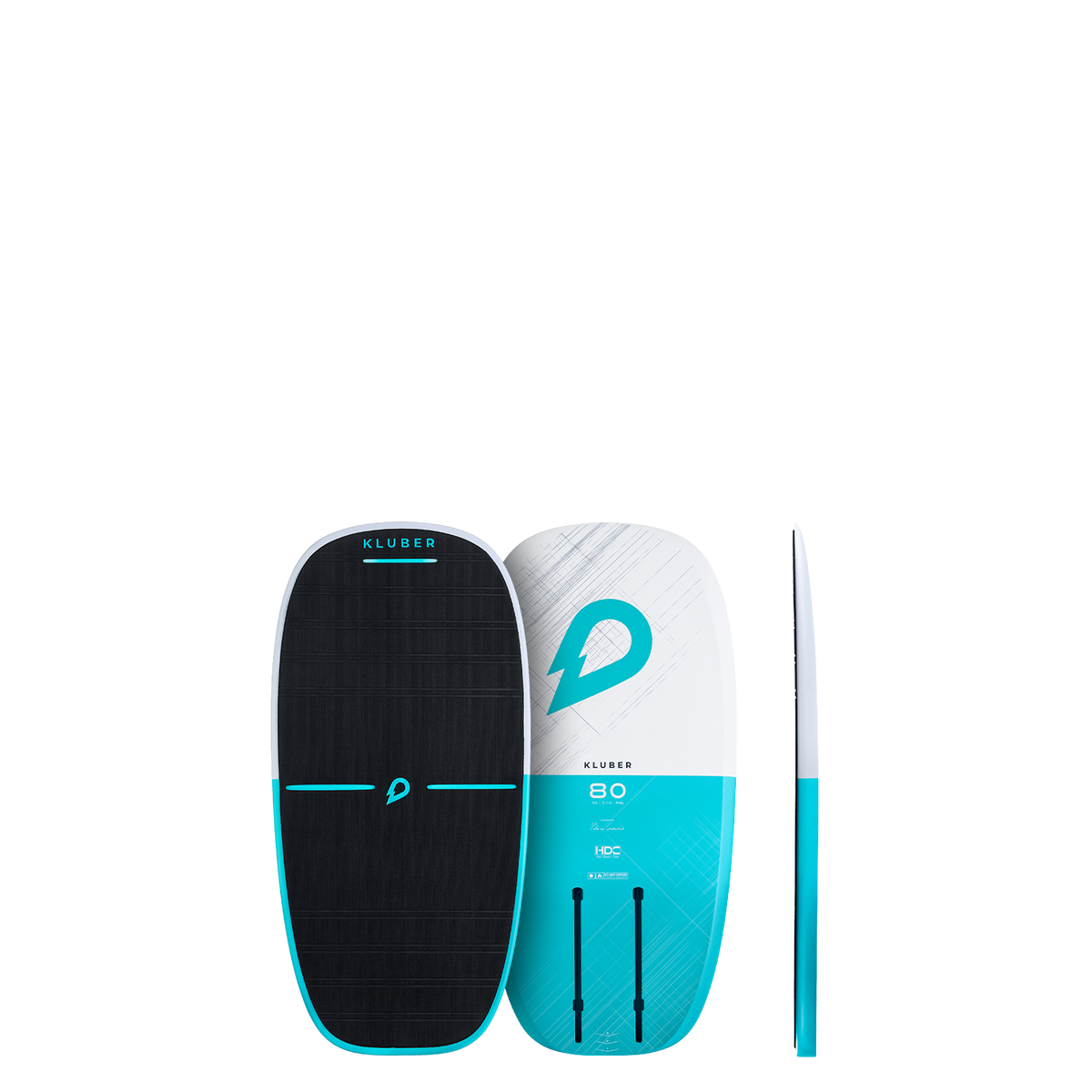
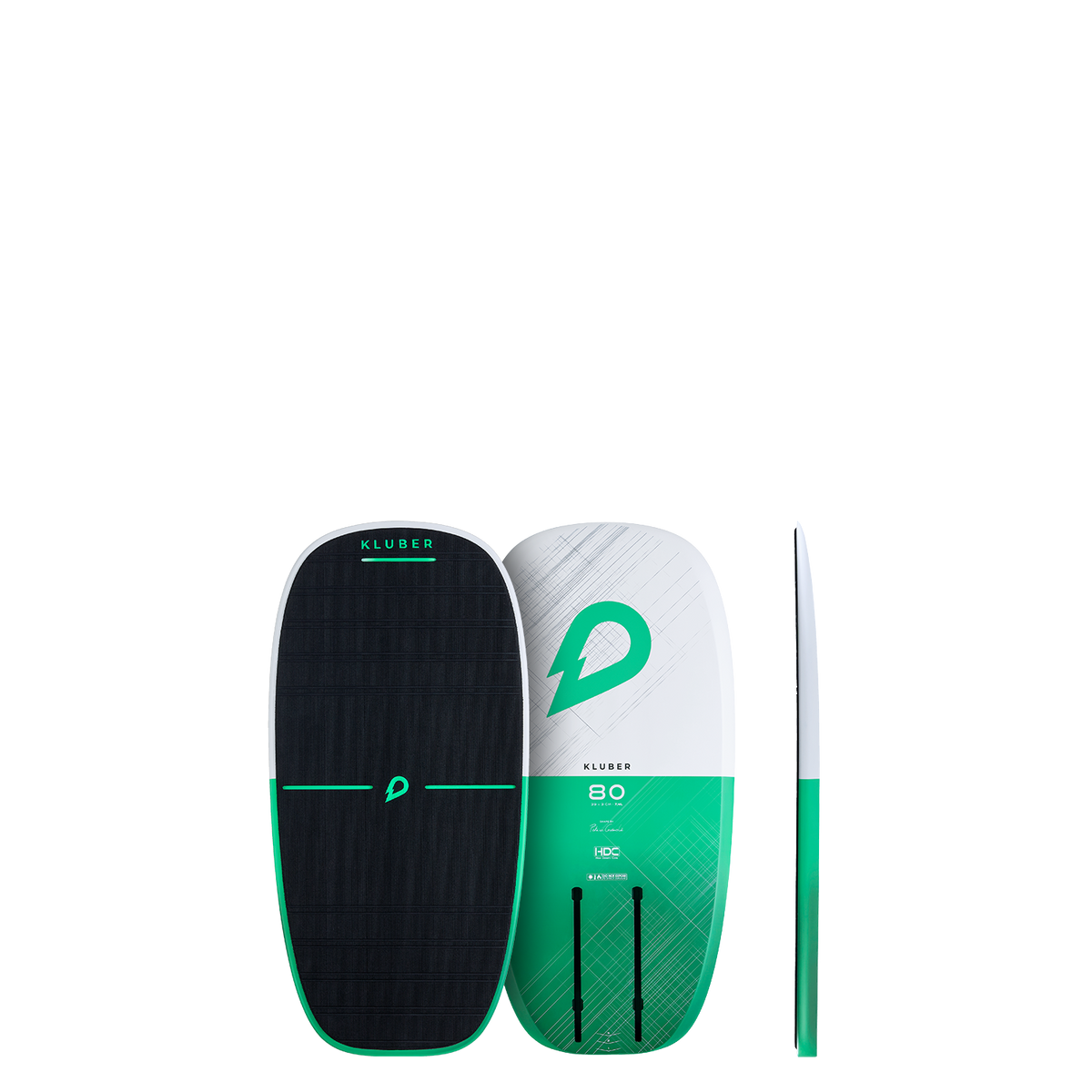











Choose larger to have some leeway for dock starts and secure easy speed build-up. Choose smaller if you're already comfortable, energetic, and want more speed, more rail to rail, and more responsiveness on a course.


