Your cart is empty!
It's flat around here...




100% competition freestyle: maximise pop, lock in your landings and get going again instantly to link up the most committed tricks.
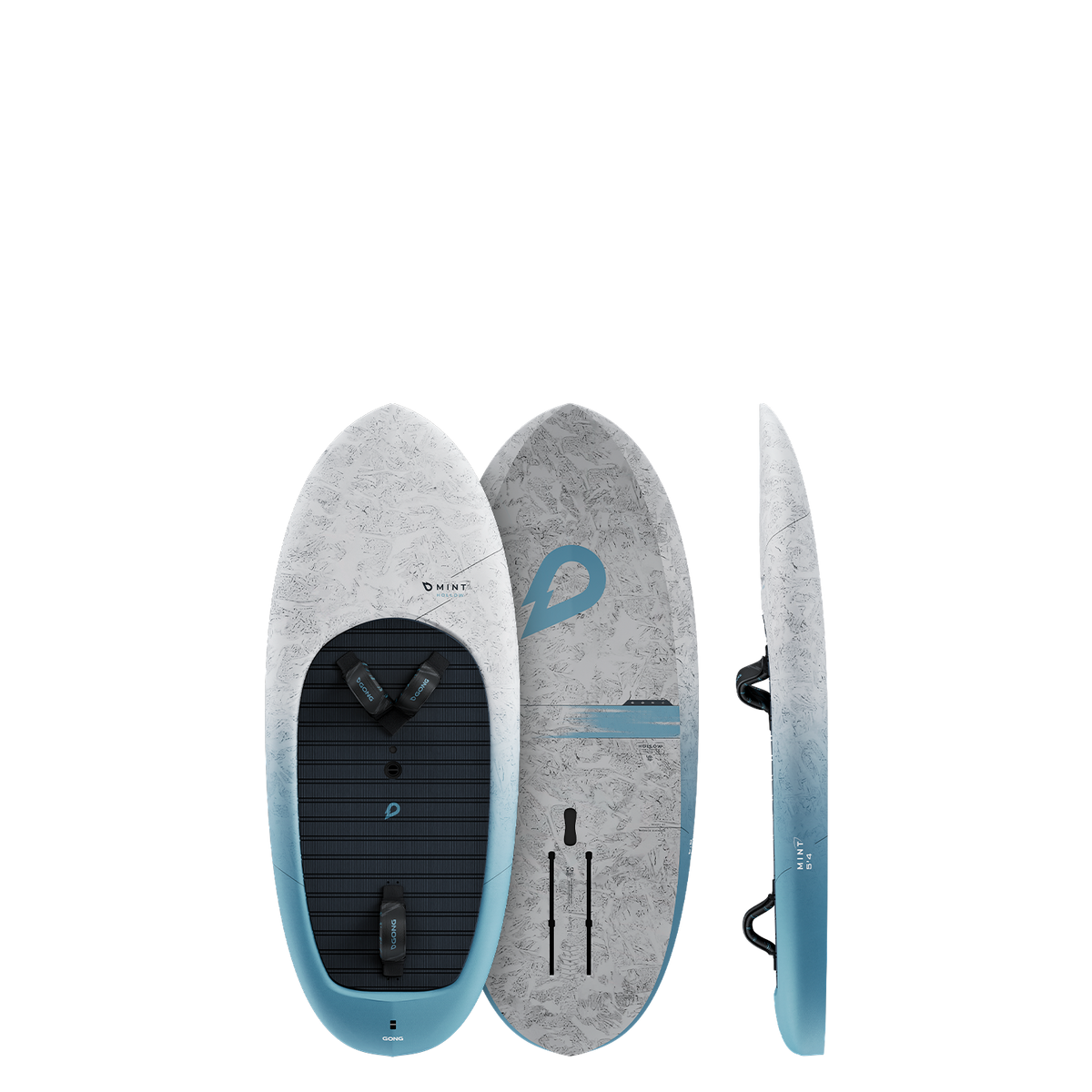
The Hyperloop is a board built entirely for freestyle, developed for riders who want to progress on the most technical tricks and have maximum control when they start pushing their limits.
Double World Champion in 2025 and 2026, it comes directly from the work carried out with the Team at the highest level. That competition experience makes it possible to target very precisely the qualities expected from a modern freestyle board: sharp pop, low rotational inertia, predictable landings and above all the ability to get going again quickly when a trick is not landed perfectly.
The Hyperloop gives you a lot of confidence to commit. It offers enough support on contact with the water to recover from an approximate landing, reset your stance and get back up on foil. That forgiveness is essential in freestyle: it lets you stack up attempts without the slightest trim mistake systematically bringing the trick to an end.
The work done around rider positioning also strengthens the connection with the foil. Foot pressure feels more direct, foot placement is more natural and the board’s reactions are easier to read. You can feel exactly what is happening under your feet, both when loading up for pop and during the landing.
Repop remains one of the key elements of its behaviour. Once the board is back on the water, it quickly regains speed and support to get back up on foil. That ability changes a lot in a freestyle session: less time spent building speed again, more attempts and more opportunities to link tricks together.
Its Hollow Full Carbon construction reinforces that feeling of lightness and responsiveness. With very little inertia to move around, the board follows rotations and trim changes more naturally. It stays very present when you need to push against it, but becomes much more discreet as soon as you leave the water.
In wing and lowkite alike, the Hyperloop is aimed at riders who make freestyle their priority. A precise, highly specialised board designed to multiply attempts, control landings better and progressively push your level further.
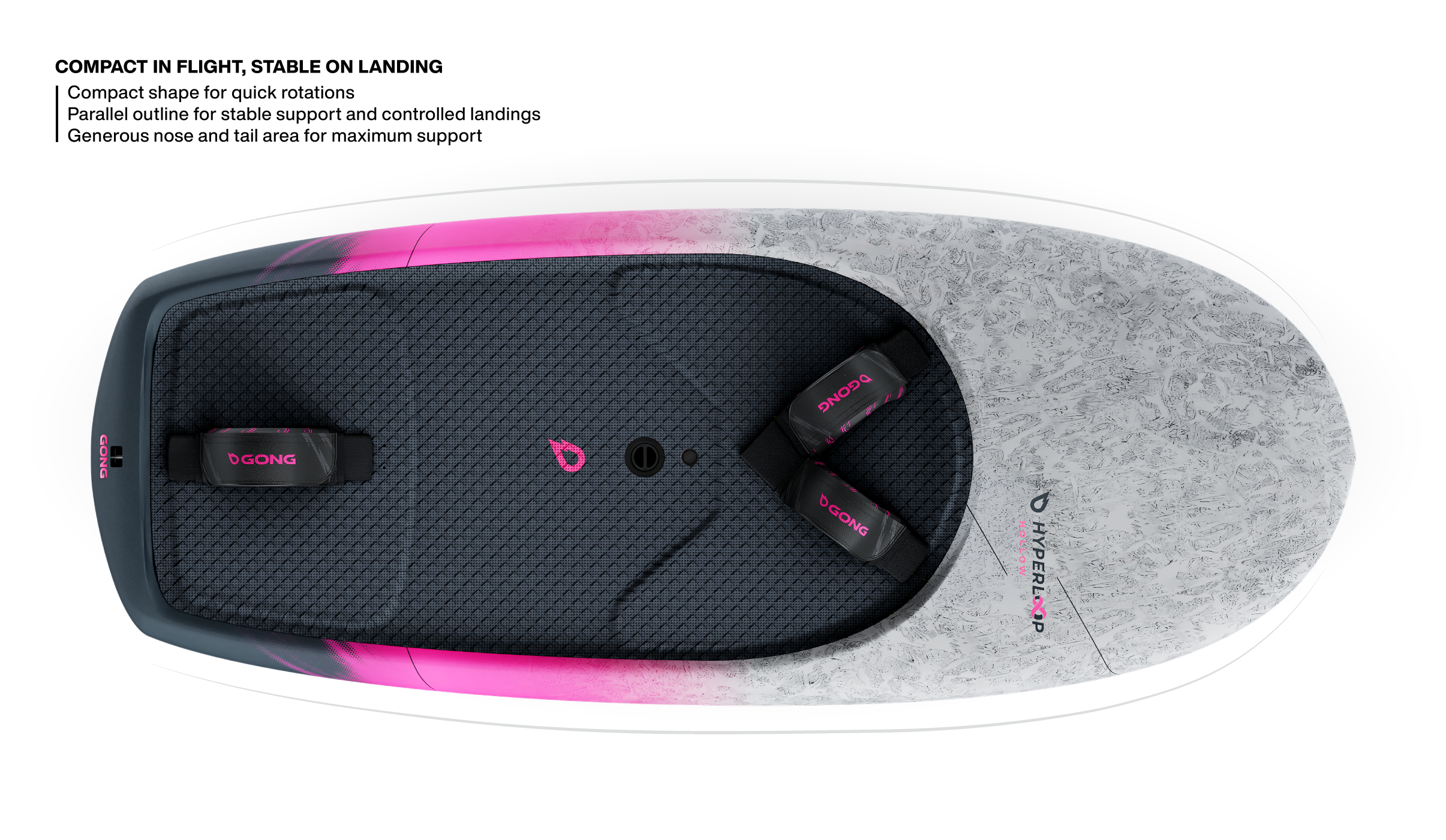
The ultra-compact shape with generous width drastically reduces swing weight in the air while keeping plenty of usable surface area when the board comes back down onto the water. Its relatively parallel outline delivers stable, predictable behaviour both on take-off and on landing.
The highly buoyant nose and tail provide support at both ends, making it easier to recover from an off-centre landing and build speed quickly back into flight.
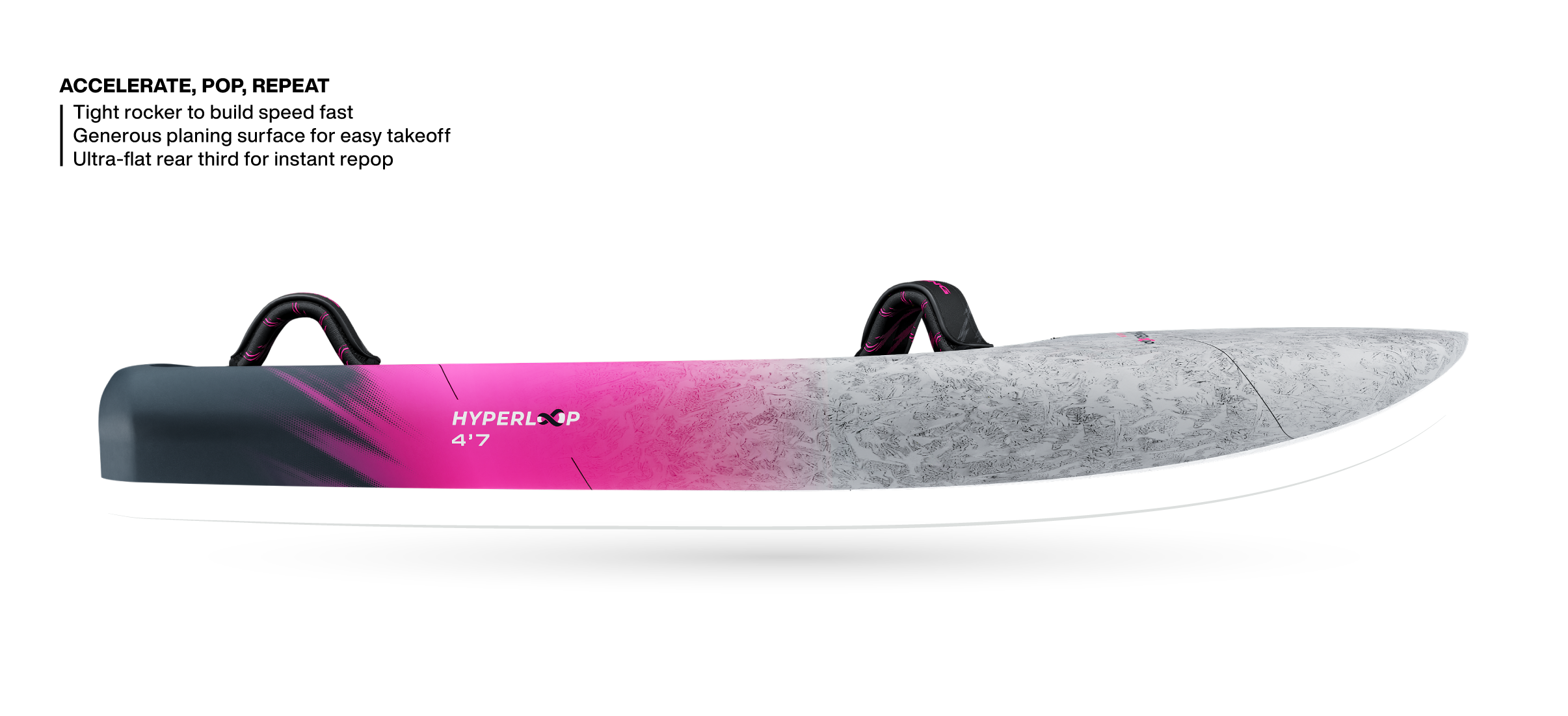
The very flat rocker, especially through the rear third, delivers instant glide and gets the board up to speed fast. On take-off, this planing line lets you load your pressure efficiently to turn acceleration into pop.
On landing, the board very quickly regains a large contact area with the water. It keeps gliding instead of sticking, making it easier to pop straight back up into flight.
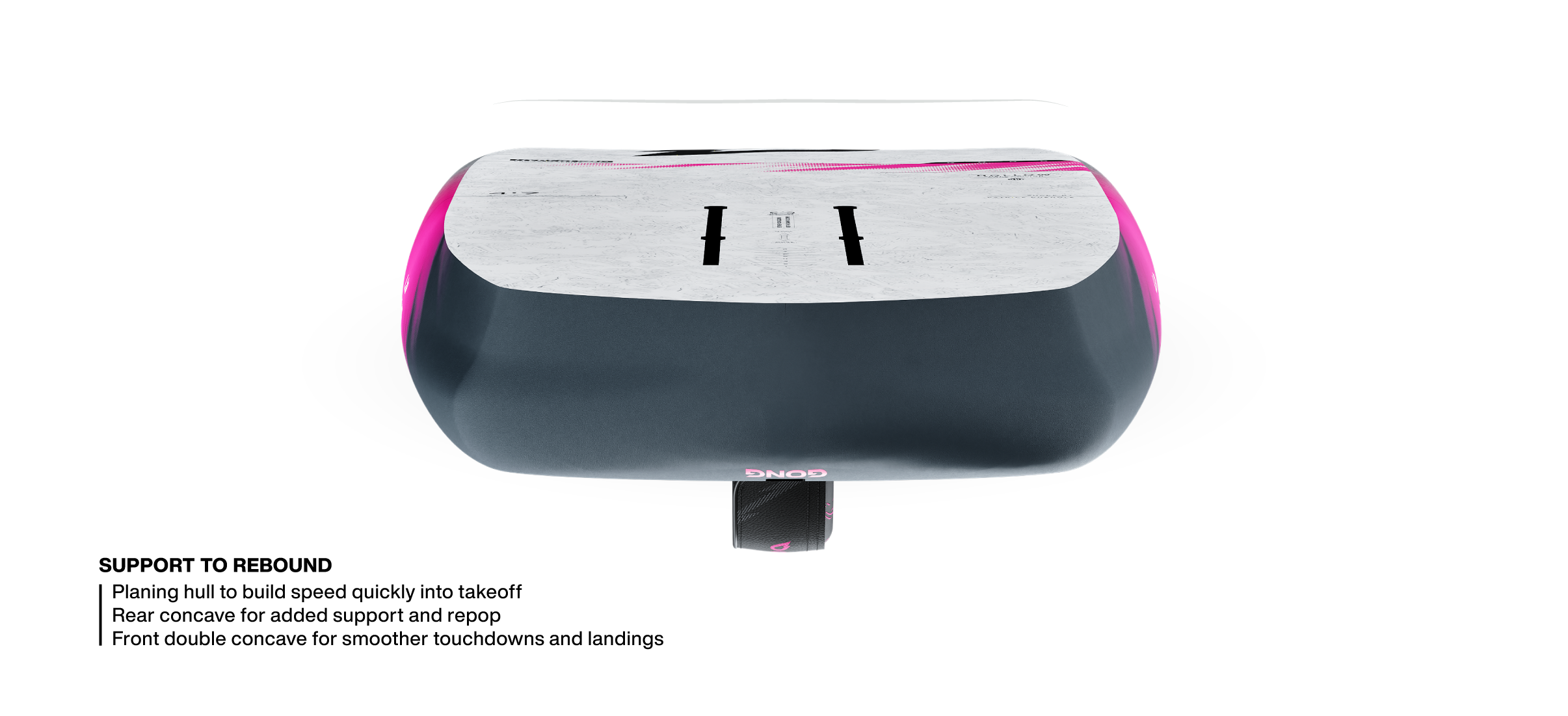
The very planing hull optimises water flow and provides efficient support from the very first accelerations. At the rear, the slight concave works with the flat rocker to load the board and generate powerful pop after a landing.
At the front, the double concave is paired with a slightly more buoyant area. It progressively spreads impacts and allows the nose to slide and bounce rather than stopping abruptly.
The large square tail provides a massive platform under the back foot. When pumping and taking off, it lets you really load up the board to generate speed and pop. On landings, this surface instantly stabilises the tail and gives you a solid base to set off again.
The volume is concentrated around the stance thanks to a generous rear bulb, which increases support without moving your feet away from the foil. The tail absorbs, carries and sends you straight back into flight.
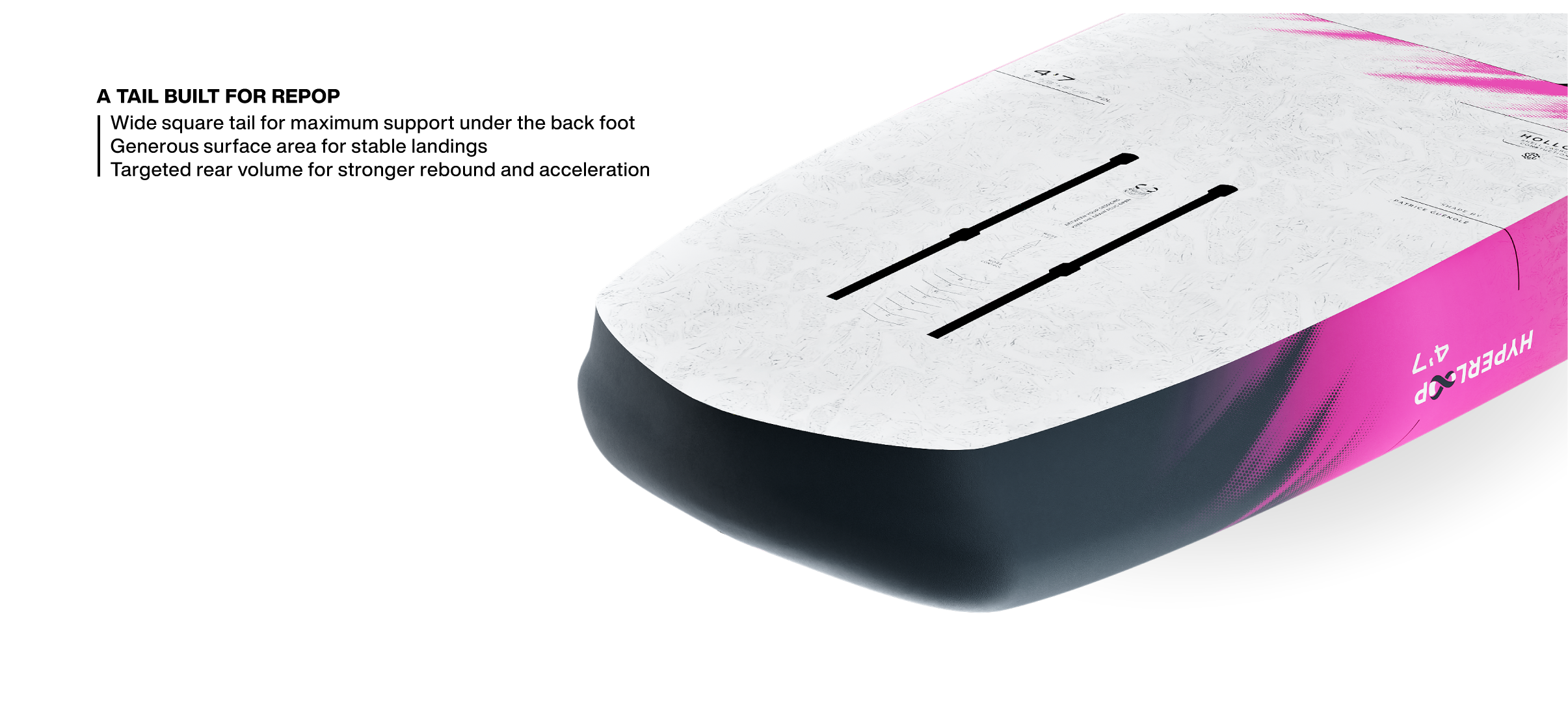
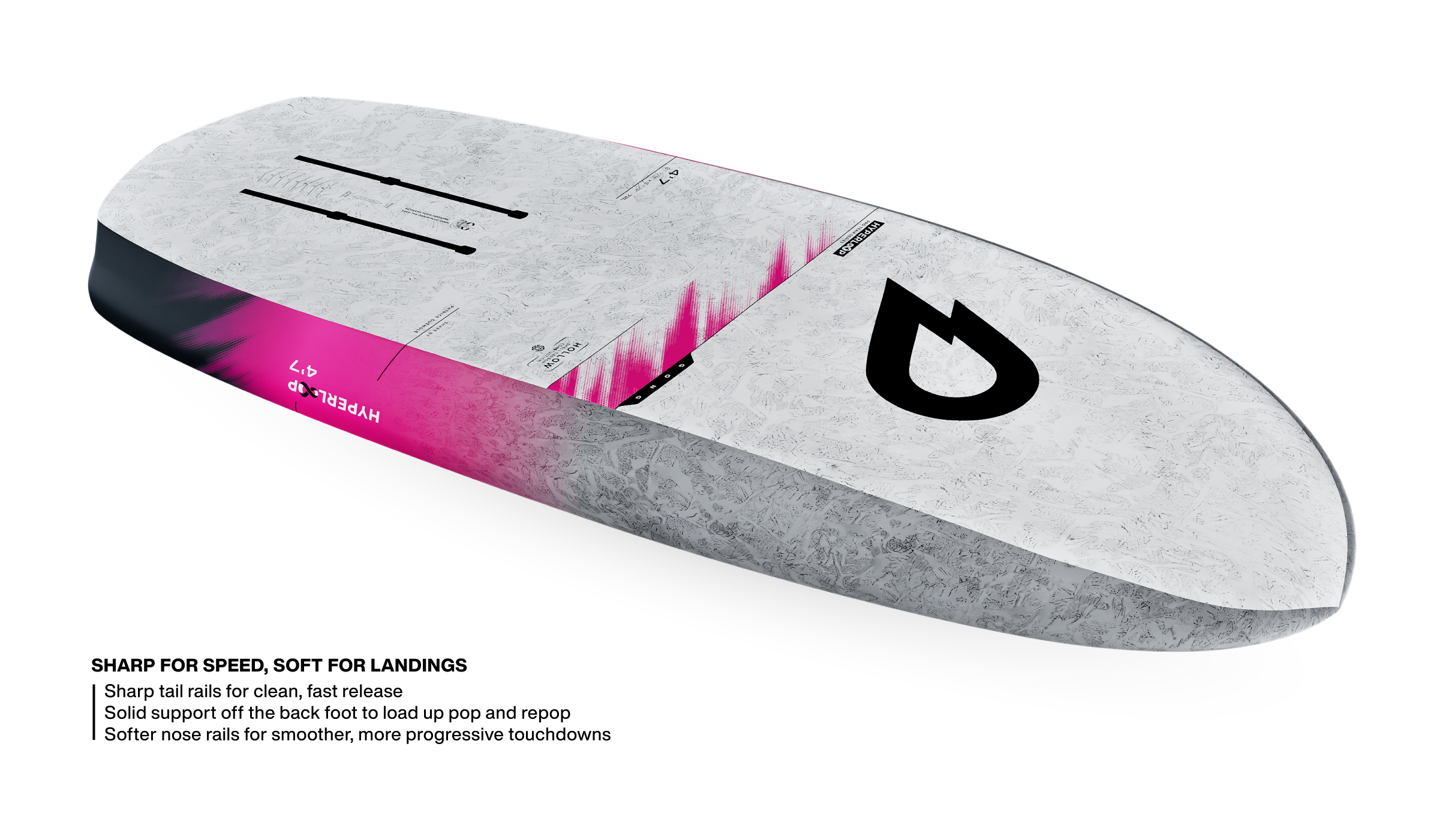
The rails are straight and sharp in the tail to release the water cleanly and deliver maximum glide. This geometry gives you solid support under the back foot, especially useful for accelerating, popping and quickly regaining speed after a landing.
They gradually soften towards the nose to avoid catching during off-axis contacts. The front can touch down, slide and come back out more naturally without abruptly stopping the trick.
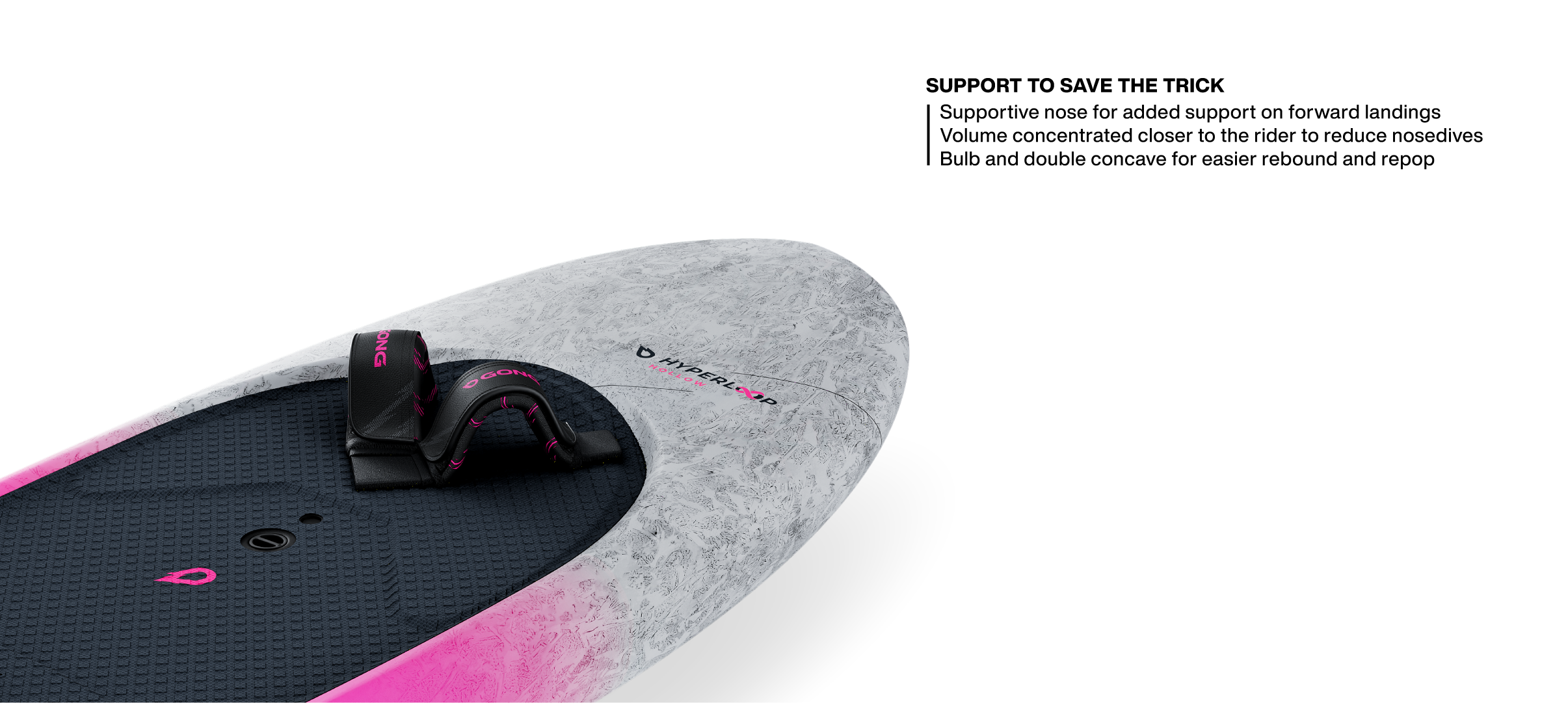
The wide, buoyant nose gives you plenty of margin when the landing puts heavy load on the front foot. Its bulb concentrates the maximum volume closer to the rider so the support kicks in exactly where it’s needed, without unnecessarily loading the tip.
Combined with the double concave and soft rails, this volume helps the nose pop back out more easily after a nose dive. The board rebounds, keeps more speed and increases your chances of saving the trick.
Are you seriously into freestyle? Do you like pushing yourself, repeating a trick until you land it, and making the most of any stretch of water to send it? The Hyperloop is built for exactly that.
It’s aimed at riders who already have solid foil fundamentals: confident gybes and first tacks in wing foiling, very good foil control built through kite foiling, or strong board sports experience that lets them get comfortable quickly with foot pressure and balance.
The Hyperloop remains a demanding board when you choose a volume close to or below your body weight. In chop, staying on your knees and getting going again quickly takes technique and good fitness. With more volume, it naturally becomes more comfortable before take-off.
It’s clearly the board for riders who want to make the most of the freestyle potential of a wing or lowkite, from building a first real trick repertoire right through to top-level competition.
The Hyperloop is a pure freestyle board, designed to deliver serious pop, controlled landings, and immediate repop.
Its behaviour is designed to encourage repeated attempts. It accelerates easily before take-off, stays very discreet in rotations, and offers plenty of support when it comes back into contact with the water.
An imperfect landing does not necessarily mean the end of the trick: the board helps you recover trim, regain speed, and get back up on foil.
It’s this ability to touch down, bounce, and go again that gives it that true ping-pong ball feel.
If your goal is to go higher, spin faster, work on new combos, and push your freestyle level, that’s exactly what it’s made for.
On the Hyperloop, what you’re looking for above all is acceleration, pop, responsiveness, and the ability to repop quickly. Three options make particular sense depending on the level of specialisation you’re after.
The Ypra Freestyle Micro V3 ATMO: the 100% freestyle choice.
This is the most radical pairing with the Hyperloop for riders who put tricks above everything else. Strong acceleration, immediate reactions, loads of pop, and behaviour designed to make take-offs and combinations easier. The setup for riders who want to unlock the board’s full freestyle specialisation.
The Ypra Surf-Freestyle V3 ATMO: the mix of freestyle and freedom in carves.
It brings huge dynamism to pop and repop while keeping a real ability to turn and use the foil between tricks. It’s an excellent choice for riders who want to send hard while keeping a mobile, playful foil.
The Fluid V3 ATMO: the more versatile choice.
Fast, manoeuvrable, and lively, it delivers plenty of performance without pushing specialisation quite so far. It lets you turn tight, accelerate, glide, and generate excellent pop. It’s the logical choice for getting the most out of the Hyperloop with a more progressive and versatile feel.
In short: Ypra Freestyle Micro for pure freestyle, Ypra Surf-Freestyle to mix tricks and carves, Fluid for more versatility.
The tail wing has a huge influence on the character of a freestyle foil. On the Hyperloop, what you mainly want is responsiveness, acceleration, and freedom through trim changes.
The Ypra Freestyle Micro: to maximise freestyle.
Paired with the Freestyle Micro front wing, it creates the most specialised setup for rotations, acceleration, and landings. Very little inertia, loads of response, and a foil that goes again instantly when the rider loads it.
The Surf-Freestyle: for a balance of pop and manoeuvrability.
It gives the foil a lot of freedom and works naturally with a Ypra Surf-Freestyle. It’s particularly well suited to mixing committed tricks with a very mobile riding style.
The Fluid: for more progression.
It delivers lively behaviour that is easier to read. It’s a good option for keeping plenty of manoeuvrability and speed while maintaining more progressive support on landings.
You can then fine-tune the feel through size:
In freestyle, that extra instability can actually become a strength: the less locked-in the foil is, the faster it responds to the rider’s inputs. You just need to match that level of freedom to your ability and the type of tricks you’re aiming for.
With a Tail Shaft Short, you push manoeuvrability and instant response even further. The Medium brings a bit more control while still keeping enough freedom for committed freestyle riding.
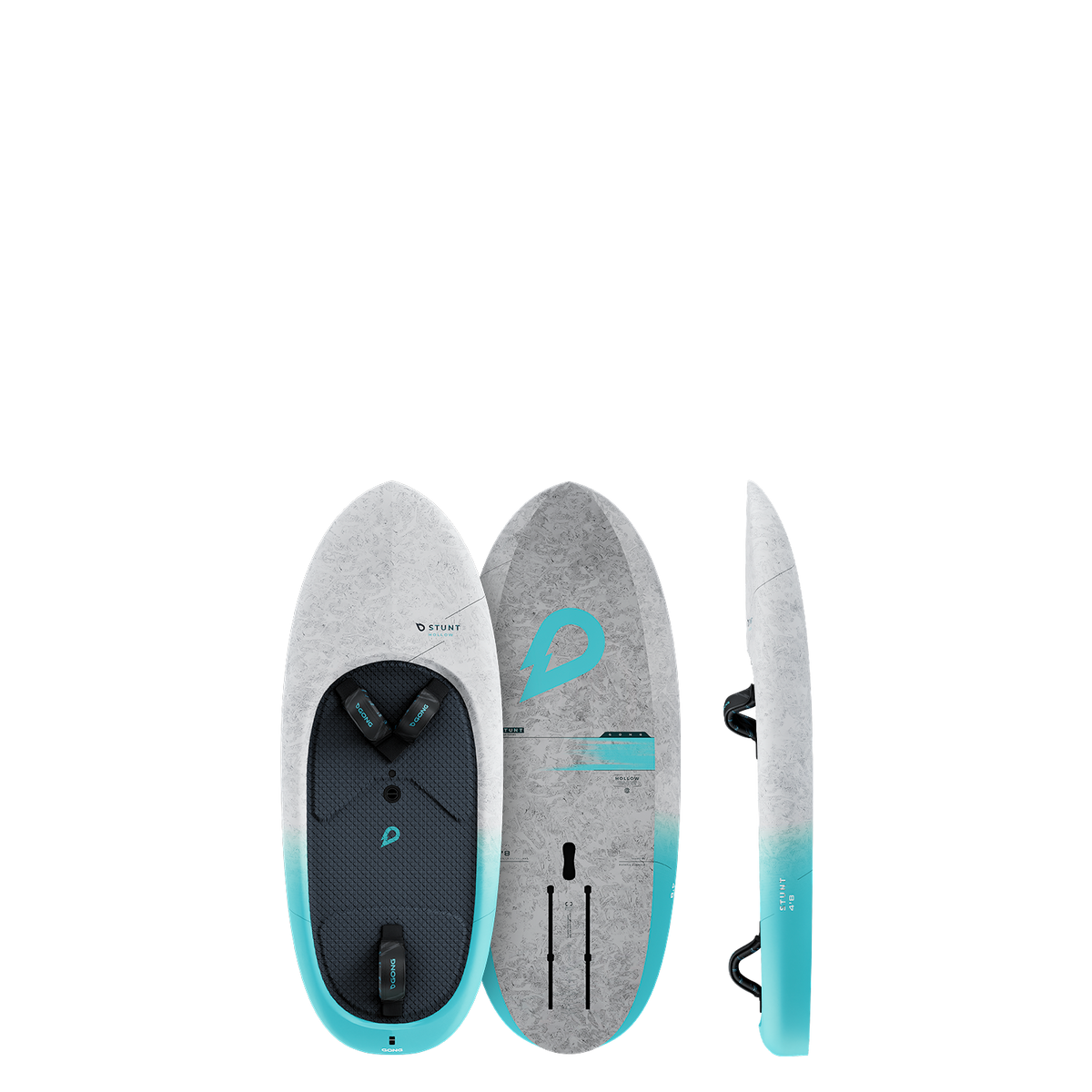
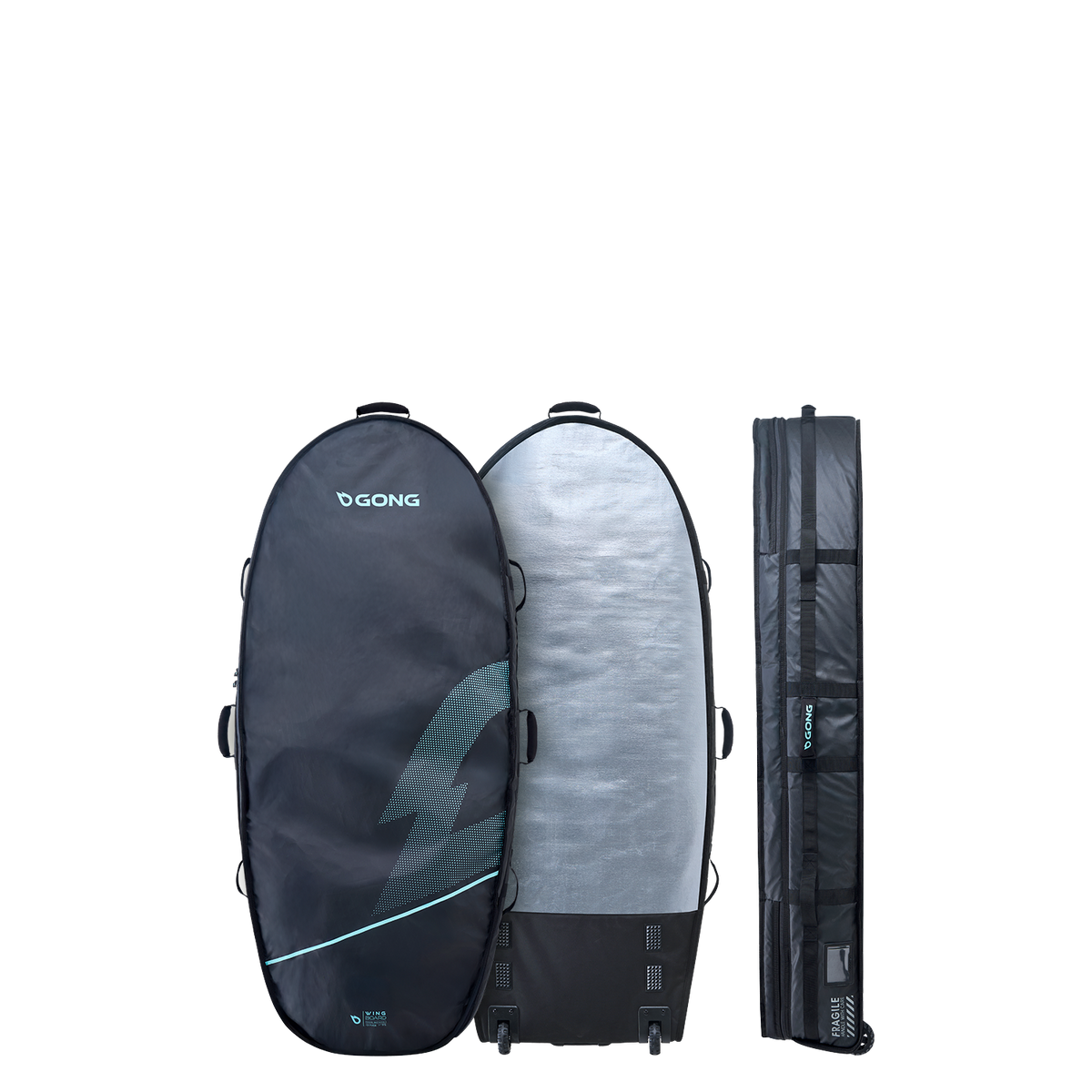
These boards are equipped with 2 GONG US Box Double Entry tracks compatible with standard 4-bolt plate foils and the SCS system with 9 cm spacing, Luxe footstraps with multi-position anti-twist inserts, a Shock Traction Pad, an integrated carry handle, a leash plug, an automatic pressure relief screw and a drain valve.
The Double Entry system allows very fast mounting of GONG foils while remaining compatible with standard square nut setups. The SCS is not supplied with the board.











Because in freestyle, less length means less bulk around the rider during rotations. The board follows your body movements more easily and takes less effort to change trim quickly.
The goal is simple: maximum freedom in the air, without sacrificing the support you need on landing.
This relatively consistent width creates plenty of usable surface area when the board comes back down onto the water. A slightly front-footed, back-footed or off-axis landing therefore has more support to stabilise.
That’s what allows the Hyperloop to be very compact in flight yet very present as soon as it touches the water.
Because a trick doesn’t always end with a perfectly clean landing still on foil. Very often, the board momentarily reconnects with the water.
The Hyperloop is designed to turn that contact into fresh acceleration, so you can quickly get back up on foil instead of staying stuck to the surface. This greatly increases your chances of saving a trick and carrying on the combo.
The wide nose, volume positioned close to the stance, the double concave and the softened rails all work together to limit nose-diving.
Instead of catching abruptly, the front has enough support to skim, bounce and come back out of the water more easily. This forgiveness helps you recover landings that would be far more punishing on a less specialised shape.
The wide square tail provides huge support under the back foot. It is especially effective when loading the board to take off or when you need to save a landing.
Its large surface area lets you quickly regain support and speed, which has a direct impact on pop and, above all, repop.
They bring your feet closer to the foil and create very clear reference points underfoot. The rider feels the foil’s feedback more directly and naturally finds their position again after a rotation.
This proximity is especially beneficial for precision when you need to load up the pop, control the board’s trim in the air, then instantly find your footing again on landing.
It gives you plenty of margin for such a specialised board. Its large planing surfaces, volume concentrated around the stance and hull shaped for water contact help you recover a lot of imperfect landings.
It obviously does not make a trick automatic, but it is designed to give the rider the best possible chance of saving the landing and riding away.
Because every gram of inertia matters in a rotation. The Hollow Full Carbon construction allows the Hyperloop to follow the rider’s movements more quickly and require less effort to adjust its trim.
The benefit is felt most in the air: the board feels lighter and easier to move around, while still keeping the support of its shape as soon as it reconnects with the water.


