Your cart is empty!
It's flat around here...
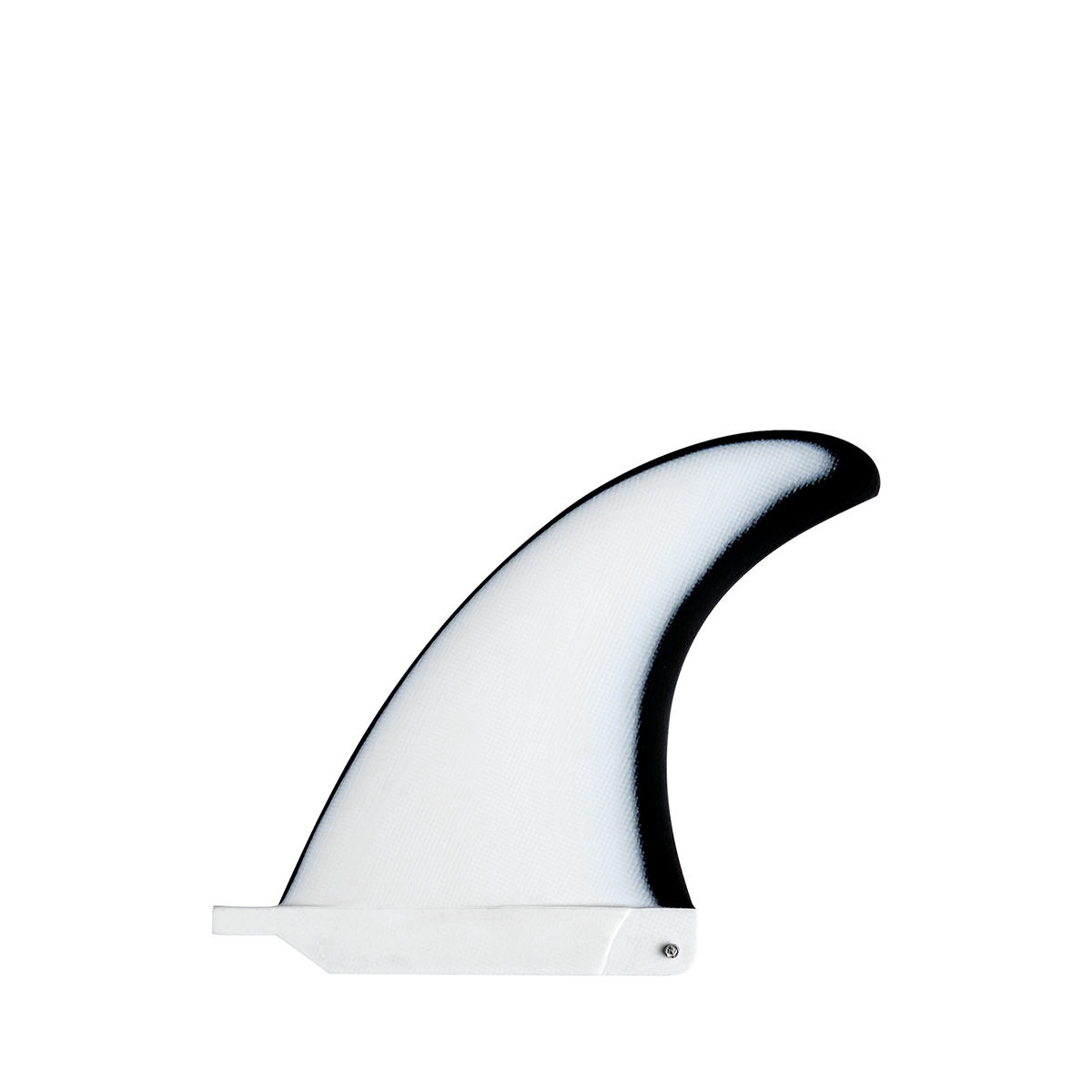
The single fin is the original setup of modern surfing. Long before the thruster became the norm, it defined how to draw a line, hold a trim and read a wave. A single center fin, positioned on the board’s centerline, is enough to give the board its direction, stability and character.
This setup is closely tied to the history of classic longboarding, but it is not limited to noseriding. A well-chosen single fin can transform a retro longboard, a glider, a hull, a mid-length or even certain eggs. Where multi-fin setups distribute the work across several fins, a single-fin setup concentrates everything into one fin. The feel becomes more direct and easier to read, but also more demanding: the board is surfed more through its lines than through constant corrections.
The philosophy of the single fin is based on a simple idea: less interference, more flow. The board glides, holds its line, draws its turns and settles into the wave with a particular elegance. But depending on its template, size and placement, a single fin can range from a highly pivot-oriented feel, almost like a keel, to faster glide with more projection.

With a single-fin setup, the fin plays a central role both literally and figuratively. It does not simply complement a shape: it can literally dictate how the board is meant to be surfed.
A large, upright and deep single fin with plenty of surface area will slightly slow the board down, anchor the tail and promote noseriding. Conversely, a slimmer single fin with more rake and less surface area will provide more drive, more projection and greater freedom when changing lines.
This is why the single fin is often the easiest setup to understand visually, but also one of the most subtle to choose. Everything comes down to the balance between stability, drive, pivot, glide and control.

A single-fin setup works particularly well in waves that favor reading the line and maintaining glide.
It excels in:
In these conditions, a single fin lets you draw smooth lines and maintain natural speed without constantly having to generate more.
 Surfer: Evelin, GONG team rider, on the Deano PU.

Rake refers to how far the fin leans backward. On a single fin, it strongly influences the way the board draws its lines.
A fin with less rake, meaning a more upright fin, favors pivot. The board turns around the fin as if it were an axis. This type of fin is particularly well suited to classic noseriding, where the goal is to lock the board into the pocket and perform short pivots to reposition it.
Conversely, a fin with more rake favors drive and projection. The board holds its line better and draws longer, smoother turns. This type of fin is often used on dolphin fins or singles designed for mid-lengths and boards focused more on speed and carving.
On a single-fin setup, rake therefore largely defines the character of the fin and, in turn, the character of the board:

The base refers to the length of the fin’s lower edge, the part directly connected to the board.
A wide base generates plenty of control and drive. It stabilizes the board when committing to a turn and handles powerful pressure well.
A shorter base frees the board up more and makes pivoting easier. This is a common choice for more technical fins or for boards you want to make more playful.
On many classic longboard single fins, the base is deliberately generous to increase stability and keep the board in the right section of the wave.

Depth refers to the height of the fin between the base and the tip. On a single fin, depth plays an essential role in stability. A deep fin creates significant leverage beneath the board, increasing hold and helping keep the tail in the water. This is particularly important for noseriding.
A more moderate depth will make the board feel freer and faster, but with less support when pressure increases.

The total surface area of a fin determines how much contact it has with the water and therefore the overall level of control.

A large surface area increases stability and hold. It slightly slows the board down and helps keep it locked into the pocket, which is once again very useful for noseriding.
A smaller surface area reduces drag and promotes glide. The board becomes faster and more maneuverable, but also slightly less stable.
The template refers to the overall outline of the fin, meaning the overall shape created by the combination of rake, base and surface distribution. It is often the first indicator of what a fin is designed to do.
A very upright pivot or hatchet template favors a feel centered around a fixed point. The board pivots around the fin, stays firmly locked into the pocket and provides plenty of stability at the nose.
Conversely, a template that extends farther backward, such as a dolphin fin, favors longer lines and greater projection. The board tracks through the wave more easily and maintains its speed better.
Between these two extremes, many hybrid templates exist: modernized D-fins, cutaways, versatile templates and mid-length single fins. Each variation shifts the balance between pivot, drive and glide.

The foil. On a single fin, the foil is symmetrical (50/50). This profile distributes thickness equally on both sides of the fin. This type of foil generates neutral, progressive lift. It gives the board stable and predictable behavior, perfectly suited to the philosophy of a single fin.
A thicker profile provides more stiffness and control, while a thinner profile introduces a little more flex and fluidity into the glide.

Flex refers to the fin’s ability to bend slightly under pressure and then return to its original shape.
A very stiff fin provides solid support and a stable feel under the back foot. It is often preferred for noseriding or for boards that require plenty of control.
A fin with more flex makes the board feel livelier. It releases the energy stored through the turn and can provide a more dynamic feeling of acceleration out of the turn.

A single fin generally favors linear drive. The board holds its line and continues moving through the turn without constantly needing to be pumped for more speed.
Pivot depends heavily on the template. A very upright fin, such as a hatchet or pivot fin, makes tight turns easier. A fin with more rake increases projection but needs more space to draw its arc.
Hold is often strong, especially on larger templates with plenty of surface area. This creates a feeling of security and stability, particularly on classic longboards.
Stability is one of the major strengths of a single fin, especially when it is large, deep and positioned farther back. This stability is what makes trim and noseriding possible.
 Patrice Guénolé, GONG boss and shaper, on the Pampa EPS.
A single fin is particularly well suited to:
On a very wide longboard with little rocker, it maximizes glide and hold. On a mid-length or an egg, it can create a very pure, flowing style of surfing, provided you choose the right template.
The size of a single fin mainly depends on:
On a classic longboard, one simple rule remains very effective: choose a fin roughly one inch larger than the board’s length in feet. A 9’ board will therefore often work very well with a 10” fin.
However, this rule needs to be adjusted according to the board’s shape and intended use:
A heavier or more powerful surfer can go slightly larger to maintain control. A lighter surfer can reduce the size slightly to gain more fluidity.
On a mid-length or an egg, you will often choose a smaller fin depending on tail width and the behavior you are looking for. Fins from 7” to 9” can work on their own on these shapes, or even serve as the center fin in a 2+1 setup.
 Surfer: Vilayta, GONG team rider, on the Indra PU.
On a single-fin setup, fin placement dramatically changes the board’s behavior.
Moving the fin forward makes the board more maneuverable, more responsive and easier to turn. It can bring a board that feels slightly too locked in back to life.
Moving the fin backward increases hold, stability, grip and the ability to stay on the nose for longer. This is often the solution when you are looking for more control or better noseriding.
With a log or noseride fin, it is common to position it toward the back of the box. With a more versatile fin or one designed more for carving, you can center it or move it slightly forward.

Not all single fins tell the same story. Some are designed to lock the board into the pocket and hold the nose, others to draw long lines, and others to offer a more playful glide on mid-lengths or modern logs.
The models presented here cover a very broad range of behaviors, from pure noseride pivot to a technical and maneuverable single fin, including all-round dolphin fins, cutaways, performance 2+1 center fins and mid-length single fins.

 Surfer: Evelin, GONG team rider, on the Deano longboard with a Poster fin.
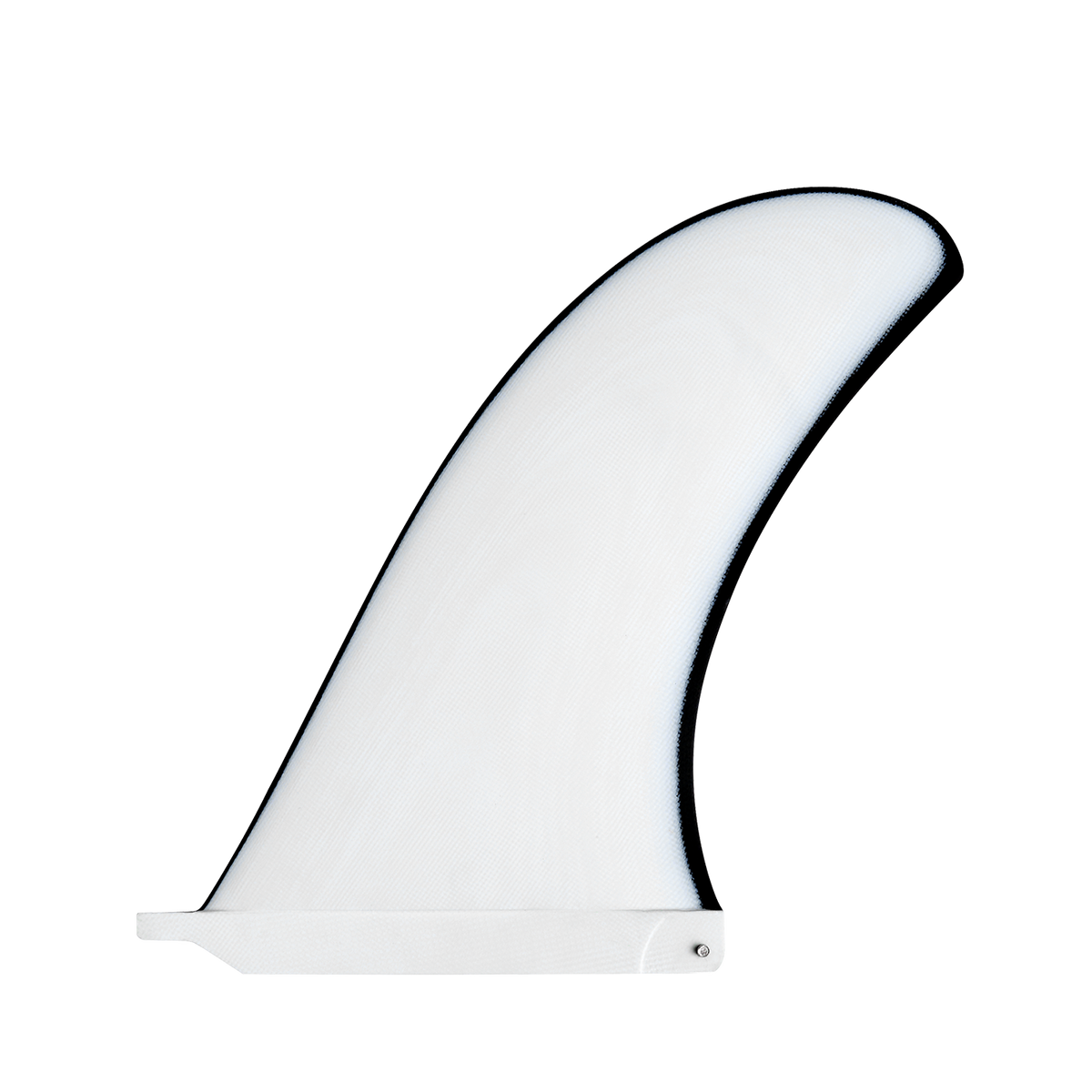
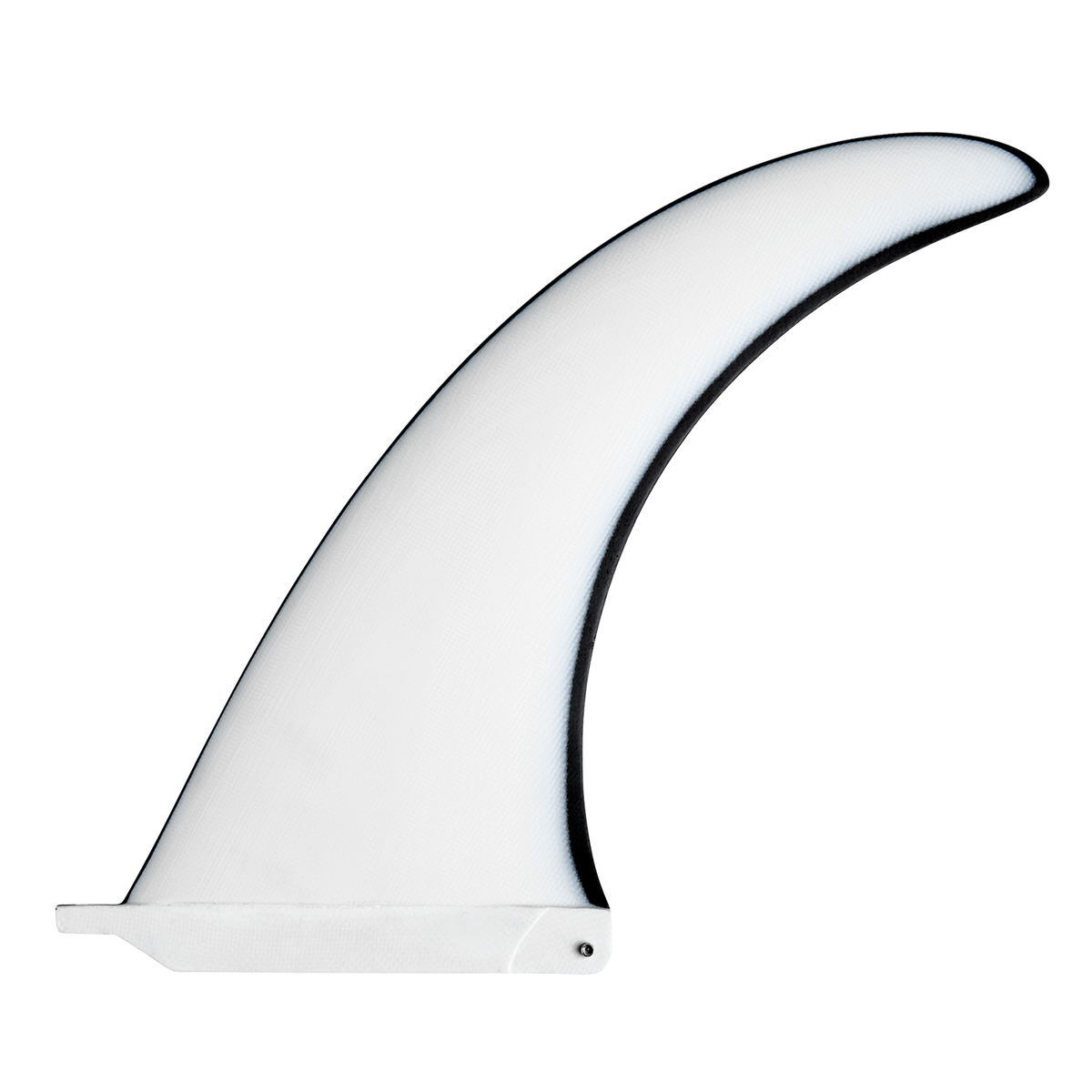
The Dfeatr is a log fin in the purest sense. Its purpose is clear: stabilize the board, slightly slow the glide and anchor the tail so you can head to the nose without overthinking it.
Its template draws inspiration from both the D-fin and the hatchet. Rake is low, surface area is huge, the base is very wide and depth is substantial. Its entire geometry is designed to create hold, pivot and stability rather than drive. This is not a fin designed to generate hard acceleration or draw long projected arcs; it is designed to lock the board into the pocket, hold a slow trimline and secure deep noserides.
It naturally suits heavy logs, retro longboards focused on noseriding, and shapes with a centered or forward wide point, as well as weak to moderately powerful waves where controlling speed is essential to stay in the right part of the wave.
A 9’6 to 10’6 retro longboard in mellow, long waves is its ideal playground. Positioned toward the back of the box, the Dfeatr becomes a true anchor.

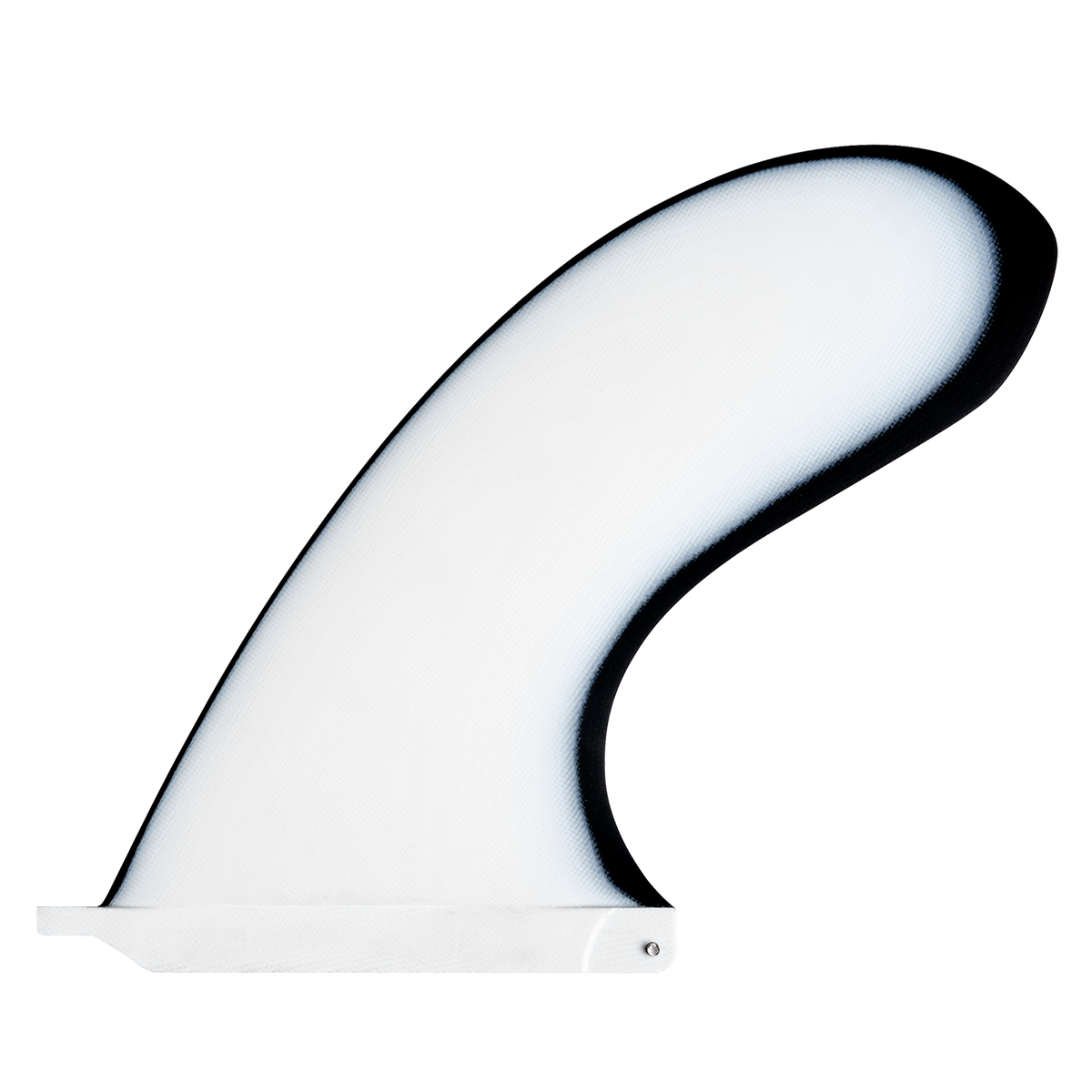
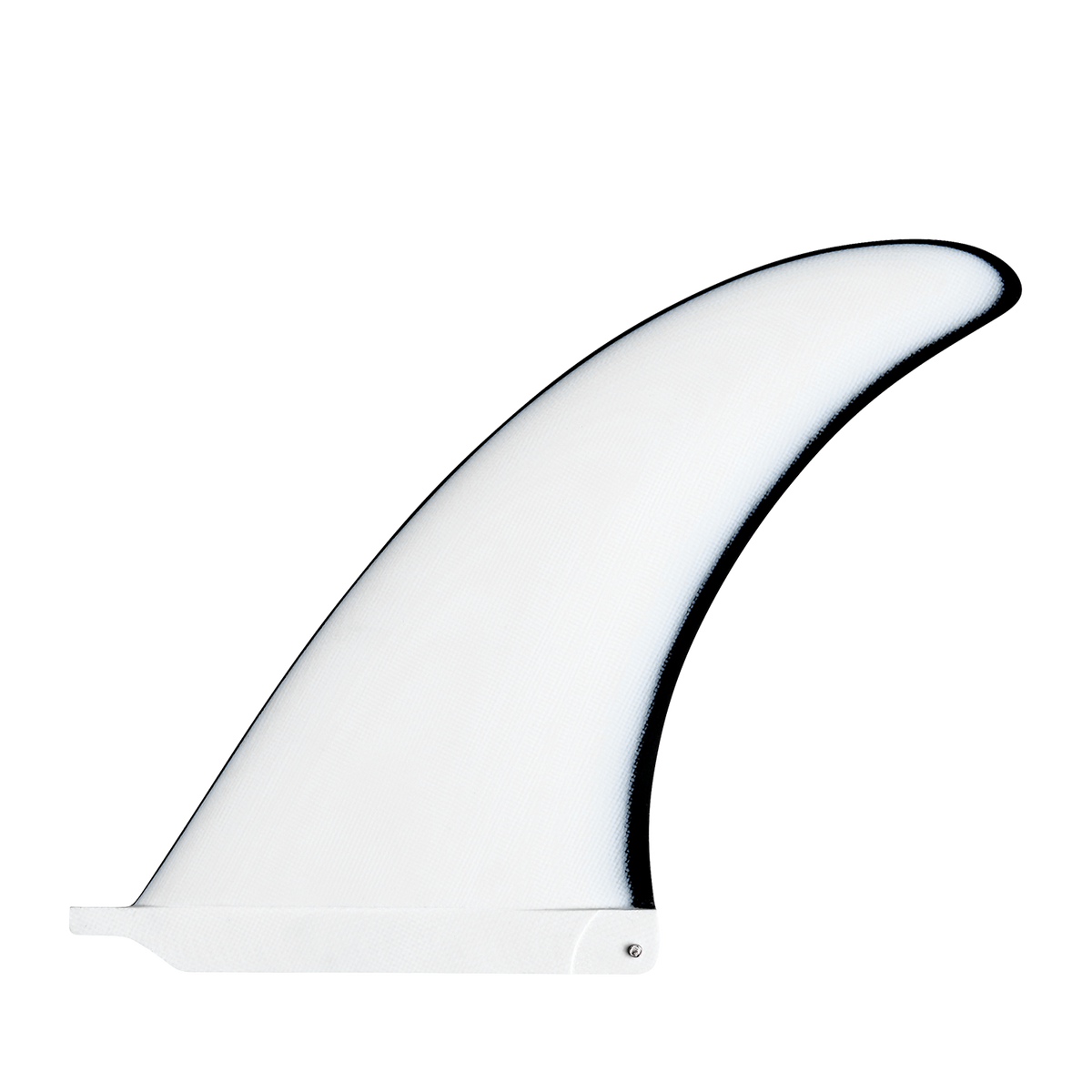
The Lokin sits at the crossroads between classic noseriding and more committed line surfing. Its XXL cutaway template blends two philosophies: a fairly upright front section that retains pivot and a more swept-back rear section that adds rake and drive.
It is designed for retro logs that want to retain stability at the nose while gaining a little more projection when changing lines. It allows more stylish turns, more drawn-out cutbacks and wider bottom turns, while remaining perfectly balanced for noseriding.
It suits classic longboards that are not exclusively focused on the nose, or slightly more “exploratory” logs where the goal is to alternate between trim, pivot turns and more committed arcs.
In weak to intermediate waves, it offers an excellent balance between control and freedom. It is the model for surfers who love classic style but do not want a fin that feels completely locked in.

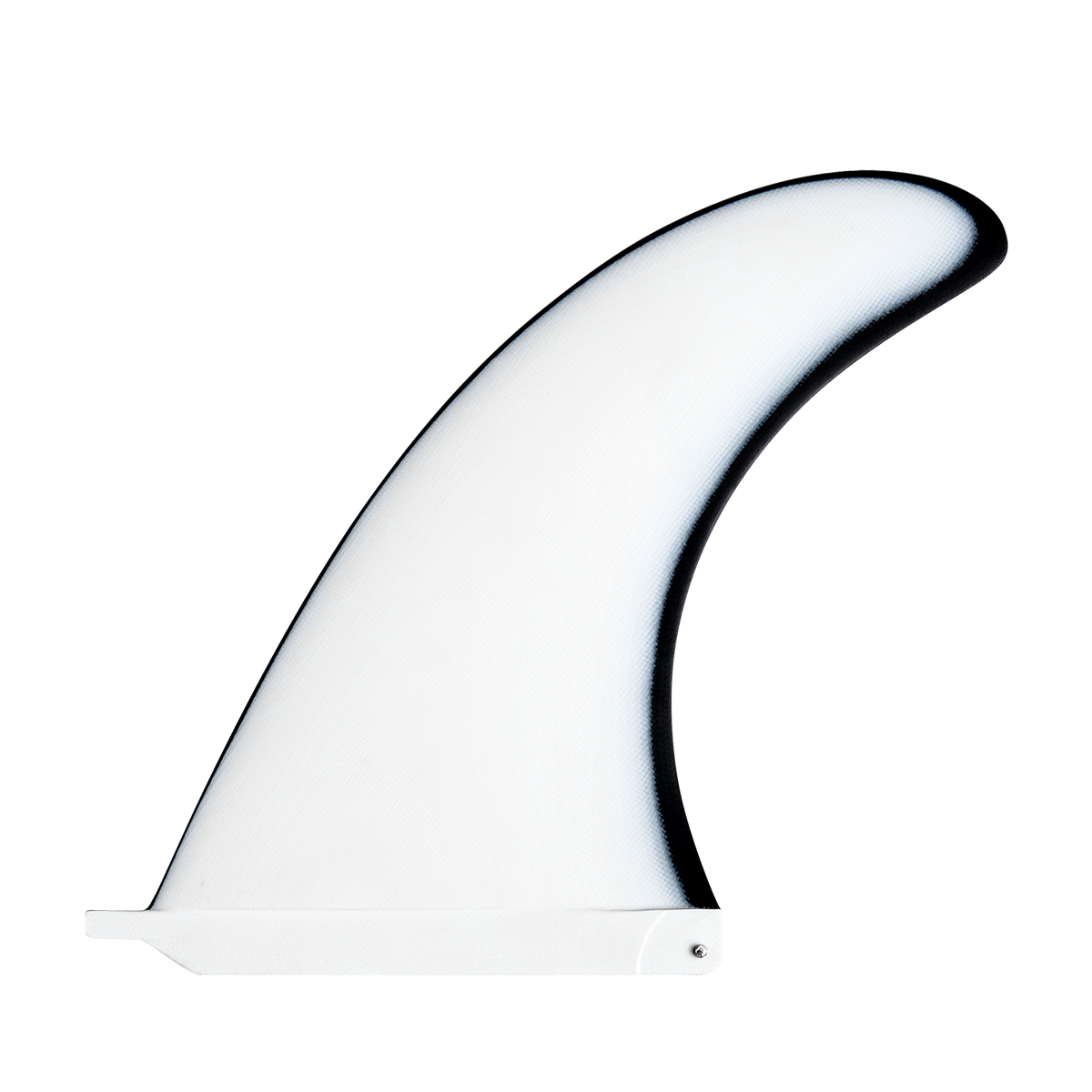
The Ron D revisits the spirit of the classic D-fin while making it more maneuverable. Its template retains the upright, stable character of a D-fin but introduces a cutaway approach that frees up the board without changing its core feel.
It remains heavily focused on trim, tail hold and stability through the line, but turns more easily than a pure D-fin. This makes it an excellent option for surfers who love the aesthetics and wave-reading style of classic longboarding while looking for a little more mobility through transitions.
The Ron D works particularly well on retro longboards, modernized logs, or boards that aim to remain very classic while allowing slightly freer lines.
It is a great fin for anyone who wants a stable board that looks beautiful in motion, can hold a trimline and head to the nose, without going all the way toward the radical pivot feel of a pure pivot fin.

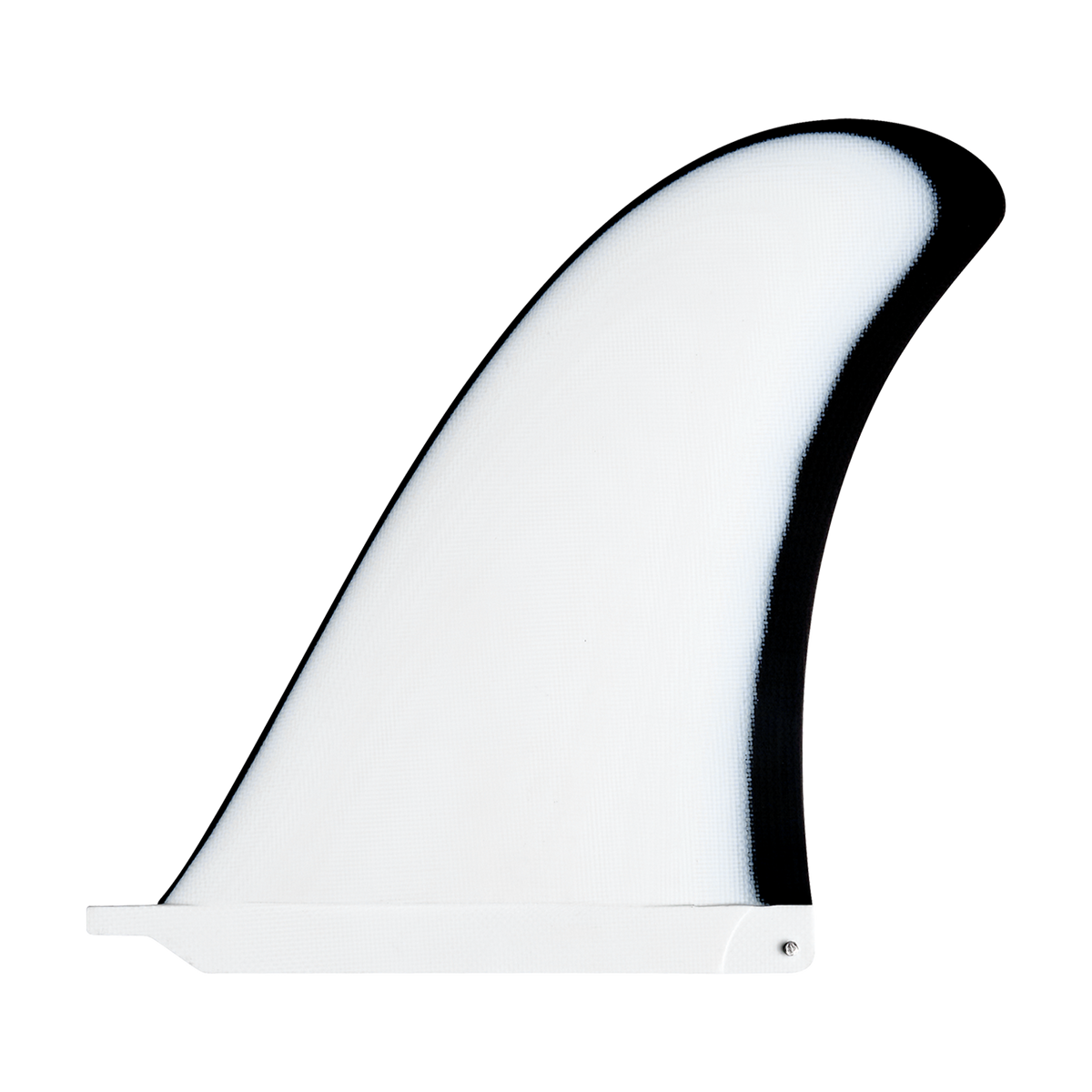
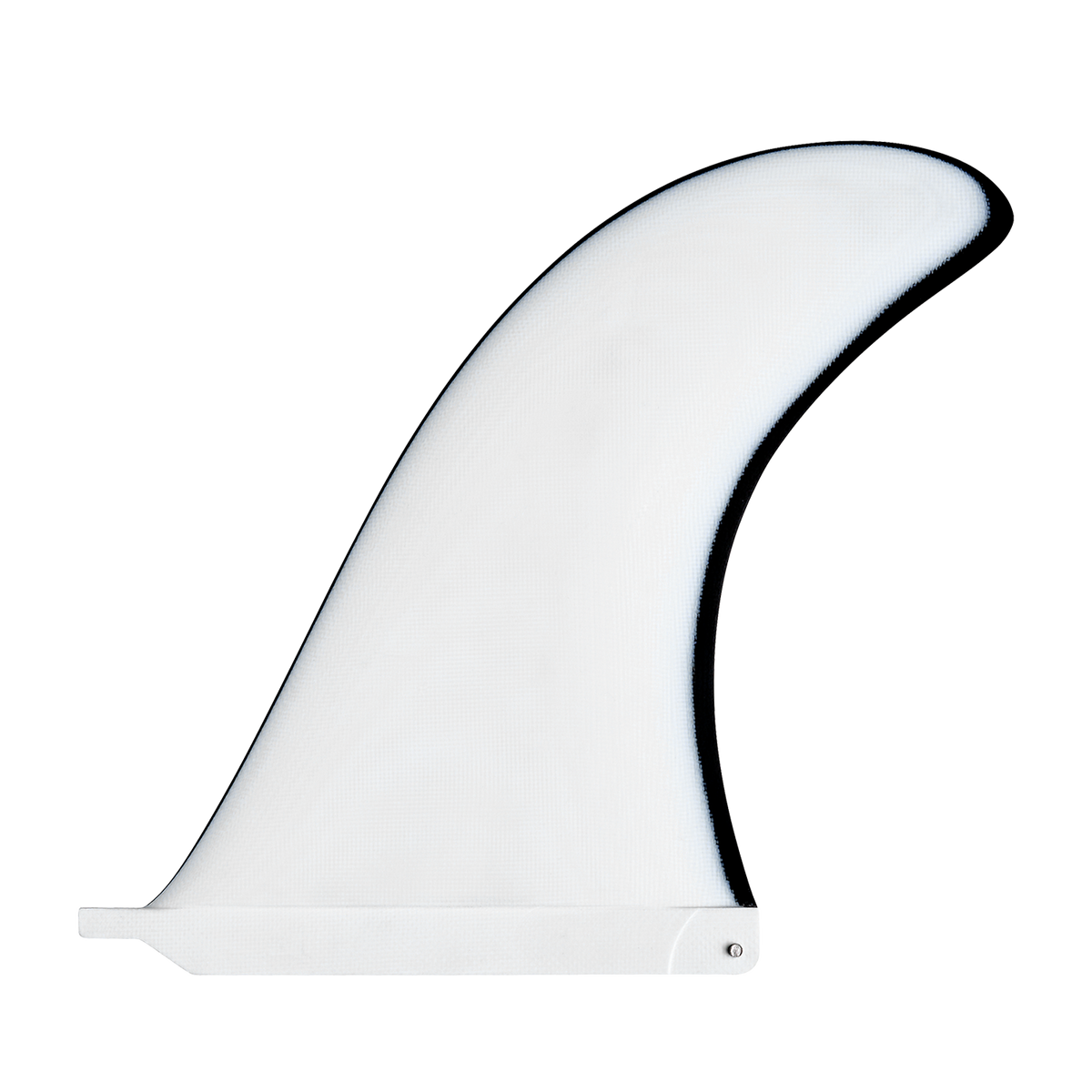
The Royal is one of the purest expressions of a noseride fin. Its classic hatchet template is designed to maximize tail hold, meaning the tail’s ability to remain anchored when the surfer moves toward the nose.
It has plenty of surface area, significant depth, a relatively short base to retain pivot, and surface distributed toward the upper part of the fin so it can maintain hold even when the board is heavily locked onto the trimline.
It is designed for heavy, high-volume retro longboards and dedicated noseriders. It thrives in medium-sized waves, clean sections and pockets where the board can settle in and slow down without losing hold.
It is neither the fastest nor the most maneuverable fin in the range, but it is one of the most reassuring when the objective is clear: set up and hold long noserides.

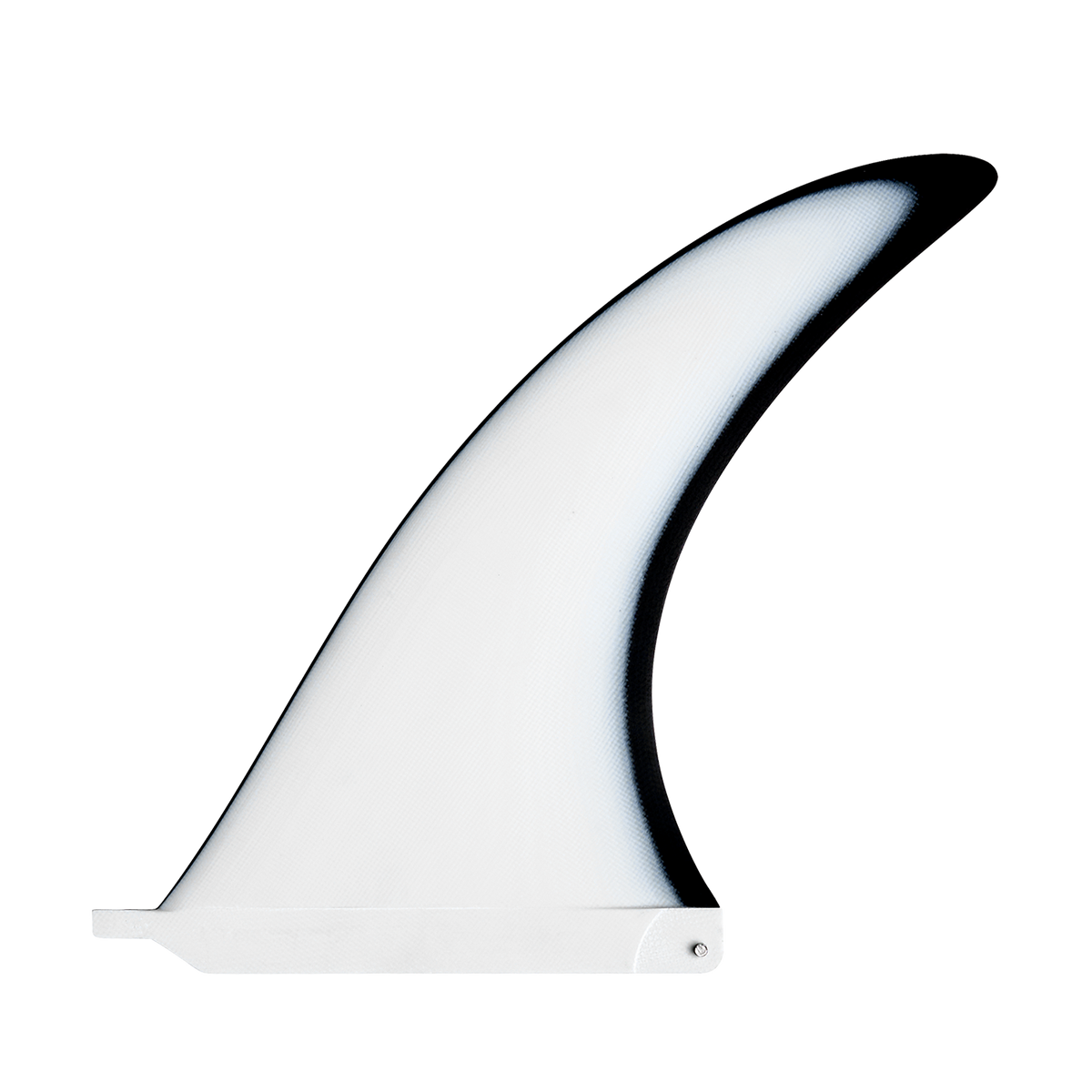
The Dred follows the same concept as the Royal but adds a little more rake. The result is subtle but important: the fin retains its pivot and noseride DNA while offering a little more drive and a more committed line.
It suits surfers who like hatchet-style fins but want a less “fixed” feel, with a little more freedom through turns and more acceleration between sections.
On retro longboards, clean waves or slightly faster conditions, the Dred still provides real stability at the nose while drawing longer, livelier lines than the Royal.
It is an excellent option for a classic log that you want to surf with a little more rhythm.

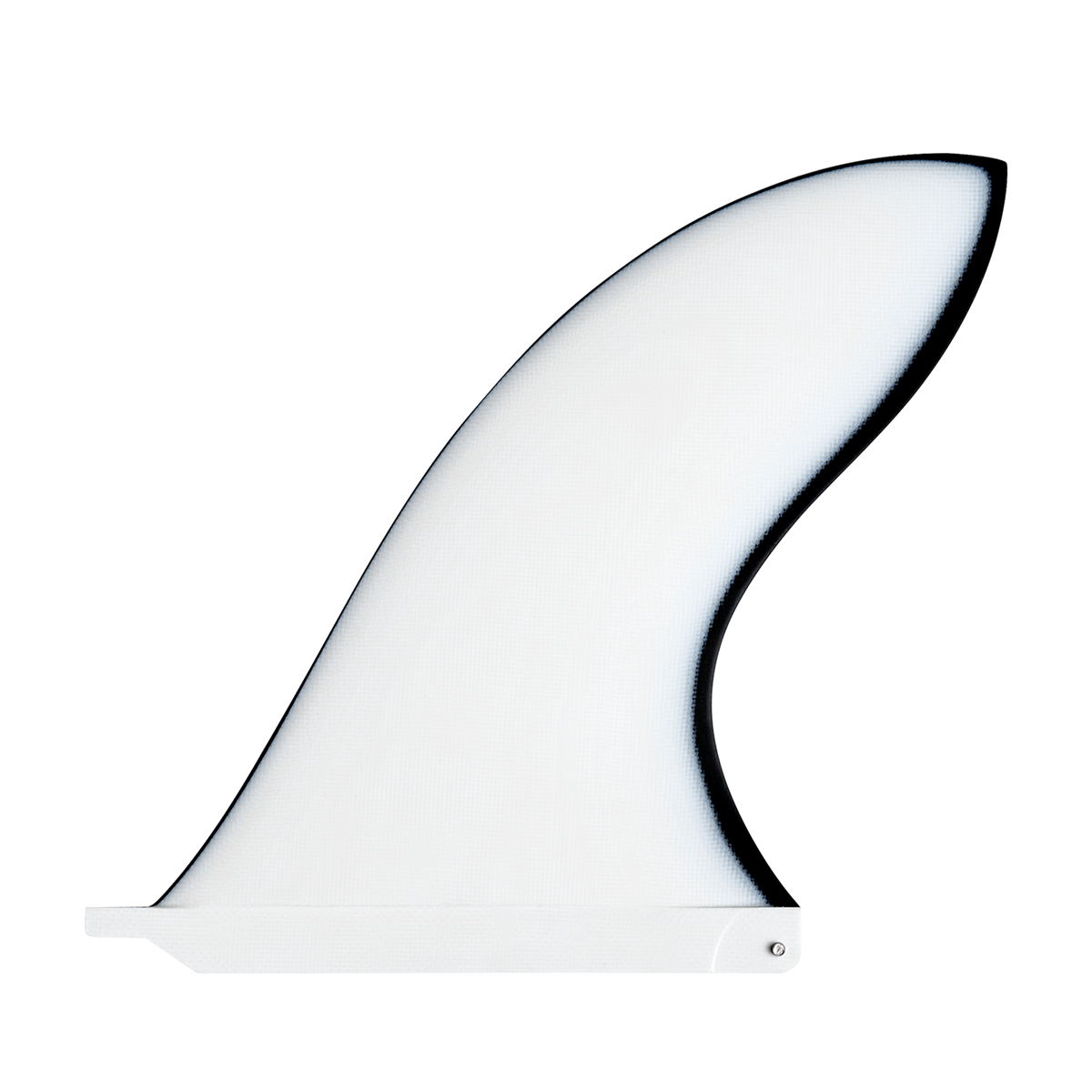
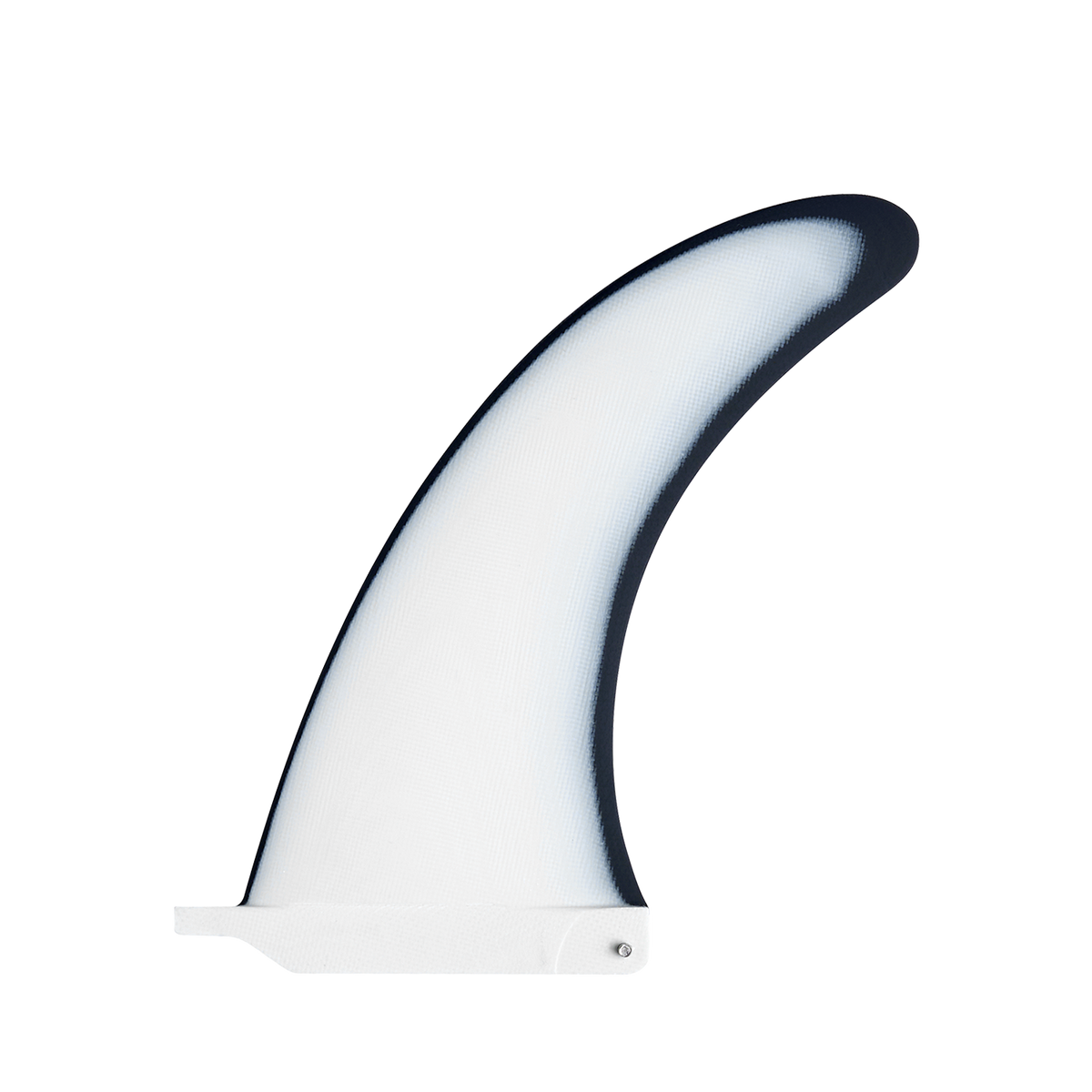
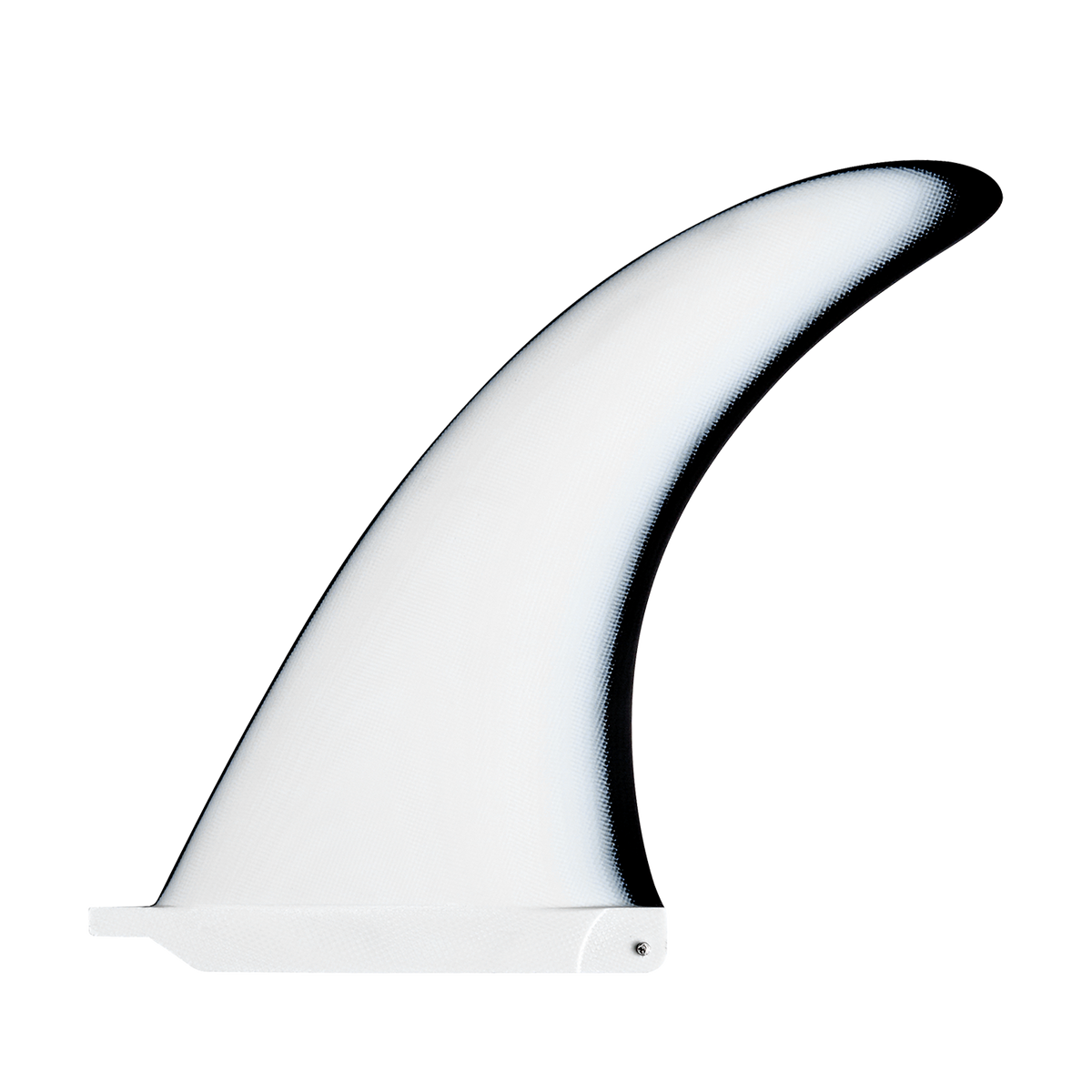
The Poster uses the classic dolphin fin template, renowned for its versatility and natural balance. But it stands out through one key design feature: a thin, refined tip that noticeably changes its behavior.
Its pronounced rake promotes drive and long lines, while its solid base retains control under pressure. But it is above all the thinness of the tip that creates a real difference underfoot.
This refined tip allows the fin to free the board more easily out of turns, introduces flex into the upper section of the fin and improves acceleration and fluidity through transitions.
In practice, the board retains drive through the line but feels livelier and smoother when linking turns. Where some dolphin fins with fuller tips lock the trajectory in more firmly, the Poster offers a more nuanced feel: it holds the line without freezing the board.
This makes it an extremely versatile fin, capable of generating speed through weak sections while remaining smooth enough to link natural turns and free enough to correct your line effortlessly.
It is not the highest-performing option for extreme noseriding, where a fuller fin will offer more stability, but it excels when you are looking for complete surfing that blends glide, turns and transitions.

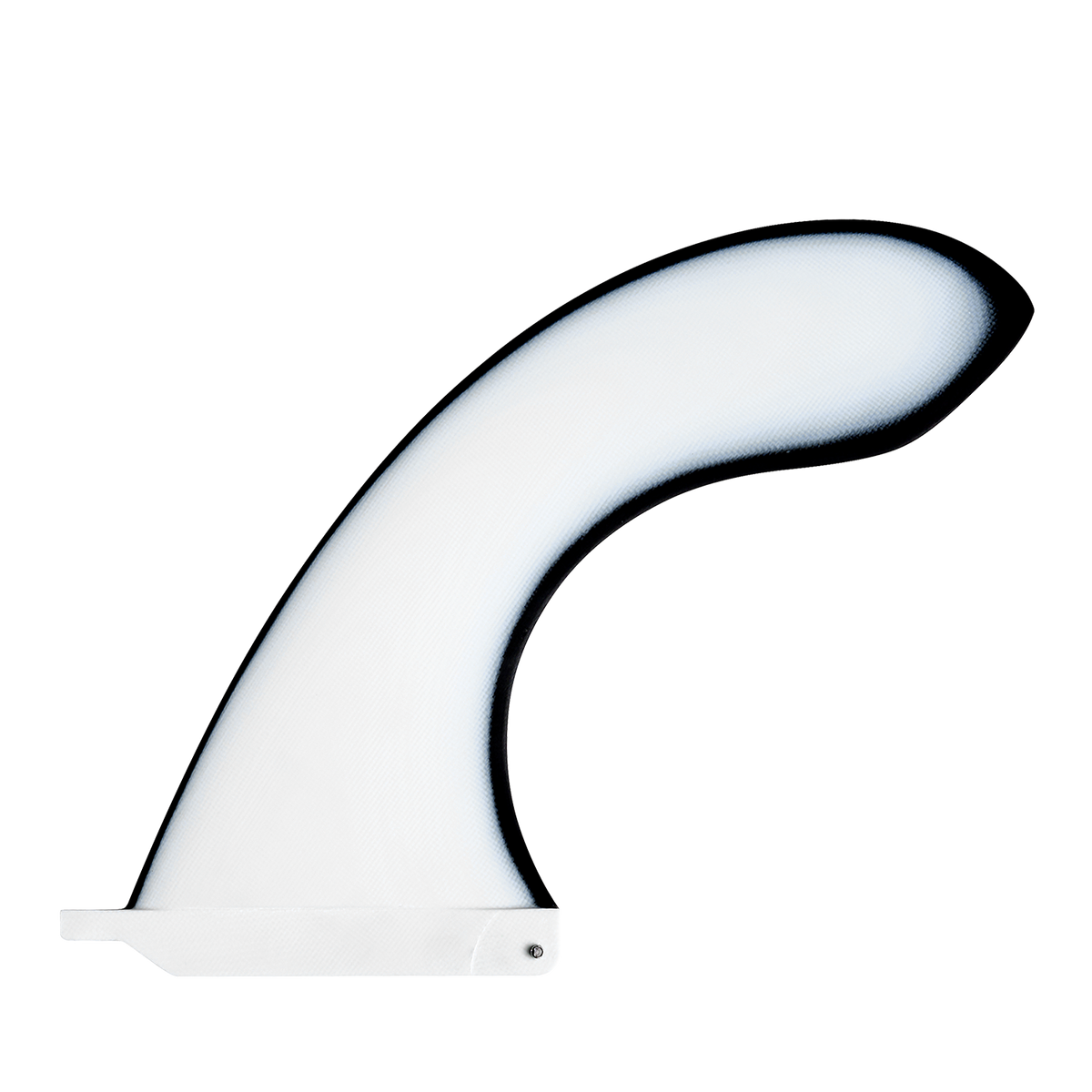
The MyWay is a very distinctive fin, designed as a reworked cutaway. Its central cutout frees the board, while the base and bulb of surface area at the tip maintain drive and control.
It therefore offers a rare combination: plenty of maneuverability for a fin that still retains genuine traction. Its pronounced rake gives it strong projection, while the cutaway removes the locked-in feeling and leaves real freedom under the back foot.
It works very well on a variety of longboards, mid-lengths, and even in certain 2+1 setups when using the smaller sizes. It is a fin for surfers who like to test, adjust and explore less conventional lines.
If you are looking for a single fin that breaks away from traditional templates while remaining highly effective, the MyWay is one of the most interesting options.

The Amalgam features a narrow, upright tuna-fin template. It is one of the liveliest and most technical fins in the range.
With little base, limited surface area and an upright outline, it prioritizes glide, pivot and precision. It completely frees the board, allowing tight turns, fast bottoms and highly precise surfing. In return, it requires more accurate pressure from the rider and enough depth to retain control.
It is particularly well suited to mid-lengths, technical single-fin boards, boards with little rocker, and can also work as the center fin in a very loose 2+1 setup.
It is a fin for surfers who want to feel the board breathe, accelerate and pivot without being held back by too much surface area.

The Fewer is a slimmer, more technical interpretation of the dolphin fin. Its pronounced rake provides drive, while its reduced surface area limits drag and creates a stronger sensation of speed.
It remains controllable thanks to a solid base, but offers more freedom than fuller templates. Its lines are long, its glide is sensitive and its behavior more playful. It loves long waves, point breaks and open sections where you can draw lines and let the board run.
It works very well on mid-lengths, hulls and 7’ to 9’ single-fin boards, and can also be paired with side bites in certain setups.
It is a more technical, more subtle fin aimed at surfers looking for speed, style and precision without relying on a large, highly locked-in surface area.

The Mach was designed for mid-lengths and boards that need a real presence under the back foot. With its very wide base, pronounced rake and well-distributed surface area, it provides plenty of control, plenty of drive and an excellent ability to handle powerful pressure.
It favors long turns, wide bottom turns and committed lines. In waves with plenty of face, it creates a continuous rail-like feel, especially when paired with sidebites.
It is a more “serious” fin, less playful than an Amalgam or Fewer, but extremely reassuring and effective when the surfing is based on power, angle and projection.
On a mid-length, a fast-rockered egg or a high-performance transition board, the Mach is an excellent choice.

The Clinch can be seen as the Poster’s more stable little sister. Its dolphin template remains highly versatile, but with slightly more surface area and a little more control.
It works as a single fin or in a 2+1, making it an excellent fin for modern longboards that alternate between time on the nose and more committed rail surfing. It retains genuine glide and some flex, while providing more reassurance as wave size or power increases.
It is a very easy model to recommend to someone looking for a single fin capable of covering a wide range of situations, from small beach breaks to more substantial waves.

The Quirk follows the dolphin-fin concept but with more surface area, more control and a greater ability to handle solid conditions.
It retains good maneuverability and excellent glide while adding more secure support through powerful sections. It suits modern longboards, versatile single-fin boards and surfers who want to maintain flow while increasing control.
In a 2+1, it becomes a very serious tool for attacking with confidence. Used alone, it can be an excellent all-round single fin for boards that need more stability than a Poster or Fewer.

The Slash is not a single fin in the classic sense. It is a center fin designed to work with sidebites in performance-oriented 2+1 setups.
Its mini-thruster template allows it to maintain drive, control and maneuverability in smaller sizes. It is an excellent option for performance mid-lengths, performance longboards and 2+1 setups looking for more bite, more rail-to-rail response and greater efficiency in powerful waves.
If the goal is not the pure glide of a classic single fin but a modern center fin for a highly dynamic setup, the Slash becomes an obvious choice.

 Surfer: Vilayta, GONG team rider, on the Carter EPS.
A pure noseride fin, with a deeply anchored tail and maximum stability at the nose
→ Dfeatr or Royal
A classic log fin, but with more line and style through turns
→ Lokin, Ron D or Dred
A versatile fin capable of working in a wide range of conditions
→ Poster or Clinch
A more technical single fin, lively and unlocked
→ Amalgam or Fewer
A powerful and committed single fin for a mid-length
→ Mach
A center fin for a performance-oriented 2+1
→ Slash

For large retro logs and noseriders, sizes from 9” to 11.5” make the most sense. The more you prioritize the nose, hold and stability, the larger you should go.
As always:
The right choice therefore depends on the board, the surfer’s weight, the speed of the waves and the way you want to surf.
The minimum size favors: glide, speed, maneuverability
The maximum size favors: stability, control, noseriding
For example, for a 9'2 longboard:
Lighter surfer → slightly smaller size.
Heavier surfer → slightly larger size.
A simple rule is to choose a fin roughly one inch larger than the board’s length. This rule works particularly well for classic longboards and noseriders. On more modern or shorter boards, you can reduce the size slightly to favor maneuverability and speed.
Within the same fin range, the difference between two sizes, for example 10" and 10.5", may seem minimal, but it noticeably changes the board’s behavior.
Example: Which size should you choose between 10" and 10.5" on a 9' longboard?
With 10":
With 10.5":
The 10" will suit a versatile longboard or a surfer who likes to turn more. The 10.5" will be better suited to a log focused on noseriding.
You can also adjust according to the surfer’s weight, on a 9’6 longboard with the same fin:
Weight directly influences the pressure applied to the fin, and therefore the surface area required to stabilize the board.
In weak, slow waves, a slightly larger fin will help slow the board down and keep it in the pocket.
In fast or hollow waves, a slightly smaller fin will make transitions easier and provide more freedom through turns.
When you are hesitating between two sizes, ask yourself:
Larger → stability, noseriding, locked-in lines
Smaller → glide, speed, freedom.
 Surfer: Evelin, GONG team rider, on the Deano with a Poster fin.