Your cart is empty!
It's flat around here...
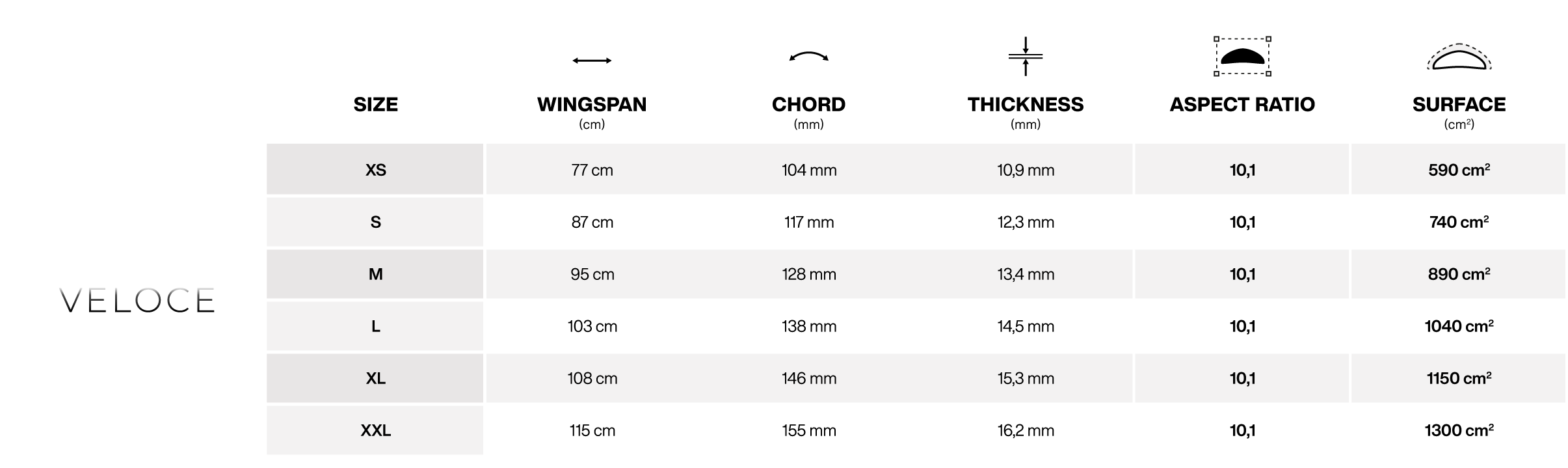
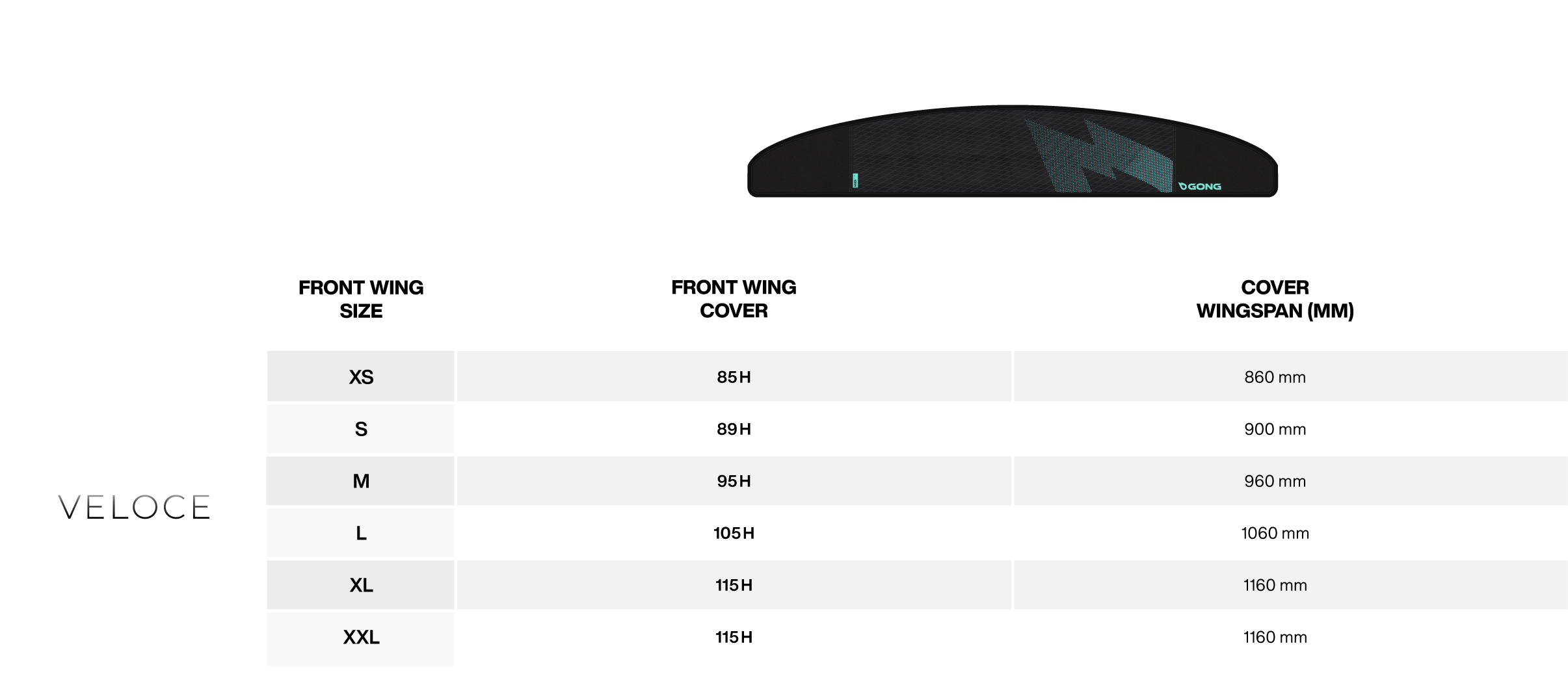


The high aspect front wing for glide, freefly, downwind, pumping, and long connections, with exceptional performance and impressive manoeuvrability for its wingspan.
The Veloce V3 Atmo Perf Series is a brand new addition to the Perf Series range. It adopts the wing shape of the Veloce V3 Team, already available in full carbon, and introduces it for the first time to the Perf Series technology.
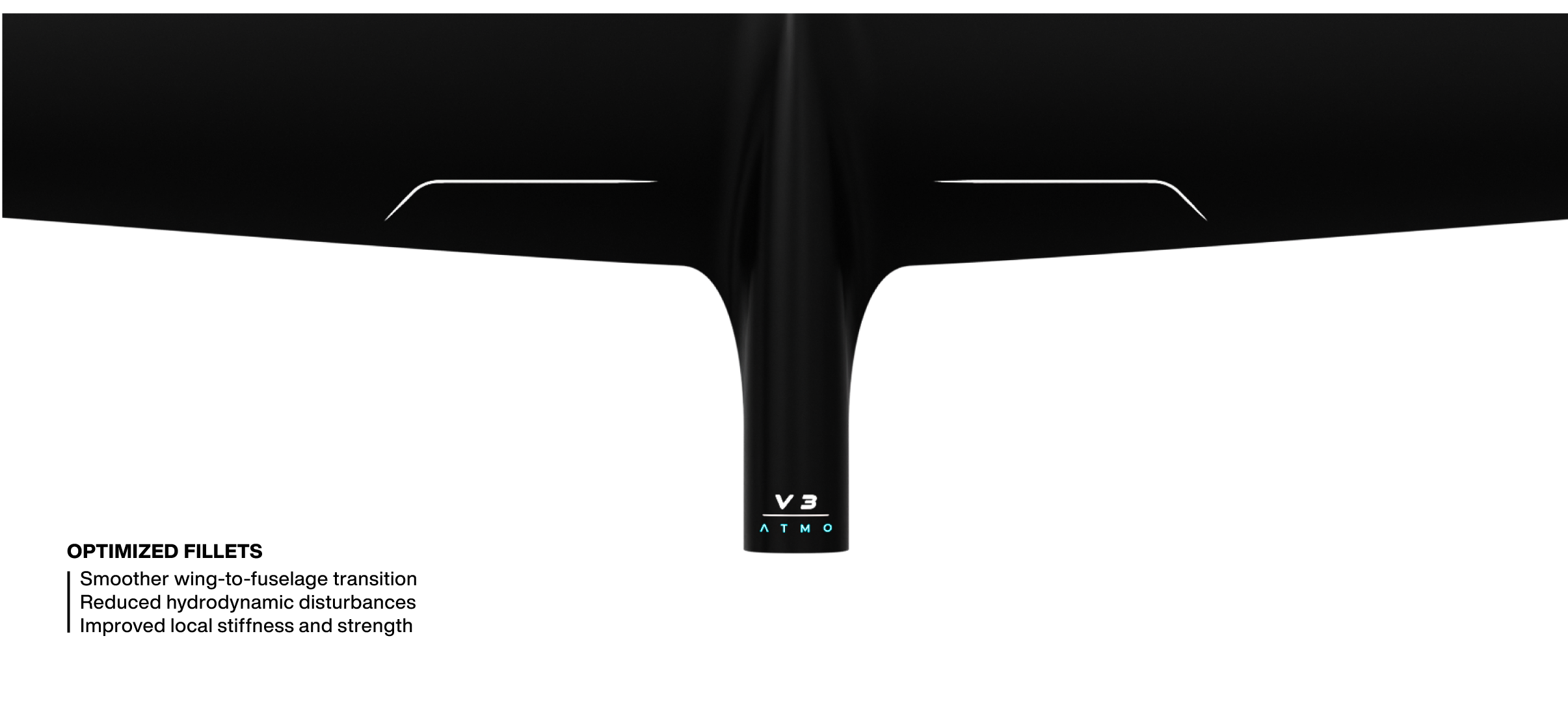
The main behaviour remains what made the Veloce V3 Team successful: very high aspect ratio, glide, freefly, pumping, and performance. The transition to the Perf Series allowed us to optimize certain peripheral elements of the main design, notably the fillets near the fuselage, to improve the cleanliness of the joints, the finish, and the hydrodynamic quality around the connection.
This is the fast front wing that glides. It is designed to fly for a long time, maintain its speed, pass through lulls, pump with less energy, connect waves, transition from one swell line to another, and maximize freefly time.
Its aspect ratio of 10.1 provides very high performance. The wing requires little energy to maintain flight and retains an impressive average speed. You can feel it gliding far, maintaining its inertia, and transforming each push into distance.
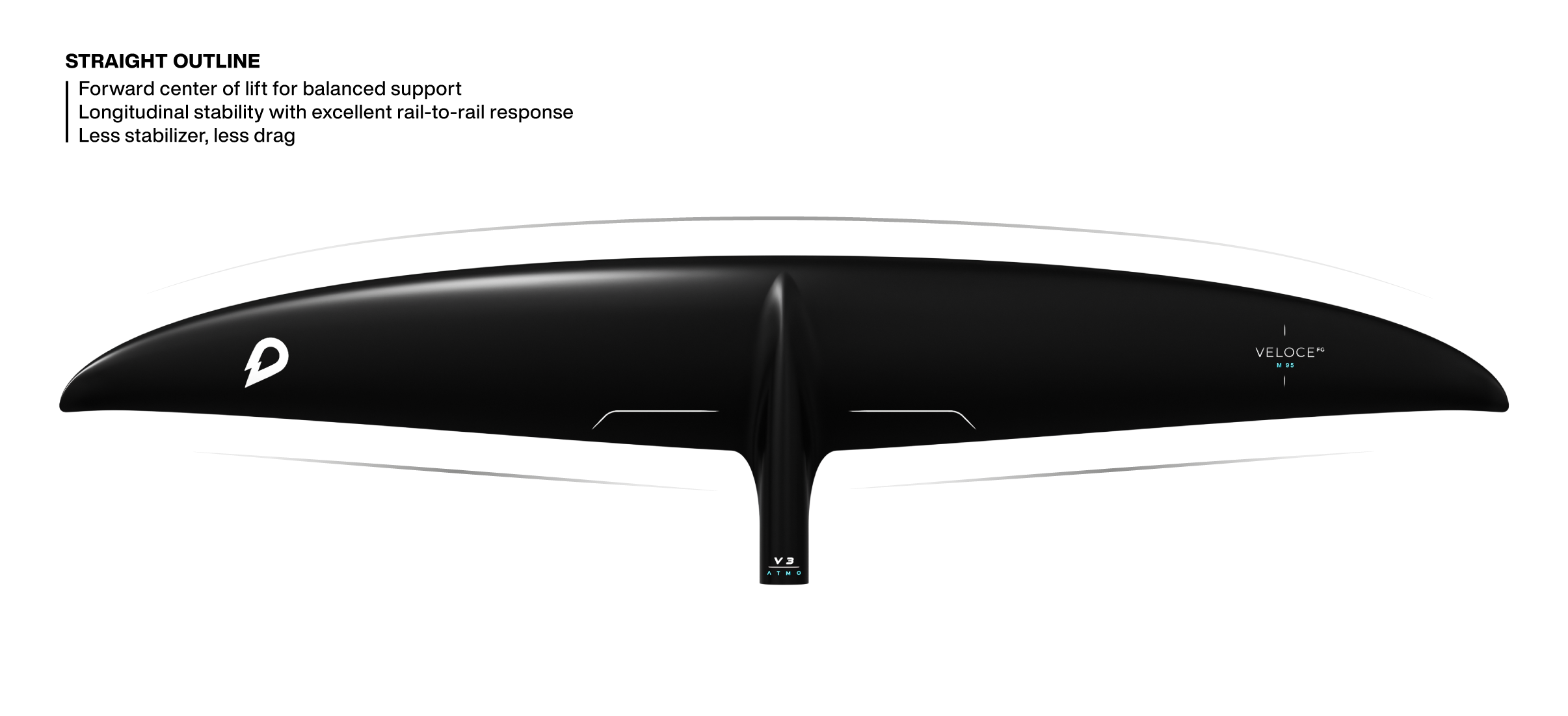
Its straight outline advances the center of lift and increases the stabilizer's lever arm. This allows for a reduction in stabilizer surface, decreased drag, and even more glide freedom. The Veloce is not just a front wing: it is designed to optimize the complete balance of the setup.
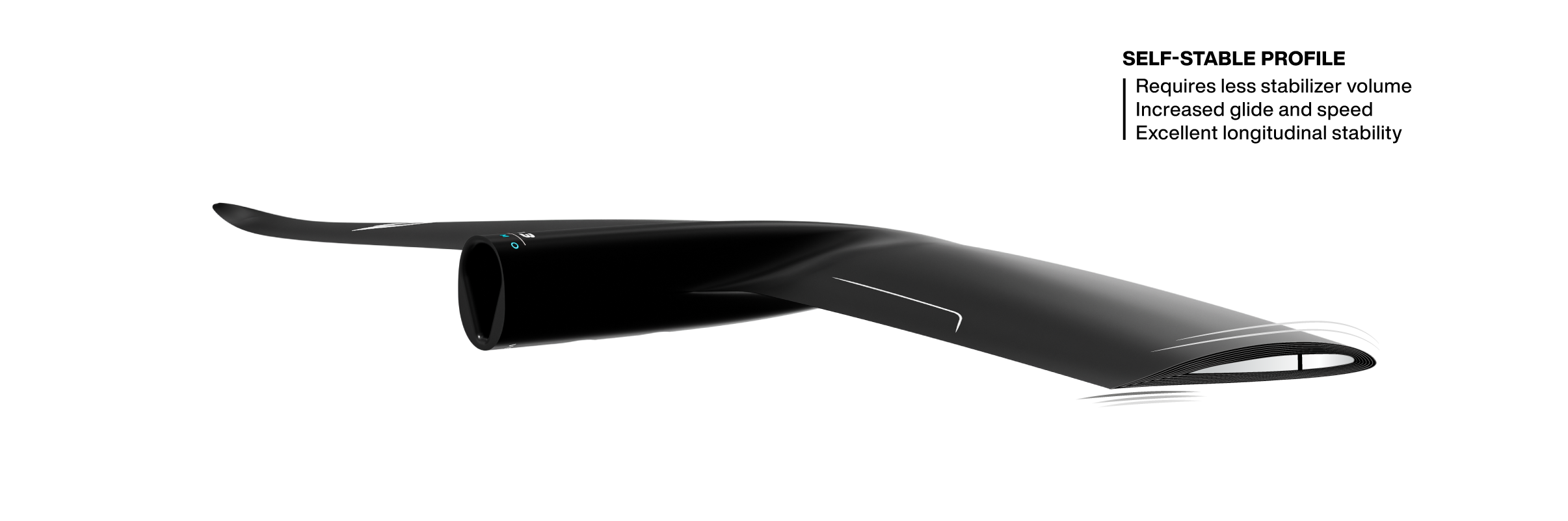
Its self-stable profile, with a concave on the upper surface, reinforces this logic. It provides a steady, efficient flight with less need for stabilizer volume and excellent longitudinal performance. In pumping, this profile adds bounce: the wing naturally rises, maintains speed, and allows for longer distances with more economical effort.
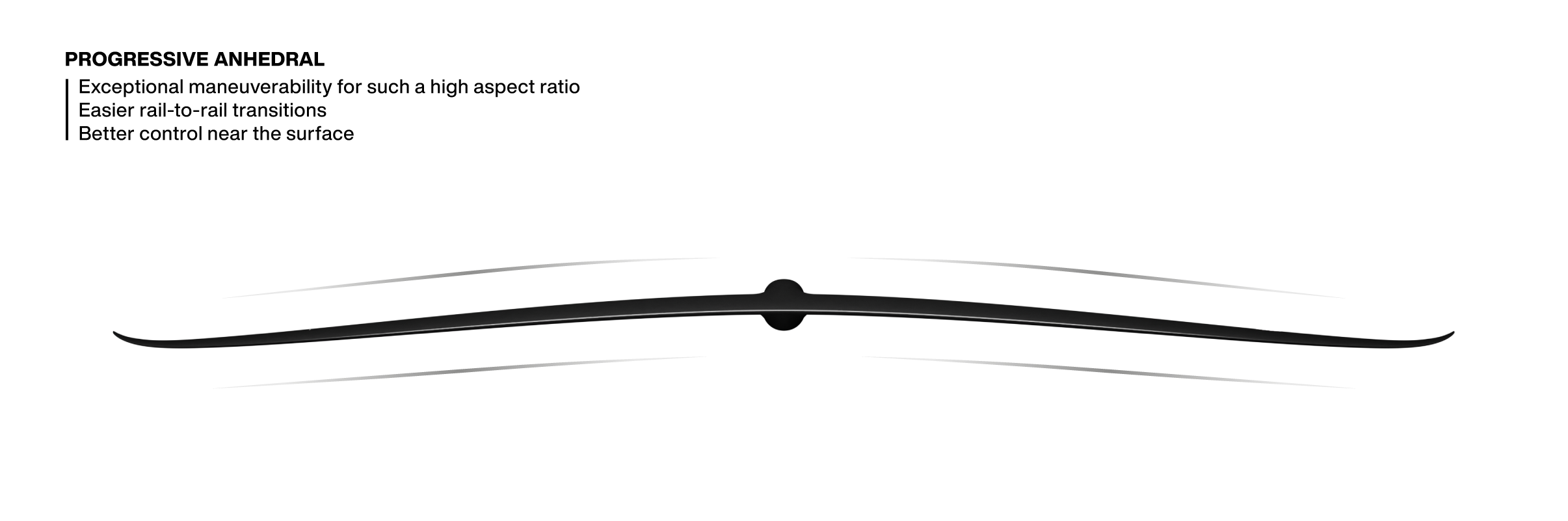
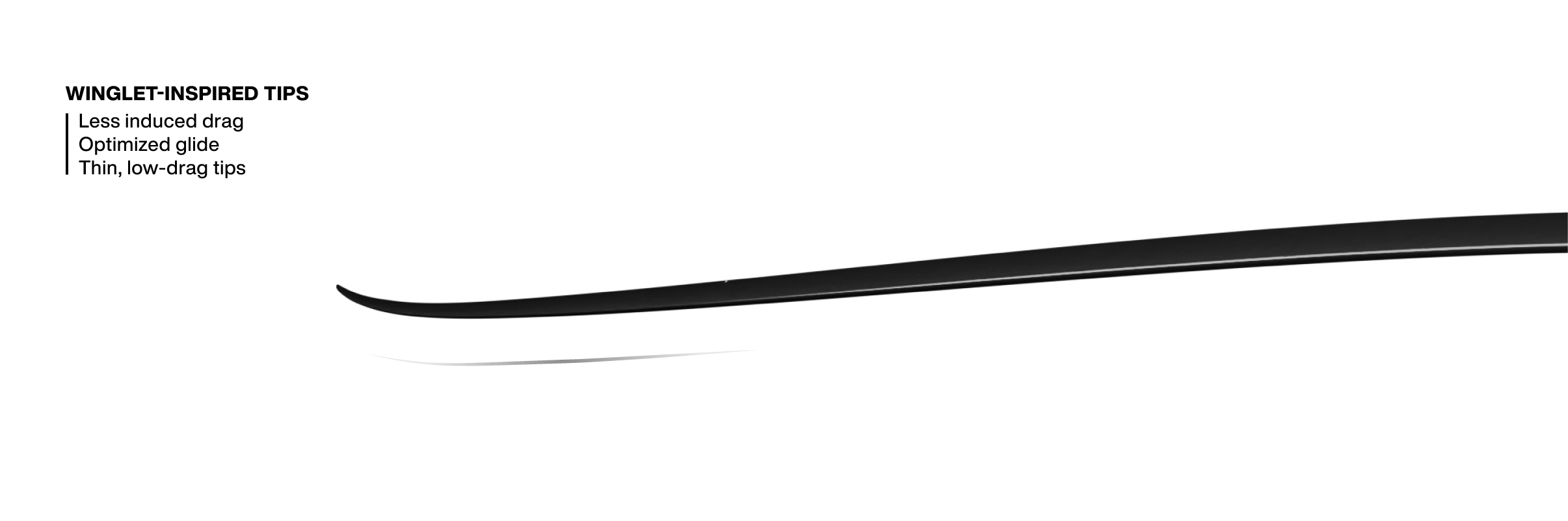
The pronounced and progressive anhedral makes the Veloce surprisingly manoeuvrable. Despite its high ratio, it transitions well from one rail to another, maintains control, and remains stable in carving turns. The fine, free, and raised tips like winglets reduce induced drag and contribute to this very clean glide.
In wing foiling, it excels in freefly, advanced lightwind, and bump surfing. In surf foiling and SUP foiling, it allows for further connections, surfing small peeling waves, and exploiting weak swells. In downwind, it helps maintain speed between bumps and remains very manoeuvrable. In pumping, it provides superior performance for those who want to fly far.
Built in the Perf Series, the Veloce V3 Atmo makes this high aspect ratio shape accessible with solid, forgiving, and repairable prepreg fiberglass technology, while maintaining the V3 Atmo precision standard and the self-locking SuperLock connection.
The Veloce V3 Atmo Perf Series is the wing for gliding longer, faster, pumping more efficiently, connecting further, and accessing a high-performance Team V3 shape at a unique price.

The straight outline of the Veloce maximises longitudinal stability and performance. By moving the wing's centre of lift forward, it artificially increases the lower's front to rear span and gives more leverage to the stabiliser.
This design allows for a reduction in the stabiliser surface needed to balance the foil. Less rear surface means less drag, more glide, more speed, and a freer flight. This is one of the great secrets of the Veloce's performance.
This outline also provides a lot of comfort in bump descents, swell lines, and freefly phases. The wing remains steady, predictable, and longitudinally stable, allowing you to focus on trajectory, rhythm, and maintaining speed.
Yet this outline also retains formidable manoeuvrability with most of its surface at the heart of the wing, creating a pivot zone that enhances rail to rail. Unlike pure glide wings, the Veloce Perf loves carves and proves to be a true surfer in its style.
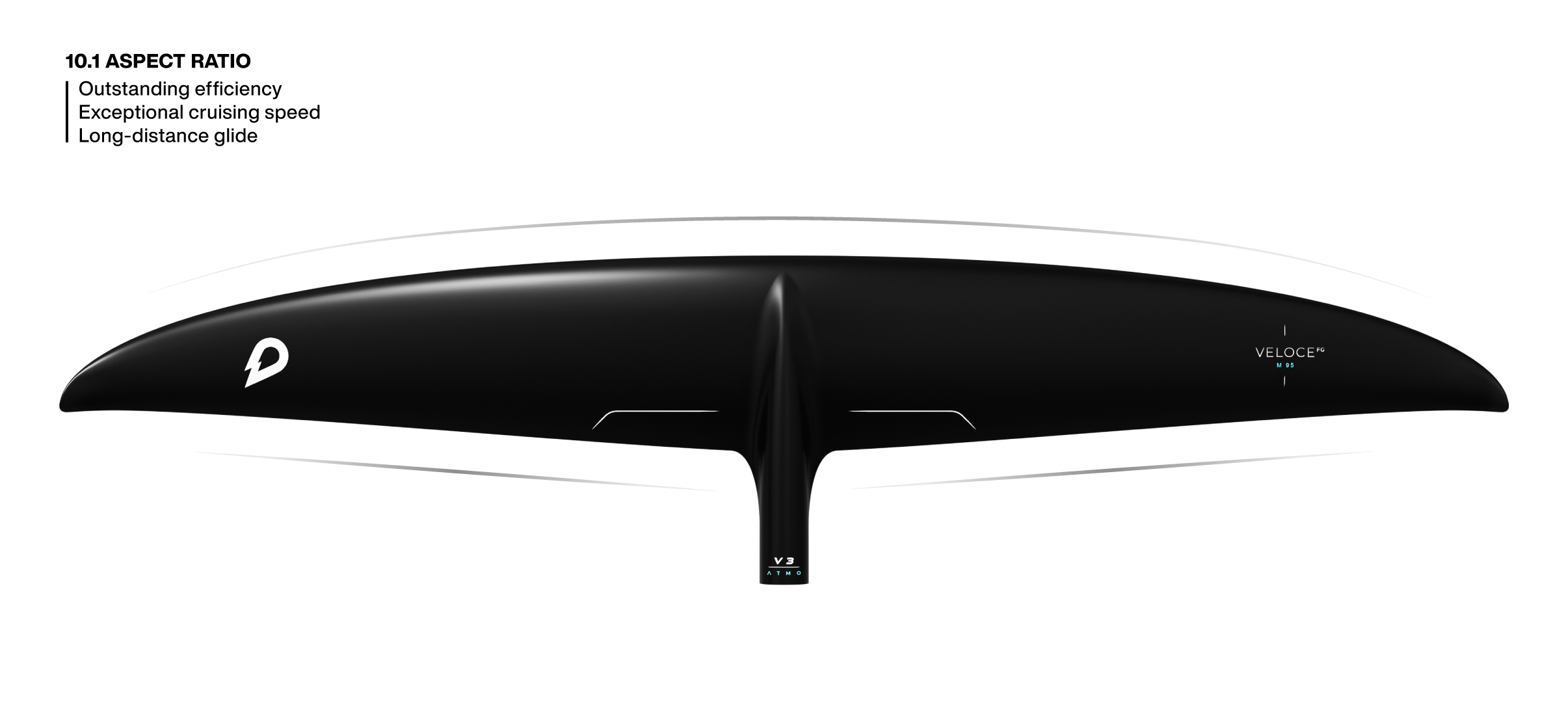
With its aspect ratio of 10.1, the Veloce enters the very high ratio category. This ratio provides exceptional efficiency: the wing glides far, maintains its speed, crosses lulls, and requires little energy to keep flying.
This ratio is particularly useful in freefly, downwind, pumping, and planing waveriding. Every push translates into distance. The foil loses less speed between two bumps, two waves, or two pumping cycles.
Despite this high ratio, the Veloce remains very controllable thanks to its progressive anhedral and free tips. You benefit from the glide of a very high ratio wing without having a rigid foil under your feet.
The Veloce V3 Atmo Perf Series retains the shape of the Veloce Team V3, with specific work on the fillets near the fuselage. This area is critical: it connects the wing to the connection system and concentrates both mechanical stresses and potential hydrodynamic disturbances.
Clean, continuous, and precise fillets improve the transition between the wing and the fuselage. This limits flow disruptions, parasitic drag, and micro-turbulences in an area where every detail matters.
This optimization also contributes to local rigidity and strength. The forces transfer more cleanly between the front wing and the V3 connection, enhancing steering precision and the quality of feedback underfoot.
The Veloce's profile features a concave on the upper surface that gives it an autostable character. This design helps the wing maintain a very stable longitudinal balance, with less need for stabilizer volume. By reducing dependence on the stabilizer, the rear surface can be decreased, thus reducing the aircraft's total drag. The foil gains in glide, speed, and freedom underfoot.
This profile also provides a very stable flying sensation, allowing you to push with confidence. The Veloce does not require constant corrections to maintain its trim. It retains its efficiency, maintains speed, and allows you to focus on your trajectory.
The anhedral of the Veloce is pronounced and progressive to make the wing manoeuvrable despite its wingspan and aspect ratio. It frees the tips, facilitates rail to rail transitions, and provides very stable control in carving turns.
Without this anhedral, a wing with this aspect ratio could skid. Here, the Veloce maintains a true ability to reassure, turn, and hold its line. It remains very playful for its level of glide.
This anhedral also brings a lot of confidence close to the surface. The wing can fly high, exploit the slope of a bump or wave, and maintain control without giving an uncontrollable slipping sensation.
The tips of the Veloce are raised like winglets to reduce induced drag and improve overall efficiency. On a very high aspect ratio wing, this optimization is essential to maintain clean glide and high average speed.
These thin, raised tips also contribute to maneuverability. They free up the wing's extremities, limit perceived inertia, and make the foil easier to place in carves.
Finally, they provide real tolerance near the surface. The Veloce can be ridden high in the water to exploit the slope and maximize glide, while maintaining stable behavior. Breaches are never a problem anymore as the wing no longer ventilates tip out.
The Veloce V3 Atmo Perf Series is aimed at experienced riders who want to maximize glide, freefly, pumping, connections, and the overall efficiency of their foil.
In wing foiling, it is perfect for those who already know how to fly smoothly, manage their speed, pump, ride underpowered, seek out bumps, and exploit freefly phases. It requires a higher skill level than a Curve or a Fluid, but it offers much more efficiency and glide.
In surf foiling and SUP foiling, it suits riders who want to exit the wave, pump far, connect waves, transition from one swell line to another, and enjoy small conditions with a truly gliding wing. It is particularly interesting in peeling waves, soft swells, wind waves, and conditions where efficiency matters more than radicality.
In downwind, it is for riders who want a fast, gliding, and efficient wing to maintain speed between bumps. It requires good reading of the water surface but greatly rewards clean trajectories.
In dockstart and pumping, it appeals to those who want to go faster and further than with a fairly easy wing while maintaining more versatility than a purely specialized wing. It requires rhythm but offers a lot of distance and speed while remaining maneuverable.
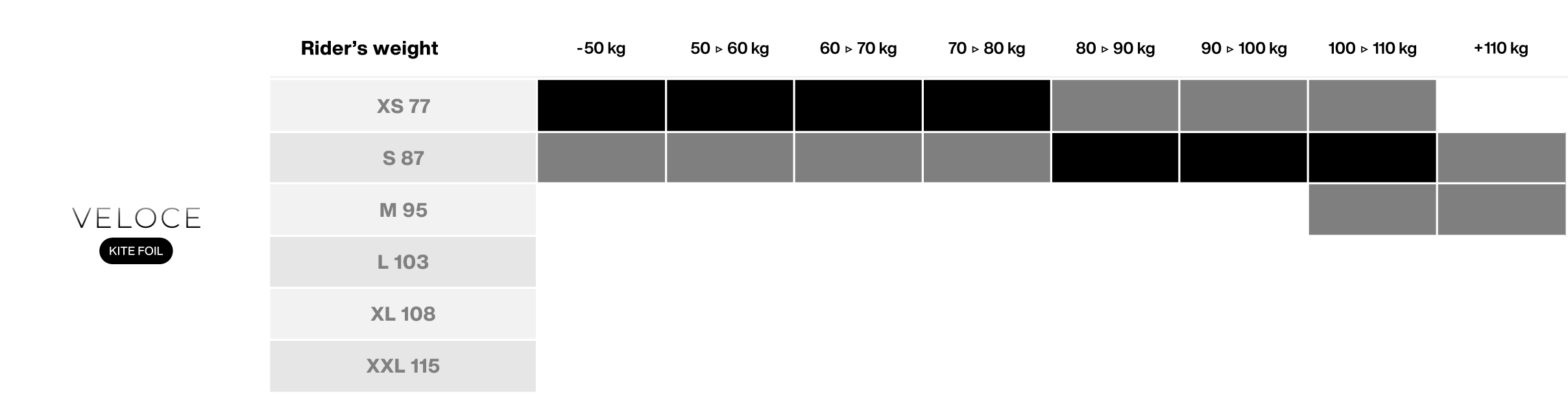
In kite foiling, the smaller sizes may interest riders who want a very gliding, fast, and stable wing capable of maintaining high speed without stalling.
The Veloce is made for those who want an energy-efficient foil, not a foil that requires forceful handling. It demands skill, rhythm, and finesse but offers truly superior glide.
The Veloce is not the right choice for beginners. For learning, stabilizing your first flights, and progressing without pressure, the X-Over or the Ascent will be more suitable.
It is also not the easiest wing for working on your first carves or progressing in a simple freeride program. For that, the Curve will be more accessible, more buoyant at low speeds, and easier to place.
It is not the most responsive wing nor the best suited for very tight carves. For more dynamic, compact, and engaged riding, the Fluid will make more sense.
It is also not the absolute specialist for flat starts or very low-speed pumping. In this area, the Sirus or the Trail will be more suitable depending on the level and objective. The Veloce is a wing for fast efficiency, glide, freefly, and long connections.
The Veloce V3 Atmo Perf Series is designed to maximize glide. Its job is to fly longer, pump further, cross lulls, connect more easily, and maintain a high average speed with minimal energy.
In wing foiling, it excels in freefly, advanced lightwind, bump surfing, and underpowered riding. It allows for early takeoff with the right setup, creates apparent wind, maintains speed, and lets you release the wing longer to let the foil work.
In surf foiling, it is ideal for small peeling waves, soft swells, wind waves, and conditions where you want to exit the wave to catch the next one. It allows for reconnecting on the set, transitioning from one line to another, and extending flights with remarkable efficiency.
In SUP foiling, it provides excellent efficiency for exploiting bumps, small swells, and weak waves. It requires more positioning than an easier wing but offers superior glide.
In downwind, it helps maintain flight between bumps, cross energy gaps, and keep a high average speed. It's a very coherent wing for those who want fast and lasting glide.
In pumping, it is designed to go far with a clean rhythm. It requires more skill than a Trail, less brute force than a less gliding wing, and provides a lot of distance once the tempo is right.
In kite foiling, the smaller sizes allow for fast riding with a stable, gliding, and very clean foil underfoot.
The Veloce is therefore the wing for flight time: it allows you to transform every small water feature into exploitable energy, every support into distance, and every wave into a possible connection.
The Veloce has high efficiency, which often allows for reducing the surface area compared to a less gliding wing while maintaining good lift and glide. It doesn't need to be oversized to function.
Choosing a larger size maximizes the low range, pumping, connections, freefly, small waves, and soft conditions. It's the logical choice for heavier riders, light winds, small swells, or those who want to prioritize flight time.
Choosing an intermediate size provides the best balance between glide, speed, maneuverability, and versatility. It's often the most coherent choice for a rider who wants to use the Veloce in multiple disciplines.
Choosing a smaller size allows for more speed, control, maneuverability, and performance in faster conditions. It's the choice for experienced riders, more powerful spots, or uses where a very gliding but less cumbersome foil is desired.
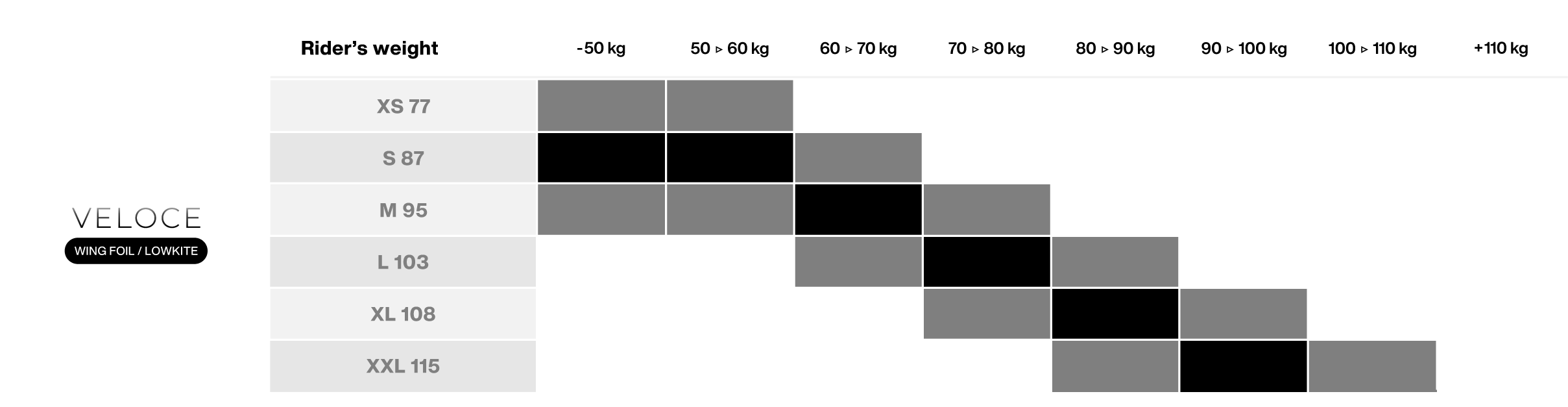
In wing foiling, the size depends on weight, wind, board, and skill level. The weaker the wind, the heavier the rider, or the more the goal is freefly/lightwind, the larger the size needed. The higher the skill level and the faster the conditions, the smaller the size can be.
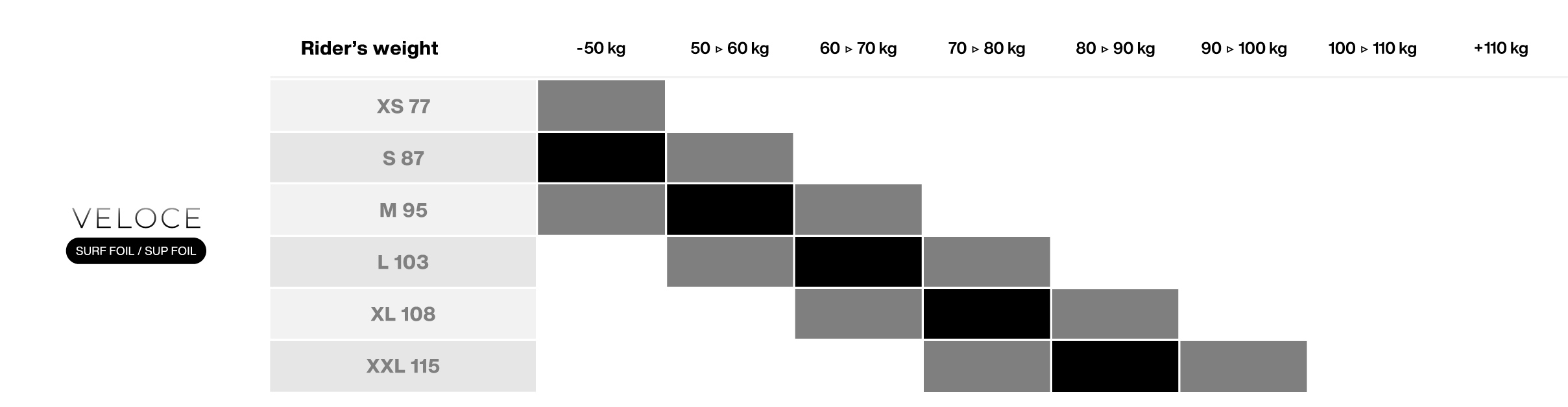
In surf foiling and SUP foiling, you need to find the balance between lift at takeoff, pumping, and maneuverability. A larger Veloce allows for easier connections and exploiting small conditions. A smaller one will be more enjoyable in more powerful waves.
In downwind, choose a size that allows for early takeoff while maintaining the speed needed to follow the bumps. Too large can limit speed and maneuverability; too small can make starts and lulls more difficult.
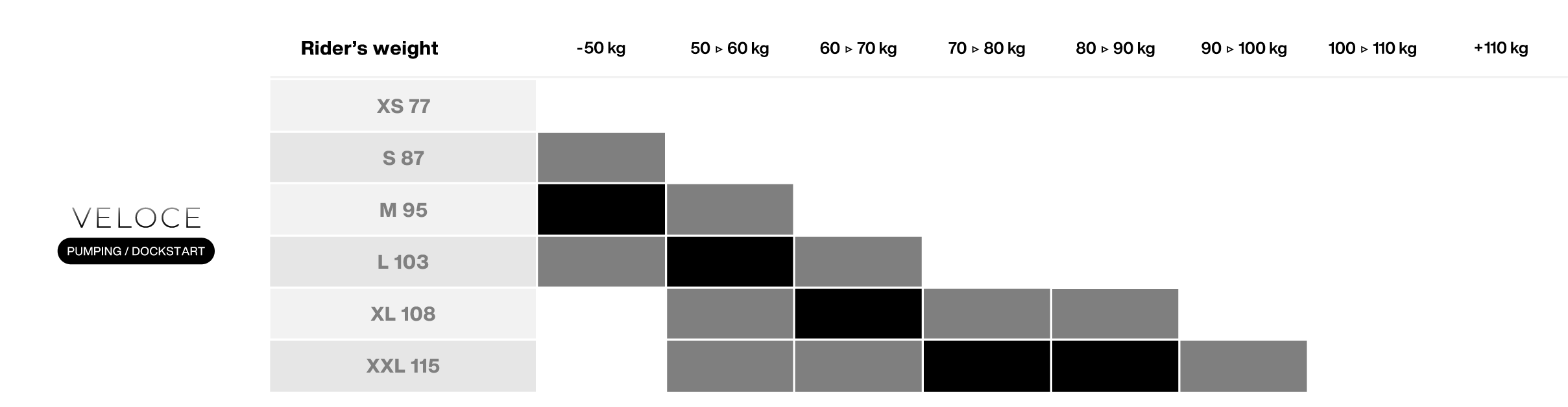
In dockstart and pumping, a larger size provides more comfort and flight time. A smaller size requires more rhythm but gives more speed.
In kite foiling, stick to smaller sizes to maintain control, limit wingspan, and exploit the speed of the setup.
If hesitating between two sizes, choose the larger one if the goal is lightwind, pumping, freefly, or connections. Choose the smaller one if the goal is speed, maneuverability, and faster conditions.
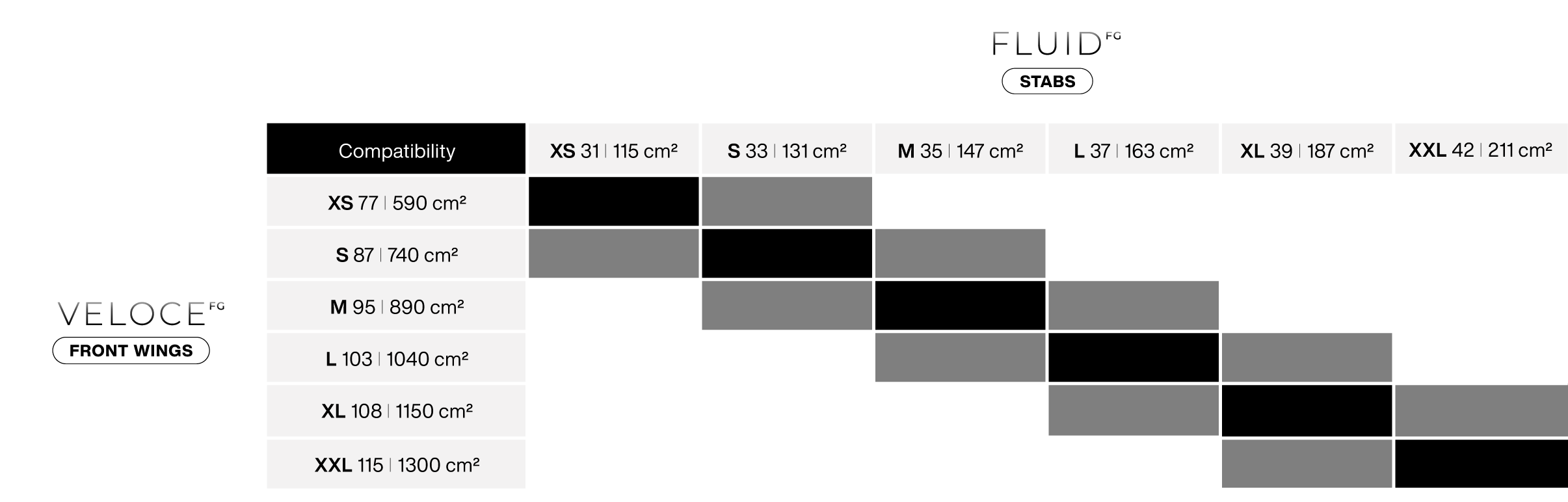
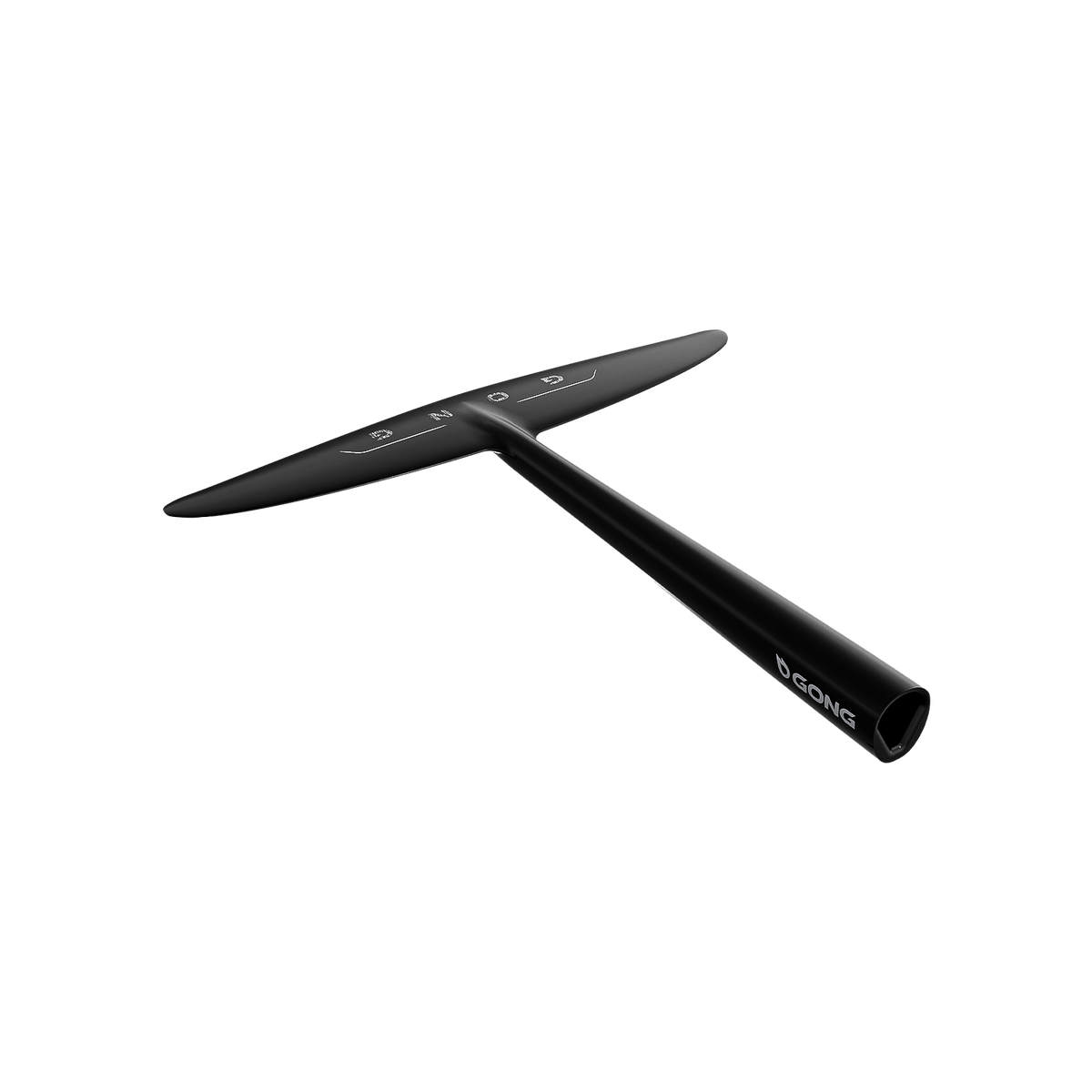
The Veloce V3 Atmo works ideally with a stabilizer that preserves its efficiency. The goal is to stabilize the setup without adding too much drag, in order to maintain the glide, average speed, and economical pumping that make it so appealing.
A larger stabilizer provides more longitudinal stability, more front foot pressure, more comfort during takeoff, and more margin at low speeds. It's the most reassuring choice for discovering the Veloce, for larger front wing sizes, or for very soft conditions.
A smaller stabilizer significantly frees up the foil. It reduces drag, increases speed, improves fast pumping, and gives a freer feeling. It's often the choice of experienced riders who want to fully exploit the Veloce's glide potential.
The Veloce handles thin stabilizers very well, as its outline and self-stable profile move the center of lift forward and reduce the need for rear surface area. This is one of the essential levers for transforming its efficiency into real speed on the water.
The right setup always depends on the front wing/stabilizer combination, as well as the foil's position in the boxes. If the stabilizer is smaller and the front foot pressure decreases, you will often need to move the foil slightly forward to regain natural balance.
If in doubt, start with a comfortable stabilizer to secure takeoff and balance, then gradually reduce to free up speed, glide, and pumping. The Veloce likes fine-tuning: when well-adjusted, it becomes a machine for long flights.

The front wing comes with all the necessary screws to mount it on the fuselage: 2 M6 x 25 mm screws.













GEAR: V3 ATMO FOILS: BUILD YOUR GLIDE
A completely redesigned range, all-new models and revolutionary tail shafts! V3 Atmo is a complete redesign of our foils, from...

GEAR: WHICH VELOCE SHOULD YOU CHOOSE?
Focus on the shape and construction differences across the Veloce range! The Veloce V3 you love is now available in...


