Your cart is empty!
It's flat around here...
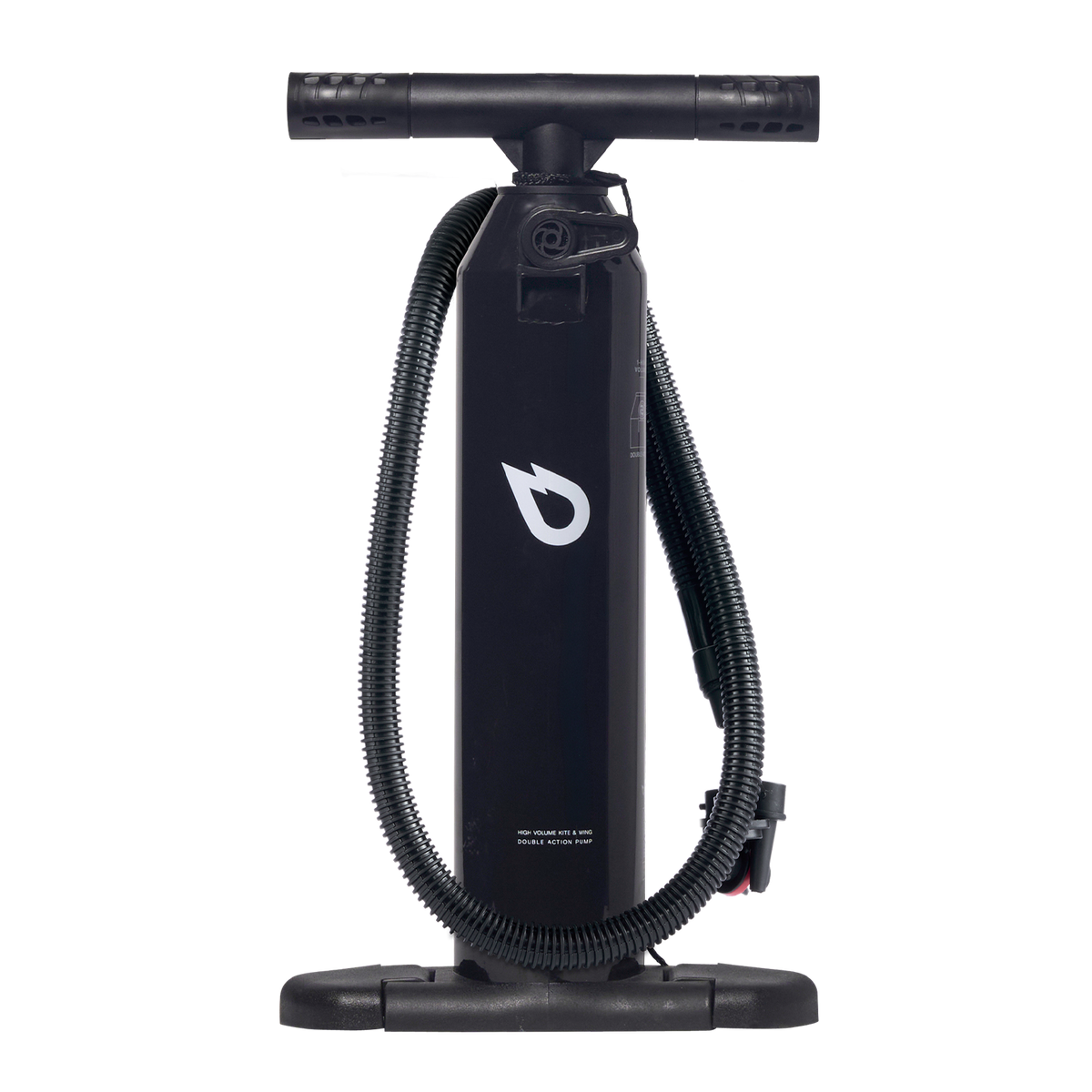
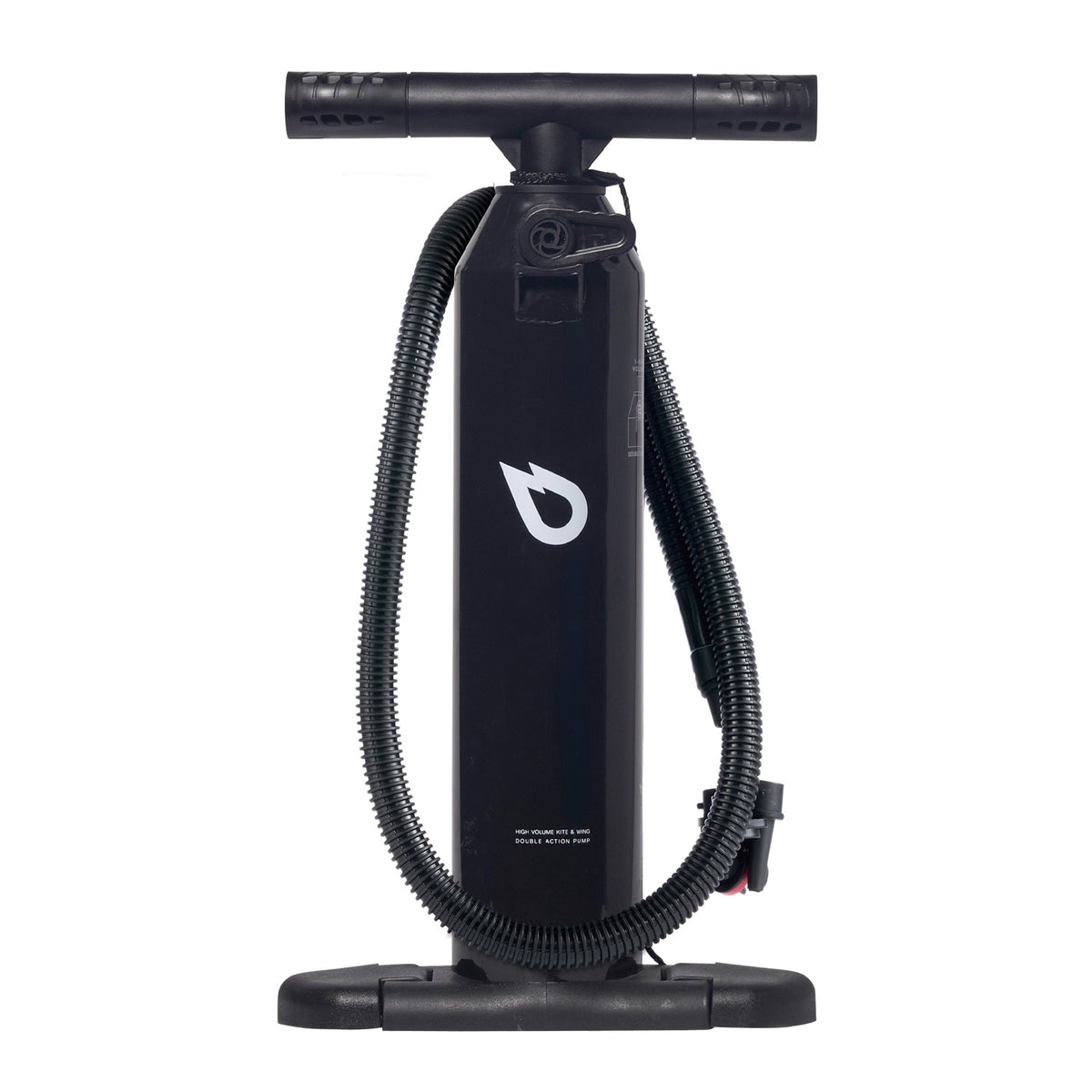
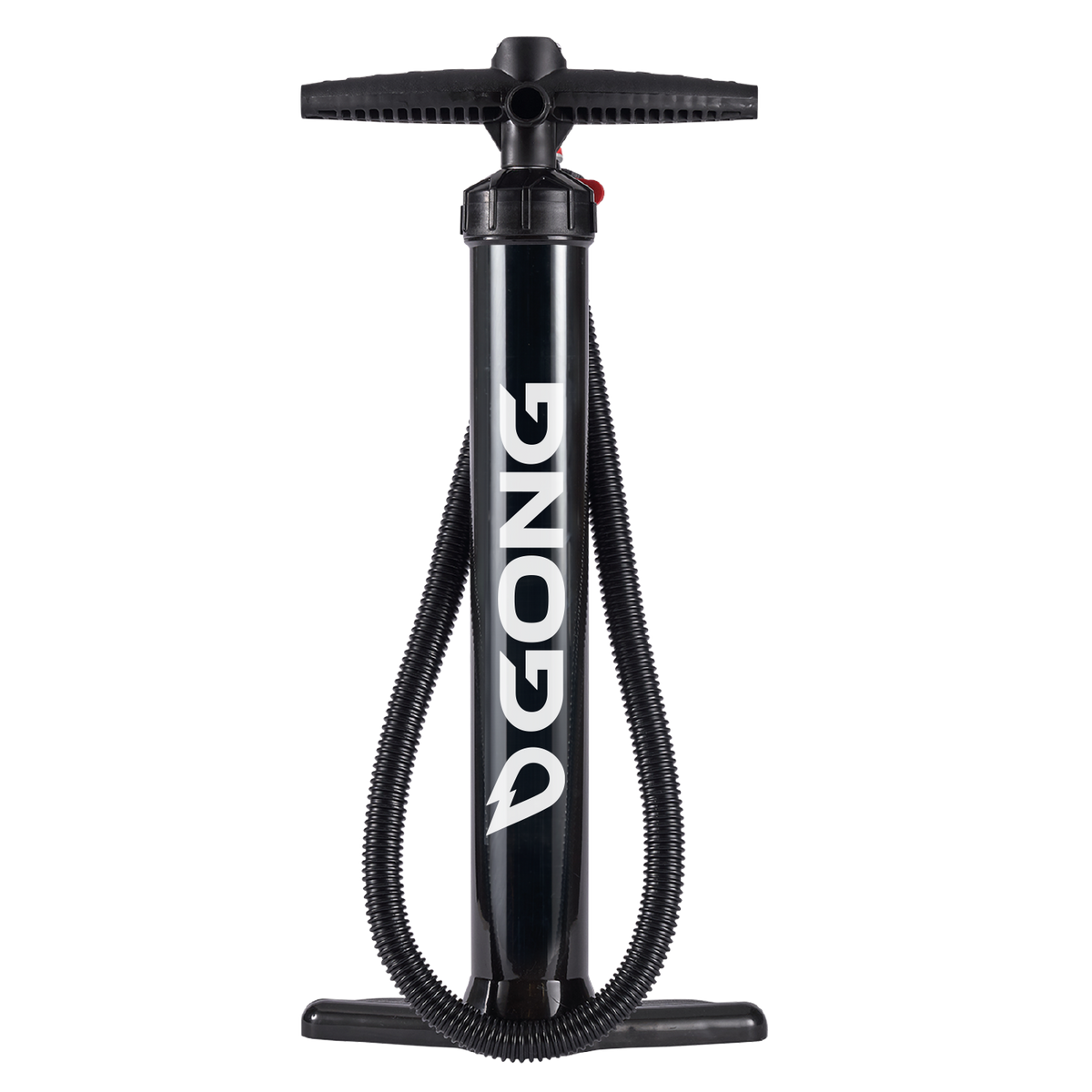
Inspect your pump at least once a year, and more often if you ride regularly or in sandy conditions. Don't wait until the pump becomes difficult to operate: proper cleaning and lubrication can help prevent premature wear.

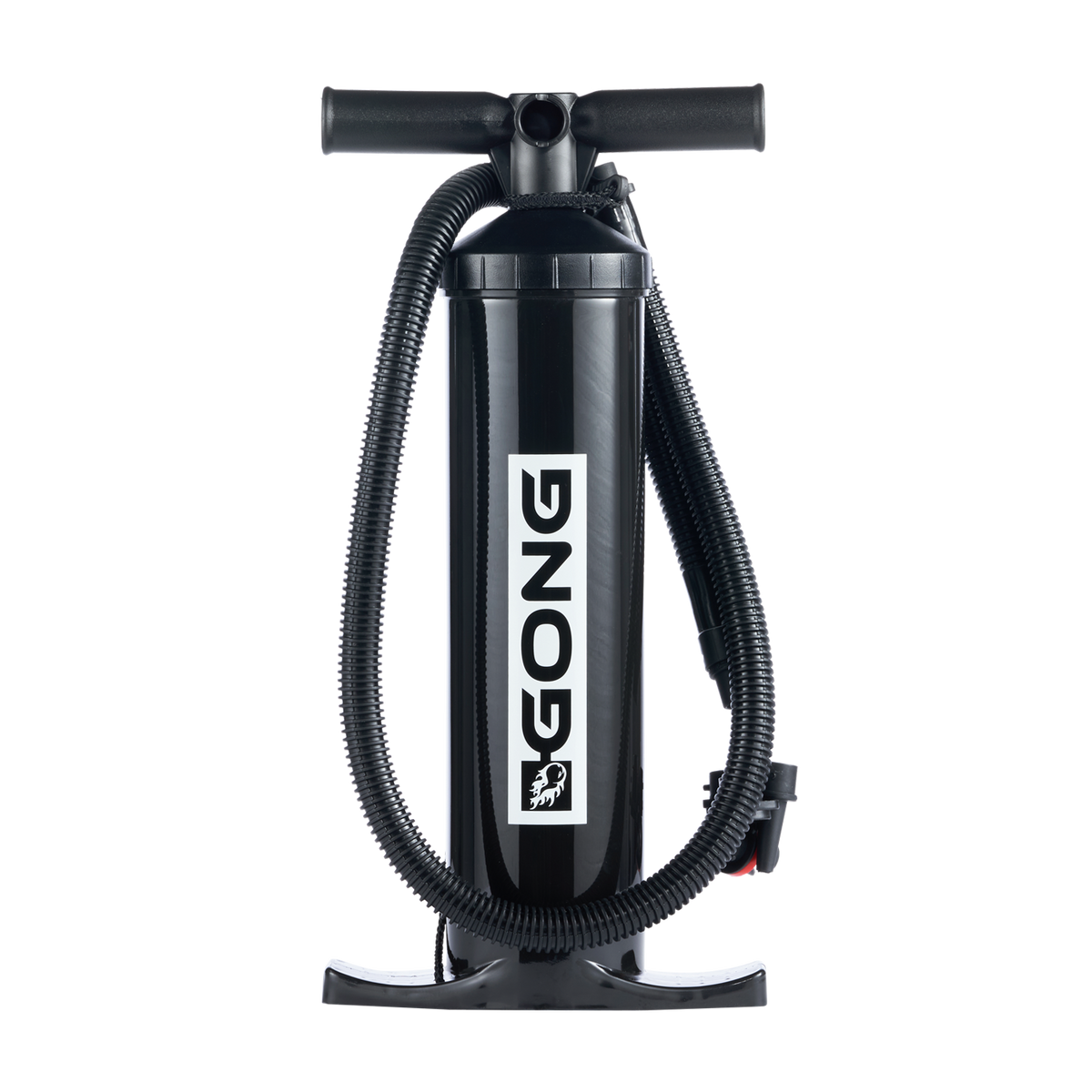
Wing foiler: Lou Thouin, GONG team rider, inflating his Droid Boom with the High Volume Double Action pump.
Place your pump on a clean surface and avoid leaving the hose connectors in the sand. Before connecting the hose, make sure the fittings and your equipment's valve are clean.
If necessary, wipe away salt deposits and dirt from the outside with a slightly damp cloth, then let it dry. Avoid getting water inside the pump body, air intakes, or pressure gauge.
Store your pump in a dry place, out of direct sunlight, and avoid sharply bending the hose.
Pumps generally come lubricated from the factory, but sand, salt, and dust can eventually find their way inside and affect performance. Repeated use may also make cleaning and relubrication necessary.
To maintain your pump's performance, lubricate the friction points with a suitable product, such as a silicone grease compatible with the seals.
The main areas to maintain are:
Over time, grease can collect dirt and change color. It's important to clean the components before applying fresh lubricant.
The grease is originally whitish, but after extended use, it tends to turn black as dirt accumulates or the piston seal begins to deteriorate. The first step is therefore to remove the old grease.
You'll need paper towels and a degreaser.
Once everything is clean, lubricate all the friction points, including the inside of the pump, the piston, and the seal. Then reassemble your pump, and it's ready to use again. Regular maintenance (at least once a year) will extend its lifespan and help reduce your environmental impact.
Don't worry: when you first start inflating a high-volume board, the pressure may be too low to register on the gauge. Some pressure gauges only begin to respond clearly after several pump strokes.
However, the threshold varies by model: 5 psi is not a universal rule. You also can't accurately determine a board's pressure simply by how firm it feels.
Check that the hose is properly connected, that there are no leaks, and that the pressure gauge is securely attached if it's removable. If the needle remains stationary even as pressure builds inside your equipment, have the gauge checked or compare its reading with a compatible gauge known to be working properly.
Always follow the recommended pressure for your equipment and never exceed your pump's maximum pressure rating.
A leak may appear around the valve during the first use or after several sessions. This can be caused by a slightly loose valve, dirt, or a damaged seal.
On certain SUP valves, the outer section screws into an inner section located inside the board. Repeated inflation and deflation may make it necessary to check that the valve is properly tightened.
Use the valve wrench included in your repair kit, and only work on the valve when the board is completely deflated. Tighten it gently, without forcing it, as overtightening can damage the valve.
If the leak persists, contact our after-sales service team. Checking the valve is part of regular board maintenance.
Make sure the hose is securely connected to the pump and that the fitting's seal is present, clean, and in good condition.
A leak can result from a loose fitting, a worn seal, or a damaged hose. Clean and reposition the components before trying again, without overtightening.
Even if you can still inflate your equipment, a persistent leak should be investigated.
Make sure the connector and its seal are compatible with the valve, then remove any grains of sand. Also check the position of the center pin if your valve has one.
Some connectors feature an adjustable pin that operates the valve. An incorrect setting can make connecting the hose or inflating difficult. In this case, follow the instructions specific to your connector: adjusting it doesn't necessarily mean turning it two or three full rotations.
Never force the hose connector onto the valve.
This air loss may be caused by the seal at the end of the hose. Check that it's present, correctly positioned, and in good condition.
The seal must also be the correct thickness for the valve: if it's too thin, air may escape, while a seal that's too thick can prevent the connector from locking into place.
If the seal is missing or worn, replace it with a compatible one.
Squeaking accompanied by friction may indicate insufficient lubrication or dirt inside the pump.
As explained above, clean the surfaces, inspect the piston seal, and apply a thin layer of suitable lubricant. If the noise or resistance persists, check the condition of the components rather than adding more grease.
A whistling sound may also indicate an air leak, so check the hose and its fittings.
This issue may be caused by a displaced or damaged piston seal, a faulty valve, or an air leak.
First, check the fittings and make sure the single-action/double-action selector is set correctly. If your model allows it, open the pump to inspect the piston and its seal.
If the seal has come out of its groove, clean and lubricate it before repositioning it, provided it's still intact. If it's torn, deformed, or worn, replace it.
First, make sure the selector is set to double-action mode.
If the problem persists, a check valve may have shifted, become damaged, or been blocked by sand, preventing it from functioning properly.
To inspect the check valves, follow the disassembly procedure for your pump. Their number and location vary depending on the model. Clean any accessible components and replace damaged parts if necessary.
Regular maintenance will help keep your pump in good working condition for years. After each session, remove any dirt from the outside, keep the connectors clean, and store everything in a dry place, away from direct sunlight.
If a component breaks or gets lost, many parts can be replaced depending on the model, including seals, hoses, connectors, check valves, and pressure gauges.
If you encounter an issue, contact us with your pump's model reference and a few photos so we can help you find the right solution.