Your cart is empty!
It's flat around here...
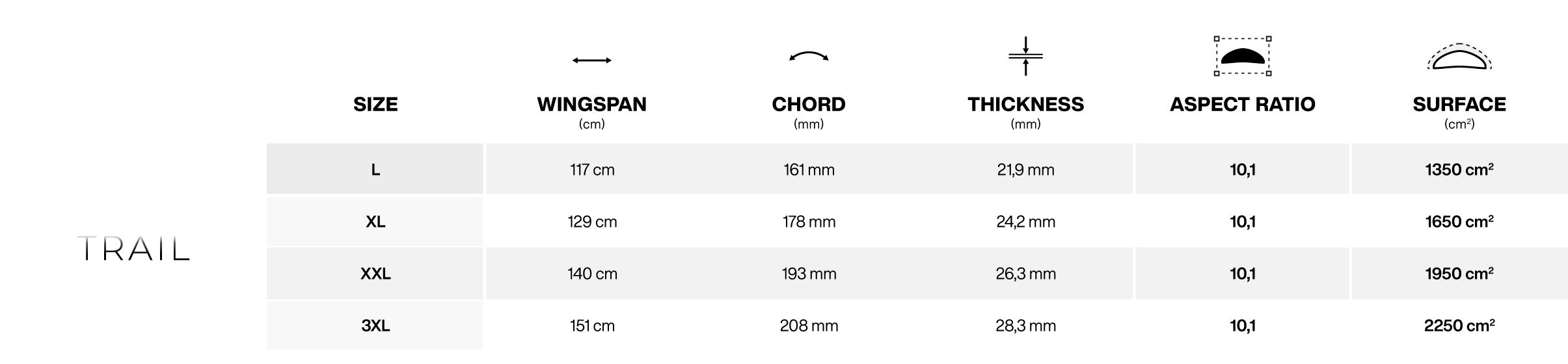


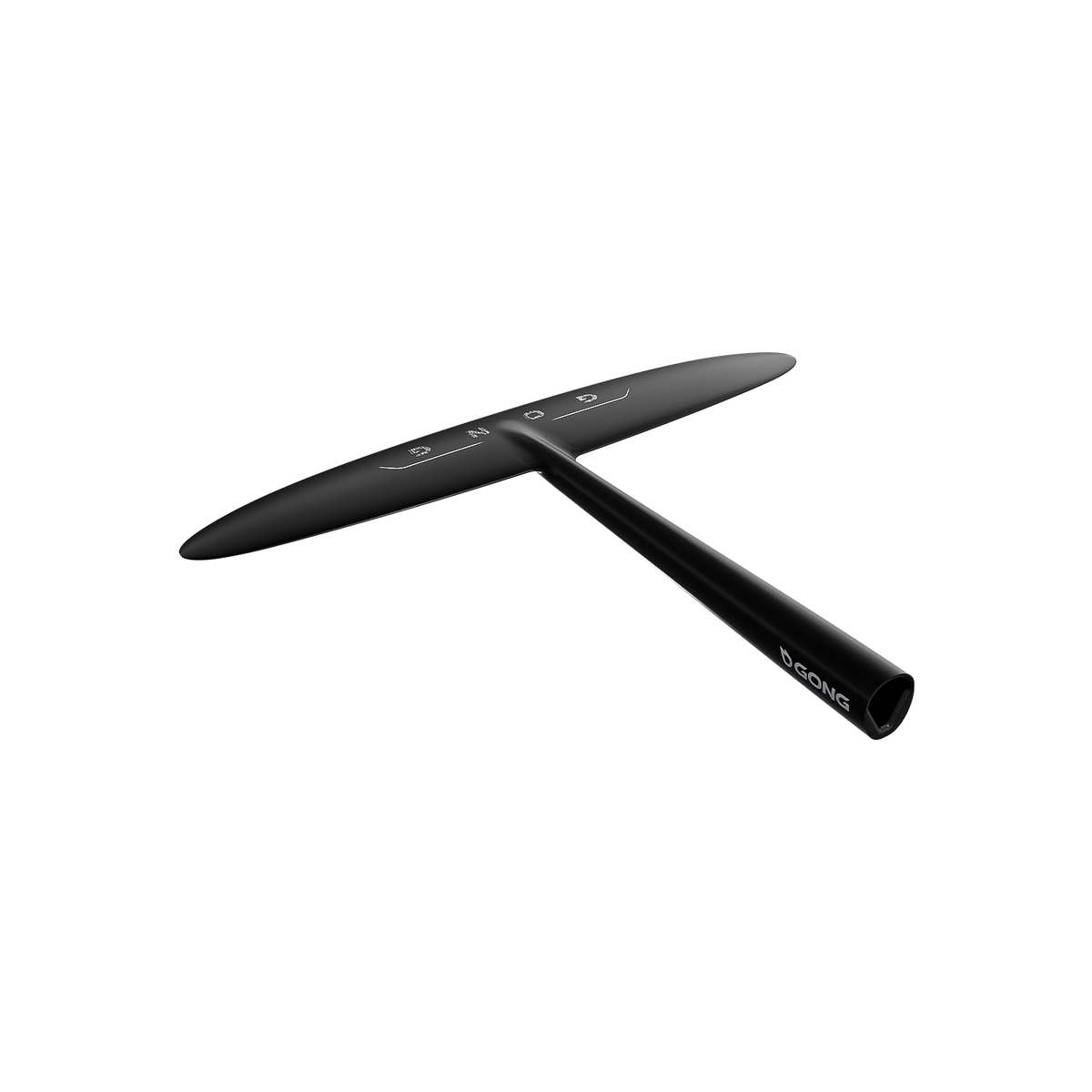
The front wing dedicated to easy pumping, dockstart, beach start, and accessible flat start, with very strong lift, reassuring low speed, and great tolerance for rapid progression.
The Trail V3 Atmo Perf Series is the wing that makes pumping accessible. It is designed to take off very early, provide strong lift, fly slowly, and give you time to understand the movement.
It is the ideal wing for discovering dockstart, beach start, and initial flat starts. It immediately reassures with its clear lift and very readable behavior. You launch, get on the board, the wing lifts immediately, and the foil gives you time to find your rhythm.
Its 9.4 ratio offers the right balance for learning: enough span to glide and cover distance, enough lift to fly at low speed, enough stability to recover from mistakes, and enough maneuverability to correct a trajectory.
The elliptical outline maximizes hydrodynamic efficiency and maintains consistent lift. The Trail does not feel elusive or technical. It easily settles underfoot, remains stable, and allows you to understand what the foil is doing.
Its powerful profile, very tolerant to stalling, is the core of its program. It provides a lot of lift even at the lowest speeds, reducing the urgency of takeoff. You don't need to go fast to fly. You can gradually establish pumping with a simple, vertical, and readable movement.
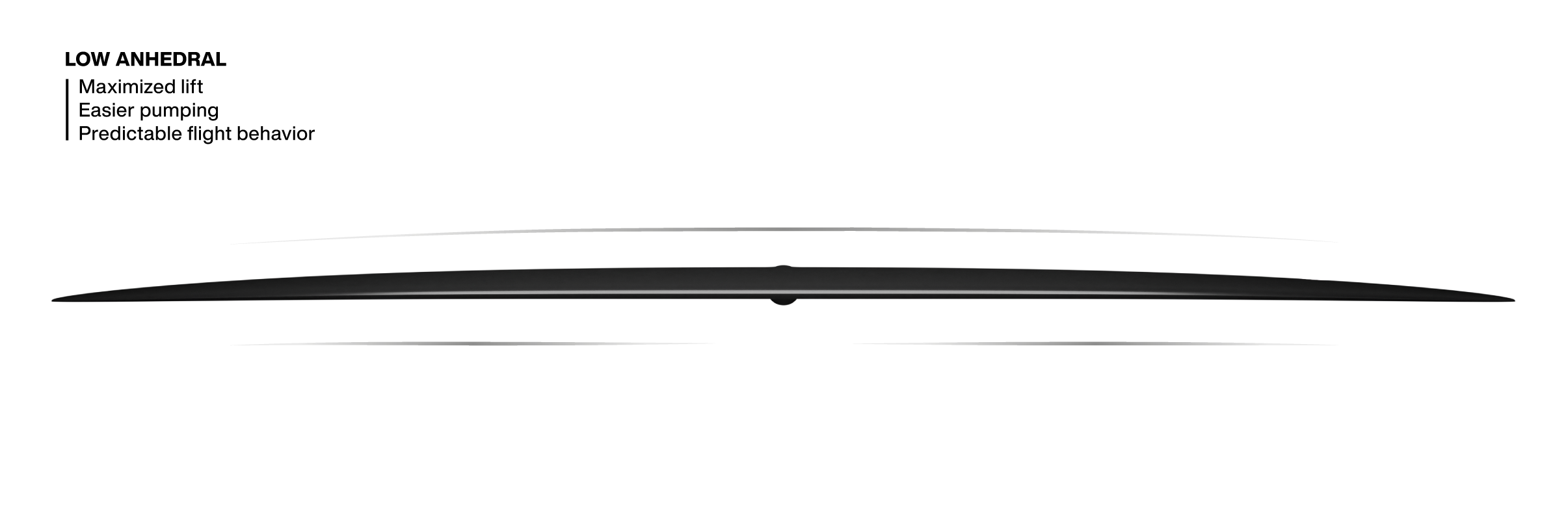
The almost flat dihedral maximizes the lift-to-drag ratio and promotes pumping. The wing glides between two supports, maintains flight with little speed, and allows you to extend distances without having to relaunch violently or maintain an exhausting pace.
The Trail is absolutely not a wing for speed or extreme glide. It is a progression wing for pumping: easy, lifting, reassuring, stable, and very effective for learning to fly without waves or wind.
Built in the Perf Series, the Trail V3 Atmo makes this program very accessible with solid prepreg fiberglass technology, tolerant and repairable, while maintaining the V3 Atmo precision standard and the SuperLock self-locking connection.
The Trail V3 Atmo Perf Series is the wing to discover pumping with confidence, succeed in your first starts, and gradually extend your flights using only the power of your legs.

The Trail has a ratio of 9.4, which is very suitable for discovering dockstart and pumping. It offers a good level of glide without making the wing too fast or too technical to control.
This ratio provides enough efficiency for covering distance while maintaining strong lift at low speeds. It's exactly what you need for learning: the foil should lift early, stay in flight for a long time, and give you time to adjust.
The Trail is not an extreme wing. It doesn't aim to maximize speed or high range. Its ratio is chosen to create a wing that is easy to launch, easy to pump, easy to recover, and efficient enough to progress quickly.
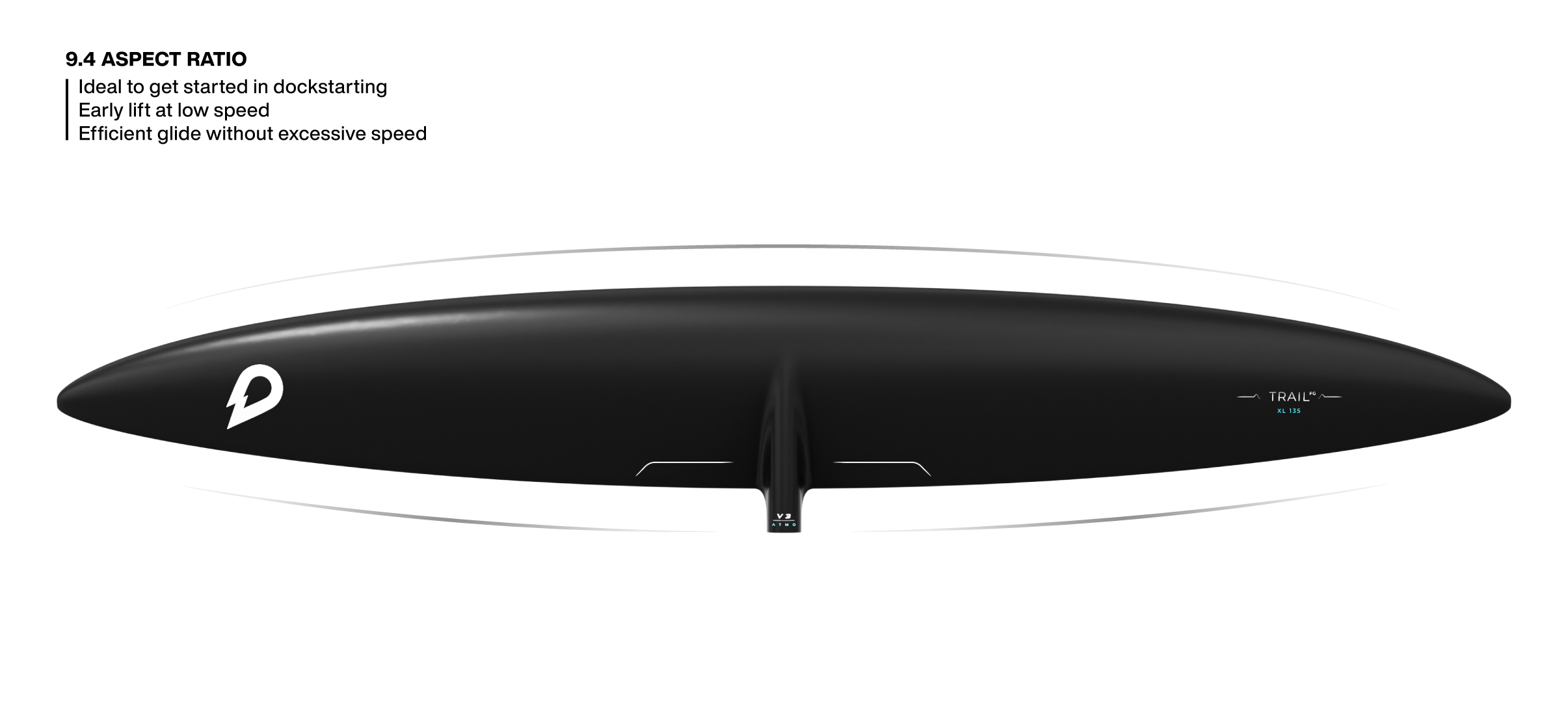
The elliptical outline of the Trail maximises hydrodynamic efficiency and stabilises lift across the entire span. The foil remains stable, predictable, and very readable underfoot.
This even distribution of lift is essential for learning to get on the board. The wing doesn't slip, doesn't pull abruptly to one side, and allows for adjustments without immediate consequences.
The outline also provides enough manoeuvrability to exit a trajectory, correct a mistake, or engage in a simple carving turn. For learning to pump, this ability to recover is as important as pure lift.
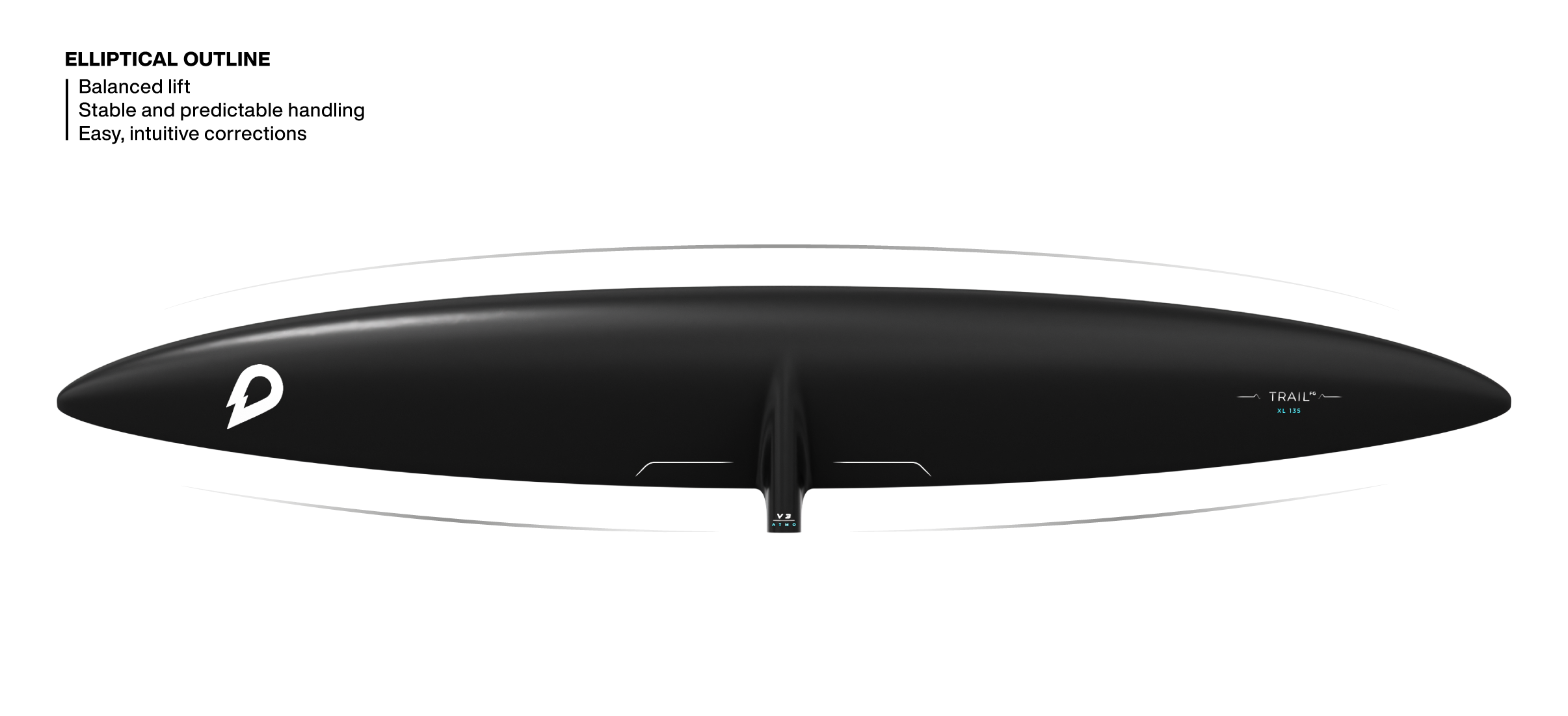
The Trail's profile is powerful and very forgiving when it comes to stalling. It generates a lot of lift even at the lowest speeds, which greatly facilitates dockstart, beach start, and accessible flat start take-offs.
This early lift reduces urgency. The rider doesn't need to run very fast or pump immediately with perfect rhythm. The wing kicks in early, supports the flight, and gives time to stabilize the stance.
The stall tolerance also helps maintain flight when pumping is still irregular. If the rhythm slows down, if the stance is imperfect, or if the board loses a bit of speed, the Trail maintains a margin and helps prolong the flight.
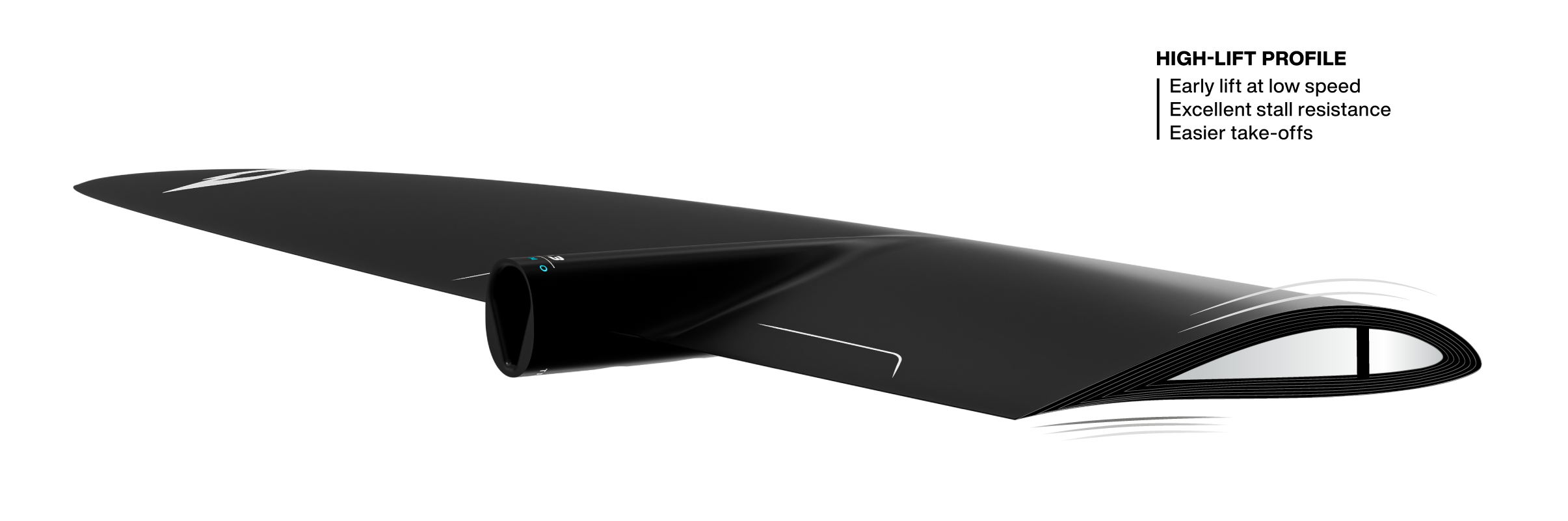
The Trail deliberately evolves at a cool speed. This is a fundamental choice in its program. To learn pumping, you need time, room for error, and a foil that doesn't accelerate too quickly underfoot.
This low speed allows you to escape the stress of the start. You can launch more cleanly, get on the board, position your feet, and establish the rhythm without feeling overwhelmed. The foil remains predictable and reassuring.
This characteristic is also important physically. A wing that's too fast forces you to pump at a higher rhythm and with finer precision. The Trail allows you to learn the movement with a simpler and more accessible tempo.
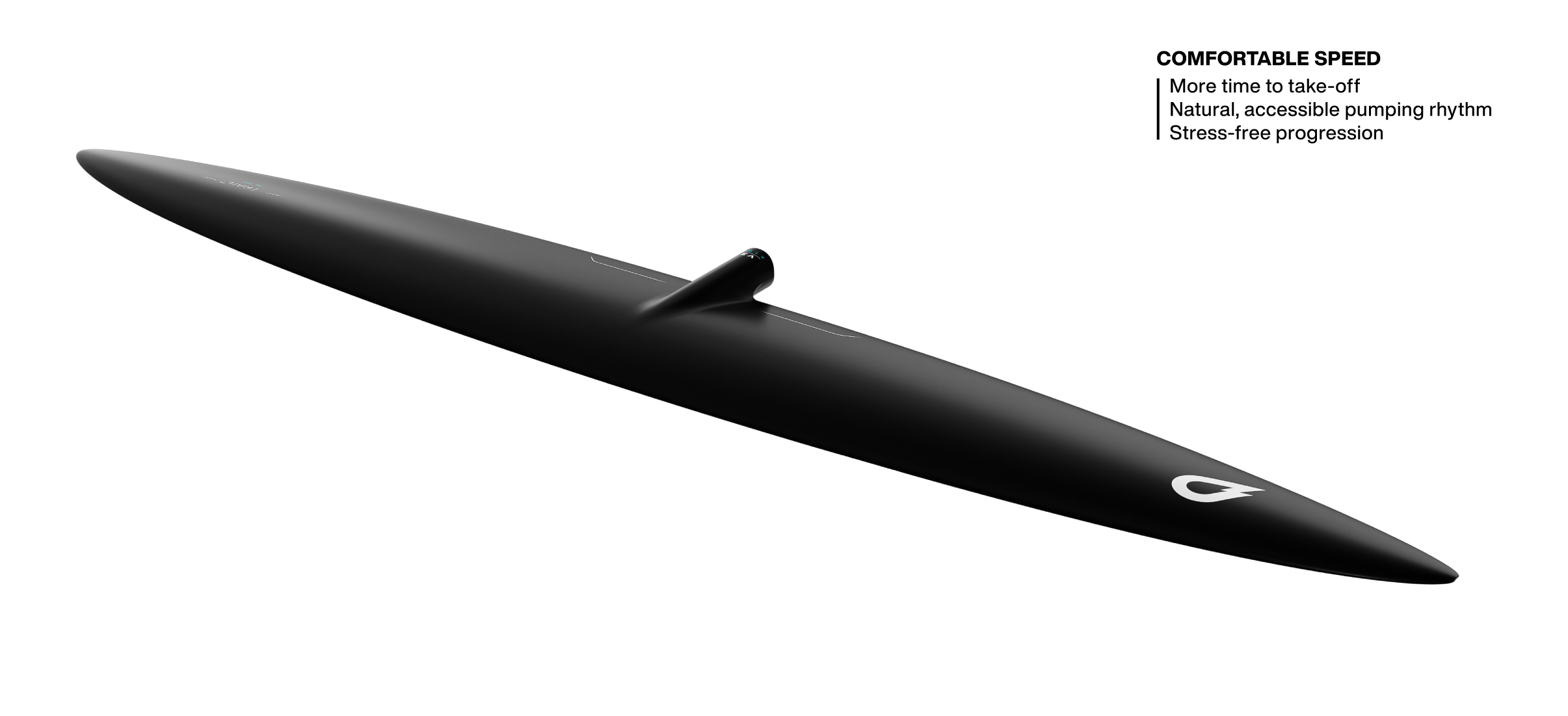
The Trail is almost flat across its entire span to maximise the lift-to-drag ratio. This design favours pumping, the readability of the supports, and glide between two supports. Its programme is obviously not tight carves and high-speed counter-leaning, so its lift is maximised.
A zero anhedral allows the wing to lift efficiently across its entire span. The projected area is optimal. Each impulse generates lift and distance. The foil maintains flight with little speed, which is essential for learning.
This geometry also provides very consistent behaviour. The Trail remains stable, predictable, and easy to control. It allows you to focus on the pumping rhythm rather than constant trajectory corrections.
The Trail is designed for learning to pump. Its behaviour is intentionally simple: it lifts early, flies slowly, maintains stability, and converts pressure into sustained flight without requiring perfect technique.
The movement can remain vertical, progressive, and readable. The rider learns to load the foil, release, regain height, maintain speed, and establish a regular rhythm. The wing provides time to understand.
As you progress, the Trail allows you to extend distances, improve timing, and gain endurance. It provides a solid foundation for entering the world of autonomous foiling before moving on, if needed, to a more gliding Sirus or a faster Veloce.
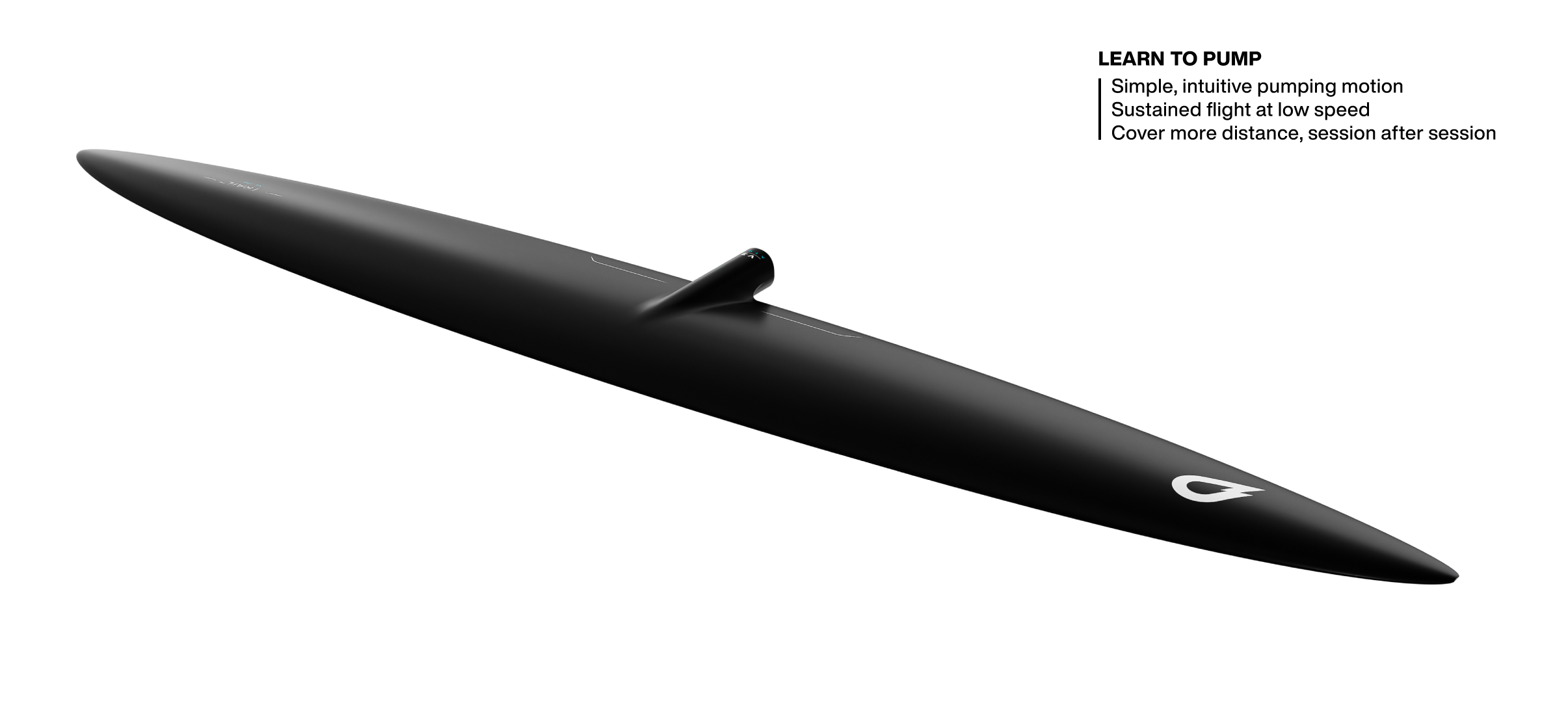
The Trail V3 Atmo Perf Series is designed for riders who want to discover pumping, dockstart, beach start, or their first flat water starts with an easy, buoyant, and reassuring wing.
It's perfect for those who want to start without pushing their cardio and mental limits from the first attempts. The foil lifts early, flies slowly, remains stable, and allows the movement to be gradually established.
It suits riders who want to learn to fly without waves or wind, from a dock, a suitable beach edge, a shallow area, or calm water. Its program is very specific: providing lift, time, and tolerance.
It also appeals to riders who are already foilers and want to add an easy pumping wing to their quiver. Even with a good level in wing, surf foiling, or SUP foiling, learning the dockstart requires particular timing. The Trail simplifies this step.
It can suit various body types, as its program is based on lift and low speed. Heavier or less energetic riders will benefit from choosing a generous size to maximize ease.
The Trail is not the right choice if the main goal is speed, freefly, fast downwind, slippery waveriding, or long high-speed connections. For that, the Veloce or the Sirus will be more suitable depending on the program.
It is also not the most versatile wing for riding in all disciplines. It can be handy in very light wind or very low-speed uses, but its true program remains easy pumping.
If the goal is to surf waves with freer carves, a Curve, a Fluid, or a small Sirus will be more logical. If the goal is freeride wing foiling or general progression, the X-Over or the Ascent will be more suitable.
The Trail is a specialized wing. It is extremely effective in its program, but it should not be expected to be a fast wing or a generalist multisport quiver wing.
The Trail V3 Atmo Perf Series is made for learning and progressing in pumping. It allows you to succeed in your first dockstarts, beach starts, accessible flat water starts, and first distances powered by leg strength.
In dockstart, it provides clear lift as soon as it's loaded. You can get on the board with more margin, feel the wing lift quickly, and establish pumping without having to be perfect from the first push.
In beach start, it allows you to start at low speed, with a wing that takes over very early. Its lift helps you get out of the water and maintain flight with a simple rhythm.
In accessible flat start, it provides a very buoyant and stable base for working on the first attempts. The very large Sirus will go further in pure flat start, but the Trail offers a simple and more reassuring entry point.
In pumping, it allows you to build the movement: tempo, amplitude, foot placement, weight transfer, speed maintenance, and endurance. You progress quickly because the wing gives you time.
It is also very interesting for physical training. Pumping becomes a real standalone practice: you challenge yourself, improve your technique, extend distances, and develop your own rhythm.
The Trail is therefore the breakthrough wing: the one that allows you to go from "I don't understand how it flies" to "I hold the flight, I pump, I move forward, I can progress."
The choice of size depends on weight, level, support, type of start, and progression goal. In pumping, you should prioritize enough surface area to facilitate the start and maintain flight at low speed.
A larger size provides more lift, more stability, more time, and more ease at the start. It's the logical choice for learning, for heavier riders, for difficult starts, or for those who want to maximize the first distances.
A smaller size will be faster, more maneuverable, and less cumbersome, but it will require more speed, more technique, and more precise pumping. It is more suitable for riders already comfortable who want to free up the foil.
In dockstart, you should choose a generous size to establish flight easily. The priority is to succeed in the start and maintain the rhythm, not to seek speed.
In beach start, a large size helps a lot because the launch phase is short and the initial speed is limited. The earlier the wing lifts, the simpler the start.
In flat start, the size should be large enough to compensate for the absence of waves or wind. The heavier or less explosive the rider, the more surface area is needed.
If hesitating between two sizes, choose the larger one to learn faster, gain lift, and reduce the urgency of the start. The smaller one will only be relevant if the level is already good and if the goal is to gain speed or maneuverability.

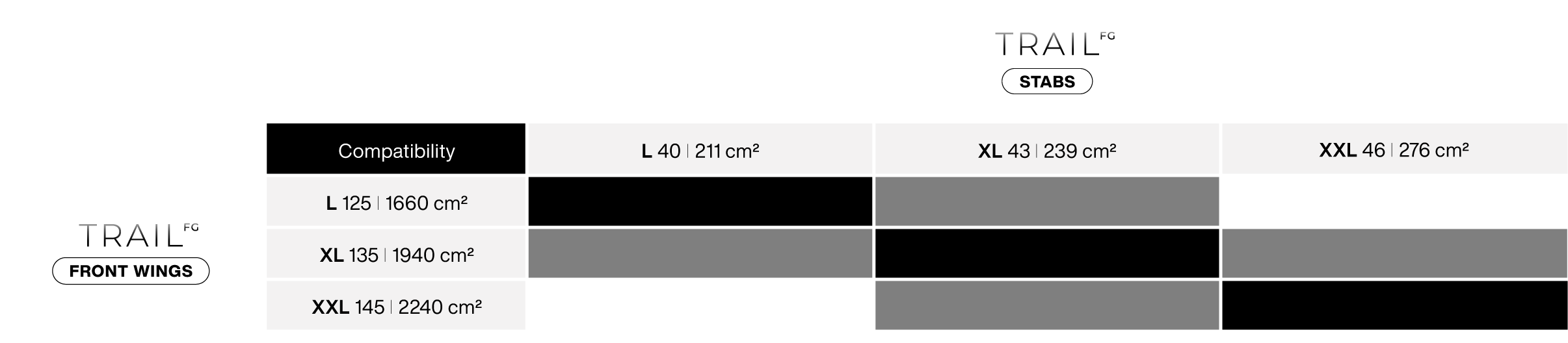
The Trail V3 Atmo works ideally with a stabilizer that maximizes stability, lift, and ease of pumping. The goal is to achieve a very readable setup that lifts early and provides reassuring rear support.
A larger stabilizer provides more front foot pressure, more longitudinal stability, and more ease at low speed. It's the most logical choice for learning dockstart, securing starts, and establishing the pumping rhythm.
A smaller stabilizer frees up the foil, increases speed, and makes the wing more dynamic. It requires more precision and can be interesting as the level increases, but it is not the simplest choice for beginners.
Since the Trail is very buoyant, the stabilizer must balance the setup without making it too draggy. A stabilizer that's too large can provide a lot of comfort but limit speed and cause fatigue over time. A stabilizer that's too small can make the start more technical.
The position of the foil in the boxes remains important. If the foil lacks front foot pressure, it should be moved slightly forward. If it pushes too hard under the front foot, it should be moved back or the rear pressure reduced.
If in doubt, start with a comfortable and stable stabilizer. The goal of the Trail is to learn pumping easily: it's better to have a slightly more reassuring setup at the beginning, then gradually reduce the stabilizer as timing and speed become natural.

The front wing comes with all the necessary screws to mount it on the fuselage: 2 M6 x 25 mm screws.