Your cart is empty!
It's flat around here...
Paraplegic since 2015, Guillaume Colin has never left the water. He first returned to riding waves with sit surf, eventually becoming world champion with the French team. He then set himself a new challenge: to fly. After wing foiling in 2023, he is now exploring SUP foil downwind in a seated position, working on technique, adaptation, and commitment. A unique approach that opens new perspectives in foiling.
Guillaume shares with us the first lessons from this unprecedented experience 👇
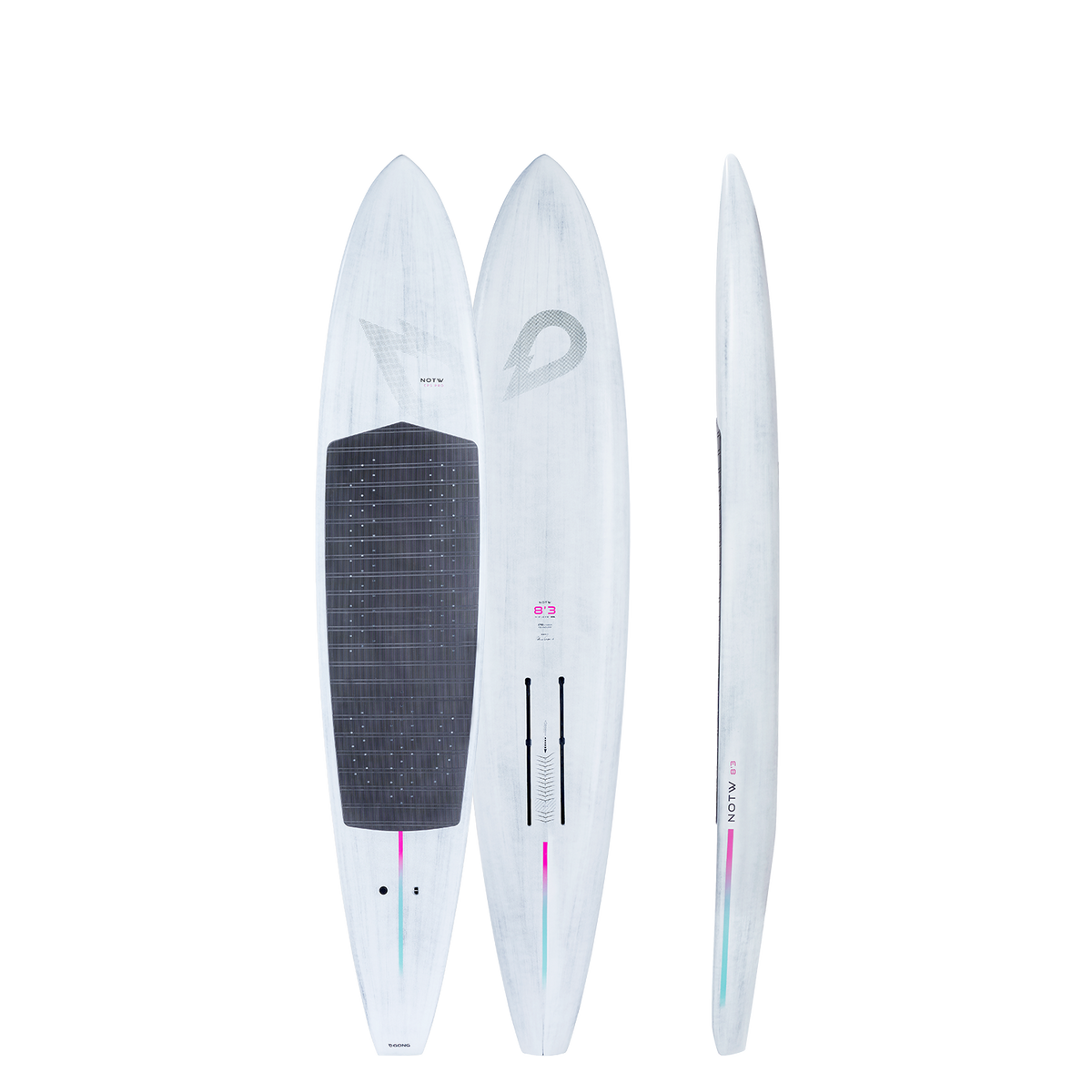
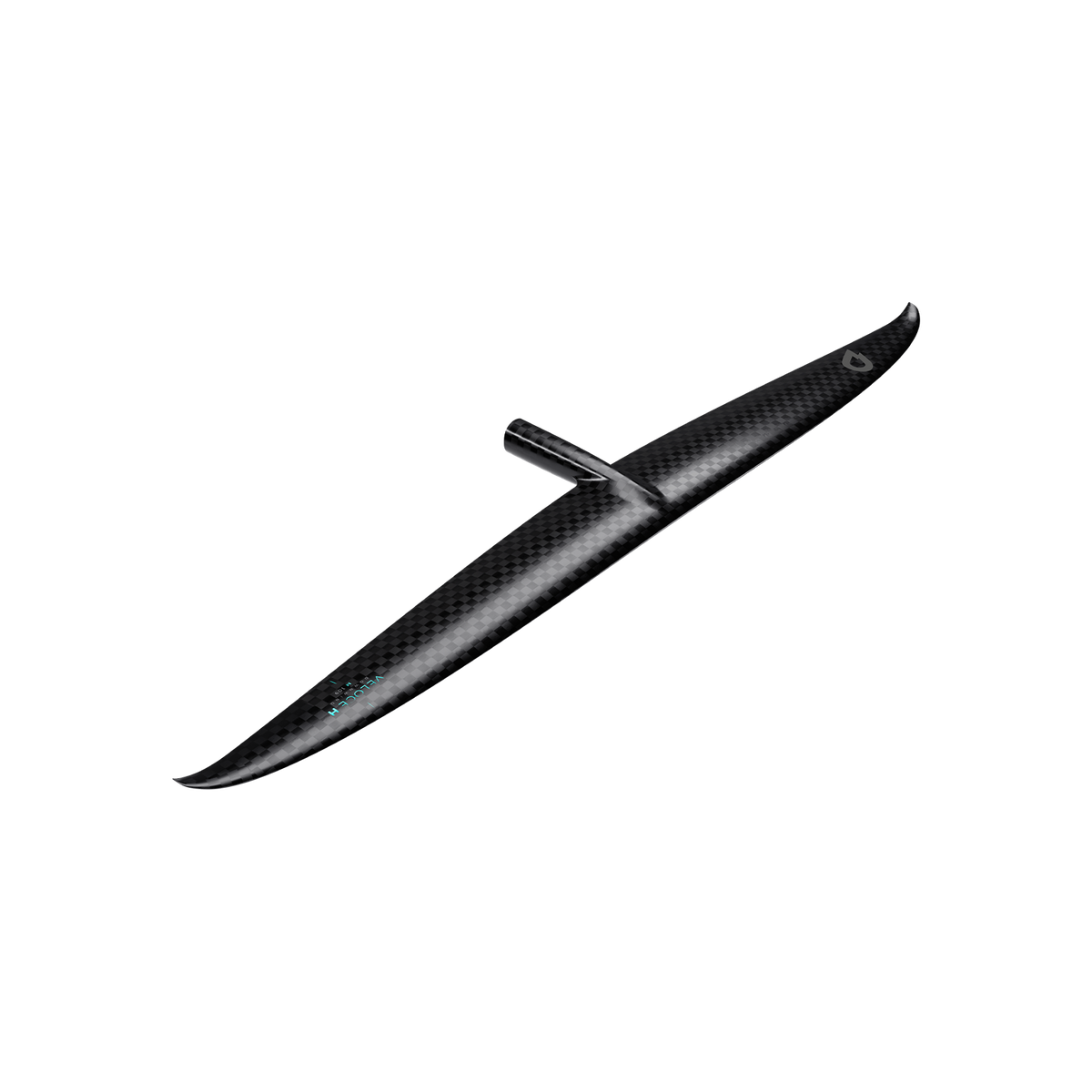
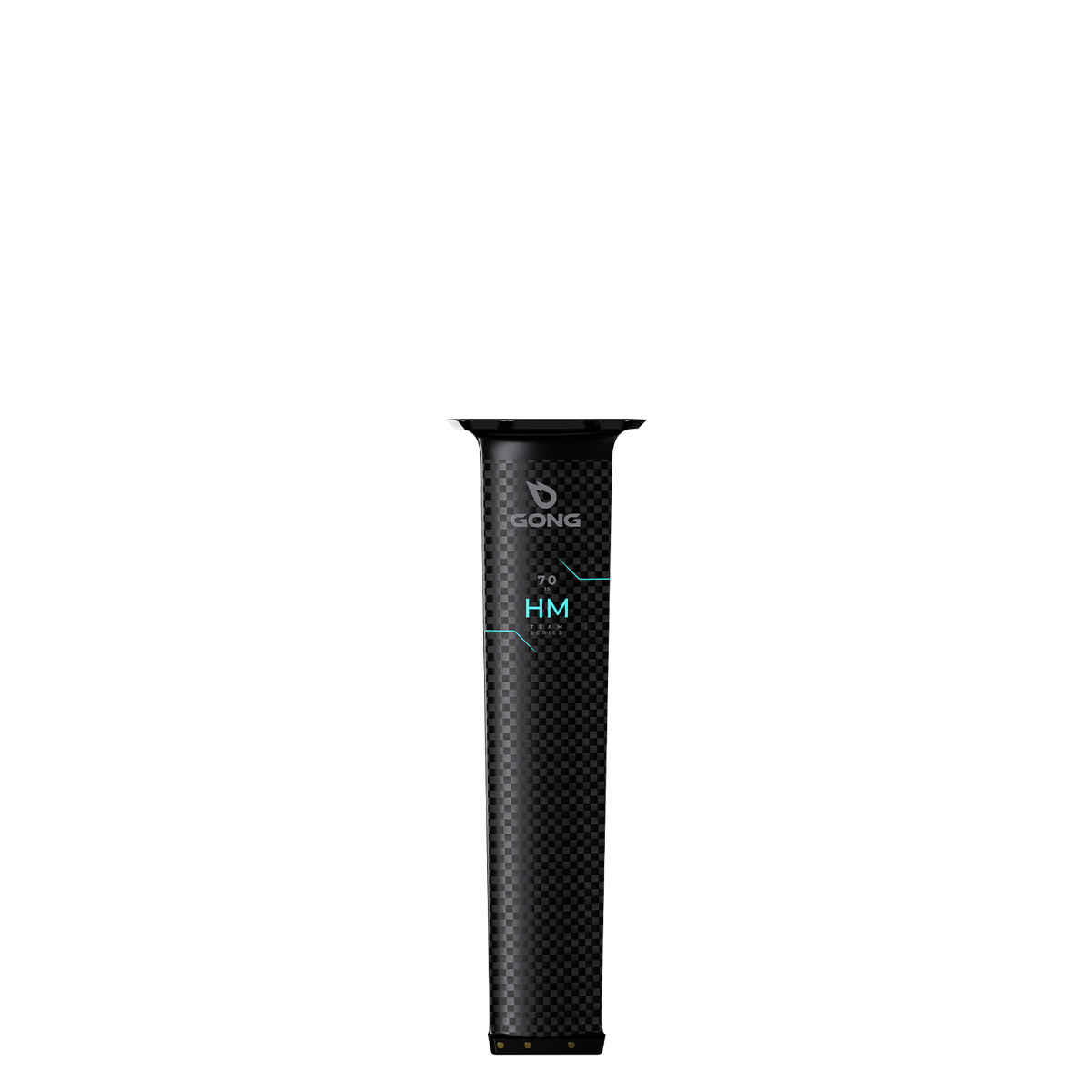
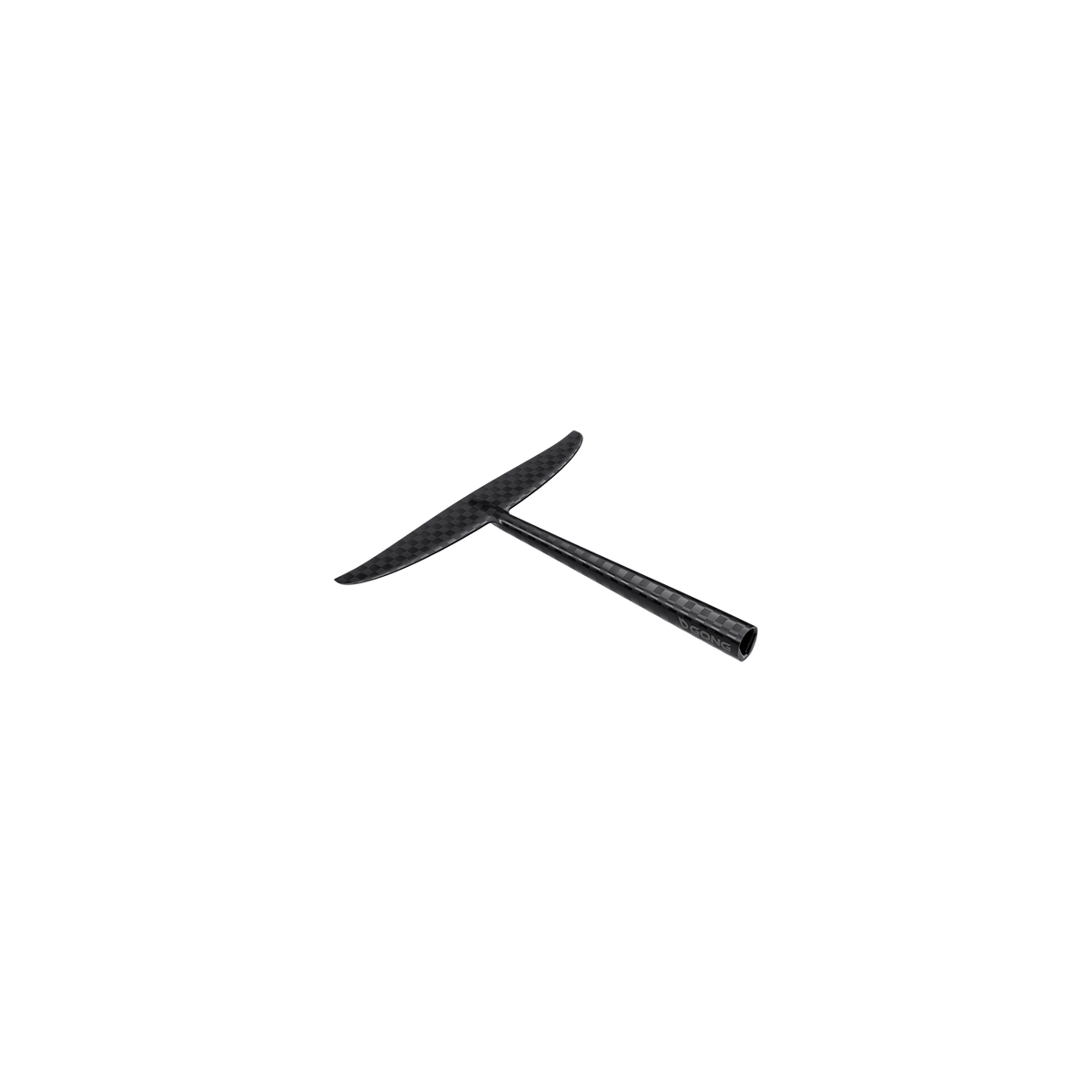
 SUP foiler: Guillaume, GONG team rider, on a NOTW EPS Pro 8’3, HM70 mast, Veloce HDW XL front wing and Veloce XL stab.
I got into the SUP foil downwind challenge in several stages. It wasn’t an initial goal, but rather the logical continuation of the discoveries I made after wing foiling. First, I wanted to keep foiling when there was swell but no wind. In my region, we often have soft waves, perfect for foiling. So I tried surf foil, still seated and using a kayak paddle to propel myself. It worked. It was great.
Then came the idea of doing downwind seated. I had already done downwinds in wing foil in freefly. I wanted to free myself from the wing and go with a paddle since surf foil had worked. I thought I could take off and fly on a different kind of swell, offshore, and do downwind. I also had prior downwind experience in surfski from a few years earlier.
Before really believing in it, I mostly had questions that needed answers. The first was whether I would be stable on this board, which is much narrower than what I was used to. In the end, with my experience in riding and especially with the foil in the water, which provides a lot of stability, there was no problem.
The second question was whether I would be able to take off on offshore swell, which is less powerful and doesn’t necessarily break. For now, in my experience, it requires a lot of energy. You really have to sprint with the paddle to take off, or wait for the right bump, the one that gets steeper or pushes a bit more, and then it lifts off.
The third question was whether I could handle flat zones with the paddle without losing flight, like someone who can pump with their legs to regain energy. I can’t pump, so I needed to keep paddling without losing flight to avoid having to take off again. That was probably the biggest question, and it works.
With trials and answers to these three questions, I realized it could work. Of course, it didn’t happen immediately.
The biggest difficulty in the process is probably positioning on the board. I’m used to wing foil, I know exactly where to place myself, where to position the foil relative to my seat to be balanced. Once I’m on the board, I’m strapped in and can’t move, so positioning has to be very precise.
I realized that this positioning, for a wingless, paddle-powered practice, was different, mainly during the floating phase before takeoff. With a wing, I’m pulled by the wind with upward traction, and my body is quite vertical. With a paddle, to be powerful and generate energy, you have to lean forward to push on the paddle. There’s no more vertical pull from the wing, so my whole body shifts forward and puts weight on the nose. If I used the same settings as in wing foiling, it didn’t work at all in surf foil or SUP foil downwind. The nose would dive, impossible to move forward or take off.
So I had to rethink these settings. Finding the right balance takes time, the right position doesn’t come immediately.
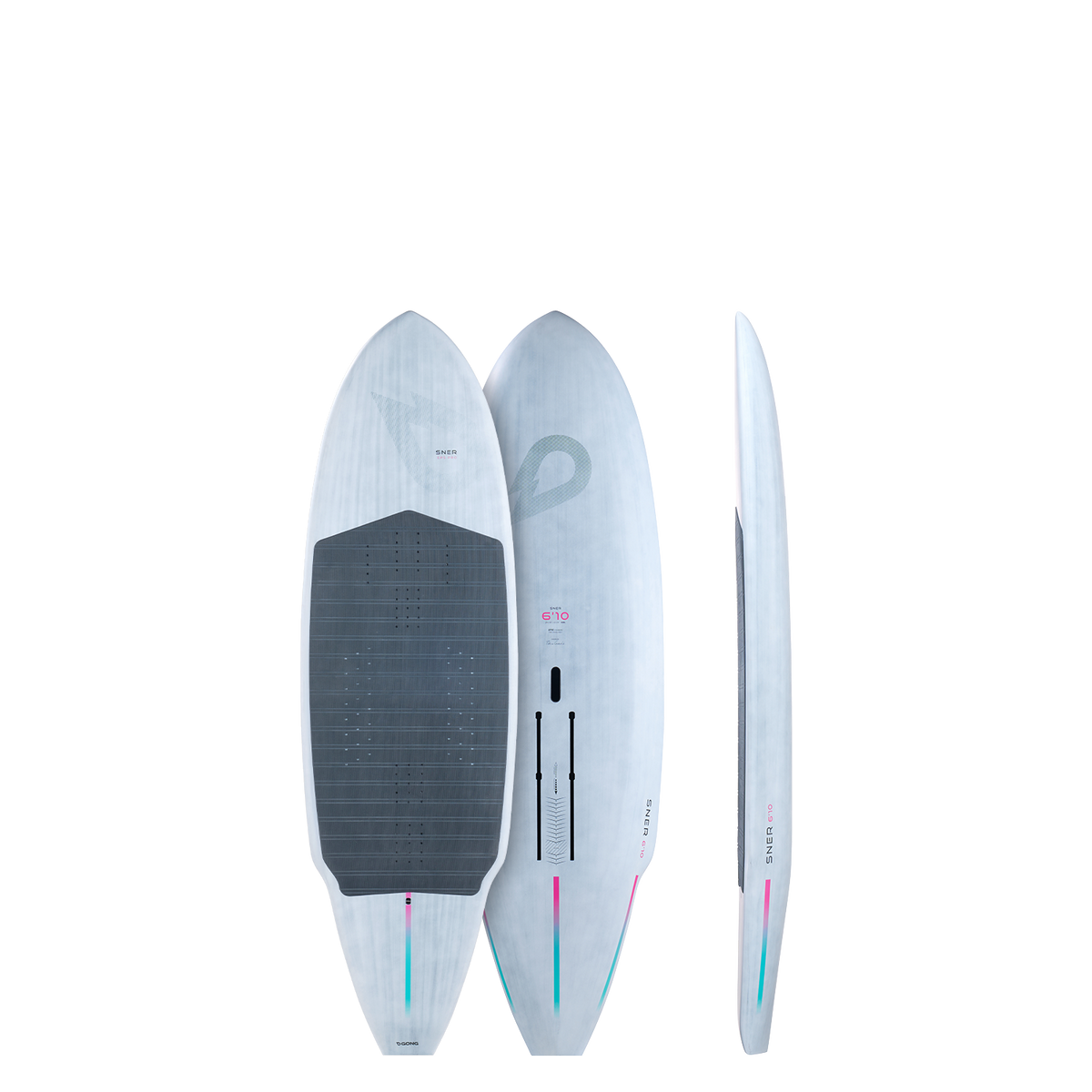
 Surf foiler: Guillaume, GONG team rider, on a SNER EPS Pro 7’0, HM85 mast, Fluid XL V3 front wing and stab.
This is very new, so I haven’t had many downwind sessions yet, but I clearly feel that I’ve answered the three questions I mentioned. That really validates the interest of this discipline for me.
I did a very first short downwind of 5 km, with a safety boat following me to take no risks during this first real-condition test. It was intentionally short, with steady wind between 30 and 40 knots, and it worked.
Then I went for a real downwind with a friend: crossing the Étang de Berre, with a mistral of 25 to 35 knots, about 80 cm swell in the middle of the lagoon, and a true downwind experience over 18 km.
I was able to confirm fairly long flight phases several times, between two and three minutes of nonstop flight, with paddle restarts to reconnect with the swell lines. It’s pure pleasure to foil for several minutes without touching the water, carried only by swell and wind.
I’m convinced that with more experience, better speed maintenance with the paddle, and better reading of the water, I’ll be able to achieve even longer flights.
These first sessions were in strong wind and short swells. I’ll also need to explore different types of swells and conditions.
Haha, no, I don’t think you need to be a world champion to do this. Of course, my past experience helped me a lot in making these downwinds work: seated riding with sit surf, balance management, foil control from wing foiling, and my previous surfski downwind experience, including reading the water and swell. All of that helped a lot, along with a minimum level of physical ability and endurance that I train regularly. But you definitely don’t need to be a world champion.
The choice of board came from discussions with GONG, especially Fred, who follows my progress and with whom I regularly share feedback from my different experiences. For downwind, we both felt the NOTW was the most suitable, so the choice was quite quick.
Then, the adaptations I requested from GONG were to add inserts to install my footstraps and a waist belt. I strap myself to the board to really become one with it, using a quick-release buckle belt that I can detach in a fraction of a second. This time, I also wanted to carve footwells to lower my center of gravity on this fairly narrow board. I wanted to sit as low as possible, as close as possible to the foil. For efficiency and comfort, it’s better to have the heels lower than the seat. So we carved footwells to lower the feet relative to the deck.
As for my setup, it’s specific to downwind: a Veloce HDW front wing and Veloce stab, both in XL for now. We started with large sizes to ensure enough lift. The mast is a 70 cm HM.
The key adjustments involve my position on the board, which I’ve now found, as well as the position of the mast and foil relative to my seat. With this new Veloce HDW foil that I’m discovering, I’m still refining the right balance.
Throughout the board preparation and adaptations, there was a lot of communication with Fred and the GONG workshop to precisely meet my needs. The result matches exactly what I had in mind, and it works very well.
Compared to the Sner, the NOTW offers better glide thanks to its length and narrowness. It’s naturally more unstable, but it allows better paddling glide and easier takeoff on weaker swell.
 Guillaume and his NOTW EPS Pro 8’3 prepared by the GONG workshop.
Downwind brings unique sensations, the feeling of being fully immersed in the elements, in the middle of a vast body of water. You’re never really alone because you should always go out with a partner or group, but at the heart of that vastness, even with others, you feel like you are.
That sense of isolation in the middle of the elements is quite incredible. You’re carried by them, working with them. There’s a sense of total freedom, but also a lot of humility in the face of nature, because you must remain constantly aware of safety. There’s truly a feeling of being alone against the power of the elements.
Once in flight, there’s not even a wing to hold. I do have a paddle, but it’s very light, almost like having nothing in my hands. It’s pure flight, and all the pleasure that comes with it.
There’s also the challenge aspect, the physical effort that I enjoy. I like that balance between intense effort and the reward that follows. It’s physically demanding, and in return, the downwind sensation is absolutely incredible.

There’s already a lot of feedback on the few posts I’ve shared on social media. This goes beyond adaptive practice linked to disability and opens up to everyone. I’m receiving messages not only from people with disabilities, but also from the SUP world, kayaking, and surfski downwind practitioners, people who already paddle seated but without a foil, who are naturally interested in this new discipline.
I also get feedback from people in the river community who would like to surf standing river waves with a foil. The exchanges come from very different backgrounds and from all over the world. Some find it inspiring, others want to try, or simply understand how it works and how to get started. All of this makes the discussions really interesting.
For me personally, the practice is fully validated. I’m eager to explore it further, improve my experience and abilities, and refine my settings even more. They’re already very good, but I haven’t yet found the perfect balance point, or at least I still have more tests to do to find the best setup.
There’s also the whole training aspect, because it’s a very physical discipline. With more work, things can only improve.
I also want to test different wind and swell conditions to see how far it can go. I already know that with my current gear, on short swell with choppy water and wind of 25 to 30 knots, it works. Now I need to see how it performs on longer swells. It will probably require a longer and narrower board than the NOTW 8’3 I’m currently using, like the Intruder 9’3, and maybe a slightly smaller foil to gain speed before takeoff.
The concept is clearly validated. Now it’s about exploring all its possibilities and seeing how far it can go. But I’m convinced that this approach can meet the expectations of many people who want to do downwind in a seated position.
Thank you Guillaume! It’s a pleasure to share this foiling adventure with you.
Follow Guillaume on Instagram.






1 comment
Carrément inspirant ! Bravo à toi pour ta persévérance dans tout ce que tu entreprends, mais encore plus dans cette discipline.